God is subtle but he is not malicious. – Albert Einstein
Many of our astute and learned intellectuals on BU have been waiting patiently for a discourse on this rather voluminous topic since last year. It would be remiss and foolhardy in denying the pivotal role that science plays in our world today – for ever increasing connectivity has never been so necessary to everyday normal human existence.
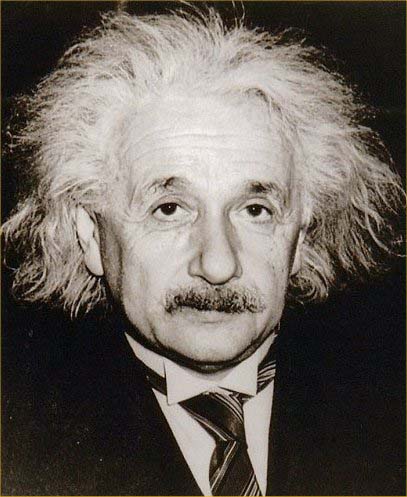
Much of modern science starts with Einstein who first proposed his General Theory of Relativity in 1915. It describes how any massive object, such as the Sun, creates gravity by bending space and time around it. Everything in that space is also bent: even rays of light. Consequently, distant light sources, behind the massive object, can appear in a different position or look brighter than they would otherwise. So the total eclipse of 29th May 1919 gave scientists the chance to test the theory for the first time.
Astronomer Professor Pedro Ferreira from the University of Oxford argued that:- “This first observational proof of General Relativity sent shockwaves through the scientific establishment… it changed the goalposts for physics.”
“Einstein’s assumption agreed beautifully with everything else and allowed him to discover a number of great things so that nobody ever questioned it,” said Bahram Mashhoon, Professor of Physics in the MU College of Arts and Science. “All forces need to be of quantum origin, but Einstein’s general relativity theory, which is the modern theory of gravitation, has not yet been brought into conformity with quantum theory. The modern theories of special and general relativity have their origins in the problems associated with the way electromagnetic waves appear to observers in motion.”
However, scientists at Texas A&M University, in the August 24th issue of Physics contend that – “If it ain’t broke, don’t fix it,” sums up fairly well how many scientists have viewed Einstein’s theory of general relativity. But outside of the gamut of Einsteinian mathematical wisdom – what is his position on how the Universe is ordered? Are his philosophical paradigms coherent with his ideas on science and God? Also, what can we deduce from other scientists who hold religious, philosophical as well as empirical scientific knowledge?
This is the CONNUNDRUM? This is the circle that many astute and learned men have been trying to square since the days of Copernicus, Galileo, Newton & Halley to mention but a mere few names.
So what is the answer?
The New York Times reported that 40% of American scientists believe in a personal God to whom they pray. The numbers in Europe are about the same. It is from this vantage point that we examine the thesis of our discourse by drawing upon the foundational paradigms of Prof. John Polkinghorne – noted former Professor of Mathematical & Quantum Physics at Cambridge who in his mid career became an Anglican priest. His books include Science and Creation, Science and Providence, Belief in God in An Age of Science, Serious Talk: Science and Religion in Dialogue, The Faith of a Physicist, The God of Hope and the End of the World, Exploring Reality, and Quantum Physics and Theology.
As the goodly Professor puts it – “Physics is powerless to establish the rational intelligibility of the Universe… It is often felt that in religion you have faith; in science you have fact, and that no faith is involved in science. That is patently false. All science depends and proceeds on the basis of believing that the Universe is rationally intelligible, you wouldn’t do science if you didn’t believe that. But science itself cannot give it to you.” He describes his view of the world as critical realism and believes that there is “One World”, with science and religion both addressing aspects of the same reality.
Professor Polkinghorne considers that “the question of the existence of God is the single most important question we face about the nature of reality.” He addresses the questions of “Does the concept of God make sense? If so, do we have reason for believing in such a thing?” But he is “cautious about our powers to assess coherence,” pointing out that in 1900 a “competent… undergraduate could have demonstrated the ‘incoherence’” of Quantum ideas. He suggests that “the nearest analogy in the physical world [to God] would be … the Quantum Vacuum.”
He suggests that God is the ultimate answer to Leibniz’s great question “why is there something rather than nothing?” The Atheist’s “plain assertion of the world’s existence” is a “grossly impoverished view of reality,” he says, arguing that “Theism explains more than a reductionist atheism can ever address.” He “does not assert that God’s existence can be demonstrated in a logically coercive way (any more than God’s non-existence can) but that theism makes more sense of the world, and of human experience, than does atheism.”
Freeman Dyson (Professor of Theoretical Physics at the Institute for Advanced Study in Princeton with disciplines in Mathematics and Astronomy, a Futurist, famous for his work in Quantum Mechanics) argue that “the more I examine the Universe and the details of its Architecture, the more evidence I find that the Universe in some sense must have known we were coming” and suggests there is a wide consensus amongst physicists that either there are a very large number of other universes in a multiverse or that “there is just one universe which is the way it is in its anthropic fruitfulness because it is the expression of the purposive design of a Creator, who has endowed it with the finely tuned potentiality for life.”
If epistemology follows ontology according to Professor Polkinghorne, then it is logical to infer that different epistemologies have a relationship of verisimilitude hence the relationship of consonance and assimilation.
Professor Polkinghorne says that he is “believer in the unity of knowledge. There is one world of reality – one world of our experience that we’re seeking to describe. Of course, there are different aspects and levels of that reality; we can encounter the same event in a different way. We could describe it in very physical terms, or as a carrier of beauty, or a moment of moral choice; it could be the moment we encounter God. There are these different layers. But somewhere they’ve all got to fit together. I want to put them together in a way that respects the different characters of each level that I experience, as well as the fact that the experience is of one reality. I want a consonant relationship, for example, between science and theology. Science cannot tell theology how to construct a doctrine of creation, but you can’t construct a doctrine of creation without taking account of the age of the universe and the evolutionary character of cosmic history. I also think we need to maintain distinctions – the doctrine of Creation is different from a scientific cosmology, and we should resist the temptation, which sometimes scientists give in to, to try to assimilate the concepts of theology to the concepts of science. There is a distinction that needs to be maintained.”
As Renaissance shift from the dualistic thinking of Descartes and Newton to the present understanding of reality as one – Einsteinian cosmology helps us to appreciate the role that the general theory of relativity, “that space and time and matter are all linked together, so that the world is relational in that sense. That is a very important development, and many theologians have seen in it a suggestion of the relational thinking of a Trinitarian theology.”
Polkinghorne argues that “the discovery of quantum theory, which has brought about a number of changes in our thinking about the world – suggest that the world is no longer tightly deterministic and mechanical; there is a probabilistic character to physical process. And, of course, quantum theory also has its own relational character. Once two quantum entities interact with each other, they retain a very surprising and counterintuitive power to influence each other, however far they separate. Quantum theory also tells us that the world is not simply objective; somehow it’s something more subtle than that. In some sense it is veiled from us, but it has a structure that we can understand.”
In conclusion, Polkinghorne believes that bottom up thinkers try to start from experience and move from experience to understanding. They don’t start with certain general principles they think beforehand are likely to be true; they just hope to find out what reality is like. If the experience of science teaches anything, it’s that the world is very strange and surprising. The many revolutions in science have certainly shown that. If that’s true of our encounter with the physical world, it’s likely to be even truer of our encounter with God.
A Song lyrics …
a song for everyone
a song your song
jah jah song
some may consider it appealing
some find the true meaning
maybe a little too long
or maybe a little too short
but a song from my heart
Men see EVIL* as a reason for DISBELIEF in GOD* – forgetting that the misuse of ‘freewill’ has led us down the garden path to where we are today – even in HAITI…
Alvin Plantinga (Professor of Philosophy at the University of Notre Dame) in his conceptual analysis of “transworld depravity” assumes that God is limited by the laws of logic, and therefore has a limited set of worlds that it is possible to create, and it is possible that of this set, there is no world in which there is no evil.
J.L. Mackie (Lecturer in Philosophy at the University of Birmingham) looks at “The Logical Problem of Evil,” as the following triad:
1. God is all-powerful.
2. God is wholly good.
3. Evil exists.
These three – she sees as to be logically inconsistent. This means one cannot affirm – simultaneously – the truth of all three statements.
When carefully studying the 2 paradigms of Mackie & Plantinga – it is clear why men look outside of the Biblical and Philosophical tenets of rhyme and reason to find justification for their beliefs in Quantum Mechanics/Physics and in other forms of esoteric sciences and beliefs structures…
The problems with Mackie & Plantinga is one of God not being able actualize all possible worlds given the prevalence of evil…
Men HOWEVER* overlook how God will ultimately deal with evil in the revealed Scriptures.
In conclusion, the back door solution is to keep using a bit of science –
First 2 reasoned assumptions…
1) Imagine there are Multiple Universes
2) Imagine that any two Universes that are identical are the same based now on a moral assumption
3) Assume God prefers that you exist for you – “a free moral agent”
Now God’s job is to try to fix all of this by creating every possible Universe so that every potential which exists some of which are evil, some good, some suffer and some are happy.
These are the philosophical arguments used in the tête-à-tête between Machie & Plantinga which ultimately spills over into contemporary day-to-day debates over the existence of God and why he continue to allow EVIL* while somehow lurking in the shadows silently observing…
Loading…
Georgie Porgie
Note
1- That I did not say that only one person – the little boy had food.
2- That the text intimates that food was in scarce supply on site which evidently caused the little boy to donate his lunch.
3- the crowd was estimated as 500o MEN. If we suppose that there were women and other children present the head count must surely have been many more.
4- The text in all the passages indicate that only one person’s lunch was used to do the miracle.
When 5000 or more folk attend a large public event even today when food is much more available, how many people carry food. When 5000 people attend cricket at Kensington how many of them carry food.
“The fact that in a crowd of 5thousand people only i person had food is mindboogling” to you but from reading Ahoroni’s book – an expert on Jewish Geography and History – and others, I am willing as a simple soul who knows no rocket science at all and interprets the Bible literally that a mirake took place which can not be explained away.
@GP
The simple fact that i can use logic to explain a “miracle” which Jesus used to demonstrate act of giving and sharing has caused you much discomfort.
@terrence Blackett
You gave me an assigment .I did it, and
your response so far has been negative.
I am beginning to rethink my opinion of you .So far it has been good.
The history of Quantum Mechanics is in part the history of the question of whether or not we should revise our standard logic so as to not include the law of the excluded middle…
Entanglement in Quantum Physics was first introduced in an attempt to illustrate, a priori, the absurdity inherent in quantum theory.
If true, the theory predicts that interacting with one individual object instantaneously effects the entangled partner no matter how spatially segregated the two particles may be.
This seems to call into question our ability to distinguish one particle from two particles.
But the evidence since then seems to suggest that this is actually the way that things are (this is sort of ironic since Einstein’s theory had done the very same thing for non-Euclidean geometry).
But has this discovery led to any of the results that the rationalist predicts?
No!!!!!!!!!!!!!!!!!!!!!!
A similar problem arises across the board; suppose the law of non-contradiction can only be an empirically justified theory.
How do we empirically justify something if we can’t even assume that an empirical justification of the law of non-contradiction is not also an empirical justification of its falsehood?
And so forth for all major principles of logic and mathematics.
Willard Van Orman Quine, mathematician, philosopher and verificationist – indispensability argument for the empirical justification of mathematics starts from the claim that we are ontologically committed to the things which we quantify over in our best theories.
The indispensability of mathematics to physics means that we are committed to the existence of numbers (but not, obviously, to their non-physical existence).
So Quine argue that, since our theories all get confirmed or dis-confirmed together as a group, the empirical confirmation of physics is empirical confirmation for mathematics.
Hence, in this way mathematics is empirically justified.
However, one problem exist with this argument – is that it depends on confirmation holism…
I am suffering with a bout of time – space distanciation….
BLAME IT ON CHRIS HALSALL!!!
LOL….
Anyhow, I am still in the contemplative process of searching through your argument which on the surface seems pliable but like “KIKI” – “I am a ‘ROOTS’ man!!! LOL
@Terence M. Blackett: “This seems to call into question our ability to distinguish one particle from two particles.
Only to someone who didn’t understand what they were talking about.
Loading…
Georgie Porgie
@GP
The simple fact that i can use logic to explain a “miracle” which Jesus used to demonstrate act of giving and sharing has caused you much discomfort.
I repeat that the miracle of the feeding of the 5ooo does not demostrate any act of giving and sharing in either of the contexts in which the accounts are set.
If causing me discomfort is your intention is your intention you havefailed miserably.
In October 2008 I listened to a jackass on my fasther’s porch interpret this miracle as good to teac sanitation. The idiot proudly proclimed that he had suggested to the Dean of St Michael’s that the passae was a good one for sanitation week.
I thank my God that he has afforded me the privilige to read many commentaries on John’s account of this miracle, and that none of them wrote such bovine excrement. I thank Him too that he taught me how to learn from those who could teach me, because they had learned and knew.
@Terence M. Blackett: “Your conclusion seems to placate a lot of serious scientists who according to you – “don’t seem to know what they are talking about…”
Care to name names and their associated arguments?
@GP
You are indeed very closeminded .Had not for the bible you would have no thoughts of your own.
Closed mindness should be classified as a mental disorder.
Loading…
Georgie Porgie
Now you are teaching Psychiatry! ROTFLMAO!
You have clearly not been on BU too long. ROTFLMAO
In philosophical discussion, it is more useful to apply ‘Inference To Best Explanation’ when we are confronted with certain data to be explained.
That is, when we assemble a *pool* of live options consisting of various explanations for the data in question. Therefore, from the pool of live options we then select the *explanation* that, IF true, best explains the data.
Among the commonaly acknowledged criteria will be properties as follows:
1. Explanatory scope.
2. Explanatory power.
3. Plausibility.
4. Less ad hoc.
5. Accord with accepted beliefs.
6. Comparative superiority.
The neo-Darwinian theory of biological evolution is a good example of inference to best explanation. Darwinists recognize that the theory represents a HUGE extrapolation from the data, which support micro-evolutionary change, BUT, do NOT provide evidence of macro-evolutionary development. They further admit that NONE of the evidence, taken in ISOLATION, whether it be from microbiology, paleogeography, paleontology and so forth, provides PROOF of the theory. But, their point is that the theory is nontheless the best explanation, in virtue of its explanatory power, scope and so on.
By contrast, the charge leveled by critics of the neo-Darwinian synthesis like Philip Johnson, that the theory presupposes *naturalism* is best understood as the claim that the explanatory superiority of the neo-Darwinian theory is a function of the *pool* of live options’ being RESTRICTED by an *unjustified* methological constraint, namely, the *philosophical* presuppostion of NATURALISM.
Remember Lewontin’s openly expressed pronouncement, “…WE MUST NOT ALLOW A DIVINE FOOT IN THE DOOR…”
Johnson is quite happy to agree that the neo-Darwinian synthesis is the best *naturalistic* explanation available ( in contrast to Lamarckianism, self-organization theories and so on). But, he insist that the interesting and important question IS not whether the neo-Darwinian theory is the best naturalistic explanation, BUT, whether it is the best explanation, that IS, to say, whether it is CORRECT. Johnson argues that once hypotheses positing Intelligent Design ARE allowed INTO the *pool* of LIVE options, then the explanatory superiority of the neo_Darwinian THEORY is NO longer apparent. On the contrary, its deficiencies, particularly IN the explanatory power of its mechanisms of RANDON mutation and NATURAL selection, stand in STARK relief. What IS intriguing IS that several of Johnson’s detractors have OPENLY admitted that Darwinian’s explanatory superiority depends on LIMITING the *pool* of LIVE options TO naturalistic hypotheses, BUT, they claim that such a constraint IS a necessary condition of doing SCIENCE – a claim which IS NOT, as such, SCIENTIFIC, but, IS a *philosophical* claim, ABOUT the nature of SCIENCE.
In any case, this controversy serves as a vivid illustration, of *Inference to the best explanation* and clearly reveals that many misdirected criticisms are due to the failure to understand this pattern and principle of inductive reasoning. (Argumentation and Logic).
“To say of what IS that it IS, or of what IS not that it IS not, IS true” (Aristotle Metaphysics 1077b 26)
“Pilate asked, ‘So you are a king?” Jesus asnwered, ‘You say that I am a king. For this I was born, and for this I CAME into the world, to TESTIFY of the TRUTH. Everyone who belongs to the TRUTH listen to MY VOICE.” Pilate asked Him, ‘What is truth?” (John 18: 37-38) emphasis added.
Again, remember Lewontin, “…WE MUST NOT ALLOW A DIVINE FOOT IN THE DOOR..” Why NOT?
Because evolutionary *naturalism* IS premised ON a PHILOSOPICAL foundation of Rampant Atheism, NOT true SCIENCE, hence, their rabid, vehement, position as stated by Lewontin:
Issues of moral culpability dog many scientists to the effect that assignments of moral responsibility for the performance of wrong actions must always terminate with the identification of an akratic act…
To consider questions like – ‘What it is like to be a “Being” who lacks inclinations or feelings?’
‘What does God know when we say everything?’
‘In a Kierkegaardian sense, can we think of God who transcend our forms of thought and generates paradoxes of faith?’
‘What was it like to be a God in the absence of everything except His Only Presence and what happened after He decided to create the Universe(s), and did He know Himself in the absence of objects of perception?’
Do you have any answers for these questions?
They just prompt me to think that something strange is really happening while we begin thinking properties of God.
To answer your previous question – brevity on this thread won’t allow for an expose…
Loading…
Zoe
To the silly question who created Almighty God?
That IS as silly as some stupid fellow who asked a while back on another thread, “…how is Omnipotence and Omniscience obtained/achieved…”
An Omnipotent Creator, IS ETERNALLY EXISTENT, NO beginning…NO END!!!
The US government essentially said to Thompson: “GO HOME!!!” “NOT IN HERE.”
“Haiti is not a place for a TOUR. It is a place for serious people.”
Are you a Nurse, a Doctor or an Engineer?
Thompson are you trained in search and rescue or are you a counsellor?
Are you a helicoptor pilot or just coming for a photo op?
Then stay Home!!!
EVER SO WELCOME WAIT FOR A CALL.
Loading…
kiki
Cherokee Legend
Do you know the legend of the Cherokee Indian youth’s rite of Passage?
His father takes him into the forest, blindfolds him an leaves him alone. He is required to sit on a stump the whole night and not remove the blindfold until the rays of the morning sun shine through it. He cannot cry out for help to anyone.
Once he survives the night, he is a MAN..
He cannot tell the other boys of this experience, because each lad must come into manhood on his own.
The boy is naturally terrified. He can hear all kinds of noises. Wild beasts must surely be all around him. Maybe even some human might do him
harm. The wind blew the grass and earth, and shook his stump, but he sat stoically, never removing the blindfold. It would be the only way he could become a man!
Finally, after a horrific night the sun appeared and he removed his blindfold.
It was then that he discovered his father sitting on the stump next to him..
He had been at watch the entire night, protecting his son from harm.
We, too, are never alone.
Even when we don’t know it, God is watching over us, Sitting on the stump beside us.
When trouble comes, all we have to do is reach out to Him.
If you liked this story, pass it on.
If not, you took off your blindfold before dawn.
Moral of the story:
Just because you can’t see God,
Doesn’t mean He is not there.
“For we walk by faith, not by sight.
Loading…
Alex Fergusson
A mere two years and the DLP’s bubble has busted.
It is a political party in decline, but which is holding on to power, in circumstances where it has absolutely nothing useful to add or contribute to national development.
We are all for vaulting ambition and reaching for the heights.
But the DLP is a reminder that what Barbados needs right now is a sensibly government that knows what it is doing as well as a solid economic foundation on which to build going forward.
It is therefore time to try something better. Make the call – the BLP stands ready to answer and to serve in defense of the people of Barbados.
Loading…
kiki
btw I’ve got some feedback from a native american re legend
Sorry, my friend. The “legend” is a much circulated Christian fabrication. One can see the Christian doctrine throughout it.
The real Cherokee Rite of Passage was an educational process with instruction given by the elders of the responsibilities of a man. There was a ‘graduation’ ceremony involving smudging and sweat lodges performed by a Holy Man, or Holy Woman, and included the elders of the tribe.
No stump sitting. No blindfold. No father standing by unseen and unheard in the night.
Two gods are relaxing on a very tall mountain top having a drink; watching over their People.
“I’m stronger than you!” says God#1.
“No you’re not, I’m stronger than you!” says God#2. “How can you possibly believe your claim?”
“Because more believe in me than in you.” says God#1.
“Ha!” says God#2, “Just you wait until you see what I have planned during the next turn of our game!”
“Why must you both spend so much time encouraging and allowing your believers to kill each other for your petty little insecurities?” says God#3.
Loading…
kiki
Buddha was born at the exact moment his mother looked toward the heavens in the garden of Lumbini. He took seven steps in each direction of heaven while a lotus flower grew at each step, and then declared that he would not be born again, as Buddhists believe in reincarnation.
Gautama left the asceticism and meditation behind and focused on The Middle Way, a path away from all extremes. History tells that Gautama then accepted some rice pudding, sat beneath a papal tree and refused to arise until he had discovered the truth. At the age of thirty-five, or six years after beginning his quest, Gautama obtained enlightenment.
Aseity (from the Latin ‘a se’ “by itself” refers to Almighty God’s self-existence or independence. God does not merely exist in every possible world (as great as that IS), BUT, even more greatly, He exist IN every possible world WHOLLY independent of ANYTHING ELSE.
The Scriptures AFFIRM the preexistence of the Divine Word.
“ALL THINGS came INTO being through HIM, and without HIM NOT ONE thing came into BEING” (Jh. 1:3).
Almighty God IS absolutely UNIQUE in His ASEITY; all other things exist ‘ab alio’ (through another).
(The Coherence of Theism).
Loading…
Zoe
INCORPOREALITY.
“God IS Spirit” (Jh. 4:24), that is to say, a living, immaterial being. God’s ‘immateriality’ entails the divine attributes of *incorporeality*, that Almighty God is neither a body nor embodied. As a personal being, God IS, therefore, of the order of unembodied Mind. (The Coherence of Theism).
Todays Date:
13-Moon Date: Moon 7 Day 11
Gregorian Date: January 20, 2010
Galactic Overlay: White Cosmic Wind
Day Translation Utility
Resonant Moon day 11
Year of the Yellow Self-Existing Seed
Day Translation Utility
kin 182: White Cosmic Wind
I Endure in order to Communicate
Transcending Breath
I seal the Input of Spirit
With the Cosmic tone of Presence
I am guided by the power of Death
Loading…
scientist
Firstly I want to deal with the Haiti earthquake. Haiti was severely affected for the following reasons: The epicentre of the earthquake was in the densely populated Port-au-Prince area, the earthquake occured at a shallow depth (in the range of tens of kilometres) and thirdly Haiti’s infrastructure wasn’t designed as earthquake resistant as buildings in California would be. It has nothing to do with vodoo, because in 1700 when the French ruled Haiti even before Toussiant was born an earthquake 20 times as severe struck Haiti. Why would God punish the Christian French? The answer is has more to do with plate tectonics than anything else. Further, didnt God wipe out almost everyone except Noah’s family before? I guess human beings don’t learn lessons from natural disasters.
On the question of the Bible and what it says about anything scientific. It says absolutely nothing! The Bible is the farthest thing from a science book and the men who wrote it had a limited view of the universe so how could one expect them to articulate any profound scientific theories. Actually the leaders of the earliest church (Roman Catholics), from which all Christian demoninations are derived, constantly tried to use the Bible as a science book and misled its followers. Through science we know that the earth is not flat and the earth is not the centre of the universe. As science advances the church’s position on things will change to suit new discoveries, just as they did with the ones I mentioned earlier.
Loading…
Georgie Porgie
Re the nonsensical goo in the second paragraph above.
On the question of the Bible and what it says about anything scientific. It says absolutely nothing!
THIS IS A FALSE STATEMENT!
Whereas it is TRUE that the Bible is NOT a book of Science, there are indeed many statements of science in the Bible that can not be refuted!
Whereas it is TRUE that the men who wrote the Bible were not scientists and whereas they had a limited view of the universe (except perhaps Moses & Solomon) and whereas the human authors of the Bible could not be expected to articulate any profound scientific theories, we must understand that the Bible makes it clear that God, the Holy Spirit is the real or ultimate author of the Bible. And that he spoke through the human writers (See 2 Tim 3:16 & 2 Peter 1:21)
Also the church existed for over THREE HUNDRED YEARS before being corrupted by the Roman Catholics.
Also it is not really true to say that all Christian demoninations are derived from the Roman Catholics. The Baptist church certainly is not. And it is not really very accurate to say that denominations are derived from the RC’s since many denominations are far removed from the nonsense practiced by the RC’s.
In fact it is more correct to say that many of the evangelical churches are derived from the evangelical wing of the Methodist Church.
The Brethren church which was started by ex Anglicans is also unrecognizable from Anglican goo except for the retention of many beautiful Anglican hymn tunes.
The author of this nonsense has obviously NOT SERIOUSLY READ OR STUDIED THE BIBLE AND/ OR ANY OF THE VERY GOOD BOOKS ON CHURCH HISTORY!
@Mr. Georgie Porgie (probably not his real name): “Whereas it is TRUE that the Bible is NOT a book of Science, there are indeed many statements of science in the Bible that can not be refuted!
Such as what? Exactly?
Does not the Bible say that the “value of pi” is three, rather than 3.1415…? (First Kings, chapter 7, verses 23 and 26.)
(I, of course, already know your response. But it is fun asking a question which I know you have to fudge around to answer (if you do).)
@GP: “Whereas it is TRUE that the men who wrote the Bible were not scientists and whereas they had a limited view of the universe … we must understand that the Bible makes it clear that God, the Holy Spirit is the real or ultimate author of the Bible.
So are you then arguing against yourself; that the god of the Bible didn’t understand Science?
Hmmm…
@GP: “The author of this nonsense has obviously NOT SERIOUSLY READ OR STUDIED THE BIBLE…
Mr. Georgie Porgie (probably not his real name)… I asked you while you where pontificating about evolution how much of Richard Dawkins’ work you had read.
“None” was your answer.
QED.
Loading…
Zoe
@Halsall, When you THINK…you do think…I suppose…somtimes…however *independent* of rational, cogency… what IS IT, that allows you to THINK?
Is IT just your grey matter, in your brain?
Is is not true, scientifically speaking, that ALL matter IS DEAD?
Loading…
scientist
@GP The Catholic church at the council certainly agreed upon which books should be expunged from the Bible, which tenets mainstream christians should adhere to and at the council of Nicea decided that the trinity should be accepted as the cornerstone doctrine of christianity. Therefore, Baptists, Anglicans, etc unless you have your own version of the Bible and don’t believe in the trinity you are indeed just a derivative of the Roman Catholics, you honestly feel these denominations just came out of midair?
If there is a conceptual analytical categorization for this age in which we live – it would be called the “AGE OF CONFUSION”…
The juggernaut of forces which are constantly in a state of molecular flux and bombardment resemble a “neutron collider” with anatomical fusion going on every which way…










The blogmaster invites you to join the discussion.