God is subtle but he is not malicious. – Albert Einstein
Many of our astute and learned intellectuals on BU have been waiting patiently for a discourse on this rather voluminous topic since last year. It would be remiss and foolhardy in denying the pivotal role that science plays in our world today – for ever increasing connectivity has never been so necessary to everyday normal human existence.
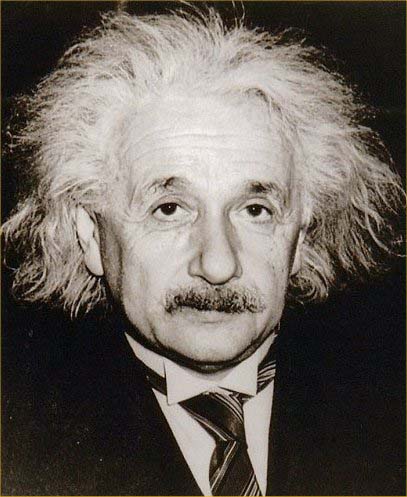
Much of modern science starts with Einstein who first proposed his General Theory of Relativity in 1915. It describes how any massive object, such as the Sun, creates gravity by bending space and time around it. Everything in that space is also bent: even rays of light. Consequently, distant light sources, behind the massive object, can appear in a different position or look brighter than they would otherwise. So the total eclipse of 29th May 1919 gave scientists the chance to test the theory for the first time.
Astronomer Professor Pedro Ferreira from the University of Oxford argued that:- “This first observational proof of General Relativity sent shockwaves through the scientific establishment… it changed the goalposts for physics.”
“Einstein’s assumption agreed beautifully with everything else and allowed him to discover a number of great things so that nobody ever questioned it,” said Bahram Mashhoon, Professor of Physics in the MU College of Arts and Science. “All forces need to be of quantum origin, but Einstein’s general relativity theory, which is the modern theory of gravitation, has not yet been brought into conformity with quantum theory. The modern theories of special and general relativity have their origins in the problems associated with the way electromagnetic waves appear to observers in motion.”
However, scientists at Texas A&M University, in the August 24th issue of Physics contend that – “If it ain’t broke, don’t fix it,” sums up fairly well how many scientists have viewed Einstein’s theory of general relativity. But outside of the gamut of Einsteinian mathematical wisdom – what is his position on how the Universe is ordered? Are his philosophical paradigms coherent with his ideas on science and God? Also, what can we deduce from other scientists who hold religious, philosophical as well as empirical scientific knowledge?
This is the CONNUNDRUM? This is the circle that many astute and learned men have been trying to square since the days of Copernicus, Galileo, Newton & Halley to mention but a mere few names.
So what is the answer?
The New York Times reported that 40% of American scientists believe in a personal God to whom they pray. The numbers in Europe are about the same. It is from this vantage point that we examine the thesis of our discourse by drawing upon the foundational paradigms of Prof. John Polkinghorne – noted former Professor of Mathematical & Quantum Physics at Cambridge who in his mid career became an Anglican priest. His books include Science and Creation, Science and Providence, Belief in God in An Age of Science, Serious Talk: Science and Religion in Dialogue, The Faith of a Physicist, The God of Hope and the End of the World, Exploring Reality, and Quantum Physics and Theology.
As the goodly Professor puts it – “Physics is powerless to establish the rational intelligibility of the Universe… It is often felt that in religion you have faith; in science you have fact, and that no faith is involved in science. That is patently false. All science depends and proceeds on the basis of believing that the Universe is rationally intelligible, you wouldn’t do science if you didn’t believe that. But science itself cannot give it to you.” He describes his view of the world as critical realism and believes that there is “One World”, with science and religion both addressing aspects of the same reality.
Professor Polkinghorne considers that “the question of the existence of God is the single most important question we face about the nature of reality.” He addresses the questions of “Does the concept of God make sense? If so, do we have reason for believing in such a thing?” But he is “cautious about our powers to assess coherence,” pointing out that in 1900 a “competent… undergraduate could have demonstrated the ‘incoherence’” of Quantum ideas. He suggests that “the nearest analogy in the physical world [to God] would be … the Quantum Vacuum.”
He suggests that God is the ultimate answer to Leibniz’s great question “why is there something rather than nothing?” The Atheist’s “plain assertion of the world’s existence” is a “grossly impoverished view of reality,” he says, arguing that “Theism explains more than a reductionist atheism can ever address.” He “does not assert that God’s existence can be demonstrated in a logically coercive way (any more than God’s non-existence can) but that theism makes more sense of the world, and of human experience, than does atheism.”
Freeman Dyson (Professor of Theoretical Physics at the Institute for Advanced Study in Princeton with disciplines in Mathematics and Astronomy, a Futurist, famous for his work in Quantum Mechanics) argue that “the more I examine the Universe and the details of its Architecture, the more evidence I find that the Universe in some sense must have known we were coming” and suggests there is a wide consensus amongst physicists that either there are a very large number of other universes in a multiverse or that “there is just one universe which is the way it is in its anthropic fruitfulness because it is the expression of the purposive design of a Creator, who has endowed it with the finely tuned potentiality for life.”
If epistemology follows ontology according to Professor Polkinghorne, then it is logical to infer that different epistemologies have a relationship of verisimilitude hence the relationship of consonance and assimilation.
Professor Polkinghorne says that he is “believer in the unity of knowledge. There is one world of reality – one world of our experience that we’re seeking to describe. Of course, there are different aspects and levels of that reality; we can encounter the same event in a different way. We could describe it in very physical terms, or as a carrier of beauty, or a moment of moral choice; it could be the moment we encounter God. There are these different layers. But somewhere they’ve all got to fit together. I want to put them together in a way that respects the different characters of each level that I experience, as well as the fact that the experience is of one reality. I want a consonant relationship, for example, between science and theology. Science cannot tell theology how to construct a doctrine of creation, but you can’t construct a doctrine of creation without taking account of the age of the universe and the evolutionary character of cosmic history. I also think we need to maintain distinctions – the doctrine of Creation is different from a scientific cosmology, and we should resist the temptation, which sometimes scientists give in to, to try to assimilate the concepts of theology to the concepts of science. There is a distinction that needs to be maintained.”
As Renaissance shift from the dualistic thinking of Descartes and Newton to the present understanding of reality as one – Einsteinian cosmology helps us to appreciate the role that the general theory of relativity, “that space and time and matter are all linked together, so that the world is relational in that sense. That is a very important development, and many theologians have seen in it a suggestion of the relational thinking of a Trinitarian theology.”
Polkinghorne argues that “the discovery of quantum theory, which has brought about a number of changes in our thinking about the world – suggest that the world is no longer tightly deterministic and mechanical; there is a probabilistic character to physical process. And, of course, quantum theory also has its own relational character. Once two quantum entities interact with each other, they retain a very surprising and counterintuitive power to influence each other, however far they separate. Quantum theory also tells us that the world is not simply objective; somehow it’s something more subtle than that. In some sense it is veiled from us, but it has a structure that we can understand.”
In conclusion, Polkinghorne believes that bottom up thinkers try to start from experience and move from experience to understanding. They don’t start with certain general principles they think beforehand are likely to be true; they just hope to find out what reality is like. If the experience of science teaches anything, it’s that the world is very strange and surprising. The many revolutions in science have certainly shown that. If that’s true of our encounter with the physical world, it’s likely to be even truer of our encounter with God.
@FTC: “Please note that the date for the reading of the BL&P’s Decision has been set for Thursday, January 28, 2010 at 10:00 a.m. at the Lloyd Erskine Sandiford Centre.
The FTC’s site has not yet been updated to reflect this, mind you.
You heard it here first.
Loading…
Georgie Porgie
Mr scientist Sir
The Catholic church did not decide on the canon of the Scripture. That was decided long before the RC organization came into being .
Check your texts on Canonicity or Bibliology.
The tenets that true Christians should adhere to is called in the NT over and over the APOSTLES DOCTRINE! THEY GOT IT FROM CHRIST SIR NOT the RC organization!
What we now call the Baptists were not at the council of Nicea, Sir. Read the Trail of Blood or THE FAITHFUL BAPTIST WITNESS on the origin of the Baptist Church. NO Church History text will tell you that the Baptist Church came out of the RC organization Sir!
The council of Nicea did not decide the doctrine of the trinity either. The council of Nicea was convened to decide a big rift between the followers of Arius and those of Athanasius!
The doctrine of the trinity is in both the OT & NT.
The cornerstone doctrine of true Christianity is not the doctrine of the trinity Sir but THAT JESUS THE CHRIST IS COME IN THE FLESH.
The church rests on the TRUTH THAT JESUS IS THE CHRIST THE SON OF THE LIVING GOD as the Spirit led Peter to say.
Read 1 John and 2 John and you will see that Jesus’ cousin, and his dearest disciple who was present when this was said, stresses this belief as the major test of being a Christian! See chapter 4
Origin of Anglicans. Henry defected. Anglicans sill much like RC’s.
Brethren churches and their several spin offs were started by ex Anglicans. The Brethren are totally Bibliocentric & Christo- centric and demonstrate a total departure from Anglicanism. Check their history. Visit their meetings. Hear their teachings. Read their books and Theology. Check their influence via the notes in the Scofield Reference Bible and Dallas Theological Seminary & Emmaus Bible College etc— totally different. Also the doctrine of Dispensations etc
Baptist church emerged in the open in Germany as the Anabaptists from a life time as the persecuted underground wing of the true church who refused to obey Constantine and merge with the state. Check out their history in Trail of Blood or THE FAITHFUL BAPTIST WITNESS by Phil Stringer.
SDA & JHW emerged from the Baptist church and not the RC organization.
Re Therefore, Baptists, Anglicans, etc unless you have your own version of the Bible and don’t believe in the trinity you are indeed just a derivative of the Roman Catholics
SIR, DENOMINATIONS AND THEIR ORIGINS ARE NOT TAUGHT IN THE BIBLE SIR! Read the NT through and you will see that Sir?
And NO I don’t honestly feel that these denominations just came out of midair Sir. But I can see that you have not studied Church History well OR AT ALL SIR!
Many denominations in Barbados emerged from the Evangelical wing of the Methodist church. The Methodist church was started by ex Anglicans, but again the Methodist church is different from either Anglicans and RC no icons no incense and “so called high church goo!” And the United Methodist Church in the USA is nothing like our Methodist church at home, which is yet a watered down version of the movement stated by the Wesleys.
Are you comfortable with what is being said in your name?
Can you do something about it?
Or are you comfortable that this is your “public facing message”?
Loading…
Zoe
@CH, “Some others pray for the day we all can get past this pathetic part of our reality.”
Yes, C, and I can assure you, it IS not to far ahead to come; the Glorious appearing of our Lord and Saviour, Jesus Christ, BUT, one has to be one of HIS children in Redemption, to awaite the Majestic Glory of His Coming for His True Church!
“I could argue that all matter is alive.”
That depends on what constitutes being ALIVE, means!
“I believe (interesting word!) I can think (another interesting word!) because of the interaction between *particles* collapsing their waves.”
There IS much more than this, behind this so-called naturalist explanation of the brain function, IS something that ANIMATES all of these other biological aspects, without which, NO amount of collapsing can cause US to THINK!
Loading…
Zoe
I am no scientist, but, to put it in simple layman terms, ‘matter’ IS what constitues the the physical realm of all substance; wheras, *spirit* the immaterial aspect, what we cannot see, but can sense, feel, and know, it IS there!
I am also sure, that ‘matter’ cannot be destroyed, i.e., annihilated, cease to exist. Neither can ‘spirit’ be destroyed, i.e., annihilated, THEY both cease to *function* when they are destroyed. As in a vehicle that’s terribly mangled from an accident, BUT, its ‘matter’ physical, machanical, electronic, etc, at still THERE.
Likewise, the *spirit* of man/woman, the REAL us, IS not destroyed, even in Hell, but, rather the original *function* for which were where Created in the first place, ceases to FUNCTION in relation to its Creator, hence, the Bible calls it DEATH, Gk. Thanatos, meaning, ‘separation FROM, or to SEPARATE.
This Greek word ‘Thanatos’ NEVER means ‘annihilation’ or ceasing to exist!
@Halsall, “The rest of your message has no basis in *fact*”
That’s what you think, factual reality in such matters IS way beyond your comprehension! Like how my nieces’ MD Wet, WAS HEALED by Who you don’t believe exist. How DID He do it?
You wouldn’t KNOW, probably NEVER will!
No Science CAN explain IT. Miraculous! That’s FACTUAL!!!
Loading…
Zoe
If matter can be converted into Energy, then IT is not annihilated, is IT?
I have enjoyed our banter over the last few days and I look forward to your comments on the next thread which I hope will prove to be a real storm chaser…
I have learnt so much from you guys – BARBADOS UNDERGROUND should be recognized as a tertiary distant learning adult university institution given the platform it operates on and the level of academic, scholarly and punctilious intelligence displayed on this forum….
Chris, on a personal note – I still believe that you are one of those individual who uses “hybrid logic” to thrash your opponents… It is a subtle strategy and I am beginning to see kinks in your armor… (LOL)
By the way Chris, I still hold firm to the belief that standard modal logic is not expressive enough to capture the intuition that God’s foreknowledge is incompatible with “Human” free will…
Maybe you could provide us with a scientific theoretical equation to prove what you may deem a fallacy?
Thank you for the kind words. I have also enjoyed our interaction, and look forward to future *debate* with you and others.
I also learn from this, and am always willing to admit that I am wrong iff it can be demonstrated conclusively that I am… (smile)
I will agree with you (to summarize) that we puny little humans will never understand enough to be able to say if any particular god(s) exist(s). Within my personal believe system, we simply cannot.
I, personally, believe that we’re all probably almost entirely wrong. But then again, some of us (perhaps all of us) might be at least a little correct…







The blogmaster invites you to join the discussion.