God is subtle but he is not malicious. – Albert Einstein
Many of our astute and learned intellectuals on BU have been waiting patiently for a discourse on this rather voluminous topic since last year. It would be remiss and foolhardy in denying the pivotal role that science plays in our world today – for ever increasing connectivity has never been so necessary to everyday normal human existence.
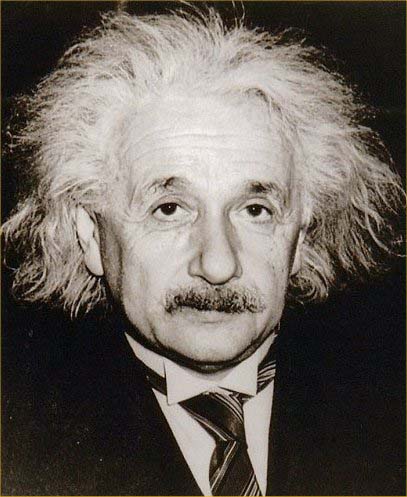
Much of modern science starts with Einstein who first proposed his General Theory of Relativity in 1915. It describes how any massive object, such as the Sun, creates gravity by bending space and time around it. Everything in that space is also bent: even rays of light. Consequently, distant light sources, behind the massive object, can appear in a different position or look brighter than they would otherwise. So the total eclipse of 29th May 1919 gave scientists the chance to test the theory for the first time.
Astronomer Professor Pedro Ferreira from the University of Oxford argued that:- “This first observational proof of General Relativity sent shockwaves through the scientific establishment… it changed the goalposts for physics.”
“Einstein’s assumption agreed beautifully with everything else and allowed him to discover a number of great things so that nobody ever questioned it,” said Bahram Mashhoon, Professor of Physics in the MU College of Arts and Science. “All forces need to be of quantum origin, but Einstein’s general relativity theory, which is the modern theory of gravitation, has not yet been brought into conformity with quantum theory. The modern theories of special and general relativity have their origins in the problems associated with the way electromagnetic waves appear to observers in motion.”
However, scientists at Texas A&M University, in the August 24th issue of Physics contend that – “If it ain’t broke, don’t fix it,” sums up fairly well how many scientists have viewed Einstein’s theory of general relativity. But outside of the gamut of Einsteinian mathematical wisdom – what is his position on how the Universe is ordered? Are his philosophical paradigms coherent with his ideas on science and God? Also, what can we deduce from other scientists who hold religious, philosophical as well as empirical scientific knowledge?
This is the CONNUNDRUM? This is the circle that many astute and learned men have been trying to square since the days of Copernicus, Galileo, Newton & Halley to mention but a mere few names.
So what is the answer?
The New York Times reported that 40% of American scientists believe in a personal God to whom they pray. The numbers in Europe are about the same. It is from this vantage point that we examine the thesis of our discourse by drawing upon the foundational paradigms of Prof. John Polkinghorne – noted former Professor of Mathematical & Quantum Physics at Cambridge who in his mid career became an Anglican priest. His books include Science and Creation, Science and Providence, Belief in God in An Age of Science, Serious Talk: Science and Religion in Dialogue, The Faith of a Physicist, The God of Hope and the End of the World, Exploring Reality, and Quantum Physics and Theology.
As the goodly Professor puts it – “Physics is powerless to establish the rational intelligibility of the Universe… It is often felt that in religion you have faith; in science you have fact, and that no faith is involved in science. That is patently false. All science depends and proceeds on the basis of believing that the Universe is rationally intelligible, you wouldn’t do science if you didn’t believe that. But science itself cannot give it to you.” He describes his view of the world as critical realism and believes that there is “One World”, with science and religion both addressing aspects of the same reality.
Professor Polkinghorne considers that “the question of the existence of God is the single most important question we face about the nature of reality.” He addresses the questions of “Does the concept of God make sense? If so, do we have reason for believing in such a thing?” But he is “cautious about our powers to assess coherence,” pointing out that in 1900 a “competent… undergraduate could have demonstrated the ‘incoherence’” of Quantum ideas. He suggests that “the nearest analogy in the physical world [to God] would be … the Quantum Vacuum.”
He suggests that God is the ultimate answer to Leibniz’s great question “why is there something rather than nothing?” The Atheist’s “plain assertion of the world’s existence” is a “grossly impoverished view of reality,” he says, arguing that “Theism explains more than a reductionist atheism can ever address.” He “does not assert that God’s existence can be demonstrated in a logically coercive way (any more than God’s non-existence can) but that theism makes more sense of the world, and of human experience, than does atheism.”
Freeman Dyson (Professor of Theoretical Physics at the Institute for Advanced Study in Princeton with disciplines in Mathematics and Astronomy, a Futurist, famous for his work in Quantum Mechanics) argue that “the more I examine the Universe and the details of its Architecture, the more evidence I find that the Universe in some sense must have known we were coming” and suggests there is a wide consensus amongst physicists that either there are a very large number of other universes in a multiverse or that “there is just one universe which is the way it is in its anthropic fruitfulness because it is the expression of the purposive design of a Creator, who has endowed it with the finely tuned potentiality for life.”
If epistemology follows ontology according to Professor Polkinghorne, then it is logical to infer that different epistemologies have a relationship of verisimilitude hence the relationship of consonance and assimilation.
Professor Polkinghorne says that he is “believer in the unity of knowledge. There is one world of reality – one world of our experience that we’re seeking to describe. Of course, there are different aspects and levels of that reality; we can encounter the same event in a different way. We could describe it in very physical terms, or as a carrier of beauty, or a moment of moral choice; it could be the moment we encounter God. There are these different layers. But somewhere they’ve all got to fit together. I want to put them together in a way that respects the different characters of each level that I experience, as well as the fact that the experience is of one reality. I want a consonant relationship, for example, between science and theology. Science cannot tell theology how to construct a doctrine of creation, but you can’t construct a doctrine of creation without taking account of the age of the universe and the evolutionary character of cosmic history. I also think we need to maintain distinctions – the doctrine of Creation is different from a scientific cosmology, and we should resist the temptation, which sometimes scientists give in to, to try to assimilate the concepts of theology to the concepts of science. There is a distinction that needs to be maintained.”
As Renaissance shift from the dualistic thinking of Descartes and Newton to the present understanding of reality as one – Einsteinian cosmology helps us to appreciate the role that the general theory of relativity, “that space and time and matter are all linked together, so that the world is relational in that sense. That is a very important development, and many theologians have seen in it a suggestion of the relational thinking of a Trinitarian theology.”
Polkinghorne argues that “the discovery of quantum theory, which has brought about a number of changes in our thinking about the world – suggest that the world is no longer tightly deterministic and mechanical; there is a probabilistic character to physical process. And, of course, quantum theory also has its own relational character. Once two quantum entities interact with each other, they retain a very surprising and counterintuitive power to influence each other, however far they separate. Quantum theory also tells us that the world is not simply objective; somehow it’s something more subtle than that. In some sense it is veiled from us, but it has a structure that we can understand.”
In conclusion, Polkinghorne believes that bottom up thinkers try to start from experience and move from experience to understanding. They don’t start with certain general principles they think beforehand are likely to be true; they just hope to find out what reality is like. If the experience of science teaches anything, it’s that the world is very strange and surprising. The many revolutions in science have certainly shown that. If that’s true of our encounter with the physical world, it’s likely to be even truer of our encounter with God.
1. Science and Faith are not incompatible. Quite the opposite, in fact.
2. One of the differences between Science and Faith is those who subscribe to the Scientific Methodology are always questioning themselves and what they believe to be true.
2.1. The Scientific Methodology relies upon *independently* *verifiable* evidence for the believe structure. I.E. if it can’t be measured (directly or indirectly) by *everyone*, it doesn’t count.
3. Practitioners of the Scientific Methodology are always willing to be proven wrong.
4. As I’ve said before, because nothing can be proven (outside of mathematics) no true Scientist can be an atheist.
“The natural attitude of a thinking mind towards the *supernatural* is that of *skepticism*, NOT agnosticism. The skeptic halts at the cross-roads, to take his bearings; BUT, at the sight of a cross-road, the AGNOSTIC gives up his journey altogether. True skepticism connotes intellectual caution, BUT, agnosticism IS intellectual suicide.” (Sir Robert Anderson, In Defense)
CH, as Dictionary would so aptly assert:
“Consistently applying the Worldview test: (1) factual adequacy [I.e., explanatory scope relative to the material facts; [2] Logical coherence, and [3] explanatory power [relative simplicity, predictive/descriptive accuracy, and comprehensive unity of THOUGHT!”
‘Warranted, Credible, Truth’ (WCT), to best possible explanation.’
@Mr. Georgie Porgie (probably not his real name): “Do you fear the scriptures halall and the claims it makes on your life?
Not at all.
Nor any other scared texts.
Although I would like to know what tests they provide which can be independently verified.
In fact, I believe I asked you previously a question with regards to the scriptures which you never answered.
Perhaps you will now.
What do the scriptures say about the “double slit experiment”?
@All: This has to do with Quantum Uncertainty, which is part of this thread.
Loading…
Zoe
@CH, Jan 13 @ 1:27PM
“The agnostic position is the purist possible.”
The Agnostic View.
Agnosticism holds that one cannot know whether God exist or not. It neither denies nor affirms the existence of God. A Gnostic is “a knowing one”, who says “I know all”. An Agnostic is one who says “I cannot know” or “I know nothing” This view holds that we CANNOT have knowledge as to the existence or nature of God and the universe. It IS WILFULL IGNORANCE. (Acts. 17:23)
The Arguments for the Existence of God.
1. The Cosmological Argument
2. The Teleological Argument
3. The Anthropological Argument
4. The Ontological Argument
5. The Moral Argument
6. The Biological Argument
7. The Historical Argument
8. The Christological Argument
9. The Bibliological Argument
10. The Argument from Congruity
The word “congruity” means agreement, correspondence, harmony.” The nine previous arguments are ALL in *agreement*. There IS *correspondence* and *harmony* between them ALL. There IS NOT one argument presented in these cluster of arguments, which brings a discordant note, BUT, all together they form a *HARMONIOUS* whole. This IS argument from *Congruity*. The FACT that the Cosmological, Teleological, Anthropological, Ontological, Moral, Biological, Historical, Christological and Bibliological arguments ALL blend together in a *HARMONY*, constitutes the argument from Congruity. It states concerning the existence of God, that it if is not so, then all these related FACTS are inexplicable. Belief in the existence of a self-existent Personal God, IS in HARMONY with ALL the facts of man’s mental and moral nature, as well as with the nature of the material universe. Man, IS, therefore, left totally without EXCUSE as to the fact of God’s existence. It IS only wilful *Ignorance* that would reject such conclusive evidence.
Also, those holding to Non-Christian views of God, such as:
Pantheism, makes nature god and misses the Almighty God of nature.
Materialistic Pantheism, makes matter eternal, and misses the Almighty God who MADE matter.
Hylozoism, makes a principle of life god, and misses the Almighty God WHO IS the source of LIFE.
Neutralism, makes some neutral substance god, and misses the Almighty God, the Creator of ALL substance.
Idealism, makes the mind god, and misses the Almighty God, WHO IS a real Person, having a perfect mind.
Philosophical Mysticism, makes man himself god, and misses the Almighty God, who MADE all men.
Pantheism, makes all god, and misses the Almighty God of ALL.
Polytheism, makes many gods, and misses the One True Almighty God.
The Atheist, says there is no god, and thus sets himself up as God.
The Agnostic, says he cannot know whether God exist, and thus makes wilfull IGNORANCE his God.
(The Foundations of Christian Doctrine, pp. 43, 44, 46, 47) emphasis added.
CH, continue on in your *purist* illusion of reality, or….is it just… wilfull ignorance…on your part…!?
@Zoe… My apologies. My immediate above was overly harsh.
Let me please speak to your statements:
@Zoe: “The Agnostic, says he cannot know whether God exist, and thus makes wilfull [sic] IGNORANCE his God.
Incorrect.
The Agnostic knows that no one can *know* the truth.
Therefore, the Agnostic is willing to accept every possibility as *possibly* correct.
But, equally important, the Agnostic is also willing to accept every possibility as *possibly* incorrect.
Thus my claim that Agnosticism is the purest position possible.
For what that’s worth.
Loading…
Zoe
@C Halsall,
When the true adults were talking, Dic and GP, re cogent, well warranted FACTS and EVIDENCE, based upon Factual Adequacy, Logical consistency, and Empirical Adequacy, using TRUE science, across the range of systematic consistency, YOU were conspicuiously SILENT, now you come back here with your Agnostic NONSENSE, couched in pseudo-scientific jargon!
In the New York Times (Oct.10th 1995) that the National Aeronautics and Space Administration had just announced that its “deep space” radio telescopes in California and New Mexico had obtained the first clear images ever recorded of a star being born in the Milky Way. Wrapped in a thick cloud of gas and in-falling dust, the infant star had not yet ignited through nuclear fusion. It was also small, about half the size of our Sun, and by cosmic standards stood very close – a scarce 800 light years distant from Earth in the direction of the constellation Aquila. Such “protostars,” we were told, enable scientists to understand the dynamic forces that once generated a solar system like our own. Nascent stars, in fact, are a cosmic commonplace. As the Times reporter put it, “While other stars are aging and collapsing in death, with a bang or a whimper, the universe is always replenishing itself with new stars.”
That new star, of course, will be only one of 50 to 100 billion in the Milky Way. Nothing special. Moreover, another article in the Times a few months later (Jan.15, 1996) reported that the Hubble Space Telescope’s probes into far out space had revealed that the number of galaxies had just increased five-fold over the previous count. Astronomers used to think there were some 10 billion galaxies; now the number is estimated to be about 50 billion of them, extending across some 300 billion billion light years of ever-expanding time-space.
What, I ask myself, is the effect of post-Einsteinian cosmology on my spiritual practice – and by that I mean both the inward work of prayer and contemplation as well as the outward work of social action? Does the expanding, replenishing universe of the big bang, black holes, and “dark matter” make a real difference to the way in which we believers pray and work?
News of the birth of new stars or of the size of galactic space can be both fascinating and intimidating. It begets both awe and a shudder down the spine. Why so? At both the macroscopic and microscopic scales, as poet Czeslaw Milosz puts it, current scientific research is making space and time “as sublime and magical as a fairy tale about elves.” Carl Sagan and Stephen Hawking may be hardened to black holes and quantum weirdness, but for the rest of us who understand very little about the mathematics of quantum mechanics or general relativity, talk about the birth of stars and galaxies, like talk about subatomic particles that are found in two places at once, can send us a bit over the edge. Such talk has something “too much,” even numinous about it – as if this strange cosmos remains a metaphor for the uncanny otherness of the Creator.
But let us not exaggerate. One can make too much of the latest deliverances of a nuclear accelerator and too much of news from the Hubble Space Telescope. Neither one will save your soul – contrary to what certain New Agers seem to think. Cosmology in the modern, technical sense is not to be confused with the premodern concept of cosmology – and the distinction ought to be borne in mind.
The highly dramatic cosmologies of the Babylonians, Israelites, and Aztecs spanned what we think of as philosophy, science, and religion and thus had room in them for creation stories, battles with dragons, and the release of an oppressed people from captivity.
In contrast, cosmology as it is presently conceived by scientists refers to a subfield of physics having to do with theories about the origin, evolution, and present physical structure of the universe (e.g., “steady-state” or big-bang theories, accounts of the formation of galaxies, etc.). Grand unified theories in physics, which sound as though they ought to approach a premodern concept of cosmology, thereby unifying everything in the whole universe, do nothing of the sort. In fact they leave out almost everything above the level of an electron.
Loading…
Zoe
@Halsall,
“There is power in silence.”
Yes, when one KNOWS, in your case, it IS a lack of cogent, congruious, factual evidence, hence your SILENCE!
When, you do speak, IT IS laced in ARROGANCE…and ignorance!
“The fear of the LORD, IS the beginning of wisdom.” (Prov. 9:10) or, appearing in another form:
“The fear of the LORD IS the beginning ( or principle part) of knowledge.” (Prov. 1:7).
Coming through the diversity of examples time and again, are such truths as these:
1. Wisdom (the ability to jude and act according to God’s directives) IS the most valuable asset.
2. Wisdom IS available to anyone, BUT, the price IS high.
3. Wisdom originates in God, NOT SELF, and comes by attention to instruction.
4. Wisdom and Righteousness go together. It IS good to be WISE, and it IS wise to be GOOD.
5. Evil men suffer the consequences of their evil deeds.
6. The simple, the FOOL, the lazy, the IGNORANT, the PROUD, the profligate, the sinful are NEVER to be admired.
Many powerful contrast are found in the Book of Proverbs, again and again. Antithests helps to clarify the meaning of key words. Among the ideas set in vivid contrast with each other are:
Wisdom versus Folly
Righteousness vs Wickedness
Good vs Evil
Life vs Death
Prosperity vs Poverty
Honour vs Dishonour
Permanence vs Transience
Industry vs Indolence
Friend vs Enemy
Prudence vs Rashness
Fidelity vs Adultery
Peace vs Violence
Goodwill vs Anger
GOD vs MAN.
The Call of Wisdom
“Wisdom CALLS aloud outside; she raises her voice in the open square. She cries out in the chief concourses, At the opening of the gates in the city. She speaks her words: How LONG, you SIMPLE ones, will you love SIMPLICITY? For SCORNERS delight in their SCORNING, And FOOLS hate KNOWLEDGE. Turn at my rebuke; Surely I will pour out My spirit on you; I WILL make My words KNOWN to you. Because I have CALLED and YOU have refused, I have stretched out MY HAND and no one regarded. Because YOU disdained ALL my counsel, And would have NONE of My rebuke, I will LAUGH at YOUR calmity; I will mock when your terror comes, When your terror comes like a storm, And YOUR destruction comes like a whirlwind, When distress and anguish comes upon YOU. Then they (unbelievers) will call on Me, but I will NOT answer. They will seek Me diligently, BUT they will NOT find Me. Because they *HATED* knowledge, And did NOT choose the fear of the LORD. They would have NONE of My counsel, And DESPISED My every rebuke. Therefore they shall eat the fruit of THEIR OWN way, And be filled to the full with their OWN FANCIES. For the turning away of the simple will slay them, And the complacency of FOOLS will destroy them. But, whoever LISTENS to Me will dwell in safely, And will BE SECURE, without fear of evil.” (Proverbs 1:20- 33) emphasis added.
The Value of Wisdom
“My son, if you receive My words, And treasure My commands within you, So that you INCLINE your EAR to wisdom, And apply your HEART to understanding; Yes, if you cry out for discernment; And lift up your voice for UNDERSTANDING, If you seek her as silver, And search for her as for hidden treasure; THEN you will UNDERSTAND the fear of the Lord, And FIND the knowledge of God. For the Lord gives wisdom; From His mouth come knowledge and understanding; He stores up sound wisdom for the upright: He IS a shield to those who walk upright; He guards the paths of justice. And He preserves the way of HIS SAINTS. When WISDOM enters your heart, And KNOWLEDGE is pleasant to your soul, Discretion will preserve you; UNDERSTANDING will keep you, To deliver you from the way of Evil.” (Proverbs 2: 1-8- 10) emphasis added.
CH, you don’t have a clue what TRUE *knowledge* IS about!!!
The cosmology of classical Newtonian physics provides an excellent example of this. In some respects it is consonant with at least some features of Christian theology; in other respects it is profoundly dissonant.
(For Newton’s science and its cultural impact, see Timothy Ferris, Coming of Age in the Milky Way [New York: Doubleday Anchor, 1988], 104 – 22. Also Ilya Prigogine and Isabelle Stengers, Order Out of Chaos: Man’s New Dialogue with Nature (New York: Bantam, 1984), 27–99).
Consider, for instance, the Newtonian order of nature. After decades of internecine religious warfare, what the benevolent despots of seventeenth- and eighteenth-century Europe wanted above all was a model of constancy, a sense of nature’s utter regularity. Newton gave that to them – and thus (though this was not his intention) he incidentally gave them a model for their societies. The macrocosmic universe, he discovered, is bound by rigid, deterministic laws of motion – which to Newton’s Calvinist mind proceeded from the fiat of God’s omnipotent will. From both a religious and a secular angle, the attraction of this account lay in its picture of the utter dependability and stability of nature’s big inert structures – which seemingly work with the clocklike regularity of a pendulum, whose every instant is the integral repetition of the preceding instant. Newton’s invariant nature could thus be seen as the bona fide of a timeless and trustworthy deity.
In fact, Newtonian laws and their subsequent analogues in contemporary physics (e.g., Clerk Maxwell’s equations for electromagnetism) continue to serve this ancillary cultural function. They remain universally in force in 1996, and presumably always have been and will be. If you want to send a satellite to photograph the planet Jupiter, you still have to rely on Newton’s inverse square law of gravity.
In the minus department, however, the ingenious Lawgiver who (at least for the theistic Newton) stands behind such laws is not the Holy One that Jews and Christians worship as immanent in all creation and “closer to us than we are to ourselves.” Rather, it is the Absentee Landlord of deism. For once Newton’s God creates the cosmic machine, it will run by itself – and God can retire. The otherness of God thus becomes an abyss no longer crossable by means of nature. For an inert, mechanistic landscape is not semiotic, a set of numinous signs, as the medieval material world had been; it is a silent expanse that signifies nothing and of which we can hardly feel ourselves a part. All analogy or kinship of being is broken – and we are effectively shut out (or shut up within our own bag of skin).
In such a world, one can no longer contemplate the elements, the stars, or any other feature of nature, as Ignatius Loyola did, and expect to taste and touch the Spirit immanent in these things.
What Newtonian cosmology suggests is a Great Engineer who constructs the cosmic clockworks, but thereafter retreats beyond the heavens, sealed off from creation and thus inevitably superfluous in history and daily-life. (Thanks to David S. Toolan – Praying in a Post-Einsteinian World)
I remember also that the Heisenberg Uncertainty Principle dealt with this duality and related the error in knowing the position of the electron and the error in knowing its momentum with Planck’s constant.
Like Young’s experiment, the existence of the electron is not at issue, just its appearance as a wave or electron at a moment in time. It is just that it is impossible to both know where it is and what momentum it has at that point in time.
@CH
“What do the “scriptures” say about the double slit experiment?”
I was hoping that I wouldn’t have to touch this rather ridiculous question – however, let’s have a swing at it, because there is wisdom even in folly according to the wise man Solomon
First of all, I opened and closed quotation marks around the word “scriptures” as a point of emphasis!!!
Could you be more specific about what “scriptures” you are referring to, as you used a common “s” to denote or insinuate that there may be a myriad of supposed enlightened texts from which an empirical answer could be gleaned or drawn???
Finally, is the “wave-like” nature of reality hidden (according to this theory) from GOD* or from MAN*???
Can you support your answer from the BIBLE* – The Holy “S”criptures and from “empirical scientific data???
Proponents of Quantum Mechanics used human theory to dispel the Omniscience of JEHOVAH God* by trying to utilize “slick” theoretical gobble-de-goo…
But these arguments fall to pieces in the light of the revealed Word of God…
We are reminded that God knows all things – both in the HEAVENS* & in the earth and even under the earth (what Hollywood calls – the UNDERVERSE)*
“God has perfect knowledge of us, and all our thoughts and actions are open before him. It is more profitable to meditate on Divine truths, applying them to our own cases, and with hearts lifted to God in prayer, than with a curious or disputing frame of mind. That God knows all things, is omniscient; that he is every where, is omnipresent; are truths acknowledged by all, yet they are seldom rightly believed in by mankind. God takes strict notice of every step we take, every right step… He knows what rule we walk by, what end we walk toward, what company we walk with. When I am withdrawn from all company, thou knowest what I have in my heart. There is not a vain word, not a good word, but thou knowest from what thought it came, and with what design it was uttered. Wherever we are, we are under the eye and hand of God. We cannot by searching find how God searches us out; nor do we know how we are known. Such thoughts should restrain us from sin. (Ps 139:7-16)
Loading…
Zoe
@ C Halsall,
You continue to ask this silly question:
“Let me please repeat .”
“What do the Scriptures say about the double slit experiment.”
“By by Him (Jesus Christ) ALL THINGS were CREATED that ARE in heaven and that ARE on the earth, visible and invisible (protons, etc, etc) whether thrones or dominions or principalities or powers. ALL THINGS were CREATED through Him and for Him. And He IS before (eternal existence) ALL THINGS, and in Him ALL THINGS consist.” (Are held together by His Eternal Power) (Col. 1; 16,17) emphasis added.
The Lord Jesus Christ, holds the SUN in the palm of His Hand, like an ATOM!
And, IF…His Father, Almighty God…moves His little FINGER…the UNIVERSE TREMBLES!!!
The double slit experiment…Halsall..Man..go and play with your marbles…!!!
Loading…
kiki
Eyes of needles are often notoriously small and difficult to thread, leading to an aphorism used in the religious texts of Judaism, Christianity, and Islam. These aphorisms are based on the impossibility of passing a large object or animal through the eye of a needle.
Judaism:
They do not show a man a palm tree of gold, nor an elephant going through the eye of a needle.
+
The Holy One said, open for me a door as big as a needle’s eye and I will open for you a door through which may enter tents and [camels?]
Christianity:
…I tell you the truth, it is hard for a rich man to enter the kingdom of heaven. Again I tell you, it is easier for a camel to go through the eye of a needle than for a rich man to enter the kingdom of God.
Islam:
To those who reject Our signs and treat them with arrogance, no opening will there be of the gates of heaven, nor will they enter the garden, until the camel can pass through the eye of the needle: Such is Our reward for those in sin.
Brian Greene in his book “The Fabric of the Universe describes the experiment in this way:-
“A simple version of the quantum eraser experiment makes use of the double-slit set up, modified in the following way. A tagging device is placed in front of each slit; it marks any passing photon so that when the photon is examined later, you can tell through which slit it passed…when this double-slit-tagging experiment is run, the photons do not build up an interference pattern.”
The quantum eraser asks, “What if just before the photon hits the detection screen, you eliminate the possibility of determining through which slit it passed by erasing the mark imprinted by the tagging device?”
The delayed-choice quantum eraser, Greene describes it thus:
“It begins with [the set-up of the quantum eraser], modified by inserting two so-called down converters, one on each pathway. Down-converters are devices that take one photon as input and produce two photons as output, each with half the energy (“down converted”) of the signal. One of the photons (called the signal photon) is directed along the path that the original would have followed toward the detector screen. The other photon produced by the down-converter (called the idler photon) is sent in a different direction altogether. On each run of the experiment we can determine which oath a signal photon takes to the screen by observing which down-converter spits out the idler photon partner. And once again, the ability to glean which-path information about the signal photons– even though it is totally indirect, since we are not interacting with any signal photons at all– has the effect of preventing an interference pattern from forming.”
Again Greene ask – “ What if we manipulate the experiment so as to make it impossible to determine from which down-converter a given idler photon emerged? What if, that is, we erase the which-path information embodied by the idler photon? Well, something amazing happens: even though we’ve done nothing directly to the signal photons, by erasing which-path information carried by their idler partners we can recover an interference pattern from the signal photons?”
“Does this erasure of some of the which-path information– even though we have done nothing directly to the signal photons– mean that the interference effects are recovered? Indeed it does– but only for those signal photons whose idler photons [had their which-path information erased]…If we hook up equipment so that the screen displays a red dot for the position of each photon whose idler photons [had their which-path information erased] and a green dot for all others, someone who was color-blind would see no interference pattern, but everyone else would see that the red dots we arranged with bright and dark bands– an interference pattern.”
SO NOVICES, SKEPTICS & OTHER ALIEN LIFE FORCES TRIES TO USE THE ARGUMENT – “The reason is because knowledge of the outcome seems to effect the outcome…”
This is because there are no ways to passively measure both the velocity and the position of a particle without affecting it.
The same thing with electromagnetic phenomena – your measurement will mess with what you’re measuring.
However, this wouldn’t be an empirical limitation if it say for example you happen to do it in virtual reality (e.g. God’s Mind).
James Studer argues in Consciousness & Reality that:- “The 70th anniversary of the Heisenberg Principle gets us closer to what the electron means. The principle says that we cannot measure both the position of the electron and its velocity at the same time; the electron is inherently uncertain, or more forcefully, intrinsically indeterminate. It shows in the world only by what is called statistical probabilities. Underpinning all higher-order connected sciences, it concerns particles so tiny that we can only imagine them. Its nature in ultimate mystery is taken here for cash, and will show what it does in ordinary experience that funds spiritual life.”
“The pioneer physicists announced this bizarre principle only after exhaustive experiment. Werner Heisenberg, baffled at the anomaly, exclaimed, “I repeated to myself again and again the question: Can nature possibly be as absurd as it seemed to us in these atomic experiments?” Niels Bohr replied that understanding could come only by creating a new framework of meaning and language. (Werner Heisenberg, Physics and Philosophy: The Revolution in Modern Science (New York: Harper & Row, 1958), 42. Niels Bohr, Essays 1933-57 on Atomic Physics and Human Knowledge (New York: John Wiley and Sons, 1958), 67).
To cast its influence “upward” into our material world, subatomic activity must convert indeterminacy into determinacy. But how? As John Polkinghorne says, this question has puzzled science for seventy years.” (See John Polkinghorne, “The Quantum World,” in Physics, Philosophy, and Theology: A Common Quest for Understanding, ed. Robert J. Russell, William R. Stoeger, George V. Coyne (Vatican City: Vatican Observatory, 1988), 336.)
“The more free in spirit we are as human, the more the divine presence can unite with us. We relate to this divine first as individuals, and there we find that pursuing God without regard for self establishes full personal identity and security. Divine empowerment can overwhelm all exaggeration of ego. The Journey flourishes in eternal completion. In the same identity in freedom, we counter hostility as we become enabled to love and to serve our neighbor. The God whom we identify in our inner experience – as well as in response to the question, “Why is there something instead of nothing?” – is the eternal Lover who responds to our transcendent yearning to live forever in fulfillment.”
“God does not “deign to create us from on high” and then merely to associate with us, albeit closely. We are God’s love affair, and our immortality is divine poetry. As the mystics know, we are “the throne of God’s glory,” and when we lose ourselves in the divine, we become most truly found. We have not wasted our studies in the nature and soaring implications of incarnation. The original divine egg has hatched into the self-reflective creature that can return the divine love given. God “dreams for us much more,” and the divine hope for creation becomes our own.”
Loading…
Hopi
What a shame to say that much of modern day science starts with Einstein. Before there was an Einstein, the ZULUS knew that “Time & Space” were the same.
Before one binocular was ever made the Dogon were mapping out the stars with their minds.
The Black Ancients built Pyramids to align with the stars.
The Ancients interfaced with the CREATOR thru their minds and thru nature and there was no need to question the CREATOR, no need for an intercessor i.e. Jesus Christ or the Pope!
btw…..A ‘THOUGHT’ travels faster than the speed of LIGHT!
@Terence M. Blackett: “To cast its influence “upward” into our material world, subatomic activity must convert indeterminacy into determinacy.
Only once it is observed; measured. Is the cat alive, or is it dead? It is called collapsing the wave function.
Run the experiment again. Can you predict the outcome absolutely? By definition, no — no matter how many previous samples you have. But you can make a guess based on statistical probabilities.
Be thankful for Quantum Uncertainty. It is why you can think. (Read Roger Penrose’ s “The Emperor’s New Mind”.)
However — and importantly — this is only one example of why not all is knowable by we pathetic little humans.
Ergo, I take some exception to those who try to tell others that they *know* that only their god is.
@BU.David: “Our last comment stand. What believers advocate or not does not change our starting position, it requires faith to believe in a God, period.
Hmmm… I detect emotion…
However, to speak to your above:
1. Yes, it requires faith to believe in a (particular) God.
2. It also requires faith to not believe in a (particular) God.
3. There are many Gods.
4. Why the anger?
Loading…
kiki
Revelation 21:6 (KJV)
And he said unto me, It is done. I am Alpha and Omega, the beginning and the end. I will give unto him that is a thirst of the fountain of the water of life freely.
+
“Mind Playing Tricks on Me” heavily samples Isaac Hayes’ song “Hung Up On My Baby” from the soundtrack of the 1974 film Tough Guys (also known as Three Tough Guys).
Hung Up On My Baby










The blogmaster invites you to join the discussion.