



Submitted by Observing
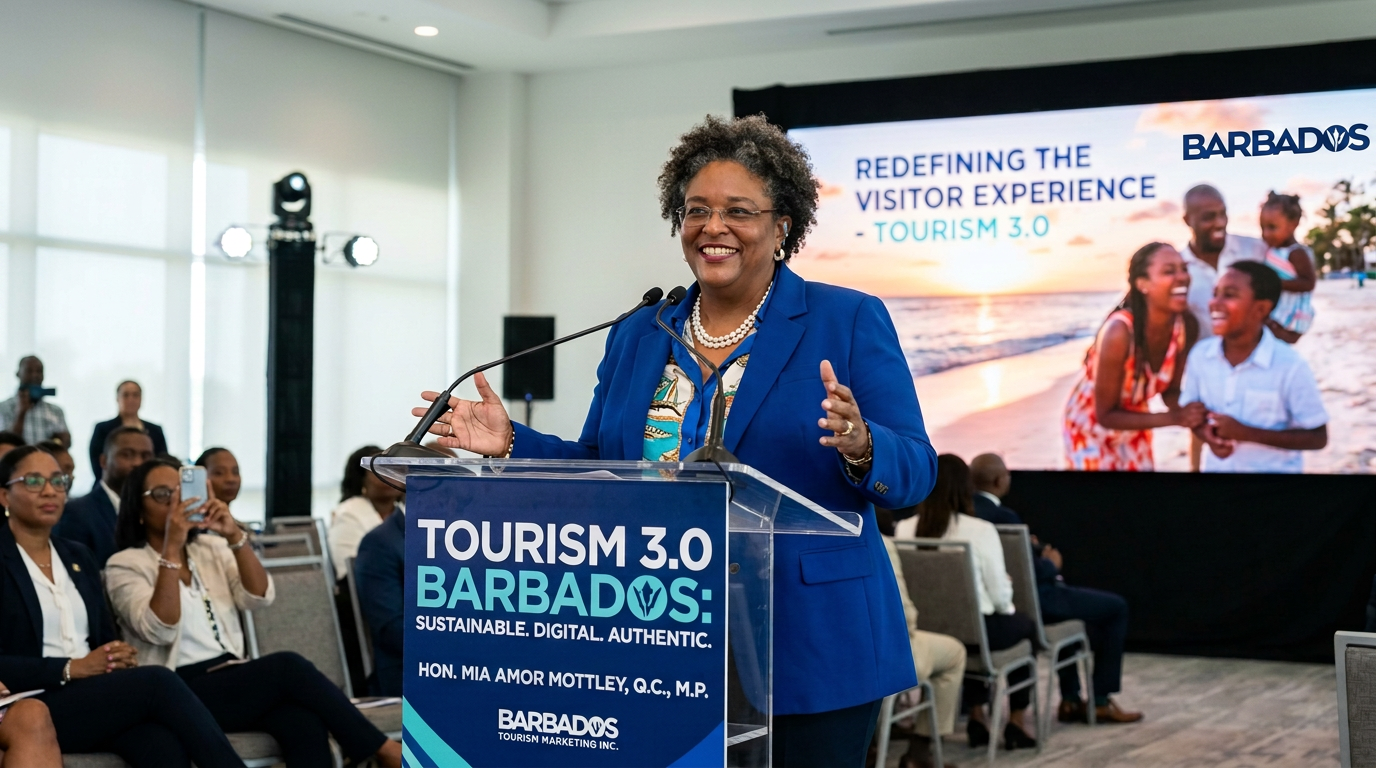
A recent Barbados Today article quoted the Prime Minister as saying that Barbados had completed its economic rehabilitation and was entering a new phase of tourism-driven growth, branded as “Tourism 3.0”. Let us walk this back for a minute.
During the economic expansion of the 1990s, Barbados saw major capital projects, increased foreign investment and an approach that often seemed to favor selling land to the highest bidder. At the same time, regional CSME integration was promoted, and repeated promises were made to diversify the economy, reduce our dependence on tourism and move towards renewable energy. Meanwhile, the country itself was changing.
The internet and foreign media reshaped culture. Marijuana use became more visible. PSVs multiplied. Gated communities expanded. Concerns grew about discipline, inequality, weakened institutions and declining social standards. Other cultures started to creep in an cement themselves.
Fast forward to 2008. A new government, and by 2010 a new Minister of Finance. This Minister of Finance took over during time of recession and robustly defended his every action. He held that portfolio for eight (8) years continuously and is unanimously seen as the face of any national financial or economic fall-out. The term the Lost Decade was coined and the 2018 elections clearly established how Barbadians felt.
Then came another government. This new one empowered by 30-0 promised to fix the mess, transform the economy, reform education, modernise government and move Barbados towards renewable energy by 2030. This along with integrity legislation, modernization, digitization, transparency, public consultancy and accountability. So, what have we seen?
More borrowing. More high-end projects. More hotels. More luxury development. Real estate increasingly beyond the reach of ordinary Barbadians. Continued dependence on foreign investment and little visible evidence that genuine diversification of the economy is anywhere near.
Yes, tourism creates jobs. Yes, hotels can support farmers, manufacturers, artists and service providers. But dependence on a larger tourism sector and higher hotels is not a diversified economy. More hotel rooms do not necessarily mean transformation. Promises of integration do not lead to prosperity for service workers and providers. Calling the basket “Tourism 3.0” does not change the number of eggs inside it.
Socially, the internet has become social media, instant outrage and permanent distraction. Marijuana may not be fully legal, but in some places it may as well be. Crime is treated by some as a second income. Implementation deficits continue. Policies are launched, photographs are taken pamphlets are printed while real delivery and visible impact typically remains paused.
Accountability is regularly discussed and hardly ever enacted. “Who you know” and “who you support” increasingly appear to matter more than what you know, what you have achieved or whether the decision makes sense. Competence may still make the shortlist, but connections determine the results long before the interview.
And in one of politics’ more entertaining twists, that former Minister of Finance who carried much of the blame for the so-called Lost Decade is now a Senior Minister in the government that said he wrecked the country.
Foreign entities and wealthy individuals remain free to pay the piper, acquire the property and help choose the tune. Ordinary Barbadians are then encouraged to celebrate the investment and hope that prosperity eventually travels beyond the gates.
Perhaps Tourism 3.0 will be different.
Perhaps the promised linkages with agriculture, culture, technology and local enterprise will finally become measurable realities.
Perhaps I am fooling myself.
But after decades of familiar promises and revised versions of the same economic strategy, scepticism and shrugged shoulders should not be mistaken for negativity. It’s just plain old reality.
Good luck to that basket.
Good luck to those eggs.
God help us.




The blogmaster invites you to join the discussion.