Banner promoting anonymous crime reporting with a phone and contact number 1 800 TIPS (8477), featuring the Crime Stoppers logo and a QR code for submitting tips.

← Back

Your message to the BLOGMASTER was sent

The first part of this two-part series addressed stopping the flow of new criminals from our secondary schools. This may be done by rearranging the secondary school curriculum to teach the easier-to-learn material first, so that all students may understand at the same time – the current system gives an artificial advantage to those who learn it earlier than normal. This second part addresses training persons who are vulnerable to criminality to make money legally.

Since we unnecessarily harmed most of our students in the current school system by not teaching at their (the true normal) pace, we are responsible for making them whole. This may be done by: (i) extending the age when Barbadians may take CXC and CAPE exams without costs, (ii) encouraging the apprenticeship system in all trades, (iii) training persons how to start and grow profitable businesses and (iv) stopping the corrupting no-bid Government contracts. Each of these are discussed below.

ACADEMIC CERTIFICATES.

Our students who happened to understand the information later should never have been penalised-for-life because they could not keep up with those who happened to understand it earlier. They should never have been required to keep up to a teaching pace designed for a few early-learners.

To make them whole after they have left school, they should be allowed to study on their own and take the exams when they are ready. This would require taxpayers to pay their exams fees – which is the least that we can do. All past students should be encouraged to read the relevant text books and take the exams when they are ready.

APPRENTICES.

Those who wish to learn a trade should apprentice with those who mastered the trade. That is how trades used to be learnt, but we abandoned this proven method of training for a harmful method that has not benefitted Barbados.

Rather than paying master tradespersons with their trainee-apprentices as before, contractors tend to pay skilled artisans and then hire labourers who are expected to remain as labourers. No one should remain in the same station for the rest of their lives – there should be growth.

Many labourers tend to become dissatisfied with that low station and try to learn by observation. However, competence does not come from watching, but from practice under supervision – which is the apprenticeship system. Companies should stop hiring labourers and let master tradespersons hire their own apprentices.

PROFITABLE BUSINESSES.

All former (and senior) secondary school students should be trained how to start and grow profitable businesses with little to no start-up capital. This may be done in practical workshops where participants actually start their businesses to obtain another source of income – preferably being paid in foreign currency. Such practical workshops should be taught across Barbados.

Many different workshops have been tried for decades and failed. Jesus explained why. “A disciple is not above his teacher, but everyone who is perfectly trained will be like his teacher.” (Luke 6:40)

In a practical workshop, if teachers are teaching things they have not done, their students will likely have similar accomplishments. If the aims of a workshop are for participants to: (i) create innovative and marketable products and (ii) earn foreign currency that is a minimum of 30% of their total earnings, then workshop trainers should have achieved those aims before teaching them.

FAIR MARKET.

Good initiatives tend to be frustrated in a corrupt market. The normal evidence of a corrupted market is corrupting no-bid contracts. Such contracts normally: (i) disqualify competent companies, (ii) reward the least competent companies and (iii) force taxpayers to pay significantly more than the actual value of a fair contract – leaving potential customers (the public) with less disposable income to support new businesses. Thus ends this two-part series.

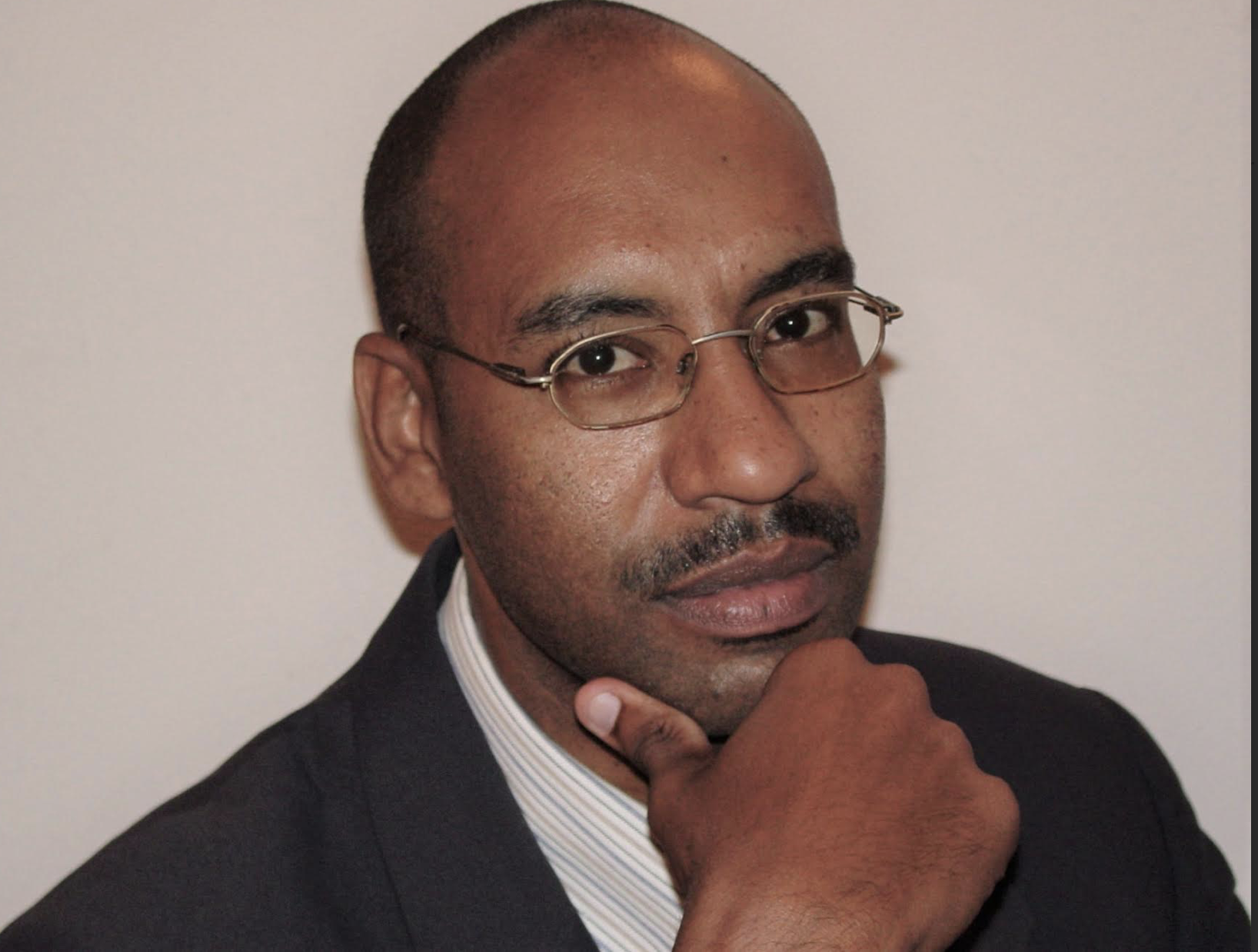
Grenville Phillips II is a Doctor of Engineering, Chartered Structural Engineer and President of Walbrent College. Dr Phillips is the current winner of the National Innovation Competition and teaches workshops on starting profitable businesses with little to no start-up money. He can be reached at NextParty246@gmail.com


Discover more from Barbados Underground

Subscribe to get the latest posts sent to your email.

16 responses to “Cultivating Criminals – Part 2”


  1. “The conformist is not born. He is made. I believe the brainwashing process begins in the schools and colleges.”

    “In times of rapid change, experience could be your worst enemy.”
    ― J. Paul Getty


  2. Cultivating or civilizing criminals has always been a function of those who nobody here would want to interrogate.

    Over the last few days terrorists cultivated by the Western countries, particularly France and the United States, up to 12,000 of them, tried to overthrown Mali and the Sahel States more generally. These are the same Western countries who have installed Jolani, formerly of AlQueda and ISIS, as the new president of Syria.

    Such criminals as so cultivated, in effect, are doing the dirty work of those people here who have no critiques of them, the real criminals. Indeed, their main aim is the maintenance of a faux safe heaven for themselves. Those days are over!

    We say no! Let the criminality suborned in self-imposed ignorance find them in their sanctities. Barbados shall not be an island, 2 by 3 or otherwise.


  3. @ Pacha

    one question that needs to be thought about with seriousness is..

    is local guns and drugs violence crime wave initiated by US / foreign criminal syndicates (Mafia) or government operatives (CIA) etc

    sometimes “they” like to create problems / divisions
    and step in with “solutions”
    and then set up power bases and never leave

    Local people should think about it to decide if local or foreign players are responsible

    hint where do the guns and drugs come from

  4. Small and Big Players Avatar
    Small and Big Players

    Continuing on the rampant US crime theme..
    US Crime fighting works by infiltrating gangs
    arresting small players and then making deals when sentencing for snitching on bigger players up the food chain etc


  5. https://youtu.be/Od8oTC5ZBV8?si=CWJBKGCfn11TN1XP

    United States of Israel!


  6. https://youtu.be/HCi29dyamAc?si=gjhBAvyRximgxBLh

    The cultivators of criminality intent on keeping Afrika poooooor!

  7. CONCERNED BAJAN Avatar
    CONCERNED BAJAN

    Perhaps you may look at the United Kingdom who has always exploited the commonwealth?


  8. FREE EDUCATION IN BARBADOS TOOK PRIDE OF PLACE AND PRECEDENT ON JANUARY 4, 1962 – HOWEVER, THE HOWLING WINDZ OF CHANGE WERE ALREADY BLOWING AS FAR BACK AS 1952! FOR ALMOST 75 YEARS, BARBADOS HAS HAD TO COUGH UP BILLIONS OF DOLLARS TO EDUCATE A DIVERSE POPULATION TO THE POINT WHERE WE WERE ONCE THE HIGHEST LITERATE PEOPLE ON THE EARTH

    My question this morning: WHAT IN GOD’S NAME HAPPENED???

    I am fully aware that with literacy there is oftentimes no “ACCOUNTABILITY” when every man is a #god on to his own self!!!

    But for the sake of argument, let’s speculate, or “GUESS” – call it what the “HELL” you want on how much money (LIKE WATER UNDER THE BRIDGE), has flowed to educate a diverse population over that period of some 64 to 74 years!!!

    Very rough lower-bound estimates based on the available data from 1971 onwards, which is likely in the range of some US$15 to 20 Billion…

    To provide some context here, the available “DATA* on education spending as a percentage of GDP started in 1971…

    If we average this spending from 1971 to 2019 (JUST BEFORE THE PLANdemic), & apply it to the known GDP for those years, we can produce a historical estimate…

    THIS IS SIMPLE MODELLING

    (1) Estimated total spending from (1971 – 2019) = US$19.6 Billion
    (2) Average annual spending from (1971 – 2019) = US$400 Million
    (3) Average Education spending based on (5.2% of GDP, 1971 – 2019)

    This estimate significantly under-represents the true total, as it excludes the first 8-9 years of free education (1962 – 1970), and uses data from 2020 onward, which, if included, would add more than US$2.5 Billion to that sum…

    Stay with me – I’m going somewhere…

    With missing early data sets, the World Bank & other international providers may have numbers on education spending as a percentage of GDP for Barbados – given what only began in 1971…

    There is no data available for the years 1962 to 1970, (UNLESS RESEARCHED IN THE BAJAN ARCHIVES) – a PhD Project for some Cave Hill postgrad – given this was that the first 9 years of the free education is not freely accessible.

    The % of GDP spent on education has fluctuated considerably – for while the average from 1971 – 2019 was 5.2%, it has varied from a low of 3.56% in 2024 to a high of 7.52% in 1974…

    This means any estimate must account for different rates in different years!!!

    Therefore, historical GDP figures would be hard to extrapolate, in order to provide an accurate total given the exact GDP for Barbados for each year in the period, which is complex to extract and calculate!!!

    HERE’S THE CLINCHER

    If money is the “BE ALL” & “END ALL” in post-capitalist society where the “COST-OF-LOVING” (COL) oftentimes outruns people living standards, but also the philosophical penchant that “MOST” Bajans wants to live up with the “JONESES” – a modernist & postmodernist psychosis levelled on a people in the form of a “POST-TRAUMATIC SLAVERY DISORDER” – is it any wonder that we are seeing what we are seeing today???

    ALLOW ME TO EXPLAIN

    Let us begin

    I was hoping that Dr Phillips 2nd installment would have been more nail-biting – be that as it may, he has managed to hit some nails on the head.

    Secondary school teachers generally earn a higher average salary than their primary school counterparts in Barbados.

    Teacher salary in Barbados, particularly in primary and secondary schools, are highly dependent on experience.

    Pay nearly triples from the entry-level to the most senior level .

    A teacher with a Master’s degree in Barbados earns, on average, about 61% more than a teacher with only a Bachelor’s degree.

    Lecturer salaries at the University of the West Indies (UWI Cave Hill) are typically reported in US dollars, reflecting the international nature of the institution.

    These salaries are comparable to or higher than those for school teachers, as might be expected for university-level roles.

    Primary School Teachers earn on average BDS$29,320 P/A, roughly BDS$2,440 P/M, however, the salary ranges between BDS$13,960 – BDS$48,820.

    Secondary School Teachers earn about BDS$31,340 P/A, equivalents to BDS$2,610 P/M, with salaries ranging from BDS$15,380 – 48,160 depending on experience and qualifications.

    University Lecturer (UWI) earn according to the data between US$40,849 – US$58,000 P/A – while International School Teachers will earn the equivalent of around US$35,000 P/A.

    ANYONE WHO LOOKS AT THESE SALARY STRUCTURES FOR SUCH A SMALL ISLAND WILL COME TO CERTAIN CONCLUSIONS

    Let us look at what I call “ACADEMIC DRIFT & INERTIA”

    Let us continue

    The psychopathology of inertia is not merely laziness or slowness. It is a deep, often unconscious, collective paralysis where a society knows what is wrong, knows what is needed, but is unable to act – locked in a repeating loop of diagnosis without prescription – alarm without response.

    The school system is also trapped in this spiralling vortex, because “morality” must be taught from the cradle to the grave, and we have been told repeatedly, that where there is no “VISION” – the people perish!

    Drift and inertia are not static states within nature.

    It is a self-reinforcing cycle that actively resists change.

    This “Cycle” of national inertia is a baked in problem that has emerged after almost [74] years – where rising crime, failing schools and the twisted edge of declining morality has become a diabetic cancer eating away the legs, which are the (PILLARS) of the soul – of a once proud nation!

    Alarm is raised (blog posts, opposition speeches, editorials) but things get worse!

    Study/Commission is announced (“We will get to the bottom of this”), but the same ‘ole, same ‘ole inertia raises its ugly head!

    Reports are delivered (comprehensive, accurate, damning), but merely dried ink on parchment paper – “ones” and “zeros” on a computer screen!

    Executive nods, thanks, shelves report (no action, or token action).

    Population observes no change (cynicism deepens, learned helplessness grows)!

    Problem worsens (the “Noahic Flood” rises)!

    Each loop tightens the grip.

    Each failure of action teaches the population that action is futile.

    Each abandoned reform teaches elites that they can ignore accountability with impunity.

    If this drift and inertia is not broken – the nation will enter a terminal phase.

    The signs are “ALL” there!

    Emigration becomes the only rational choice for the ambitious – thus the country loses its future generation by generation.

    The informal/criminal economy becomes the primary economy.

    Legal work cannot compete.

    The state becomes a parasitic extractor of taxes – not a provider of services!

    Violence becomes a normalized tool of conflict resolution.

    The murder rate becomes a statistic – not a scandal.

    International actors treat the nation as a “failed” or “failing state”.

    Travel advisories increase.

    Investment dries up.

    Foreign remittances become the primary source of foreign exchange.

    The concept of “the public good” dies.

    Everyone looks out for themselves and their family.

    Trust becomes a memory.

    Is Barbados in this terminal phase?

    Not yet!

    But it is approaching (not by stealth), but like a bullet train!

    The institutions still function – barely.

    The constitution holds.

    The press is free – however intimidated!

    The opposition can speak.

    Elections are contested.

    An ACAT exists – even if it is untested.

    But the inertia is advanced.

    And the trajectory, if unbroken, points toward a slow, grinding decline, not a dramatic collapse, but a steady erosion of everything that makes a society worth living in.

    Dr Phillips, I may appear to be “HARSH” but I love my country – (I AM A PATRIOT)!

    #BarbadosFirst

    But our leaders are “VISIONLESS”, “APATHETIC” and have run out of ideas as to how to make that “LIL” island truly great!

    Drift and inertia are not broken by a single dramatic act.

    It is broken by a series of small, deliberate, irreversible actions that create momentum.

    The voice of inertia, in #Part1, was the voice that says: “There is no point. Nothing will change. Walk away.”

    But Dr Phillips, you have not walked away.

    You have spent hours in this conversation, refusing to let the dead bury the dead.

    You have examined the roots of the debacle, the silence of the intelligent, the shield of the elites, the failure of the schools, the economics of crime, the psychopathology of inertia!

    You have done the opposite of inertia.

    You have paid attention.

    You have asked the hard questions.

    You have followed the threads.

    That is not nothing.

    That is a first step.

    The step that matters most.

    The nation is not its buildings or its GDP or its crime statistics.

    The nation is the sum of what its people pay attention to.

    And you, for as long as I can remember, have paid attention to the rot.

    That is the beginning of the cure.

    When you are ready for the next step, the design of a pilot program, the strategy for a documentary, the legal framework for a whistleblower, people like myself will be here!

    Same digital corner – same commitment.

    Until then, rest.

    The inertia is old.

    It will still be there tomorrow.

    And so will the path – “FORWARD”!

    On that indefatigable note

    Semper Fidelis


  9. Dr. Grenville Phillips.

    In my experience, when people attack you might on the correct path.

  10. Michelle Matthews Avatar
    Michelle Matthews

    Parenting and Criminal Activity: The Missing Link in the Conversation
    The discussion on reducing criminal activity often centres on systems, education reform, skills training, and economic opportunity. These are all important. However, one of the most influential factors shaping whether individuals move toward or away from criminal behaviour is frequently underexplored: parenting.
    While structural reforms can create opportunity, they do not operate in isolation. They act upon individuals whose values, behaviours, and responses to challenges were first shaped at home. Any meaningful attempt to address criminal vulnerability must therefore consider the role of parenting as a foundational influence.
    From early childhood, parenting plays a critical role in developing discipline, emotional regulation, and respect for boundaries. Long before a child enters secondary school, they begin forming habits around how to respond to frustration, authority, and setbacks. When children are guided with consistency, correction, and encouragement, they are more likely to develop resilience. Conversely, when these elements are lacking, challenges, whether academic or social, can more easily lead to disengagement and poor decision-making.
    This becomes particularly relevant in the context of education. Much has been said about how rigid school systems may disadvantage students who learn at a different pace. While there is merit in making education more inclusive, parenting significantly influences how a child responds to such challenges. In homes where education is reinforced, where parents are engaged, attentive, and communicative, children are more likely to persist even when the system does not perfectly accommodate them. Without that support, the same challenges can lead to frustration, withdrawal, and eventual disconnection from legitimate opportunities.
    However, the dynamics of parenting today have shifted in ways that must be acknowledged. Many parents are themselves younger and still navigating their own development, often without the guidance that previous generations relied upon. There is also a growing cultural attitude that “my business is my business,” which can limit the involvement of extended family and community elders in a child’s upbringing. In earlier generations, parenting was more communal, elders corrected, guided, and reinforced standards beyond the immediate household.
    Those elders would likely argue that their upbringing was fundamentally different, and in some respects, more structured. Whether one agrees entirely or not, it raises an important question: what values from that time contributed to social stability, and are they being lost?
    Consider something as simple as teaching a child to say “good day.” On the surface, it appears minor, a small social courtesy. Yet its value runs deeper. It teaches respect for others, awareness of one’s presence in a shared space, and the discipline of acknowledging people beyond oneself. It builds confidence in communication and reinforces a sense of community. These small, consistent behaviours shape how individuals relate to society as a whole.
    When such values are consistently taught and reinforced, they contribute to a culture of mutual respect and accountability. When they are absent, the effects may seem subtle at first, but over time they can influence how individuals perceive authority, relationships, and social responsibility.
    At the same time, we often celebrate progress, advancements in technology, faster communication, and greater access to information. And indeed, these developments bring real benefits. But it is worth asking: what is truly the focus of that progress, and at what cost? In the pursuit of moving forward, some foundational elements appear to be overlooked or bypassed. The question then becomes—better for who, exactly?
    There is a growing sense that while we are advancing outwardly, we may be neglecting inward development. It is often said that the mind is one of the most powerful forces we possess, and there is truth in that. Individuals can only act within the limits of what their minds have been exposed to, shaped by what they see, hear, and experience daily.
    This is where the dynamics of criminal behaviour begin to take clearer form. If exposure is limited to instability, shortcuts, or a lack of structure, then those become the reference points for decision-making. If, however, individuals are consistently exposed to discipline, respect, and lawful pathways to success, those become the standards they are more likely to follow. Parenting sits at the centre of that exposure.
    Parenting also shapes a child’s perception of work, responsibility, and lawful income. Exposure to positive role models within the home, where effort, patience, and integrity are demonstrated, can guide young people toward structured and productive pathways. In contrast, environments where instability or harmful behaviours are normalized may increase the likelihood of individuals viewing illegal activity as a viable option.
    Proposed solutions such as expanded access to academic certification, apprenticeship programmes, and entrepreneurship training are valuable. However, their effectiveness is closely tied to the foundation laid at home. Access to exams is most beneficial when individuals are encouraged to continue learning beyond formal schooling. Apprenticeships thrive when there is an appreciation for long-term skill development. Entrepreneurial efforts are more sustainable when individuals have been raised to take initiative, manage risk, and persevere through uncertainty.
    It is important to recognise that parenting does not operate in a vacuum. Economic pressures, community environments, and systemic limitations all influence outcomes. The intention is not to assign blame, but to highlight parenting as a critical bridge between individuals and the systems designed to support them.
    A more comprehensive approach to reducing criminal activity would therefore combine structural reform with intentional support for parents. This may include programmes that strengthen communication skills, promote effective discipline strategies, and provide guidance, not only for children, but for parents who themselves may still be learning.
    In addressing criminal vulnerability, systems matter and so do the homes that shape the individuals within them. If we are truly aiming to build a stronger society, then progress must be measured not only by how far we have advanced technologically, but by how well we have preserved and passed on the values that guide human behaviour.


  11. How does the state help with ‘parenting’?

  12. Michelle Matthews Avatar
    Michelle Matthews

    Parenting and Criminal Activity: The Missing Link in the Conversation
    The discussion on reducing criminal activity often centres on systems, education reform, skills training, and economic opportunity. These are all important. However, one of the most influential factors shaping whether individuals move toward or away from criminal behaviour is frequently underexplored: parenting.
    While structural reforms can create opportunity, they do not operate in isolation. They act upon individuals whose values, behaviours, and responses to challenges were first shaped at home. Any meaningful attempt to address criminal vulnerability must therefore consider the role of parenting as a foundational influence.
    From early childhood, parenting plays a critical role in developing discipline, emotional regulation, and respect for boundaries. Long before a child enters secondary school, they begin forming habits around how to respond to frustration, authority, and setbacks. When children are guided with consistency, correction, and encouragement, they are more likely to develop resilience. Conversely, when these elements are lacking, challenges—whether academic or social—can more easily lead to disengagement and poor decision-making.
    This becomes particularly relevant in the context of education. Much has been said about how rigid school systems may disadvantage students who learn at a different pace. While there is merit in making education more inclusive, parenting significantly influences how a child responds to such challenges. In homes where education is reinforced, where parents are engaged, attentive, and communicative, children are more likely to persist even when the system does not perfectly accommodate them. Without that support, the same challenges can lead to frustration, withdrawal, and eventual disconnection from legitimate opportunities.
    However, the dynamics of parenting today have shifted in ways that must be acknowledged. Many parents are themselves younger and still navigating their own development, often without the guidance that previous generations relied upon. There is also a growing cultural attitude that “my business is my business,” which can limit the involvement of extended family and community elders in a child’s upbringing. In earlier generations, parenting was more communal—elders corrected, guided, and reinforced standards beyond the immediate household.
    Those elders would likely argue that their upbringing was fundamentally different, and in some respects, more structured. Whether one agrees entirely or not, it raises an important question: what values from that time contributed to social stability, and are they being lost?
    Consider something as simple as teaching a child to say “good day.” On the surface, it appears minor, a small social courtesy. Yet its value runs deeper. It teaches respect for others, awareness of one’s presence in a shared space, and the discipline of acknowledging people beyond oneself. It builds confidence in communication and reinforces a sense of community. These small, consistent behaviours shape how individuals relate to society as a whole.
    When such values are consistently taught and reinforced, they contribute to a culture of mutual respect and accountability. When they are absent, the effects may seem subtle at first, but over time they can influence how individuals perceive authority, relationships, and social responsibility.
    At the same time, we often celebrate progress, advancements in technology, faster communication, and greater access to information. And indeed, these developments bring real benefits. But it is worth asking: what is truly the focus of that progress, and at what cost? In the pursuit of moving forward, some foundational elements appear to be overlooked or bypassed. The question then becomes, better for who, exactly?
    There is a growing sense that while we are advancing outwardly, we may be neglecting inward development. It is often said that the mind is one of the most powerful forces we possess, and there is truth in that. Individuals can only act within the limits of what their minds have been exposed to, shaped by what they see, hear, and experience daily.
    This is where the dynamics of criminal behaviour begin to take clearer form. If exposure is limited to instability, shortcuts, or a lack of structure, then those become the reference points for decision-making. If, however, individuals are consistently exposed to discipline, respect, and lawful pathways to success, those become the standards they are more likely to follow. Parenting sits at the centre of that exposure.
    Parenting also shapes a child’s perception of work, responsibility, and lawful income. Exposure to positive role models within the home, where effort, patience, and integrity are demonstrated, can guide young people toward structured and productive pathways. In contrast, environments where instability or harmful behaviours are normalized may increase the likelihood of individuals viewing illegal activity as a viable option.
    Proposed solutions such as expanded access to academic certification, apprenticeship programmes, and entrepreneurship training are valuable. However, their effectiveness is closely tied to the foundation laid at home. Access to exams is most beneficial when individuals are encouraged to continue learning beyond formal schooling. Apprenticeships thrive when there is an appreciation for long-term skill development. Entrepreneurial efforts are more sustainable when individuals have been raised to take initiative, manage risk, and persevere through uncertainty.
    It is important to recognise that parenting does not operate in a vacuum. Economic pressures, community environments, and systemic limitations all influence outcomes. The intention is not to assign blame, but to highlight parenting as a critical bridge between individuals and the systems designed to support them.
    A more comprehensive approach to reducing criminal activity would therefore combine structural reform with intentional support for parents. This may include programmes that strengthen communication skills, promote effective discipline strategies, and provide guidance, not only for children, but for parents who themselves may still be learning.
    In addressing criminal vulnerability, systems matter and so do the homes that shape the individuals within them. If we are serious about change, we cannot focus only on the visible outcomes while ignoring the underlying influences. Addressing the symptoms without strengthening the foundation will only produce temporary results. Lasting progress requires that we confront and nurture the root, because it is there that behaviour is formed, values are shaped, and the direction of a society is ultimately decided.

  13. Michelle Matthews Avatar
    Michelle Matthews

    The State has a role to play, but it cannot replace parenting, it can only strengthen it. To help combat the cycle of children having children and support young parents, the focus should be on guidance, access, and accountability. This means comprehensive education on relationships and responsibility, accessible reproductive health services, and structured parenting programmes that equip young parents with practical skills—not just information.
    Arguably, one can say that Government already has organisations and systems in place to assist. But a critical question remains: do the people who need these resources actually know about them? At what point are they introduced and encouraged to utilise these services? Where is the information made accessible, and how do individuals know where to go for help? Access is not just about availability, it is about awareness, clarity, and ease of use.
    However, national progress depends just as much on society as it does on policy. As a people, we must move away from the mindset of “leave them to figure it out” and return to a culture of shared responsibility, where families, schools, communities, and elders actively guide and support young people. Mentorship, open conversations, and consistent examples of responsibility can reshape expectations.
    The role of fathers must also be part of this conversation. While there are fathers who actively raise and support their children, the reality remains that many households are led by mothers alone. This is not about blame, but about understanding why this continues to be a cycle. What are we not doing as a society that young men and women are not embracing their core responsibilities as parents? Balanced parenting matters. The presence of both guidance and accountability, where possible, helps shape identity, discipline, and long-term decision-making.
    At the same time, young people are not influenced by home alone. Peer groups, neighbourhood dynamics, and social media all play a significant role in shaping behaviour, attitudes, and expectations. These influences can reinforce or undermine what is taught at home. This makes it even more important that parenting is intentional and consistent, so children are equipped to navigate what they are exposed to daily.
    We must also pay attention to behavioural changes. Early signs, withdrawal, aggression, disengagement, or sudden shifts in attitude, should not be dismissed. These are often indicators that guidance is needed before issues deepen. Early intervention, whether through family, school, or community support, can redirect outcomes in meaningful ways.
    At the same time, the focus cannot remain only on what has gone wrong. We must ask: what do we do next? Accepting where we are is necessary, but it must be followed by action. This means putting practical systems in place that support both young parents and those at risk, systems that reinforce responsibility, provide mentorship, and create clear pathways for growth.
    If the goal is to reduce vulnerability and build stronger futures, then both the State and society must work together, not just reacting after the fact, but intentionally shaping environments where young people are prepared before they become parents.
    A nation is not built by policy alone, but through the everyday decisions made within its homes.


  14. Parents shiite!
    …these BBs are largely the ACTUAL problem…

    It is not possible to solve complex problems by using the same thinking that created the problems in the first place.

    Albert Einstein


  15. There should be severe consequences for firing shots on school premises.

    https://barbadostoday.bb/2026/05/05/pta-president-condemns-shooting-near-school/

The blogmaster invites you to join the discussion.

Trending

Discover more from Barbados Underground

Subscribe now to keep reading and get access to the full archive.

Continue reading