โ† Back

Your message to the BLOGMASTER was sent

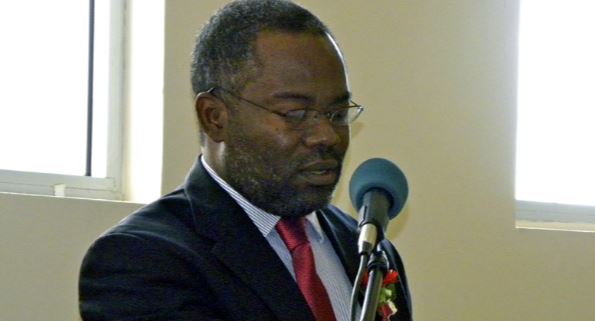
Jeff Cumberbatch – Chairman of the FTC and Deputy Dean, Law Faculty, UWI, Cave Hill

Last week, the first part of this column treated the submission by Sir Hilary Beckles, Vice Chancellor of the University of the West Indies, that the statue of Lord Admiral Horatio Nelson had outlived its incongruous presence in Heroes Square and that its continued presence there makes Barbados a deviant and a pariah in the community of progressive nations that oppose publicly revering persons (such as Nelson) known to have committed โ€œcrimes against humanityโ€.

In that first part, I also bemoaned the absence of a popular discourse on the Vice Chancellorโ€™s proposal, an absence that I found mystifying. In the past week, however, there has been some public reaction to the proposal, most of it predictably defensive of preservation of the status quo rather than of its alteration by one jot or tittle.

For example, in last Fridayโ€™s edition of the Barbados Advocate, a correspondent, Mr Michael Rudder, chose to pray in aid the undeniable reality of the criminally forcible mix of the races present in most if not all slave societies and to wonder โ€œif any of my African ancestors were responsible for selling any of their โ€œbrothersโ€ to those who carried on the slave tradeโ€ while he admits knowledge that the family of one Caucasian ancestor did have slaves.

He then proceeds to make the amazing rhetorical point that since we are all mixed, โ€œwhat does it matter that some ancestor was a so-called white supremacist? And he continues still rhetorically, โ€œDid your ancestor see him/herself as such? Do we see ourselves as black supremacists?

Essentially, he makes the point that we should acknowledge our history and move on and not โ€œkeep holding up the rear mirror of our pastโ€.

It is tempting to read this opinion in a sense clearly not intended by the author and to treat it as an agreement with Sir Hilaryโ€™s thesis that officially to maintain the statue of Lord Nelson in its current location is to hold up the rear view mirror of 1813 Barbados when Nelson was a hero to the existing societal structure, the identical structure that was to be the target of a slave rebellion a mere three years later, officially recognized by the elevation of one of its reputed leaders to the highest national status. Indeed, there is a bit of a paradox in having both of these men elevated to this lofty status, even if that status of one of them is now merely situational.

It is a conundrum that seems to pervade Barbadian society, where the general attitude appears to be โ€œI do not really care what they do about Lord Nelson, but he is part of our historyโ€ OR the more extreme and silly, โ€œif we move Nelson then we should remove all traces of English influence, including place names, titles and perhaps surnamesโ€ฆโ€

Veteran columnist Patrick Hoyos in his column last Sunday required โ€œsome sort of consistent rationale if Nelson should be movedโ€ although he did not spell out what would constitute such consistency or who would be the ultimate arbiter of it.

Mr Hoyos also appears to have interpreted Sir Hilaryโ€™s letter in a way different to me. He construes the following passages from the Beckles letter as indicating that Sir Hilary would not have minded Nelson remaining standing so long as he was overlooking Carlisle Bay contemplating his exploits beyond the horizonโ€ฆโ€

โ€œ The Democratic Labour Party turned it around and deepened its roots when it had the opportunity to move it to a marine park on the pier.

โ€ข The Barbados Labour Party did not wish the Right Excellent Errol Barrow at the centre of Parliament Square and placed him out of sight of the Assembly in what was a public car park. Nelson remained in the more prominent placeโ€.

Perhaps owing to my professional training, I prefer to base the gist of an opinion on the interpretation that what is stated later should generally overrule an earlier statute or decision that is inconsistent with it through the doctrine of implied repeal. I prefer to ascertain Sir Hilaryโ€™s sentiments from his final paragraphs-

โ€œThe assumption is growing, I have been informed, that the Government might rather citizens, in an act of moral civil disobedience, to take matters in their own hands, and remove the offending obstacle to democracy. This has been the case in the United States and South Africa.

Quietly, state officials could slip away and say that the people have spoken. Such alliances of active citizens and passive state have moved many societies. Barbados must move on.โ€

This most assuredly does not read as a paean to a mere relocation of the statue to me.

O Dominica!

I should wish to express my sincere best wishes for the full renaissance and recovery of the island of Dominica after its devastation by Hurricane Maria during last week. Owing to my occupation, I have come into contact with many of the people of that island whether as teachers, classmates, or most latterly students, and they have been without exception, some of the most gracious and warmest people you will ever encounter. Dominica was also the first country that I slept in outside of Barbados when as a member of the Animation Choir under the leadership of Mr Harold Rock, I sailed there by the Federal Palm, I believe, in 1968. I do not remember much of it now; except partaking of the sweet lime fruit and hazarding a taste of stewed mountain chicken.

My more recent visits unfortunately have been severely limited in duration and in free time, but I have seem the photographs of the recent destruction wrought and I weep for the country I remember.

O Dominica, the land of beauty

The land of verdant and glorious sunshineโ€ฆ


Discover more from Barbados Underground

Subscribe to get the latest posts sent to your email.

499 responses to “The Jeff Cumberbatch Column – “…The Ball that Shot Nelson” (2)”

  1. peterlawrencethompson Avatar
    peterlawrencethompson

    @John September 28, 2017 at 1:30 PM # said
    “You are confusing crime and sin.”

    We executed Nazi’s after the Nuremberg trials not because they had “sinned,” that’s between them and their gods; we hung them by the neck until dead because we found them guilty of crimes.

    On the other hand, your behavior in making excuses for the crime of enslaving human beings… that is a sin, not a crime. But notice that making excuses Nazi crimes in Germany is a crime, not just a sin.


  2. โ€œJohnโ€™s point that the plantations in Bim were not profitable as brought out by the number of times they went bankrupt(chancery) and were auctioned.โ€

    All it says is they were a number of operators who were not good at what they did, and another set who realised this, and were willing to buy these non or under performing assets. The intrinsic value lay in the arable land, the crop potential given the climate/soil, and the costs of production (read slavery). That some plantations sold at a premium/discount is merely following the laws of demand/supply at any given time.

    A similar observation could be made about the rum distilling business in the Caribbean in the past 30 years. Both Jamaica and Guyana have production facilities which are essentially the combination of multiple bankrupt distillers. The profitably/bankruptcy pertained to their ability to sell their product above their costs. The recent WIRD sale in Bim, was to a French operation, which was somehow able to buy bulk rum from many Caribbean sources, blend it and bottle it, and then export it, and get shelf space/distribution, where several of the same Caribbean distillers who supplied their bulk rum could not.

    There was money in sugar. And there is money in rum.

  3. peterlawrencethompson Avatar
    peterlawrencethompson

    @John September 28, 2017 at 1:35 PM # said
    “Sin against God, not ‘crime against humanity’”

    I’ve read your holy myths and agree that slavery was a sin against your God; love thy neighbor as thyself. But it was also a crime against humanity. Some sins against your God are also crimes, e.g. thou shalt not kill; some crimes are not sins, e.g. smoking a spliff; and some sins are not crimes e.g. coveting thy neighbor’s wife.

    Don’t try to smooth over your own sins (bearing false witness) in your pretense that the historical practice of slavery in Barbados was not a crime.


  4. We executed Naziโ€™s after the Nuremberg trials not because they had โ€œsinned,โ€ thatโ€™s between them and their gods; we hung them by the neck until dead because we found them guilty of crimes.
    ++++++++++++++++++++

    Exactly how many of the dead people pre 1834 are you planning to execute or hang by the neck until dead?

    No matter how much linguistic twists you take you are out of your league.

    God has it in his hands.

  5. peterlawrencethompson Avatar
    peterlawrencethompson

    @WW&C
    “The first code was that of Barbados of 1688, whose origins are unknown”
    It is interesting to see mistakes in Britannia Kids. The Barbados Slave Code was enacted in 1661, not 1668, and it’s subtitle was “An Act for the Better Ordering and Governing of Negroes.” This makes it’s origins explicit, not “unknown.” In fact the Act uses the words โ€œNegroโ€ and โ€œslaveโ€ interchangeably, making it clear that its intent was to dehumanize anyone of African ancestry..

  6. peterlawrencethompson Avatar
    peterlawrencethompson

    @John September 28, 2017 at 2:22 PM #
    “Exactly how many of the dead people pre 1834 are you planning to execute…”

    I already pointed out to you John, the obvious truth that the existence of a crime is not dependent on whether the perpetrator is alive or dead. The crime is still a crime, it does not cease to exist on the natural demise of the criminal.


  7. Hmmmmm…….slavery is a crime……slavery is being carried on today in Africa…… Why are the bleeding hearts on here not putting their energy in this most heinous of crimes by physical involvement.


  8. John

    How can the discussion on the profit or non profit of Bim’s slave era plantations be laid to rest?


  9. There was money in sugar. And there is money in rum.
    +++++++++++++++++++++++++++++

    There is money in both, I agree, but costs are higher than revenues many years when the profit and loss accounts are done and we are talking about profit.

    That’s how business works.

    The people who are involved are wealthy and use their wealth to gain access to riches.

    The riches are transferred to the arable land and support the people who depend on that arable land.

    When expenses are met, the owner takes the profits.

    If you look at the Codrington Estates, they were never auctioned off!!

    They were always subsidized, some years they repaid the faith the owners had in them, other years the owners absorbed the losses.

    If you look at many plantations in the time of Quakers, they passed in families, no $$$$.

    Marriage settlements, bequests but some sales.

    Drax Hall is the extreme example.

    No one was clamouring to buy these hugely “profitable” enterprises as you would expect until they the sources of the riches called in their debt and the became available at knockdown prices in Chancery.

    I have an ancestor who in his 1672 will left his whole 12 acres or so to his daughter on condition she not marry that man Edward Jollop … Gollop I reckon.

    I can locate the actual field in St. Philip by its name because it bears the name of her husband, which I know!!

    Maps of the day confirm the location.

    Most landholders were owned small plots, 10 or more acres was the qualification to vote.

    What sort of profit would be made from selling say a case of Rum, or a tonne of sugar?

    Land allowed you to vote but more importantly, it fed you.


  10. When you buy a house and give the bank a mortgage you are tied to repaying it for the next 20 or 30 years.

    Whatever your wages are, they better be able to pay the mortgage or the bank forecloses and puts the house in Chancery!!

    If you lose your job but still want to keep your house, you finance the shortfall either from savings, the profit you made from your wages, or by approaching someone else, probably a family member, for a loan.

    Same principle in Sugar.

    Otherwise, Chancery!!


  11. If the geniuses here refer to mortgage slavery, then all plantation owners were and are slaves!!

  12. peterlawrencethompson Avatar
    peterlawrencethompson

    @vincent haynesw September 28, 2017 at 2:45 PM # asked
    “How can the discussion on the profit or non profit of Bimโ€™s slave era plantations be laid to rest?”

    Vincent, it has already been laid to rest:
    The Profitability of Sugar Planting in the British West Indies, 1650-1834
    J. R. Ward
    The Economic History Review
    New Series, Vol. 31, No. 2 (May, 1978), pp. 197-213

  13. Well Well @ Consequences Observing Blogger Avatar
    Well Well @ Consequences Observing Blogger

    ….it is interesting to see mistakes in Britannia Kids. The Barbados Slave Code was enacted in 1661, not 1668,…

    PLT….trust me, those are not mistakes, but maliciously planted information, by the descendants of criminals….to cover up there crimes as best they could…though their ancestors saw how to keep crimes against the Black race going indefinitely…they never saw us, our skills and abilities manifesting in this century….

    so i ignore all their deliberate mischief and just deal with the incontrovertible facts.

  14. Well Well @ Consequences Observing Blogger Avatar
    Well Well @ Consequences Observing Blogger

    as i posted , many of the enslaver criminals and their descendants changed their names because they knew they committed crimes and were likely to be sued for reparations in the future, as is happening now.

    cumberatchs mother is still warning him to change his name….that curse and blight of their ancestor`s crimes will follow them into forever… they cant shake that, no matter what…their false god cannot help them.


  15. If you go and read the paper by R.L. Ward it will show there are two views in academia, one that posits it was not profitable and the other, his that posits the opposite!!

    Take your pick

  16. peterlawrencethompson Avatar
    peterlawrencethompson

    @Vincent
    The Profitability of Sugar Planting in the British West Indies, 1650-1834 by J. R. Ward is the best available research into plantation profitability in Barbados. It is peer reviewed and published in one of the better academic journals of economic history. The surviving data are incomplete but Ward has no axe to grind and has tried to find all the relevant figures for capital costs for land, capital costs for enslaved people, transportation costs, feeding and clothing of enslaved people, etc. ward has done incomparably more and more thorough research than John has. His findings for profit rates in Barbados as a percentage of invested capital are as follows:
    1689-1697 War —
    1698-1702 Peace —
    1703-1713 War 6.2%
    1714-1748 —
    1749-1755 Peace 3.4%
    1756-1762 War 11.2%
    1763-1775 Peace 5.6%
    1776-1782 War 2.3%
    1783-1791 Peace 5.3%
    1792-1798 War 6.1%
    1799-1819 War 5.8%
    1820-1834 Peace 7.7%

    Note that data are missing for some time periods, but at no time, in war or peace, was the return on capital negative.

    I showed all this to John and he had no way of disputing any of the figures, but he just persists in lying in his posts.

  17. Well Well @ Consequences Observing Blogger Avatar
    Well Well @ Consequences Observing Blogger

    and if Vincent had any smarts, he woud know that when modern day enslavers are caught in Africa or anywhere, if they dont get away and go into hiding, they go to prison.

    some societies are centuries behind but will be forced to catch up.

    UK just locked up a slavery gang for over 100 years combined for enslaving others in UK…..if ya would spend more time understanding how the world is changing around you and less time pimping behind John working overtime to manifest ya failed conman scam on the majority population of Barbados, ya will see that authorities world wide are chasing down modern day enslavers and working to educate people to dismantle slave societies everywhere….its not my job.

    http://bit.ly/2hzOXQu

    Eleven members of same family convicted over modern slavery ring
    Gang targeted victims who were homeless, had learning disabilities or drug and alcohol issues

    Richard Vernalls Friday 11 August 2017 16:30 BST

    The convicted gang members groomed their victims with drugs and alcohol Lincolnshire Police

    Eleven members of the same family have been convicted of running a modern slavery ring which kept one of its captives in “truly shocking” conditions for decades.

    Vulnerable people were forced to work for the Rooney clan for little or no wages, while their pay-masters lived a life of lavish luxury.

    The 11 gang-members, convicted of fraud and slavery charges, enjoyed holidays to Barbados and cosmetic surgery and even shelled out on a Manchester United soccer school, using money earned by their workers.

    Operating from Traveller sites in Lincolnshire, they targeted victims who were homeless, had learning disabilities or complex drug and alcohol issues.

    One of the victims was found to have been working for the family for 26 years.

    Some of the gang also targeted four elderly homeowners, getting them to sign over properties into their names and selling three on for profit โ€“ one for ยฃ250,000.

    One of the householders ended up dying without his family knowing. Only when they contacted police did they discovered they had missed his funeral.

    After four trials resulting in convictions, the full scale of offending can now be revealed after a ruling at Nottingham Crown Court on Friday.

    This City-Builder Game lets You Play through the Ages
    Forge Of Empires – Free Online Game
    Flight Prices You’re Not Allowed to See
    Save70.com
    Hitler’s Final Bunker Discovered, Wait Till You See Inside
    Trend Chaser
    by Taboola Sponsored Links
    Judge Timothy Spencer QC said: “After careful consideration, I’m quite satisfied the public interest lies in these matters being reported.”

    Members of the family would go looking for victims in the streets, hostels and shelters, offering work for food and accommodation.

    But at sites in Drinsey Nook and Washingborough, the offers of fair work for fair pay were exposed as lies.

    However, through false promises, drugs, alcohol and violence, family members made sure they kept their victims “financially-trapped” and under total control.

    Labourers were forced to live in shabby, run-down caravans, or in stables next to kennels, with little or no access to basics such as heating, water and toilets.

    Some were forced to squat in woods behind their living areas, while electricity was “dangerously” tapped from a nearby pylon.

    UK news in pictures
    82
    show all
    In all, 18 men were forced to work at the sites or for the Rooneys’ businesses, repairing properties and tarmacing drives.

    Most told how they were never given safety equipment or the right clothing.

    The police said victims were also “poorly fed” and often went hungry โ€“ or were given the “family’s left-overs”, even though they were worked for hours on hard, manual tasks.

    If victims complained, the gang would say they still owed money and would claim more labour to pay off the bogus debts.

    The heartless gang provided alcohol and drugs as part of what prosecutors had described as a “grooming” process.

    But as their hold on the victims increased, that illicit supply gave the clan an ever-tighter hold over their victims, including their bank accounts.

    In some cases, the accounts were used to pay for gym memberships, soccer schools and building materials to supply the business.

    The Rooneys also used “threats” and “violence”, including punishment beatings, and the victims were denied medical help for their injuries and ailments.

    The impact on the victims was severe, with many suffering mental and physical torment during their “gruelling and emotional” ordeal, said police.

    The gang also targeted vulnerable homeowners, coercing them into signing over properties to them which were then sold on for profit.

    For the convicted gang-members, there were luxurious holidays to Australia, Egypt and Mexico, high-performance BMWs, spa days and cosmetic surgery.

    It was a far cry from what Chief Superintendent Nikki Mayo, who led the investigation, described as the “suffering” inflicted on the men they employed.

    She said: “The tragedy in this case is that the victims will never get those years of their lives back โ€“ we believe one man was held for 26 years.

    “The severity and gravity of the charges speak for themselves.

    “Modern slavery is a cruel and extremely demoralising crime and it’s important that people understand that it isn’t just forced labour like this โ€“ victims can be sexually exploited, or forced into committing crimes.”

    She added many of the victims “have now got their lives back”.

    John Rooney, 31, of Drinsey Nook, Sheffield Road, Saxilby, Lincolnshire โ€“ conspiracy to require a person to perform forced or compulsory labour, conspiracy to defraud, fraud by false representation and two counts of theft.
    Patrick Rooney, 31, of Drinsey Nook, Sheffield Road, Saxilby โ€“ conspiracy to require a person to perform forced or compulsory labour, fraud by abuse of position, assault occasioning actual bodily harm, and two counts of theft.
    Bridget Rooney, 55, of Drinsey Nook, Sheffield Road, Saxilby โ€“ conspiracy to require a person to perform forced or compulsory labour.
    Martin Rooney, 35, of Sainfoin Farm, Gatemoor Lane, Beaconsfield โ€“ conspiracy to defraud, two counts of converting criminal property.
    Martin Rooney, 57, of Drinsey Nook, Sheffield Road, Saxilby โ€“ conspiracy to require a person to perform forced or compulsory labour and unlawful wounding.
    Martin Rooney, 23, of Drinsey Nook, Sheffield Road, Saxilby โ€“ conspiracy to require a person to perform forced or compulsory labour and assault occasioning actual bodily harm.
    Patrick Rooney, 54, of Sainfoin Farm, Gatemoor Lane, Beaconsfield, Buckinghamshire โ€“ converting criminal property.
    John Rooney, 53, of Chantry Croft, Pontefract, Yorkshire โ€“ two counts of conspiring to require a person to perform forced or compulsory labour.
    Peter Doran, 36, of Washingborough Road, Lincoln โ€“ conspiracy to require a person to perform forced or compulsory labour.
    Gerard Rooney, 46, of Washingborough Road, Lincoln โ€“ conspiracy to require a person to perform forced or compulsory labour.
    Lawrence Rooney, 47, currently in prison โ€“ conspiracy to require a person to perform forced or compulsory labour.
    Press Association.

    More about: modern slaverySlavery

  18. peterlawrencethompson Avatar
    peterlawrencethompson

    @Vincent, go and read the paper yourself… you can find it quite easily using google. You will discover that Ward comprehensively disproves John’s theories about plantation profitability.

  19. Well Well @ Consequences Observing Blogger Avatar
    Well Well @ Consequences Observing Blogger

    the enslavers of the 1500-1900s were no better than this gang of frauds, modern day enslavers and thieves but were undeniably more brutal savage and evil, that can never be erased, it just keeps manifesting itself in UK over and over..


  20. For Codrington Estates, also in Barbados

    1710 Death of Codrington
    1713โ€“19 Boom period
    1715 Gross income ยฃ5666, expenditure ยฃ2954, profit ยฃ2712 = ยฃ2170 sterling
    Construction of college started and by 1725 nearly complete, but sharp decline in sugar and rum caused cessation.
    1729 Improved conditions
    1745 College opened, after windfall as a result of dispute with Codrington heirs
    1755โ€“70 Estates cleared more than ยฃ2000 pa
    1770โ€“82 Estates losing money due to sugar cuts, Revolutionary War and 1780 hurricane
    1783โ€“93 Brathwaite leases for ยฃ500 sterling p.a. and any profit to be had to rebuilding college. Manager, friend of Brathwaite, George Barow. Gibbes assumes care of college through his attorney Alleyne
    by 1793 Brathwaite has cleared debt, accumulated reserve and rebuilt upper plantation. Average income now ยฃ2000 sterling
    After return to Societyโ€™s control profits fall to ยฃ1000 p.a.
    1813 Management put in hands of agricultural attorney and much improved
    1814โ€“23 Average income ยฃ4042
    1828โ€“41 Average income ยฃ2343 and estates adjust well to emancipation

    Would be interested to know of any estates whose records exist in the period but so far have not found any!!

    The Codrington Estates are the best most complete source so far I have come across.

    In 100 years or so, 1715 – 1828 income more than cut in two.

    Slave population grows from under 300 to over 400.

    What you will find is Ward makes a lot of assumptions.


  21. Rain easing a bit but so far for the day one inch and eighty parts.


  22. @John
    note the WAS and IS.

    You cannot equate the post slavery profitability/losses, which in more recent times has felt the competition from other sugar sources and methods of sweetening, to the era when a major cost of production was labour, and its competitors were few. And that labour was artificially inexpensive (slavery).

    What exactly does this mean? “The people who are involved are wealthy and use their wealth to gain access to riches.”

    I don’t think anybody is suggesting that in agriculture they are not times when the operation needs to be subsidized. Drought, hurricanes, fire and multiple other climatic, political and biological factors can make arable yields zero.

    Even back in the slavery era, they were external factors which could significantly alter profitability.

    However, to suggest all these landowners and plantation operators in the slavery era, were running such operations for 200 years, without making money, is erroneous. One might argue over accounting or record keeping methods. Yet, one only has to look at where their children were educated, the trinkets they acquired, the travel undertaken, and know, the manner of payment was not falling out of the clouds.

    I had the opportunity to see one plantation’s records in the modern era. They were not making money. But within the expenses, I found tuition fees for foreign schools, a top of the line sedan, a foreign purchased racehorse, travel (masked of course ‘for business reasons’), even entertainment. Bottom line…”dey living well, but dey en mekking any money”. Hasn’t this been the planter’s lament forever?


  23. These Rooney characters are any relation to the Rooney that bought Westmoreland at agricultural prices, started the golf course and residential development and then sold his investment at $100 million or so to Morphet?

    I see Morphet is on selling … or on sold!!!

    http://www.dailymail.co.uk/travel/travel_news/article-3000626/Yours-75million-Barbados-resort-Chelsea-stars-holiday-Rooneys-villa-goes-sale.html

  24. peterlawrencethompson Avatar
    peterlawrencethompson

    John, you are proving me correct again. What is more you have made a huge error in comparing 1715 gross revenue to 1828-41 profits. In 1715 the profit was ยฃ2170; between 1828-41 the annual profit averaged ยฃ2343. So you see that your statement that “In 100 years or so, 1715 โ€“ 1828 income more than cut in two” is completely and utterly wrong.

  25. peterlawrencethompson Avatar
    peterlawrencethompson

    I know that you are an engineer rather than an accountant John, but that is a very embarrassing mistake for you to make.


  26. 1828โ€“41 Average income ยฃ2343 and estates adjust well to emancipation
    +++++++++++++++++++++++++++

    You better go and put on your glasses!!

    1814โ€“23 Average income ยฃ4042

    Where are you getting “between 1828-41 the annual profit averaged ยฃ2343” from?

    Income and porfit cannot be interchanged


  27. … did you notice I spelt Profit Porfit?

  28. peterlawrencethompson Avatar
    peterlawrencethompson

    @John September 28, 2017 at 4:27 PM #
    the very next line in your post is
    “1828โ€“41 Average income ยฃ2343 and estates adjust well to emancipation”
    That ยฃ2343 is a statement of net income, not gross revenue.

  29. millertheanunnaki Avatar

    @John September 28, 2017 at 2:55 PM #
    โ€œIf the geniuses here refer to mortgage slavery, then all plantation owners were and are slaves!!โ€

    Massa John, you are really taking the piss by comparing the piss-poor management of plantations to that of being a slave not only for 12 years but from the 1650โ€™s to the 1840โ€™s including a 5-year period of apprenticeship equivalent to the training of a doctor in the cutting of sugarcane until it burnt his hands.

    Are you nuts or what? Or are you being downright disrespectful to the memory of the unforgiving suffering of people of African heritage in Barbados?

    But you have every right to disrespect the fawning eye-rolling niggers. After all, they ought to be obsequiously grateful for their freedom arranged by the Quakers to provide them with the opportunity to get to know their white saviour and friend Lord Jesus Christ.

    The former owners of plantations and slaves -most of whom were either drunkards, compulsive gamblers or lascivious philanders- who sired the large mulatto population found in the โ€˜New Worldโ€™; (unless of course they were of good Quaker temperance stock)- had the option to walk away from it all.

    They could either return to cold Old Blighty, emigrate to other places like the Carolinas or even later on to Australia to seek their fame and fortune (again).

    My Quaker friend, neither the slaves of yesteryear in halcyon Barbadoes nor their modern-day equivalent could ever boast, like you, of such automatic privileges.

    Your loyal slave and eternal servant
    Uncle Sambo.

  30. peterlawrencethompson Avatar
    peterlawrencethompson

    @John, you did not footnote your source. Here is mine.

    Codrington Average annual profits (ยฃ sterling)
    1722-1730 ยฃ1,003
    1750-1755 ยฃ469
    1756-1762 ยฃ1,879
    1763-1775 ยฃ412
    1776-1782 -ยฃ546 (loss)
    1783-1791 ยฃ958
    1792-1798 ยฃ1,215
    1799-1819 ยฃ2,151
    1820-1829 ยฃ2,472
    Source: United society for the Propagation of the Gospel, London, Codrington Plantation Papers; F.J. Klingberg, ed Codrington Chronicle (Berkeley, 1949), pp.78-82


  31. However, to suggest all these landowners and plantation operators in the slavery era, were running such operations for 200 years, without making money, is erroneous.
    ++++++++++++++++++++++++

    Let’s go back to why I think Barbados as a sugar economy even existed.

    I say, Barbados first and foremost was a retreat for Quakers from religious persecution from Puritans in England.

    Barbados as a sugar economy on its own did not make financial sense in the long term but it made extreme economic sense!!

    It was a retreat … like Shelter Island off New York was a retreat in 1651.

    Life and death.

    God honoured Quakers with business success because they honoured Him.

    He made it so they only had business on which to depend.

    Barbados was a small part of an overall business, England, Caribbean, America.

    Africa fitted in, but not India until the days of steam.

    Barbados is tiny, but the Atlantic currents pass right through it!!

    It is quite possible to be completely correct in the statement that Barbados on its own over the long term was financially unprofitable.

    Money turned over here, for sure, every year …. but its location made Barbados economically viable.

    The purpose of Agriculture was to be self sufficient in food and to minimize the financial losses the endeavor suffered by earning an income to contribute to the whole.

    So, what today can make Barbados economically viable?

    How can we minimize the yearly deficits which by their very existence shows Barbados to be an ongoing financial failure and needing subsidization?

    Does that help in understanding the difference between wealth and riches?

    A wealthy person can always access riches, but never the other way.

    What is our wealth today?

    I say, our history!!


  32. Just like Britannica for Kids, Ronnie Hughes and Mr. Queree using no doubt “Bondsmen and Bishops” who probably got their figures from your source copied their description wrongly!!

    … or maybe it was Mr. Klingberg (1949) as both Bennet (1958) and he were at Berkeley and Bennet corrected him.


  33. Like Schomburk claiming that after 1810 there were no Quakers in Barbados!!


  34. Miller

    The former owners of plantations and slaves -most of whom were either drunkards, compulsive gamblers or lascivious philanders- who sired the large mulatto population found in the โ€˜New Worldโ€™; (unless of course they were of good Quaker temperance stock)- had the option to walk away from it all.
    …………………………………………………………………………….

    An interesting point,once substantiated would suggest as I have always thought that the African slave and progeny were responsible for the proper management and husbandry of the plantations and to a larger extent the country.

    It would further suggest that they had to be learnt and literate in the ways of their masters,which means they would have come out of the house and yard variety of slave.

    Its an area that needs exploring and discussion i.e. house,yard,field…..each of which would have subsections e.g house-butler,head maid,1st maid etc….yard-stable,cobbler, etc…..field-ranger,1st gang,etc……………..how did these interact after emancipation and what was their relationship with the original freed ones,poor euros and indentureds.

    This is what will lend to a greater understanding of who we are and how we got to where we are.

    Might even explain the present govt.

  35. peterlawrencethompson Avatar
    peterlawrencethompson

    @ John
    So both your figures and mine demonstrate that Codrington plantation was profitable during the era of slavery, except for the period of disruption during the American war of independence. These were not insignificant profits… using the conservative average earnings methodology to estimate the value of the 1829 profits of ยฃ2,472 in today’s money it’s an annual equivalent profit of ยฃ1.8 million.

    So you know perfectly well that you are bearing false witness when you write things like “It is quite possible to be completely correct in the statement that Barbados on its own over the long term was financially unprofitable” and yet you persist with these blatant and obvious lies.

    May I remind you that it is a sin to bear false witness?


  36. @John

    The manholes are ‘tearing’ up.


  37. John September 28, 2017 at 4:00 PM #

    The Rooneys were kitchen and bathroom manufacturers in Leeds, a Yorkshire City with a big Bajan population, who sold up when they feared losing control of their business and bought in Barbados. I am still trying to find a single Barbadian that worked in their factory when it was under their control.
    Morphet owned a caravan site and decided to move up market by buying in Barbados – from travellers to Bajans.

  38. peterlawrencethompson Avatar
    peterlawrencethompson

    @Vincent Haynes,
    Will you now accept that the it is definitively and conclusively proven that sugar plantations in Barbados were profitable during the days of slavery??

  39. Well Well & Consequences Observing Blogger. Avatar
    Well Well & Consequences Observing Blogger.

    Nasty, disgraceful, lying white supremacist behavior….PLT check it out, the scamp git caught on national tv.

    HOME ยป POLITICS
    Trump Just appeared on Fox And Friends made a grave racist attack on NFL Players!
    Conlan POSTED ON SEPTEMBER 28, 2017

    Despite several backlashes from celebrities and lawmakers, Trump continues to attack black NFL athletes, while millions of Americans are suffering from the after-effects of Hurricane Maria in Puerto Rico. Now Trumpโ€™s behaviour is beyond any reasonable argument that he is more than a racist whistle. Anyone still unconvinced need only look at the comments Trump made today.
    The president now gave a brief interview to Fox and Friends, where he once again wasted the countryโ€™s time and his own by babbling on the NFL and patriotism, spreading the lie that athletes taking a knee during the national anthem is an insult to the country. He completely ignores that fact that taking the knee was the protest against police brutality.

    โ€œI have so many friends that are owners. And theyโ€™re in a box. I mean, Iโ€™ve spoken to a couple of them, they say โ€˜we are in a position where we have to do something,โ€™โ€ Trump said to Fox and
    โ€œI think theyโ€™re afraid of their players, you want to know the truth. Itโ€™s disgraceful,โ€ Trump added, in perhaps his most blatant example of racist code language on this issue to date.

    Trumpโ€™s idea that billionaire team owners would be โ€œafraidโ€ of their players just doesnโ€™t make any sense, however, it indulges to the fear of the black man that racists so often engage in. The inference is clear here: these men are dangerous. There is a long, disgusting history of hateful white men painting black people as something to be feared. It makes it easier for these bigots to rally other white people together to push a white supremacist agenda. The only disgraceful thing here is Trumpโ€™s behaviour.

    Vincent…it’s obvious that your line was upgraded from the field hand to the house negro…you dusplay al of the attributes of a grateful house negro who would do anything to keep the majority black population as field slaves, the modern day version..

    ….. as long as the majority population don’t listen to any of you, they will be fine…

    …as long as the greedy Black governments stop communicating with all of you, the people and island will be fine.


  40. “The early profitability of sugar was itself the factor that encouraged the lopsidedness of the Barbadian economy. When the sugar industry ceased to be profitable on a long term basis, the planters were in no position to retrench and diversity. Their resources were geared to the production of the export crop, and the debt which they had by then accumulated forced them to go on concentrating on the production of the export staple as the only means of earning the foreign exchange necessary for meeting debt payrnents to the metropolitan merchants. Protection in the metropolitan market helped the planters to maintain the plantations intact during the Eighteenth Century.”

    http://digitool.library.mcgill.ca/webclient/StreamGate?folder_id=0&dvs=1506632483077~229


  41. 1969


  42. Subsidy, subsidy and more subsidy

  43. peterlawrencethompson Avatar
    peterlawrencethompson

    @John, a proper citation please… the link just gives a “DigiTool Stream Gateway Error:”


  44. @John September 28, 2017 at 11:08 AM “Crime is relative and at the time, slavery was not a crime.”

    Slavery was only not a crime because the people who made the laws and who benefitted from slavery said that it was not a crime.

    or as we say a fisherman will never tell you that his fish stinks.

  45. Well Well & Consequences Observing Blogger. Avatar
    Well Well & Consequences Observing Blogger.

    Ah Jack Warner will be going to prison in US, to trial….if he loses an appeal.

    http://www.nationnews.com/nationnews/news/100889/warner-loses-fight-us-extradition

    “PORT OF SPAIN โ€“ Former politician and football official, Austin โ€œJackโ€ Warner on Wednesday, lost his lawsuit challenging his extradition to the United States. Warner is wanted by authorities to answer charges of fraud arising out of a Fรฉdรฉration Internationale de Football Association (FIFA)

    Delivering a 50-page ruling in the High Court on Wednesday, Justice James Aboud dismissed the claim for judicial review brought by Warner.

    That lawsuit challenged the process used by the Office of the Attorney General in signing off on the US Governmentโ€™s request for his extradition in May 2015.

    It now means that the extradition proceedings in the Port-of-Spain Magistrateโ€™s Court will resume.

    That matter was on hold while Warnerโ€™s challenge was being heard.

    There was agreement however for the stay on the extradition proceedings to remain for 28 days to give Warner time to consider whether he wants to appeal the decision.

    Warner was indicted by US authorities over allegations of racketeering, wire fraud and money-laundering conspiracies spanning 24 years.”


  46. @John September 28, 2017 at 11:59 AM “We have already established that first Foundation (1671), Combermere (1682), Lodge (1710), and Harrison College (1733) were the result of bequests made by Quakers, planters. Generations of Bajans of all colours benefitted from these bequests from the planters, even you and me too!!”

    All of the money earned by the planters came form the stolen labour of the enslaved people. So if you steal my labour and give me back a pittance am I supposed to say “thank you?”

  47. Well Well & Consequences Observing Blogger. Avatar
    Well Well & Consequences Observing Blogger.

    Simple…enslavers and their descendants do not get to say when slavery became a crime, it was a crime from the first slave they bought, they do not have that right or privilege…

    …..they also got the nerve to want to say when someone is being racist…they do not have that right either.

    Ya often have to put them in their place.


  48. BARBADOS
    A CASE STUDY OF THE
    PLANTATION ECONOMY
    A Thesis
    Submitted to
    the Facu1ty of Graduate Studies and Research
    McGi11 University
    In Partial Fulfillment
    of the Requirements for the Degree
    Master of Arts
    by
    winston D. Nicholls
    July 1969

    Anyone growing up in Barbados when Sugar was working instinctively knew we were subsidized.


  49. John September 28, 2017 at 12:19 PM “Quakers did not invent slavery, they ended it!!”

    Quakers may not have invented slavery, but certainly they practiced it and benefitted from it.


  50. John

    Anyone growing up in Barbados when Sugar was working instinctively knew we were subsidized.
    ……………………

    Correct.

    I was exposed to it since my arrival in 1964 which is why I would like to know definitively when it was profitable.

    It must have had some benefits over tobacco and cotton besides being a good ground cover for our fragile soil.

The blogmaster invites you to join and add value to the discussion.

Trending

Discover more from Barbados Underground

Subscribe now to keep reading and get access to the full archive.

Continue reading