Banner promoting anonymous crime reporting with a phone and contact number 1 800 TIPS (8477), featuring the Crime Stoppers logo and a QR code for submitting tips.

← Back

Your message to the BLOGMASTER was sent

President Trevor Browne and his team at CoopEnergy Barbados are the indefatigable voices calling for a broader, more ambitious vision for the national energy sector. The following is the latest communication from the team which should be addressed as a national strategic imperative.

– Blogmaster

Dear sirs

I refer to remarks credited to Minister Kerrie Symmonds as part of a national report on the state of the energy sector, which was presented at the Lloyd Erskine Sandiford Centre.

Is there still no concrete plan in place to guide the multi billion dollar BNEP’s policy to transition this country away from fossil fuels?

Is it a better cleaner fossil system that we are after?

Is it a new sustainable energy framework that is our goal?

Or is Minister Symmonds now targeting a combination of the two systems? 50 /50?

For years now I have pointed to the trial and error approaches being used for this transition, and called for a modern project management approach to be applied to bring some order to what is a clearly an ad-hoc process.

It really is now past time for this expensive quagmire to be professionally addressed by persons who actually understand the science involved.

Trevor Browne


Discover more from Barbados Underground

Subscribe to get the latest posts sent to your email.

8 responses to “Barbados Energy Transition in Disarray”


  1. There is certainly room for a serious and frank conversation to be had with the public. It is obvious to the blogmaster that successive governments have been reluctant to – according to them – destabilize the grid by overwhelming it with intermittent energy. This is going back to when Darcy Boyce was in charge. So which is it, we will maintain the two systems fossil and RE to mitigate against disruption to global supply? Is the plan to go all in with RE?

    What we know is that successive governments have a poor record of execution. Thankfully the pocket of taxpayers is deep!


  2. The below was shared with the blogmaster.

    David here is a classic example of how far below many caribbean islands Emera Barbados is on alternative energy as a source. So Emera has used us to prop up their balance sheet while not spending in diversification, now they went to the FTC so they can bill us the cost of said diversification.

    Have not seen the 2025 figures so don’t know if they are published yet, but doubt things change much seeing how far down the line we were in 2024

    Regards

    https://barbadosunderground.net/wp-content/uploads/2026/08/RE_EMERA.jpg


  3. Cost impact from from energy transition, says Worme

    THE QUEST for long-term energy security may mean some increased electricity costs for Barbadians in the interim as the country transitions away from fossil fuels to rely on more renewable power sources like solar.

    Stephen Worme, who represents the energy sector on the Barbados Chamber of Commerce and Industry’s council, said there was no perfect solution and what “we have to do is make sure that we do our best to manage the situation, and communicate with our citizens”.

    He was speaking in the context of the national energy consultation process led by Prime Minister Mia Amor Mottley and policy changes announced by Minister of Energy Kerrie Symmonds.

    Symmonds said Government was pursuing a major programme of battery energy storage, grid modernisation and regulatory reform as Barbados works towards achieving 50 per cent renewable energy penetration by the end of 2027.

    Worme said the BCCI “has been the more solar. Industry’s reform achieving integral part of that discussion. We are actually participating on two of the four committees that she has set up for the process”.

    “So we are in a position to contribute and to give our ideas and to challenge some of the proposals that are being put forward, and you would have known that the minister made some announcements on Monday to do with what how the country plans to move forward,” he stated.

    “Everybody thinks that renewable energy is going to be all and end all, [that] it’s going to reduce electricity prices, and there is a lot of discussion on whether or not that will happen.

    “One thing for sure [is] it will definitely help the country become more secure from an energy perspective. It will also help . . . to buffer any challenges that we may have in terms of pricing as a result of wars and other issues that do occur from time to time that impact the price of oil.”

    He said this was a positive thing, with many benefits for moving to renewable energy, but added that “during the transition, there is definitely going to be a time where we are going to be requiring equipment to actually provide the renewable energy”.

    “But we need to maintain some of the existing equipment to . . . actually participate and make sure the transition goes smoothly. So, from that perspective, there will be potentially an increase in costs,” Worme suggested.

    “How much it will be, we cannot tell, but . . . the customer will be impacted . . . to the extent we don’t know.

    “But one thing for sure, Government is doing its best to try to manage that because it’s not the solution that’s the issue: is how we manage the solution, and . . . how we are going to manage this process to try to make sure that the impact on customers is minimised.”

    He reiterated: “But what will happen in the long run, is that we will have a more secure energy supply, and at the end of the day, I do believe Barbadians will benefit.

    “And that’s where our job on the Chamber is, trying to make sure that we put the representations that are needed and to support government through their efforts to do so.” (SC)

    Source: Nation


  4. A good story. Some Bajans got sense.


  5. Despite the fact that he is speaking through the filter of a special interest group like the BCCI, it is really great that Mr Stephen Worme has chosen to publicly voice his opinions on the ongoing electricity transformation process in Barbados.
    Stephen is one of the persons who actually understands the complexities of actualizing the Barbados National Energy Policy which has been laid out by government.

    For context, we can consider and compare a situation where there becomes a need to replace the Chamberlain Bridge due to increasing unreliability, the high cost of maintenance, and the unavailability of parts needed for maintenance.
    Let’s say a new replacement bridge is identified, which solves the problems of reliability, long-term costs, and future dependence on imported spare parts. But unfortunately there is a high initial capital cost for the new one.

    As a matter of law, such a project would be subjected to Architectural, Engineering, Financial and Legal conceptualization, followed by design, costing and modeling.
    This process would have produced designs, drawings, plans, budgets, rules, timetables, regulations, and extensive financing models, all this would have been done before a single piece of actual construction started.

    The plans would clearly outline full construction details of all materials, expertise, funding, and time requirements. Equally important would have been public education so that the project’s impact on the traveling public, both positive and negative, would be well known to everyone.

    No one in their right mind would ever conceive that the objective would be changed to end up with two bridges working at 50% capacity each, while serving the same purpose. Or that it makes sense to make the heavy capital investment in the new bridge, while continuing with the burdensome expenses of keeping the old one in place.

    The obvious objective would be to arrange as short a parallel operation as is possible, solely to accommodate the ongoing users of the bridge, and then to urgently scrap and dispose of the retired bridge to eradicate those costs.

    The BNEP’s objective is a much more complex, intricate, expensive, and dangerous undertaking. It affects the very engine of the country’s life. Furthermore, every single cent of the final cost will be borne by electricity customers, and by taxpayers – where government assumes any liabilities for losses. Yet we have been chasing investors, building PV plant and now BSS, increasing rates, passing laws, spending like crazy – now seven years into this scheme, and yet answers are not clearly forthcoming for such basic questions as:

    1*Who exactly has final responsibility for the success or failure of this project?
    2*Where is the architectural concept design for the targeted sustainable framework?
    3*Where are the computer models that demonstrates the viability of the proposed concept?
    4*Who will own these new expensive structures?
    5*What will customers pay for basic services, and how does this compare with the cost of competing, and available, off-grid systems?
    6*How will the new arrangement be regulated?
    7*What are the regulatory contingency options, should large numbers of customers withdraw from the grid in favor of more competitive / reliable off-grid options?

    The whole point of strategic planning is to proactively address obstacles, and to identify possible opportunities for synergies etc, prior to engaging in expensive trial and error missions.

    Mr Worme is quoted as saying:
    “So, from that perspective, there will be potentially an increase in costs,”
    “How much it will be, we cannot tell, but . . . the customer will be impacted . . . to the extent we don’t know.”

    He is unfortunately correct. The very fact that we do not know such basic details about an ongoing multi-billion dollar disruption of our previously extremely reliable electricity system, in 2026 – when engineers can produce working computer models of practically any complex operation, should be a matter of grave concern to all Barbadians.

    We are long past the days of trial and error management. Also we certainly do not have the money to burn, nor can we afford the existential risks of massive breakdowns in our electricity systems.
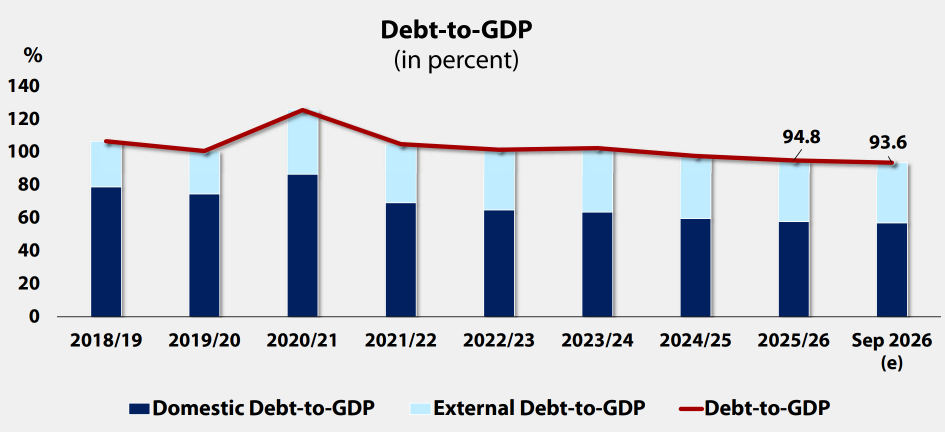
    The Marla Dukharan chart which was shared above on August 29, 2026 at 9:19 pm is particularly revealing. After 7 years into our 12 year quest for sustainable energy transformation, Barbados is at the very bottom of the list of neighboring countries – most of whom are just practicing basic good management without extravagant promises.

    It is also interesting to note that Belize’s progress is in some measure due to their incorporation of their sugar cane industry into electricity generation – exactly as CoopEnergy had proposed for Barbados.
    Perhaps we may need to get them to come here and provide the leadership that is required for success, since local solutions appear to be non starters.


  6. @Trevor Browne

    As the youth often express, it is imperative for Bajan professionals, including engineers, architects, and others, to ‘up d ting’. However, it is evident that this will not happen in a significant number due to the majority being bound by the business conduct guidelines of their respective organizations.

    Therefore it leaves the politicians, and by extension the government, to continue to serve ‘narrow interests’.

The blogmaster invites you to join the discussion.

Trending