



Parliament recently passed a Bill that makes almost all Barbadians guilty of domestic terrorism and liable to life imprisonment. This could have been avoided by narrowly defining domestic terrorism to catch those who fund, plan and/or commit mass-murderous terror activities.
The Domestic Terrorism Bill includes in its definition of domestic terrorist, someone who: (i) violates any law of Barbados where the penalty is at least 5 years in prison, (ii) does the act in a public place and (iii) is motivated by bias against race, nationality, ethnic origin, sex, sexual orientation, gender or religion.
HURDLE 1 – 5 YEARS IN PRISON.
Since 2018, many bills have been passed where the penalties for relatively minor offences are a prison term of 5 years or more. Some scenarios follow.
If you do not give a document about your business to the Beneficial Ownership Unit, which is a new unit that every small, medium and big business must register, you are liable to a fine of $100,000 and 5 years in prison (Beneficial Ownership Transparency and Register Bill, 2026, Section 29.2).
If you remove or cause to remove any tissue from the body of a dead person, you are liable to a fine of $100,000 and 5 years in prison (Human Tissue Transplant Bill, 2026, Section 33.3).
If you: (i) operate a drone without approval (Section 123) or (ii) allow a tied sheep to graze on airport land (Section 131), you are liable to a fine of $50,000 and 5 years in prison. If you use a cell phone on-board an airplane contrary to the notice in the seat’s pamphlet, which few read (Section 134), you are liable to a fine of $250,000 and 7 years in prison (Civil Aviation Bill, 2026).
If you fish in Barbados’ waters without approval, you are liable to a fine of $10 million and 15 years in prison (Section 20). Any visitor to or employee of the Maritime Authority who tells someone without approval what they read, heard or learnt while there, is liable to a fine of $100,000 and 5 years in prison (Section 90) (Maritime Areas Bill, 2026).
If you: (i) associate with a gang (Section 5), (ii) pretend to be a gang member to intimidate someone to leave you alone (Section 5) or (iii) conceal gang-related activity (Section 14), you are liable to a prison term of not less than 10 years and not more than 20 years. If you do not tell the police where a gang member (including a relative) lives (Section 12) you are liable to a prison term of not less than 10 years and not more than 25 years (Criminal Gangs Bill, 2026).
If you cause an older person to feel distressed or use threatening words to them (Section 2), you are liable to a fine of $100,000 and 5 years in prison (Older Persons Bill, 2026, Section 10).
If you, without approval: (i) remove sand from the beach (Section 152), (ii) remove coral from the sea (Section 153), (iii) sell coral, (iv) include coral in the manufacture of an item (Section 153), (v) leave garbage on the beach (Section 154) or (vi) enter a restricted area without paying the entrance fee (Section 151), you are liable to a fine of $100,000 and 10 years in prison. If you do any research in Barbados’ waters without permission (Section 164), you are liable to a fine of $500,000 and 10 years in prison (Integrated Coastal and Marine Management Bill, 2025).
If you know that a book, song or movie is copyrighted and allow it to be read, performed or watched in public, you are liable to a fine of $200,000 and 5 years in prison. If you watch a copyrighted movie or listen to copyrighted music for free, you are liable to a fine of $100,000 and 5 years in prison (Copyright Bill, 2025, Section 166).
If you intercept another person’s e-mail, text or voice message, you are liable to a fine of $500,000 and 7 years in prison (Interception of Communications Bill, Section 5).
If you: (i) threaten to sell or give away any household item of a person with a disability or (ii) repeatedly insult a person with a disability, you are liable to a fine of $50,000 and 5 years in prison (Rights of Persons with Disabilities Bill, 2025, Section 24).
If you: (i) copy data from a computer (Section 6), (ii) turn off a computer (Section 7), (iii) disclose a password (Section 11) or (iv) receive or are given access to any data (Section 13) without permission, you are liable to a fine of $70,000 and 7 years in prison (Cybercrime Bill, 2024, Section 6).
If you use a computer to send information that: (i) intimidates someone (Section 19) or causes someone ridicule or embarrassment (Section 19) or annoys or insults another person (Section 20), you are liable to a fine of $70,000 and 7 years in prison (Cybercrime Bill, 2024).
If you are operating a small boat and it is too loud (Section 213) you are liable to a fine of $100,000 and 7 years in prison (Shipping (Domestic Vessels) Bill, 2024).
If you: (i) do any research or collect any data or information from a coastal or fishing community or the surrounding area (Section 42), (ii) inform the public about traditional cultural expressions associated with the sea (Section 48), (iii) export part of a fish or any sea organism (Section 66), (iv) search for any underwater treasure (Section 81) or (v) take minerals from seawater (Section 176) without Government approval, you are liable to a fine of $100,000 and 5 years in prison (Maritime and Underwater Heritage Bill, 2024).
If you do not provide information to a Barbados Water Authority inspector or their consultant, you are liable to a fine of $50,000 and 5 years in prison (Water Reuse Bill, 2023, Section 11).
If you collect and treat water flowing on your property and share it with your neighbour to irrigate their plants, flush their toilets or use in any other non-drinking use without Government approval, you are liable to a fine of $200,000 and 10 years in prison (Water Reuse Bill, 2023, Section 12).
If you harvest a large bag of mangoes from your tree and do not have a delivery note with you when transporting them, you are liable to a fine of $10,000 and 5 years in prison (Protection of Agricultural Products Bill, 2022, Section 4).
Why do we want to lock-up so many Barbadians for 5 years for relatively minor offences? Where is the sober second thinking that the Senate is supposed to exercise rather than carelessly rubber stamping legislation passed in the House of Assembly? However, that is a separate difficult conversation for another day.
HURDLE 2 – PUBLIC PLACE.
Once the 5-year imprisonment threshold has been met, the second step for most Barbadians to be charged as domestic terrorists is that the act must be done in a public place.
The Bill defines a public place as a highway or road and any other place where the public are allowed free or paid access at specific times. This would include any: store, restaurant, church, school, public building, hospital, clinic, stadium, airport, park, cemetery, beach or sea in Barbados.
All of the offences listed above may be done in a public place. However, some may require explanation.
If you remove human tissue at a cemetery, that is a public place. If you tell someone to remove the tissue while you are driving on a public road, that is a public place. If you watch a copyrighted movie or listen to a copyrighted song for free on your phone while in a bus, that is a public place. If you tell a disabled person that you plan to sell the clutter in their house while on the road with them, that is a public place.
If you copied information from a lap-top computer at a restaurant, that is a public place. If you have to cross the road to give your neighbour some treated water to flush their toilets, that is a public place. Roots of fruit trees may extend beyond your boundary into a public place. If you water them, that is a public place.
HURDLE 3 – MOTIVATION.
The final hurdle to be charged as a domestic terrorist is that the act must be motivated by bias against: race, nationality, ethnic origin, sex or sexual orientation, gender or religion. (Domestic Terrorism Bill, 2026, Section 2).
In this digital age, evidence for bias is abundant on people’s social media: friends, posts, comments, likes and shares. Information is multifaceted. Every day, most information posted on social media can be justified, through one facet, as being against someone’s: race, nationality, ethnic origin, sex, sexual orientation, gender or religion. We have boxed ourselves in a corner when using social media to evidence bias.
If the person requesting information about your business is a male, female, Christian, Muslim, white, Indian, homosexual etc and you liked an innocent joke that included a disparaging comment about an aspect of the person requesting the information you did not provide, then you just won the mother of all lotteries – that you wished you lost.
If you tie your sheep on Airport land, and the person in charge of airport security is a woman, and you liked a comment on your friend’s social media page, and your friend frequently posts comments disparaging women, then you also win the lottery of losers.
If you sell coral at the beach at inflated prices to white female tourists because you think they will pay more without complaining, and you do not sell to black women, because they may complain loudly and disrupt your business by accusing you of overcharging, then that is a bias against race and gender.
If you listened to copyrighted gangster rap on a public bus, and that rap music disparages women, then that may be evidence of a bias that motivated you to listen to it.
If you preach against homosexuality in a Church and that message, which is certain to annoy homosexuals, is broadcast over the Internet, then that is bias against sexual orientation and the lottery is automatically won. Prosecutors normally use an accused’s social media activity to evidence an accused person’s bias, motive and intent in the USA, Canada, the UK and Europe.
THE PENALTY.
The liability for winning the lottery of losers is life in prison. To ensure you remain locked away for a very long time, you must first serve out your sentence of breaking the first law with a liability of at least 5 years in prison. Once that sentence is served, the life in prison liability is then added consecutively.
We could have passed a Bill targeting actual terrorists. We did it before in the Civil Aviation Bill, 2026, Section 104, where anyone who endangers the safety of an aircraft or the persons onboard, including taking hostages, is liable to life in prison. So, why set the domestic terrorism threshold at 5 years for any law of Barbados? Why not set it at 25 years?
Our Senators were given the option to raise this ridiculously low threshold that can trap almost everyone as a domestic terrorist. They chose not to take it. They should explain why.
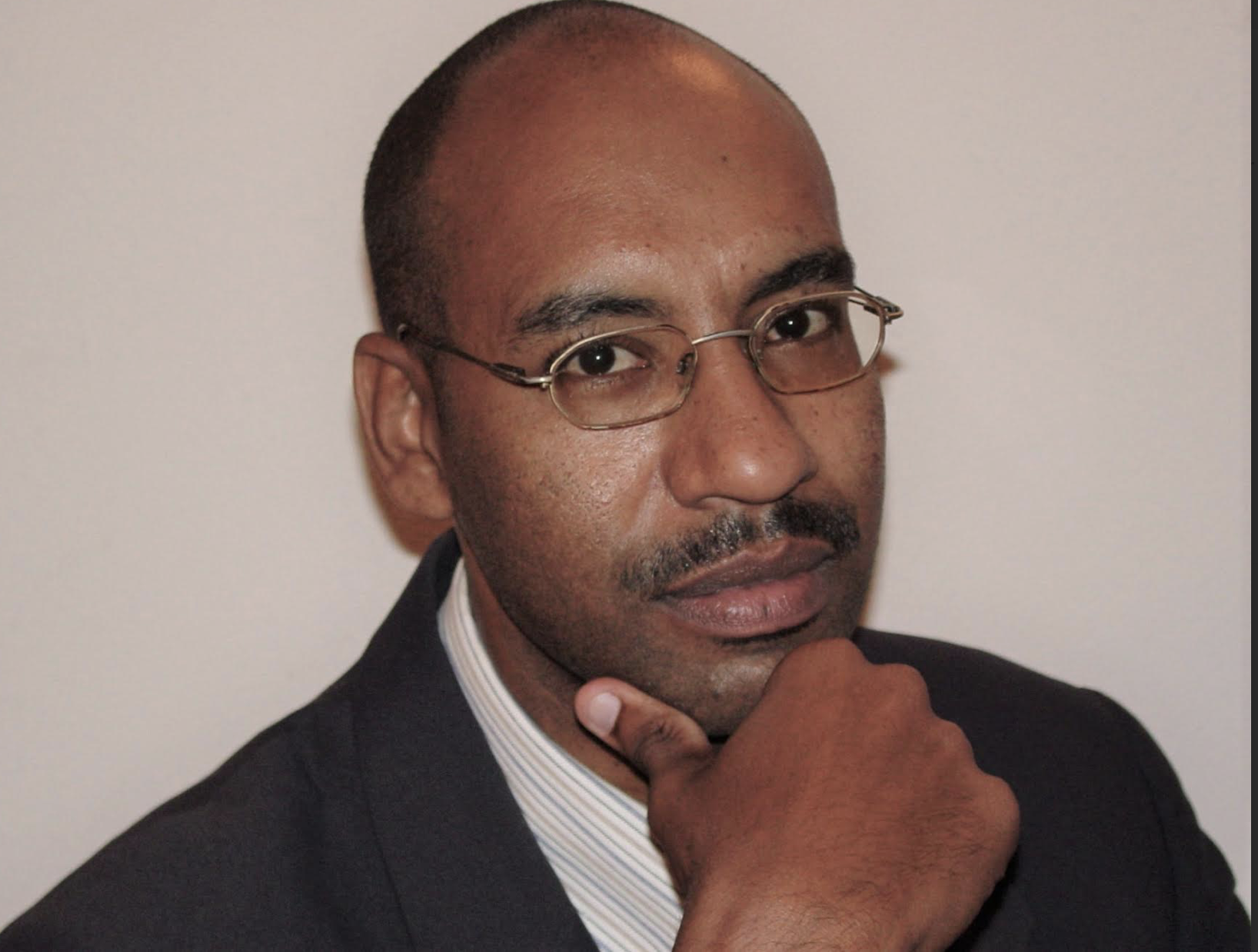
Grenville Phillips II is a Doctor of Engineering and Chartered Arbitrator. He can be reached at NextParty246@gmail.com





The blogmaster invites you to join the discussion.