



Pip: Welcome to Barbados Underground's weekly digest — where the world's messiest problems get the clear-eyed treatment they deserve, and occasionally the treatment they don't.
Mara: David has been looking at the shape of global power right now — specifically how the old Cold War order has given way to something far less predictable, and what that means for every conflict currently in motion.
Pip: Let's start with the geopolitics.
The Fragmented World Order
Pip: The central tension here is a paradox: the most powerful nations on earth are involved in wars they cannot seem to finish. Ukraine and Russia, Israel and Palestine, now the United States and Iran — and the question is why military dominance no longer translates into resolution.
Mara: The post frames it directly: "these conflicts show a geopolitical landscape that looks less like the bipolar world of the Cold War period and more like a fragmented arena where power is selectively exerted, and smaller nations are caught in the melee."
Pip: So the old rulebook is gone. The Cold War was dangerous, but it was legible — two superpowers, a shared set of guardrails, and enough mutual deterrence to keep things from dissolving into chaos.
Mara: That predictability mattered. The post makes the point that nuclear weapons deter wars broadly but do not deter the kind of grinding, destabilizing conflicts that strain global harmony without ever triggering the ultimate threshold. Superpowers can project force but cannot easily impose outcomes.
Pip: Iran is the sharpest illustration of that. It cannot match the United States missile for missile, so it doesn't try to.
Mara: Right — the post notes Iran operates through proxies and strategic leverage, including control of the Strait of Hormuz, "that narrow waterway through which a significant portion of the world's oil supply flows." Threatening energy markets and regional stability is its version of deterrence.
Pip: And then there is the Trump variable — a leadership style the post describes, generously, as a desire to win in order to project strength. Meeting unconventional tactics with dominance-first negotiation is its own kind of gamble.
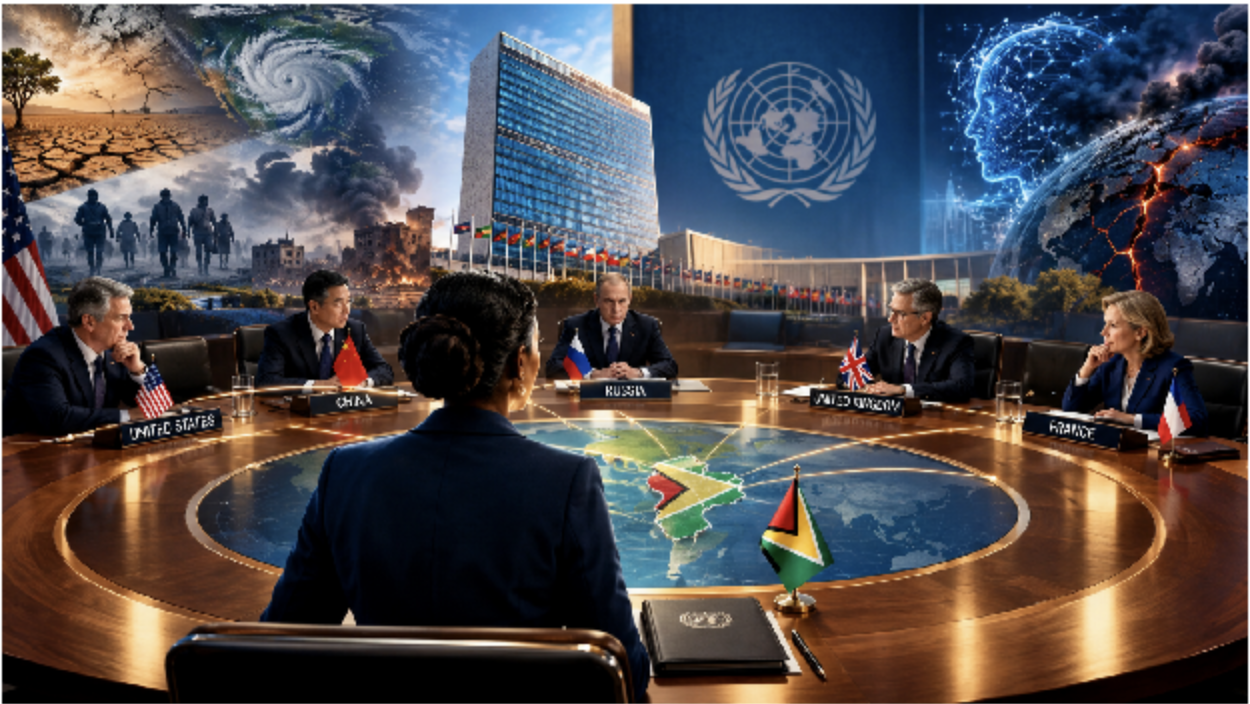
Mara: The post also flags China as the emerging weight on the scale — not through direct conflict, but through economic might that shifts every calculation. Power, the argument goes, is now amorphous, which makes resolving conflict nearly impossible.
Pip: A global environment defined by uncertainty where every move carries us to the brink. Not a comforting summary, but an honest one.
Mara: The through-line is that the structures we built to manage great-power rivalry have not kept pace with how power actually moves now.
Pip: More on that next time — the brink has a way of generating material.



The blogmaster invites you to join the discussion.