



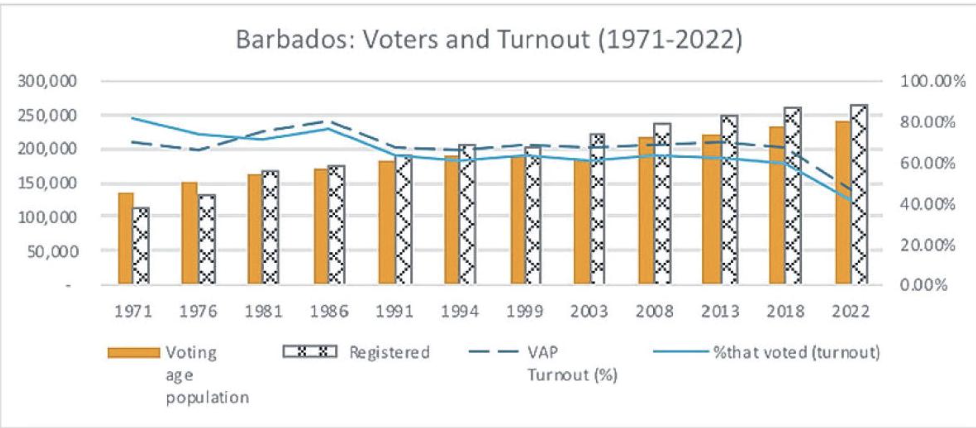
The simplest explanation found to explain voter apathy: is a lack of interest, motivation, or concern about the political process. It shows up not only in low voter turnout but also in a broader disengagement from civic duties, of which voting is only one example. This distinction matters. Some argue that the voters’ list needs to be “culled” to improve turnout percentages, but this ignores a deeper truth: many Barbadians vote because it seems like the right thing to do, not because they feel any genuine civic obligation to participate.
Hinds (see Dr. Kristina Hinds’ article) obviously is a conservator of the petite bourgoise ‘democracy’, the status quo.
For to deal with a matter of such import by relying on dated emotional triggers is generally unhelpful and does not make contact with the central failings of her so called representative democracy.
For a country which has serially tried to use voting to impact “governance”, and failing at every turn, it has surely long become a truism that voting changes nothing, and if it did it would have long been illegal. More fundamentally, that this system has long past it usefulness, if it ever has any.
But instead of addressing structural problems, Hinds has opted to attempt extending the life of a dead or dying system.
Pachamama President, None of the Above Party. The Party of Non-Voters. The Party for the Militarization of Government.
Source: Pachamama
As we go about our daily lives, we hear constant appeals in the traditional media urging Barbadians to “go out and vote.” This is a simplistic expectation. Equally simplistic is the tendency to heap all blame on the political class. While politicians bear part of the responsibility, the lack of civic engagement also reflects the shortcomings of NGOs and citizens themselves.
Political polarization in Barbados has mirrored global trends, bringing with it socioeconomic fallout. This polarization has eroded trust in key national institutions — the Courts, Barbados Police Service, Parliament, and regulatory agencies. These are key institutions that help define the character of a country, declining confidence in them must give reason to pause.
How do we encourage and promote a dissenting voice – a requirement of our kind of democratic system – and at the same time avoid being consumed by it? This is the challenge we face as a new republic, albeit without a revamped Constitution.
Like most things in Barbados, we prefer to operate in drift mode, unable or unwilling to repair the crack in the road before it becomes a large pothole. When fixing potholes elevates to a national issue, we know there is a more structural problem to be addressed.
What will it take to fix the status quo? Those charged to lead seem happy operating in a mediocre landscape. Those of us educated to lead have obviously been miseducated given our unwillingness to step up. Where is the social uprising to come?
Good luck as we thrive to be a government of the people, from the people, and accountable to the people.



The blogmaster invites you to join the discussion.