← Back

Your message to the BLOGMASTER was sent

Moral leadership represents the soul of any strong nation. There is that word again, soul. Yet, Barbados has stumbled through a series of startling misjudgments many have been arguing has propelled us to moral crisis in the country where there is a preponderance of focus on political spectacle instead of substance. The blogmaster wishes to offer three events as evidence of contributing to the moral decline in Barbados: a public clash over which Jamaican dancehall stars should have been welcomed here, closing schools to permit school children to listen to a band, and continuing to popularised the Trojan Riddim artists. These episodes, taken together, illustrate a leadership more enamoured with optics than ethics.

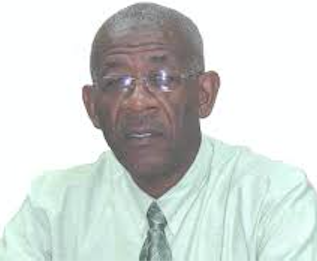
A smiling man in a formal shirt and tie, seated and looking at the camera.
Darwin Dottin, Crime Consultant

It began with a public showdown: Assistant Commissioner Bertie Hinds opposed permitting performances by Jamaican artists with lyrics steeped in violence and vulgarity. At the center of controversy was none other than Vybz Kartel and Movado, prolific dancehall artists whose lyrics often glorify gun culture and sexual aggression. Hinds warned that allowing such figures to perform risked transmitting warped values to the nation. Commissioner Darwin Toppin, however, brushed aside these concerns—prioritizing permits and logistics over moral clarity. The fallout? Conflict cracked the unity in the Barbados Police. When our enforcers of law and order clash publicly over a simple issue of guarding against indecency what moral anchor is left for citizens and youth? The rediculous spectacle of their disagreement eroded respect, implying that morality is optional when convenience beckons. In the end the concert fizzled but the damage was done.

Next came the education spin the wheel decision. The then Minister Mia Mottley closed schools to host a crime protest concert featuring Edwin Yearwood and Krosfyah. Some believe that it sent a dangerous message: that education can be sidelined for political theatre, and that deep social fissures can be addressed with popular music and not substantive policy interventions.

The final act in this moral ungrounding was the Trojan Riddim situation. The local music video that featured Barbadian artists Lil Rick, Peter Ram, Mole, Screwface, Mallis, Lead Pipe, Brutal Crankstar, Chiief Diin, and Quan De Artist, rapping over a riddim filled with gun talk and sexual intimidation. Only after a public backlash did Mottley, now Prime Minister, declare herself “horrified,” demanding apologies and the video’s removal. the video was never removed and the Prime Minister and government agencies, including the National Cultural Foundation (NCF) have continues to contract these artists who continue to manufacture smut for local consumption.

There is no need to be prolix on this matter. The point is made.


Discover more from Barbados Underground

Subscribe to get the latest posts sent to your email.

41 responses to “When Moral Leadership Bows to Popularity”


  1. The word “woke” has become bastardised over the years. Its origin came out of the African American lexicology. This group would implore their people to “stay woke” (conscious and alert) when out and about in certain known locations of the USA where their lives where endangered. I’m sure we have heard the term sunset town. For example, Bridgetown suburbs such as Belville were off limit to black Bajans after sunset. If caught out, the forfeiture of their life could be justified by the local Watchman.

    Moral leadership under this current leadership has always been non existant. The crisis of Barbados was due to the permission given to foreign entities to take possession of our patrimony, and our ancestral land. With the encouragement by Mia to increase Barbados population by 80,0000 we will see a great replacement of our people.These decisions are carried out by a leader who is under the spell of greater external powers.

    The link below exposes how Cyprus and Barbados are twinned in their desire to oust their own people to be replaced by others. Why have our journalists not carried out similar exposés to this fine journalist.

    We have a plethora of foreigners who dominate the real estate industry in Barbados. Our largest realtor is from Jewish East European ancestry who is affiliated to the mainland Israel. It would be interesting to know how many Jews are purchasing real estate in Barbados.

    Our Prime Minister is part of the problem. Black Americans would say that she has not remained woke and has gone off code.

    I hope that our domestic Bajans such as Bush Tea, Artax, Donna, Cuhdear Bajan and a host of others will start to call out what’s going on in Barbados and put a halt to Mia’s contribution towards our countries soil and land being handed over on a sliver platter to groups whom have no respect for us.

    https://m.youtube.com/watch?v=4ksUrcMBsVU


  2. Barbados

    “Black: 92.4%
    Mixed: 3.1%
    White: 2.7%
    South Asian (Indian): 1.3%
    Other: A small percentage includes East Asian and Middle Eastern groups.”


  3. Reading The Tales of Entrepreneurship …. & noted that the growth of the Barbados economy occurred during the period of time it pursued policies promoting free trade & fiscal restraint. Sir Arthur Lewis ”industrialization by invitation” played a role in policy setting with Andrew Downes identifying 6 elements 1) Focus on the international market; 2); Pursuit of policy measures to make products internationally competitive; 3) Strategic alliances with foreign industrialists; 4) State’s key role in defining policy; 5) Investments in human resource development; and 6) Use of local resources, such as agriculture & tourism. Said to be incentive driven, it supported entrepreneurship.

    We also have a fundamental issue re economic policies that will drive the economy


  4. “At the center of controversy was none other than Vybz Kartel and Movado, prolific dancehall artists whose lyrics often glorify gun culture and sexual aggression. Hinds warned that allowing such figures to perform risked transmitting warped values to the nation. Commissioner Darwin Toppin (Dottin), however, brushed aside these concerns—prioritizing permits and logistics over moral clarity.”

    @ David

    I believe you’ve misrepresented the truth…… perhaps not intentionally.

    I remember Vybz Kartel and Mavado performed in Barbados on separate occasions in October and November 2009.

    However, as it relates to the 2010 unity show featuring both artistes, I also recall when then CoP Dottin, before going on vacation, said he was against bringing in those artistes, and that he did not have the manpower to police the show, and would therefore not grant the required permit.

    Dottin subsequently admitted that Hinds undermined his orders and authority regarding granting a permit for the show.

    According to a Nation Newspaper article entitled, “Angry Chief,”

    “In an exclusive interview, a visibly upset Dottin told THE NATION yesterday that he first learnt of the decision to grant licences for the show through a radio news flash while on his way to Grantley Adams International Airport.”

    “Confirmed reports indicated that Hinds, who acts as commissioner while Dottin is on leave, made the decision to grant the promoters requested licences for the show during a meeting yesterday.”

    Additionally, you should read BU’s March 16, 2010 article, “Update: Movado And Vybz Kartel – Stay the hell out of Barbados!”

    However, the show was subsequently cancelled by then PM Thompson after, according to him, persons were mainly concerned with the idea of these artistes being portrayed as role models.


  5. But where are these ‘morals” oft cited?

    Are there any within the legal profession?
    Politics?
    Religion?
    Capitalism?
    Neoliberalism?
    Christianity?
    Academia?
    Any other profession?
    International law?
    Woke-ism?
    Have not all our ‘leaders” been ‘men’ lacking this ill-defined characteristic?
    And if men lack morals, might it not be time to seek them, morals, with AI networks?


  6. @Artax

    What was misrepresented? Isn’t it fair to say Hinds and Dottie were not on the same page regarding the staging of the show?


  7. The Guardian reports on Ray Dalio, the founder of Bridgewater Associates books, Principles for Dealing with the Changing World Order and How Countries Go Broke: the Big Cycle, described how large annual spending deficits and unsustainable debt growth had brought the US economy to the brink of a debt crisis – a situation that had worsened over many years. He further noted “Classically, increased wealth and value gaps lead to increased populism of the right and populism of the left and irreconcilable differences between them that can’t be resolved through the democratic process. So democracies weaken and more autocratic leadership increases as a large percentage of the population wants government leaders to get control of the system to make things work well for them.” Is this analogous to Barbados


  8. Popularity.


  9. Come on, David.

    Yes, it’s “fair to say Hinds and Dottin were not on the same page regarding the staging of the show?”

    Is it FAIR to apportion blame to Dottin for Hinds’ actions?

    In your contribution you mentioned that “Commissioner Darwin Toppin (Dottin), however, brushed aside these concerns—prioritizing permits and logistics over moral clarity.”

    Therein lies the misrepresentation.

    It was HINDS who UNDERMINED Dottin’s orders, therefore “prioritizing permits and logistics over moral clarity.”

    Any media outlet announcing that information would’ve acknowledged the mistake, made the necessary corrections and issued an apology.


  10. @Artax

    The blogmaster is acutely aware that both were always at loggerheads on a myriad of issues. Let us agreed to disagree.


  11. Woke means awakened or enlightened like Buddha (lit. the awakened one) circa 500 BCE and Yeshua Christ .

    Master Teacher
    “Stay Woke”
    “To be woke is to be black”
    “If your woke you dig it”
    The woke interpretation as African American hip slang used by Blues artists such as Lead Belly in 1938 or Harlem Author William Melvin Kelly Georgia Anne Muldrow or in 60s and Erykah Badu a decade ago is the trope from White Racists who picked it up during George Floyd protests and they were on the backfoot.

    So who defines woke, don’t listen to disgruntled white racists who use it an as a stealth insult to denigrate black people without appearing to be full on racist

    We all know Trump’s war on woke is prejudiced and biased like his face

    “Woke is definitely a black experience — woke is if someone put a burlap sack on your head, knocked you out, and put you in a new location and then you come to and understand where you are ain’t home and the people around you ain’t your neighbors. They’re not acting in a neighborly fashion, they’re the ones who conked you on your head. You got kidnapped here and then you got punked out of your own language, everything. That’s woke — understanding what your ancestors went through. Just being in touch with the struggle that our people have gone through here and understanding we’ve been fighting since the very day we touched down here. There was no year where the fight wasn’t going down.”

    “Most people who are woke ain’t calling themselves woke. Most people who are woke are agonizing inside,” Muldrow says. “They’re too busy being depressed to call themselves woke.”

    Now don’t even get me started about dancehall or Hip Hip moans and gripes
    there were gangs drugs guns before music genres started singing about it


  12. The following excerpts were taken from a March 16, 2010 BU article entitled, “Update: Movado And Vybz Kartel – Stay the hell out of Barbados!,” written by the Blogmaster himself.

    “The blogmaster has no fear in repeating the call posted in this space in 2010 – Vybz Kartel and all the smutty dancehall artistes, stay the hell out of Barbados!”

    “In light of Barbados’ current challenge with tackling deviant behaviour in the wider society and particularly among the youth, it seems a no-brainer to BU that as a country we should take a deep breath, take a step back and tell the Jamaican dancehall duo to stay the hell away from Barbados at this time.”

    “Of CONCERN is the FACT Commissioner Darwin Dottin who is responsible for maintaining law and order in Barbados HAS EXPRESSED DISTASTE AT THE STAGING OF THE REGGAE show which has been dubbed a peace concert.”


  13. A quote from Bertie when asked about approved not approved of the canceled so called peace show with Kartel and Movado.

    “I have nothing to say, full-stop.”


  14. “When contacted for comment that he acted CONTRARY to the FORCE’S PROTOCOL, Hinds would only say: “I have nothing to say, full-stop.” ….”


  15. More gobledeegook.


  16. And more.


  17. “The blogmaster is acutely aware that both were always at loggerheads on a myriad of issues. Let us agreed to disagree.”

    Or just accept that you were wrong!


  18. @enuff

    Are we wrong that there is HOPE?


  19. Mentioning HOPE was meant to hurt me? LMAO, boy bye!!!


  20. Hurt Enuff? You politicos are made of teflon stuff.


  21. TLSN September 2 at 8:11 “The crisis of Barbados was due to the permission given to foreign entities to take possession of our patrimony, and our ancestral land.”

    Nope.

    The crisis began when you English folks came here and killed off the indigenous people with foreign European diseases, and then kidnapped and enslaved hundreds of thousands of Africans to do the work they were too lazy to do. And even the priests and bishops, alleged moral leaders enslaved and overworked, and raped your ancestors and mine.


  22. @David “closing schools to permit school children to listen to a band”

    Would you have objected if the children left school to listen to Wynton Marsalis at Frank Collymore Hall as has happened some years ago?


  23. @David “whose lyrics often glorify gun culture and sexual aggression.”

    Jean and Dinah
    Rosita and Clementina
    See how dey posing?
    Bet ya life is something they selling
    And if ya catch them broken ya can get it all fah nothing
    Doan make a row, de Yankees gone…

    I learned this song as a toddler, and I still remember it. Does this song glorify prostitution?


  24. @TLSN “I hope that our domestic Bajans such as Bush Tea, Artax, Donna, Cuhdear Bajan.”

    Who says that I am a domestic Bajan?

    And if you are so worried that Bajans will be replaced by others why don’t you come home and add a few or many children to the population?


  25. David you need to man up and apologize.


  26. Interesting finding and what should be of concern to us as a people.

    Human development ‘not progressing’

    Human development in the region has not been progressing since the COVID-19 pandemic.

    That is the finding of the 2025 Human Development Report.

    Rodrigo Barraza, Sustainable Development Goals technical specialist at the United Nations Development Programme’s Regional Bureau for Latin America and the Caribbean shared this information yesterday.

    Noting that the full report will be launched in the coming days, Barraza told day two of the Second Wider Caribbean Regional Risk Conference at Wyndham Grand Barbados, Sam Lords Castle that the region’s progress on the Human Development Index had stalled.

    The index, he said, measures human well-being beyond income, focusing on “the opportunity to live a long and healthy life, having access to education and securing the resources needed for a decent standard of living”.

    “For decades, the human development index in Latin America and the Caribbean made steady gains . . . and with the COVID-19 pandemic, it caused an important setback in the index for the first time in history,” Barraza told the conference ahead of a related panel discussion on Has The Global Sense Of Societal Fragmentation Trickled Down To The Region?

    “So what we saw were two years in a row of the [downward] trend in 2020 [and] 2021 and the rebound in 2022 . . .barely reached . . . the pre-pandemic levels, but not in all the countries we measure the index, so the region has not returned to its pre-2020 trajectory.”

    At risk

    Barraza said that this outcome “puts achievements of development in education, in health and income possibilities at risk” at a time when global uncertainty and volatility are increasing.

    “This persistent volatility compounds . . . this low human development progress, but also compounds . . . other declining trends related to well-being, as in poverty reduction efforts, growing inequalities and reduced fiscal space,” he stated.

    “So in consequence, we are entering a new era of uncertainty that reshapes how risks are understood. So these trends are not just temporary turbulence, but this is a new territory of unknowns with higher levels of unpredictability.”

    He said that UNDP’s main concern about uncertainty is that it generates a growing sense of disempowerment among people.

    “Human Development is about agency, it’s about people having the possibility to live the life they want and be an actor of their lives. So uncertainty disempowers people and reduce the freedoms and the agency that people have,” he said in relation to Latin America and the Caribbean.

    “We made some qualitative analysis for . . . Latin America and the Caribbean, and what we found is that people [are] feeling less in control of their lives and less optimistic about the future.”

    Barraza also said that technologyrelated inequality and the erosion of public trust were two areas impacting human development in the region.

    “If access to technologies remains unequal, technologies could increase existing gaps instead of creating opportunities for human development. This is also relevant because technology . . . is increasing also polarisation with fake news and all these dynamics related to politics,” he said.

    “Trust is the glue of social life, but in Latin America and the Caribbean, it has been eroding for the last years. Why? Because people [are] trusting more their closest circle, their family, but the . . . confidence in others in [the] community and in government is clearly going down.” (SC)

    Source: Nation


  27. Clearly former Minister Wood is echoing the concerns of the BU echo chamber.

    Update needed on BESCO

    Someone in Government and/or CoopEnergy needs to update the country about the status of Barbados Energy and Sugar Company (BESCO). Is BESCO a functioning company with its own management team and employees, assets, and financial autonomy?

    In a practical sense, does BESCO have management and financing responsibility for Portvale factory, or is the Barbados Agricultural Management Company (BAMC) responsible for the operation at Portvale factory, despite the announced closure of BAMC in December 2023?

    An impasse between the Government and Barbados Sustainable Energy Cooperative Society Limited (CoopEnergy), parent company of BESCO, was highlighted by Colonel Trevor Browne, president of CoopEnergy, in an update to members of CoopEnergy on November 15, 2024.

    Browne noted that the physical list of assets to be transferred and their valuation along with other key information were not provided in accordance with the memorandum of understanding signed by the two parties.

    Subsequently, an article entitled Crop us out! in the Midweek Nation of April 16, 2025, quoted Browne as saying that nothing had changed and as it stood, CoopEnergy had nothing to do with either Portvale factory or the sugar industry. Browne suggested that information on the sugar industry should be obtained from the Government, which continues to be the current owner of Portvale factory and the sugar industry.

    Important questions arise from Browne’s revelation. The first relates to the status of BESCO? If the parent company of BESCO is not involved in the operation at Portvale factory and the sugar industry, then by what arrangement is BESCO involved? If BESCO is a functioning company, has its ownership been transferred to the Government?

    BESCO sign

    Alternatively, if nothing related to the management, financing, and ownership of the sugar industry has changed, why is the sign of BESCO prominently displayed at Portvale factory?

    The second important question relates to the mechanism (and quantum) through which the Government continues to fund the operation at Portvale factory and the sugar industry. Specifically, what is the source of funds, and through which company managing the sugar industry are the funds being channelled?

    It is pellucidly clear that the stalemate between the Government and CoopEnergy is having a deleterious effect on the sugar industry. Sugar production reached an historic low of 3 800 tonnes in b2025, which is 1 000 tonnes or 20.83 per cent less than the 4 800 tonnes in 2024.

    With 96 000 tonnes of canes harvested (compared to 109 463 tonnes in 2024), the industry also reached its most inefficient level in history with the tonnes of canes to tonne of sugar – the sucrose content – reaching 25.3:1. This means that compared to the international benchmark for efficient sugar production of ten tonnes of canes to one tonne of sugar (10:1), the level of inefficiency in Barbados was a staggering 153 per cent.

    – Anthony P. Wood, Minister of Agriculture and Rural Development in the Owen Arthur administration

    Source: Nation

  28. NorthernObserver Avatar

    Wood wasting time. The GoB incorporated two entities BESCO and ABC, with the stated “intent” to sell them. The sale to Co-Op never closed, so the GoB still owns BESCO and reportedly the asset transferred from BAMC to BESCO was Portvale factory. Hence the sign.
    Wood would like to know who owns BESCO? Like CBL it’s the Bajan taxpayers. And since CBL sold its primary asset, twice it seems, in the dead of night, possibly BESCO did the same?


  29. Did Minister Weir not publicly state on Brass Tacks – in response to a direct question from David Ellis, that he was UNABLE to speak to matters on the sugar industry UNLESS accompanied by Clyde Mascoll – who was apparently out of the country at the time?

    Is Mascoll not employed directly in the PM office?
    Surely, either Mascoll or the PM knows the answers to these pressing questions…

    Unless of course we are awaiting yet another ‘Report’ on the issue – which now has to join the queue behind the;
    – Four Seasons report
    – Clear waters report
    – HOPE report
    – STEAL Houses report
    – Radical report
    – QEH hematology upgrade report
    – MULTIPLE BWA reports
    – $7,500 political contributions cheque report
    ….etc

    What a place!!!


  30. @NO

    That said (to your comment) we listened to deputy general secretary of BWU advising all the companies (negotiating to own) were at the recent bargaining table. Go figure.


  31. Trinidad. “LOCAL distributor AS Bryden & Sons Holdings Ltd (ASBH) has announced that it has purchased a 50% interest in Armstrong Agencies Ltd (AAL) in Barbados, creating a partnership between the two companies.”

  32. WU (Whistleblowers United) Avatar
    WU (Whistleblowers United)

    Material no longer falls off of a truck.

    A small country like ours not having whistleblowers is a prescription for unbridled corruption.

    With the resignation of DS, now would be a good time for whistleblowers to leak information. Note that there would still be suspicion and finger pointing, but the thought of an angry, bitter and disgruntled former minister getting his revenge would be at the front of everyone’s mind. (This assumes he was clean and not part of the corrupt cabal we call a cabinet)

    Whistleblower(s), this is your time.


  33. Why would Sutherland engage in whistleblower activity if his wife has a political pick or if he is promised a soft landing like Trevor Prescod and John King to name only two?


  34. @Roslyn ”So democracies weaken and more autocratic leadership increases as a large percentage of the population wants government leaders to get control of the system to make things work well for them.”

    This is very pertinent globally. I believe that it is also the reason that populist government are pushing the divide between existing domestic populations and immigrants aka the USA and UK now.

    Because this is the old ‘divide and rule’ strategy, meant to shift focus from the real issue. That is, that wealth lies in the hands of so few.

    It is those few and the rest with little and if left unattended, the general populations will turn against the few.

    Hence, the need for a contrived conflict between the ‘rest’…let them fight amongst themselves, if not, they will turn on the few.

    Think wider and deeper. The immigration issue is being used as a lever, but it is a distraction from the real issue.


  35. @David,

    Unless the country, whether government or private enterprise, can expand the available industries for opportunities, of course development will be stagnant.

    And instead of developing true culture, a culture of learning, respect and discipline, the alternative distraction of Wukup provides an outlet for the masses.

    How can you have progress when there is no goal, or the goal is a wine up, rum punch, spliff and some bump and grind?


  36. @David
    Memory says”labour” was promised an ownership share in one or both of the Newco’s?
    Hence they have an interest. Unions are struggling to stay relevant. Consummation of that share would be a feather in the cap of the other St.George MP.

    @Hants
    You only looking to fire up Bushie!!


  37. From Extractivism to Impact: What I learnt in Zambia

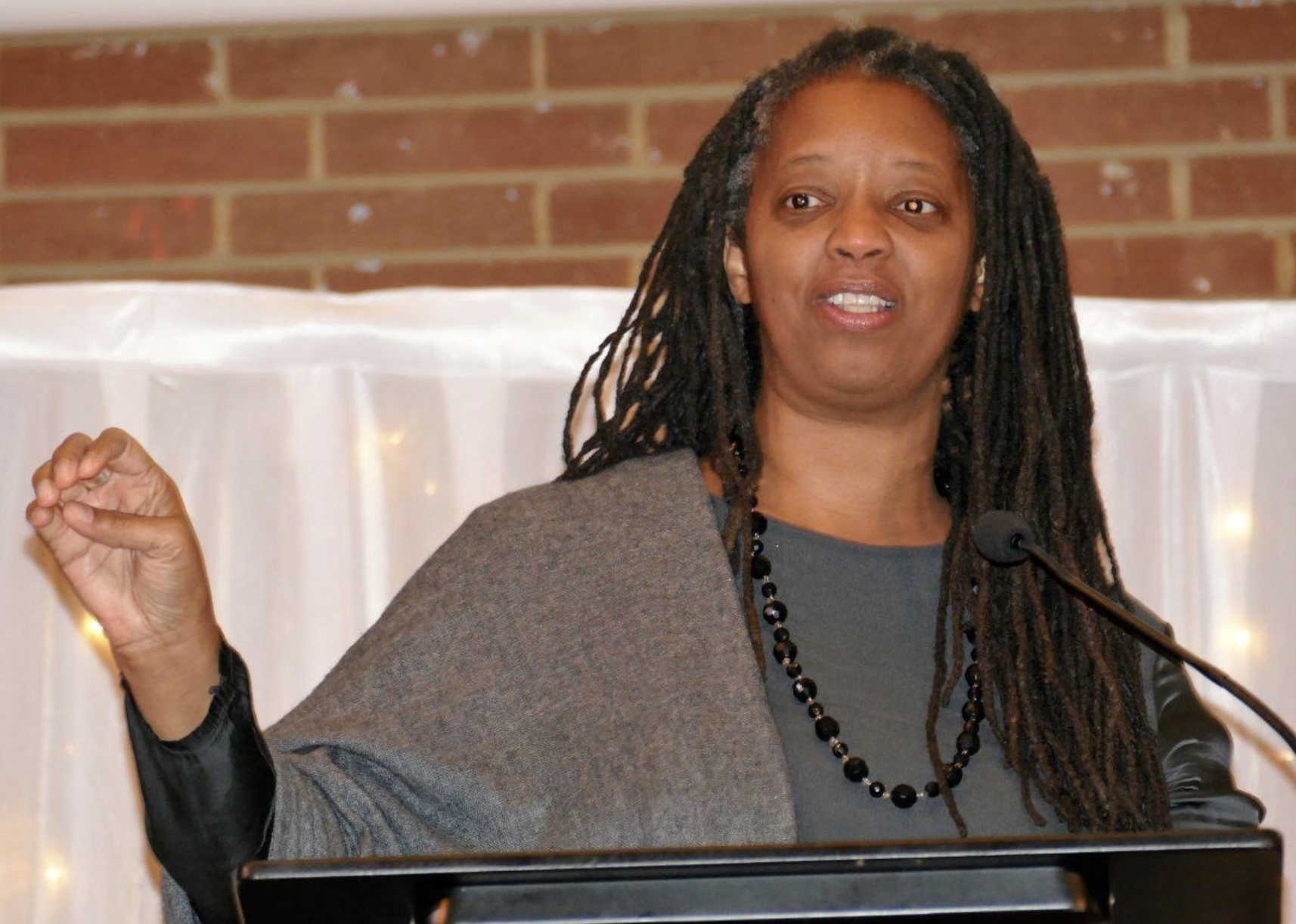
    Written by caribbeantradelaw in Trade Alicia Nicholls

    What good is research if it never reaches the people it is meant to assist? That question echoed in my brain as I boarded the plane from Zambia to South Africa, the first stop on my way back home to Barbados. In the preceding several days, I had been in Lusaka, the capital of the beautiful landlocked African country of Zambia, a country known for its copper exports and being home most notably to the iconic Victoria Falls on its border with Zimbabwe. I had joined fellows from across the Global South for an in-person convening under an inaugural OXFAM Fellowship Programme in which I have been participating for the past few months.

    I was deeply grateful for the chance to finally meet the mentors and scholars whose names and faces, until then, I had only seen on a screen during our monthly Zoom meetings. Drawn from across the Global South, we came together in beautiful Zambia not just as bright-eyed early career academics, but as thinkers committed to reshaping the conversations around justice, equity, and the global order.

    As a PhD candidate and early-career scholar, I found the experience both inspiring and intellectually-stimulating. Sitting in workshops where our mentors spoke about the role of public intellectuals, I could not help but think of the giants whose work shaped my own worldview—Angela Davis, Cheikh Anta Diop, Walter Rodney, and so many others who never shied away from challenging power in their own scholarship. To be honest, the imposter syndrome was real at times, but so too was the motivation: the reminder that, in my own way, I too could contribute to carrying that torch forward in my research on trade and global financial governance issues.

    Over the four days, we engaged in a series of workshops and practical sessions designed to equip us with the tools to move our work beyond the pages of academic journals and to bring it to the communities and struggles that inspired it in the first place. One of the most defining moments for me was an evening dialogue with Zambian community leaders organized by the Fight Inequality Alliance at an Arts Centre which too had its own inspiring origin story. The message from the leaders, a mix of young people and experienced ‘aunties’, was sobering. Too often, academia feels “extractive.” Researchers arrive, collect data from communities, and disappear, leaving behind little of value for the very people whose lived experiences inspired the research. The published research is buried in journals which are often inaccessible behind pay walls. 

    This struck a chord with me. In academia, our ‘street cred’ comes from publications, particularly in high-impact journals. While important, these are publications that few people outside of academic and policy circles will ever read. Unless that research is then translated into accessible forms such as policy briefs, blog posts, short videos or documentaries, it remains out of reach for the communities who could benefit most. Yet, the incentive structure for promotions and other accolades in academia rarely rewards accessibility or impact of our research. If we are to move from extractive research to impactful scholarship, we must push for an incentive system in our universities that values on-the-ground outcomes as much as journal citations.

    As I watched Lusaka disappear beneath the clouds, I reflected deeply on my own journey. Fourteen years ago, fresh out of my Master’s in Trade Policy and about to pursue my Bachelor of Laws, I launched my blog Caribbean Trade Law and Development. My goal was simple. It was to make otherwise esoteric trade issues accessible to everyday readers and to give me a platform through which I could, unfiltered by others, share my thoughts on burning trade issues. Did it give me visibility? Most definitely. Did it help my career as an academic? No, not really. Blog posts do not count toward promotions. Indeed, as I transitioned from the private sector into academia, I had to prioritize traditional academic publishing to “get ahead”, much to the neglect of my blog. Yet, Zambia reminded me that scholarship has a greater purpose when it is accessible. Only then can it move from being extractive to transformative.

    I am grateful to OXFAM and to convenor, the Zambian economist, Prof. Grieve Chelwa, for creating this space of reflection, learning, and growth in Lusaka. This fellowship is already reshaping how I think about my role as a scholar, and I look forward with anticipation to what lies ahead.

    Alicia D. Nicholls, B.Sc., M.Sc., LL.B. is an international trade specialist and the founder of the Caribbean Trade Law and Development Blog.


  38. @NO

    Makes sense.


  39. PM MAM.


  40. Remember thisÉ

The blogmaster invites you to join the discussion.

Trending

Discover more from Barbados Underground

Subscribe now to keep reading and get access to the full archive.

Continue reading