← Back

Your message to the BLOGMASTER was sent

The Mottley government ran a political campaign in 2018 and 2022 on a commitment to being transparent and delivering good governance. In her victory speech in 2018 she proclaimed, “We believe that transparency and accountability are not optional—they are essential to restoring trust in public life.” Seven years later is enough time to make a judgement call on whether Mottley has delivered on the rhetoric.

There has been no haste to implement transparency legislation. There has been no haste to ensure the Public Accounts Committee (PAC) does its work. Despite ‘pretty talk’, Prime Minister Mottley risks falling into the same bucket as her predecessors—talking transparency while sidestepping implementing legislation to enforce it.

The Mottley government took office in 2018 and immediately defaulted on its debt to local and international bondholders. It hired a little-known firm by the name of White Oak Advisory to assist and claimed the right to execute a no-bid contract given the dire economic circumstances that faced the country. The late Walter Blackman joined others on Barbados Underground by being über-critical of the decision, suggesting homegrown actors should have been contracted to do the job if restructure was the decision to make. The Financial Times published an article highly critical of the US$27 millions and other retainer fees paid to White Oak as being “absurd” for a small country like Barbados. Prime Minister Mia Mottley was not deterred.

Even if some expertise was required to deal with international bondholders, why did the Mottley government continue to support its decision to contract White Oak Advisory because of savings associated with the restructure of local government securities? There was no complicated negotiation required, it was a directive administered by the Central Bank of Barbados to apply the haircut on a few Barbadians holding bonds AND notably the National Insurance Scheme.

Since 2018 there have been questions about the full scope of White Oak’s role in Barbados. Although there have been snippets in the media to support that White Oak remains government’s financial advisor, details surrounding its function have lacked transparency. Recently the name of White Oaks “popped-up” as the financial advisor that assisted with the US$500 sovereign bond issue. Resident BU family member Northern Observer has been highly critical of the coupon rate of 8% which contrast with lower rates offered in the local market.

White Oak was invited to Barbados in 2018 to assist with the restructure of debt when the government decided to undergo a Selected Default and enter an IMF program. Seven years later the government has indicated it will terminate the arrangement with the IMF, however, the relationship with White Oak Advisory continues. The Prime Minister owes it to the Barbadian public to ‘fully’ disclose the nature of government’s ongoing relationship with White Oak Advisory, what it entails, what it the cost, and why it remains necessary. In a democracy, taxpayers are not just deep pockets, we are key stakeholders and we deserve and demand full transparency.


Discover more from Barbados Underground

Subscribe to get the latest posts sent to your email.

52 responses to “White Oak Advisory has deep roots”


  1. Is our fee on foreign exchange transitions in play?

    Digital dependency a hidden trade imbalance

    by PROFESSOR C. JUSTIN ROBINSON

    CANADA RECENTLY abruptly cancelled its digital services tax less than 24 hours before collecting US$2 billion from tech giants.

    The trigger wasn’t Silicon Valley lobbying – it was United States (US) President Donald Trump’s threat to suspend trade negotiations, calling the tax “an attack on America”.

    While this capitulation is in the area of tax sovereignty, it illustrates the leverage the US has when it is willing to weaponise trade and should alert the world to a stark reality: digital dependence on the US and how digital infrastructure can become a lever of economic coercion that extends far beyond traditional trade relationships.

    The scale of American digital dominance

    While global debates focus on China’s trade dominance, there’s been little scrutiny of America’s digital hegemony. Five US companies – Google, Amazon, Meta, Apple, and Microsoft – control the world’s digital infrastructure.

    Google processes 90 per cent of global searches.

    Apple and Google’s app stores determine which services reach smartphones worldwide.

    Meta connects three billion users daily.

    This concentration means billions of people, businesses, and governments depend on American-controlled platforms for communication, commerce, data storage, and essential services. Yet while “dominance of and dependence on China” in supply chains sparks constant debate, similar “dominance of and dependence on US tech” is accepted as natural.

    When infrastructure becomes weapon

    Digital platforms function as critical infrastructure but remain under private control aligned with specific national interests. Recent examples show how this creates leverage: Connectivity control: Elon Musk’s Starlink decisions affected Ukraine’s military communications.

    App store power: Removing applications can eliminate services from entire populations Payment systems: Digital processors can isolate countries economically.

    Border control: Foreign students seeking US visas may face social media searches – a digital strip search.

    The sovereignty challenge

    This digital concentration raises fundamental questions about economic autonomy. When essential functions depend on foreigncontrolled platforms, traditional concepts of independence require re-examination.

    Digital infrastructure can be modified or weaponised much faster than physical infrastructure, creating new dynamics in international relations. The issue extends beyond market competition to questions about who controls the infrastructure enabling modern economic activity.

    The China exception

    China represents the most comprehensive example of digital sovereignty, having developed domestic alternatives across virtually every major platform category: Search: Baidu dominates with over 70 per cent market share in China.

    Social media: WeChat (Tencent) combines messaging, payments, e-commerce, and government services for over 1.3 billion users.

    E-commerce: Alibaba’s Taobao and Tmall platforms handle more transactions than Amazon globally.

    Payments: Alipay and WeChat Pay process the majority of China’s digital transactions.

    Video: Douyin (TikTok’s Chinese version) and other domestic platforms dominate entertainment.

    Cloud services: Alibaba Cloud, Tencent Cloud, and Baidu Cloud serve the massive Chinese market.

    China’s approach demonstrates that comprehensive digital sovereignty is possible, but it requires enormous state coordination and market protection.

    The stakes ahead

    Canada’s experience previews broader challenges. As digital platforms grow in importance, the relationship between technological dependency and economic sovereignty will define the next decade.

    Nations face a choice: accept digital vassalage or invest in independence.

    The message from Canada’s capitulation is unmistakable: challenge US digital giants and face economic coercion. Imagine the threats facing any nation attempting true digital independence. The age of digital empire is here – the question is whether nations will chart a path towards sovereignty or accept algorithmic submission.

    Professor C. Justin Robinson is Professor of Finance, Pro Vice Chancellor and Principal, University of the West Indies Five Islands Campus.

    Source: Nation

  2. NorthernObserver Avatar
    NorthernObserver

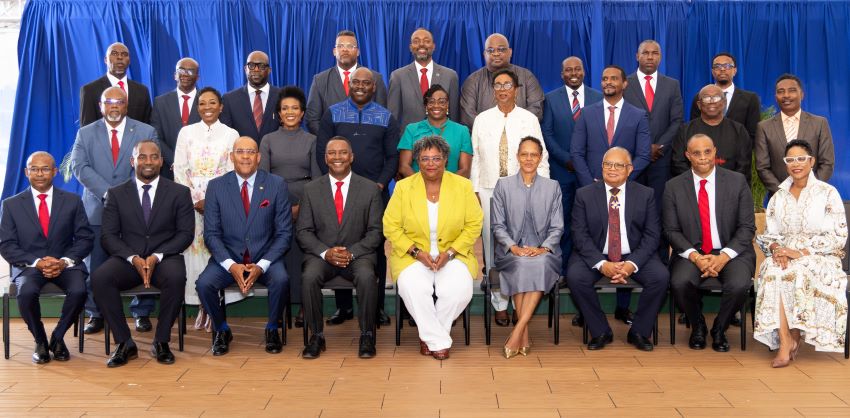
    The GEL story is old news. Without any announcement, a new picture has been added under Directors.
    The real news will be the report to Shareholders on the findings of the PwC Report, which is now ‘overdue’.
    ——
    The fx fee is a local tax. What is being challenged is how to tax the digital space. The proposed Cdn tax which was “delayed”, was given notice years ago. Some of those companies affected, cut off our (Canadian) feed, in opposition. For example, several of the links posted on BU, if IG or FB, when I click without a VPN, tells me the information is not available in my area.
    At day’s end, Trump did a favour to all those who contributed to his campaign and inauguration.
    “The message from Canada’s capitulation is unmistakable: challenge US digital giants and face economic coercion.” The Trade question is so large, all else takes a back seat.
    The USA bullying is not new. Trump even creates issues which don’t exist, like fentanyl crossing our border, as a reason for tariffs. And like Barbados, the USA is a nation of laws, but when they feel like ignoring them, USMCA?, they do.

The blogmaster invites you to join and add value to the discussion.

Trending

Discover more from Barbados Underground

Subscribe now to keep reading and get access to the full archive.

Continue reading