



Submitted by ivan hugh walters (rev.)
INFORMED CONSENT AND THE TRANSMISSION OF PATHOGENS VIA COMMON CUP FOR HOLY COMMUNION
INTRODUCTION
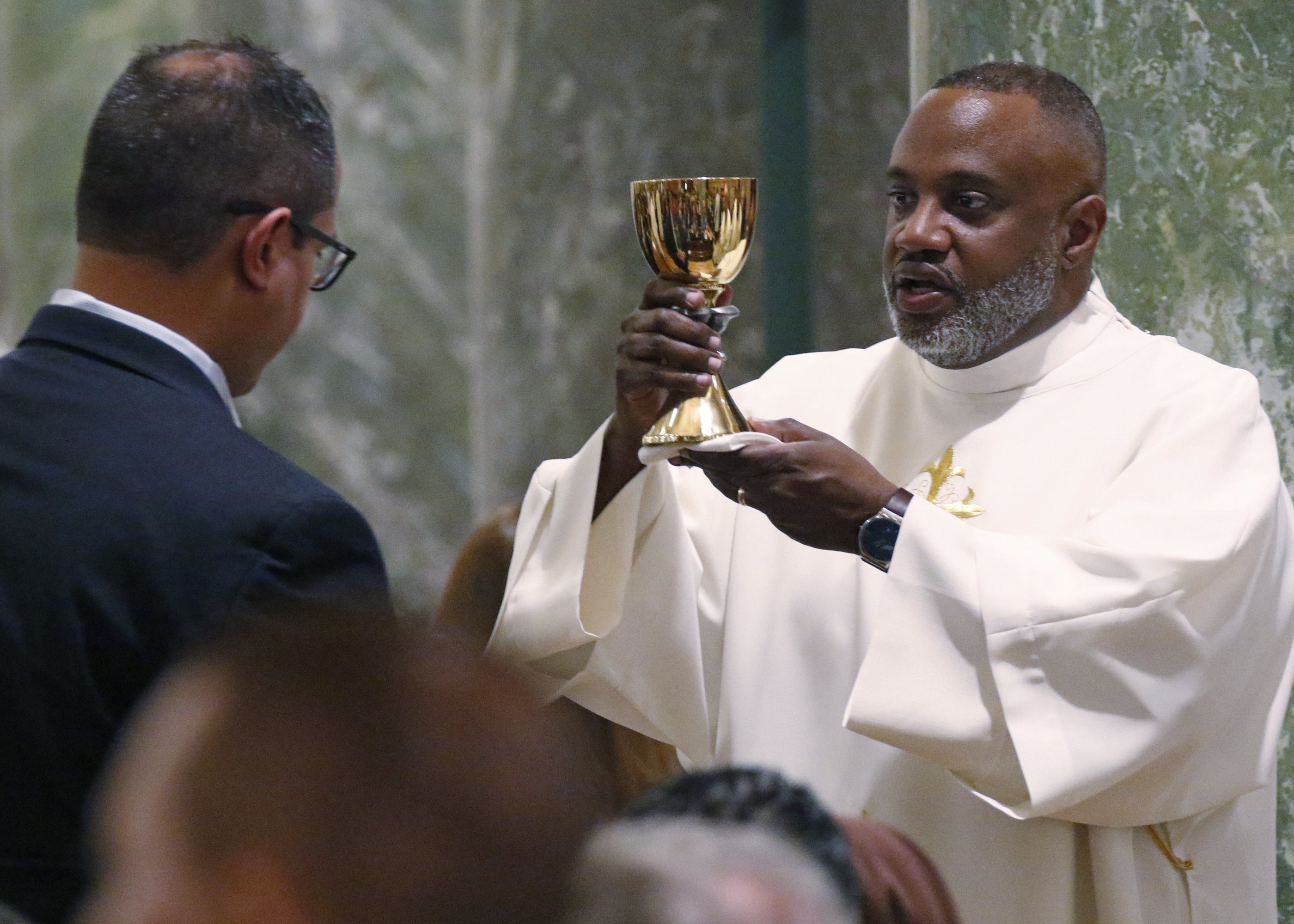
Reference the Bishop’s Pastoral Letter for Easter 2024 wherein his Lordship stated that he has reintroduced the Common Communion Cup after the cessation of the Covid-19 Pandemic. This has materialized, but it was done without canvassing the opinion of the Anglican congregation as though they are passive actors, who have no say in a matter that affects them, somewhat like sheep before the sharer. I have noted the same with a measure of consternation and distress that the Church had arrogated to itself the right, moral or otherwise to impose on the congregants in a ‘magisterium’ fashion the reintroduction of the Common Communion Cup. The same position was reiterated in the Charge to Synod on Sunday May 19, 2024. I have found this to be amazing.
The said Pastoral Letter of the Lord Bishop was published in the Churches on Sunday April 28, 2024, and which took effect on May 5, 2024, his Lordship by ‘Episcopal Proclamation’ reinstated (imposed) the common practice of distributing Holy Communion using a Common Communion Cup (Chalice) without providing any detailed explanation sufficient for the congregants to make an informed decision and without first seeking their consent on the matter. The congregants are not sheep, they are real people who can make their own informed choice(s) on any given matter, especially one that is as personal as sipping communion wine from a Common Communion Cup.
I have taken the liberty to express my dissenting opinion on the matter and I do so with humility and filial piety. I have shared this dissenting opinion with the holy pecking episcopal order of the Church. The desired objective is to state a pellucidly clear position on the matter and to aid congregants in their understanding of the same. I believe that I am now at liberty to share this dissenting opinion with all and sundry. Mind you, this is only my opinion, and I bear in mind that ‘the officious by-stander’ may very well dismiss it by saying: “You are entitled to your opinion however absurd it may be”. And so, it is. I am also well aware that in another age a dissenting opinion of this sort would have earned me a place on the stake. But this is a democratic republic based on the rule of law.
THE THEOLOGICAL POSITION
I had listened sedulously to the delivery of the Synod’s Charge wherein it was competently(?) reiterated and reaffirmed that the reintroduction of the Common Communion Cup in all the congregations will be implemented. The theological teaching behind the use of the Common Communion Cup, is the leitmotif which is frequently repeated in the church’s doctrinal dogma, is that it symbolizes the Church’s “Oneness” in unity with Christ, the Paschal Lamb. This symbolism is prima facie supported by Scripture (the cup is referred to in the singular in Matthew 26, Mark 14, and Luke 22); this dunks us back into the past in search of the truth.
The use of the Common Communion Cup is an ancient Christian practice to share the blessed wine which is symbolical of Jesus’ blood of the New Covenant. This is a practice that is loaded with deep theological and biblical meaning, but the methodology for communicating is doubtful. The practice as it now stands in the current state of gnosis is not sacrosanct and set apart, free from rational scientific knowledge, reasonable theological knowledge, and ethical criticism, contrary to the bishop’s assurance “I wish to assure you that our Lord and science are both on our side …” sounds hollow.
Therefore, I am of the considered opinion that the Common Communion Cup should not have been so hastily reintroduced without consultation and discussion with the congregations. The practice of the use of the Common Communion Cup was vacated during the Covid-19 Pandemic for fear of contamination by pathogens moving from the lips of one person to another. This reprieve gave the congregations the opportunity for deep reflection on the relevance of it to worship and spiritual wellbeing.
The theological rationale and scientific explanation and ramification of the use of the Common Communion Cup should have been explained to the congregations, so that they may make an informed choice whether they wish to suffer the reintroduction. It is not a one-man’s unilateral decision or that of the chosen few in the holy pecking ecclesiastical order.
A failure to consult the congregations is tantamount to a species of ecclesiastical mal administration or hybris. Leadership in the magisterium style in the past has failed miserably to evoke good Christian behavior and it is bound to fail in the present and the future. What in my opinion was required is consultation with the congregations to garner their opinion whether to opt-out or to opt-in. The fact is that receiving communion from a common cup is very personal regardless of its religious symbolism.
It is an established scientific fact that pathogens are present in the saliva of all of us, even those who are in a healthy condition, albeit that the quantum is negligible and would not cause a disease outbreak, they are nonetheless disease organisms which people should decide whether they wish to have them introduce into their bodies through the use of the Common Communion Cup, bearing in mind that the bodies of each of us is inviolable.
The non-consensual, unwarranted introduction of pathogens in the saliva into the mouth of another person, however negligible, (an assault?) is in the lease socially offensive and worse it is done when the person or the other person or both are ignorant of it happening when several persons are sipping from one Common Communion Cup.
In the Catholic Church as long ago as the 13th century the precious blood of Christ was not distributed to the congregation for fear of spillage which apparently occurred frequently (Catholics generally do not use communion cups because they offer communion without wine or use intinction). However, there is an even more potent reason why Anglicans should refrain from distributing the precious blood (symbolic) in a common cup – the avoidance of transmitting pathogens in the saliva of one worshiper to the mouth of another via the use of a Common Communion Cup.
However, I certainly cannot school the holy pecking ecclesiastical order in this matter because my knowledge is at best suspect, I can only rely on the knowledge which I have gained from church’s practice and the available science. But you may wish to note that the reputation of communion, according to orthodox doctrine of Sacramental Theology, is that the sacred and symbolic ritual, the manifestation, if you like, of the unity in Christ. But this sacred and symbolic gesture does not manifest itself in the life of the historical Church nor in the Church today because Peter’s barque is beset with schisms and fraught with considerable controversy ad infinitum. Does it mean that other forty thousand or more fragmented Christian denominations and sects are not in unity with Christ, who do not share this sacred symbolism in the Common Communion Cup?
You may wish to note that at the pivotal moment, Jesus invited his disciples to eat bread and drink wine with him. Jesus did not fling the door of room open and invited in the public, all and sundry, to come in and participate in the meal, only his disciplines – a group of 12 men who are known to him and to one another (Matthew 26:17-29; Mark 14: 12-25; Luke 22: 7-38; Corinthians 11: 23-25). It is interesting to note that Luke has a different version to Matthew and Mark. It states: “And he took a cup, and when he had given thanks he said, “Take this and divide it among yourselves” (emphasis mine). So, the parallel accounts are not in harmony. Using the literal interpretation, what were they to divide among themselves? It could not have been the cup, so prima facie, it must have been the content of the cup, wine that was in the cup. And the reasonable and logical inference is that each of the disciples pour a portion of the wine from the cup which Jesus gave them into his cup. Thus, indicating that in the Lukan account there was no common cup from which all drank. Therefore, the use of a common cup is not an essential doctrine in the synoptic gospels that is necessary for salvation, but merely church dogma.
THE SCIENTIFIC POSITION
Even if we assume that Jesus and his disciples drank from the same cup which was passed around at the Last Supper, that cup was shared with a small group and the members were familiar with one another, and as such may be acceptable and may conform to the Church’s theological position of it being a profound expression of sacrifice, covenant, and remembrance (intended to be symbolic); but it cannot be acceptable or so acceptable today, at least not without the informed consent of communicants, their having been first schooled in the fact that the Common Communion Cup, the Chalice, is capable of transmitting pathogens, albeit not sufficiently potent to cause a disease outbreak according to the research which was done by several scientists, such as B. C. Hobbs, J. A. Knowlden, A. White: “Experiment on the Communion Cup” in which they explored the hypothesis that pathogens of the mouth may contaminate wine on the communion cup. The authors concluded that the risk of the transmission of infection through a common communion cup is negligible. Further, according to these authors, rotation of the chalice was ineffective in reducing bacterial colonization of the cup. Contrary to the utterance that: “… the careful wiping of the Chalice interior and exterior rim and rotating it after each communicant has received” as per the Pastoral Letter. However, it is to be noted, according to the same authors, wiping the rim of the chalice with a cloth, the so-called ‘purificator’, for example, reduced bacterial counts by 90%. So, there remain the negligible 10% – inoculation(?).
Similar experiments were conducted by Burrows and Hemming to investigate the potential for transmission of pathogens, from one person to another through the common use of the chalice, they have reported that under most favorable conditions only 0.001% of pathogens pass from the saliva of one person to the mouth of another person. This may be the findings that Streptococcus Pyogenes swabbed from the polished surface of the chalice died rapidly; per Burrows W and Hemmens E S: “Survival of bacteria on the silver communion cup”.
In this regard, I am inclined to hold a contrary opinion in the good company of Manangan et al who pointed out that the issue of potential transmission of bacteria through the Common Communion Cup is controversial (Manangan LP, Sehulster LM, Chiarello L, Simonds DN, Jarvis WR: “Risk of infectious disease transmission from a common communion cup”). They stated that even if transmission occurs, it does not imply inoculation or infection. This is so because disease requires a minimum number of pathogens to be transmitted from person to person to have an outbreak.
Therefore, one may argue that despite the learned debate among scientists, historically, the use of the Common Communion Cup has not been associated with a pandemic outbreak. However, this is not the same as saying that it cannot or will not happen in the future, but on a balance of probabilities, based on prior scientific knowledge, one may conclude that it is unlikely to happen. It follows then that the present state of things is based on scientific principles and not on respect for religious belief (“… it is received in faith as the Blood of Christ …” per the Pastoral Letter) and, I dare say, properly so. But even so, that too is subject to change in the near future or in the distant future with the effluxion of time. According to Andy Sterling in relation to scientific knowledge, we should heed the Precautionary Principle because “… it is shown how conventional “science-based” risk assessment techniques address only limited aspects of incomplete knowledge in complex, dynamic, evolutionary processes (emphasis mine) (“Science, Precaution, and the Politics of Technological Risk Converging Implication in Evolutionary and Social Scientific Perspectives”).
So, novel pathogens may (and do) develop from time to time, and they may surprise us and take us unaware due to the state of our incomplete knowledge, witness Covid-19 pandemic. It follows inexorably that the Precautionary Principle and the Participatory Approach can help us to mitigate the risk of contamination by pathogens in the use of the Common Communion Cup in circumstances where there are scientifically grounded reasons for concern over uncertainty, ambiguity, or ignorance.
You will recall that St. Paul on his visit to Athens was brought to the Areopagus to explain to all present this new God of whom he preached. He had prior observed an altar with the inscription: “To an unknown god” and he seized the opportunity that this unknown god was in fact the God who made all things (Acts 17:23-31); mysterium tremendum et fascinans. The “unknown unknowns” simply cannot be seen ahead of time because “[W]e see through glass, darkly; but then face to face. Now I know in part, but then I shall understand fully, even as I have been fully understood” (1 Corinthians 13:12), but “in the fullness of time” all was made known, and we were “adopted as sons and daughters of God” (Galatians 4:4-5). Our obscure or imperfect vision of reality will be transformed and made whole.
INTINCTION IS A SAFER METHOD FOR COMMUNION – SCIENCE
To transform our obscure and imperfect vision of reality, a study that is done by LaGrange Loving A: “A controlled study on intinction: a safer alternative method for receiving Holy Communion” (J Environ Health. 1995, 58:24-28), offers intinction as a safer way for receiving communion. It is noteworthy that the authors reported that intinction did not eliminate the risk (inoculation possible(?)), but it significantly reduced the hazard of infection compared to the practice of sipping from a Common Communion Cup. They suggested intinction to be safer, as an alternative method for receiving Holy Communion. And I concur with this opinion.
The Centre of Disease and Control Prevention was moved by the considerable debate that had arisen, in 1998, attempted to achieve a balance between scientific principles and respect for religious beliefs (Manangan L. P., Sehulster L. M., Chiarello L., Simonds D. N., Jarvis W. R: “Risk of infectious disease transmission from a common communion cup”). They found that compared with non-communicants and communicants there was no higher risk of infection (the sample was 681persons). However, this finding did not provide lasting assuagement.
Another research was done by Fiedler K., Lindner M., Edel B., Wallbrecht F., in their study, “Danger of infection from communion cups – an underestimated risk?” (Zentralbl Hyg Umweltmed.1998, 201:167-188) concurred with LaGrange, Loving A., in their advocating that intinction is the better option for communion but insist that it is not a panacea; I concur with the former opinion.
Based on the foregoing review of the literature, it is my considered opinion that intinction is a safer way to receive Holy Communion short of individual cups. Further, I concur with the authors that intinction is the safer method for communion given the multiplicity of mouths that frequent the chalice at communion. And this is the method that I will personally use or in the alternative, I will accept communion in one form only – bread.
MY OPINION IS BASED ON AN INFORMED POSITION:
THEOLOGICAL SCIENTIFIC AND ETHICO-LEGAL
I have studied some of the available literature and I have drawn my own conclusion on the matter sui generis; therefore, I am able to make an informed decision on the same. I believe that each communicant should have been placed in a similar position. This is in my considered opinion, it is not indicative that I am a man of little faith or for that matter no faith, even although some may form such a conclusion, none-the-less, anyone and everyone is entitled to draw his/her conclusion from what I have written herein. But I must add a caveat here less I should appear sacrosanct and sanctimonious because I am not a paragon of virtue, and my sins are many: mea culpa. However, my opinion is subject to revision, when I shall have examined other literature, and the learning therein informs me that I should re-examine my current opinion.
However, based on my survey of the available literature and the conclusion reached above, it is my considered opinion that members of the Anglican congregations should have been placed in the same or similar position to make an informed choice, but the Church, have taken the position to return to the Common Communion Cup without consultation with members of the various Anglican congregations, and has so deprived them of making an informed decision as to whether they are comfortable in consuming communion wine that is mingled with pathogens from the mouths of other members of the congregation even though according to the scientific record, it has not and is unlikely to cause pandemic outbreak. But pathogens, albeit in negligible amounts which do not warrant infection transmission, are not inoculation.
But this conclusion does not exculpate the Church for failing to consult with the congregants and so acted negligently, prejudicing the members of the congregation by not providing them with the scientific facts and so deprived them of the right to make an informed decision on the Church returning to the Common Communion Cup.
The selected and specially Blessed wo/men, as is the custom and practice, have taken a paternalistic approach to the issue at bar and this approach, in my opinion, is ethically unsound whether by utilitarian principles or ontological principles. The principle of respect for the autonomous choices of people runs as deep in the common morality as any other moral principle in a pluralistic democracy. Unlike many other people, I hold that the principle of respect for autonomy takes moral priority over most other moral principles (Beauchamp Tom, L. & Childress, James, F. (2013). Principles of Biomedical Ethics (7th Edn.). London: Oxford University Press); and the lack of information on rights and of effective mechanism for the realization of rights: Longford, M., Cousins, B., Dugard, J., Madlingoz1, T. (2014) (Eds). Socio-Economic Rights in South Africa: Symbols or Substance. London: Cambridge University Press. The principle of paternalism is an unjustifiable restriction on the freedom of the person to make her/his own choice (Singer Peter (1999). Practical Ethics (2nd Edn.) London: Cambridge). The difference between a person and a non-person is robbing them of something they value and of the very thing that makes it possible to value anything at all: Harris, J. (1985). The Value of Life: An Introduction to Medical Ethics. London: Routledge.
As I have argued above, I am persuaded that receiving communion from a common cup is a fundamental matter of a moral personal choice beyond the legitimate reach of the Church (if such a thing exists) and/or the specially beatified episcopal leaders of the Church without more. The principles of freedom and choice (in a pluralistic democracy that adheres to principle of the rule of law) are consistent with an individual’s ability to control her/his own choices unless she/he is defective in several ways. She/he may be, for example, suffering from mental illness which makes it implausible for her/him to be in any sense in control of her/his choice. It would therefore be reasonable to conclude that illness deprived her/him of making an informed choice (Harris J. (1991). The Value of Life: An Introduction to Medical Ethics. London: Routledge).
Therefore, it is my considered opinion, based on the foregoing theological, scientific and ethico-legal reasoning, that to deprive members of the Church, the right to decide by an informed majority whether the Church should return to the Common Communion Cup is morally and ethically unreasonable. However, if the holy pecking ecclesiastical order is compelled by Church dogma to reintroduce the Common Communion Cup post Covid-19 pandemic, then the better choice, evidently, would have been the giving of Holy Communion by intinction only. This is my witness: “And in God’s house forevermore, my dwelling place shall be” (Psalm 23:4).






The blogmaster invites you to join the discussion.