Banner promoting anonymous crime reporting with a phone and contact number 1 800 TIPS (8477), featuring the Crime Stoppers logo and a QR code for submitting tips.

← Back

Your message to the BLOGMASTER was sent

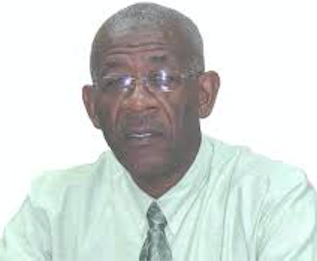
The following important comment was posted by Actuary and Talk Show host Walter Blackman to respond to a comment raised on the blog 60 Love Can Lose – Blogmaster

Walter Blackman – Actuary and Brasstacks host

Pensions have surfaced as an extremely important issue at this stage of our national development, so I want to commend you for bringing this pension-related matter to the attention of BU readers.

The challenge for me is to distil esoteric, actuarial and mathematical concepts into information that you and all BU readers can understand. Please forgive me if I fail to overcome that challenge

We grew up hearing that one of the major benefits derived from working for the government was the receipt of a pension and gratuity.

I will use a 5-year average pay of $5,000 (assumed to be under the NIS ceiling, for illustrative purposes only). I simply want to show how the changes in pension legislation have affected government workers hired before September 1, 1975, those hired on or after September 1, 1975, and those to be hired on or after January 1, 2023.

A person born on January 1, 1945, who was hired before September 1, 1975 and who retired after 33 1/3 years of service will receive the following:

  • Government pension = $3,333.33
  • NIS Pension = $3,000
  • Total Pensions received = $6,333.33

Note that this pensioner is receiving a total monthly pension which is greater than the pay he was getting as an active worker.

This was a problem that the government decided to solve.A person born on January 1, 1945, who was hired on or after September 1, 1975 and who retired after 33 1/3 years of service will receive the following:

  • Government pension = $333.33
  • NIS Pension = $3,000
  • Total Pensions received = $3,333.33

Note the drastic reduction in government pension. This was not the best approach to be taken by the Government of Barbados to solve the pension problem.

A person born on January 1, 2003, who will be hired on or after January 1, 2023 and who will retire after the following years or less of service will receive the following:

  • Government pension (1-36 years of service) = $0
  • Government pension (37 years of service) = $$83.33
  • Government pension (38 years of service) = $166.67
  • Government pension (39 years of service) = $250.00
  • Government pension (40 years of service) = $333.33

This proposed pension formula makes a bad situation worse. The unions ought to make their voices heard.

Walter Blackman – Audio Version

Note:
Gratuity = 25% x monthly pension x 150
Pension to be paid = 0.75% of calculated pension

For example:
Government Pension = $3,333.33 per month
Gratuity = $125,000.00
Monthly Pension to be paid = $2,500.00


Discover more from Barbados Underground

Subscribe to get the latest posts sent to your email.

182 responses to “Proposed Public Pension Formula Makes Bad Situation Worse”


  1. We have argued for decades that one of the aims of neoliberalism was to collapse all the social security and pension systems. Private and public.

    In recent decades this clear intention could have been clearly seen in the way both governing tools have been deployed to loot systems once thought to be sacrosanct.

    Any Washington Consensus sponsored meme about pension reform was always Orwellian double-speak for the radical reductions in emoluments, hard earned, generally below market rates over time and representing an historic thief from people expecting a baseline, fixed income, in retirement, even in its insufficiency.

    This cowardly act will not avoid the coming wave of government bankruptcies starting in Laos and Sri Lanka. Indeed, these pension reform projects by satraps will only hasten the systemic collapse of neoliberalism, as an economic system, now made more and more unavoidable.

    Somebody should tell the Mottley crew to stop listening to the people in Washington.


  2. In the private sector, long gone are the days when defined benefit retirement plans were the gold standard.

    These days money purchase plans, not subject to COLA and other adjustments in retirement dominate for those still getting pensions.


  3. The first point Walter made is very important. The NIS stands on its own. Government pensions are separate from that. NIS pensions have their own contributions from employees and employers.

    Combining the two pensions and looking at them together is wrong. Seems like there is basically no such thing as a government pension now, effectively. Almost nothing after all those years of service. There is really only an NIS pension. (And even that has been threatened by government raids, declining working population aside.)

    Walter has put everything into its correct perspective for us.

    These are the bare facts. Workers up the creek without a paddle.

    Pass the mike to Toni Moore, please!


  4. Why are we surprised that we have found ourselves where we are with the NIS? It has been grossly mismanaged and manipulated by ALL polticians for at least the last 2 decades.

    As i said on another thread here the dems forced billions of worthless paper on them and the bees slashed the return on that paper to nearly zero. Did Aunty Mia not stop to think what a cut in earnings from 7% to 1% on roughly $2 billion in bonds would mean to the cashflow of the NIS? Why then was no provision made by government when this was done to sure up the cashflow of the NIS? Insted that has bled money from that action for over 2 years. Add to that the lost of income from covid related layoffs and piss poor “investments” over the years and you have a basically insolvent entity that we are told is ” our life line.”

    So what do we do after the above? Well rather than adressing the problem we play with the retirement age and benefits. Newsflash leaders you will never be able to “adjust” benefits enough to make up for the devistation i outlined above. Yet i hear on the radio government saying to the public and self employed, ” you must pay your NIS for your old age.” Basically you are saying to them invest in an insolvent entitiy where we can change the age of maturity at a whim along with the benefits, but dont mind wunna put you money here. You all have demonstrated gross mismanagemet of the peoples pension money for decades, dipping in it when wunna want and yet we are to have confidence in the NIS?

    Listen dont offer free education to people and then treat them like fools. When you all sure up the fund and can present the audited up to daye financials on the said entity for all to see. then come badk and talk to me about this ” glorious national entity that is my lifeline.”


  5. @John A

    From outside looking in it seems obvious they are making it up as they go along as it pertains to the NIS. Underlying the mismanagement is the lack of serious debate by independents largely because timely audited statements are never available. This applies to the actuarial reports due every 3 years?


  6. We here now, what do we do?

    It seems we have little room to make decisions as Walter points out. We increase age eligibility, we amend pension formula to pay less, we reallocate revenue from other areas? We increase the immigrant population to help with increasing new jobs and tax base?

    What?


  7. David
    All pension systems are under pressure worldwide, not only Batbados government pensions. And have been for decades.

    We have to cast a wider net.


  8. What do you suggest Pacha? Give tax relief to encourage registering in private plans?


  9. @ David

    The fund is no different to any other business. You must have a surplus of infllows over outflows. This has not been the case for years and i woukd bet money an audit would confirm this.

    Lets look at the sinkyuh/Mia scenario alone. $2B moving from 7% to 1% would of cost the fund a loss of $120 million in cash flow annually! Add to the that foolish investments like the Grotto where the rents can even pay for the tiles and you begin to understand the condition the fund is in. Then look at all the other properties the fund has. Are the rents up to date? Do they reflect a rent that offers a decent return on investment for the fund?

    The little tap dances this government has done with the fund in terms of changes, can not begin to have any real effect on the funds solvency. Bringing in more people and all the other nonesence they talk does not address the core problem with the fund. You first need to get to a point where the funds true earnings and asset base can be identified. That means an external audit and full independant assesment of its assets in terms of rates of return. The fund in other words first must be returned to a financially strong entity. This can only be done by a large cashflow injection in the form of a government grant and not a loan either. Stop and think of the nonesence the fund was used for. Clear Water Inv an alleged $100M gone dey! The restructuring $120M a year lost dey! $2B in promissory notes called bonds from central government dead dey! Tens of millions used by Sinkyuh to keep civil servants in jobs till elections which he still lost 30 to 0 and the list goes on and on and on.

    I doubt in the history of Barbados there will ever be a more mismanaged and pilfered entity than the same dam NIS.


  10. @John A

    How would you respond to Pacha’s above intervention?


  11. How does Barbados build a firewall around the NIS if it’s viability depends on government’s handling of the economy?


  12. @ David

    I agree with Pacha that broadening the net will help, but only after the measures I outlined have been taken. If this is not done its like putting 2 hoses in a bucket with nuff holes and expecting it to fill faster.


  13. David
    Our point is that ALL pension systems are under mounting pressures worldwide. Not only a Barbados government pension.

    We’ve stated that even in the private sector defined benefit pensions or retirements plans have been replaced with money purchase plans almost universally.

    There is no place to hide from this problem which has been engulfing us for decades.

    A money purchase plan is what the private sector will best give. If they don’t go broke prior. In other words pensioners are left with an acculmated sum in a 401K, in the case of the USA, to at retirement purchase a stream of payments plan.


  14. David
    Deal with neoliberalism, your friend, for concrete answers.


  15. Further, the assets of the social security system in the very USA are largely made up of IOUs.

    Meaning the government has spent the savings and promises to repay.

    Then the problem becomes one of toooo much debt. These “unfunded liabilities”, and more, make real US debt levels 300 trillion. As oppose to the 30 trillion as measured by accumulated deficits.

    And if neoliberalism will expose Americans in such ways what of Bajans?

    All the debt must be removed from the international system, as primary causation.


  16. The difference is the usa can print usd and we can’t. We also can not sell the NIS bonds on any secondary market either here, so government is the only client basically for government bonds. The usa can sell debt to China or anyone who thinks their paper safe, as has been the case for years. Our situation is therefore quite different to the usa. Also after the default our paper is not seen the way it was by many who previously would of gobbled up a bond issue locally.

    Anyhow do not let us get side tracked here our concern is the local NIS here on de rock. Let others worry about their own problems.


  17. @John A

    Was waiting patiently for someone to make that point. The USD is still the world’s reserve currency. A monetary system built on a FIAT foundation.


  18. @ David

    Yep their situation is quite different to ours. When we borrow we repay in hard currency. We can print all the Bajan dollars we want they are worthless when it comes to repaying foreign debt.

    The problem our NIS has is its saddled with way too much government paper earning very little. Its assets can’t earn enough to keep pace with inflation and we don’t have the money for the size of cash injection required to stabilise it either. Heard the PM say it needs to be addressed urgently but I doubt you will see anyone tackle that demon in any real way. Instead you will see a patch here and a trim there approach.


  19. In Walter’s comment on the other blog he suggested the government needs to prioritize allocation of funds to the NIS. Your view as well?


  20. David

    Dream on!


  21. @ David

    Yes I agree with Walter for sure the only real fix is a sizeable cash injection. This must also not be passed off as a repayment or purchase of a bond either. In others words a straight forward cash injection that will show in the audit as a recapitalisation and nothing else.


  22. @John A

    Wouldn’t that suggestion derail the work done so far to restructure debt?

  23. Walter Blackman Avatar
    Walter Blackman

    Pachamama
    June 25, 2022 3:22 AM

    “In the private sector, long gone are the days when defined benefit retirement plans were the gold standard.
    These days money purchase plans, not subject to COLA and other adjustments in retirement dominate for those still getting pensions”.

    Pacha,
    You are correct.

    The recent trend has been a moving away by pension plan sponsors from Defined Benefit (DB) plans towards Defined Contribution (DC) plans.

    However, in Barbados, DC plans present a challenge.

    For DC plans, you must consider the fact that the employees in the plan are of different ages. Therefore, employers have to offer different investment options for the young, the not so young, and those employees nearing retirement.

    For example, you can provide an investment option for young employees made up of a heavier concentration of stocks, whilst for employees nearing retirement, the investment option should be primarily made up of fixed income securities such as bonds, and mutual funds.

    Unfortunately, we have very limited investment options in Barbados.

    One way to solve this problem is for the actuary to design a Cash Balance (CB) plan, which looks and behaves like a DC plan, but which really is a DB plan. Cash balance plans have not yet hit the market in Barbados.

  24. Walter Blackman Avatar
    Walter Blackman

    Donna
    June 25, 2022 4:05 AM

    “The first point Walter made is very important. The NIS stands on its own. Government pensions are separate from that. NIS pensions have their own contributions from employees and employers.”

    Donna,
    Unless my ears were deceiving me, I heard the PM on the news saying that she was bringing this new pension formula to make the NIS strong.

    Enlightened BU readers like you know fully now that the PM was ill-advised in making that statement. It simply made no sense.

    Barbadian taxpayers’ money, in the form of consultancy fees, wasted.


  25. @Walter

    The NIS Board report to a BOD and to Cabinet?

  26. NorthernObserver Avatar
    NorthernObserver

    The USD is still the world’s reserve currency……David you only said that to piss off Pacha.
    This thread seems to be void thus far of @VC to assure us things are unfolding as they should.
    I wonder what the annual cost savings to the CF will be?
    Surely this change will be challenged in the Courts.

  27. African Online Publishing Copyright ⓒ 2022. All Rights Reserved Avatar
    African Online Publishing Copyright ⓒ 2022. All Rights Reserved

    ‘Somebody should tell the Mottley crew to stop listening to the people in Washington.”

    these are only interesed in fake prestige NOT REALITY…..their world stage name is the Earth Worm…always looking for a string to pull……sorry can’t give up any of my sources…lol

    “Meaning the government has spent the savings and promises to repay.”

    they did say 25 years ago it will all collapse…and here we are…

  28. William Skinner Avatar
    William Skinner

    We are about or are witnessing the ruthless economic dismemberment of the middle class. This in effect means there is little or no hope for the lower economic class .
    Wastage, widespread corruption ,poor economic planning and governance have brought us to this dangerous point.
    To basically wipe out the hard earned retirement benefits of our people is a crime.
    We were warned time and time again by @Pacha and@Waru, that this would be the end result when all the cliches and feel good vernacular speeches could not escape reality forever.
    We are constantly turning up with little weak twigs to fight those who have big sticks.
    The price we pay for doing little or nothing but fooling ourselves we are doing a whole lot.
    Peace.


  29. “Enlightened BU readers like you know fully now that the PM was ill-advised in making that statement. It simply made no sense.”
    ~~~~~~~~~~~~~~
    With the obvious exception of Lorenzo, it has to be obvious now to everyone (and that includes Enuff 🙂 ) that Miss Mottley is suffering from the Peter principle. This is a common weakness of shiite talkers who are able to impress with their words. especially when they surround themselves with shiite-hounds, batty-boys and their various women cohorts where SOUND ADVICE is scarce.

    Unfortunately, the challenges of leadership in this time is not designed for the mediocre.
    A careful study will show that this government has NOT been able to accomplish ONE SHIITE that that required ANY effort.
    Not even the easy shiit has worked out….
    The Republic was meant to be a ‘show of leadership and success’….. LOL what a brass bowl mess….
    The Chinese houses were designed to score a BIG housing success…. MURDUH!!!
    The vaccine gambit was sure to be a RADICAL example of leadership…. WUHLOSS!!!

    All they managed to do successfully was remove the two most useful and sensible persons in the government from office – namely Atherley and his appointee Caswell. Only Lorenzo and Enuff sees this as a benefit to the country.
    Now we have 30 pathetic lackies acting EXACTLY like blind brass bowls in a dark room of questionable constitutionality, while feeling up a wild elephant called INFLATION …

    …al this at the VERY WORSE POSSIBLE TIME in our history of mediocrity, when we DESPERATELY NEED some vision and sensible leadership.
    It is A PERFECT storm for Titanic outcomes….


  30. @NO

    What continues to be most amazing is the inability to produce up to date audited financials of our most important fund and there is no urgency by those in charge AND the media AND PO Political Opposition AND citizens to shoutout about it.


  31. @Bush Tea

    You punching hard.


  32. @ NO
    “What continues to be most amazing is the inability to produce up to date audited financials”
    ~~~~~~~~~~~~
    Can Bushie assist you with this one..?
    This may be difficult for you to internalize, but there is a VERY GOOD reason for this lack of interest….

    99.9% of Bajans do not have the SLIGHTEST IDEA what such financial reports mean, say, or portend. – and that INCLUDES most of the JAs making the decisions…..
    That explains why there are no COMPLAINTS.

    As to why there are no FINANCIALS, the bushman suspects that no news is better than bad news..

    Indeed, except for yourself, Walter and Artax, even if David managed to publish these financials on BU, all you will get is shiite talk about shiite politicians….and schoolgirl type tiffs….
    …so Bushie don’t even bother with that anymore… we are grass anyway ….


  33. @ David
    “BushTea….You punching hard.”
    ~~~~~~~~~~
    Not hard Enuff.
    Can you see where we are headed…?


  34. One way to solve this problem is for the actuary to design a Cash Balance (CB) plan, which looks and behaves like a DC plan, but which really is a DB plan.

    ±++++++!+++++++

    Interesting idea. But switching to notional db is still leaves the problem of where to invest the surplus in the face of shallow domestic markets and restrictions on overseas investing.


  35. There is a spread in the today’s Nation singing the praises of the NIS.

    NTSH


  36. @David

    Can you post it here pls?
    Grazie.


  37. NIS: It’s your lifeline
    THE National Insurance Scheme (NIS) was established on June 5, 1967, after the passing of the National Insurance and Social Security Act CAP 47 of the Laws of Barbados in 1966.
    The National Insurance Office was first located at Jemmotts Lane, St Michael. It later moved to Fairchild Street,The City, in 1975.The Office relocated to its current home at Culloden Road, St Michael, in 1992.
    National insurance contributions were first paid by affixing stamps to the contribution cards of insured persons. By 1978, this method was replaced by direct payment, with contributions being paid in cash to the National Insurance Office. In 1987, the contribution card system was replaced with Contribution Certificates and Earnings Schedules.
    Today, contribution payments can also be made online through EZPay+ via wire or bank transfer.The earnings schedule for employers only can also be sent electronically via the NIS Portal.
    The NIS offers several benefits to all insured working persons, aged 16 to 67.These are sickness, maternity benefit or grant, invalidity benefit or grant, unemployment, funeral grant, employment injury, and survivors’ grant or pension, old age contributory grant or pension, non-contributory old age pension. However, persons under the age of 16 or over the age of 67 are eligible only for employment injury.
    Since January 4, 1971, NIS benefits were extended to all self-employed persons between age 16 and the pensionable age of 67.They are provided with coverage of all benefits with the exception of unemployment benefits and employment injury.
    It must be noted that the receipt of non-contributory old age pension is not automatic and applications must be made at least three months in advance upon reaching age 67.
    In 2003, the pension system was reformed providing a flexible retirement age (60 to 70 years old) annual increases (indexation), and an increase in the pensionable age. From January 1, 2018, the NIS pensionable age became 67 years.
    Directors through the years
    Since its inception, there have been five directors of the National Insurance Office. The first director was Edward Humphrey Walcott who served from 1967 to 1979.The E. Humphrey Walcott Building, named in his honour was officially opened on August 27, 2004. It houses the Unemployment Section of the National Insurance Office, the Ministry of Civil Service and the People Resourcing and Compliance Directorate (formerly the Personnel Administration Division).
    Other directors over the years were Clifford Gittens, who served from 1979 to 1990; Grantley Smith from 1990 to 1996, and William Layne, from 1996 to 2000.
    The longest serving director was Ian Carrington. His tenure began on October 1, 2000 and ended on May 30 2018. However, it must be noted that during this period, Carrington was on secondment at the newly established Financial Services Commission as its chief executive officer from 2011 to 2013. During this time Almroth Williams acted as director.
    Jennifer Hunte was acting director of the National Insurance Office from 2018 to 2021. Luther Jones acted from 2021 to 2022.The current Director, Kim Tudor, took up duties from April this year.
    Since 1967, there were 11 Chairpersons.The current chairman, since 2020, is Leslie Haynes, Q.C.
    Tribute to Founding Fathers The Right Excellent Errol Walton Barrow
    It was National Hero and Barbados’ first Prime Minister,The Right Excellent Errol Walton Barrow, who introduced social security on June 5, 1967. On that date, the Barbados National Insurance and Social Security Scheme was established under the provisions of the National Insurance and Social Security Act, Cap. 47 of the Laws of Barbados.This was preceded by a feasibility study prepared by the International Labour Organization (ILO) in 1962.
    The Right Excellent Sir Frank Walcott
    National Hero, the Right Excellent Sir Frank Walcott was one of the early advocates for a comprehensive social security institution in Barbados. Sir Frank served on the “Working Committee” that was appointed to prepare an administrative plan for the island’s social security scheme.
    He was a strong advocate for the Workmen’s Compensation Act and the Severance Payments Legislation, and served as a member of the National Insurance Board from 1967 until his resignation due to illness in 1991.
    Frank Walcott Building, the home of the National Insurance Office at Culloden Road, St Michael, was officially opened and named in Sir Frank’s on October 3, 1992.
    Reverend Francis Godson
    Reverend Francis Godson, a Methodist minister, agitated for the introduction of a state pension for those who had grown old.Thanks to his efforts and the tremendous public feeling he aroused, legislative provisions were made in 1937 for the payment of an old age pension to persons who reached their 68th birthday.
    As a sign of appreciation for his dedicated service to social insurance, in January 1997, the National Insurance Board named the road around the Frank Walcott Building the “Francis Godson” Drive.

    Source: Nation


  38. MESSAGE FROM PRIME MINISTER THE HONOURABLE MIA AMOR MOTTLEY
    A saviour to countless citizens
    SO OFTEN, when it is necessary to consider the character of an individual, we pay attention to how he or she treats others.When it comes to the character of a nation, in the final analysis, the thought is not much different: our conclusion is largely based on how that country treats its people.
    In Barbados, any measure of our character as a nation must take into consideration our National Insurance Scheme, one of the most ubiquitous arms of Government. For more than half a century it has been reaching into almost every Barbadian home at that moment when our citizens are at their most vulnerable, providing not just financial relief, but the kind of peace of mind necessary to preserve the dignity of the individual and the cohesion of the family.
    Today, it is my absolute pleasure to congratulate the Board of Directors, Management, and staff of the National Insurance Office for 55 years of exemplary service to the people of Barbados. For more than half a century you have been, literally, a saviour to countless citizens!
    Since June 5, 1967, our social security scheme has served us so well that it has been consistently a point of reference for others, near and far, seeking to deliver to their populations, those services from the NIS that we now take as par for the course.
    From employment injury to sickness and maternity benefits that cover even the selfemployed; to funeral grants and survivors’ benefits, the NIS has been truly a lifeline to Barbadians.
    However, for all of its landmark advances and innovations since its formation, no period in its history has been as trying, or as critical to the survival of our citizens and the preservation of our national peace and security as 2020 and, to a lesser extent, 2021.
    COVID-19 tested every
    one of us, but not like it did the National Insurance Department in carrying out its mandate to serve Barbadians.
    For much of this period, commercial activity was almost at a standstill, retrenchment occurred on a scale that for us was previously unimaginable, unemployment reached unprecedented levels, and you, the management and staff of the NIS were called on to process claims at a volume and rate for which your systems were never designed.
    The NIS processed 52 282 unemployment benefit claims in 2020 and paid out a whopping $147.5 million. Last year claims fell to 28 071, and payouts totalled $44.6 million. Overall, it paid out $777.1 million in benefits in 2020 and $785.6 in 2021.Your contribution to the sustainability of the Barbadian family cannot be questioned.
    So, celebrate your 55 years. It is not just an anniversary, but an accomplishment marked by distinguished service to the country and its citizens.

    Source: Nation


  39. Secure future with the NIS
    Message from Minister of Labour, Social Security and Third Sector, Hon. Colin E. Jordan, M.P.
    THE National Insurance Scheme (NIS) can be proud of its growth through diligence and service, and filling a critical need of providing adequate insurance coverage to the people of Barbados for 55 years.
    With more than 108 000 persons registered with the NIS, including self-employed persons, a range of benefits is provided to eligible persons. In 2021, the National Insurance Office paid $785.6 million in benefits from the National Insurance Fund and $44.4 million in benefits from the Unemployment Fund.The NIS can also boast of a diversified portfolio of more than $4 billion in assets at the end of March 2022, which places it among the top financial institutions in Barbados.
    Focusing on this year’s theme, It’s Your Future, Secure It!, I encourage employers to comply and pay contributions when deductions are made from salaries, along with your employer portion, to the NIS. I further encourage employers not to treat employees as subcontractors simply to avoid paying the employers’ portion of national insurance. It is not right. In addition, selfemployed persons should play their part and pay NIS contributions on earnings as low as $21 a week or $91 a month. Seasonal workers can prepay their contributions to cover periods when there is little or no income.
    Many persons do not realise the benefit of social security until a need or crisis arises. I continue to appeal to selfemployed persons to register with the NIS and start contributing towards your future. Self-employed persons may be eligible for a range of NIS benefits which include old-age contributory, survivors’, sickness, invalidity and maternity benefits. Self-employed persons can also register for the NIS Portal on the NIS website to track earnings and contributions.
    You may recall that during the COVID-19 pandemic in 2020, self-employed persons who did not pay contributions were not included in the social protection which the NIS
    offers. However, the 1 481 self-employed persons who were up-to-date with their NIS contributions were provided with the Self-employed Business Interruption Benefit, valued at $3 000 for April and May 2020.This matter was also addressed when Inequalities and the World of Work was discussed at the 344th session of the governing body of the International Labour Organization which I attended in March 2022.
    I fully support the efforts of the NIS to further raise awareness of the coverage provided by the scheme to self-employed persons.They need to be aware that social security is a benefit during and after their work lives and it also supports their families. Social protection is a right, and all workers should be sensitised to that entitlement.
    I take this opportunity to inform you that my ministry has received the approval of Cabinet to amend the Labour Clauses (Public Contracts) Act. This proposed amendment will insist on minimum terms and conditions for workers, including participation in our social security scheme, in situations where private businesses are benefiting from contracts funded by taxpayers.
    Finally, to all employers, employees and self-employed persons, NIS is for you! Our future is secure when we contribute to the NIS.

    Source: Nation


  40. Message from Chairman of the National Insurance Board, Leslie Haynes, Q.C.
    Committed to service excellence
    AS I REFLECT on this significant milestone, the 55th anniversary of the National Insurance Scheme (NIS), I must salute the hard work and commitment of past and present employees of the department whose efforts and service continue to impact the lives of persons who work in Barbados.
    I wish to acknowledge the service of former chairpersons through the 55 years who steered the department through major adjustments such as pension reform, and I am honoured to continue the work of these outstanding leaders.
    In 1967 when the Scheme started, Barbados was undeveloped with a low standard of living and little social protection for workers.The National Insurance and Social Security Act Cap 47 was undoubtedly one of the most progressive pieces of legislation adopted in this country within the last 55 years.
    The objectives of the founding fathers in conceptualising the NIS was to bring relief to workers through a sustainable social insurance system that would address contingencies of sickness, invalidity, old age, maternity, employment injury and unemployment. I am proud to say that the Scheme has been able to honour the promises made to the insured population in that regard, and will continue to provide replacement income for the working public.
    Over the years, the National Insurance Office has sought to modernise operational processes within the department with the implementation of features such as the NIS portal. I wish to encourage employees to sign up to the NIS portal to determine whether their employers are reporting their earnings and monitor the progress of any claim submitted to the department. Employers are also encouraged to register for the portal, where they can submit earnings and contribution payments or correct errors made on the earnings reported.The portal is accessible via the website at http://www.nis.gov.bb.
    The COVID-19 pandemic has taught us the importance of the NIS, which came under immense pressure during the past two years, as many of the working population was unemployed and sought replacement income in the form of unemployment benefits and severance payments. I am delighted that the NIS, which introduced the Unemployment Benefit in 1981, was a pillar of hope during this challenging period.
    Our Scheme is one of the few Caribbean territories that offers the unemployment benefit and remains a model amongst the region. Just recently, a contingent from the Social Security Office of Jamaica and the Caribbean Office of the International Labour Organization visited the NIS for two days, to gather information on our unemployment business process and discuss the legislation with knowledgeable and cooperative staff. Employers whose businesses have been also significantly impacted in the last two years by COVID-19 are encouraged to apply to the interest waiver programme implemented by Government from April 1 to June 30, 2022, to assist them in liquidating their indebtedness to the National Insurance Fund.This programme allows for 100 per cent of the interest owed to be waived if outstanding contributions are liquidated within 24 months, until March 31, 2024.
    As announced by the Honourable Prime Minister in the budgetary proposals of 2022, the National Insurance Office is undergoing the process to transition to a statutory corporation. This change will allow the Department to be more nimble and responsive to challenges encountered, and reduce the loss of valuable and knowledgeable employees to other government ministries and departments.
    Please be assured, the National Insurance Board and the staff are committed to providing excellent, accessible, customer- centric, reliable, efficient, empathetic and consistent customer service to the public of Barbados throughout the next 55 years.

    Source: Nation


  41. Q&A with NIS Director Kim Tudor
    SENIOR executive and chartered professional accountant, Kim Tudor joined the National Insurance Office as its new Director, effective April 1, 2022.
    Tudor who has more than 30 years of experience in leadership positions, including being the chief executive officer at the National Initiative for Service Excellence (NISE), holds a Master of Business Administration from the Syracuse University, USA.
    She previously served in several senior positions in financial management, strategic planning and customer experience management, and has established herself as a seasoned, visionary executive and a strategic planning expert during her distinguished and exemplary career.
    She is also recognised in the Caribbean region as a pioneer in total quality management and service excellence.
    Tudor was responsible for introducing the first national indexes for customer satisfaction and employee engagement in Barbados and served on the team which developed one of the first strategic plans for Barbados. She is also an adjunct lecturer with the Sagicor Cave Hill School of Business, University of the West Indies, (UWI), on the Executive Diploma in Management programme.
    Her accounting career began in 1986 at the Shell Antilles and Guianas Ltd in Barbados. She would go on to become a director at the Quality Management Consultancy Co. Ltd in Jamaica and a tax and treasury accountant in Singapore. She has also worked in St Maarten, Guyana,Trinidad and Tobago and throughout the Organisation of the Eastern Caribbean States (OECS).
    Currently,Tudor is a member of the Synod of the Anglican Diocese of Barbados where she has served for several years, a member of the International Women’s Forum, the Rotary Club of Barbados and a Past President of the Kiwanis Club of Barbados Central.
    Below,Tudor answers three pertinent questions concerning the future of the National Insurance Scheme (NIS):
    Q:How can you improve upon what the National Insurance Office is currently doing, as it relates to the National Insurance Scheme (NIS)?
    A: The National Insurance Scheme (NIS) has made significant strides in managing the social security needs of Barbadians since its inception on June 5, 1967.
    Keeping in step with the times, it has introduced several initiatives to benefit claimants, such as sickness, injury, maternity, unemployment benefits, etcetera.
    We can boast of one of the best social security systems not just in the Caribbean but in the world. However, the NIS was dealt a severe blow by the COVID-19 pandemic, like other entities.The lockdown of the country to reduce the spread of the virus and get it under control resulted in many persons turning to the NIS for assistance in their time of need. At this juncture, I am pleased to report that we have held steadfast to our slogan, and the NIS has been ‘More than a contribution’ to thousands; it has been their lifeline.
    To keep up with the burgeoning demand, the NIS had to pivot. In 2020, in response to the pandemic, the Government introduced the Business Interruption Benefit for insured selfemployed persons.The benefit paid $1 500 per month for April and May.Additionally, the Severance Payments Act was amended temporarily due to the public health emergency caused by COVID-19 in March 2020.The Severance Payments (Amendment) Act 2020 provided new terms and conditions for claiming severance due to layoffs from March 1 to July 31, 2020.
    The NIS received more than 52 282 unemployment claims during the pandemic, resulting in the Unemployment Benefit Account exhausting the budgeted funding. Last August, Parliament approved a resolution to recapitalise our Unemployment Benefit Account to the tune of $50 million. In total, nearly 40 per cent of persons contributing to the NIS have claimed unemployment benefits since the pandemic.
    The NIS has proven its worth during this trying period and has highlighted the importance of all persons working in this country contributing to the Scheme, including those who are self-employed.
    Our social security system is inclusive for all employees and the self-employed. Earnings can be declared from as little as $21 per week to 1,126 per week. Employers are reminded of their statutory obligation to pay contributions on behalf of their employees and the self-employed are admonished to contribute to secure their future.
    We acknowledge that COVID-19 caused a slowdown in business activity in Barbados, but things are picking up as the COVID-19 restrictions are relaxed.Where employers or self-employed persons have outstanding payments, we are willing to work with them to settle those arrears. In fact, up to June 30, 2022, there is a moratorium on the interest of any outstanding contributions owed to the NIS once a settlement of the principal contributions is made within two years, that is, by March 31, 2024. Several businesses have contacted us regarding this offer, and there is still time for others to reach out to us.
    Q:
    Many Barbadians appear to be concerned about the future of the NIS and its ability to pay pensions down the road, let’s say five to ten years at least from now. Can you in any way
    allay those fears?
    A: It is no secret that our population has sluggish growth, and the resulting demographic trends have the potential to negatively impact pensions if remedial measures are not taken. During the Budget earlier this year, Prime Minister Mia Amor Mottley noted that it is projected that our workforce will be smaller in the next 12 years than it is today, and that our classrooms are already smaller.Those realities are certainly concerning, but we are determined to devise a strategic plan of action to counter this trend.
    Efforts are being made to remedy the situation proactively.
    The Government, therefore, is putting systems in place to ensure that the NIS can continue to be a lifeline to its members.
    As has been announced, the plan includes:
    • Making the NIS a statutory corporation and increasing its independence from the Government in how it operates.
    Work has started on this, and it is anticipated that it will be completed by the end of this year.
    • Recapitalising the NIS.
    • Diversifying the NIS investments at home and abroad.
    • Ensuring that where private projects are desirous of public support, they give the NIS the choice to invest.
    Investments are one of the key means by which the NIS remains solvent, and we are keen to invest in solid projects that will redound to the benefit of the NIS and the Barbadian economy and society.
    • Digitalisation of key processes, to improve
    customer service and turnaround times.
    • Facilitating persons who are self-employed to ensure that they have convenient ways of engaging with the NIS.
    This year’s theme,
    It’sYour Future, Secure It!
    speaks to the that fact that the sustainability of the NIS recognises that each person working in Barbados has a role to play and we encourage you to do so.
    Q:
    What can the public look forward to in the months and years ahead?
    A:The Government will continue to work diligently to ensure the longevity of the NIS for generations to come.
    We have a long and robust history of providing a safety net for Barbadians, and the goal is to ensure that the NIS remains the lifeline when needed.The plan, referred to earlier, which was outlined by the Prime Minister in the Budget in March this year, is intended to put the NIS on a viable and sustainable path, and we at the NIS are confident of its success. (
    CH)

    Source: Nation


  42. Cheers to 55 more years and beyond
    ON BEHALF OF the International Social Security Association (ISSA) and its members in 160 countries, I would like to extend my sincere congratulations on this remarkable anniversary, 55 years of service to the protection of the present and future of Barbadians.
    In a constantly changing context and with different challenges, the National Insurance Scheme has, throughout these 55 years, always been able to demonstrate innovation and adapt to meet new challenges, including the extension of coverage to the self-employed.
    I am therefore particularly proud to count the NIS among the CARICOM members of the ISSA and look forward to continuing our long and fruitful collaboration. I wish you every success in these celebrations and send to all the NIS staff my warmest greetings.
    – MARCELO ABI-RAMIA CAETANO

    Source: Nation


  43. Securing self for the future
    ACCORDINGTO Deputy Director of the National Insurance Office, Frances Fontinelle – Walcott, mandatory coverage for the self-employed under the National Insurance and Social Security Act CAP47 began in January 1971.
    She explained,“A self-employed person is anyone over the age of 16 and under pensionable age (currently 67), who is employed, but is not employed under a contract of services. In other words,“you are your own boss”.You determine your hours of work, the nature of the work and provide the tools and equipment necessary to perform the work.
    “A self-employed person is also an individual who is employed in Barbados, but their employer does not reside in Barbados, has no place of business on the island, or has not appointed an agent on the island to conduct their business.”
    In addition, Fontinelle-Walcott disclosed, a person is also said to be self-employed, if he or she is a majority shareholder in a limited liability company and is involved in the day-to-day operations as officers of the company.This means that the Chief Executive Officer or General Manager, may be treated as self-employed for the purpose of social security coverage.
    According to Fontinelle-Walcott, some examples of self-employed individuals include masons, cosmetologists, architects, mechanics, engineers, farmers, creatives, fisherfolk, lawyers, vendors, entertainers, entrepreneurs, dentists and doctors.
    The National Insurance Office official further stated that the National Insurance Board has the power to determine if an individual should be insured under the Act and in what category, that is, whether as an employee or as self-employed.
    She stressed,“Employees who are unsure of their insurability status or whose employers have deemed them to be self-employed are advised to visit the National Insurance Office to commence the determination of status.
    “There is no appeal against the decision of the National Insurance Board in these matters, except on a point of law, in which case, the appeal should be laid before the High Court.”
    Fontinelle Walcott further informed that the contribution rate for the selfemployed is 17.1 per cent of reported earnings.
    She explained,“For example, the amount of contributions that will be due by an individual reporting earnings of $1,000 in any month is $171.00.”
    “Contribution payments are due by the 15th day of the month after each calendar quarter. For example, contribution payments for January, February and March are due on or before April 15.”
    She noted that due to the unsteady receipt of income experienced by
    the self-employed, contribution payments can also be submitted monthly or annually. In addition, a self-employed person in the fishing industry can submit their contributions for an entire year during the fishing season, as they may not generate any income during the off-season.
    “Contributions are payable on earnings from the minimum of $91 per month to a maximum of $4,880 per month, therefore the payments to be submitted monthly range from as little as $15.56 to the maximum amount of $834.48.There is no excuse for the self-employed to neglect securing their future,” the deputy director added.
    She disclosed that while there is a minimum contribution payment, the amount of benefit an individual receives is based on the level of contributions paid.
    Contribution payments can be submitted by cash, cheque, debit or credit card.Wire transfers can also be made to the National Insurance’s bank account.
    Further, Fontinelle-Walcott pointed out that benefit entitlements are given to self –employed persons who meet the qualifying criteria for maternity benefits or grants, sickness benefits (short-term incapacity); invalidity pensions or grants (if the self-employed is permanently unable to work due to illness); contributory pension or grants; funeral grants; and survivors pension or grant, which are payable to the spouse and children of a deceased self-employed individual. (CH)


    Source: Nation


  44. Ian Carrington former director of the National Insurance Scheme.
    Call to protect pensions, elderly
    COVID-19 HAS significantly affected social services agencies, particularly the National Insurance Scheme (NIS), and former director, Ian Carrington, is today calling for social sector reform as it relates to pensions and protection of the elderly.
    Carrington, the longest serving director of the NIS, having served from 2000 to 2018, said that no one could have planned for the social and economic impact of COVID-19.
    According to him, the last two years have been particularly challenging for the NIS, its staff, management and the Board of Directors.
    Carrington, who is currently attached to the Ministry of Finance and Economic Affairs as Director of Finance and Economic Affairs, described the NIS as “a safety net – a social safety net that seeks to take care of the most vulnerable in their greatest hour of need, and when they find themselves in the most difficult of circumstances”. But he lamented that COVID-19 presented authorities with the difficult challenge of keeping the country whole, while ensuring that the most vulnerable among us were able to put food on the table and keep their heads above water during the onset of COVID-19 and even in these turbulent times.
    He noted,“This would have been reflected in terms of the amount of benefits which were paid out by the NIS and the social services agencies, and the creation of additional benefits in response to the needs of the population.
    He pointed out,“Generally, you had employees and self-employed persons not being able to work.That’s where the NIS and the Government had to step in and create new benefits to assist persons, for example, the Business Interruption Benefit for the self-employed, and Adopt-a-Family, to help those families where all the members of the family were unemployed and qualified for an unemployment benefit.
    “The NIS paid out more unemployment benefits and paid more persons unemployment benefits in 2020/21 than in the last five years that I was director.”
    Carrington also stressed that logistical shocks and the current increases in energy and food prices from the war between Russia and Ukraine, further impacted the economies of small island states, such as Barbados.
    The former NIS Director disclosed that all political parties in Barbados have had to face the question of pension reform and this was necessary now in light of Barbados’ declining population and
    the increase in the number of retired persons.
    He said,“This is a major issue and it must be addressed.We did it back in 2004 and we must face it again.There must be change and these two issues – pension reform and immigration – as it relates to the NIS, must be given a greater focus, as well as customer service and getting the NIS financially sustainable.”
    Carrington also added,“This is absolutely necessary because Barbados has all of the demographic features of a developing country.We have an ageing population and more elderly, retired persons than persons who are working. Our population today is much smaller than it was 40 years ago.There are more elderly persons today than in 1967. Back then, there was a significantly higher number of younger people in the workforce and in the country, than there were elderly people or retirees.”
    Noting that the NIS cannot afford to make errors, Carrington also stated that there must be an informed, noncontentious, mature conversation about pension reform and immigration if Barbadians are to maintain their standard of living.
    He explained,“I say this because the demographics show that unless we face it and fix it, we will break it. Some tough decisions must be made. Avoidance is not one of the policy options available to us.”
    Carrington, who joined the public sector in 1998, and held major posts within the sector, disclosed that when he joined the NIS in 2000, the organisation’s focus was on ensuring that customers received good service. He said that over the years, funds continued to be put to good use, as reserves grew up to around BDS$5 billion.
    However, he emphasised, much has changed over the years, thus the need for discussions with the public about pension reform.

    Source: Nation


  45. Severance made easy
    Q: WHAT IS A SEVERANCE PAYMENT?
    A: Severance payment is a monetary compensation for loss of employment due to redundancy. Income tax and National Insurance are not deducted from severance payments.
    Q: What makes an employee entitled to severance?
    A: He or she must be working for at least 104 continuous weeks; be contracted to work for no less than 21 hours per week; should be over the age of 16, and under the pensionable age at the date of dismissal, and must be dismissed for redundancy.
    Q: What conditions determine redundancy? A: If the employer has ceased or intends to cease to carry on the business.This could be voluntary closure, or involuntary, due to fire or natural disaster. Other factors include if the employer has ceased or intends to cease to carry on the business in the place at which the employee was contracted to work, or if the requirements of the business for the employee to carry out work of a particular kind has ceased or diminished or are expected to cease or diminish.
    Q: What exactly is a lay-off? A: A lay-off is a temporary stoppage to employment due to the lack of work.The employee is available for work but no work is available.
    Q: What is short-time? A: This occurs when an employee is working for less than half a weeks’ pay for that week.A severance claim can be submitted if an employee is laid-off for a period of 13 or more consecutive weeks, or after a series of 16 or more weeks in a 26 week period.
    Q: What is the time limit for the submission of severance applications?
    A. For dismissal, it is one year from the date of termination. The employee completes a severance application form and submits it to the National Insurance Office. In the case of layoffs or short-time, it is after the expiration of the required period.At the end of the lay-off period the employee writes a letter informing their employer of their intention to claim severance, as they were laid off for 13 consecutive weeks or a series of 16 or more weeks out of a 26-week period. The letter is to be sent by registered mail, and the employee must retain the receipt.
    An employer has seven working days after service of the notice of intention to claim, to respond with a counter notice.
    The counter notice of the employer must guarantee the employee period of employment not less than 26 weeks of employment, during which time the employee would not be laid off or kept on short-time for any week. The employer must re-engage the employee within four weeks.
    If the employer does not respond with a counter notice, the employee has a period of three weeks after the end of the seven days to terminate their employment. The employee sends a letter by registered mail, informing the employer that they are terminating their employment. The employee must retain the postal receipt.
    If the employer files a counter notice, but withdraws the counter notice by a subsequent notice in writing, the employee has a period of three weeks after the service of the notice of withdrawal to terminate their employment.
    If the employer files a counter notice within the seven days and does not withdraw it, the question of the right to severance is referred to the tribunal.
    Q: How is severance calculated?
    A: 2.5 weeks for each year up to ten years.Three weeks for each year exceeding ten years but not exceeding 20 years.Three and a half weeks for each year exceeding 20 years and up to the maximum of 33 years.
    Q: What should I do if my employer does not pay severance?
    A: Firstly, a severance payment required to be paid by an employer shall be paid within two months of it becoming due, or a period not exceeding four months.
    If the employer does not pay severance, visit the Severance Section and fill out an application for the severance. You will receive an acknowledgment; and the former employer will be notified of your application.When the case is scheduled to be heard by the Severance Payments Tribunal you will be notified.
    Q: What happens if my employer has paid severance but I am unsure if the amount I received is correct?
    A: You should copy and deposit the cheque and visit the Severance Section of the National Insurance Office to have the amount due computed.
    If the amount is incorrect, the employer will be notified and asked to the pay difference.
    If the employer does not comply with the request, an application has to be submitted to the Severance Payments Tribunal for the amount owed to be awarded.
    Q: What category of employees are not eligible for Severance Payment?
    A: Employment in the service of the husband or wife of the person employed, or employment without pecuniary remuneration by the employed person’s father, mother, grandmother, father, stepfather, mother, son, daughter, grandson, daughter, stepson, daughter, brother, sister, half-brother, sister, or those employed under a Partnership Agreement. In the case of a death of an employer, an employee is not deemed to be dismissed if a contract of employment is renewed or is engaged under a new contract of employment by a personal representative of the deceased employer and the reengagement or renewal takes place no later than eight weeks after the death of the deceased employer.

    Source: Nation


  46. Out of work, not options
    UNEMPLOYMENT BENEFIT is paid to an insured person who:
    • Has become unemployed and has an interruption of earnings from his employment;
    • Has been laid off and has suspension of earnings from his employment or;
    • Is being kept on short-time and suffers loss of earnings from his employment. Earnings must be reduced by more than 50 per cent of an individual’s average insurable weekly earnings in the relevant quarter.
    Leisa Wood, an inspector at the National Insurance Office, also explained that if an employer terminates the services of an employee, or an employee is laid off, the employer is required to complete the Termination of Services/Layoff Certificate in duplicate.The original certificate must be given to the employee on the date of termination and the duplicate sent to the National Insurance Office within one week of the termination of services of the employee. In addition, if an employee terminates his/ her own services, on the request of the Director, the employer is required to submit the Termination of Services/Lay-off certificate within two weeks of the date of the request.
    The employee is required to make an application for unemployment benefit by visiting the Unemployment Section at the E. Humphrey Walcott Building, Culloden Road, St. Michael, within two weeks from the date of termination whether or not he or she has received the Termination of Services Certificate from the employer.The individual is also required to visit the Unemployment Section every three weeks after the date of submission of his application as long as he or she is still unemployed. If the individual is re-employed the Director must be informed of the date of re-employment.
    Wood further stressed, that to qualify for unemployment benefit, the insured person must:
    • Be over 16 and under pensionable age
    • Be insured for at least 52 weeks
    • Have at least 20 contributions paid or credited in the three consecutive quarters ending with the relevant quarter
    • Have at least seven contributions paid or credited in the relevant quarter.
    The relevant quarter is the quarter which falls two quarters before the quarter in which the unemployment benefit commences.
    Wood disclosed, that self-employed persons are not entitled to the Unemployment Benefit because they do not contribute to the unemployment fund.
    Unemployment benefit is payable for a maximum of 26 weeks in a continuous period or an aggregate of 26 weeks in the 52 weeks immediately preceding the commencement of the
    current week of unemployment.
    An insured person who has exhausted all 26 weeks of the unemployment benefit will not be entitled to another such benefit until the expiration of 52 continuous weeks from the last week in which benefit was paid. He or she must also satisfy all other qualifying conditions.
    The daily rate of unemployment benefit is 60 per cent of the insured person’s average insurable weekly earnings in the relevant quarter, divided by six.
    The NIS officer noted that there are disqualifications for unemployment benefits.These include:
    • Refusing or failing to apply for suitable employment that is vacant once he or she is aware of such or fails to accept employment after it has been offered.
    • Neglecting to avail himself or herself for opportunity for suitable employment.
    • Voluntarily leaving his or her employment without good cause
    • Losing his or her employment because of misconduct.
    • Late submissions (that is, submissions made more than two weeks after the date of becoming unemployed)
    • Out of the island, (except representing Barbados or the region at a regional or international event).
    • Receiving a pension (anytime within the six months of cessation of employment)
    • Confined to prison If an unemployment claim is disqualified or disallowed, the insured person is informed of the decision in writing and the insured person has the right to appeal to the Benefits Appeal Tribunal within 21 days from the date of the issuing of the letter. (CH)

    Source: Nation


  47. Some other fluff/PR stuff not posted.


  48. How do you mean NTSH?
    This is EXACTLY what NO was talking about….

    Lotta shiite about everything else ….but a FINANCIAL REPORT on the performance (or otherwise) of the money invested in the NIS.
    all about Barrow
    all from Mia
    all from the minister
    ..the old director who ruined it and got promoted
    ..the new director who failed at being NISE
    ..all the longtime staff
    all the great benefits that people complain about not getting

    BUT….
    NOTHING on the financial reports that are REQUIRED by LAW.

    What a place…..!!!


  49. Tongue-in-cheek Bush Tea. It eluded you?


  50. No
    Just wanted to make sure it did not elude Enuff… 🙂

The blogmaster invites you to join the discussion.

Trending