← Back

Your message to the BLOGMASTER was sent

Submitted by Tony (kite) Gibbs
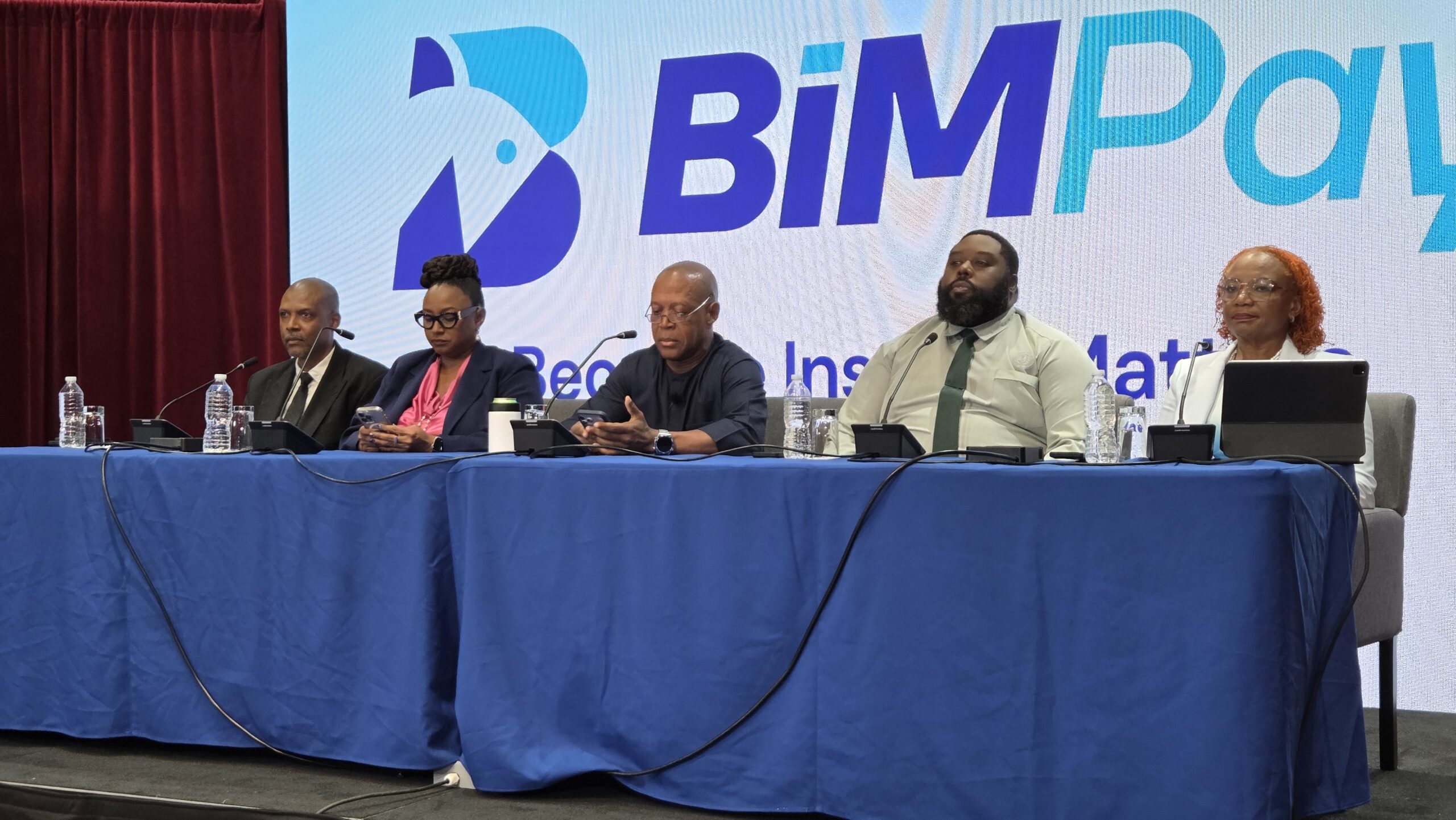
Sir Neville Nicholls - Chairman of Securities Exchange Commission - August 8, 2013 ruling, the FTC determined that the distributed intermittent renewable energy generation shall be increased to seven megawatts
Sir Neville Nicholls – Chairman of Securities Exchange Commission – August 8, 2013 ruling, the FTC determined that the distributed intermittent renewable energy generation shall be increased to seven megawatts

The rapid deployment of PV in recent times has taken many by surprise. This is because its true potential has been consistently underestimated by policy makers, planners and industry participants alike. But while this is no longer the case, all we can now hope for is that industry stakeholders recognize the major challenges – technological, policy and regulatory – that must be overcome in building out a high level of intermittent renewable capacity.

In their August 8, 2013 ruling, the FTC determined that the distributed intermittent renewable energy generation shall be increased to seven megawatts. At the time of the ruling, there were two hundred PV customers connected to the grid, representing a total of 2.1 MW of capacity. In its long term resource plan, the Barbados Light and Power (BL&P) projected that the 7 MW capacity limit would be fully subscribed by January 2016.This projection was made in February 2014, but fewer than six months would elapse before BL&P informed customers that the approved capacity limit had almost been exhausted..

In BL&P’s plan, which was informed through broad consultations with stake-holders, the company made no further PV growth projections after January 2016. It therefore, came as no great surprise, that there was no further discussion about future of the Renewable Energy Program (RER) or how events would unfold after the 7 MW limit was met. That such omissions could escape the attention of the regulators is quite remarkable, especially since PV roof-top development is touted as an important element in meeting our energy security needs. More importantly, this approved resource plan claims to be the culmination of a process that “considers Barbados’ future power needs and identifies a future portfolio of power generating technologies”.

Regarding the identification of future power needs, there is something not very reassuring with a process that fails to recognize obvious near-term industry trends but purports to chart a certain path for long-term development. To remedy the planning oversight, and to give recognition to the tremendous demand for grid-tied installations, BL&P has now decided to conduct an Intermittent Penetration Study (IPS), which when completed will indicate what changes, if any, be made to the renewable energy limit. Procedurally, such a study should have taken place at the beginning of the planning process, not at the end of it. Had this chronology been followed, the planners would have been informed, far in advance, of the necessary operational and infrastructural grid changes required.

Notwithstanding these chronological shortcomings, and given the tremendous popularity of PV systems, many industry players are still hopeful that the IPS will show that there is still sufficient intermittent capacity left within the planned grid operations that could support the grid development. However, there is little evidence to support such optimism at this time. The reality is that solar PV plants can be deployed very rapidly. Much faster than the rate at which required operational and infrastructural changes can be adapted to reliably integrate it on a large-scale. At the same time, this rapid PV deployment is occurring on an ageing grid that was not designed for steep ramps and excessive cycling that a high PV penetration brings. This problem could be overcome either through utility-scale battery storage or by replacing the ageing generating plant with a new mix of highly responsive and flexible technologies to follow the load cost-effectively. Unfortunately, neither of these is likely to occur anytime soon. First, BL&P has indicated that battery storage is too costly and second the company’s approved resource plan is dominated with inflexible base-load plants that are not designed for, and are inconsistent with, large-scale intermittent deployment.

Putting aside the planning short-comings, the challenges that pertain to the integration of large-scale intermittent renewable energy are seen, for the most part, as technological and regulatory. But, while these are important areas of concern, so too is the lack of a clear policy mandate. This entire PV expansion process can only make sense, if it is driven by a clear policy directive that mandates the level of intermittent renewable energy necessary to support national development goals. Only then will the planners and regulators be able to determine the extent to which system elements require rebalancing and the economic impact of doing such. The characteristics of the system may have to be significantly altered as a result, but these changes must be seen to be responding to a clear policy directive.


Discover more from Barbados Underground

Subscribe to get the latest posts sent to your email.

65 responses to “Expanding the Renewable Energy Rider”


  1. The Governor of the EECB Dwight Venner made the point this week at the Leo Leacock lecture that the problem we have with research at the UWI has been the inability to commodify. Surely the private sector in Barbados can see the benefit of partnering with Cave Hill to taken solar research to the next level? Enery cost plus labour are two inputs to cost of production we MUST control to protect the economy.


  2. David wrote “Surely the private sector in Barbados can see the benefit of partnering with Cave Hill to taken solar research to the next level?

    http://www.nationnews.com/articles/view/reds-green-side/

    I gine fishing. ill rejoin the blog when I get back.

  3. Tony (kite) Gibbs Avatar

    @Are-we-there-yet
    There are so many new battery technologies under research now that I am unable to keep up with. However, I am not so sure about a process that stores ‘energy of melting snow’. As far as I know melting snow absorbs energy (latent heat) not gives it up.
    Also, I am not totally convinced that solar PV at utility scale makes sense for Barbados. Solar PV is suitable for roof-top development, car parks etc but its diffused nature and low power density makes it unsuitable for large-scale development in a land-scarce island.
    For example, Bl&P is constructing a 8 MW plant on 45 acres of land that will provide only 1.5% of our energy needs. This works out at 44 watts per meter square. Less than what it takes to light bulb. The Israelis are constructing a concentrated solar plant of 1.5 MW on 15 acres of dessert land or at a power density of 24 watts per meter square.
    On the matter of scaling WTE one must first decide on which technology is being used: incineration, gasification or pyrolysis.These depend on the level oxidation. Incineration is less efficient, cheap, scalable and dirty. It requires much cleaning up of flue gases. Gasification and, in particular, plasma gasification is cleaner and more efficient but it is very expensive. As a result,small sizes plants (less than 100 tonnes of waste per day) are not economically viable. The operating economics become more attractive at generation sizes above 10 MW or 200 tonnes of waste per day.


  4. Tony (kite) Gibbs; Thanks for responding.

    First, let me apologize for my loose writing re. utilizing the energy of melting snow. That correct formulation is contained in the extract from a St Georges Dragon post below

    “PGE’s icy solution, a Thermal Approach to Grid Energy Storage (TAGES), was developed by a company called Applied Exergy. It uses a heat pump, driven by excess energy from wind turbines or solar panels, to cool water into a pumpable icy slush, which is then stored. The slush is run through the heat pump the other way to retrieve the energy, powering a turbine as it melts. Using waste heat from a coal plant to power the heat pump can mean 80 per cent of the energy put into the slush can be retrieved.”

    But my overarching point was not about utilization of Solar PV as stand alone systems at Utility scale. It was about using our resources of rooftops and sunlight and wind, with research driven modification of our ubiquitous Solar water heaters to provide both hot water and to be used as a component for storage of energy for households, not for Utilities and large scale users. In that regard, the example you gave of BL&P setting up a 8 MW system on 45 acres in Barbados and the Israeli Government setting up a 1.5 MW one on 15 acres of Negev desert land is moot.

    The system that I envisage would be somewhat stratified at a number of levels and would have to be phased in over a relatively long period. Coverly or a similar new or old development could be a good model community for a project of this nature.

    The arguments you have used are for utility scale operations. Why couldn’t PV and wind and some new or relatively cheap battery system for storage of excess energy be used for households while the utility scale operations concentrate on grid type systems, WTE, etc..

    In any case with the conservation that the coming hard times will almost surely force on most of us, 1.5 to 2 kwh PV systems will be adequate for powering most of our households. Why shouldn’t the country be looking at ways to seamlessly go in this direction before the hard times hit all of us?


  5. See the following extracted from FB:

    Hallam HopeSURVIVING OUR HARSH ECONOMIC ENVIRONMENT

    4 hrs ·

    So I visited with an engineer in St Phillip yesterday who is focused primarily on battery-based Photo Voltaic solar systems for residential and commercial customers. Not that my faith (strange word) in battery solutions needed a boost but that hour-long discussion and look at some of his equipment has further convinced me that there is a solution out there for everyone, from the four and five kilowatt guy to the very small apartment. Management of investment and a determination of costs is of course an intimate matter as we can agree that the economies of scale start to look brighter the larger your usage needs. The good news is that like your solar panels some batteries, while they carry an expense, can also last up to 20 years but some monitoring and maintenance might very well be required. So Yes, batteries can work regardless of your need. But remember that all equipment is not created equal and the ordinary citizens does not always know the difference between quality and junk. hallamhope@gmail.com. (246) 822-1414.


  6. So thanks for sharing my FB post. It appears that if Barbados Light & Power says it has no problem with regulation then there is the likelihood that there can be some fast track. As an example we have the unusua;;y speedy decision by the Fair Trading Commission to increase the total available Megawatts from seven to nine. But that’s not how regulation will work for the consumer and business and the economy because the evidence of recent FTC hearings show the power company objecting to just about every consumer and business argument and we had the most ridiculous decision on buy all/sell all where a Renewable Energy Rider customer who invests in a system and quite likely has to incur debt now has no choice to to sell all of the power generated by their investment back to the power monopoly without an option to use some for their own purposes. And yet consumer choice is a fundamental aspect of good regulation. So we supposedly attract foreign competitors to provide choice, better technology and more innovative products and of course lower prices and we say the idea of competition is that the consumer has a right to choice. Yet, when it comes to the energy monopoly we say the consumer is not entitled to make a huge return on their investment under the RER and unlike a farmer growing potatoes who has an option to consume some of his potatoes and sell them to who soever he or she wishes under the RER those potatoes would all have to be sold to Barbados Light & Power. The opportunity that a Photo Voltaic system with batteries that is not tied to the grid should be obvious. Off grid systems are not regulated by the fair Trading Commission so you can have as big a system as you want and there is full independence and choice as well as a chance to determine an attractive return on investment. For customers seeking independence we recommend an energy audit and some consideration of batteries, either fully or partially off the grid. Find advice you can trust, understand the pros and cons and take a decision before the next round of rate increases to make a start. hallamhope@gmail.com. (246) 822-1414. Hallam Hope, GreenTech Barbados.


  7. Solar Power is growing so fast that older energy companies are trying to stop it

    If you ask the people who run America’s electric utilities what keeps them up at night, a surprising number will say solar power. Specifically, rooftop solar.
    That seems bizarre at first. Solar power provides just 0.4 percent of electricity in the United States — a minuscule amount. Why would anyone care?

    But utilities see things differently. As solar technology gets dramatically cheaper, tens of thousands of Americans are putting photovoltaic panels up on their roofs, generating their own power. At the same time, 43 states and Washington DC have “net metering” laws that allow solar-powered households to sell their excess electricity back to the grid at retail prices.

    That’s a genuine problem for utilities. All these solar households are now buying less and less electricity, but the utilities still have to manage the costs of connecting them to the grid. Indeed, a new study from Lawrence Berkeley National Laboratory argues that, without policy changes, this trend could soon put utilities in dire financial straits. If rooftop solar were to grab 10 percent of the market over the next decade, utility earnings could decline as much as 41 percent.

    More: http://www.newsforage.com/2014/09/solar-power-is-growing-so-fast-that.html

  8. millertheanunnaki Avatar

    @ Green Monkey | September 29, 2014 at 10:48 PM |
    “But utilities see things differently. As solar technology gets dramatically cheaper, tens of thousands of Americans are putting photovoltaic panels up on their roofs, generating their own power. At the same time, 43 states and Washington DC have “net metering” laws that allow solar-powered households to sell their excess electricity back to the grid at retail prices.”

    So what happens in the Winter months especially in those states with heavy snowfalls and significantly reduced sunlight?


  9. The issue we have to address is that with the continuing adoption of PV and other RE solutions the revenue of the power companies (EMERA included) will be negatively affected. They are stock companies and will respond to protect the P&L.


  10. millertheanunnaki asked:
    So what happens in the Winter months especially in those states with heavy snowfalls and significantly reduced sunlight?

    It should be fairly obvious. Unless the efficiency of solar cells increases quite dramatically homeowners and businesses in those areas with increased winter cloud cover and fewer hours of sunlight will not find it as easy to get by on their own by bolting a few solar panels onto the roof and perhaps installing some batteries for full self-sufficiency. Therefore for those people centralized power generating systems (If other renewables like wind or geo-thermal are not a viable option) and a reliable grid to distribute that power will continue to be a necessity to a greater extent than for those living in sunnier climes.

    So what’s your point? I don’t advocate shutting down the grid or doing away with centralized power generating facilities when and where it is not practical to do so and neither does the article I posted. However, the article does explain why power companies in the USA (as with BL&P) are not rushing to integrate householder supplied RE into their grids to the extent we might like and why it appears power companies might actually try to stall or hold up the process. This is understandable as distributed RE generation by businesses and homeowners is likely going to have a negative effect on the business model they have been relying on for over a hundred years, and in a worse case scenario could put many of them out of business. The article also explores some of the various options being discussed as to how best to integrate RE into the existing grids. I thought it could be of interest to those on BU who are discussing the options for Barbados.

  11. millertheanunnaki Avatar

    @ Green Monkey | September 30, 2014 at 12:37 AM |

    I am not arguing any point. Just seeking some clarification/’enlightenment.
    I am on the RE side. Just wanted to know how that extended hiatus of penetrative sunlight would be compensated for.
    Such a prolonged down-period of sunlight is not a regular occurrence in places like Barbados.


  12. @ Miller
    The substantive point is that the old utility model is dead – or at least mortally wounded. The technology to provide a household energy “black box” is already here, …is falling in price, …and increasing in reliability and convenience.
    When the new “Lion type” battery technology becomes available on a large scale…..dog dead for utility scale business – especially in tropical areas, or where the infrastructure is not well developed or is unreliable.
    The energy model of the future will be based on “every man under his own fig tree….”
    Those living in climates not well suited for green energy will go into decline while the former “deserts” will begin to thrive…..


  13. Sounds like it’s another case of buggy whip makers meeting the horseless carriage.


  14. @ David,

    I hope that our government is investing in the renewable energy industry as oppose to exploiting and importing fossil fuels.

    ” Renewable energy surges to record levels around the world”

    ” With China accounting for more than one-third of the global total, the developing countries outspent the richer nations on renewables for the first time.

    When measured against a country’s GDP, the biggest investors were small countries like Mauritania, Honduras, Uruguay and Jamaica.”

    http://www.bbc.co.uk/news/science-environment-36420750

The blogmaster invites you to join the discussion.

Trending

Discover more from Barbados Underground

Subscribe now to keep reading and get access to the full archive.

Continue reading