Banner promoting anonymous crime reporting with a phone and contact number 1 800 TIPS (8477), featuring the Crime Stoppers logo and a QR code for submitting tips.

โ† Back

Your message to the BLOGMASTER was sent

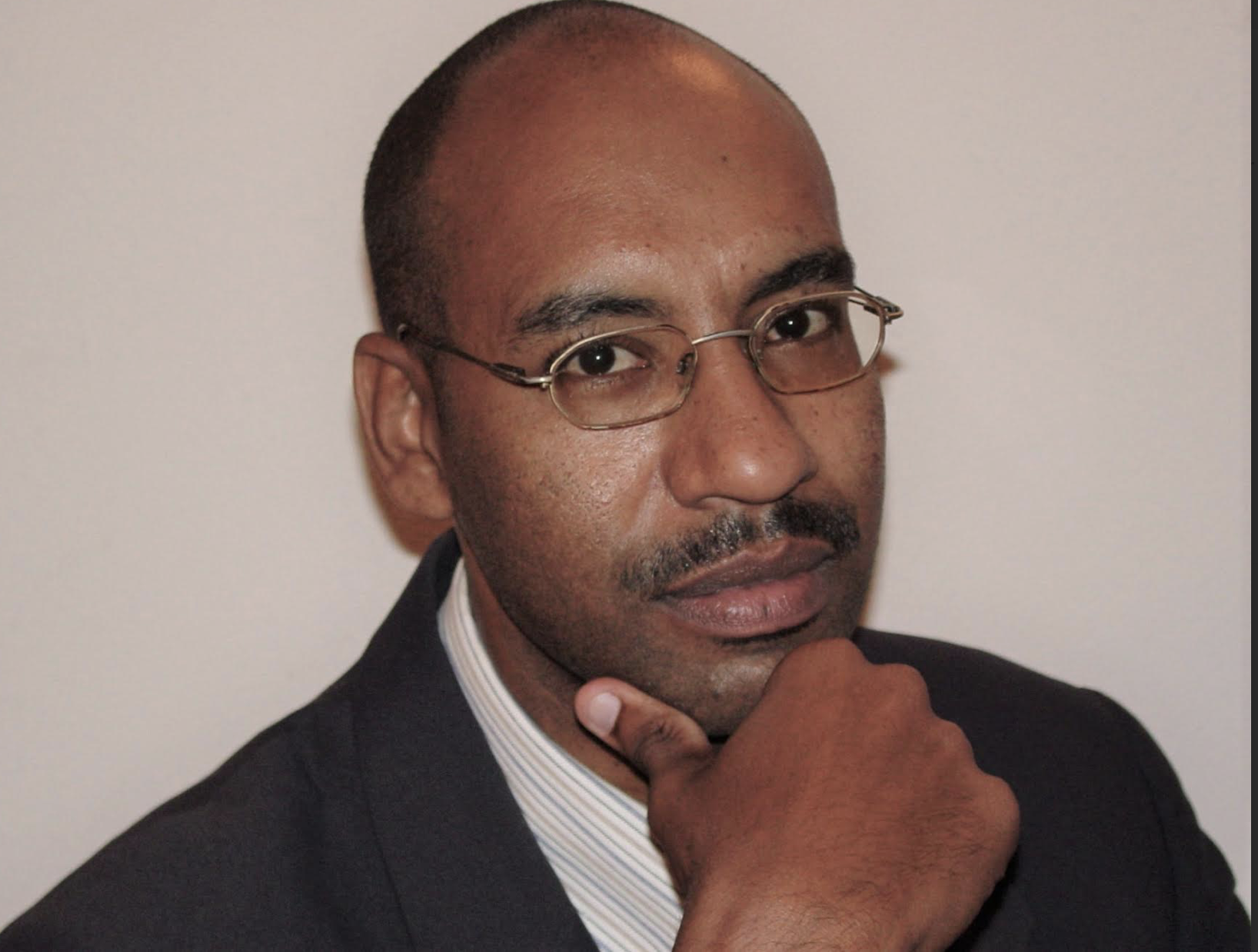
Hal Austin
Hal Austin

Introduction:
This yearโ€™s world famous Notting Hill Carnival, the biggest and most successful popular cultural event introduced to Britain by its Empire Windrush generation, the 49th, was historic for a number of sociological and political reasons. First, it visually marked a passing of the baton, from traditional mas players to a younger, more raucous generation who just had its own ideas of celebrating black culture. It was also more integrative, in the sense that there were as many other minority (and majority) ethnic participants as young African-Caribbean people who took part, many arguably for the first time. But the event still brings out the contradictions in most Britons, and new communities, if not in Londoners.

Street Theatre:
In the main, middle class Britain has no intention of ever understanding carnival; it does not fit with their interpretation of โ€˜cultureโ€™, therefore it plays second fiddle to the Edinburgh Festival, the Edinburgh Fringe Festival, the Edinburgh Tattoo, the Reading Festival and the much earlier Glastonbury Festival, even if it attracts many more people. Above all else, carnival is street theatre, it is a celebration of music, costumes, dance, which, unlike its more mature cousins in Brazil, Trinidad and Southern Europe, is disconnected from religious meaning but was invented by Trinidadian Claudia Jones simply to cool passions, to temper the racial hostility that scarred that part of Ladbroke Grove in the mid-1960s.

So, to understand and describe the Notting Hill Carnival, which used to be the West Indian Carnival, one has to understand its pre-history: from the brutal murder of Antiguan Kelso Cochrane in 1959, to the Mosleyites, to the terrible anti-black policing which came out of the Notting Hill and Notting Dale police stations. Itย  must also be remembered that nearly every police commissioner after Sir John Waldron had had some experience of policing in Notting |Hill โ€“ an experience now transferred to Brixton in South London โ€“ before reaching the top of the greasy police that is commissioner of Scotland Yard. It is this background that makes the popular interpretation of carnival a policing event, rather than one of theatre.

Crowd Policing:
For these reasons, carnival has always been an event which allowed the police to put in to practice their latest crowd policing theories. This became particularly so after the first flare up in 1975, when police were caught unawares and were forced to use dust bin lids as shields, forcing them to return in 1976 fully armed with patent riot shields, extended staves, and vehicles with protective bars across their windshields. It was the introduction of para-military policing to the streets of London. It also gave the police an opportunity to devise new methods of command and control โ€“ from the manipulation of the press and management of the news, to new applications of street patrol as the event unfolds throughout the day; from jolly, mature traditionally uniformed officers dancing with plump elderly women or, this year, three officers showboating for YouTube, to the paras with their plastic handcuffs, baseball caps and hidden numbers creeping out after dark.

This year, for the first time, the police used the โ€˜kettlingโ€™ method, frequently used against animal rights campaigners and other protest groups. So, for an event that the police themselves officially and grudgingly had to accept was relatively peaceful, there was still the pre-planned aggressive policing, with the para officers stopping groups of young men, out for a dayโ€™s fun with their mates, to search them and take their details. These bits of gossip will eventually find their way on to some computer and will emerge later as so-called intelligence, which will no doubt go towards feeding further anti-democratic laws and regulations based on the myth of security and anti-terrorism.

The Media and Carnival:
The Notting Hill Carnival, the signature cultural event for Caribbean people living in Britain and the nationโ€™s biggest street festival, presents an enormous challenge to the British media โ€“ and has always done. Due to a combination of police manipulation and the willingness of the press to represent black people as criminals, the media find it difficult treating the carnival as a cultural event, with colourful, theme-base, creative costumes, or just a massive public gathering at which criminals โ€“ in the main young black men โ€“ run riot (often literally).

But by far the great barometer of the acceptance of Caribbean people is the response of the press. The most telling media non-story about this yearโ€™s carnival was its treatment by the BBC, both television and radio, the voice of Britain, the organisation funded by taxpayers. BBC local radio and television behaved differently, and have always done. Nothing on the early or late national television news, nothing on radio and, on Radio Fourโ€™s Today programme on Monday bank-holiday, the flag ship programme which purports to be the eyes and ears of cultural developments, there was not even a mention of the number of arrests.

But, for the great decision makers, the policy wonks, the politicians and informed middle classes, that are the Today audience, there was an item about the new tattoo on pop singer Cheryl Coleโ€™s bottom. This is what the producers of the day and the senior broadcasters working with them thought was the most important cultural event of the day. The liberal Independent (Monday bank-holiday) gave a better report on page 10, focusing on what is called โ€˜colourโ€™, basically fluff about how wonderful the costumesย  were designed, the weather, patronising drivel about smiling people, but with the expected number of arrests.

Again, there was no expert view on the creativity of the costumes, the themes behind the bands, the quality of the steel band playing, nor the street parades. The Daily Mail (bank holiday London edition), the day after the Sunday, a publication that likes to see itself as the voice of โ€˜middleโ€™ Britain, could not even find space for a picture caption about carnival, but a full page, complete with eight pictures of Cheryl Coleโ€™s tattoos. The message quite clearly was no violence, no coverage. The Tuesday edition, following the usually exciting Monday event, again did not even carry a picture caption; it was the Daily Mail at its political and quietly hostile best. The Independent on the same day, restricted itself to a small picture caption with one of the iconic carnival pictures, even if the words were just again waffle. The Daily Telegraph (Monday) also restricted itself to a clichรฉ picture caption and again on Tuesday, going for a Brazilian samba shot. The Guardian (Tuesday) ran a full centre page spread with five pictures, with the main one that of a Brazilian samba queen.

One of the smears on the black British community, one that has survived since the 1950s, is that we are a drug-using culture. True, in the 1950s and 60s, as a young, male dominated community, there was a regular use of illegal substances, in particular marijuana, encouraged by a large number of US military personnel based in the UK. Carnival quite often is seen by the more popular press as a collection of drug users, even if there is now a shift in popular opinion.

By coincidence, a report in the Independent (29/8/13) of a study by Release, the drug advocacy group, and the London School of Economics, and well timed for carnival, said: โ€œHundreds of millions of pounds of taxpayersโ€™ money are spent every year on arresting and processing people for possessing drugs, with no discernible impact on drug markets or levels of use. โ€œMeanwhile, thousands of otherwise law-abiding people receive criminal records, and many poor and minority communities deal daily with the feeling that the police are unfairly targeting them.โ€ Carnival brings all these biases in to a single geographical area. But we know the true story of drug abuse, from the so-called legal highs to the casual use of cocaine. All we have to do is read the confessions by the pop โ€˜starsโ€™, actors and their hangers-on. Of course, none of this abuse is reflected in official crime statistics since police and law enforcing agencies rarely touch these mega-rich people, preferring instead to arrest the Rastas, unemployed teenagers and boys on the block.

Those of us who have been there know the drill: the late calls telling us about a raid and inviting us to accompany them; the television cameras, the photographers, reporters, the briefings, the paramilitary-style knocking down doors; the highlights on the evening news; the fear of ordinary people that drug gangs are invading their quiet neighbourhoods. It comes back to the old criminological statement on criminal justice: whose law are the police enforcing, and, what justice? In reality it is all public relations, a battle for the hearts and minds of ordinary people, while the high and mighty get away scotch free.

Festival of Food:
At the heart of the event is a festival of food, one of the highlights of which is the incredible display of foods from almost every ethnic group in Britain. It is this display of street-corner food that highlights the economic potential of carnival, along with the numerous other opportunities it provides to enterprising local people, from privately run toilets (one man was charging ยฃ2 to use his) to commodity sales and distribution, marketing, logistics, transport, just to mention a few. The carnival is estimated by the Daily Telegraph to bring ยฃ100m in to the local economy. Of that, it can be safely said that the Caribbean community gets minimal benefits from this, either as small entrepreneurs or as consumers. This is based on a crude calculation of one million people attending on each of the two days and spending about ยฃ50 per capita. One reason for this business failure is the lack of organisation and business enterprise: an inability over the last near 50 years to set up a permanent organisational structure to mange carnival and negotiate on behalf of the community. Another failure, one that is replicated across the Caribbean, is the refusal of professional people to step forward and provide the community leadership the event badly needs.

With the exception of the Barbados high commission, few Caribbean high commissions play an active role in the London carnival. Again, a politically-misguided lawyer aside, most of the organisation behind carnival has been clouded with voluntarism, petty nationalism โ€“ the Selwyn Baptiste (Trinidadian), Louis Chase (Barbadian) saga of the 1970s, and the intervention of such community activists as Darcus Howe and others on various occasions. โ€œCarnival is we tโ€™ingโ€ became the signature tune for a reactionary nationalism that chose to ignore the social and political circumstances that led to founding of the carnival. It is the same rallying call is giving birth to a Brazilian take-over on the basis that Brazilians are world-class organisers of modern carnivals โ€“ just go to Rio. Compare this, however, with the inner citry youths of the US, marginalised by the society, kept out of meaningful jobs and criminalised, yet they went away and created a multi-billion dollar rap and hip-hop industry, which now dominates popular world music.

Analysis and Conclusion:
National media and the police have had forty-nine years to get it right over carnival, and they are still lost like kids in a maze not knowing if to recognise it as a criminal event or art. Even given the historical infighting and bad organisation of carnival, there is very little to excuse the Metropolitan Police for its historical prejudiced policing of the event, and the media for their bias and blatant contempt.

In the old days, the 1970s and 80s, at least the main attraction of carnival was the predicted showdown between young muscular policemen, and fierce, determined young black men. It was a show of strength, a battle as to who controlled the streets, and black youths knew that the police had most of the tools, from arrest and custody, to being legally heavily armed, to the courts and the loyalty of the press. All these young men โ€“ and a few women โ€“ had on their side was moral strength and courage, the right to go about their legal business unmolested, a right to enjoy themselves in a free and democratic society.

It is to fill this knowledge vacuum and lack of interest, that the dominant white community defines carnival by the metric of criminality, the number of arrests, the reasons for those arrests (300 this year for petty offences like urinating in public view, possession of marijuana for personal use, etc. In the meantime a death occurred at the Reading festival and few, if any, drug arrests took place at Glastonbury), and the number of officers policing the event. Even people who under normal circumstances will describe themselves as โ€˜liberalโ€™ see carnival through this fractured and distorted prism. Those African Caribbean young people who feel that they have fully integrated in to British society, that they are now part of the social furniture, either have to turn away from this crude reality, or pretend it does not exist.

In many ways, the English reaction to carnival at home betrays the deceit of claiming to be madly in love with the Caribbean and its people when on a tourist visit. Cultural symbols are important as they signal the status of the group within the wider society. That our social and political leaders choose to disassociate themselves from carnival sends a message that carnival is not socially acceptable.

In the final analysis, newspaper coverage of carnival and official responses to it are but walk on parts in a wider moral drama: do Caribbean people, especially those from the former colonies, have any culture that we as English people should respect? Havenโ€™t we already defined Caribbean people as petty criminals, educational failures, creative dunces, moral reprobates?

See: Hal Austin, Carnival: Reflections on a community, in Journal of Ethnic and Migration Studies, Vol 7, Issue 1, 1978, pages 114-117

Discover more from Barbados Underground

Subscribe to get the latest posts sent to your email.

70 responses to “Notes From a Native Son: The Notting Hill Carnival Remains a Yardstick of Caribbean Progress in the UK”


  1. Why do some Caribbean people find it so important whether English or any other people respect or recognise the value of their culture?? That is the mystery to me. The other mystery is why go and live in cold old England at all? Is it for the weather?


  2. The world going to hell in a hand basket and the only ware you could espouse from London is about a tired, jaded festival. We were hoping to be surprised by some special insights ‘from our reporter in England’ about the machinations of a bankrupt, corrupt, war criminal class in Whitehall. Guess that was too much to hope for. In any event, you would lack the courage.


  3. This says a lot about what this carnival has become! People trying to see who can be more vulgar!


  4. Hal Austin,

    Some good insights into and about some aspects of the historical and present day black experience in Great Britain, via this analysis of yours of the Notting Hill Carnival.

    What the PDC is interested in also is the nature and level of support for the Carnival that comes from the British Government at the ministerial/public service level.

    What is the amount and quality of responses to, or the amount and quality of promotion – before, during and after the fact of its taking place, given by users of modern social media in particular, Great Britain, to the Carnival, given that you have mentioned the totally inadequate coverage (the biases ignorance included too) of it, as coming from the traditional media in that country?

    What are some of those extant political legal financial underlying structures and functions that are peculiar to and supportive of the Carnival itself that will reflect what this event will possibly look like evolve morph into, if so, in the next 5 yrs, 10 yrs, 25 years, etc, and what will its cultural social political material financial significances likely be, tenor for in those years ahead?

    PDC


  5. @Pacha

    Cut the guy some slack, we are not one-D you know.


  6. Why you would choose the Edinburgh tattoo as a comparison is beyond me. Scottish history and culture have a place as well. It is true we don’t mount our women in public in the name of carnival , never the less we know how to party.


  7. I have been to the carnival once while a student in London in the early 90’s. NOT IMPRESSED. Struck me as a celebration of Jamaican slackness and debauchery. Insofar as it gives English people (who are naturally ignorant enough about the world) the impression that it represents the culture of all people from the Caribbean region, it is a travesty.

    “Carnival” is itself a tradition with roots in catholic countries, so how it came to be associated with the largely protestant Anglo-Caribbean is beyond me. As for Reggae and Calypso music, these are only representative of SOME countries of our region. The whole thing was unimpressive.

    To compare it to the Edinburgh festival or the spectacularly impressive tattoo is laughable. Scottish culture is simply far more attractive than “black” culture for an obvious reason: the latter is a figment of someone’s racist imagination. When in Britain, I personally keep well away from “Black Britain” at all costs.


  8. This whole Caribbean culture that has morphed into utter distaste and nothing to be proud of has become just as old and tired looking as the buildings in bridgetown.


  9. Wasnโ€™t Miley Cyrus criticised for doing what some of de young wimmin was doing on de video? Only in Amurica dey call it twerking but we in de Caribbean missed de boat in getting wuk up or sumting like dat in de dictionary.

    I say old chap what are those people dressed in funny costumes doing on the street? Oh itโ€™s called West Indian Carnival, some people from the colonies are trying to foist their strange culture on us. Culture? We have our own culture, are you riding with the hounds this weekend?

    If the Romans who used to run Britainnia reappeared they would be very impressed that Saturnalia has survived the passage of time.


  10. @Sargeant

    You have totally been North Americanized. When Rihanna participates in Crop Over do a Google to see how her ‘jumping’ is described. Cultural expression is unique to a people now? So how do we expect a Bajan, now Canadian to appreciate the nuances…lol.


  11. Interesting but false comparison between black culture and Scottish culture. There is nothing “black” about what passes as black culture today. Most things so called blacks in the west do today is learned behavior from whites.


  12. We have to be careful not to throw out the baby with the bath water.


  13. i agree with Pacha … Too much is happening on the world front that involves the UK government. A perspective from Hal on any of these issues would have been fine, but…

    In any event wah I see on the Utube offerings look tame compared to wah is happen ’bout they. I got one problem, I ain’ young nah mo’ … Stupse!


  14. Baf, check out a video i posted on the Syria thread, it will answer most of your concerns, be aware there are still many other things to be revealed.


  15. I am. Well Well I would like you to look at BarbadosToday on the last page and tell me wah you feel w’ong wid the picture …

    http://edition.pagesuite-professional.co.uk/Launch.aspx?PBID=87ad6005-1972-4d63-92b0-8927eda53c7a


  16. That’s where the money is at, have to keep the game going it has been very successful financially for centuries so why stop a good thing now even with all the information coming out. The Caribbean still has a long way to go in understanding the game.


  17. Baf…………that comment was regarding the Barbadostoday.bb backpage.


  18. I assume you are talking about the black girls with white dolls. All I see are children having fun. But if you would like to compare cultures scot to bajan, as Hal seems to be doing, my culture has made many contributions to the world the television, the phone, the steam engine, the bicycle, the pneumatic tire the adhesive stamp, standard time, the incandescent light bulb , radar etc etc etc. Now I am sure in your mind they pale in comparison to Barbados’s contribution to modern society the……..pop up vendor……just when you have made it to the most desolate beach on the island and begin to relax ..presto there he is briefcase in hand. On behalf of all the tourists to your shores thank-you Now back on topic don’t let the fringe element hijack carnivals and turn them into events that most people feel are moving away from beauty, fun, and skill to nothing short of porn, that and that alone wll kill them. If the product is have the same values as most of the people they will support it.


  19. @ David

    Do you know the story of how King Dyall became King Dyall?


  20. @@Pacha

    No


  21. @David

    what is the point of stopping comment on the Arthur post while leaving all the slanderous and salacious comments to remain ? If you have any integrity left you would remove the post . You must have convinced yourself that it was not worthy to continue the comments . If so why leave the post ?


  22. ” The Notting Hill Carnival Remains a Yardstick of Caribbean Progress in the UK”

    I wonder on what basis the above statement is being made. As someone who witnessed the Notting Hill Carnival in the early days during the 1960s, I never felt then it was indicative of the progress of Caribbean people, neither do I feel so now. The violence associated with the carnival has meant many people from the Caribbean stay away and the rush to be home before darkness falls, is almost a stampede by revellers.

    It is true many people from the Caribbean live in London, it being a very diverse city with many nationalities but they also live in large numbers in Birmingham, Manchester, Leeds and other cities some of whom also have their own Caribbean carnival – on a smaller scale it is true but without the violence associated with the Notting Hill Carnival.

    To suggest that there is a correlation between the progress of people from the Caribbean and the success of the Notting Hill Carnival is tenuous. Most Caribbean people do not care much about the Notting Hill Carnival, because of the press in its early years and the thought of dancing, surrounded by a heavy police presence and more in reserve can be intimidating.

    I do not take issue with all you have written but in many respects London is not truely representative of England, although it is its capital. Another factor is the Notting Hill Carnival has not got the reasonance with Caribbean people – particularly the young – you have ascribed.

    Most Caribbean people are too busy buying homes, bringing up children, making themselves financially secure for the future . . . .the Notting Hill Carnival is not on their radar. They have no wish to be associated with an event known for violence, drugs and in too many cases lawlessness.

    There is a good case to be made for how the media has reported the fortunes – in many cases the misfortunes – of black and Caribbean people, but the Notting Hill Carnival is not an example on which I would hang that hat.
    Just a view Hal.


  23. @ YardBroom

    I too tend to agree that Mr. Austin’s yardstick comment is misstated.

    The fact that it is 49 years, irrespective of its beginnings, does not an azimuth of progress make.

    I quote “Bacchus was associated with fertility, wine and grapes, as well as sexual free-for-alls”

    In the beginning…what began and should have continued as an expression of “we culture” has like that horror movie “taken a wrong turn” and we now descend into cavortings and banality and borderline sexually explicit publically acceptable free-for-alls.

    Now mind you, what is ok for a dance floor in a dub and what de young uns love to call dance, we old fogeys will as is normal in the “changing of the guard”, call cavorting.

    Remember the absolute scandalous perceptions to “twisting, the strong man, de bump and the rest of the dances by “the imps of Satan” ?

    Such is the nature of things, change, because of its differences, brings “push back” and comments from those who would hold on to the status quo.

    We ole fogeys will never believe that NottingHill has anything to do with progress, it is just another wuk up session, where people can come vent their carnality without actually tekking out their dog*ie and inserting it in vagi**s in public, a place where some believe that it gives them licence to drink to absolute intoxication, smoke varied hallucinogens and inject other drugs without any constraint and unleash their unbridled passions, and fight with others, as the “spirit” moves them

    I want you to watch how “foreday Morning is going to grow and shadow Kadooment Day.

    $1500 against $20 for a tee shirt and $10 for a slosh of body paint and it is easy to see how easily the “progress” in our expression of culture on the local scene is going to follow your Bacchus festivities in Notting Hill.

    @ Hal Austin.

    I like a few others on this site would be more interested in knowing about the economic empowerment that blacks have experienced in Englant over these (49) years and how Englant, the so called stalwart for human rights, in Syria and other countries, has in fact integrated our denizens (Sambos) into their society as they are supposed to have done with the Pakis

    I am the first to note that i do not see you openly comment on (race) issues, enfranchisement and other (economic) policies in Rule Britania with as much alacrity as you afford the Affairs of BIM.

    I have over the years fear men and women who are so quick to point out that BIM has its faults but seem fearful to speak of any wrongs that abound in their adopted homes

    What do you think?


  24. @pieceuhderock

    In answer to your question to Hal re the progress of afro-Caribbeans in the UK, they are in fact a lot better integrated into British society and attract a lot less general hostility than, say, Pakistanis.

    I studied in the UK and was pleasantly surprised at how much better black/white race relations feel than they do in the US, which is still a downright horrible place to be black. A majority, I believe, of afro-Caribbean people in the UK marry white British partners, which seems only natural unless (as in the US) racial conditions prompt minorities to seek out their own and choose a partner based primarily on race.

    My insight is limited as there is no Bahamian community living in the UK, apart from students. But it seems to me that most of the ‘problems’ facing afro-Caribbean people in the UK are self-inflicted, as demonstrated by those disgusting people seen cavorting in public in the video of carnival. There are certainly no external conditions keeping black people down there.


  25. r these reasons, carnival has always been an event which allowed the police to put in to practice their latest crowd policing theories. This became particularly so after the first flare up in 1975, when police were caught unawares and were forced to use dust bin lids as shields, forcing them to return in 1976 fully armed with patent riot shields, extended staves, and vehicles with protective bars across their windshields. It was the introduction of para-military policing to the streets of London. It also gave the police an opportunity to devise new methods of command and control โ€“ from the manipulation of the press and management of the news, to new applications of street patrol as the event unfolds throughout the day

    not happenstance my dear hal not happenstance shades of new world order tribulation to me


  26. @Bahamared

    Yours is a simplistic analysis. We should analyze the reason why a minority Black group in the UK must find ways to express itself. If there has been ‘ deterioration’ as we see it then the discussion must be why and try to fix it. Carnival and dancing has always through the ages been practiced by Blacks.We have become too Eurocentric.


  27. @David

    That is just my point. There is no “reason” why a minority black group in the UK must so express itself. My guess is that the best “reason” is to be found in watching too much idiotic American television and wanting to mimic the horrendously self-destructive culture of “blacks” across the Atlantic.

    Like every other successive wave of migrants to the UK (Normans, Vikings, Saxons, Jutes, Huguenots), these “blacks” need to simply integrate and lose their awkward and self-conscious determination to act “black”. Or of course, they can go home, which I would have done long ago.

    That is not Eurocentric. It is human centric. Only “blacks” seem to exhibit an irrepressible ability to seek out excuses to feel isolated from their surrounding community and to work to deepen that isolation by acting ostentatiously “black” at every opportunity. Sad.


  28. @ David…..and talking of Eurocentric, what on earth on this planet could be more 110% Eurocentric than Carnival? It is a medieval European rite, vividly associated with the Middle Eastern/European mythology called Christianity.

    You state that “blacks” have practiced it through the ages, but I can assure you that, just like Christian mythology itself, Africans have spent the first million or so years of their history blissfully unaware of carnival.

    Further, it only exists in those black countries with a catholic history. It does not exist in any form in the Bahamas. In Barbados, carnival-like features have been added to the historic crop over festival, which originates in the agricultural industry of the island. But it is in no way endemic to any “black” culture that I am aware of.


  29. @Bahamared

    Why do you expect Blacks to assimilate to the predominant culture? Is this what the other minorities do?


  30. @David
    That is exactly what the ones I mentioned in my previous post (Normans, Saxons, Jutes, Vikings) have done.


  31. @Bahamared

    Please clarify, are you suggesting dance rituals were not practiced in Africa pre-Anglo?


  32. @David

    No. I am referring specifically to Carnival, which you cited in connection to blacks.

    Dancing rituals were practiced by all primitive cultures, from Scandinavians, to Peruvians to Zulus. Africa is simply like everywhere else in the world in that regard. But it is a far more diverse continent, genetically and culturally, than any other. That is why it is such a mistake to try to characterise anything as “African”.

    We in the Caribbean region are more racially mixed than any other region. So to explain us only in relation to our African (itself maddeningly diverse) background, would be a mistake, too. As for this “black” label, it is beyond ridiculous that anyone would accept such an external characterisation and claim it as their own.

  33. millertheanunnaki Avatar
    millertheanunnaki

    @ bahamared | August 31, 2013 at 8:27 AM |

    Your analysis is historically correct and anthropologically sound.
    Africans know little about carnival except in those countries with a recent Roman Catholic infusion. Even then it is integrated and subordinated/subsumed to their indigenous dance rituals.

    From what we garner from your submissions you seem to have a fairly good handle on the various โ€œCarnivalโ€ festivals of Afro-Caribbean origins in UK cities with sizeable black communities like London, Leeds, Manchester, Birmingham and on a smaller scale Leicester.
    We trust you realize also that these money-spinning events are mainly to the financial benefit of the Asian (Indian and Pakistani businesses who do not participate culturally) with very few black business people involved in the sale of goods and services.


  34. @Miller and Bahamared

    Culture is what it is whether original or not. Blacks as a result of being socialized in Eurocentric environments would obviously see customs mores and the like morph into the current state we are now discussing. We should be careful not to generalize and or throw out the baby with the bath water.

  35. millertheanunnaki Avatar
    millertheanunnaki

    @ David | August 31, 2013 at 9:24 AM |

    Surprisingly, Africans do not see Anglophile (English speaking) West Indians as having a “culture’ but just apish followers of English crassness taken by immigrants to the colonies and adopted by the black slaves.
    Not that I agree with them, but the English themselves would much prefer to appreciate cultural expressions coming from Mother Africa than what emanates from their former colonies of exploitation and now abandonment.

    Can we agree that culture is basically manifestations of the mores and habits of a people expressed in dance, music,theatre and art? So if we want to treat bacchanalia and submission to saturnalia as culture with imported beads and feathers, so be it. I have no problem with that.
    But we should also remember the Aztecs who practiced human sacrifices as much as thousands at a time. Would you consider that to be part of their culture? I do.


  36. @miller

    It should not matter what the Africans or the English think, just what We think.


  37. @David,

    Nevertheless, the Caribbean region is big and very diverse. It therefore saddens me that events like the NHC seem to portray the whole region in a light reflective of specifically Jamaican urban street culture.

    When studying in the UK, I had to go to all lengths to tell English people that the various labels and stereotypes (most negative) that they sought to apply simply did not fit the region as a whole, which is VERY diverse if seen from Bermuda to Guyana.

    It is hard enough trying to (constantly) dispel the idea that the Bahamas is somehow part of the United States. We are all done a disservice by the images promoted by the NHC of the whole region.


  38. @Bahamred

    Agree with most of your last comment.


  39. @ David
    Culture is what it is whether original or not.
    ***********
    Agreed.

    However, if upon analysis of the product what we see is a whole roll of depraved, crass, visionless, animal-like behaviors with NO creative, inspirational or developmental aspects beyond anything that could be expected from a monkey or dog….

    What does that tell you about the nature of the people?

    If you are arguing that ‘culture’ is what ever the hell comes out of the mix……..are you then saying (like Bushie) that such people are nothing more than inert bowls of brass?

    It takes pressure cookers to produce real culture…not brass bowls…
    Real culture is about taking WHATEVER EXISTING CONDITIONS that a people find themselves in, and reflecting images of HOPE, VISION, CREATIVE ENERGIES AND FAITH IN A SUCCESSFUL FUTURE…..
    …..not wukking up on one another’s backsides like dogs and composing mindless, tasteless, crass songs about beating bumpers, pelting iron, and eating bacon…..

    Culture shiite…..that is not culture, that is brass bowl foolishness.


  40. @Bushie

    Take your analysis a little further. If the culture of Blacks in the UK is being questioned it means how Blacks are educating and generally constructing their lifes is where the microscope should be placed and not on the surface behaviour demonstrated in dry humping, drug related and other undesirable activities. Even those Blacks who avoid the NHC it is a reflection on them. It seems these Blacks as described by Yardbroom who prefer to stay busy by going to work, fixing their gardens and careers are happy to distance themselves from the issues of those Blacks who are of the mind to attend NHC activities.


  41. wearing your underwear outside your pants ,mounting women in public and calling it dance, is culture of a sort, subculture . I relieved to see many people see these actions for what they are. To those who defend this type of behavior your the problem


  42. the problem is that many of the Caribbean people now in the UK form a subculture in their own countries. Taken abroad, they are then seen wrongly as representative of the whole culture. Also, too often Caribbean = Jamaican to many in England. This is, as someone rightly observed, a London-centric phenomenon, as there is, for instance, a large Vincentian community in High Wycombe, Buckinghamshire, which is culturally a world away from what you see at NHC. But London’s Jamaican influenced subculture is all that many people in Britain know of the whole region.

  43. millertheanunnaki Avatar
    millertheanunnaki

    @ David | August 31, 2013 at 10:23 AM |
    โ€œmiller: It should not matter what the Africans or the English think, just what We think.โ€

    Who or what do you mean by โ€œWeโ€? If you are referring to black British people from Afro-Caribbean descent then you better reconsider. Black British don’t consider themselves “West Indian” unlike their fore parents who emigrated in the era the Empire Windrush and the Sorriento and other cargo cum travel liners.

    Afro-Caribbean Blacks born in the UK are experiencing an identity crisis and participate in Carnival as a way of coping with it. A strong identification with the Jamaican subculture is more influential and dominant than carnival and its trappings as part of their daily lives.

    If you are prepared to accept the dominant Jamaican cultural expressions as representative of the Caribbean that is fair enough but carnival is certainly not it in the UK other than an annual street fair and festival to make money for certain non-black communities focused more on business than interested in participating in what they pejoratively refer to as โ€œmonkey cultureโ€.


  44. @Miller

    Hopefully Hal will chime in and move the conversation along given that he has put a view out there.


  45. @ Bhamared
    Bermuda is not in the Caribbean. Further, the London carnival is not rooted in Catholic ritual. It is just an unfortunate name, simply because the founder was Trinidadian and gave it that name.
    It was founded as a form of social resistance to widespread prejudice and police harassment. Over the years sit has remained the most significant Caribbean event, warts and all. It is a political signifier because the society has made it that.
    note that it gets no state funding, no local authority support, apart from over-regulation, politicians can lost their reputations by attending – look at the media attack on William Hague, when Tory leader, for attending with his wife and seen drinking coconut water. No Royal endorsement, not even Prince Harry.
    The suggestion that it is not representative is political ignorance, this by people from an island that its dominant petty bourgeois culture is framed by the former colonial masters and which cricket, football, athletics, netball, and hockey are its favourite public sports – all with origins in Europe.
    Of course young people behave badly, just look at Crop Over. Vulgarity is part of the culture of youth, with those hormones running through their bodies that is what they do.
    Carnival, however, remains the greatest attraction for foreigners in such a short space of time – more than Glastonbury of the Reading Festival.
    Those horrified at the comparison with the Edinburgh Festival, the Fringe Festival and the Tattoo. As someone who almost annually attends all these events as a corporate guest, I think they are important and exciting.
    But apart from walking up and down the Royal Mile, watching street jugglers and people handing out leaflets for comedy events, what is the importance of the Festival.
    The point I was making was that an event attend by two million people over two days, about two miles from the BBC’s Broadcasting House, it was not mentioned once by radio or television. But entire programmes moved to Edinburgh for the Festival.
    That is about programming, about the allocation of broadcasting time.
    Finally, as to the influence of Jamaica culture, British urban culture is Jamaican – not just carnival – and rightly so.
    Jamaican is the most dynamic, culturally significant, creative and forceful social force among black people in the UK. We may not like everything about it, but then again I am not a football fan, do not like opera, ballet,
    polo, etc, but can still appreciate that lots of people do.
    As to the idiotic suggestion that I am writing about carnival when more important events are taking place in the world, the more important question is why is it that Barbados has a large Lebanese/Syrian community and they say very little in public?
    How many of them are Hamas supporters and funders? How many are closet Hezbollah supporters and funders?
    Why should some internecine religious tribal warfare threaten work peace? Why should this regional barbarism be of ‘global’ importance, apart from the American militaristic over-reach?
    We are going t get more of this. In fact, I predict a possible world war as US economic might declines it will become more militaristically The Chinese will not back down, the Russians will not back down, the trade war that is taking place between the US and Europe in the WTO could easily spill over in to a military confrontation.
    We are witnessing the end of the nation state; welcome to the new world order.
    Various groups are contesting public space and influence, and in Barbados this will be reflected in about 25 years time when traditional Barbadians become like Australian Aboriginals in their own land.
    Instead of spouting about trivia we should be concerned about who is ‘silently’ taking control of our country.


  46. When studying in the UK, I had to go to all lengths to tell English people that the various labels and stereotypes (most negative) that they sought to apply simply did not fit the region as a whole, which is VERY diverse if seen from Bermuda to Guyana.

    bahamared- your comments are very educational and enlightening. I would recommend that my children read your submissions to stimulate their thoughts.

    but why did you have to go to all lengths to make us acceptable to a race which from my observations of interacting with when visiting and living in England are far more decadent and dumb than I ever imagined.

    is it that we somehow still have a kind of inferior complex which encourages us psychologically to believe we have to suck up to the white race.


  47. Love it, join the Barbados conga line, just jump on in …show your racist colors… then wonder why tourism is down travelling abroad for an education it sounds like you have been very hard done by .Lucky for Barbados most whites do see the Caribbean as diverse and your pin head racism only a minority This may be shocking to you, all whites aren’t the same either , maybe that’s what you should be telling your children.


  48. @Hal

    I am quite aware that Bermuda is not in the Caribbean. Neither is the Bahamas, as I am sure you are aware. They are both Atlantic Islands. That is why I used the words “Caribbean region” in an expansive sense. Bermuda, though further away from the Caribbean than the Bahamas, is far more “Caribbean” culturally. They play cricket. We do not. They eat salted codfish. We do not. And they are, by virtue of their British colonial ties, significantly more tied to the English speaking Caribbean than is the Bahamas in many ways. I believe they even participate in CXC examinations, which we do not.

    My point was cultural, not geographic. Our REGION of Atlantic and Caribbean English speaking territories is very diverse indeed. Jamaica may be the most instantly recognisable culturally around the world, but that does not mean that its culture can speak for the rest of the region.


  49. I am quite aware that Bermuda is not in the Caribbean. Neither is the Bahamas, as I am sure you are aware. They are both Atlantic Islands.

    according to the world map, so is BARBADOS.

The blogmaster invites you to join the discussion.

Trending

Discover more from Barbados Underground

Subscribe now to keep reading and get access to the full archive.

Continue reading