

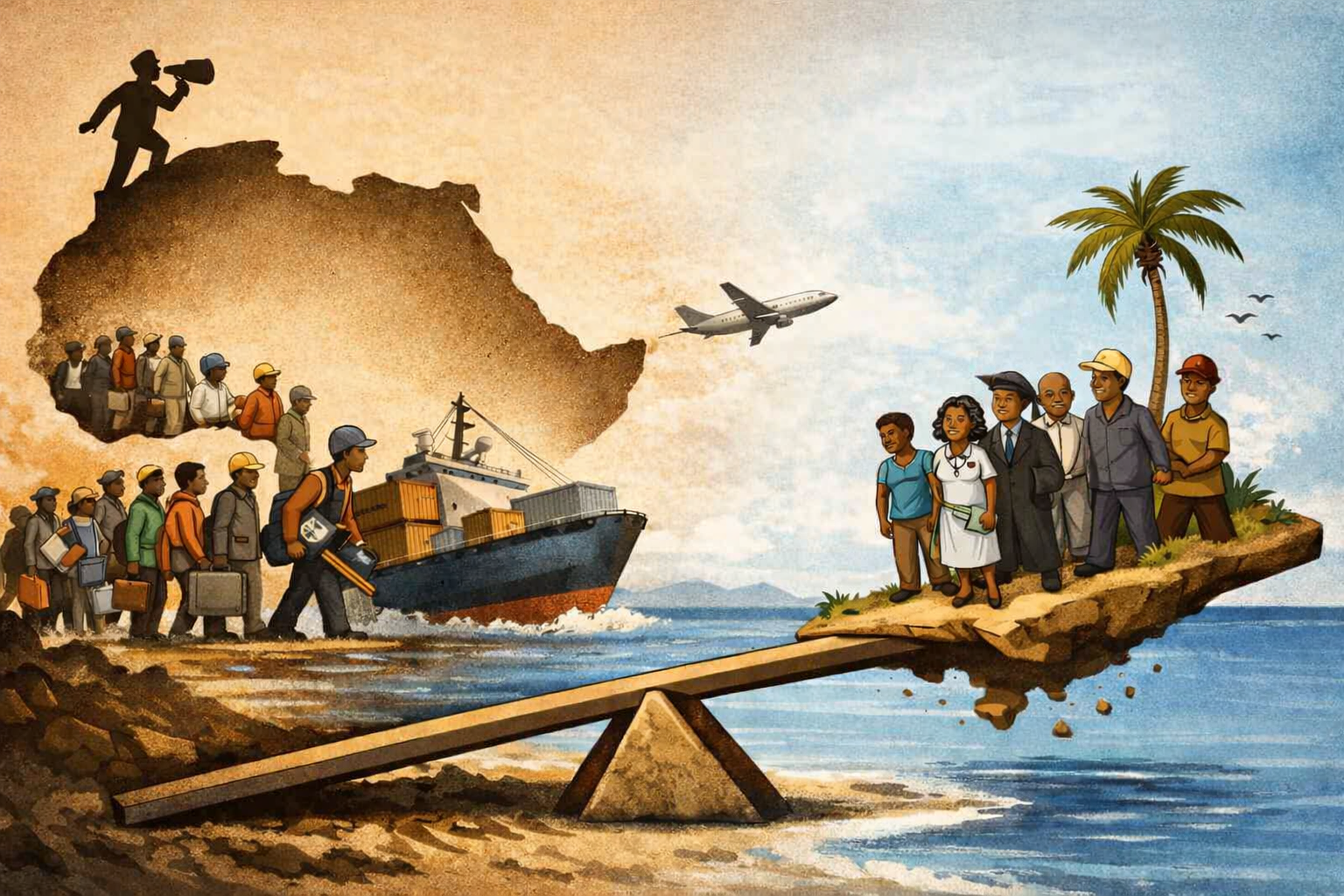


Across the Caribbean, governments are increasingly promoting the importation of workers from Africa under what is often described as a “labour exchange.” The phrase sounds collaborative and mutually beneficial, but it raises an important question: Is this truly an exchange, or is it simply a convenient way to fill jobs that could otherwise be held by healthy Caribbean citizens?
Let me be clear. This is not an argument against Africans or against immigration. People everywhere have the right to pursue better opportunities, and those who come to the Caribbean seeking honest work deserve respect and dignity.
My concern lies elsewhere.
Many Caribbean nations have some of the highest rates of non-communicable diseases (NCDs) in the world. Diabetes, hypertension, heart disease, kidney disease, stroke, and obesity have become national epidemics. These diseases are disabling thousands of citizens during their most productive years, reducing the available workforce while placing enormous pressure on already strained healthcare systems.
Instead of making the health of Caribbean people a national economic priority, governments appear increasingly willing to solve labor shortages by importing workers from abroad.
The obvious question is: Why?
Imagine if those same governments invested aggressively in preventing chronic disease, identifying illnesses earlier, and helping citizens remain healthy enough to work longer and more productively. The result would be stronger economies, lower healthcare costs, higher productivity, and a workforce capable of filling many of the very positions now being offered to imported labor.
Another question deserves honest discussion. If this arrangement is truly a “labour exchange,” where is the exchange? One rarely hears of large numbers of Caribbean workers relocating to Africa under the same program. The relationship appears, at least from the outside, to flow primarily in one direction. If that perception is accurate, then describing it as an “exchange” may not fully reflect the reality.
There is another uncomfortable truth. Every country seeks workers who are healthy, productive, and able to contribute to its economy. Caribbean governments should want exactly the same for their own citizens. Rather than accepting a shrinking healthy workforce as inevitable, they should be asking why so many people are leaving the labor force because of preventable chronic disease—and what can be done to reverse that trend.
Healthcare is not merely a social service. It is one of the most important economic investments a nation can make.
Every citizen who avoids a stroke, controls diabetes, prevents kidney failure, or remains healthy enough to continue working contributes to national productivity, supports a family, pays taxes, and reduces pressure on public healthcare spending.
Importing labor may help address today’s shortages, but it does nothing to solve tomorrow’s healthcare crisis.
The Caribbean has no shortage of talented people. What it has is a shortage of healthy people.
Until governments place the prevention and management of chronic disease at the center of economic policy, they will continue treating the symptoms of a workforce crisis while ignoring its underlying cause.
A healthier Caribbean population would strengthen our economies, reduce dependence on imported labor, and ensure that the greatest investment governments make is not in finding workers elsewhere—but in keeping their own people healthy enough to build the future of the Caribbean.





The blogmaster invites you to join the discussion.