Banner promoting anonymous crime reporting with a phone and contact number 1 800 TIPS (8477), featuring the Crime Stoppers logo and a QR code for submitting tips.

← Back

Your message to the BLOGMASTER was sent

In March of 2014 there was a discussion about the ‘tearing up’ of land located in the agriculture belt of St. George.

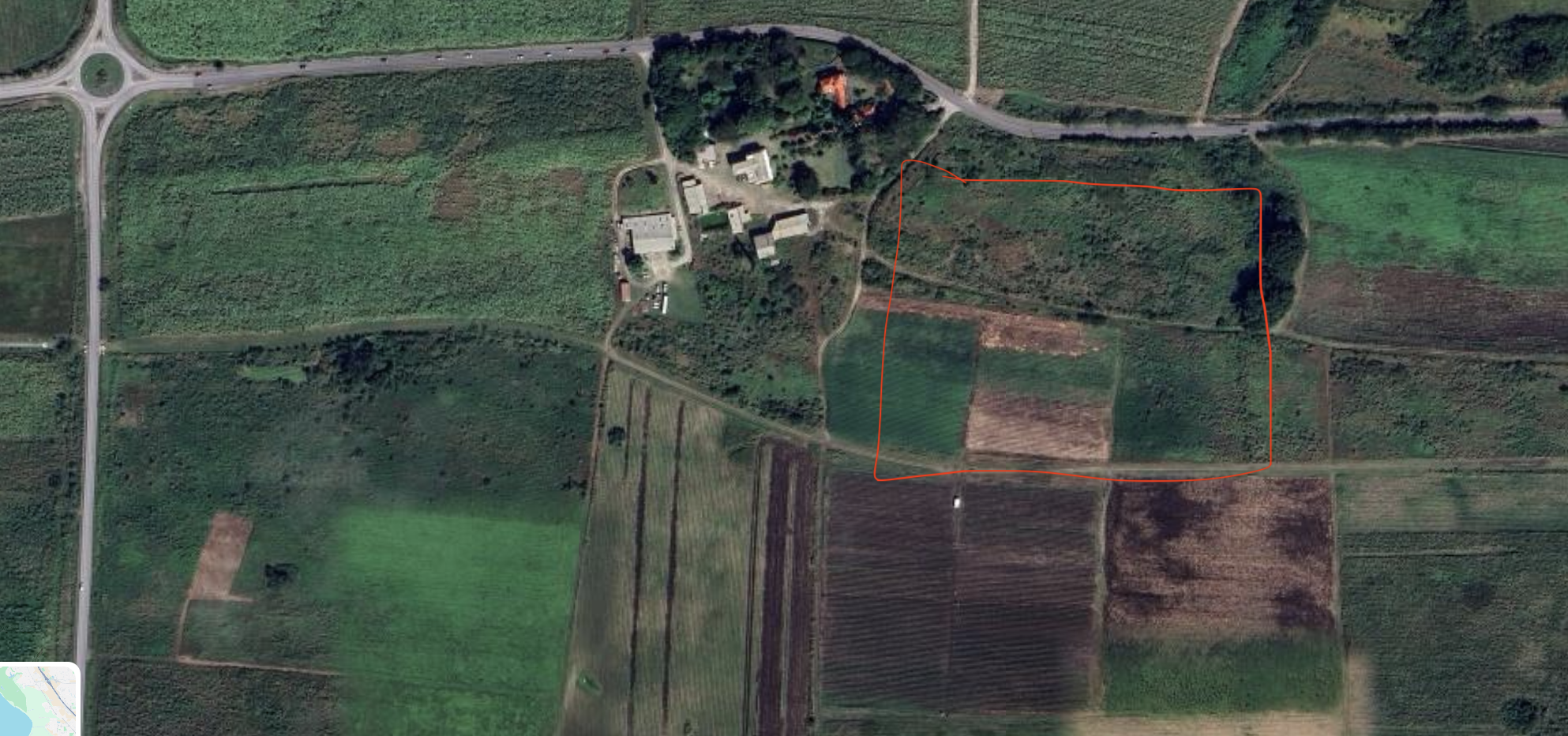
In 2026 under a Barbados Labour Party (BLP) government, we are witnessing the same ‘tearing up’ of land a couple kilometres away at Constant, St. George, adjacent to the ramshackle Buckley Sugar factory.

Relevant Link: Lower Greys Located in Proximity to the St. George Valley Agriculture Belt is Under Construction.

The Robinsons have done what needed to be done and acquired ‘change of use’ and voila, once agriculture land is currently being carved upon like a shoulder ham at Christmas time. There will be the arguments that the land must be able to fetch its economic value, or that the Robinsons needed to offload because the agriculture model is loss making etc etc etc. But where is a national policy that ring fences our best lands? Should national interest not override individuals IF we are serious about food security and food sovereignty of Barbados?

Relevant Link: Constant Plantation land approved for housing by government

The time has come for our ‘leaders’ to stop the long talk and enforce a land use policy that aligns and delivers on national strategies to support the interest of residents. Barbados is 166 square miles – give or take – therefore commonsense should be that we stop the planting of concrete at the whim and fancy of politicians looking for votes, or greasing the palms of greedy actors.

As a country boy, it harrows the blogmaster with fear and wonder that an intelligent Barbadian somewhere in the Planning and Development Department, approved the housing development at Constant. An approval that was likely heavily influenced by those in charge of Big Works.

First they came to Mount Wilton,and cut up prime agricultural land to put big houses on. I did not live anywhere near Mount Wilton so I rocked back and did nothing.

Next they came to Castle Grant, and cut up prime agricultural land to put big houses on. I did not live near Castle Grant, so I sat back and did nothing.
Then they came to Lower Grays, where I live, to cut up prime agricultural land to put big houses on ….. ….. ….

Source: Late Commenter Colonel Buggy

What is unfolding at Constant is not an isolated misstep; it is the continuation of a trend born out of greed and laziness. In 2014, Lower Greys was carved up in the heart of St. George’s agricultural belt. The faces in Cabinet changed but decision making did not. Barbados keeps treating land as though it were a replenishable commodity instead of the finite, irreplaceable resource of a tiny island.

The Robinsons did what the system allows, apply for change of use, wait for the ‘nod’, and then convert agricultural land into another concrete Coverley in Barbados St. George Valley known for agriculture production. The problem is not the Robinsons. The problem is successive governments failing on its mandate to protect our interests.

If Barbados does not change course, it will sink under its weight.

Are we there yet?


Discover more from Barbados Underground

Subscribe to get the latest posts sent to your email.

17 responses to “Planting concrete on agriculture lands at Constant plantation”


  1. This is a tragic planned misuse of land. That area is not planned for residential development in our current Physical Development Plan (2023) that is supposed to guide development for the next decade. Plan is linked below.

    It is prime Agricultural land (MAP 4, pg 36), not planned for housing but protected Agriculture (Soil Protection Overlay area) (Map 13).

    Why do all of this planning work and then basically do the opposite? As a Land-use Planner (I am also qualified in that discipline) and someone who contributed to the 2023 Plan, this one hurts.

    http://www.townplanning.gov.bb/pdp/Downloads/files/PDP-August-2023.pdf


  2. And how is this breach of the much vaunted national development plan any different to the unserious attitudes generally given pride of place?

    Were we not doing these kinds of betrayals to agriculture for decades?

    And was the head of the current regime not up front and centre as the country outsourced the national development plan to Cow Williams whose task then was to generate revenue “to pay the bills” as OSA said?

    Bajans were and are an unserious people. The governments have been the same. Such a people are incapable, as a collective, of seeing the importance of food production, import substitution. A people more likely than not to think that food grows in a supermarket.

    And maybe the leaders had long come to see that giving lip service to agriculture is the right political approach. For they could not on the one hand be signatories to WTO mandates and on the other support and protect ocal agriculture lands from concrete.

    Then the specious argument we’ve left with is in support of growing concrete! Concrete farmers, if you will!


  3. Perhaps you should use your training to speculate on what could be the overriding factors that would lead professional planners to approve such an OBVIOUS travesty.


  4. Says those that enjoying their big houses on former agriculture land. In other words, I can live on it but others, nope! Y’all still approach complex issues with primary school level reasoning. Stupse!


  5. Yuh right. Everybody building hotels on Bay St, but suddenly they en want one at Savvy. But wait, cross de street is good. Very complex.


  6. @Enuff

    Your comment does not merit a serious response given the concern about planting houses in the an agricultural area, the St. George Valley.


  7. What is sacrilegious about the approval to allow construction at Constant, is the fact we have too many unfinished housing developments and derelict structures dotting our small land space in Barbados.


  8. @ David
    Can you conceptualize a methodology through which ‘political contributions’ can be solicited in the process of incentivizing the owners of idle / unkempt derelict properties to rehabilitate these properties – thereby addressing our housing demand WITHOUT the need for such entities as HOPE, HELP, STEAL houses etc?

    If you could, then Bushie predicts that the matter of housing shortages would fall to the bottom of our national challenges.

    Otherwise, agricultural lands are headed for concrete.

    What a place!


  9. @Bush Tea

    You have to add simplifying the issue of transferring titles in cases where such is under dispute because of intestate and other issues. You would need the lawyers to assist. Oh boy!!!


  10. @Hants

    Like the NISSS, successive governments have been at sixes and sevens about Andrews factory. In the meantime, we plan to spend hundreds of millions to build flyovers to solve a problem they created.


  11. David

    Um is the truth though. The NHC alone waiting list is 6,000. Would using these properties you mentioned remove the need for other lands? Do you suggest government acquiring all these privately owned derelict properties and unfinished projects? Y’all complain about going up and then complain about going out as well. I remember this same BU cuss me when I said building up on already used land was the best strategy. I repeat, primary school reasoning. The condos start in the Graeme Hall swamp yet?


  12. @Enuff

    Maybe you are being deliberately misleading? The issue here is the type of land being selected for housing is it not?


  13. “Do you suggest government acquiring all these privately owned derelict properties and unfinished projects?”
    ~~~~~~~~~~~~~~
    What simplistic thinking…!

    Hopefully this is not the level of problem-solving analysis that characterizes our government.
    …Otherwise despite the lotta greedy hands, we won’t EVER get one shiite done.

    There are so many creative ways that privately owned derelict properties and unfinished projects can be leveraged to address our housing challenges… that it boggles the mind.

    Admittedly, finding a workable approach that ALSO includes the use of ‘grease’ to lubricate some red-tape political tollgate can be challenging.

    Conversely, the CURRENT ‘lubricant’ that converts agricultural zones into housing, works excellently for the powers that be. The only drawback being that it will destroy the country.

    bwh-wait-doh!!!
    Bushie thought that Enuff was done wid BU…
    This topic seems to be hitting close to home…


  14. @Bush Tea …You have to add simplifying the issue of transferring titles in cases where such is under dispute because of intestate and other issues. You would need the lawyers to assist. Oh boy!!!
    ~~~~~~~~~~~~~~~~
    ‘Needing the lawyers to assist’ … would be like asking undertakers to come up with strategies to reduce death rates…

    Or like putting a criminal lawyer in charge of the crime policy…

    Or like having a Minister of Finance who do not grasp basic decimal arithmetic..

    WAIT!!!
    This is routine bout here fuh YEARS now!!!
    LOL
    Murduh!!!


  15. Getting the balance right

    Today, on the lands of the Vineyard plantation, surrounding the historic property of Pollard’s Mill, we do more than turn soil; we turn a page . . . . For generations, this land grew crops. From today, it will grow something far more valuable: homes, families and community.

    – Derek Edwards, chief operations officer, Vineyard Development Inc.

    AT A TIME WHEN, ostensibly, Barbados is seeking to become more food secure the above statement is curious, to say the least.

    It was made on the occasion of the sod turning for a new residential development that will take an impressive 80 acres of what was agricultural land in a definitely new direction – which begs the question as to the seriousness of the country’s supposed push to be more self-sufficient, or at least to what degree do we want to reduce the gargantuan annual food import bill.

    Interestingly, Prime Minister Mia Amor Mottley also made reference to planned future highrise housing options (more on that later), while, according to the reporting, giving some assurance that these developments would not compromise agriculture.

    Vast residential district

    The Prime Minister has been at the forefront of the regional efforts to make the Caribbean as a whole more self-sufficient, so such statements would be on brand. However, she made her latest statements while, as another section of the press took pains to point out, “presiding” over the “ground-breaking ceremony for a project that converts an entire rural plantation into a vast residential district”.

    Are we doing an adequate job of balancing how we use our country’s tiny land area for all the things we would want to do here? Unquestionably. we have lost a substantial portion of our arable land to housing, commercial and other types of development, with more being lost each day. Even what was once unspoilt rugged terrain in the east of the island is being gobbled up by private interests for various housing and tourist projects.

    Are the announced high-rise projects a concession that the sprawling housing developments such as that at Vineyard will soon be a thing of the past?

    Are we finally conceding that, despite being around as long as it has, Barbados is stubbornly refusing to be larger than 166 square miles, and that we may have maxed out the land area available for all the things we want to do here, and we have to adopt new approaches to how many things are done?

    The Prime Minister reiterated Government’s move to adopting vertical agricultural practices, the type that requires less land. Similarly we may be moving towards taking more of our homes up in the air. Perhaps going forward, Barbadians will continue to be provided with more opportunities to “own a piece of the rock” but we might have to own it several hundred feet off the ground.

    Construction timeline

    It is noteworthy that the Prime Minister indicated that the timeline for the construction of the high-rises in Bridgetown is over the next two years, which would mean they will be established around the time that the 400th anniversary of The City will take place. Are these developments part of a more intentional and energetic approach to reinvigorate The City?

    Up until this point, efforts to make Bridgetown an attractive space for all and sundry to live and work has often seemed piecemeal. So any concerted consistent efforts to reverse the decline is welcome. The Prime Minister has announced the new developments at Exmouth and Greenfield. On previous occasions, it was indicated that the former Treasury Building, which still stands empty within sight of Parliament would be used for housing.

    Is that still the plan? Bridgetown needs as many people living and working in it as possible.

    Barbados is certainly not the only country in the world that faces the challenge of finding housing for its citizens, and it is a challenge that locally is exacerbated by its extremely limited land area, and the push to have more people moving here to support the economy. We also need to feed our people, whilst creating the infrastructure necessary for economic and social development, especially since we have a developmental model which is based on accommodating people from other places as well as our own people. We just have to make sure we strike the right balance.

    Randy Batson is a researcher, social commentator and social advocate. Email ranric1@hotmail.com

The blogmaster invites you to join the discussion.

Trending

Discover more from Barbados Underground

Subscribe now to keep reading and get access to the full archive.

Continue reading