



Submitted by Looking Glass
That the IMF would dare suggest devaluation of the dollar as reported is to put it mildly unwise, misleading and embarrassing. Economics assume rationality. Countries are not rational entities; they differ in terms of resources etc. Dollar devaluation might have been something to consider if we were a large scale producer and exporter with large guaranteed markets to supply but that is definitely not the case. Sugar is about the only significant thing we export. Devaluation will make it easier to sell the exported products but more costly to produce. If we can’t get people to work on the land today it is unlikely they would do so for lower wages.
Devaluation will increase to cost of imports and with it the cost to consumers. Salaries and wages will be devalued in the sense that everything will cost more. Businesses and government will be expected to increase salaries. Hotels too will be expected to increase wages and will likely increase the price to visitors. In short the cost of everything will rise and so too job loss and unemployment. It is unlikely that salaries and wages will rise sufficiently to compensate the increase cost of living. Government will have to increase taxes etc. in order to have money to pay its bills and the national debt which will increase. Given our reluctance to revise our lifestyle the dollar devaluation will likely lead to social unrest.
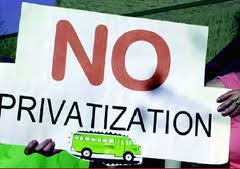
Exactly what does privatization and private sector participation mean and how will it improve the economy? Privatization is generally understood to mean the sale of commercial assets. Why would government sell/privatize its profitable assets? If government sells its commercial assets to foreigners or the local private sector profitability and efficiency could lead to staff reduction and higher costs to consumers, more so with devaluation.
It is unlikely that people will readily invest in non-productive entities in the name of public participation. The state of personal and household indebtedness suggest that, some politicians apart, the people have not the where-with-all to buy shares especially in non-productive enterprises. That workers would buy shares especially in non-productive state entities does not make sense, nor does it make them efficient. Are people and or the private sector going to buy shares in business in which there is no return on investment? Even if they do it does not make them efficient and or profitable. It seems that government businesses have been inefficiently managed for a long time.
In Privatization Debate Devoid of a Philosophy a BLP spokesman cites the need to examine the ownership structure of the CBC, GrantleyAdamsAirport, Port Authority and a few others. When you do be sure to tell the public who owns the Port and Airport.
The last administration sold some of our most important commercial assets to Trinidad and the UK. It left a massive national debt of about $62bn, no value-added industry for employment generation (construction, services and tourism are not value-added industries), no powerful additions to fuel the economy beyond tourism (Fallacy In Shoddy Robes) and used borrowed money to finance reserves.
Fourteen years of ‘astute’ management left us in bankruptcy, indebtedness to sink the Titanic and the loss of profitable public assets. The motley autocrats are so inured in their iniquities they see them as natural they make sophists look like angels. On offer is another term of progressive retrogression. Like peacocks on audition they continue to fillip painful irrelevancies in the name of probity, financial management, progress, development and above all wisdom. The wise men, their integrity fragile, lack the ability to hide their nakedness behind tattered rags. As Lowdown once put it, the BLP doesn’t let customary convention stand in the way. The Reverend dare not importune the Redeemer on their behalf. In a country without natural resources and devoid of industry, given its past performance and current utterances, it is unlikely the opposition can/will change the tide and lift the country out of permanent recession and decline. It would require a generation or so to effectively lift the country from the bottom of a bottomless pit and for people to adjust their lifestyle.




The blogmaster invites you to join the discussion.