Banner promoting anonymous crime reporting with a phone and contact number 1 800 TIPS (8477), featuring the Crime Stoppers logo and a QR code for submitting tips.

← Back

Your message to the BLOGMASTER was sent

The following was posted as a comment to the Highlights 2026-2027 Budget blog by NorthernObserver

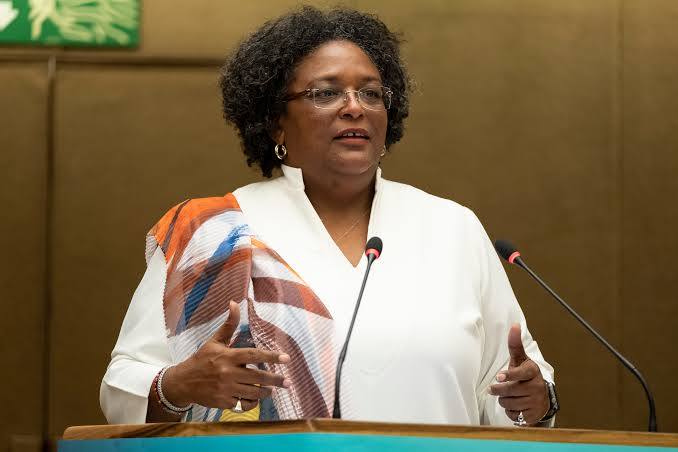
Government MP Toni Moore has called for sweeping changes to the nearly 60-year-old Barbados National Insurance and Social Security (NISS) Act, saying the current system no longer reflects the realities of modern work.

Moore, the Barbados Workers’ Union General Secretary, recently tabled a resolution in the House of Assembly proposing a national portable benefits framework that would tie social protection to the worker rather than to a specific job title or contract.

Moore argued that expanding participation would strengthen the National Insurance Social Security Service, “deepening compliance and closing long-standing loopholes that have nurtured a lack of accountability.

Moore also called for “stronger inspection, monitoring and enforcement, and proportionate penalties for non-compliance”, along with public education so that both “workers and engagers alike understand their rights, duties, and responsibilities. Source: Nation

Only in Buhbaydus?

For those who are not aware, Member of Parliament Toni Moore is also the longest serving Director on the NIS/NISSS Board of Directors. The Chair of that group is to provide an Annual Report to the Minister of Labour. This hasn’t occured in nearly 20 years. And here she is calling for “penalties for non compliance”, and again using the word “accountability”.

Please don’t piss in my pocket and tell me it’s raining.


Discover more from Barbados Underground

Subscribe to get the latest posts sent to your email.

10 responses to “General Secretary, MP and NISSS Board Member Toni Moore serving three MASTERS”


  1. A reflection on the unions?

    ‘70% of workers disengaged’

    By Shawn Cumberbatch

    shawncumberbatch@nationnews.com

    Barbados could be losing $1.6 billion a year to disengagement and lost productivity in the workplace.

    That is the “conservative” estimate of new research by Dr Shindale Seale, an international organisational strategist based in the United States, who presented her findings at the Central Bank of Barbados’ recent 46th Annual Review Seminar.

    In an interview while in Barbados, the founder and chief executive officer (CEO) of SEADE Coaching & Consulting said she believes that organisations in Barbados were virtually paying what was tantamount to a “productivity tax” because they were not measuring the cost of “cultural misalignment”.

    Seale, who is a Barbadian, launched the Cultural Excellence & Economic Development Strategy (CEEDS™) Framework here in April, which she is calling “the first methodology purpose built to quantify what cultural misalignment is costing your organisation in real dollars”.

    With research from American analytics and advisory company Gallup concluding that there is approximately 70 per cent disengagement among workers in Latin America and the Caribbean, Seale said she initiated a survey involving companies which participated in the CEEDS™ Framework launch to determine the extent of their disengagement/productivity tax.

    “The range in their productivity tax was astronomical. We had an MSME losing like $560 a year, to a banking outfit losing like $12 million a year, and everywhere in between. So it was too salient to ignore,” she shared.

    With that as her base, Seale took her research further by estimating the losses at a country level, including using information on Barbados’ workforce and salary figures.

    “So we’re looking at 70 per cent of Latin American Caribbean workforce is either not engaged or actively disengaged. When you apply that to the Barbadian organisations and what they’re paying their people, the productivity loss estimate base is around $1.6 billion annually,” she said.

    “And [this] is conservative because it’s . . . telling you kind of where we’re at around ballpark, what we call the order of magnitude of what we’re losing. So it’s significant enough that we really need to measure it properly. And this is where I’m looking at that further study,” Seale added, while welcoming the expert feedback she received at the seminar on her research paper Measuring The Hidden Productivity Tax: Quantifying Cultural Impact On Economic Competitiveness In Small Island Developing States.

    Three pillars

    She said her expanded research would “help me to refine it in a way that would allow it to be a much more longitudinal study”.

    Stressing that “this is not consulting theory, these are active client results”, the CEO explained the CEEDS™ Framework was built on more than 30 years of organisational development expertise, doctoral-level research and was vetted through research across 200-plus organisations in 15 industries.

    CEEDS™ is built on three pillars – cultural transformation, economic impact and community resilience.

    “First is the cultural transformation pillar . . . that we align with [your] disengagement tax,” Seale said.

    “Our next one is Pillar 2, which is our income impact which is aligned with our innovation gap. That’s a really, really important piece that I think in Barbados . . . it’s not really as prioritised.

    “The third pillar is called the the community resilience pillar and we attribute that to the reputational capital at risk.”

    She added: “It’s an economic framework with cultural inputs and financial outputs, essentially. It’s like a systems framework where we start with deriving the organisation’s number, and that number is basically what your general productivity tax is that you’re paying,” she noted.

    “What that basically means is we calculate your disengagement, your innovation gap and your reputational capital at risk.

    “Once we have that number, then we know what your starting point is, and from your starting point, then we can determine what behaviours are going on in your organisation that are exposing you to financial risks or financial loss.”

    Source: Nation


  2. Seems like three mistresses!

    And all three seem to be much less useful than when Frank Walcott was around. For Walcott might have served several mistresses but he never left any doubt which one was his sweetie!

    Three case studies in anti-development.

    The parliament, the NISSS and the Barbados Worrkers’ Union are no less feckless than each other. Kakistocracies all!

    What we are watching is the generation of the misleadership class responsable for finally destroying the country. And they are doing it with glee!

    And in that, their best service to their mistresses lies.


  3. The NISS has within the last four years or so axed certain overseas contributory pensioners who have paid into the system, some in question for twenty four years or more.

    No amount of letters to the CEO or lawyers visits have softened one of their hearts to the plight of overseas pensioners whom they assume do not have the financial ability to get on a plane to come and represent themselves in person.

    This is egregious when you have people in their seventies unable to work, unable to claim pensions from the country they live in being put out to pasture.

    The current administration has truly disenfranchised many faithful contributors to the National Insurance Scheme.

    Talking about “reparations” should it not start at home?

    Am I reading correctly that Ms. Toni Moore is a Member of Parliament, the Barbados Workers Union General Secretary, and the longest serving Director on the NIS/NISS Board of Directors?

    I agree with “Northern Observer”

    Only in Buhbaydus?


  4. A simple feature of contributory pensioners being able to access a calculator on the NISSS portal to assist with retirement planning is not available. Although it can be roughly calculated based on penalty levied for early retirement, some who are not kindly inclined with arithmetic may struggle and have to depend on others. We need to do better at the NISSS. Why are these high ranking maguffies on the Board being paid Board fees (tax dollars)?


  5. Any word on when the 18th Actuarial Review covering up to 2023 will be laid in parliament? End of 2026 is rapidly approaching!

  6. NorthernObserver Avatar
    NorthernObserver

    On the 18th Review, based solely on patterns, surely the move from NIS to NISSS is enough to generate challenges to baffle the actuaries, as the move from cost to accrual accounting baffled the accountants.


  7. @NO

    A former Chairman Dr. Judi. Robinson explained that the NIS (as it was then called) was reluctant to take a qualified opinion on the financials. Surely the time has long gone when this drawn out matter of unaudited financials must end?

  8. NorthernObserver Avatar
    NorthernObserver

    David
    Not sure Justin would like Judi.; he did his job, which found recognition in a series of professional promotions, after his NIS tenure.
    For chrissake they can’t even get the few fund numbers current, (see website). And you want financials? The filth and stink is so great, that bag is unlikely to ever be opened. NIS financials died with the NIS, whether the NISSS will make any attempt to comply with the law is left to be seen.


  9. As man though @NO…
    How would YOU personally choose between complying with the law – and thereby making likely incriminating evidence public…
    …and NOT complying with the law – and knowing that only BU and Marcia Weekes take note?

    Besides…
    You may also be using the incorrect analysis to rate NISSS performance.

    You behave as though those appointed to operate there have Vision and Mission objectives related to quality performance and diligence.

    What if their actual performance has been 100%?
    …and what if this is reflected in the three 30-0s political ‘victories’ that Bajans have been celebrating…?

    Do you not yet grasp the extent of brassbowlery…?
    What a place!!!


  10. Another concern – highlighted in this space numerous times – the lack of tension by media practitioners on this subject. Key mandates of the fourth estate are to bring news to the public, hold those in civil society with power to account, and fuel public discourse on the issues.

    Are we there yet?

The blogmaster invites you to join the discussion.

Trending

Discover more from Barbados Underground

Subscribe now to keep reading and get access to the full archive.

Continue reading