Central Bank of Barbados Addresses Governor’s Role on Afreximbank Board
Governor of the Central Bank Kevin Greenidge
The Central Bank of Barbados wishes to clarify recent inquiries regarding the Governor’s role as an Independent Director on the Board of the African Export-Import Bank (Afreximbank).
The Governor’s appointment to the Afreximbank Board fully complies with the Central Bank of Barbados Act, 2020-30, and poses no conflict of interest with his responsibilities as Governor.
In accordance with the Act, the Governor may accept external appointments with the approval of the Central Bank’s Board of Directors. This appointment has received such approval, and importantly, the Governor receives no remuneration for his service on the Afreximbank Board. His work on the Board of the multilateral is pro bono.
Afreximbank is a multilateral financial institution that operates outside the regulatory jurisdiction of the Central Bank of Barbados. The Central Bank regulates and supervises domestic financial institutions in Barbados, not international multilateral development banks.
The Bank views the Governor’s service on Afreximbank’s Board as an opportunity to deepen Barbados’ international financial relationships and enhance the Bank’s own strategic perspective through global engagement. Moreover, this appointment aligns with established international practice, as evidenced by the participation of central bank governors from three other jurisdictions, as well as a deputy and a sub governor, also serving on the Afreximbank Board.
Boss, run that video again – but turn off the shiite talk and OBSERVE the body language of both the speakers and audience… (remember “gi muh de vote and WATCH muh…!”)
…a clear case of being caught with your hands in the cookie jar … But hopingto look like you were putting some cookies IN…..
ANYONE WHO PUTS THEIR TRUST IN MONOLITHIC INSTITUTIONS WILL SOON HAVE A RUDE AWAKENING! BANKS ARE NOTHING MORE THAN THE TENTACLES OF EVIL, CORRUPTION & MALFEASANCE OPERATING WITHIN THE HIGHEST ESCHELONS OF PERFIDY. THEY LAUNDER, WHITEWASH, SUGAR-COAT & PROP UP EVIL WHEREVER THEY CAN MAKE A BUCK! REMEMBER HOW THE FEDERAL RESERVE WAS FOUNDED
The globalization of banks is the McDonaldization of eCONomic human control where expansion of banking activities across international borders, continues to be a significant trend as the financial sector shrinks the world down to mere paper size (ESPECIALLY SO SINCE 2008). This process includes the establishment of foreign branches, subsidiaries, mergers & acquisitions by banks, leading to increased international financial hegemonic control & capitalist integration….
Research indicates that globalization in banking can have both positive & negative effects on the efficiency & performance of banks. For instance, the presence of foreign banks in host countries is often associated with lower efficiency in those countries, a phenomenon known as the “HOST-COUNTRY EFFECT”!!!
The globalization of banks – their expansion across borders & integration into the global financial system – has been a defining feature of the modern economy. This process has reshaped trade, investment, & economic policy worldwide, but it also raises debates about inequality, systemic risk, & sovereignty!!!
Here is an analysis of how banks drive & shape globalization, along with its implications
How Banks Facilitate Globalization
Cross-border capital flows is unique to “BANKS ONLY” (unless you are a key player in the Sinaloa Cartel) – given that I can get on a plane & travel to a foreign country with £10K in cash in my luggage (FOR IF FOUND – WE KNOW THE REPURCUSSIONS)
Banks however, enable global trade & investment by providing financing, currency exchange, & credit giving them license to move capital in any form they choose. Multinational corporations (e.g., Apple, Toyota) rely on global banks (e.g., HSBC, Citigroup) to manage supply chains & operations across countries (ALTHOUGH THESE BANKS HAVE SHADY RECORDS AS IN HSBC THAT WAS FORCED TO COUGH UP 1.3 BILLION DUE TO WHAT THEY CALL DARK MONEY MOVING ACROSS OFF-SHORE BANKING INSTITUTIONS)
International Lending & Investment
Banks fund infrastructure projects in emerging markets, as is being witnessed in Barbados, however, the “HOOK” of collateralization is seen, (e.g., CHINESE BANKS ACROSS AFRIKA & NOW IN THE CARIBBEAN & LATIN AMERICA) amalgamating with “HOST COUNTRIES”, due to “WEAKENED ECONOMIES” – (POST-PALNDEMIC) – purchasing “SOVEREIGN DEBT” (BUYER OF LAST RESORTS), thus linking these fragile economies to global capital markets ( WHO BENEFITS – #YouDecide)
Financial Innovation
The specious mathematical algorithms of “DERIVATIVES”, (WHICH HANDED US THE GLOBAL FINANCIAL CRASH OF 2008/9); #ForeignExchangeMarkets, (PRIMARILY IN US $$$, £££ & eEURO & securitization against the “CROWN JEWELS” in those respective countries (YOU KNOW WHO YOU ARE), allow these “BANKSTERS” to “HEDGE” risks & profit against global economic shifts & “SHOCKS”, yet sadly, these tools also amplify deeper systemic risks as we saw in the 2008 crisis
Global Banking Networks
MEGABANKS* (THE LATEST CAPTURE WITHIN THE GLOBALIZATION PARADIGM), operate across dozens of countries, offering services like “WEALTH MANAGEMENT”, mergers & acquisitions (M&A), & corporate banking. JPMorgan Chase being the behemoth (OWNED BASICALLY BY BLACK ROCK, VANGUARD & STATE STREET) with Jamie Dimon at its helm – where they facilitate cross-border deals worth “TRILLIONS” annually (TOO BIG 2 FAIL – 2 BIG 2 JAIL)
Key Players in Banking Globalization
Multinational Banks – primarily, #WesternBanks (i.e., #GoldmanSachs #DeutscheBank, & Barclays dominate global investment banking – but the “DARK HORSE” is now “CHINA” – as she gathers “PARTNERS” around the world – starting with “AFRIKA” & its wealth, solidifying her reach in countries where she challenges US fiscal hegemony
Asian Banks like ICBC (China), Mitsubishi UFJ (Japan), & HDFC (India) reflect Asia’s rising financial clout where China is taking the lead
International Institutions
IMF, World Bank & BIS use their levers to impose policy conditions based on their globalization reach but that too is being challenges by BRICS nations who see mechanism like “AUSTERITY” AS DEFEATEST & ON THE OTHER HAND – LIBERALIZATION), a prerequisite for growth as the exchange for loans, shapes national economies (THE POWER OF DEBT)
Bank for International Settlements (BIS) sets global banking standards (e.g., Basel Accords) to regulate risk & capital adequacy – however, #ShadowBanking & #NonBank entities (e.g., hedge funds, private equity firms & “CRYPTO” institutions) basically operate globally with little 2 no regulation, controlling some ~$240 trillion in assets (2023)
Impacts of Banking Globalization
The positive effects mean economic growth – access to global capital that fuels development in emerging markets (e.g., India’s Tech Boom, C’bean Tourism).
Such efficiency mean lower transaction costs & faster payments (e.g., IBAN, SWIFT networks).
Then there is “RISK DIVERSIFICATION” that allows banks to spread their investments globally, reducing exposure to local downturns – however, the negative effects, include inequality – where wealth concentrates in financial hubs (e.g., NY, London), while developing nations face debt traps (e.g., Caribbean, Latin America & Sri Lanka’s [2022] crisis)
Such systemic risk because of the interconnectedness of banks spread crises (e.g., 2008 U.S. derivatives housing crash that triggered a global “CRASH” & deep recession that may nations are still digging themselves out of)
Sovereignty Erosion
Devolving countries cede control to global lenders (e.g., Greece’s 2015 bailout terms imposed by the EU/IMF).
The issue of exploitation by global banks profit from extractive practices (e.g., commodity speculation, tax havens like the Cayman Islands)
Controversies & Criticisms
“Race to the Bottom” sees banks lobby for more deregulation to operate globally, undermining labor/environmental standards
Tax Avoidance
Offshore banking & profit-shifting cost GOVs $500 billion+ annually in lost revenue (cf. Oxfam)
Debt Colonialism
Poor countries spend more on debt repayment than healthcare/education (e.g., Zambia, Pakistan)
Too Big to Jail
Megabanks often evade accountability for misconduct (e.g., world’s largest bank HSBC’s 2012 money laundering fines)
The Future of Banking Globalization
Digital disruption sees #Fintech (e.g., REVOLUT, ALIPAY) & “CRYPTO BLOCKCHAIN” blockchain challenge traditional banks with borderless transactions
Globalists are pushing for “Central Bank Digital Currencies” (CBDCs) in the hope of reshaping global finance which would centralize power even further
Geopolitical Shifts
China’s Belt & Road Initiative uses state banks (e.g., China Development Bank) to expand influence as we are seeing across (Afrika, Caribbean, Latin America)
Sanctions are used as weaponized banking networks, (e.g., against Russia) fragmenting the global system
Banking globalization has turbocharged economic integration but created vulnerabilities: financial crises spill faster, inequality deepens, & nations grapple with loss of control. While banks are not yet a monolithic force that “rules the world,” their structural power in capitalism gives them outsized influence over globalization’s trajectory. The challenge lies in balancing efficiency & stability with equity & accountability – a debate that will define the remainder of this decade
Loading…
NorthernObserver
There seems minimal issue with Dr Greenidge being an alternate director (means if one of the existing directors is not available). The existing structure of Afrexim has four classes of shares (owners), and directors serving each class. It is currently a Private company.
If their IPO (Initial Public Offering), when a private company first offers its shares to the public, is realised, Afrexim’s governance structure will change.
Loading…
Terence Blackett
@ John
More CBI madness in Dominica with the “FRAUD” – PM SKERRITT
DID NOT AL JAZZEERA EXPOSE HIM DURING THE PLANDEMIC
On Wednesday and Thursday, he (Rubio) will travel to Jamaica, Guyana, and Suriname. And while in Jamaica, the Secretary will also meet bilaterally with heads of state from Barbados, Trinidad and Tobago, and Haiti……..
We’ll also meet with Barbados. Barbados currently heads CARICOM, so that’s – this is where those kind of joint topics and issues of energy security in Haiti is a great opportunity to meet that, even though we’re deeply committed to the bilateral relationship with each of these Caribbean nations. There’s a dozen and it’s a lot of work, but we’re deeply committed to the bilateral relationship with each of these islands. But we look forward to with the leadership of Barbados and CARICOM, working on some of these broader, cohesive issues.
From a commercial side as well, Jamaica being a key partner in so maintaining those maritime routes that come – the routes that come from obviously the Panama Canal but also in the upward flows that come through the region. We want to strengthen that. Obviously, this has been a discussion with Jamaica for a long time. The government, Prime Minister Holness, has been a great ally, has made great strides in dealing with the issues of crime in Jamaica.
Loading…
John
Jamaica owes China over 2 billion and Barbados just under that number. These are two leading debt slaves of the Caribbean.
As Johnson points out, Rubio is due in Jamaica today.
@ Terence
Here is a thesis that may be worth your while to explore for us…
If the love of Money is indeed the root of all evil, then what is the most likely genesis of the concept of banking – from the perspective of those of us with an understanding of the SPIRITUAL underpinnings of our existence?
Furthermore, what if a certain sector of CHOSEN brass bowls were favourably BLESSED with unimaginable wealth – beyond anything else anywhere…
How could such brass bowls have become so blinded, as to fall MADLY in love with the shiite CONCEPT ‘money’ – to the extent that a band of paltry albino-centric demons have been able to take away those VAST RICHES of gold, oil, silver …. in exchange for some imaginary fiat paper called ‘dollars’????
How for example, does a little BLESSED country even THINK of selling off 6 acres of PARADISE to persons who may well be the children of those who sold our ancestors to White people 500 years ago to be shipped here like cattle…
What a curse!!!
Loading…
TLSN
“How for example, does a little BLESSED country even THINK of selling off 6 acres of PARADISE to persons who may well be the children of those who sold our ancestors to White people 500 years ago to be shipped here like cattle…
What a curse!!!”
This is a taboo subject to discuss. It was black Africans who converted to the Muslim faith whom were probably the culprits. I agree with you BT.
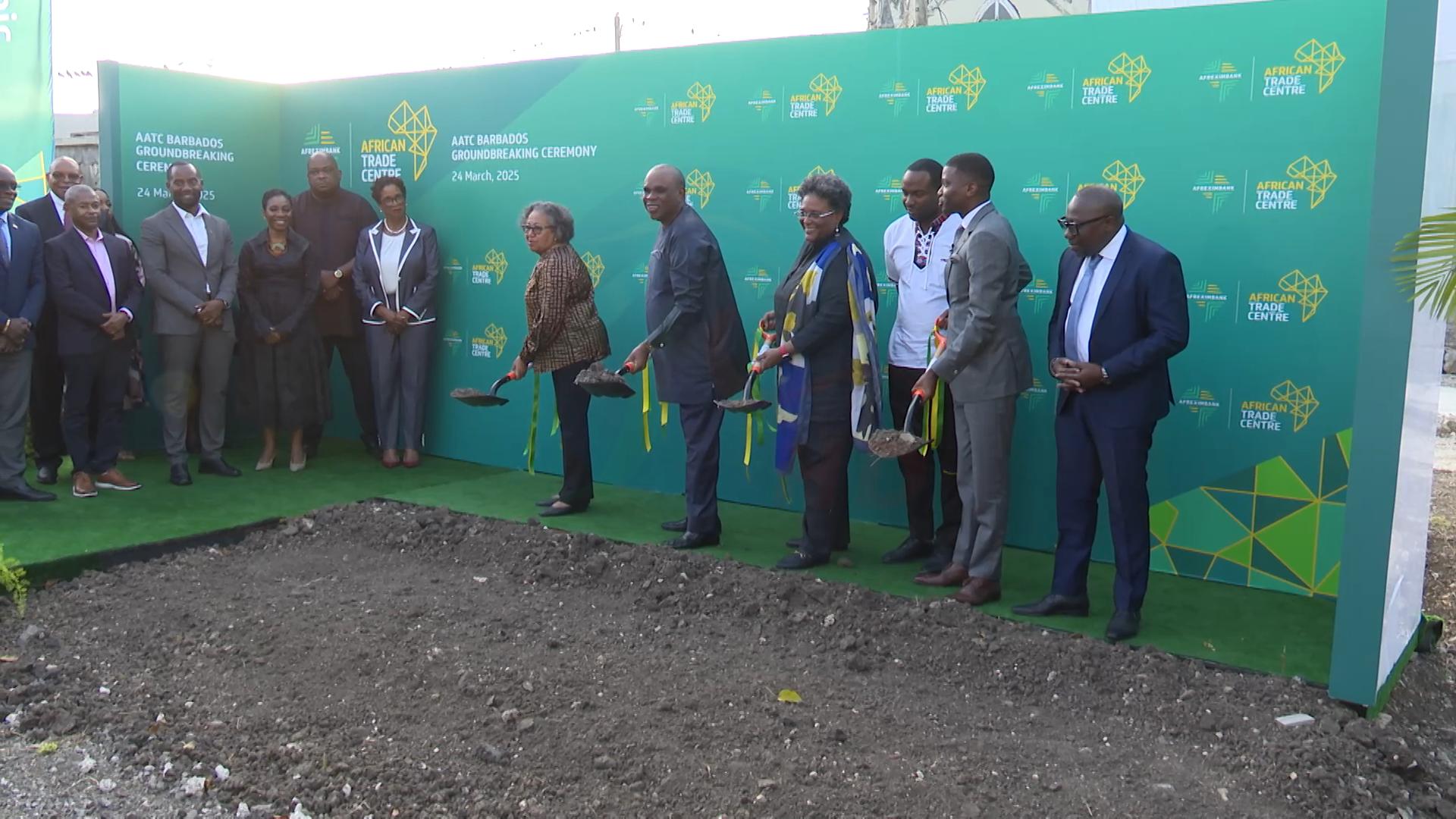
Following the recent groundbreaking ceremony for the African Export-Import Bank (Afreximbank) last week, former Minister of Health Donville Inniss has expressed a blend of cautious optimism and concern regarding the establishment of the bank, calling for transparency and clarity from Government on the arrangement.
“This is a multifaceted issue. God knows that Barbados really needs foreign investment, when you look at our debt portfolio,” Inniss told the Sunday Sun.
“We do need foreign investment in a sustainable manner, as we have to pay our bills in US dollars. We need the investment and if it helps to strengthen the relationship between Barbados or the Caribbean and Africa, even better.”
However, he was apprehensive about the lack of clarity on the terms of the investment.
“I don’t think we can be criticising the bank being located in Barbados but the question is, what will the people of Barbados get in return?” Inniss asked. He noted the potential for immediate benefits in terms of direct investment and job creation, but stressed the importance of transparency in such arrangements.
“What is the suite of incentives that have been offered to this bank to get them here?” he queried.
He noted that Afreximbank is a private entity owned by Africans, thus making it distinct from institutions like the Caribbean Development Bank or the World Bank.
Mixed messages
“It is erroneous to compare this investment with others,” he said.
Inniss drew attention to what he considers to be a concerning juxtaposition, highlighting that the same week the groundbreaking for Afreximbank took place, the Barbados Revenue Authority was selling properties owned by citizens who had fallen behind on land tax payments.
“This helps to create a level of disquiet in the country. We do need the investment, but this Government must be careful with the mixed messages it is sending,” he warned. “It sends the wrong message that as you are selling off properties owned by Barbadians for non-payment of land tax, you are giving away valuable real estate to foreign investors.”
The former minister raised critical questions regarding the privileges and immunities granted to a private, for-profit bank such as Afreximbank.
“The details of such an arrangement must be very clear. The Vienna Convention that governs such international arrangements between countries did not envisage private international facilities,” Inniss explained, suggesting that these complexities warranted careful scrutiny.
“The Government must be careful that it is not setting a very dangerous precedent where employees of a foreign-owned private entity are not only benefiting from tax-free status, but also a right not to be arrested, special licence plates and such like. This bank is more akin to Scotiabank or First Caribbean than it is to the CDB.”
Inniss said the disquiet has led to some into believing Government was selling the family silver to foreign investors, as manifested by the Holetown Civic Centre controversy, compounded by rumours about the Oistins Civic Centre.
The former St James South MP said he noted some details of the Afreximbank scenario came out in Parliament, but wondered if many Barbadians were connected to the forum for communication.
“Without recourse to empirical evidence, Bajans probably find debates in Parliament to be very boring and are disinterested. Parliament must not be reduced to be a glorified Parliamentary Group meeting of a political party.”
The controversy surrounding the Eastern Caribbean Central Bank (ECCB) is no longer just about the cost of a governor’s residence for Timothy Antoine – it has evolved into a battle over governance, financial oversight, and institutional independence. What started as a dispute over an EC$22 million residence has now raised more profound questions about who approved the spending, who was responsible for oversight, and whether political interference threatens the stability of one of the region’s most important financial institutions.
At the heart of the matter is the ECCB’s Monetary Council, comprised of finance ministers from the eight Eastern Caribbean Currency Union (ECCU) member states. They are the ones responsible for approving major financial decisions. The governor of the ECCB does not have unilateral authority to greenlight large expenditures – the Council must approve them. This raises a critical question: if the cost of the residence was deemed excessive, why didn’t the Monetary Council step in earlier?
Public outrage over the residence reached new heights when St Vincent and the Grenadines Prime Minister Dr Ralph Gonsalves labelled the project an “absolute scandal”. However, what has been overlooked is that his finance minister and son, Camillo Gonsalves, was a key decision-maker on the Monetary Council. If there were concerns about financial prudence, why were they not raised? Why did finance minister Gonsalves not use his veto power?
Growing concern
Beyond the cost, there is growing concern over political interference in the ECCB’s operations. Central banks must function independently, free from political influence, to maintain trust in the monetary system. Yet, the attacks on Antoine suggest a broader agenda that could reshape regional financial governance to give politicians more significant control over central banking decisions. If this is allowed, the ECCB’s credibility could be permanently damaged.
Another key issue is the Headquarters Agreement that governs the ECCB’s operations in St Kitts and Nevis. Dr Gonsalves suggested that the residence be sold to the government of St Kitts and Nevis or repurposed for national use.
However, such a move ignores the legal constraints of the Headquarters Agreement, which ensures that ECCB property belongs to the entire region, not just the host country. Selling the property would require approval from all ECCU member states – not just one government.
This controversy has gone far beyond a debate over the cost of a building. It has exposed weaknesses in financial governance, raised questions about political influence over central banking, and created a crisis of confidence in the region’s financial institutions. If this moment is not handled correctly, the consequences could be severe – not just for the ECCB, but for the economic stability of the Eastern Caribbean.
So what happens next? The ECCB and the Monetary Council must act swiftly and transparently to restore trust. This means: an independent audit of the residence project’s financial management and a clear reaffirmation of the ECCB’s independence from political pressure; stronger oversight mechanisms to ensure transparency in institutional decision-making.
The future of the ECCB depends on whether it can rise above political manoeuvring and reaffirm its role as a stabilising force in the region. If it fails to do so, the impact will be felt far beyond this controversy – it will shake confidence in the very foundation of financial governance in the Eastern Caribbean.
Julian Rogers is following these developments from his Caribbean home base in Belize. Contact him at mycaribbean@gmail.com.
The Ministry of Housing, Lands and Maintenance is still exploring options regarding the use of the derelict Louis Lynch School property and final recommendations will be made within the next few weeks.
After a clean-up crew was seen on site last week and a notice circulated of the impending demolition, the Sunday Sun reached out to Minister of Housing and Lands Dwight Sutherland, who said after careful consideration and “consultation with a number of other Government agencies”, the decision was taken to demolish the derelict school following alarming safety concerns exacerbated by a series of incidents.
“The decision stemmed from multiple critical findings at the site, including the presence of squatters – displaced individuals who had sought refuge there after being removed from other areas like Queen’s Park and the Treasury Building. Furthermore, livestock, including sheep, goats, chickens and pigs were found on the property without proper infrastructure.
“Residents of the surrounding areas reported illegal utility connections, particularly to their water supply, which were subsequently disconnected by the Barbados Water Authority (BWA). However, unauthorised attempts to reconnect to a larger main led to a sewage spill, creating an alarming public health risk. Fortunately, BWA was able to contain the spill and is actively working on repairs to prevent further complications for the Bridgetown Sewage System,” he said.
Sutherland added: “Following a site inspection by the Ministry of Health, the property, which was never used or designed for housing, was deemed unsuitable for human habitation.”
He said further evaluations by the Chief Property Manager revealed significant structural deterioration and rodent infestations.
While the exact costs associated with the demolition and clean-up remain undetermined due to the involvement of various private and public entities, officials described it as a critical investment necessary to mitigate the serious health and safety risks posed by the site.
Prior to the decision, Sutherland said the ministry engaged with the local community to address numerous complaints regarding the rising surge in crime and unauthorised utility connections. Concerned residents had raised alarms about public safety, emphasising the necessity for decisive action, he explained.
He said extensive de-bushing and rat baiting with assistance from health inspectors and the Barbados Police Service was ongoing.
“The Ministry of Health’s role was critical in assessing the conditions and declaring the site unsafe,” Sutherland explained.
“Additionally, the Ministry of People Empowerment and Elder Affairs and its social service departments have been instrumental in assisting the individuals who were squatting on the premises, where possible, to ensure that they receive the necessary support and are not left in an even more vulnerable situation,” adding that most of the individuals “have vacated the compound to date.”
As the demolition process unfolds, the ministry is exploring various strategies for the re-purposing of the site. Although no specific development plans have been confirmed, possibilities remain open.
Sutherland said while the future of the site was still under consideration, comprehensive assessments would guide the next steps to best utilise the area. Furthermore, with the implementation of recent amendments to the Health Service Act, officials aim to tackle similar neglected properties across the country.
“Each [neglected] property will be assessed on its merits. The recent amendments will allow the Ministry of Health and Wellness and the Environmental Protection Department to address derelict, abandoned and overgrown properties that are not owned by the state or its agencies.
“The Ministry of Housing, Lands and Maintenance will undertake a comprehensive assessment of state-owned properties to ensure that issues of dereliction and abandonment are addressed. Where demolition is indicated that will occur, however, where adaptive reuse is possible it will be pursued,” stated Sutherland.
Established in 1977 as Roebuck Secondary School, the school was renamed in 1990 to honour outstanding educator Louis Lynch. It was closed in April 2006 amidst environmental issues and scientific tests after many staff and pupils complained of burning eyes, itching skin and dizziness.
While some people felt the laundry cleaning agent PERC and gasoline from a nearby laundry were among the culprits, scientists from the University of the West Indies (UWI) said the absolute levels of both chemicals were low and well within international limits.
However, in 2007, Professor Winston Tinto, head of the UWI’s scientific team, deemed the building safe to be used again. In 2019, Government was looking at the abandoned school, among other outof- use state buildings, “to put back into productive use.”







The blogmaster invites you to join the discussion.