Banner promoting anonymous crime reporting with a phone and contact number 1 800 TIPS (8477), featuring the Crime Stoppers logo and a QR code for submitting tips.

← Back

Your message to the BLOGMASTER was sent

In November last year a development occurred that piqued the interest of the blogmaster. President of CoopEnergy Trevor Browne indicated the government had changed its original position regarding a plan to divest from the Barbados Agricultural Management Company (BAMC). Based on media reports it seems there was an expectation CoopEnergy would own 55% stake in the new company, workers 20%, and 25% private investors. The change in position reported in the media was that government would retain 25% interest in the new operations and appoint 2 members to the Board of the new entity. Mr. Browne from CoopEnergy also lamented the lack of financial reports that was hindering the deal.

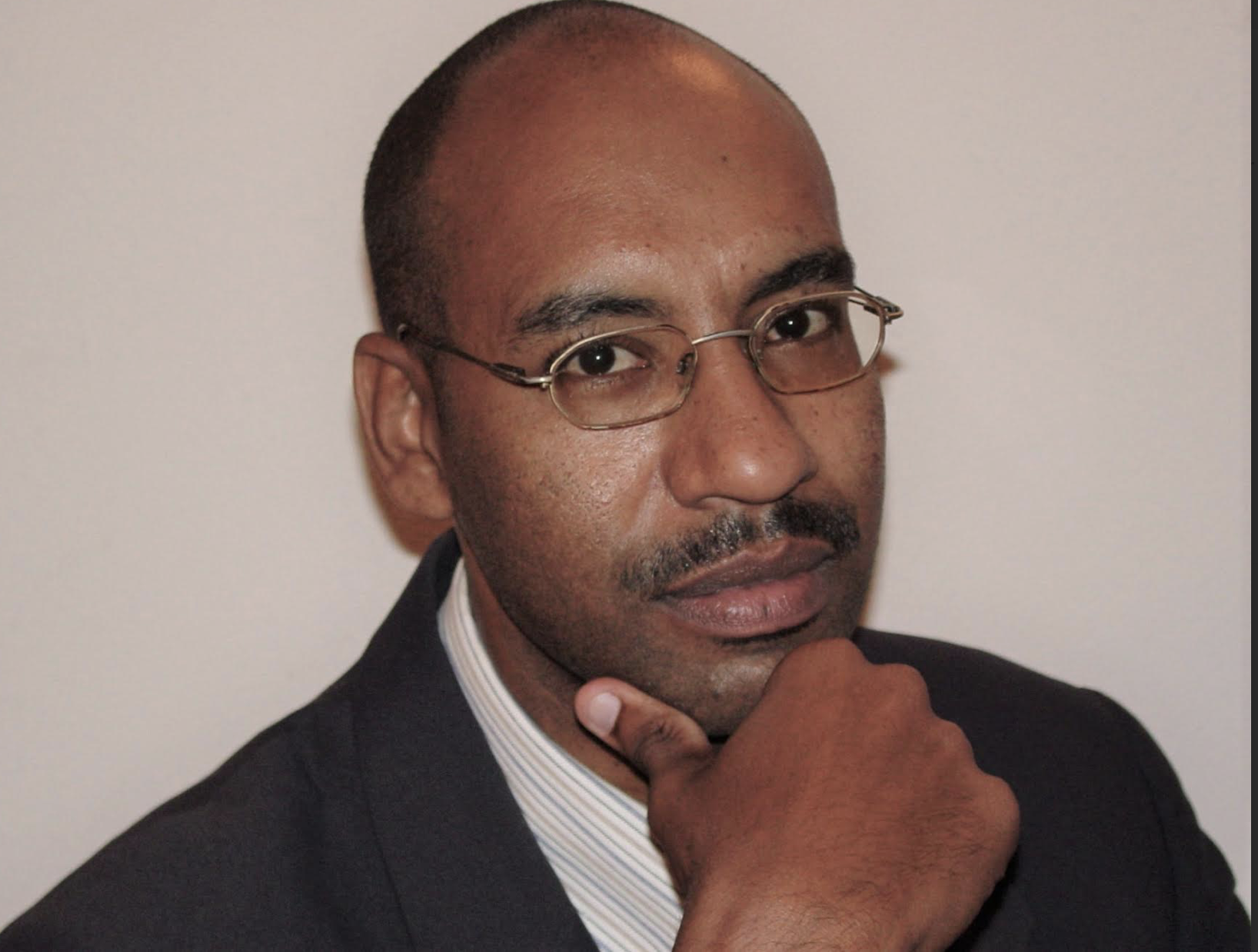
Mark Sealy, Trevor Browne, Indar Weir
Mark Sealy (BSIL), Trevor Browne (CoopEnergy), Indar Weir (Minister)

Minister of Agriculture Indar Weir in a public dismissal of the claim stated CoopEnergy’s assertion was incorrect. In fact he countered strongly by highlighting that CoopEnergy had not fulfil its commitment to inject 16 million dollars into the deal as agreed. Weir promised to convene a meeting quickly to address the ‘misunderstandings’ that had leaked into the public space. It is in the interest of all concerned to resolve any ‘misunderstandings’ to protect investor confidence. Truth be told the matter has faded from the public space since the initial blowup which suggests both parties have agreed to a gag order.

What has further piqued the interest is a recent announcement by Chairman of the Barbados Sugar Industry Ltd (BSIL) Mark Sealy the group he represents will be requesting a price increase. What is alarming is that the rate increase request is expected to be levied on the 2025 sugar crop harvest. Bear in mind the harvesting season is anticipated to start latest by the 15th of February 2025. How is it possible for one of the key players in the process to share such a significant position in public on the eave of the sugar harvesting season? Last year under the new management for the first time there was also a delay due to negotiations with the Barbados Worker’s Union (BWU).

One does not have to be a Rihanna to know a successful business cannot be achieved by pulling hard on the levers of key expense drivers at the last minute. Especially if the business is a ‘start up’. Surely the blogmaster must be missing something based on what is unravelling. Does the BSIL realistically expect to receive a rate increase for its members in 2025? How does the anticipated rate increase impact the business plan of CoopEnergy and related companies created to manage the sugar industry and spin off energy business?

It seems there is some more work required to optimise the workings of the new business model between the different actors i.e. government, CoopEnergy, BSIL and possible others. Obviously there is more than meets the eye associated to this matter. A wondering public already vested in the process – an unknown amount at this stage – would expect parties involved to exercise the highest level of professionalism and business acuity to make what is a medium to high risk venture a successful one.


Discover more from Barbados Underground

Subscribe to get the latest posts sent to your email.

34 responses to “Sugar deal”


  1. Truthfully, the writer does not feel well positioned to speak with deep knowledge on this matter as it evolves.

    However, weeee remain reticent about the spectre of having coops be the repositories of failed Industries once every other Tom, Dick and Harry has had their fill and have thusly failed.

    Some may say that the production of energy, ethonol, maybe as a good substitute for the importation of petroleum products and represents a new industrial sub-sector, or a deviation from the past.

    In those circumstances our rejoinder will be that that is not the sweet spot, pun intended, within that industry.


  2. Without the cane farmers, a business plan is not needed. Political football.


  3. @ Pacha
    Boss, a ‘failed industry’ may just be the result of vital national assets having been mismanaged and exploited over decades, and in this case, even centuries- by jokers.

    What better solution, when all the brassbowlery have failed, than for the collective PEOPLE to take control of their own damn assets and bring a level of common sense and transparency to the table? … or are you saying that such a role is beyond brass bowls?
    Bushie thought that you were one for leadership ‘by the people’?

    @ David
    This situation is symptomatic of the general ineptitude of our government and systems.
    There is clearly no overarching plan in place by government, and they are making decisions based on how key people happen to feel on any particular morning.

    EVERY damn project is the same shambles. Can they not see the chaos? ..or is it deliberate?

    Unless we can bring to bear some kind of national strategic think tank (of genuinely intelligent people), whose role would be to determine long-term national strategies, and to review and supersede the inevitable partisan political idiocy, EVERY shiite that we attempt will fail… even as basic a diversion as ‘Gathering’ in a parish.

    How hard can it be to manage a little shiite country that has been blessed unlike ANY other with protection from natural hazards etc? What if we were a little Haiti?

    WAIT… are we not well on that path…??!!

    Steupsss.


  4. Bushie
    Yes, however leading from behind may not be the best thinking. We’ll prefer cutting edge industries, transformations. Electricity and ethanol etc from sugar cane are dated.

    That everybody else gets to sit in the catbird seat, economically, and when they fail then the broad mass is to be further exploited is problematic.

    Lastly, there is nothing sacred about former ‘assets’ unless they are taken in a new direction.

    Instead, we get the idea that these so-called national assets, those who use to run them, those who crave them, maybe influenced by notions of keeping White corporate cultures going beyond their useful life.

    This is not development.


  5. @ Pacha
    ‘We’ll prefer cutting edge industries, transformations. Electricity and ethanol etc from sugar cane are dated.’
    ~~~~~~~~~~~~~~
    So your suggestion would be to explore making hypersonic rocket fuels from alcohol, and inter-planetary rocket bodies from bagasse?

    Dont mek Bushie dedd wid laugh do!!

    Brass bowls who have YET to see the value of even OWNING their own national assets CANNOT make a direct leap from serfdom, to cutting edge competitiveness.
    They have to CRAWL, then WALK, then RUN … before they start to learn to compete at world levels.

    BASIC industries such as energy, water, agriculture, and food industries will FOREVER be key areas to be used for national development.

    The lotta ‘cutting edge’ shiite is just another albino-centric ploy – to seperate brass bowls from their asse(t)s

    Think about it Pacha…


  6. Bushie

    No. There’s no need to think about the stars or celestial plane.

    However, there are other sectors of that same sugar cane industry which we’re not at liberty to discuss here and for which the limited scope or scale of a dated thinking, technological berth, have not even considered.

    You proclaim to be a well ‘educated’ society. How else can progress be made, competitive advantage to be gained, unless indigenous quantum leaps are made?


  7. @Bush Tea

    The word is not leap, it should be quantum leap.


  8. @ Bushie
    How can we realistically expect anything but confusion ? We cannot even provide enough chairs for our children who are sitting exams!
    We suggest that the World Bank is approached for a loan to buy chairs.
    Brassbowlery has gone to new heights.


  9. @ William
    “Brassbowlery has gone to new heights.”
    ~~~~~~~
    LOL ha ha ha
    Amen to dat!!

    @ David
    There is a new Co-op Members Update out from CoopEnergy.
    Seen it?


  10. Isn’t BSIL a partner and will share in the profits? If so then not one cent more at this time


  11. @Bush Tea

    Have not seen any report from CoopEnergy. Is it on BT or Nation?

  12. NorthernObserver Avatar

    Seems local business have issues with input costs. Scanned the GEL Report, and their increase in sales didn’t translate to the bottom line, because their Cocoa division had guaranteed selling prices without similar guarantees from cocoa producers. Input price went up and they couldn’t pass it on.
    BSIL members claimed to have not had a raise in price in several years?
    Business is an ongoing battle between costs and revenues.


  13. @NO

    Nothing wrong with what you stated but a few weeks away from crop start?

  14. NorthernObserver Avatar
    NorthernObserver

    David
    Doesn’t the Post Office strike just before Xmas? All entities figure out when they are needed most. Teachers don’t strike during the summer?
    I will suggest the parties have likely been ‘in negotiations’ for an extended period. Possibly it never ends.


  15. @NO

    Again you are correct you should consider is usually a last resort action after failure at the bargaining table. Did BSIL raise the matter before now and if yes what was the response. From recent media reports Sealy has given no indication this is the case. In fact he stated they are now in the process of doing the analysis.


  16. Here is a link to CoopEnergy website, latest news dated 9 January 2025.

    CoopEnergy Continues to Await Full Hand-over of Sugar Industry  

    As we indicated in our November update, the excellent progress that was  initially made in the transfer of BAMC control of their sugar interests over to the  CoopEnergy controlled companies, ABC Ltd and BESCO Ltd, stalled when  government failed to produce independently verified valuations of the assets  and liabilities to be transferred, as outlined in the agreements.  

    This is obviously a basic fiduciary requirement for us, and is clearly outlined in  the initial MOU as well as in the Shareholder’s Agreement.  

    We recognize the general challenge that exist within many state agencies with respect to financial and  management reports, audits etc. However, given the less than stellar history of the sugar industry, our  position is that special efforts must be made in this particular case.  

    We have offered an alternative proposal to government through the Minister, that the provisional transfer  of control to ABC / BESCO be confirmed via a written document from Government. The new companies  will then complete the required independent financial reports and asset valuations, and provide the  completed reports to Government confirming the final takeover details. We are awaiting a response from  government officials on the way forward.  

    CoopEnergy has reiterated to government that: 

    1 – Our primary interest in this project is the transformation of the dated sugar industry into a new  renewable energy and sugar operation. We have no interest in perpetuating the old sugar model.

    2 – CoopEnergy is willing to purchase the 55% shareholding in ABC/BESCO at the confirmed values  that are established in the independent valuations as outlined in the agreement. 3 – The new operations must be completely divorced from the traditional BAMC model, and will focus  on CoopEnergy’s renewable energy transformation, rather than on the old failed sugar model.  

    In the interim, we at CoopEnergy continue to await a response from the Ministry to our multiple  communications outlining the above concerns which have prevented our appointed directors from  taking the needed control of ABC / BESCO so far.  

    BLPC Rate Hearing  

    2024 was a year of delay and procrastination for the BLPC rate case which started  way back in October 2021. The Utilities Regulations Act specifically limits such  hearings to a maximum of six months.  

    From the very outset, we maintained that there were multiple flaws in the whole  rate review process being used, and CoopEnergy proposed a complete review of  that system – starting in our original letter of application for intervenor status.  

    The fact that this process could still be ongoing in 2025, confirms beyond any doubt, the inadequacy,  and hence the inefficiency and wastefulness of the existing FTC rate hearing process.  

    No grounds for rate increase  

    It was clear to us from the very start that BLPC had no reasonable grounds for a rate increase. Indeed,  we produced indisputable figures from their own audited financial statements, which clearly showed  that this company paid some $538M in dividends to EMERA between the last rate hearing in 2010 and  the new application in 2021, while at the same time allocating a mere $97M for local BLPC operations  in Barbados.  

    We pointed out to the FTC, via a sworn Affidavit given within a formal Motion, that these dividend  payments violated specified limits set by the FTC in their 2010 decision, and were therefore illegal. Our  Motion was discarded by the FTC – after a number of frivolous responses to us about the timing of the  submission of our motions; the close of period for submissions; and other petty procedural  distractions. This Motion was submitted well within the timeline set by the FTC itself, for written  evidence to be submitted.  

    Illegal withdrawal of Insurance funds  

    Our second Motion dealt with the illegal withdrawal of some $100M from a self insurance fund (SIF)  which was established under the Barbados Trust Act under the Laws of Barbados. As we pointed out  to the FTC, withdrawals from this fund are only allowable for the purpose of reimbursement of  expenses after a catastrophe.  

    Yet, in 2016, $100M was withdrawn from the SIF and declared to be ‘income’ to BLPC – after which it  was further transferred to EMERA as ‘dividends’. 

    This motion too was ignored and discarded by the FTC. However in their decision of February 2023,  they ruled that BLPC erred in making that withdrawal, and that the SIF was to be refunded – and they  effectively gave the company a period of 30 years to do so.  

    Our Intervenors protested this decision, and in fact we called for the matter to be referred to the  Director of Public Prosecutions to be pursued appropriately.  


    https://www.coopenergy.org/phpsession/mbile_reader1.php

  17. NorthernObserver Avatar

    David
    I haven’t a clue the status of negotiations, if or when they began.
    According to the co-op webpage, it is even questionable if their deal has ‘gone through’.
    And John2 seems to know the BSIL has some ownership stake.
    I don’t follow Sugar, other than observe, the entire process was rather opaque, and disjointed.


  18. @ NO

    No I don’t know that . I probably know as much as u do. For what I have read I would assume BSIL as a stakeholder in the sugar industry ( like the worker) would be share holders in the new company

  19. William Skinner Avatar

    @ David
    We have embraced a culture of going public prematurely. We think there is a deliberate attempt to bamboozle the citizens. We have mastered the art of misinformation and disinformation. Within this planned confusion coupled with a lack of transparency , both the public and private sectors , are able to engage in sophisticated corruption and nepotism, at the highest levels.
    This is exactly what drives the contributions of erudite people such as @ Bushie, whose relentless critique of brassbowlery cannot be seriously countered.
    In this latest scenario, it has been revealed that the government has not kept its word but the public was convinced by Browne’s frequent appearances in the media that it was a done deal. Then we had Dr. Clyde Mascoll, pretending it was a great deal for the workers. Members of the public bought into the window dressing , and some apparently bought shares .This is the ball of confusion that now envelops the country in almost every sector.
    With the major opposition party in shambles and the governing party in an almost impregnable political position, unless something happens very quickly, to spark the populace into some awakening, it could be safely argued , that the perpetuation of the present state of affairs, could lead to a very sophisticated banana republic.


  20. @William

    There is a discovery to be discovered based on public sharing by Mascoll and Browne about what they discovered while doing due diligence to complete the yet to be completed deal. No wonder Enuff is quiet, same crap by a different colour.


  21. It will be interesting to see how Trump talk plays out given Putin’s interest in the Article.

    https://www.reuters.com/world/kremlin-trump-remarks-greenland-canada-says-russia-has-arctic-interests-2025-01-09/

  22. NorthernObserver Avatar
    NorthernObserver

    John2
    You know what they say about ‘assuming’?
    The BSIL said from the first public news about Co-op and BAMC, they were not aware.
    The share you may think, they have; was reportedly for ‘the public’ ( whatever that means) and was reportedly kept by the GoB.
    Other than Co-op news, to keep their members informed, what transpired has a lot of holes. But is reminiscent of ‘the Republic’. You make a decision amidst much public fanfare, and then you sort out the details later.
    Given the lack of verified independent financial information, what Co-op is currently awaiting; one realises the deal was made upon ‘representations’ by parties which the other accepted ‘awaiting formal confirmation’.
    This is like the Caves. An RFP was floated, parties were to respond, and yet, they had no verified (audited) information. Why? This time my assumption, it had already been decided WHO the successful contractor was, this was merely a pappy show. However Chukka (caves operator), like Co-op, couldn’t commit their shareholders to an agreement void of documented fact, so rather quickly, missing annual Reports for the Caves were produced.
    So you know, in the Co-op website BU linked, they are similarly interested in the CBC. Fair warning…this is more complex…beyond the technology and partnership mentioned, the CBC has a large UNFUNDED pension liability. Don’t be surprised if you see this rolled into the NISSS or similar. A pension swap? 😀


  23. sn’t BSIL a partner and will share in the profits? If so then not one cent more at this time

    @ NO

    Not my first comment was a question and then a follow up to if the answer was yes. I don’t know how u arrived at ‘I seem to know…….’

    As for my assumption = u have proven it to be wrong . I now think it was a mistake by the coop not to have made BSIL a partner

    I would for government to star out and collect their revenue from taxes, PAYE etc

    Xxxxxxxxxxx

    Today I drank cane juice from a can because the canes look too “starved out” and are not usually as sweet as ours . Was thinking we can look to explore exporting the fresh cane joints / canned juice . Brand Barbados is currently on the world stage .
    There is enuff vacant land that can come back into production .

  24. NorthernObserver Avatar
    NorthernObserver

    @Hants
    Could you translate the below
    Thx
    The borrowing plan for the 2024-2025 fiscal period, which ends on March 31, is detailed in the new Medium Term Debt Management Strategy (MTDS) for 2024-2025 to 2026-2027.
    John2
    You have to determine when I’m just shadow boxing.


  25. “Who Moved My Cheese” is a book that changed my life…

    It’s a simple tale about 4 characters:
    Sniff, Scurry, Hem, and Haw.

    They live in a maze, constantly searching for cheese.

    The cheese is a metaphor for what we want in life.

    Sniff and Scurry are quick to adapt when their cheese is moved.

    Hem and Haw resist change, clinging to old habits.

    The book emphasizes the importance of flexibility and adaptation.

    It’s about embracing change, not fearing it.

    I’ve learned to be more like Sniff and Scurry.

    I’ve learned to adapt, to move with the cheese.

    I’ve made significant changes in my life, inspired by the book.

    I’ve taken bold steps, made courageous decisions.

    I’ve learned to move with the cheese, not against it.

    To all those resisting change, clinging to old habits, this is worth a read.

    Embrace change, Adapt, and Move with the cheese.”

    Source: Linda Reddy


  26. CoopEnergy’s success vital

    AS BARBADOS GEARS UP for the 2025 sugar harvest, there is widespread hope that the season begins on time and meets its targets.

    The Barbados Sustainability Energy Cooperative Society Ltd (CoopEnergy), now responsible for managing 5 000 acres of land and operating at Portvale, the island’s lone sugar factory, shoulders a monumental national responsibility.

    By taking over the operations of the Barbados Agricultural Management Company, it has helped the Government achieve a critical International Monetary Fund divestment target. However, ensuring the venture’s long-term success is the real objective.

    One significant hurdle CoopEnergy faces is securing buy-in from credit unions to invest in its associated companies – the Agricultural Business Company, which manages the land, and the Barbados Energy and Sugar Company, which oversees energy operations. For credit unions to participate, the enterprise must demonstrate a clear and credible business strategy.

    Under credit union legislation, these institutions are required to assess the viability of any new investment thoroughly. This involves evaluating strategic risks, ensuring compliance with governance regulations and acting with prudence, ensuring that any investment aligns with their fiduciary duty to protect members’ funds.

    They must assess, therefore, whether CoopEnergy’s proposals fit within their risk tolerance and long-term objectives.

    This includes evaluating the cooperative’s business model, governance practices, and compliance with legal and regulatory requirements.

    While CoopEnergy has made enthusiastic verbal presentations about the potential benefits of investment, it must do more. What is required is a public prospectus outlining the venture’s financial projections, governance structure and risk management strategies, all essential to building trust and confidence among potential investors.

    Credit unions must also weigh the longterm benefits of such investments against their overall risk appetite. Sentiment alone cannot drive decisions.

    CoopEnergy’s role extends beyond sugar production. Its operations directly and indirectly impact jobs, the rum industry through molasses production, foreign exchange earnings and the agricultural sector, including food crop and livestock production.

    However, its success depends on maintaining public goodwill and adhering to high standards of transparency and accountability. Although not a listed company, CoopEnergy must operate with the same level of scrutiny as those on the Barbados Stock Exchange.

    To gain the confidence of credit unions and the broader public, it must provide clarity on its plans and performance.

    Questions about governance, financial stability and the change of directors must be addressed openly. This level of transparency is critical, especially as the cooperative seeks to attract investors and expand its operations.

    The sugar industry remains a vital part of Barbados’ economic and social fabric, even if it is no longer the dominant sector. For CoopEnergy to succeed, it must align its ambitions with the country’s broader goals of financial, social and environmental well-being. Due diligence and strategic vision are key to ensuring this venture becomes a cornerstone of Barbados’ sustainable future. The stakes are high.

    Source: Nation


  27. State-owned entities or burdens?

    BARBADOS IS FACING pressing economic concerns primarily driven by the precarious financial health and systemic inefficiencies of stateowned enterprises (SOEs), including the Housing Opportunities and Investment Corporation (HOPE) Inc., also known as Home Ownership Providing Energy Inc., the Caribbean Broadcasting Corporation (CBC), and the Transport Board. These entities represent critical pillars of the country’s public service infrastructure, but their struggles reflect broader governance and fiscal deficits that threaten the country’s economic stability.

    The financial instability of these SOEs has significant implications for Barbados’ fiscal sustainability. The government’s implicit guarantee of their liabilities exacerbates national debt and constrains fiscal space. HOPE Inc., for example, has failed to deliver affordable housing at scale or within budgetary limits, creating a resource drain that impacts other critical sectors. This inefficiency underscores the weaknesses in budgeting and fiscal oversight mechanisms within the broader public finance system.

    The CBC and Transport Board epitomise the fiscal burden of SOEs. With the CBC struggling to adapt to a rapidly evolving media landscape dominated by digital platforms, its traditional revenue streams have dwindled, necessitating government subsidies to remain operational.

    This dependency highlights weaknesses in the organisation’s strategic planning and business model. Similarly, the Transport Board’s inability to fully modernise its fleet and reduce operational inefficiencies continues to strain public funds. For both entities, outdated infrastructure, excessive administrative costs and inadequate performance evaluation mechanisms point to a failure in aligning operational goals with national development priorities.

    Public perception of SOEs adds another layer of complexity. While these entities are viewed as essential to the delivery of public services, their inefficiencies and financial struggles have eroded public trust. Citizens often perceive ad-hoc government bailouts to support underperforming SOEs as a misuse of taxpayer funds, especially when these interventions fail to deliver tangible improvements in service quality.

    This erosion of trust not only diminishes support for broader fiscal reforms but also limits the government’s ability to engage stakeholders in constructive dialogue about the future of SOEs.

    The broader institutional environment also plays a significant role in shaping the performance of SOEs. Barbados’ regulatory and oversight bodies have struggled to enforce accountability and transparency, partly due to limited capacity and resources. For instance, the absence of a unified performance monitoring framework for SOEs means that inefficiencies often go unchecked until they reach critical levels.

    From a fiscal sustainability perspective, these dynamics create a vicious cycle in which SOEs perpetuate economic vulnerabilities. The government’s implicit guarantees for SOE liabilities represent a significant contingent liability that increases the country’s risk profile. This, in turn, raises borrowing costs and limits access to affordable credit, further constraining fiscal space.

    Despite these challenges, opportunities for reform exist. Strengthening governance frameworks is a critical first step. This includes professionalising SOE boards, improving financial transparency and implementing performance-based management systems. Public-private partnerships (PPPs) could also play a transformative role, particularly in sectors such as transportation, where private investment could help modernise infrastructure and improve service delivery. However, the success of such initiatives depends on creating an enabling regulatory environment that balances public and private interests.

    Digital transformation represents another avenue for addressing SOE inefficiencies. For the CBC, embracing digital technologies could help diversify revenue streams and expand its audience reach. Similarly, the Transport Board could leverage digital tools to optimise route planning and fleet management. However, these efforts must be underpinned by a clear strategic vision and adequate investment in capacity building.

    Addressing the political economy dynamics is perhaps the most challenging aspect of reform.

    Building consensus around the need for change requires transparent communication about the costs of inaction and the benefits of reform.

    Engaging stakeholders, including employees, unions and the public, in the reform process can help mitigate resistance and foster a sense of ownership. Additionally, tackling the issue of political interference requires a strong commitment to institutional autonomy and the establishment of clear guidelines for SOE operations.

    While the road to reform is fraught with complexities, a strategic and inclusive approach can help Barbados navigate these challenges and build a more sustainable economic future.

    Professor Troy Lorde is an economist and Dean of the Faculty of Social Sciences at the University of the West Indies, Cave Hill Campus. Email troy. lorde@cavehill.uwi.edu

    Source: Nation


  28. How many different ways can we write the same thing.
    The above article mentions Hope, CBC …
    A possible rewrite of
    https://barbadostoday.bb/2025/01/04/three-state-owned-agencies-posing-significant-risk/
    Needless to say, I did not read it…. I seem unable to get past paragraph 1


  29. ‘Steady’ sugar harvest forecast

    The sugar industry is poised for an early start to its 2025 harvest, with production expected to match last year’s output of 100 000 tonnes, one year after the government divested ownership to the cooperative movement, Minister of Agriculture Indar Weir has told Barbados TODAY.
    Despite recent challenges including management changes and logistical issues, he expressed confidence in the industry’s stability as it enters its first full year under private ownership.
    Noting that last year’s harvest began in March, Weir is forecasting an earlier commencement to be seamless. Last week, private sugar farmers called for a mid- February start.
    Weir said: “We are forging ahead with to get the crop started. All the pre-testing is taking place, and the factory is being worked on as well. In terms of tonnage [of canes], we should be around the same thing as we did last year . . . around 100 000 tonnes. All in all, we should get the crop seamlessly going. Remember last year, we transitioned from government to private ownership, and therefore, this would be the first year that they are going to be totally on their own as far as the running of the sugar crop is concerned.”
    The minister added that the industry is being supported by the government through its climate mitigation subsidy. Farmers have received their payments which, according to him, are far better than what was obtained in the past.
    He also gave an assurance that efforts are being made to make sure that payments are kept up to date as they fall due and that the arrangements are maintained.
    Asked about the outlook for the export of sugar, Weir pointed out that priority will be given to producing molasses for the lucrative rum industry.
    “We export sugar to CARICOM and we will continue to do so. There are some interests outside of CARICOM. But that obviously is a matter for the private company to determine how they are going to approach that,” the minister said, referring to the cooperative-owned firms now running the mill and several estates.
    He indicated that one of the only challenges the crop could face is if there is a lot of rain, which is likely to reduce the level of sucrose in the canes.
    “With persistent rains of course,” Weir explained, “the sucrose content in the canes wouldn’t be as high as when the cane starts to dry out. So, that is what they will be measuring going forward to make that the sucrose content is [what it should be].”
    The 2024 sugarcane harvest got off to a slow start due to a number of factors, including trucking issues: there was a shortage of the large trucks needed to transport freshly cut canes to the sugar factory, with some farms receiving no trucks at all; and contract issues with the industry.
    There were also problems with the harvest that was the first under workerowned, cooperative management, prompting some observers to hold the position that the new owners lacked experience in sugar production.
    The Barbados Sustainable Energy Cooperative Society Ltd (CoopEnergy Barbados) took over the business of the stateowned Barbados Agricultural Management Company Co Ltd last year.
    CoopEnergy created two companies to run sugar production – Agricultural Business Company Ltd (ABC), which oversees just over 4 000 acres of land, and Barbados Energy and Sugar Company Inc (BESCO), which runs the island’s sole working sugar mill at Portvale, St James.
    (EJ)

    Source: BT


  30. High crop hopes

    CHAIRMAN of the Barbados Sugar Industry Limited (BSIL), Mark Sealy, is upbeat about the 2025 sugar harvest after last year’s output.

    “For the 2024 season, the BSIL farms put in about 72 000 tonnes of cane and overall the crop was about 101 000 tonnes, so we were a little bit over 70 per cent of the sugar cane that was put in.

    “We’re working on 2025 estimates now but it should be a reasonably good crop simply because we’ve had some very good, consistent rain and some of the canes look quite good. Obviously, this all depends on the start of the crop, which is very important, and we would like to start the crop at least the latest by February 15,” Sealy told the MIDWEEK NATION yesterday.

    He said they would be aiming for smoother communications between truckers and other stakeholders to facilitate a swift start to this year’s crop.

    Last year’s start was met with some delays due to a shortage of hauling trucks used to transport canes to Portvale Sugar Factory in Blowers, St James. Back then, he explained that the delay occurred because truckers arrived at different times.

    Under the new sugar cooperative, the hauling trucks are supplied by Agricultural Business Company Ltd. Previously, the Barbados Agricultural Management Company (BAMC) was in charge of assigning the trucks.

    Sealy said that this year BSIL farms had taken ownership of blue bins, blue trailers and in-field tipping bins which were previously owned and leased by the BAMC.

    “We are working very hard to make sure that they’re all ready, that they’re insured and inspected so that we can start promptly around that time.

    Prices up

    “Prices have gone up a lot in fertiliser over the last few years and now that we are having to take over this equipment, that’s an added expense as well. So we are in negotiations on pricing because we’ve had the same price for five years,” he added.

    The 14 tipping bins and 20 blue trailers will come at an expense of $5 000 to $7 000 annually in maintenance costs, Sealy said.

    “It could be more . . . . If you have a really bad breakdown, you might have to spend more. The BAMC or BESCO (Barbados Energy and Sugar Company Ltd) decided that they did not want to own that equipment anymore. It’s an added cost to us but, for efficiency’s sake, we decided that we would do it,” he said. (JRN)

    Source: Nation


  31. Some things you cannot make up if you try.

    Cane harvest hiccup

    Crop now scheduled to start today

    by JOSUÉ RAMIRÉZ NELSON josuenelson@nationnews.com

    YESTERDAY’S EXPECTED START of the sugar cane harvest was pushed back due to a delay in the certification of the weighbridge at Portvale Factory.

    Minister of Agriculture and Food Security Indar Weir said: “The weighbridge is used to get the correct weights when the bins or trailers come in. That area has to be certified by someone. Unfortunately, this gentleman is perhaps one of the only ones we have here, and when he was asked to go and do the certification, he said he can only do it today (yesterday).

    “So that is the reason why it was done today (yesterday) and completed. The crop will start tomorrow (today), rather than today (yesterday), because you don’t want to have canes cut and they can’t go on the bridge.”

    When a DAILY NATION team visited the plant there was little activity and the furnace was not lit.

    This year’s sugar harvest marks the second under the Sustainable Energy Co-operative Society Limited (CoopEnergy), which took over from the Barbados Agriculture Management Company (BAMC), Agricultural Business Company Ltd. (ABC) and the Barbados Energy and Sugar Company Inc. (BESC) Last year’s harvest, like previous ones, also faced a delay much to the lament of some private farmers who criticised the tardiness of trucks in collecting canes from the Portvale Factory as well as the late March 25 start.

    Weir mentioned that the start of the crop was determined by the readiness of the factory and the sugar canes, adding that aside from last year, when they were in the midst of the sugar industry transition, they were aiming for earlier starts to the season.

    “The private farmers ideally would want the crop to start in February. A lot of times, the canes in February, because of the heavy January rain that we received, will still carry a lot of water. They may be heavier, but the sucrose content might not be as good.

    “They do a study to look at the level of sucrose in the canes to determine the level of ripeness in order for us to determine the crop’s real start time. That, together with other variables like making sure the factory is in good condition, and it will not start and stop and those kind of things, those are all the things that are going to be variables that determine the crop start time,” he said.

    Weir predicted cane production in 2025 would come close to last year’s 100 000 tonnes.

    Meanwhile, chairman of the Barbados Sugar Industry Limited (BSIL), Mark Sealy, was at least pleased that the harvest was starting earlier than it did last year.

    “We’re happy that it’s earlier than last year – which was quite late. That’s an improvement and I’m sure the factory will do its best to improve all the time but there are a number of things that come into the start,” he said.

    At Edgecumbe Plantation, St Philip, manager of the estate and private farmer Richard Mayers revealed that their harvesting began at 1 p.m. yesterday. They were pushed back due to the certification.

    “We were hoping to start harvesting cane earlier this morning but the factory had something to sort out that was beyond the control of Portvale Factory. It was sorted this morning and I got the okay that the factory would be taking cane tomorrow morning 6:30 a.m.,” he said.

    In the meantime, Mayers expected to improve on the 10 109 tonnes of cane harvested last year, aiming for a yield of 11 500 tonnes. In preparation, the plantation is ironing out any kinks to its harvesters and has added two blue trailers to the plantation yard.

    “The good thing about this 2025 cane crop is that the plantation now owns the two hauling trailers which will make it easier for me because I can dictate my own pace.

    “I did some work on the blue trailers, we changed up one to do some dumping and we put some new tyres on one of the trailers so I am looking for a great 2025 cane harvest because once you’re running your own show and you have everything under control, it is better,” he said.

    Source: Nation


  32. @Hants

    Unbelievable!

The blogmaster invites you to join the discussion.

Trending

Discover more from Barbados Underground

Subscribe now to keep reading and get access to the full archive.

Continue reading