← Back

Your message to the BLOGMASTER was sent

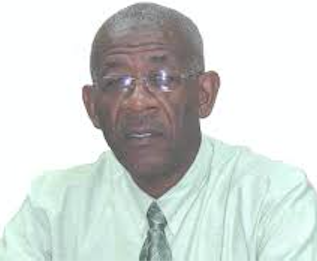
The following statement was circulated by CoopEnergy with the following foreword by Chairman Trevor Browne.

The attached seeks to clarify CoopEnergy’s position on the subject of the divestment of the Sugar operations formerly controlled by the BAMC.

It was never our expectation that this process would be seamless, nor that it would be completed without any hiccups.

The very simple matter raised in Barbados Today results from the fact that in the Cooperative Movement, we are unable to expend funds without proper supporting documentation and justifications. Most certainly, we cannot base the value of an asset to be purchased, solely on the word of the seller of that asset. The process for independent valuation of assets is spelt out in the MOU, and follows standard business practices.

We feel sure that once all the facts are shared, the process can be completed smoothly and amicably.


Discover more from Barbados Underground

Subscribe to get the latest posts sent to your email.

23 responses to “Statement from CoopEnergy”


  1. One would have thought given the potential of this project there would have been meaningful discussion during the budget lead by the loquacious minister of agriculture. Also senior government economic adviser Clyde was heard on the airwaves last week and there was no mention of this project.


  2. Has it ever dawned on anyone that without a constitutional parliament, one of the necessary parties to the agreement does not exist?

    This is a charade.

    Until we have elections which produce a constitutional parliament which can either ratify or declare null void and of no effect the agreement, things will remain in limbo.

    How do we force elections?


  3. Sugar deal turns out to be not so sweet

    A dispute is brewing between Barbados Agricultural Management Company (BAMC) and The Barbados Sustainable Energy Co-operative Society Ltd (Co-op Energy) over the proposed transfer of the assets of BAMC which was understood to be effective from last year’s start of the crop.

    In 2023, Government announced that it was getting out of the sugar industry and was no longer willing to provide any further subsidies to the industry to the tune of about $27 million per year. Sugar was not a profitable undertaking.

    In January last year, Lieutenant Colonel Trevor Browne reported that Co-op Energy had taken over the milling business of the Barbados Agricultural Management Inc., and had incorporated two subsidiary companies to operate the sugar industry.

    The Agricultural Business Company Ltd (ABC), based at Bulkeley, St George, would oversee more than 4 000 acres of farmland while the Barbados Energy and Sugar Company Inc., (BESCO) would manage the island’s last working factory, Portvale.

    It was assumed then that this was a done deal and everything was up and running. It must have come as a shocking development last Tuesday when Minister of Agriculture Indar Weir and Browne were engaged in a public spat about who controls the industry.

    Last week, Co-op Energy accused Government of reneging on key commitments in the sugar industry divestment deal, leaving the $16 million investment plan in limbo and threatening the industry’s future.

    In a press statement issued last Wednesday, Browne, Co-op Energy’s chairman, accused the Government of making significant alterations to the Memorandum of Understanding (MOU) signed in May 2023 and failing to meet agreed-upon obligations.

    Browne’s statement came on the heels of a dispute over ownership and management of the operations. Co-op Energy says Government remains in control, while Government insists that Coop Energy is responsible – despite the cooperative failing to meet its financial commitment.

    Weir said: “My stance remains. The period for their investment has passed and that must be addressed immediately. Finding excuses to prolong this investment situation is unacceptable and nothing will change until their financial obligation is met.”

    If taken at his word, it is clear that the much-touted deal has not yet materialised. It is a rather distressing situation and does not augur well for the future of the sugar industry and the potential financial viability of Co-op Energy.

    However, Browne’s statement revealed a series of changes that transpired since the initial agreement. He said that “on December 18, 2023, the BAMC severed all staff, closed its sugar operations, and began the handover process”. This suggests good faith on BAMC’s part.

    He further said the process was marred by Government-backed alterations to key terms of the MOU. The changes included Government’s decision to retain a 25 per cent stake in the new operation, instead of fully divesting as originally agreed.

    The real issue seems to be whether a MOU is legally binding in and of itself. As is generally understood, an MOU is not necessarily legally binding, but depends on the signatories’ intent and the language in the agreement. It signals the willingness of the parties to move forward with a contract.

    This quite frankly doesn’t make sense as the duty of due diligence falls on the purchaser of the assets. At the end of the season last year, this newspaper questioned why Weir was answering questions about the industry when it was widely reported that it was taken over by Co-op Energy.

    It is obvious that the situation remains unresolved and there is no formal contract between the parties. Co-op Energy was still awaiting critical financial and operational reports, “necessary for the co-op movement to attract potential credit union investors and evaluate their investment options responsibly”.

    Browne emphasised that without full financial disclosure, including past failures and how they will be addressed, it would be irresponsible for any cooperative to move forward with such an investment.

    With respect, these issues should have been thrashed out long before the final MOU or contractual document was formalised.

    Nation Editorial

  4. NorthernObserver Avatar
    NorthernObserver

    Bare sport in the Buhbaydus Rum shop.
    One blogger, handle Hal Austin, always said ‘Mia doesn’t do details’. In this most Trumpian of skills, the object is get a deal, and leave the details up to others. It appears several of her acolytes maybe similarly inclined.
    We knew the smelly stuff had hit the fan, the moment the BAMC retained 25%, AND appointed (who agreed to this and why?) the Chair and Vice Chair of the two privately owned entities reported to be acquiring BAMC assets. WTF?
    Now the parties cannot seem to agree on the relevant facts.
    Sound familiar? It should.


  5. @NO

    You are a little harsh?The media release states CoopEnergy required audited financial reports which was agreed in an MOU? How can you say parties cannot agree if rules of engagement have not been complied by government?

    Asking for a friend?

  6. NorthernObserver Avatar
    NorthernObserver

    David
    Lol… you are not the first to call me harsh or aggressive or any a number of other things.
    Screw the media release. The RH Co-op Energy essentially went forward with a promise, based on some MOU.
    You CLOSE the deal. Until it is CLOSED you don’t have shit.
    You will tell me those involved at Co-op are intelligent people. That they live on the island. Could they not see this administration of GoB doesn’t provide reports on a damn thing? Ok, ah lie, they did provide reports for the Caves, but not until pushed. And certainly before Chukka signed anything binding.
    Imagine. You are Co-op. You have some MOU, nice word for a promise. You have been “told” all manner of things, out of the forked tongue lips of the politically employed or inclined. D-day comes, they still haven’t provided the required documentation, but you go ahead? Then they tell you…’we keeping 25%, and to ensure our rights, we tekking the two top Board positions”. And now a whole year passes, and still no Closed deal.
    C’mon David, let BushTea tell you what you are dealing with.


  7. @NO

    It appears Weir and Mascoll were very convincing. Here is a case that could have been a case study for future private public alliances. We must not give up on the fact hope springs eternal.

  8. NorthernObserver Avatar
    NorthernObserver

    David
    Who were the lawyers representing Co-op? Surely they legal representation.


  9. @NO

    A Kevin Webster is listed as the legal officer and CompSec.

    https://coopenergy.org/images/coopnews.pdf

  10. NorthernObserver Avatar
    NorthernObserver

    Yes, that’s internal. Day to day matters.
    On an acquisition of this size, esp given it is outside the scope of existing operations, they would have had advisors and legal beagles to generate/review legal documents and procedures.


  11. Sugar Industry focus on core mandates amid ownership impasse
    By Emmanuel Joseph

    As the impasse over the ownership of Barbados’ sugar industry lingers, with Co-op Energy and the government locked in a standoff, key figures are choosing to sidestep the controversy, Barbados TODAY can reveal.
    The organisations representing private cane farmers and non-field sugar industry workers are focusing on core responsibilities, emphasising job security and industry improvement amidst uncertainty.
    “We are very focused on what our job is, and that is planting and growing really good cane to deliver to the factory. So, really and truly, we are not getting distracted by that at all.
    We are just doing our job…we are delivering to the factory, we are trying to make our cane better every single crop, and that’s what we are concentrated on,” chairman of the Barbados Sugar Industry Limited (BSIL) Mark Sealy told Barbados TODAY on Tuesday when asked if the impasse was was of concern to him.
    The Sugar Industry Staff Association (SISA), which represents about 50 monthlypaid staff, including foremen, supervisors, and middle managers, has adopted a similar stance.
    “The union is focused on, and remains committed to fighting for conditions and benefits for the workers in this new transitional environment,” said Dwight Miller, president of SISA.
    With the sugar crop only weeks into the start of the 2025 season, a dispute has emerged in public where Co-op Energy is firm on its position that the Mia Mottley administration continues to control the industry, while the government insists that Co-op Energy is in charge—despite failing to meet its end of the divestment bargain.
    Head of the Barbados Sustainable Energy Co-operative Society Limited (Co-op Energy), Lieutenant Colonel Trevor Browne, has indicated that the transition of the sugar industry from the state-owned Barbados Agricultural Management Corporation (BAMC) to Co-op Energy remains incomplete, despite earlier claims suggesting otherwise.
    “The BAMC is still running it. They haven’t handed it over to us,” Lt. Col. Browne said in a recent interview, explaining that Co-op Energy had received no formal communication from the government about the transfer of assets.
    “We’ve asked them and written to them.
    They haven’t even responded yet. And I don’t have any army that can go in and take it over.”
    He pointed out that the transfer had been put on pause because of unresolved governmentrelated issues.
    “We were in the process of it, but the government never completed it. They never handed it over to us,” he said, describing the situation as “in abeyance.”
    Challenging public statements that thehandover had been finalised, Lt. Col. Browne questioned: “You should ask the minister when they plan to hand operations over to us… Where in the budget did they explain the handover?”
    “Co-op Energy has closely followed the steps outlined in both the initial Memorandum of Understanding as well as the shareholders’ agreement that was crafted by the government.
    The only outstanding matter now is for an independently verified statement of the assets and liabilities being transferred, to be provided by BAMC, and then for Co-op Energy to make the required share contributions.”
    But Minister of Agriculture Indar Weir insisted that the government will not transfer sugar industry assets to Co-op Energy until it Sealy. fulfils its financial obligations.
    The minister disclosed that Co-op Energy was required to invest about $16 million, with an initial $4 million payment.
    He further clarified that while the two private companies—Barbados Energy and Sugar Company (BESCO) Ltd and Agricultural Business Company (ABC) Ltd—are managing the industry, they do not yet own the assets as yet.
    Weir said: “They are companies. They are private companies. It’s just that they don’t own the assets at this point in time, but they are running the industry.” emmanueljoseph@barbadostoday.bb

    Source: BT


  12. Where is Coop Energy in all of this? Is it an idea whose time has not come?


  13. Blame game not good for sugar industry

    By Anthony P. Wood

    During the presentation of the mini-budget in July 2018, Prime Minister Mia Amor Mottley indicated that a new private sector arrangement would be sought for the management and financing of the sugar industry.

    This move was motivated by the acceptance that it was unsustainable for the Government to continue pumping tens of millions of dollars annually in a dwindling sugar industry, which remained inefficient and very unprofitable.

    After five years of unsuccessful negotiations with key stakeholders of the sugar industry, mainly the private sugar plantation owners in the Barbados Sugar Industry Limited (BSIL) and the rum producers, a transitional agreement was concluded with the Barbados Sustainable Energy Cooperative Society Limited (CoopEnergy) in late 2023.

    The hastily-arranged agreement allowed the administration to satisfy the imposition of the International Monetary Fund (IMF) that the Government relinquishes responsibility for the sugar industry by December 31, 2023.

    With some measure of relief, public announcements were made about the closure of the Barbados Agricultural Management Company Limited (BAMC) on December 18, 2023 and responsibility for the management and financing of the sugar industry transferred to two companies owned by CoopEnergy.

    Transition

    The information provided to the public in the early stages of the transition suggested that the transitional arrangement was going smoothly and a new era in management and financing of the sugar industry was found to the satisfaction of the Government and the IMF.

    Thus, it came as a shock to many Barbadians when, in an update to the members of CoopEnergy on November 15, 2024, president of CoopEnergy, Lieutenant Colonel Trevor Browne, informed there was a stalemate in discussions with the Government. Browne noted that the physical list of assets to be transferred and their valuation along with other requested information were not provided in accordance with the memorandum of understanding signed by the two parties.

    Minister of Agriculture Indar Weir responded to Browne’s claim, noting the failure of CoopEnergy to fulfil its obligation to provide the first tranche of $4 million of the agreed $16 million up front.

    While the stalemate in the relationship between the Government and CoopEnergy persists, the sugar crop commenced in early March under a cloud of confusion and uncertainty.

    A few important concerns emerge from the stalemate. First is the welfare of the workers at the lone sugar factory Portvale and elsewhere in the industry.

    In a recent article entitled Portvale Workers Seek Answers published in another section of the Press in March, the workers identified a litany of problems at the factory. They cited mismanagement, low worker morale, and persistent operational failures. The article alluded to the workers’ mounting frustration over “deteriorating factory equipment, unresolved labour disputes, and a lack of clarity regarding worker ownership shares in the sugar industry”. The unresolved labour disputes relate to pay, working conditions, and contract terms.

    The second concern relates to the financing of the industry. It was thought that pursuant to the signing of the memorandum of understanding and in accordance with the commitment given to the IMF, the Government would significantly reduce its subsidisation of the sugar industry after 2023.

    Indeed, the Minister of Agriculture in July 2024 noted that “This (2024) will be the last year that the Government will be providing support in terms of financing of the sugar industry . . . we will maintain certain things like the Climate Mitigation Subsidy, which basically is an incentive for farmers to practice good husbandry and increase yields, but over and above that the Government will be out of that space”.

    The minister’s explicit statement was delivered before the revelation of the stalemate by Browne on November 15, 2024, which resurfaced in a more elaborate way via newspaper articles on March 19 and 20, 2025.

    Given the revelation that CoopEnergy has not fulfilled its financial commitment within the terms of the transitional agreement for reasons explained by its president, it is incumbent on the Minister of Agriculture or former chairman of BAMC and lead negotiator in the transitional agreement, Ambassador Dr Clyde Mascoll, to inform the citizens about the level of public support for the sugar industry in the 20242025 financial year and the amount earmarked for subsequent years.

    Associated with the second concern is the third one, which relates to the reporting on the financing of the sugar industry by the Government. The 2024-2025 Estimates included an approved allocation to the sugar industry of $7 million as a grant to BAMC through the Ministry of Agriculture, despite the announced closure of BAMC in December 2023.

    Notwithstanding the substantial public support for the industry in 2024, there is no revised estimate of the grant to BAMC for 2024-2025 in the Estimates. The revised estimate for the grant to BAMC for the previous year 2023-2024 was $50.4 million compared to the approved estimate of $7 million. It is also instructive to note that there is no allocation for the sugar industry through the Ministry of Agriculture for 2025-2026 in the Estimates.

    Obvious question

    The obvious question emerging relates to the mechanism (and quantum) through which the Government continues to support the sugar industry in light of the revelation that CoopEnergy’s anticipated financial injection did not materialise.

    The final concern is the outcome of the negotiations. Though the negotiations were constrained by time, it is beyond rational comprehension that CoopEnergy would commit millions of dollars to an arrangement without having received an independent valuation of the list of assets to be transferred and financial and operational information on BAMC for the past few years.

    Without such information, CoopEnergy would not be in a position to develop a business plan and produce a prospectus geared towards attracting investment funds for the sugar industry transformation project.

    Equally puzzling was the decision by the Government to close BAMC without the certainty of the financial commitment by CoopEnergy being honoured at the outset of the new arrangement.

    It is obvious that the conclusion of the rushed good-faith negotiations rested on faint assurances.

    The parties must return to the negotiating table to resolve the stalemate if the interest is still there. The blame game being played publicly will only worsen the situation and cause further contraction in the sugar industry.

    Mottley, as a matter of urgency, needs to intervene in order to resolve the stalemate. It is regrettable, though not surprising, that the situation pertaining to the financing responsibility for the sugar industry remains unchanged after six years and nine months since the Prime Minister’s announcement and the commitment given to the IMF.

    Anthony P. Wood is an economist, and former lecturer in economics, banking and finance at the Cave Hill Campus of the University of the West Indies. He was also Minister of Agriculture and Rural Development in the Owen Arthur administration.

    Source: Nation


  14. Business as usual it seems.

    Sugar prodution down from last year

    THE 2025 SUGAR HARVEST is in the books, producing 96 000 tonnes of sugar, according to chairman of the Barbados Sugar Industry Limited (BSIL) Mark Sealy.

    That tonnage is 14 000 tonnes fewer than last year’s 110 000 tonnes.

    Sealy said he is hoping for an earlier start to the 2026 harvest after the crop began on March 4 this year due to the late certification of the weigh bridge at Portvale Factory.

    He said late starts were bound to have adverse effects on the scale of production and called for the earlier preparation of the factory so grinding can begin in February.

    “When you put down a factory for nine months, you’re going to have teething problems in the first two weeks. That’s why it’s very important to start early because you’re not going to get that much production in the first couple of weeks.

    “If you start on March 4, then what happens is you get cracking two weeks later than that . . . and then also, it pushes the crop down into late May, early June. We had some rain down in May, so that was difficult for harvesters, and it’s not good for compaction of fields and so on,” he added.

    The chairman admitted that BSIL farmers were late to get started as some faced challenges acquiring their licences.

    “One of the reasons is that this year was the first time that we took over the blue trailers and the tipping bins. So, there were some challenges with people getting the licences and stuff like that.

    “We’re going to make a very special effort to be absolutely on time next year. We really hope that the factory starts particularly early next year; it could even be early February,” Sealy said. (JRN)

    Source: Nation


  15. So is Mark Sealy the official spokesman for the Sugar industry?
    …or is he just speaking for the landowners who sit on these plantations that they inherited through our sordid past, and are now somehow paid ridiculous rates for the poor quality canes they reap annually?
    If they produced 96000 tons (of canes presumably) then as Wood has been saying, the more important question is how much Sugar and molasses was produced …and EVEN more so, how much was SOLD (for example how much remains UNSOLD from last year?)
    Wuh if the BB taxpayers are going to make up any shortfall, then we should not be surprised that Mr Sealy is upbeat and looking forward to 2026.

    But what does the Ministry of Fine Ants have to say on the matter? (…cause the Minister of Agriculture is the new expert on government BORROWINGS…)
    When is the Press going to ask about these issues?
    Is it only Wood that can think…?
    What a place!!

  16. NorthernObserver Avatar
    NorthernObserver

    Bushie
    To get your undies untwisted, the news broke a week ago, and the Trinidad Guardian quoted Minister Weir as the source. Why it is just appearing locally I cannot answer

    “Barbados has produced 96 000 tonnes of sugar for the 2025 sugar cane harvest including 6.8 million kilogrammes of molasses.

    “This, of course, speaks to the fact that we have remained consistent in delivering sugar so that we can keep things sweet whilst we export the rum we produce,” said Agriculture Minister, Indar Weir, adding that this year’s crop yielded 3.8 million kilogrammes of sugar.”

    https://www.guardian.co.tt/news/barbados-government-pleased-with-sugar-production-for-2025-6.2.2350462.178c3ba02b

  17. NorthernObserver Avatar
    NorthernObserver

    Sorry, hit comment button early…

    The only guess I can make, is that by using the BSIL as source, they didn’t have to comment on the spat between BAMC and Co-op Energy as the Guardian did.


  18. @Bush Tea

    The silence around the sugar industry and more importantly the take over of the sector is troubling. It appears the government has gone back into bed with the so-called plantocracy.

  19. NorthernObserver Avatar
    NorthernObserver

    David
    Silence breeds rumours. When you combine the AudGen comments on BAMC, with those from Co-op, it potentially produces a narrative which supports Co-op statements.
    Yet, who actually owns, and in other cases operates, the lands today. Last year in conversation with someone whose mother hailed from a plantation, when I asked about sugar, he told me the GoB leased their sugar lands. He gets a fixed lease fee.
    When I asked about the property adjoining his historical family lands, he said, ‘long gone, it was part of Barbados Farms which Sagicor now owns’.
    So of the diminishing lands in production, note we get tonnage of cane, but not yield, acres produced from, the term plantocracy, may not refer to the historical ownership.
    Then we have to CLICO lands, which I’m unsure if they were part of Barbados Farms or not.


  20. @NO

    Heard a man on the radio talking about sugarcane being weighed with mud and rocks at Portvale. How much tonnage needs to be subtracted from that 96k output?


  21. Also: when will Colonel Browne and Clyde Mascoll share findings from their due diligence regarding how pricing for sugar was manipulated? This was hinted during an interview with David Ellis.

  22. NorthernObserver Avatar
    NorthernObserver

    Re weighing…that has likely been going on for years. Though with the shorter sticks of cane the harvesters produce, it maybe more difficult to contaminate.

    Re: disclosure. We aren’t going to hear shite. Was it manipulation, or did the BAMC sign a deal with a distributor in the UK, whereby they were selling the product below cost?
    Not surprisingly, the Annual Reports from BAMC available, don’t yet cover the likely period. Like the NIS, the current spat, will likely see the BMAC disbanded and rolled into some new entity, where historical records will be committed to permanent concealment.
    Note, the AudGen doesn’t even mentioned Clearwater Bay among the exhaustive list of entities.

The blogmaster invites you to join and add value to the discussion.

Trending

Discover more from Barbados Underground

Subscribe now to keep reading and get access to the full archive.

Continue reading