
Banner promoting anonymous crime reporting with a phone and contact number 1 800 TIPS (8477), featuring the Crime Stoppers logo and a QR code for submitting tips.

← Back

Your message to the BLOGMASTER was sent

Submitted by James Austin

Impact of a weak opposition party in the Republic of Barbados: a democratic challenge

The Republic of Barbados, like many other parliamentary democracies, relies on the balance of power between the government and the opposition to ensure effective governance, transparency, and accountability. When the opposition is weak, and the ruling party appears overwhelmingly strong, as has been the case in Barbados in recent years, this imbalance can lead to several significant consequences for the country’s political health, governance, and society.

#### 1. **Democratic Erosion**
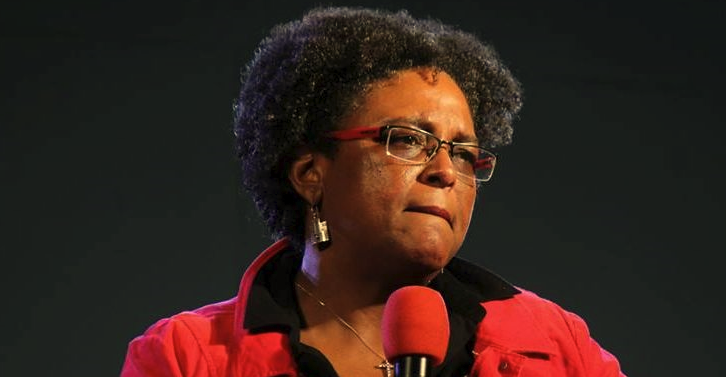
A fundamental pillar of democracy is the existence of a vibrant, credible opposition capable of holding the government accountable. In Barbados, the dominance of the ruling Barbados Labour Party (BLP), especially under the leadership of Prime Minister Mia Mottley, has resulted in a significant weakening of the opposition. For instance, after the 2018 elections, the BLP secured all 30 seats in the House of Assembly, leaving the traditional opposition party, the Democratic Labour Party (DLP), without representation in parliament.

This lack of parliamentary opposition creates a situation where the government’s policies and legislation can be pushed through without significant debate or scrutiny. While the ruling party may govern with good intentions, the absence of a robust opposition weakens the checks and balances that prevent abuses of power or flawed decision-making. Over time, this can lead to a democratic erosion, where government actions go unquestioned, and alternative viewpoints are sidelined.

#### 2. **Policy Imbalance and Lack of Scrutiny**
In a functioning democracy, the opposition plays a critical role in providing alternative policy perspectives and scrutinizing government decisions. In Barbados, with a weak or nearly non-existent opposition, there is a risk that government policies will not undergo thorough examination. Even well-meaning policies can have unintended consequences if they are not rigorously debated.

For example, economic policies, healthcare reforms, or decisions on climate resilience—critical for an island nation like Barbados—may not receive the necessary input from diverse political perspectives. A weak opposition means there are fewer challenges to government proposals, fewer opportunities to identify policy weaknesses, and fewer voices advocating for marginalized or alternative views.

#### 3. **Reduced Public Trust and Political Apathy**
The perception of a one-sided political system, where the government dominates without effective opposition, can lead to public disillusionment with the political process. In Barbados, if the electorate feels that the political arena lacks meaningful competition, it may foster political apathy, where citizens feel disengaged and powerless to influence government decisions. 

Over time, this can reduce voter turnout in elections and diminish public participation in democratic processes. A strong, vocal opposition is necessary to foster a sense of political engagement and ensure that the government remains connected to the people’s needs and concerns.

#### 4.**Rise of Alternative Political Movements or Fragmentation**
While a weak traditional opposition party like the DLP may struggle, the vacuum it creates often encourages the rise of alternative political movements or fragmented parties. In Barbados, smaller political parties or independent candidates may attempt to fill the gap left by the weakened DLP. However, without sufficient resources, a coherent vision, or broad public support, these movements may struggle to present a credible challenge to the ruling government.

In some cases, political fragmentation can lead to instability or unpredictable electoral outcomes. Alternatively, the lack of a united opposition can reinforce the dominance of the ruling party, allowing it to consolidate power further.

#### 5. **Constitutional and Governance Reforms**
The overwhelming power of a single party, particularly one that governs with little opposition, raises questions about the need for constitutional and governance reforms. In Barbados, there have been discussions about electoral reform to address the lack of representation and balance in the House of Assembly.

For example, introducing proportional representation or reforming the electoral boundaries could ensure a more balanced parliamentary composition. Such reforms would not only encourage political diversity but also strengthen democratic institutions and processes.

#### 6. **Opportunities for Government Overreach**
A government without a credible opposition may be tempted to overreach its authority, particularly in enacting laws or implementing policies that go unchecked. In Barbados, the BLP’s dominance may lead to decisions that prioritize political expediency over long-term democratic health. For instance, if emergency powers or sweeping reforms are introduced without thorough parliamentary debate, the risks of government overreach increase.

Although Prime Minister Mottley’s government has largely been praised for its leadership, particularly in navigating economic challenges and the transition to a republic, the absence of a strong opposition raises concerns about the potential for future overreach or concentration of power.

#### Conclusion: A Democratic Imperative for Balance
While Barbados benefits from a stable and seemingly strong government, the lack of an effective opposition party presents challenges to the country’s democratic health. A vibrant opposition is not just an essential feature of democracy; it ensures that the government remains accountable to the people, policies are debated thoroughly, and alternative viewpoints are considered.

For the Republic of Barbados to continue to thrive as a democratic nation, efforts must be made to strengthen the opposition, either by revitalizing the traditional opposition parties or encouraging new political movements that can effectively challenge the government. Additionally, reforms aimed at promoting political balance, such as changes to the electoral system, could ensure that Barbados maintains a healthy democracy where power is shared, and accountability is prioritized.


Discover more from Barbados Underground

Subscribe to get the latest posts sent to your email.

62 responses to “Impact of a weak opposition party in the Republic of Barbados”


  1. Ralph’s responsibilities

    WITH THE APPARENT settling, albeit with collateral damage, of the leadership of the Democratic Labour Party (DLP) into the hands of Opposition Leader, Ralph Thorne, the time may now be opportune to reflect openly on how he may approach the task before him.

    As I had suggested for Verla De Peiza and Dr Ronnie Yearwood, given the doubly reinforced 30-0 depleted party fortunes which they inherited, it was best to set minimal goals as a more practical objective for any DLP leader.

    In particular, I had taken specific pains to publicly remind at least one recent leader of the DLP that the first order of business should have been to unite the DLP. My message was simply that in light of the total electoral destruction of the DLP, it made little sense to view the remaining party loyalists in terms of “old guard’ and “fresh faces”.

    I advised that all past and vanquished leaders and aspirants should be included under a broad tent, with everyone having a role to play. I felt, then, as I do now, that the role of any DLP leader in this context, should be to serve as a central hub, holding all the defeated, disheartened and disparate members together, to heal their wounds, to assess the party’s defeat, to redefine the party and to provide the party with space for survival. The minimal task was to keep the party together. It should be observed that in outlining this minimal task, I gave no consideration to electoral success or “taking back the Government”.

    Much of the difficulty faced by the DLP, was due to the fact that its recent leadership failed to perform these minimal tasks. Instead of uniting the party, and embracing all, too much emphasis was placed on building a cult of followership around new and untried leaders, whose political stocks were not too distinguishable from those of the party members who were being sidelined.

    Had the new leaders been political heavyweights their attempts at encouraging loyalty might not have appeared as politically naive. However, when it is considered that none had won any seats, and that they were attempting to lead persons with decades long opposition and governmental experience, their over-focus on building a circle of loyalists, appeared misguided. Despite having lost two consecutive 30-0 elections, many of the disagreements within the DLP revolved around questions of “loyalty to the leader” rather than policy direction, party philosophy or party realignment. This was a clear indication of a terribly misplaced focus.

    As it was for De Peiza and Yearwood, so should it be with Thorne. Thorne’s task is, however, more complicated because of the open party split and because he has less time. His maturity and political experience, however, might mean that he may approach the task with greater finesse.

    Tennyson Joseph is Associate Professor of Political Science at North Carolina Central University. Email tjoe2008@live.com

    Source: Nation


  2. First time TJ has been wrong! What maturity? What finesse???????


  3. There is no threat to democracy in Barbados. Both parties are essentially conservative and we are essentially a conservative people. The confusion in George Street when stripped of partisan rhetoric is par for the course in our adversarial, visionless politics.
    The BLP survived the Arthur Mottley rumble and the DLP will survive the Yearwood Thorne rumble.
    We should be talking about the desecration of agriculture by plantations such as : Newton, Constant and Cottage , turning and getting permission to turn hundreds of acres of agricultural land into residential and commercial use.
    Imagine telling people to keep kitchen garden while allowing such a travesty. Imagine importing crops that can be and have been grown here.
    We really got bigger fish to fry than the bull shit in George Street.


  4. What weak opposition what? as BT might ask.

    There is no opposition – for real.

    Therefore there is no Leader of the Opposition – just theatricks.
     
    Therefore no Senate – Just theatricks.

    Therefore no Parliament – Just theatricks.

    Therefore a non existent Government. – Just theatricks.

    For the life of me I will never understand how Bajans tolerate such crap.


  5. #### 1. **Democratic Erosion**
    A fundamental pillar of democracy is the existence of a vibrant, credible opposition capable of holding the government accountable.

    +++++++++++++++++++++++++++

    No opposition therefore no democracy!!


  6. What DLP needs is some original ideas that are inspiring.
    Otherwise they will keep scoring blanks and null popularity to reflect their lack of thinking.
    New blood is needed to replace their stagnant blood.


  7. @Willaim

    You can predict the future? Situations evolved sometimes for the good or bad. It is why we say eternal vigilance is required to protect a fragile democracy.


  8. @ David,
    Just show us where democracy in Bim is in crisis. We are not soothsayers but we refuse to accept that because two childish want to be leaders could not get their act together that Bim is going to fall apart. The DLP got two 30loves and since then we have moved to a republic. Just the other day a MP crossed the floor, and the President followed the Constitution and he became the Leader of the Opposition. Radio stations are allowed to carry programs that callers give their views freely on both governments and oppositions.
    Once there is free and fair elections and the results are accepted by the citizens , there is no threat to democracy. So, if the future of democracy is going to be determined by the survival of the Democratic Labour Party , we are in a very sad state.
    So, are you saying, if the DLP gets no seats in the next election and only the BLP has seats, it would mean that democracy is further threatened. Having an opposition party or parties without seats in Parliament is no threat to democracy.
    Perhaps not growing enough food and feeding ourselves more is the biggest threat to democracy.

  9. de Pedantic Dribbler Avatar
    de Pedantic Dribbler

    David, the professor makes interesting points which resound well theoretically but less so in blunt practical terms.

    He said: “… many of the disagreements within the DLP revolved around questions of “loyalty to the leader” rather than policy direction, party philosophy or party realignment. This was a clear indication of a terribly misplaced focus.”

    Excellent in general speak, but isn’t loyalty a standard aspect of the political systems here and other places!

    It’s easy to speak of party policies/ideologies but whenever there is a leadership fight the most crucial dynamic is who is backing whom!

    “As it was for De Peiza and Yearwood, so should it be with Thorne. Thorne’s task is, however, more complicated because of the open party split and because he has less time. His maturity and political experience, however, might mean that he may approach the task with greater finesse.”

    Again, on it’s face that’s well stated … the evidence says tho that he aims to win this battle by force of arms: will, broad power and connections!

    There is and can be little finesse.

    Peace out!


  10. @William

    Do not want to rehash the point. You are tied to your position and we can agree to disagree. You may prefer to see what is infront of you, the blogmaster tried to anticipate what is ahead based on earlier indicators. Recommend you read Jeremy Stephen’s article in today’s press.


  11. @Dee Word

    Agree for the most part with your critique of Joseph.


  12. I am tired.
    I need a rest. I cannot take it anymore. This shit is depressing. Will take some time off.


  13. @ d Pedantic Dribbler
    Dr. Joseph is correct. The leadership problems are not focused on any philosophical difference. It’s really a personality clash. So it was with Arthur and Mottley. Mottley chose to let Arthur bray and accepted the political lashes. She didn’t pick her teet.
    If we remove ourselves from personalities and partisan thinking, we would see his bigger point. He has been repeating this in some form or fashion for several months, even before the
    Yearwood Thorne rumble.
    At the end of the day , warm over soup is just stale soup. He is suggesting that the DLP use the opportunity to move forward with some new philosophical positions.
    Rest assured that when the time comes for Mia to leave the leadership of the BLP, similar personality issues may erupt. They may not reach the abundant nonsense of George Street but then again we could be surprised by a smooth succession.


  14. @ The OG,

    If you have assets/property in Barbados you should not take time off.


  15. Fighting for leadership of a political party is par for the course. Thorne was obviously recruited by a faction of the DLP to help lead them in a post 60-0 period. Thorne doesn’t have the coattails to accomplish the task given who his loyalists have exposed themselves to be.


  16. @ David
    We read Stephens early this morning. In that same article one of his peers, described his position as far fetched. We concur. The current crap in the DLP will not have any effect on foreign investment. Bim is in no political turmoil. There is no marching in the streets and the populace is still very much accepting the BLPDLP. In the midst of all this nonsense , we have not heard any loud calls for a third party. Stephen’s views are understood but at this time they seem more than a bit far fetched.


  17. “Thorne doesn’t have the coattails to accomplish the task given who his loyalists have exposed themselves to be.”

    Perhaps they have now reached the full limit of their contrived plan / plot

    and are now clueless how to proceed as they have no spontaneous thought

    (it’s like when USA invaded Afghanistan and Iraq but did not know what to do after their initial 3 months plan)


  18. @William

    Agreed, business as usual.


  19. A few things!

    It’s not understandable how people can make any judgements unless there is a set definitions of the main variables under consideration!

    Questions like these should be conditions precedent-

    What is ‘democracy’ in this AI age, it’s definition?

    Have weee ever had that anywhere?

    Since this so-called democracy has come from somewhere else, given that in all of those places this so-called democracy is transforming or has transformed into other things, might it not be at least sensible to understand what’s happening within its various forms, countries?

    How can it still be possible, with the minimalist popular participation in this so-called democracy, and if it has been as marginal as wee estimate, how can a sustainable argument be mounted about something which hardly ever was?

    How can rasssoul William Skinner not have anything to say about the DLP embroilio last week, but this week he can affirm that there is some organism called democracy, while still proffering that there is as duopoly. Can a real democracy coexist with duopoly?

    The ones who come afterwards, maybe 100000 years from now, those digging up our fossils will also want to examine our mental state as well


  20. In the week or so, 3 of RAT’s spokespersons has spoken out about education, hospital and gas prices

    Note that the 3 are in leadership position in the RAT nest and can be considered the future of the DLP

    2 senators one of them acting president and the third person is a vice president.

    Now why did RAT choose the acting president as senator?
    He ran and probably will again in St. John – which used to belong to the DLP . He was 4th best of the DLP last election. Only the two oldster from st Philip and his fellow senator did better. Percentage(wise) he gained on the incumbent. Key here is that St. John was seen as the strongest of DLP strong holds

    RAT got smarts / good advisors


  21. “The Republic of Barbados, like many other parliamentary democracies, relies on the balance of power between the government and the opposition to ensure effective governance, transparency, and accountability.”
    Absolute bullshit.
    From 08-18 there was an elected opposition. Did that prevent CWB, or the borrowing of NIS funds to run Central government, or the effective PAC, or generating Annual Reports from a myriad of public entities. It is the BDLP.


  22. 555dubstreet
    September 5, 2024 at 8:25 am
    Rate This

    What DLP needs is some original ideas that are inspiring.
    Otherwise they will keep scoring blanks and null popularity to reflect their lack of thinking.
    New blood is needed to replace their stagnant blood.

    +++++++++++++++++++++++++++++++++++

    The DLP and BLP are one party.

    Ralph Thorne came out of the DLP to create the appearance of a LOO so that a CJ and judges could be appointed.

    Without the LOO, there can be no Parliament.

    One of the Justices of Appeal appointed in the smoke and mirrors was his wife!!

    The DLP then accepts him back into the fold because the DLP and BLP are one.

    If the DLP were on the level it would have taken apart the pretense 6 years ago.

    The lesson to be learned is that if we get another chance to vote, vote for anyone but B or D, even if it is Gearbox come back to lead the country out of the morass into which it has been taken.

    https://barbadosunderground.net/2016/03/29/a-conflicted-madam-justice-jacqueline-cornelius/


  23. RAT and Ms. Mockley are both imposters.


  24. @Frank

    You are missing the point big time. There is a reason why the so-called democratic system we follow the framers carved out a voice for the opposition and participation in important working committees of parliament. Like typical Barbadians we will wait for the proverbial brown stuff to hit the fan.


  25. Conflict concerns

    Economist: DLP struggles could affect country’s stable reputation

    by COLVILLE MOUNSEY colvillemounsey@nationnews.com

    ECONOMIST JEREMY STEPHEN has raised concerns that ongoing internal struggles within the Democratic Labour Party (DLP) could challenge the perception of Barbados as a stable democracy, with significant potential economic consequences.

    Stephen made the link between political instability and investor confidence, highlighting that prolonged discord in the country’s political landscape could harm its economic prospects.

    “It challenges the perception of a stable democracy,” Stephen noted, explaining that such instability “interferes with the view that investors can have secure investments in the country”.

    He warned that Barbados, which heavily relies on foreign investment, may see a decrease in capital inflows if the turmoil within the DLP persists as the lack of a competitive political environment, especially oneparty dominance, could erode democratic norms. Professor Don Marshall, head of the Sir Arthur Lewis Institute of Social and Economic Studies (SALISES), shared a more nuanced perspective, suggesting that it would be stretch to indicate that Barbados is heading towards such a political reality.

    Stephen’s concerns echo the experiences of other nations that faced the political and economic challenges of which he warns.

    “One-party states inevitably begin to become dictatorships. History has proven that time and time again. As soon as you find one party becoming too prevalent, dictatorial moves tend to benefit a bourgeoisie,” Stephen commented, adding that foreign investors typically do not form part of this entrenched class, particularly if they are new to the economy.

    This disconnect, he suggested, might dissuade sustained foreign investment.

    Stephen explained that with diminishing investment, inflationary pressures could mount, exacerbating the country’s already delicate economic balance.

    “Inflation happens because you can’t find competing products easily. This economic strain could lead to heightened poverty and social unrest, potentially fuelling crime and violence.”

    Marshall acknowledged that leadership struggles of the DLP could cause some “skittishness among investors”.

    Not unique

    However, he added that such issues are common in two-party systems and are not unique to Barbados.

    Marshall pointed to the example of St Vincent and the Grenadines, where the Unity Labour Party has won five consecutive terms, without sparking significant investor worry.

    “I don’t think investors are having sleepless nights thinking about accountability or rule of law there,” he said.

    Marshall also commented on the significance of having opposition voices in Parliament, stating, “The Parliament itself is not dominated by the ruling party. In the exchanges we have seen in the House, we can say the tradition of robust debate continues.”

    He added that the leadership changes within the DLP should be viewed in a broader context of party dynamics in the region, where leadership challenges are often part of the evolution of political parties.

    Reflecting on the state of the DLP, Stephen said that the party needed to focus on regaining the trust of the Barbadian people and if it did not undertake serious reform, the public is unlikely to trust its leadership, which in turn would impact the broader democratic system.

    “If you continue to show that you haven’t gone through your full redemption tour, then there’s no trusting you, and as such, no trust in democracy,” he remarked.

    The economist also highlighted the importance of alternative political parties in such an environment.

    “It’s the perfect time, in my opinion, for an alternative party to make serious inroads,” he argued, observing that competition is vital for a healthy democracy. Without viable alternatives to the DLP, he warned, Barbados risks creating a vacuum in its political landscape that could ultimately lead to further instability.

    However, Stephen pointed to Singapore as an example of how even a one-party dominant system could still succeed economically.

    “What capital tends to follow is a system where everyone is held accountable, primarily ministers, senior government officials, and permanent secretaries,” he said.

    While Singapore’s government maintains strict control, its strong accountability mechanisms have allowed it to maintain investor confidence and foster economic growth. This, Stephen argued, is what Barbados must strive for if it wants to avoid the negative economic consequences of instability while maintaining democratic principles.

    Source: Nation


  26. Meanwhile some 50 – 52 African leaders are in China being showered with over 50 billion worth of loans and gifts.

    https://www.ft.com/content/3ea5eead-4335-46b2-b437-3c1b9d2dcd6a

    These Chinese are a smart people.


  27. “However, Stephen pointed to Singapore as an example of how even a one-party dominant system could still succeed economically.”


  28. @TLSN

    Did the Chinese twist their arms to visit China with begging bowls in hand?


  29. @Enuff

    Here is Enuff who wants to be renamed ‘out of context’.

  30. de Pedantic Dribbler Avatar
    de Pedantic Dribbler

    David , you make an interesting point which on its face paints the DLP as absurdly ridiculous …

    You say that “Thorne was obviously recruited by a faction of the DLP to help lead them in a post 60-0 period” and then in same breath suggest that “Thorne doesn’t have the coattails to accomplish the task …”.

    So why de badword was that recruitment done, den ??

    The last part of your second sentence is immateria because once he was recruited he needed to get a majority consensus of DLPites behind him … otherwise the recruitment to be boss was absurdly ridiculous”… as it currently appears.

    And @ SKINNER…

    No dispute that what the professor says is true (theoretically) … it’s the practical application where it falters!

    The point of philosophical sameness/personalities has been repeated here ad nauseum, so no dispute there either.

    I would love to hear what would or could be new philosophical models tho, that would energize Bajans.

    Between the two parties we have heard endless sweet concepts that have never taken flight… so what’s going to be new under this sun!!

    On other point: One of the things we seem to forget about Mia Mottley is how absolutely politically POWERFUL she was due to her family connections/money.

    When you say she allowed the sitting PM ( and powerful he was then) to bray it’s a clear recognition of how explicitly powerful she was!

    So undoubtedly she will leave a vacuum that will likely threaten to collapse the Bees as it has the Dees … BUTTT … she can also use that substantial power to anoint a successor and smooth his/her way to the top!

    Consider, whereas Arthur COULD NOT use his supposed power to usurp her re-capture of the party and nor could Payne … she is well set (unless she dies ‘interstates so to phrase it) to empower her ‘will’ be done in the BLP!

    So yes all the wonderful theories are well stated but in the face of a maximum power broker they mean diddly squat!

    Peace out,.


  31. Ah boy!!!

    This compulsory acquisition like it is null, void and of no effect!!


  32. … but they still lick down the building, teefed the sawed stone and sold it for a fortune.


  33. For opposition to have a voice in Parliament they have to win seats
    the more seats they win the bigger their voice
    they can raise issues in Parliamentary debate
    and vote against motions
    but will generally lose and the motions get passed*

    (*) unless some of the Government majority vote against the motion in free votes
    Parties have “whips” to whip them and keep them in line and toe the line or they can be expelled from the Party if they rebel


  34. It is a crap and outdated system which should have been changed and improved drawing up a Constitution for the new Republic, but I dare say this opportunity will have been wasted and the new Constitution imminently due will just be a rehash of the existing one with a Queen replaced by a President in the syntax wording


  35. 555dubstreet
    September 5, 2024 at 6:57 pm
    Rate This

    For opposition to have a voice in Parliament they have to win seats …

    ++++++++++++++++++++++++

    You have it wrong!!!

    For Parliament to exist there has to be an opposition!!

    It is simplicity itself!!


  36. “For Parliament to exist there has to be an opposition!!”

    You have said that 10,000 times at every opportunity you can

    and you have been wrong every time (10,000 x exclamation marks !!!!!!!!!!…!!!…!!!)


  37. Check this.

    We have a monarchical or dictatorial system, bot a Parliamentary Democracy!!

    https://www.jstor.org/stable/24701093


  38. Try to get your head around some reasoning.

    The rules of Government and Parliament were designed for their functioning.

    These rules, designed for Government and Parliament, does not mean they should stop functioning when a Party wins all the seats in a landslide.


  39. The people democratically chose / voted for BLP to win 30 seats and DLP to win 0.

    Ralph defied this choice when he joined DLP.


  40. The rules are called the constitution and define how Parliament is formed.

    You should read it and you will realise a Parliament cannot be formed in the absence of a LOO chosen by the largest group in opposition to the intended Government.

    30 – 0 means no LOO is possible.

    The LOO is who forms Parliament from the House of Assembly, no LOO no Parliament.

    Read it and weep, particularly para 74.!!

    https://www.oas.org/dil/the_constitution_of_barbados.pdf

    .


  41. The people are tired of democracy. Those who support the opposition are betraying their families, friends and the people.

    After the next election at the latest, with a result of 30:0, our noble Supreme Leader should repeal the previous, decaying constitution and put a New Order in its place.

    Parties are the past, strong leadership is the present and the future.

    Tron


  42. Mia was born with a mortal human background

    but gained God Status after absorbing enough souls

    The Queen of England and the DLP exist no more

    Mia’s prophecy reads as the following:

    A line appears

    The order wanes

    The family falls

    And Kaos reigns.


  43. @ d Pedantic Dribbler
    There are three types of people:
    Those who make things happen
    Those who watch things happen
    Those who wonder what happened
    The entire Caribbean is caught in transition. Until we begin a radical transformation,
    we will exist in this state for eternity.
    Crassness and cynicism have no place in serious discussions about a future Caribbean.
    Existing in a dingy pseudo intellectualism is counter productive.
    Most tragedies lead to productive transformation.
    That’s essentially what thinkers like Dr. Joseph are saying.
    Unfortunately Bim , has been slipping into crassness and cynicism, when it comes to public discourse.
    Please note, we are not attributing such to you .


  44. David

    Cintext? Jeremy Stephens is reaching. But y’all like anything that fits wunna narrative.


  45. @Enuff

    So do you?

  46. NorthernObserver Avatar

    David
    I’m unsure @Frank missed much. Framers or those who pen the islands lesser legislation are all fools, if those empowered to uphold them, blatantly choose to disregard them.
    Such has been the case in Barbados for the past 20 years.
    The NIS was disbanded, the NISSS born of an Act which promised reporting every 6 months. Those who understood what Reporting means just chuckled.
    By neutering almost every yardstick of accountability, not by any official Act, but simply refusing to comply, they have effectively created a system of bozos.
    We are now September 10, and still no Auditor General report.
    The “law” is now a selective concept, where when the choice is made to recognize it, then it exists. But when it is to be ignored, then it doesn’t exist, or at least, compliance is not mandatory but at the discretion of some elected human.


  47. Northern just described Brassbados to a ‘T’.


  48. @NO

    To use your logic (of the cynical variety) the fact the Auditor General’s report is late adds no value.

The blogmaster invites you to join the discussion.

Trending

Discover more from Barbados Underground

Subscribe now to keep reading and get access to the full archive.

Continue reading