← Back

Your message to the BLOGMASTER was sent

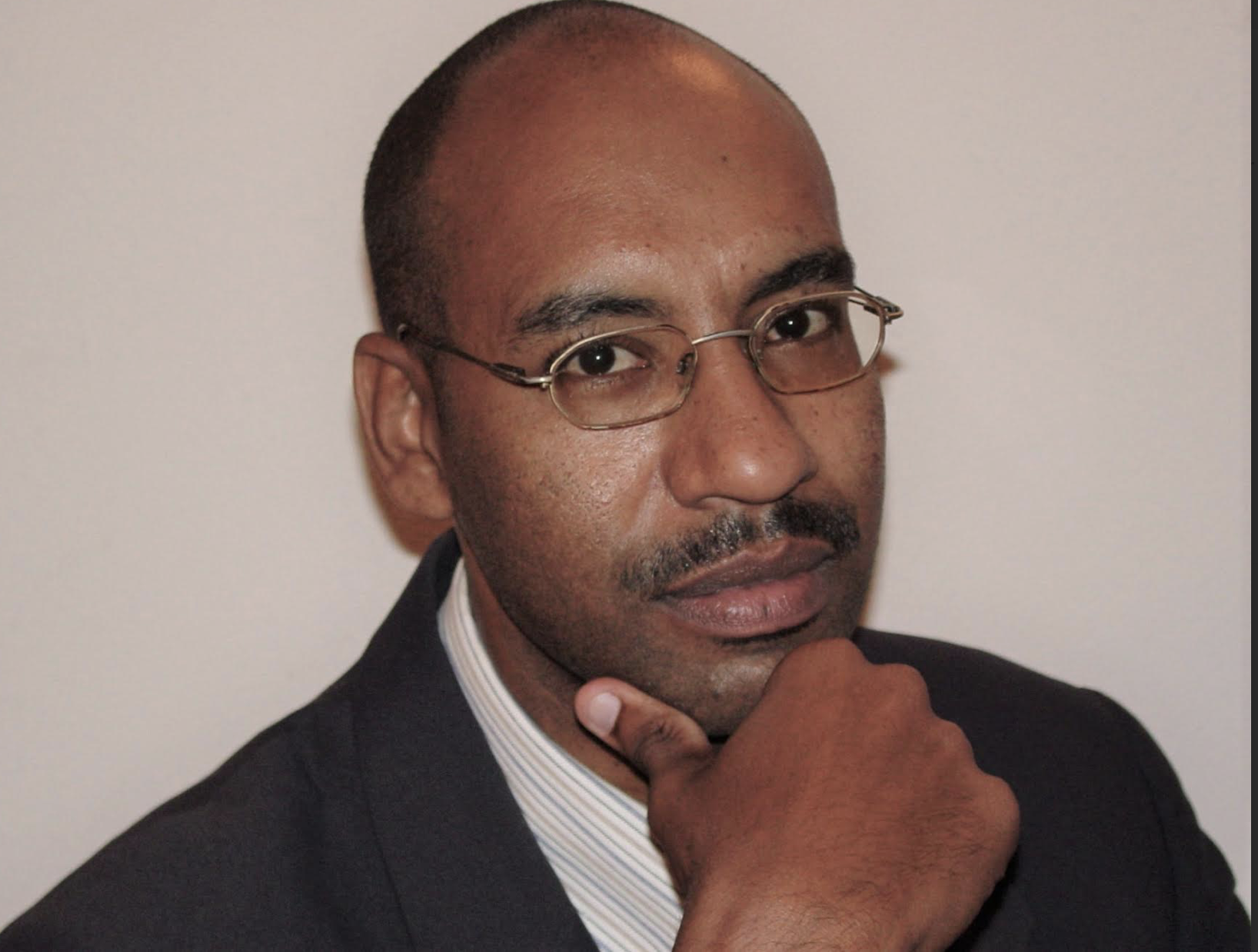
Submitted by Dr. George C. Brathwaite
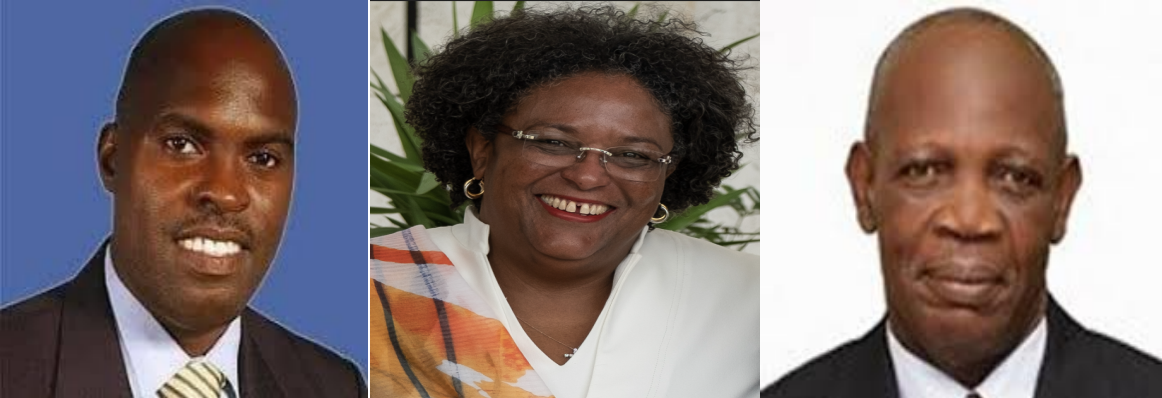
Chris Sinckler, Minister of Finance

“The challenge lies rather in the idea of planning, of purposeful, intelligent control over economic affairs. This, it seems, we must accept as a guide to our economic life to replace the decadent notions of a laissez-faire philosophy.” – Rexford Tugwell and Howard Hill, ‘Our Economic Society and Its Problems’ (New York: Harcourt, Brace and World, 1934), p. 527.

This 21st century Democratic Labour Party (DLP) administration has been the antithesis of its groundings in social democratic politics. Barbados has been tossed far away from the ideals and aspirations for which the pioneers of our development envisioned. Barbadian economic planners, under the direction of a DLP gone astray, have uncritically embraced the lull for the neo-liberalised version of laissez faire capitalism. This unflattering cuddle has derailed the socialist orientations which were instrumental in driving postcolonial Barbados and shaping the nation’s post-independent development.

In real and visible terms, Barbados has today gone off track. The macroeconomic planners and policymakers have shifted their developmental gaze away from people’s well-being and re-directed attention towards the attainment of multilateral approval. The technocrats of the IMF may be excellent singers of austerity but if the idea of effective economic planning continues to be ignored by the governing, it is very likely that the governed would voice their resistance to swelling hardship and social infelicities. History in Barbados, the Caribbean, and the developing world is replete with examples necessitating resistance and protest from the bottom.

Notwithstanding the financial and other macroeconomic variables that make economic planning difficult at best, the working class people of contemporary Barbados are drifting perilously towards ‘incivility’ while the economy, that up to a few years ago gave opportunity for an expanding middle-class, is being described in terms of ‘backwardness’. Furthermore, the Barbados economy is being characterised with ‘junk bond’ status by some of the very multilaterals to whom the country’s obedient policymakers genuflect while abandoning the strength of social consciousness.

Reluctant to admit it, Barbados’ political economy over the last five years, has been frustrated with countless but lame efforts at neoliberal economic recovery. The resultant failure to sufficiently spur economic growth by the current DLP administration has negated many of the social gains achieved in Barbados since 1966.

For instance, free education – as a vital investment in the logic of moving from underdevelopment to development – has suffered at the hands of economic slaughterers. Their main passions grew out of betrayal in order to appease accounting standards while thumping their chests and savouring their own successes of attaining political power. In fact, the then Prime Minister Errol Barrow on May Day 1987, exactly one month before his death had observed and warned us that:

“We are not going to achieve our common objectives of social justice if the workers are going to be there on the other side of the fence, having an antagonistic attitude towards the people who control the capital. We are only going to have harmonious relationships in this society if the people who now control the capital realise that the workers themselves are entitled to a share in the control of that capital, both in the managerial and ownership levels.”

Surely, the National Hero’s statement is a coronation of socialist principles within a context of the social democratic space that was opened at independence for Barbados. Equally, it is a foreboding that speaks to prioritising the worker over the dollar, although both are indisputably important. The quest for social and economic empowerment must remain in place so that Barbados can achieve its developmental objectives.

The fact is that in Barbados’ first 40 years of independence, despite whatever challenges emerged, our economic planners and leaders recognised the need for worker and business alliances. The public and private sectors grew together with the embellishment of a framework that was defined by prompt decision-making and a strong sense of certainty of purpose.

Paradoxically, the current Prime Minister and the Minister of Finance in Barbados stand out as localised points of instruction. The indecisive wavering that is closely situated in the customs of Stuart and Sinckler, also presents clear demonstrations of the dysfunctionality that has crept into the fabric of Barbadian society. What Stuart and Sinckler say and how they act have effectively become institutionalised setbacks. The pair has practically set the tone, not only for consumers and civil society in Barbados to baulk at positive reforms (e.g. BRA), but has incurred a lethargy in the investment climate. Investment classes – local and foreign – are reluctant to take calculated risks.

Barbados previously had a record of performing outstandingly well due to the factors of stability and certainty in our socio-economic space. Barbados has seen an about turn both in terms of governmental approach and in reciprocity. Prime Minister Stuart and his Cabinet colleagues have often demonstrated a naiveté with regards to inviting trust from the people. The chief Minister and economic planner have preferred to silence those who complain or object to the flawed macroeconomic management of the country.

Subsequently, working towards fixing the plethora of issues which surfaced under the DLP’s watch has proven to be extremely difficult and sluggishly prolonged. The overly cautious and procrastinating Stuart-led Cabinet has operated largely for the sake of political preservation while the opposition – viewed as an alternative government – wasted time and opportunities in seeming disarray if not outright internal disunity. Mounting evidence indicates that the indecision and wavering are constant factors in the DLP’s public policy and governance architecture.

The daunting clouds of uncertainty are prevalent under the DLP’s beleaguered administration. Uncertainty is perversely institutionalised so that local and international entrepreneurs and investors are watching and listening with apprehension to the nation’s decision-makers. It does not help us at home to hear the dangerous statements wherein culpability and responsibility for the nation’s affairs have become foreign to local Ministers of government (i.e. do not blame me). Nor, does it help those wanting to invest capital in the Barbados economy. The lingering questions arising on the ‘ease of doing business’ are still around, when in practice, little or nothing is done to change the situation.

Within this context of governance, ministerial escapism creates policy confusion and, mass uncertainty prevails in policy arenas. The Barbados government operates with unfathomable ambiguity on almost every set of public policies and regulatory pronouncements. While some economic planning does exists, the outcomes of taciturn practices have left the country adrift from obtaining optimal performances. The macroeconomic directions, for example, which repeatedly spoke of stabilising Barbados’ badly faltered economy since 2008, have largely failed due to the apparent disconnect between the real data and the whimsical analyses offered by tainted officials.

The unseemliness of many public policy decisions is often exposed in the ministerial contradictions. On public policy, government ministers ebb ‘to and fro’ among themselves (e.g. Ministers Sinckler and Inniss or Sinckler and Estwick). Professor Emeritus Ramesh Ramsaran in 2012 gave a protracted view of a fundamental concern facing Barbados and the region. Professor Ramsaran asserted that:

“Public policy exerts a crucial influence on the creation and distribution of wealth. But public policy is not confined to the discipline of economics or the management of resources. It straddles a broad area which covers issues of a political, social and economic nature. It speaks to the integrity and efficacy of governance institutions, the functioning of administrative structures and the balance between social costs and social benefits. It not only encompasses the factors that influence the real and financial sectors, but all the institutional elements that affect the functioning and well-being of society. It defines national social and economic objectives, and also provides strategies, direction and the framework of incentives for governance in response to changes in the internal and external environment. But consistency, coherence and effectiveness are often lacking in formulation and implementation.”

Since 2010, and after each Budget presentation, Barbados’ Minister of Finance has had to repeatedly remove the smoke-screens and hyperbole from his ‘levying’ pronouncements which either amount to good or bad public policy. Sadly, the demand for good public policy and the necessary implementation of such policies are of seemingly secondary importance to an irresponsible DLP Cabinet. PM Stuart’s Cabinets post-David Thompson, have largely failed to inspire national confidence although they have been quick to draw on self-congratulatory messages – written and posted by self.

Mounting frustration within Barbados’ political economy is typical of this grave uncertainty that has become exposed in other aspects of daily living in Barbados. Workers across Barbados are facing increased taxation, depressed wages, the rising incidence of serious crime, and plummeting living standards. People perceive of a political class that is less interested in service provision and more inclined to influencing the acceptance of parsimonious public relations wherein only the bare minimum of information ever reaches the public.

One wonders who in government hears the cries for water from the dislocated people living in several parishes across Barbados. The lack of urgency being exhibited by key state agents is indicative of the drought of ideas causing paralysis in the country. Indeed, Barbados’ economic activities are currently being fuelled by the need for survival and the necessity to push back against the last few years of stagnation and degradation.

Intuitively, the DLP government with all the goodwill in the world, will continue to struggle once there is jaundiced or inadequate planning at the apex of political and economic leadership. The wheels of the Barbados economy with its once socialist character will remain off track with the possibility of an impending crash which could be fatal. The Barbados fiscal and debt challenges are stubbornly acute, although in recent months, it is being suggested that some modicum of recovery is evident. One must still exercise prudence and forcefully say to Chris, it’s the lasting uncertainty that is dangerous for Barbados.

(Dr. George C. Brathwaite is a part-time lecturer in Political Science at the UWI-Cave Hill Campus, a researcher and political consultant, and up until recently, he was editor of Caribbean Times (Antigua). Email: brathwaitegc@gmail.com )


Discover more from Barbados Underground

Subscribe to get the latest posts sent to your email.

77 responses to “The George Brathwaite Column – Chris, It’s the Lasting uncertainty!”


  1. Dr. Brathwaite has distinguished himself as a leading purveyor of intellectual untruths

    How is it possible to do any analysis of anything, far less the DLP as an institution, without measuring the wider environments in which the subject exist.

    It would be misguided to assume ignorance.

    What is more troubling however is the gross dereliction of all professional standards in order to be the reliable mouthpiece for his mistress. As if some sick game of bondage and submission is to be played out before our very eyes.


  2. Steupsss
    Last week George quoted someone who said that only fools always quote other people (or some shiite like that), and this week he quotes someone from 1934 on economics….

    @ David
    If we can’t tek back the shiite PhD he got… at least yuh could ban his donkey or something nuh…! …he is just making it obvious that the BLP has nothing better to bring to the damn table….


  3. @ Pachamama

    First let me say that I am a divorcee with no mistress. Secondly, as a citizen of Barbados I have the right to call things as I see them. Thirdly, please pointt out any untruths in the article.
    Be that as it may, I encourage you with the critical mind to write on a regular basis articles that can be accepted or refuted so that we can see different perspectives.
    I really want to say more but plain commonsense dictates that I say no more except to wish you a great day.


  4. @ Bush Tea

    You know that I have been known to use similar sentiments in the past to dismiss truth. Nevertheless, I know that your ego shines through whenever you get the chance to take a dig. That means it is fun for me to see you fume in your misery although other possibilities exist.
    I wanted to correct you for a while on the matter of the PhD. Firstly, it was earned. Secondly, it was not pursued at the UWI nor in the Caribbean. Thirdly, I remain humble an open-minded. Keep well and have a great day if you can.


  5. For the sake of some clarity, I would have written and submitted this article before the completion of yesterday’s social partnership meeting. Is it not perplexing that the private sector is essentially saying the same things regarding the planning aspects of the economy and the uncertainty that has been a drag. We tend sometimes to overlook the substantive in preference to the inconsequential.


  6. @George

    Our system of democracy affords individuals/civil society to speak out about issues as they see fit once confined within the boundary of the law. Although some will say that real change can only be achieved when there is civil disobedience and sometimes this means mashing the crease as far as the law is concerned. The point here is: what is the non government partners in the partnership prepared to do to move long standing matters to actionable. We heard Charles Herbert talking a good talk like his predecessor.

    On Tue, Sep 20, 2016 at 1:36 PM, Barbados Underground wrote:

    >

  7. peterlawrencethompson Avatar
    peterlawrencethompson

    The problem with your thesis, George, is not so much that it is wrong but that you try to ascribe responsibility for Barbados’s plight far too narrowly.

    It is undoubtedly true that Bajan leaders “have uncritically embraced the lull for the neo-liberalised version of laissez faire capitalism,” but this did not just happen; it has been ongoing since the early 1980s when this particular intellectual disease infected the world at large. The entire offshore financial services sector is evidence of the severity of Barbados’s infection with the neo-liberal virus.

    Every administration for the past 30+ years bears a huge fraction of the blame for our current deplorable situation, and your attempt to focus blame on the hapless Stuart clownshow simply exacerbates our partisan fever while doing nothing to treat the disease.


  8. @ David
    I concur with your sentiments. Indeed, the very Herbert indicated that he would not like the consultation’s outcomes to be treated in the same traditional mode of non-implementation.
    I would think that all three parts of the whole must become more proactive, assertive in doing the business of the country. Simultaneously, it is the society that must have their different voices heard and see that their demands are on the table. More action, less talk from all.

  9. peterlawrencethompson Avatar
    peterlawrencethompson

    In other words George, you are tending here ” to overlook the substantive in preference to the inconsequential.”


  10. @peterlawrencethompson
    On the contrary and you know that as well. It is clear that the issues raised are real, and have had negative aspects on recovery and growth in Barbados. Why bury our heads in the sand in order to have partisan comfort or otherwise to bury the facts alongside the messanger?

  11. peterlawrencethompson Avatar
    peterlawrencethompson

    The real issue is neo-liberal economics itself, not which ringmaster is running the circus.


  12. @ peterlawrencethompson
    Clearly you have applied a tight time frame. Indeed, we have always had to navigate our affairs along lines that caused less harm and disruption. The crucial term is ‘uncritical’ and the fact that development was seen by the evidence to be pro-people. Now, there is ample indication that foremost in the minds of our planners are the statements of the IMF and the possibilities flowing from the rating agencies.
    As to be expected, civil society has to be able to understand all of the issues and look to how best we can navigate rather than just run full speed ahead without critical reflection on where we are going and how we will arrive at our goals.


  13. Dr. Brathwaite

    It is a conceptual lie to criticize the MOF and the DLP without attempting to locate such within their proper contexts.

    ”This 21st century Democratic Labour Party (DLP) administration has been the antithesis of its groundings in social democratic politics. Barbados has been tossed far away from the ideals and aspirations for which the pioneers of our development envisioned. Barbadian economic planners, under the direction of a DLP gone astray, have uncritically embraced the lull for the neo-liberalised version of laissez faire capitalism. This unflattering cuddle has derailed the socialist orientations which were instrumental in driving postcolonial Barbados and shaping the nation’s post-independent development.”

    Please re-examine your opening paragraph, as above.

    It portends a comparison, a contrast, if you will, of the DLP of two epochs. This is meaningless and misleading unless the underlying causation/s for current ‘bad’ performances, by their own hand, and by markedly different environments are also assessed.

    Another lie is the assumption that is was the DLP which lurched Barbados into the most extreme neo-liberal or laissez faire capitalism, as you put it. The truth is that is was your own OSA and the BLP, who entrenched this form, of the most perverse, neo-liberal, Washington consensus economic policies into Barbados.

    Far be it for us to appear to defend the MOF and the DLP. They are no less our enemies than the BLP, However, as an academician you must have a certain fidelity to truth. But politics outweigh truth every time, in your writings.

    Of course, both the MOF and the DLP are susceptible to a critique. Those arguments are such that they should be removed forthwith. However, your real problem is that that broadside will also serve to overturn the leaky intellectual boat of your mistress, MAM, and the BLP.

    For it is her, for whom you write. You do not have a mind of your own.


  14. @ Pachamama

    I was about to state that this is one of your finer contributions lifting discussion, notwithstanding that you deliberately chose to imply that a ‘lie’ is being told. However, your final statement tarnished what would otherwise have been useful comments to elaborate upon.
    If you read my response to another individual a few minutes ago, you would see that I did not take previous goverments out of the equation. Indeed, I stressed the point that development was people-oriented and that our economic planners better navigated the turbulent waters.
    Let us be real. The IMF’s insertion into the Barbados economy first came under JMGM Adams. 1994 and the WTO’s potency and change of rules emerged in 1994 to coincide with OSA’s first term. 1998 was also pivotal with the recession spurred by the Asian crisis. 9/11 and the new security focus also happened under OSA. So with those few things, and the rise of neoliberalism, management of Barbados’ economy went in uncharted waters but leadership and the capacity to navigate was always there. This is less evident post 2009/10.
    One. at this time, cannot so much as focus on those on the perimeter as we must focus on those at the seat of government. There is no ‘lie’ to be told. What we have to do is to be honest that against the historic development of Barbados, it is clear that this current administration has gone against the grain and that much uncertainty remains in the economy which cannot be uplifting or lend the confidence that is necessary for progressing Barbados.

  15. peterlawrencethompson Avatar
    peterlawrencethompson

    All this pointing of fingers is perfectly pointless (pun intended).

    There is plenty of blame to be spread liberally over both political parties. This, however, does nothing except feed the partisan fever. We need, instead, to diagnose and cure the underlying disease.

    George’s diagnosis, neo-liberal economic policies, is correct. Now how do we change these policies given that we are enmeshed in a global economic context that is still beholden to neo-liberal orthodoxy.


  16. Dr. Brathwaite

    No matter how we try it seems impossible for us to persuade you that you should get your head out of the the petty political food fights and engage your thinking with the systemic reasons why this DLP regime is the worst the country has had. They are not alone.

    The next one will be no better either as long as the assumptions on which you reason remain.

    We will invite you to throw away your conceptions of ‘leadership’. Again, the time has past for us to be relying on a few people to anoint as lord and master. Let us all lead.

    Again, you seek to locate the BLP at the ‘perimeter’. When in truth and in fact the BLP is part and parcel of this government. Moreover, if your latent honesty could emerge even you might accept that given the state of a collapsing capitalist infrastructure the BLP could hardly be depended upon to do much better than this feckless DLP.

    You yourself have admitted dishonesty. You did not, in this article, tell the truth.

    The truth is that under no set of circumstances could anybody else, including MAM and the BLP, could do any better.

    You don’t even want to accept the foundational problem, that capitalism is at its nadir. All you want to do is help MAM win government, that’s all.

    These are some of the reasons that a guillotine is essential.


  17. @ Pachamama

    Really sad when you cannot reason without attempting to label (incorrectly). I am a Bajan, I live in Barbados and expect to continue doing so regardless of which political party forms the government. So sad, I am almost sorry for you.


  18. Dr. Brathwaite

    What you are to be sorry for is delivering the country into this cul-de-sac from which it will never emerge, unless.


  19. LOL, you are right about Bushie…. stinking Bushie… ha ha ha

    OK Dr. George, now that we have got you talking ..and willing to defend your positions, perhaps we can begin at the beginning…
    You said, inter alia, that ” In real and visible terms, Barbados has today gone off track.”

    What is the ‘correct track’..?
    When were we on such a track ….to have ‘gone off’..?
    Please tell us where such a ‘correct track’ has been identified by those whom you represent by your posts.

    Thanks doc…. 🙂


  20. Bush Tea

    A good post…..I would also like to know what&when could be considered by the author as our start point and what was its essence?


  21. @ Bush Tea

    This is precisely why I read your comments with interest.

    By its own admission, and the pronouncements and the various ‘strategy’ plans, the evidence is glaring. Can you imagine that the economy in 2016 is smaller than it is than in 2008? In several sectors, we are playing catch up. In of itself, this is not the problem. The problem goes deeper when there is little or no communication between the governing to the governed. Hence, the trust of the people is trampled, the hopes are dashed, and confidence throughout all the sectors suffer. I have absolutely no idea what the BLP could have or would have done differently except to say whoever the leader was, I would expect that person to lead from the front. It is precisely why leadership becomes so important. I can go on and on, but it is needless. The point is we cannot expect things to substantially improve in Barbados unless the polity once agaion reaches a level of confidence in which we can get some ignition in moving forward the country. I say to the people and electorate, make the same demands that I am calling for on the BLP or any other party intending to context the elections. Hold all to a standard that can inspire rather than stagnate.


  22. Forgive the typos Bush Tea. Lol.


  23. I disagree that liberalism is the cause of Bim´s downfall. A liberal government would have cut down the public service ever since. The current model looks more like Venezuela to me (single-industry economy and huge public sector).


  24. Dr. Brathwaite

    Why have you to be eternally teetered to the idea of endless growth. Can’t you see the outer limits of these notions.

    Why not a radical redistribution.

    The platitudes about leading from the front are meaningless.

    In case you have not noticed this is what is happening currently………………

    We have a regime of negative interest rates, bail-ins, unsustainable debt, worthless fiat money systems. series of QE, unsustainable deficits etc

    And yet slave nations are asked to pay rates of interest on sovereign debt as though no regimes of negative interest rates existed.

    Monetary policies now appear to have been used beyond known limits, creating more problems. And with over 600 trillion in bonds, if and when that house of card collapses, nothing you have to say, none of your training, would be of any value.

    Dr. Brathwaite these are the kinds of practical political-economy issues which should attract your attention, and that of your party, if yuh serious.

    There will soon be nothing that the IMF or WB will be able to do for Barbados, no more international largesse. debt bondage.


  25. @George

    To challenge you on the point tat the economy is 5% smaller compared to 2008. Was the strategy embarked upon by the Arthur administration of services a sustainable one in a global context with double taxation treaties expiring with Canada for example? The rollout of EPAs etc.


  26. The straight answer David is yes. Were these ample or should remain static, NO! Starting at the end, the EPA provided much opportunity which we did not adequately tap into. Indeed, it becomes more problematic now with the BREXIT. Nonetheless, Santo Domingo for example pursued more vigorously and netted benefits. We can still negotiate in a timely matter on that. On the several bilateral accords for which Barbados entered as well as other CARICOM states, again these were not everlasting. However, one has to pursue deals which are timely if one must return to the negotiating table at a later date. Indeed, I prefer the bilaterals as opposed to the NAFTA that was previously bandied about with US hegemony at the forefront.
    On the matter of services, these have served the Barbados economy well and certainly in the contexct of what has happened globally over the last 20 to 30 years. What is wrong as pointed out by several inclusive of Winston Moore last weekend, was the need for further intra-sectoral diversification as well as maintaining adequate balances in other sectors of the economy particularly in agriculture and manufacturing. While we do not have a comparative advantage in our goods for export under the two, there are niche areas in which we could have gained some competitveness to meet our needs at home. I say this to the extent that over 50 % of our manufacturing exports were going into CARICOM and we did create spaces through Canada and the same EU.
    So I would be the last to rubbish OSA’s iniatives solely on the fact that we did not go further since then to secure more inroads.
    I do not deny the effects of the largely global recession, but Barbados ought to have been quicker in terms of responsiveness. Do you recall how BIPA kept warning us about the dwindling biusiness sector because we refused to safeguard ourt interests and move quickly? It is precisely those ‘soft’ effects that cause spiralling trouble and made hard circumsdtances more difficult to emerge from.
    All in all, there is hope. I do not say that lightly. We have come to recognise that timely decisions are equally as important to the international investor as it is for the local businessman. The trade agreements we much be more assertive in shaping the outcomes. I hope that I have answered you. There is much more that can be said, but I have no intention on throwing out the baby with the bath water.


  27. @ Pachamama

    For some reason I like it when you raise relevant questions and suggestions. Indeed, I agree with you that “radical redistribution” is a key. I am presuming that you understand that this means empowering individuals and the private sector so as to unlock the potential of entrepreneurship which, to an underestimated measure has served Barbados reasonably well since 1966.
    Now these types of discussions will never proceed if the political parties and in particular the ruling party is more concerned with political fallout. In fact, because I am a believer in putting more money in the pockets of the citizen so as to stimulate commerce locally, it means we have to quickly find means of reducing taxation all across the board and at the sdame time providing incentives for those willing to take the plunge. The debate cannot be kept under guard of political parties; civil society must become involved and lead from informed positions. essentially, a call for much more research and analyses on the development issues confronting the nation.
    Contrary to what some of you may think, I am not blinded by party affailiation and that is why I have kept it out there rather than run and hide under a pseudonym or other glossy label. I am that I am. However, my integrity and the fact that I am Bajan to the bone makes me consider things which I deem best for country.


  28. @George

    What about forex making policies? We spend, we import as well


  29. @ David

    Dominican Republic as part of Cariforum. Sorry for using the capital city.


  30. Yes, no doubt that the forex question is of vital importance. Essentially comes back to the point that we risked too much with the printing of money to pay salaries when it may have been preferable to give stimulus to areas in the economy that could spur economic activity/growth in terms of productivity increase. Again my reason for impressing upon certainty and confidence in the Barbados market for the purposes of attracting FDI. The current government has done fairly well in getting Sandals and others in the hotel sector to buy from local agriculture producers. Still more needs to be done. From a cultural perspective, it is not useful to go too far in dampening demand for imports through legislation. Education and local promotions ought to be preferred so as not to shatter the very confidence you are trying to build. There inevitably will be some leakage of forex, but emphasis ought to be significantly encouraging growth among your local sectors (goods and services), and getting more persons and the private sector into local production through incentives for export.
    I am not an economist, but I do have knowledge and particular interest in the relevant issues of national development. I hope the discussion/debate continues.


  31. @ George
    I agree with you that “radical redistribution” is a key. I am presuming that you understand that this means empowering individuals and the private sector so as to unlock the potential of entrepreneurship which, to an underestimated measure has served Barbados reasonably well since 1966.
    ++++++++++++++++++++++++++++++++++++++++++++++++++
    Boss, Bushie wanted to start ‘at the beginning’ for a very specific reason. Too many of us use meaningless cliches in attempts to answer serious questions.
    Case in point your references to ’empowering individuals’ and ‘unlocking the power of entrepreneurship…’ …and how these have ‘served Barbados well’…

    Man George, you does REALLY tempt Bushie to cuss you, yuh know!!! ..cause you know better (not because of the PhD, but because you went to a good school…)

    What do you mean by us ‘being on track’? .do you mean..
    ..Continuing growth …as Pacha ask?
    ..Good communications between Government and people …as you hinted? …or..
    .. further intra-sectoral diversification as well as maintaining adequate balances in other sectors of the economy particularly in agriculture and manufacturing….as per Dr Moore?

    The problem, George, is that you seem to essentially be saying that ‘being on track’ means having your side of the political divide in control of the keys to the treasury…. after which wunna will decide on which tracks to lay.

    How about a serious discussion of what National development means for Barbados?
    How about defining explicitly what ‘success’ means for Barbados in 2020?
    How about us exploring what ‘radical redistribution’ REALLY means..’?
    like…
    Why is there not a constitutional LAW on our books that restricts ownership of Bajan lands to Bajans or to Bajan-owned institutions …like so many other little islands do..?
    Why is there not ‘affirmative action’ legislation that encourages productive investments by co-operatives and to enfranchise the masses?
    Why is racial and national profiling not a consideration in the granting of Government contracts? …such that businesses that are best REPRESENTATIVE of the local population distribution are given preferential treatment? (Bushie knows that it is because Owen went and signed all kinda shiite agreements and treaties …. but still…)

    ‘Radical redistribution’ is not about playing with cliches Doc….. it is about DOING THE RIGHT THINGS.


  32. @George

    If you are firm in your commitment the need to put more money in people’s pockets you have to also have a grasp of the full dynamic read forex impact. The printing of money is a worry in so far as exercising fiscal discipline and managing the deficit. Not sure it has any relevance to a forex raising poli!that is sustainable.


  33. @ Bush Tea

    You raise several interesting topics. These I will suggest are some of the things meriting discussion.

    By the way, thanks for not cussing me.
    @ David – Point taken, but to me, there is a relationship. The key is to get growth moving upwards, and attract local and foreign investments especially those that are productive and export-oriented. The Minister of Fin has said as much except that his tardiness and low conviction may need some changing.


  34. Dr. Brathwaite

    Let’s start a radical redistribution with land reform.

    Then let us redistribute political power away from the elites, political parties. Make the country organized like cooperatives, removal of elected dictatorship, rights to recall elected officials and senior civil servants.


  35. Dr. Brathwaite

    Yuh see how you ‘fraid of Bushie cussing you. That is the kind of perpetual fear politicians must have for the people.


  36. Surprise – I am NOT a politician or candidate. I guess that is also confirming that I have withdrawn from any nominating process. Lol!


  37. @Pacha

    What you have asked from George (Alien Land holdings legislation) is not in consonant with his membership of the BLP…lol.


  38. @ David

    I am more inclined for the regulation with an effective land use policy as opposed to barring the sale of land which cannot get up and walk away. Nonetheless, it is a worthy discussion.


  39. @ George C Brathwaite

    Your words as usual with the slip noose for your verbal houdini like escapisms LEST IT SHOULD BE SEEN BY MIA AS AN OPINION FROM THE RESEARCHER

    To Bush Tea you said “bla blah blah.. You raise several interesting topics. These I will suggest are some of the things meriting discussion.”

    To David you said “bla bal bla…Nonetheless, it is a worthy discussion.”

    And then at 3.21 you said “I am not an economist, blah blah blah. I hope the discussion/debate continues…”

    You use what in the parlance of war is called “cannon fodder”

    A noticeable verbal filler which say alot, insofar as it fills a few lines and makes it seem like you have said something, but in actual fact you said nothing.

    What the ef do you consider each iterative point that people post here if not evidence that “the discussion continues??”

    Why do you have to place these fillers into your discussion?

    THis freudian slip for me suggest a man who is afraid that in his discourse he will say something that will offend “his potential mistress”

    You are not as yet as fully ensconced with Mia in her Committee as yet but, by these articles what you are doing is a much more subtle Walther PPK attack.

    You are not blazing like Henderson Bovell, that is not your style.

    Nor do you do the braggadocio of the PPK but, with that “the discussion continues stupidity” you are just biding time and letting the respondents voice their opinions lest it be said that on Barbados Underground on such and such a day, “George C said “x””

    Were it true that you do not have a mistress you George C would come here and, with your name firmly affixed to your post, say what you believe, unlike peeple like me who hide behind this moniker heheheheheheheheh and tek pot shots


  40. @ Piece Uh De Rock Yeah Right – INRI

    Read my lips. You are so right, now go to your mistress!


  41. “Every administration for the past 30+ years bears a huge fraction of the blame for our current deplorable situation, and your attempt to focus blame on the hapless Stuart clownshow simply exacerbates our partisan fever while doing nothing to treat the disease.”

    What a load of crap and that is why the situation would remain deplorable because it is distressing to see people of your obvious intellect use their scholarship in a disingenuous manner. Rather than analyse you choose to pour cold water on Dr Brathwaithe’s contribution by subtly inferring that Dr Brathwaithe’s contribution might be influenced by partisanship May I respectfully submit that one could very well deduce the same from your attempt to shift the blame of the managerial incompetence of the current administration to occurrences of thirty years ago. How can someone in his right mind attribute the countless faux-pas made in the implementation of current policy decisions with the failed projects like sea-foods, Caribbean airways, Carib west, Carsicott, the building of the crematorium at Warrens, Greenland, or the impact of free secondary and tertiary education to the economy. Our current deplorable situation rests squarely with those who told us that our situation before it became so deplorable was as a result of a recession and they were implementing policies including a medium term fiscal strategy to deal with the situation and now you want to give them a pass after saddling our backsides with taxes in all forms and fashions with still no light at the end of the tunnel. Shite man. Attack the message not the messenger.


  42. George ,
    One of our major problems is that we are not export oriented. Everything that is exportable in Jamaica is exported. Ackee (in cans) June Plums (Golden Apples) Aloe leaves, Ginger Beer (in Bottles) Breadfruit, Sweet Potatos, Dasheen, plums (miniJune plums) Mango, Avocado Pears, Jams, ,Jerk sauce, everything. We could produce these same products, yet we don’t market any of them, and/or fight to get them in the thousands of stores in Toronto, far less than in Ontario and the rest of Canada and the U.S. In the supermarket tester frozen tilapia was in the freezer, do we try to export our fish here? No!!. We could increase our Forex through exports. We may not be able to sell a billion dollars worth of products, but a thousand dollars earned is worth it.What about our sugar as a “superior” sugar, and our hot sauces, etc. We should try and keep trying.


  43. Piece Uh De Rock Yeah Right – INRI

    We particularly enjoyed that last post

    It reminded us of a skilled. interfering, political, character.

    LOL

  44. peterlawrencethompson Avatar
    peterlawrencethompson

    @AC said “Everything that is exportable in Jamaica is exported”

    And yet the Jamaican economy is in worse shape than the Bajan one. Higher unemployment, lower incomes, etc… I know; I live here. This is a clue that those remedies are woefully insufficient.

  45. peterlawrencethompson Avatar
    peterlawrencethompson

    @Balance
    I didn’t mean to attack George… ad hominem is not my style, so I apologize that it came across that way.

    I was trying to steer the conversation toward the search for solutions rather than blaming one party or the other. Bush Tea, David and Pachamama have accomplished this more adroitly.

  46. peterlawrencethompson Avatar
    peterlawrencethompson

    Pachamama September 20, 2016 at 2:03 PM # pointed out some very important things. Conventional economic analysis is completely broken… it cannot explain why the quantitative easing and money printing policies have not had the desired effect in the developed economies. “Monetary policies now appear to have been used beyond known limits, creating more problems.”

    Academic economists are beginning to catch up to him; a forthcoming paper by Paul Roper at NYU is an interesting read about these problems.
    https://paulromer.net/wp-content/uploads/2016/09/WP-Trouble.pdf

  47. peterlawrencethompson Avatar
    peterlawrencethompson

    Paul Romer^


  48. @ George
    …You raise several interesting topics. These I will suggest are some of the things meriting discussion.
    By the way, thanks for not cussing me.
    +++++++++++++++++++++++++++++++
    That’s it?
    …Interesting topics? …meriting discussion?

    Shiite man George, yuh mean that you DO NOT have thoughtful positions on these BASIC moots? Wuh those were just off the top of the head in the heat of blogging… you want some HARD ones….?

    Look Boss…
    If you plan to continue with this BU marketing drive of yours, you need to have at least some basic foundation of ideas that you feel able to defend.
    Don’t make it so damn OBVIOUS that you are simply seeking to ‘mek a name’ for yuhself so as to be accepted at the coming BLP trough.
    The Nation is the place for that self-promotion… nobody challenges any shiite there – for fear that Carl Moore is sniffing around trying to find out if they have an outside woman or child…

    Bushie actually thought that, like Carl Moore and Peter Wickham, you would have simply slithered away when challenged… but you seem to be of sterner stock…..

    Face it though George. YOU ARE NOT READY for the task of filling the political void that has been created in Barbados by the idiocy of the last two decades…. You just aren’t….
    Bushie recommends that you get a nom de plume (something like King George … or Braffit) and join the discussion as the non-expert that you clearly are….
    That way you do not have any shiite to prove, …no PhD to defend ….. and you and Bushie can cuss one another…like back in the old days…. and you can actually learn quite a lot…


  49. I’m thinking George constructs these commentaries from polling data.
    Be sure to mention the problems that move the voters — water shortages, high taxes, depressed wages — and endorse “free education” as a moral imperative. Imply that somehow the government could escape its fiscal and debt crisis simply by addressing the investment uncertainties its own policy incompetence have created.
    Really, George. Stop. Give us a coherent, evidence-based plan for economic recovery. No more BS.

The blogmaster invites you to join and add value to the discussion.

Trending

Discover more from Barbados Underground

Subscribe now to keep reading and get access to the full archive.

Continue reading