← Back

Your message to the BLOGMASTER was sent

Submitted by Atrue Freeman

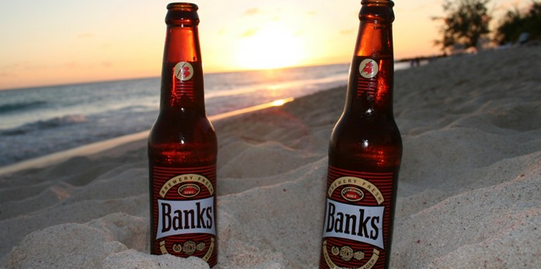
banks-beerHow is the bid by SLU Beverages Limited to takeover Banks Holdings Limited (BHL)  likely to playout?

History of similar events suggests that BHL’s directors will have a significant, possibly the most significant, influence on the outcome […]in relation to BHL’s small shareholders.

It may be worthwhile to explore how the directors of BHL are likely to perform vis a vis the performance of the directors of Light & Power Holdings Ltd. when Emera Inc. launched its bid to takeover LPH.

My recollection of the endgame in Emera’s takeover of LPH is that the LPH directors commissioned and received a valuation of approximately $25+ to $32+ per LPH share and recommended that shareholders accept the lower end of the valuation of $25+.  This notwithstanding that LPH’s main business was the provision of an essential service (electricity) and that LPH was a monopoly (only entity providing the essential service that it did).  It certainly appeared that there was a strong case for the directors to recommend to the shareholders that a price nearer to the upper end of the valuation be sought, even if it meant soliciting an alternative bid.

Would BHL be a good fit for Goddard Enterprises Ltd. and would GEL respond favourably to an invitation to bid, even a stock for stock bid, for BHL?

The below link describes the opposition to SLU Beverages Ltd.’s acquisition of its initial equity interest in Banks Holdings Limited at $4 per share in 2010, the same price being offered in 2015 in an attempt to takeover BHL.  But this issue has a wider reach. Sagicor Financial Corporation owns around 6+% in BHL.  While a minority shareholder, SFC has the ability to be heard on this matter and the responsibility to defend its investments on behalf of its many shareholders.

http://www.broadstreetjournalbarbados.com/business-briefs/2011-02-15/shareholders-protest-actions-of-bhl-board


Discover more from Barbados Underground

Subscribe to get the latest posts sent to your email.

130 responses to “SLU Beverages Limited Takeover of Banks Holdings Limited (BHL)”


  1. “And yes the two “dunciest” girls in our form were both Bajan whites”

    If i may digress; subjective I daresay Donna, some of the “dunciest” boys in school turned out to be some of the most productive persons in the society. Matter of fact, one of them reportedly owns one of the largest media houses in Barbados.


  2. March 2011: “I would like to think that time will prove that we took the right decision,” says Banks Holdings Ltd. chairman

    http://www.broadstreetjournalbarbados.com/the-bottom-line/2011-04-01/sir-allan-bhl-acted-within-its-legal-and-historical-conventions


  3. It has come to pass.

    Asked to respond to a comment from a shareholder at the AGM to the effect that under Sir Allan’s tenure as chairman, BHL had been “de-Barbadianised,” he said that Banks had had foreign shareholders long before SLU Beverages had come on the scene, with major shareholders in Trinidad, Guyana and further abroad. “I trying to educate people to understand that we now live in a global world. You can’t have borders and work only within them. We can’t ask government to let us invest in the Bahamas, Guyana, Belize or London, all of which we’ve done, and don’t want those people to come and invest our country. It’s a global stage that we’re on now. While we can invest outside, the outside people have to be able to invest in here, otherwise it just simply would not work. The whole system would fall down.
    http://www.broadstreetjournalbarbados.com/the-bottom-line/2011-04-01/sir-allan-bhl-acted-within-its-legal-and-historical-conventions


  4. Allan Fields at it again. I wonder what percentage his commission will be on this one.


  5. balance,

    No such thing from my “duncy’ girls, I’m afraid. All their wealth is inherited. Anyway the quotation marks around the word “dunciest” is indicative of the fact that the term is not really my choice. In its context though, an exchange between myself and Gabriel, it fits. We were referring to the strange presence of many of these “white Bajans” in our midst at the secondary schools whose pupils supposedly gained the most marks at the Common Entrance Exam and wondering why they couldn’t ever, EVER reproduce that form after arriving at the “top” schools.


  6. Albert Einstein

    Already a high school drop out, he failed his 1st college entrance exam, and had to go to a secondary school in Switzerland.


  7. Colonel
    .You can say the same for Bill,Steve,Mark the wiz kids of the net and apps and a host of others.On our local scene we had the of Barclays and the head of Bdos External Communications aka Cable and Wireless,both of whom left school at 16.


  8. I think that everyone should realise that this takeover was triggered by Neal & Massy (N&M)selling their shares (I understand about 20%) to SLU Beverages Ltd. N&M acquired their shareholding when they acquired BS&T. SLU Beverages already owned 20% as a result of their financing BHL the new brewery. With 40% shares owned, they can then bid for the whole company. So it was, in fact, a Trinidadian company that triggered the takeover, and it had nothing to do with Anthony King et al selling out Banks’ Barbadian heritage. So get off the soap boxes.


  9. Patrick Hoyos in the link Ping Pong posted clearly shows the possibility of BHL compromising ownership was a possibility.


  10. David, that was a slip of the tongue as Mr Ping Pong must have been otherwise monikerized on this BHL thread but that’s not too important in the least.

    What was important and I found surprising in the link was the apparent legal shenanigans discussed at the hastily called shareholders’ meeting. I do not know if that is what you mean by “the possibility of BHL compromising ownership”.

    The tactic as decribed by Hoyos was the type move instructive of business operators (world wide) and thus I was really expecting a more serious look at the issues even within the context of the original ‘soap box’ remarks of Bajan ownership.

    It was really unfortunate (and disappointing) therefore to become embroiled with you and Bushie about USA vrs Barbados perspectives, when obviously successful business tactics are governed by law and smarts and are not constrained by geographic boundaries.

    From the details in the article it was quite clear that the BHL Board threw down the gauntlet to financial/business heavy weights present like Dr. Frank Alleyne and Doug Skeete and said if you don’t like it ‘sue us’.

    I say that to note that we cannot argue these matters with simplistic black and white or nationalistic views. Of course those are important and we ALL should know our racial history but as is now pellucid with BNB being sold to Trinis, BS&T sold to Trinis and now BHL to St. Lucian this is about shrewd business tactics.

    We are way past time to get to the serious nitty-gritty on how to protect or buy back supposed local business assets/jewels.

    For a small country retention of physical assets (like land) should be a priority but if for the last 35 years Bajans have fundamentally refused to embrace share ownership far-less determine ways to get sizeable blocks of shares in these previously locally owned companies via coops, credit unions or specially created investment companies how on earth can we honestly continue these soapbox rants as we let our companies be sold out from under us.

    Don’t we have to show some serious intent first towards rectifying the problem!


  11. @Dee Word

    Correct and Bajans shareholders, especially the minority, have been exposed not to be savvy.


  12. @Dee Word

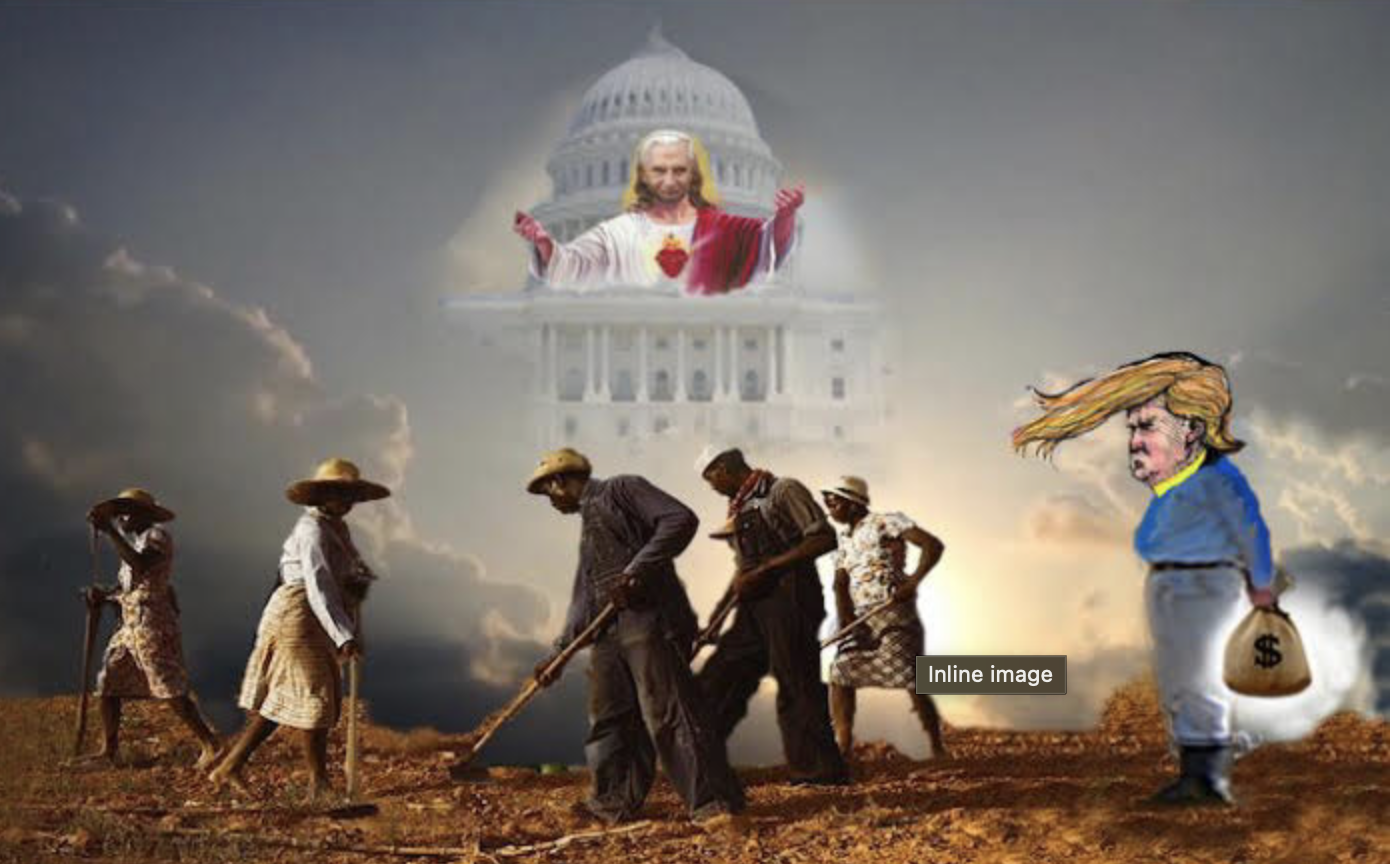
    On the matter of arguing issues based on nationalism, let us agree to disagree. The Pope said it better than BU ever can, we must maintain our individuality and identify. Why bother to exist then.


  13. I’ll say that this Massey mess is really starting to stink. I’ve always heard the term “corporate raiders” and believe that the last presidential hopeful made most of his millions this way. Buy a large company cheaply (BS&T or Plantations Trading), sell off the profitable divisions (Almond, real estate, beverage manufacturing, plantation lands) fire some staff, and leave with a profit. Just check the list – BNB, BS&T, Plantations Ltd, Arawak, Almond, McEnearney’s, Brydens, Stokes and Bynoe, Mannings, DaCosta’s, Sagicor, ICB, Caribbean Home, BL&P. I am sure that there are many more you can add.


  14. http://www.barbadosadvocate.com/newsitem.asp?more=business&NewsID=45906

    Business Monday: Banks Holdings Limited awaiting bid documents

    9/28/2015

    CORPORATE Communication Manager, Ms. Sophia Cambridge, said that the Board of Directors of Banks Holdings Limited (BHL) is presently awaiting receipt of the bid documents from the proposed purchasers of the local beverage group.

    She made the comments while responding to a query from Business Monday on exactly when the Board intends advising shareholders and staff of BHL as well as the consuming public on this latest development of the proposed purchase of the majority of shares in BHL by SLU Beverage Limited.

    According to Ms. Cambridge, while much of the bid documents will of course contain statutory details, crucially, it would give an indication of the proposed purchaser’s intentions of for the BHL group.

    “The BHL Board of Directors has established a committee to deal with its response and only upon the receipt of financial advice from an independent financial advisor can the board issue a response. According to the regulations, the BHL response should be given not later than seven days prior to the expiration of the bid,” Cambridge further noted.

    She also pointed out that the Board will refrain from giving a knee jerk response and will also refrain from responding in instalments.

    News broke last week that the SLU Beverages Limited intends on purchasing all issued and outstanding common shares in BHL at a gross cash price of Bds$4 a share.

    A press statement said that the offer was in keeping with the price paid by SLU Beverages Limited to Massy Holdings Limited last Tuesday. A block trade on the Barbados Stock Exchange effected the transaction.

    SLU Beverages Limited is a holding company established as an international business company in St. Lucia in June 2010. SLU is controlled by Cerveceria Nacional Dominicana S.A., a leading beer and malt producer in the Dominican Republic controlled by Ambev S.A. a Brazilian corporation.

    Some queries have also been made as to whether the Barbados Stock Exchange or the Financial Services Commission will suspend trading in the BHL stock on the local market.

    Efforts to contact officials of both institutions were not successful.

    Today’s BSE trading report quotes the BHL’s share price at $3.10 a share.


  15. Anyone who can grasp what De Ingrunt Word is saying ….please explain….


  16. From above “SLU Beverages Limited is a holding company established as an international business company in St. Lucia in June 2010. SLU is controlled by Cerveceria Nacional Dominicana S.A., a leading beer and malt producer in the Dominican Republic controlled by Ambev S.A. a Brazilian corporation.”

    From other source

    Ambev SA, known as Inbev Participacoes Societarias SA, is a Brazil-based company engaged in the brewers sector. Ambev produces, distributes and sell beer, carbonated soft drinks (CSDs) and other non-alcoholic and non-carbonated products across the Americas. The Company conducts its operations through three business units: Latin America North includes its operations in Brazil, where Ambev operates two divisions: beer sales (Beer Brazil) and carbonated soft drinks and non-alcoholic non-carbonated sales (CSD & NANC Brazil), and its Hispanic Latin America Operations, Excluding Latin America South (HILA-Ex), which includes its operations in the Dominican Republic, Venezuela, Ecuador, Guatemala (which also serves El Salvador and Nicaragua) and Peru; Latin America South includes its operations in Argentina, Bolivia, Paraguay, Uruguay and Chile, and Canada, among others.


  17. This could be good news, if Ambev SA, known as Inbev Participacoes Societarias SA leaves the manufacturing plant in Barbados and use their marketing might to increase the distribution to other untapped markets – like Sandals/Almond.


  18. Barbados has been hugely successful in mismanaging its best businesses and products and then selling to foreigners.


  19. Rum foreign owned, Barbados based insurance company Sagicor majority owned by others, local brew (of sorts) gone, BNB gone, etc, etc, etc,


  20. Hants

    Note “Seasonal/Limited Quantities* in LCBO ad.

    How many times have you gone to the Beer Store for Banks and were to “we are out of stock”


  21. “We first asked Sir Allan to comment on a perception that Banks Holdings had acted without the knowledge of its shareholders in bringing in a new investor. We also asked if he thought that, by giving S.L.U. Beverages the right to veto the entry of any new shareholders into the group it had acted to the detriment of other common shareholders.”

    “The suggestion that it was done behind the shareholders’ back is totally inappropriate,” said Sir Allan. The board had acted with its established and recent convention history, and within the law, he said.

    ++++++++++++++++++++++++++++++++++++++++++++++

    When I first read about the pending “takeover” of BHL by SLU Beverages Limited, I looked at this issue from an emotional point of view, since I was not privy to any additional information pertaining to the takeover bid and because Banks Beer is probably the last item we identify as being Barbadian.
    However, after reading the article from the “Broad Street Journal” that David introduced into the “discussion,” I have a better understanding and a different perspective on the issue, even though the emotion is still present.

    I am not aware that, under the Laws of Barbados/Companies Act, there are specific laws on the statute books to prevent a company’s Board of Directors from issuing or selling new shares to a private investor or mandating them to seek the approval of the shareholders before undertaking this arrangement.
    Also, the directors are not obligated by the law to engage in an initial public offering of those new shares to existing shareholders or to offer them to existing shareholders.

    This process is called “Issue of shares by Private Placement,” whereby a company may offer a number of shares to a selected entity, group of entities or an individual investor. Private Placement enables a company to raise significant additional funding for purposes such as investment, to finance a company objective or to replace or repair plant and equipment.

    Unfortunately, when a company issues a private placement, existing shareholders may experience a dilution of their shares, (i.e. the aggregate percentage share ownership will decline significantly), thereby causing shareholders to own a much smaller interest in the company.

    For example, Fields mentioned: “In April 1991 we had a 5.4% dilution when we took over BBC. We issued shares; we did not seek shareholders’ permission. In 1998 we had a 19 percent dilution when we bought Pine Hill Dairy because we equity-financed it without any shareholders’ approval.”

    However, if the company uses the capital received from private placement shares to increase revenue or profitability, shareholders may realize long-term gains as a result.

    Theoretically, BHL directors did not do anything wrong, but we must first ascertain why they went the route of private placement as opposed to the other conventional methods of raising capital.


  22. @DD there were problems with licensing etc. over the years but I have been told that the supply has become more stable.

    I now only drink alcohol once a year ( for medical reasons ) but have had my fair share of Banks in my younger days.


  23. As I mentioned previously, private placement usually have a high dilutive effect on current shareholders. If the number of shares issued pursuant to the Private Placement substantially increases the number of shares of common stock currently outstanding, shareholders will own a much smaller interest in the company.

    Bear in mind that the shares are now worth much less than they were before private placement. SLU, as the investor that was able secure a significant amount of shares through private placement issue, is in a perfect position to offer what they may deem as a fair price for the outstanding shares.


  24. David, thanks for the opportunity to hopefully close out this troubling divide or as you called it the need to “…maintain our individuality and identify”.

    I offer comparisons between Barbados and others to identify the pitfalls that we can avoid. I contrast business and societal issues from which we can learn and grow. None of that wipes away our national identity.

    I am not Catholic but I too am moved by the man who took the name of Francis of Assisi. His humility is astounding. So let me go also to his words to hopefully clarify (finally) why we need always to look outside even as we maintain that ‘individual identity’.

    He said in 2013: “At this time of crisis we cannot be concerned solely with ourselves, withdrawing into loneliness, discouragement and a sense of powerlessness in the face of problems. Please do not withdraw into yourselves! This is a danger: we shut ourselves up in the parish, with our friends…with the like-minded… but do you know what happens? When the Church becomes closed, … That is a danger. . . A Church closed in on herself is the same, a sick Church.”

    No long dissertation of how that relates to individuals and to every nation. Suffice it to say that poverty, global warming, wars and refugee assistance resonate loudly across all boundaries. Political corruption, corporate greed, national deficits and racial discrimination hits us in Barbados as it does in US or UK or Jamaica or Greece.

    If you and others can’t see that there is surely some political intelligence to be gleaned from the margins of the Republican’s play book on the termination of Speaker Boehner or indeed from the absolute stunning tactics by PM Tsipras in Greece then this is a futile discussion.

    It is extremely difficult for me to understand how any educated Bajan who has sat at the business roundtables in Barbados or anywhere else can look at the BHL issue and not appreciate ALL the dynamics related to markets, regional partnership and related corporate matters and ONLY focus on the issue of corporate governance vis a vis Black and Whites.

    I am a deeply nationalistic Bajan. I do not deny or walk away from the problem inherent and indeed endemic to us. I am also a practical and rationale Bajan. Let these problems be handled with reasonable endeavour and let us enjoin other reference materials; not dismiss other details with blase disdain.

    To your point David, Pope Francis said it better than I ever could: “A Church [person or country] closed in on herself is the same, a sick Church.”

    His words are profound here just as they were when he implored us according to you to always maintain our ‘individual identity’ .

    The different remarks go snugly hand in glove, not so!


  25. @Artax
    Theoretically, BHL directors did not do anything wrong
    +++++++++++++++++++++++++++++
    Presumably you mean to say that they did nothing ILLEGAL.
    The best crooks are those who can do their deeds under the cover of the Law…
    Slavery was the masterpiece of all time.


  26. @ Bush Tea

    Well stated, Bushie.


  27. @Artax, it was your very moving and pained commentary that originally drew me to this blog. I was surprised that you did not subsequently weigh on the big-league technical and financial matters so I am glad that you have now down so and brought your unquestioned gravitas to the discussion.

    I agree that “theoretically, BHL directors did not do anything wrong” as that was clear based on the fact that seasoned business gurus walked out of the meeting stymied.

    However, what is open to legal analysis is the fact that in issuing these shares they have apparently created a special class of shareholder (the Latin Capital group) as compared to their other fellow common shareholders.

    That is where the shenanigans and ‘wrong-doing’ is alleged.


  28. “Sagicor Financial Corporation owns around 6+% in BHL. While a minority shareholder, SFC has the ability to be heard on this matter and the responsibility to defend its investments on behalf of its many shareholders.”

    Interestingly, in 2010 Sagicor was confronted with a similar situation when its shareholders questioned the company’s decision to offer $11.7M common shares by way of private placement to National Insurance at a discount of 5% of the listed trading price at the time of the transaction.

    In a statement issued by Sagicor on the matter, Group president and CEO, Dodridge Miller, admitted that: “The natural effect of such a transaction would be some reduction in the percentage ownership of existing shareholders. In this instance, the private placement had the effect of diluting existing shareholders shares by 4% of their previous holdings.”


  29. de Ingrunt Word September 28, 2015 at 5:49 PM #

    “However, what is open to legal analysis is the fact that in issuing these shares they have apparently created a special class of shareholder (the Latin Capital group) as compared to their other fellow common shareholders. That is where the shenanigans and ‘wrong-doing’ is alleged.”

    BHL may have decided to issue shares by private placement for several reasons.

    The private placement may have been deemed appropriate at a time when BHL lacked a strong financial status, did not have the reputation to appeal to the public to invest, or the company was unable to afford the expenses of going public for its offerings. The directors may have seen SLU at the time as being strategically important and worth the offering of the low share price. There could also be some evidence of a “kickback scheme”, insider trading or some other form of impropriety on the part of the company and its directors.

    The Canadian Foundation for Advancement of Investor Rights (FAIR) is an independent national charitable organization that serves as the voice for “investors in securities regulation and a catalyst for enhancing the rights of Canadian shareholders and individual investors.”

    In an article on their web-site entitled: “Dilutive Private Placements To Insiders,” FAIR outlined a scenario involving a company called TSX and insider trading.

    “In the TSX Company Manual there is, in general, a 15% limit on discounts to market price on private placements to insiders. However, in recent years the TSX has failed to apply the spirit of the rule to more than a dozen deals involving oil and gas exploreco spin-off listings where discounts of 70% were common and dilution of public shareholders was sometimes in excess of 100%. The deals were structured so that the private placement to insiders took place immediately before the start of trading. These deals resulted in the transfer of wealth from public shareholders to insiders.”


  30. Artax, in reality such dilutions are of impact only to very large institutional shareholders and proportionally mainly. Much less impact on a mum/dad retiree or regular investor with a few hundred or few thousand shares.

    There is no absolute reason that the share price itself should fall precipitously or even fall slightly because of a special issue like this.

    As you saw from the reports the BHL share price has fallen steadily over the last 8+ years. The current price is well below their 10 year high so this transaction is of no blame on that score.

    Although for different reasons the share issue this brings to mind Buffet’s purchases of Goldman Sachs during the big crisis. He bought a sizable chunk of specially issued shares basically to loan money to the investment bank. In that instance shareholders might have otherwise taken a big hit where it not for that infusion.

    I suspect the BHL Board is playing a similar word game with this offer. But very different circumstances however. Very different.


  31. We are gradually losing control of the commanding heights of the economy and indeed of the real estate of Barbados.EWB warned it would happen if we are not observant.


  32. Good discussion, the legal versus a philosophy defined by Barbadians.


  33. “We are gradually losing control of the commanding heights of the economy and indeed of the real estate of Barbados.EWB warned it would happen if we are not observant.”
    Mere politically fashionable rhetoric by EWB; after all he started it by cutting up for good or ill some of the most productive agricultural lands into housing developments like Ruby, Sandford, Norwood etc and introducing HARP which made projectiles for apartheid South Africa to Barbados.

  34. pieceuhderockyeahright Avatar
    pieceuhderockyeahright

    @ Balance

    “…Mere politically fashionable rhetoric by EWB…” I don’t think that that is fair to EWB and I will explain why.

    Not every visionary is capable of actuating that vision and it is for this reason that w have the Queen Bee and the Worker bees.

    Housing was/is/and always is going to be an issue for those of us who believe in the vision of owning “a piece uh de Rock, yeah right?”

    Barrow, with all of his “vision” and the initiation of “change” that he brought to the colony post independence, would have lain the foundation for other iterations on his vision.

    Free Education and School Meals and subsidized Housing had its place in history when Barbados was in its infancy and Sugar was King.

    The exigencies of the Global village augmented by WTO obligations put all of that EWB “man of vision” dream-state into the sniperscope of real real life and, some will say that. it has made that vision that EWB had come up a-wanting, seriously so.

    The model of any nation is to export more than you import or you end up a borrower, indebted to other people.

    Name me a leader during whose tenure there has been a concerted effort to expand the Forex Generating Sectors so aggressively that we have been able to put a dent in our Debt ratios??

    Just one, any one!!

    So in the blue corner we have this band of “wild coot cowboys who are trying to rob the stagecoach of US$700M led by a small time highwayman (and underperforming lawyer) a “leader”who only wants to secure his pension” and on the other hand “a despot” in waiting with a similar band of crooks intoxicated by the scent of pvssy waiting to be sampled and bitten.

    What is the differentiator that we Bajans can apply to decide that “these are the visionaries for 2018 and beyond?” We simply have none.

    When you are making money very few companies will sell out a profitable undertaking.

    When you have no vision, and are incapable of generating income, and make no bones about it, as incompetent as these directors are, they know when they have exceeded their respective capacities, and with that they wisely? jettison the burden to the SLUs of the world.

    Find a resource that they know nothing about and that they cannot monopolize and they cannot sell and you would have found the way out of this mess


  35. de Ingrunt Word September 28, 2015 at 6:14 PM #

    “There is no absolute reason that the share price itself should fall precipitously or even fall slightly because of a special issue like this. As you saw from the reports the BHL share price has fallen steadily over the last 8+ years. The current price is well below their 10 year high so this transaction is of no blame on that score.”

    Your above comments and assessment are incorrect, D Word. Perhaps you are “Ingrunt” to these types of transactions. Also, mentioning that share dilution would have “much less impact on a mum/dad retiree or regular investor with a few hundred or few thousand shares,” is irrelevant.
    An investment is an investment, no matter how small it may be. And you have to factor into that people invest what they can afford. A minimum wage worker’s investment of $500 has a “similar value” in theory to an investment of $50,000 by businessman Rawle Brancker.

    The dilution of share value is not based on a theory, it occurs as a result of private placement. The shares are sold at a DISCOUNTED RATE of the listed SEC trading price at the time of the transaction. Then you have to take the rules governing the facilitation process into consideration.

    I did not want to fully elaborate on this issue lest I am accused of “not being able to explain it because I don’t understand it”, or that I am “talking over the heads of BU contributors.”

    For further information on the rules that are applicable to facilitating placement shares, you could read the FSC’s Consultation Paper on the following web-site:

    http://www.fsc.gov.bb/attachments/article/128/Consultation%20Paper%20-20Private%20Placement%20Regime.pdf


  36. Artax, incorrect how? Let’s move away from the arcane rules and complex technicalities deal with proximate reality.

    So the company had 10 shares issued at $50 ea. Five of which are owned by Artax Inc, one by me and the four others distributed to other BU denizens. In comes the private placement from Latin Capital with a sale/purchase of 10 more shares.

    In one fell swoop they now own 50% of the company and you and us all only 25% each.

    Now the private placement with its discount price has key restrictions; like a time period before any of those shares can be sold and so on. As you said not too much unnecessary details but reality.

    Now unless there are other mitigating market or company factors why should the stock price be diluted or reduced on the open market?

    If decide to sell I can offer at the market price. Because Latin bought at a 5% discount of $47.50 does not affect my sale nor does it necessarily roil the market.

    Now in your case as a institutional investor who have moved from 50% ownership to a 25% stake and that is a problem.

    You have less influence at Board level and now need a greater investment to attempt a take over. In fact the new majority owner can stifle you completely in that regard going forward.

    Yes simple analysis but my original point was also very simple.

    The impact on the small shareholder need not be significant from a stock price position. And if they are relatively small stakeholders like my 1% which became a .05% the proportional dilution is also irrelevant in the scheme of life. I still retain my original value in the company.

    Really not clear where that veers from practical scenarios.

    Again I repeat I am not dealing here with the technical finance and specifics. You are absolutely right there.


  37. @David,

    I feel vindicated, again. Another one bites the dust.


  38. Artax a hard seed BLP yard fowl throws his support behind Anthony King, Allan Fields and Cozier in the disgusting betrayal of Banks beer. Its individuals like Asstax that stand in the way of progress. If you don’t stand for something you will fall for anything. The scandalous corporate shenanigans of King’s vultures should not go unpunished. If the sale goes through a call must be made nationwide for the boycott of Banks products. Ian Desouza the Trini banker who presents an upbeat picture on Barbados with his pronouncements of optimism puts local business elites to shame and he is a foreigner. Were he at Banks the brew would remain part and parcel of the island’s national treasures.


  39. @ De Word

    Share dilution occurs when a company, in an attempt to raise revenue, issues new shares to new investors. When there is an increase in the amount of outstanding shares, existing investors will subsequently have a smaller (diluted) percentage of shares, thereby reducing their proportional ownership in that company.

    Supposed company has 10 shareholders, with each holding 1 share trading or 10% of the company. Assuming that each investor has voting rights, then every shareholder would have 10% control. If that company decides to issue 10 new shares and De Word purchases them, then you would now own 50% of the company.

    Bear in mind that these additional 10 new shares creates a situation whereby the company now has 20 outstanding shares, of which you own 50% of the company and the existing shareholders would now own 5% (i.e. 1 share of the 20 outstanding shares).

    Let’s put a money value to this scenario. Assume the original 10 shares in a company where listed as trading at $10 each. The additional issue of 10 shares would cause the other shareholders’ share value to be diluted (i.e. the stock would decrease to $5 per share).

    It is important to note that diluted earnings per share are calculated and recorded in a company’s financial statements. Potential investors use a company’s financial statements as a guide in determining if they will invest or not. The SEC also peruses these statements as well and would use the diluted share value reported therein for the stock exchange.

    If you apply the above scenario to my above comments, then it would be quite difficult for you to sell your share for “what you feel like” when it is listed in the financials at $5.


  40. Ticked off September 28, 2015 at 10:48 PM #

    The literacy rate in Barbados is said to be high, but surely a survey should be done to evaluate or determine the level of an individual’s comprehension skills and compare the results with literacy.

    WOW, by EXPLAINING an accounting process involved in the issue of shares relative to the pending takeover of BHL makes me “a hard seed BLP yard fowl (that) throws his support behind Anthony King, Allan Fields and Cozier in the disgusting betrayal of Banks beer, (and an) ass standing in the way of progress.”

    Do you care to point out to BU WHAT HAVE I MENTIONED IN ANY OF MY CONTRIBUTIONS THAT CAN BE INTERPRETED AS BEING SUPPORTIVE OF KING, FIELDS AND COZIER?

  41. millertheanunnaki Avatar

    @ Ticked off September 28, 2015 at 10:48 PM
    “Ian Desouza the Trini banker who presents an upbeat picture on Barbados with his pronouncements of optimism puts local business elites to shame and he is a foreigner. Were he at Banks the brew would remain part and parcel of the island’s national treasures.”

    What a paradox, indeed!
    And, He Ian “God Almighty” DeSouza, is pontificating from the high altar at the Republic Bank- the national bank of Barbados, Exactly!

    If Bajans can sell their shares in BL&P, aka Emera, don’t you think they will sell their dead mothers in a blink of an eye far less any holdings in Banks the beer of Guyana?

    What national treasures you are talking about? You mean those fields and hills beyond recall that are now littered with plastic junk and rusting steel donkey carts made in Japan and Korea?


  42. Ticked off aka waiting etc.


  43. @ Ticked Off

    You typify the average individual who uses emotional rhetoric as a means to incite change rather than understanding the issues confronting you.

    You must come to the realization that you, the government, shareholders, Barbadians, me, the man pun the “Cream of Wheat” box or the emotional rhetorical shiite you gine spew on BU, will not stop the takeover. There are NO LAWS that will be able to stop it. Don’t blame me for that, it’s not my fault.

    Okay, we follow your call for Barbadians to boycott Banks Beer, then what? SLU is owned by an international beer company who will shut down the plant, lay-off workers and brew the beer in another country. As the new owners, they can use the product’s reputation as a marketing strategy.

    People like you definitely “tick me off.” You come with all of the emotional shiite and are hypocritical behind it.

    You claim you love Banks Beer so much, yet I have not seen ONE written protest from you relative to CBC, which is a government entity, using taxes to host “Q in the Community,” where the sponsor and beer of choice is the Trinidadian brew, STAG Beer. Not one word from you reminding this administration that they are “standing in the way of progress.”

    Have you labeled and accused David Seale as “its individuals like AssDavid that stand in the way of progress,” for importing Hairoun beer from St. Vincent and selling them at $24 PER CASE, which is significantly lower than the price of a case of Banks or Deputy?

    I have not seen ONE written protest from you admonishing those Barbadians who, rather than drink Banks Beer, prefer to drink Stag, Heineken, Hairoun and Piton beers;

    People like you refused to withdraw your from or boycott Republic Bank in protest of the sale of BNB;

    You have not withdrawn your support from shopping at Massey Stores in protest of the sale of B.S & T, and more so after Massey removed the indigenous names of DaCosta/Mannings, Knight’s Pharmacy and United Insurance forever from our landscape;

    Your supermarket baskets are filled with Trinidadian products;

    Have you stood in solidarity with Mark Dates who, while shopping at ACE H&B Hardware, was assaulted by a white manager Brian Hinds, by boycotting businesses owned by Ralph “Bizzy” Williams?

    “If YOU don’t stand for something you will fall for anything.”

    Wunnuh so does just come to run wunnuh mout and talk nuff, nuff shiite. Shiite bucket…..


  44. Well if “Ticked off” is actually “Waiting,” perhaps he could encourage Stuart to stop the deal before the ink on the signatures dries.


  45. @ Artax, it seems we are talking at cross purposes. Maybe you did not read my example which clearly delineated the basic same information you provided.

    For clarity sake I am fully cognizant of the finance terms.

    I am not talking about EPS. That obviously must change if additional shares are issued. And in the BHL situation that also fell deeply due to a precipitous reduction in the BHL income. Their earnings fell heavily from $22.8M in 2007 to $9.3M in 2011 and under $6M in later years.

    This is straightforward finance so there is no dispute about proportional dilution nor that shares ‘MAY/COULD/DO’ fall after a new issue due to lost of investor confidence as a result of the additional shares issued.

    However, practical SEC financial data also tells us that a new share issue in a stable or strong market may cause absolutely NO REDUCTION of the listed share price. That happens on stock exchanges regularly

    Thus your comments that ” …The additional issue of 10 shares would cause the other shareholders’ share value to be diluted (i.e. the stock would decrease to $5 per share).” are not perfectly accurate.

    That decrease will depend on the investor confidence in the company.

    Google offered an IPO of 19.6M shares @ $85. In 2005 there was a secondary issue of 14+M shares. A 50%+ dilution.

    On the day of the issuance the market closing price was $295 or a 2.6% downturn of their previous day $303 price.

    But to reinforce the power of how investor confidence and company specifics will ALWAYS affect price there was actually a 6% price increase when the news of the new stock issue was FIRST reported. And of course the closing share price was at a high premium for the original investors despite the proportional dilution. They suffered NO share price reduction.

    So your general technical analysis is well crafted but it’s absolutely bad form to make such a definitive statement that a stock price would decrease.

    Anyhow enough of this Finance 4000 analysis for those others who were interested. Suffice that BHL went through some serious earning reductions and the share private placement was technically good but yet could face a class action legal suit because of the implicit special classification given to the Latin Group.

    Thanks for the discussion.


  46. Battle Royale Patiotism vs Big Business,/


  47. The current value of BHL has everything to do with the present and future and nothing to do with the past.


  48. @Atrue Freeman

    Do you believe this deal was orchestrated?

The blogmaster invites you to join and add value to the discussion.

Trending

Discover more from Barbados Underground

Subscribe now to keep reading and get access to the full archive.

Continue reading