
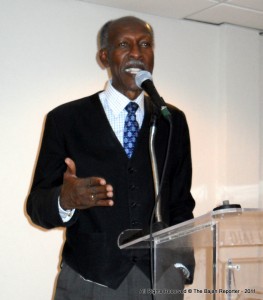


In explaining reinstatement, the employee returns to the workplace after careful consideration by the Tribunal and it would be as if the dismissal had not taken place” …In respect of reengagement,” she continued, “the employee returns and if there is suitable employment for the employee, they return to employment that is comparable [to their previous job
The Employment Rights Act – A New Era For Barbados 17 May 2013
Almost seven months ago Prime Minister Fruendel Stuart intervened in the dispute between the Barbados Workers Union (BWU), National Union of Public Workers (NUPW) and the National Conservation Commission (NCC) how 200 workers were selected to be retrenched. Stuart admitted publicly that mistakes were made in the process and the matter had to be resolved by the Employee Rights Tribunal (ERT). It was reported in the media that both the NUPW and the BWU welcomed the Prime Minister’s intervention and dutifully briefed their respective membership to expect a speedy resolution.
Subsequent events have shown that the ERT has not been able to function – a new ERT Board has to be appointed after nearly 18 months – and consequently the NCC matter has been in abeyance along with 70+ other cases. Of interest at the time, and highlighted by head of Unity Workers Union Caswell Franklyn, was the suggestion the NCC matter would have been catapulted to the top of the case load for hearing by the ERT. Because the first attempt to operationalize the ERT failed, the attempt to influence the scheduling of cases by the political directorate is relegated to moot status.
If the ERT, through no fault of the dismissed NCC workers has been unable to convene, BU sides with the view the NCC workers should be reinstated until such time the ERT is able to rule. The government cannot be expected to be taken seriously that it wants to build a society and not demonstrate the mantra by its actions. The leader of the Opposition Mia Mottley highlighted in a press release in May 2014:
But there are also existing deficiencies in resorting to procedures under the Employment Rights Act. Just to mention two:
1. Although the Act was passed in 2012, the Minister of Labour has not made Regulations as required by section 49.
2. The Employment Rights Tribunal was established in July 2013 but no prescribed forms have been published to assist employees in filing complaints in a standardized way. An aggrieved employee can begin a complaint by any method. This is unsatisfactory.
The Tribunal is simply not ready.”
To fast forward: the NUPW has agreed to stage a protest march when parliament reconvenes after the Christmas break to register its concern at the the length of time it has taken the ERT to rule on the matter. In contrast, the BWU announced it will stage no similar action, and instead, wait until the a new ERT convenes. BU finds the different positions taken by the two unions very interesting. Based on a press report which quotes General Secretary Toni Moore, the former NCC workers “have determined for themselves and not with any coaching by us that they would want to pursue the matter following a course of principle – one that seeks to demand for themselves justice because they are satisfied that had process been properly observed to date, those among us in this audience would still have been working”.
History will record that the ERT and by extension the government has not represented the interest of the NCC workers. The inability of the BWU, NUPW and CTUSAB to effectively champion the rights of the workers has betrayed the extent to which trade unions have been emasculated by the political class in Barbados.
BU remains hopeful that Hal Gollop QC rumoured to be the Chairman of the new ERT will dispatch the backlog of cases pending. We will have to wait to see the priority the NCC matter is given by the new ERT.





The blogmaster invites you to join the discussion.