Banner promoting anonymous crime reporting with a phone and contact number 1 800 TIPS (8477), featuring the Crime Stoppers logo and a QR code for submitting tips.

← Back

Your message to the BLOGMASTER was sent

Walter Blackman
Walter Blackman

The civil service of Barbados accounts for more than 25% of the country’s GDP. One dollar paid as salary to a civil servant is assumed to be one dollar worth of national output. Indifference, poor work habits, and political interference through the years have conspired to make this assumption spurious.

This article attempts to help readers understand the nature and depth of the civil service problem in Barbados by revisiting some historical signposts.

1954: The system of ministerial government was introduced in Barbados. The BLP held 16 out of 24 seats at the time so Grantley Adams became the first premier of the island and local control of the civil service began in earnest.

1974: Apparently angry and frustrated over attitudes aimed at blocking the implementation of his governmental policies, Errol Barrow as Prime Minister (PM) of Barbados, denounced the civil service as an ‘army of occupation’. He also amended the constitution to base the appointment of all judges on the recommendation of the PM after consultation with the Leader of the Opposition.

1976: Tom Adams became PM and political interference within the civil service reached unprecedented levels.

1977: As a result of excessive elections spending the year before, mixed with rising imports, declining exports and sub-par performance in the tourism industry, the Barbadian economy sputtered and forced Tom Adams to utilize the Compensatory Financing Facility provided by the IMF.

1982: Excessive election spending the year before, high salary increases to civil servants, coupled with financial recklessness and fiscal indiscipline forced Tom Adams to enter Barbados into its first standby arrangement with the IMF. Continued financial indiscipline after the end of the IMF agreement forced the economic recovery process to take longer than expected.

The Barbadian electorate chose a new administration when the first opportunity presented itself a few years later.

1986: Errol Barrow returned for his last year as PM. He attempted to counter the high level of political interference in the Civil Service under Tom Adams by establishing a Ministry of the Civil Service with Senator Harcourt V. Lewis being the minister responsible for its operations. Henry Forde, the leader of a 3-man opposition team at the time, pleaded desperately with BLP members of the civil service to play whatever role they could to advance the interests of the party. Presumably, obstructing and frustrating the implementation of government policies and programs was to become the strategy of choice.

1987: Erskine Sandiford became PM of Barbados after the sudden death of Errol Barrow.

PM Sandiford had the benefit of Tom Adams’ experience with the IMF from 1976-1986 to impress upon his mind that the Barbadian economy was open, vulnerable, small and weak and therefore required careful and skillful handling. From a political perspective, Sandiford also had to be aware that no DLP leader had ever wrecked the economy to the point where they had to seek assistance from the IMF.

1992: Irresponsible and reckless election spending in 1991 combined with generally poor economic and financial management on the part of the Sandiford administration, caused the Barbadian economy to crash land on the doorsteps of the IMF.

It should be noted that before the 1991 economic crisis, senior civil servants had claimed that their salaries were way below the market level and so a salary regrading exercise was implemented. This effectively raised their salaries and minimized the impact of the 8% salary cut which was imposed soon after.

Whereas senior civil servants were able to ‘feather their own nests’ by completing the salary regrading exercise, they were unable to quickly implement and execute structural measures agreed to under the IMF program. As a result of their slowness and lethargy, the Sandiford administration was unable to draw down the full amount of resources made available to it under the IMF standby arrangement.

Middle and lower level civil servants, private businesses and their employees took the brunt of the assault from the economic fallout. Approximately, 3000 unfortunate souls lost their jobs.

Politicians and senior civil servants, the architects of the economic collapse, remained immunized and protected from its negative after shocks.

Similar to the situation of 1982-84, the Barbadian electorate chose a new administration when the first opportunity presented itself a few years later.

1994 general election: Issues related to the civil service reached the level of national politics.

Owen Arthur of the BLP promised to amend the constitution so as to protect the salaries and allowances of civil servants from being reduced.

Dr. Richie Haynes of the NDP promised:

1. Greater wage security for public workers

2. A reversal of the 1974 amendments which had a harmful effect on the public service

3. Restoration of full responsibility for appointments, promotions, transfers & discipline within the civil service to the Public Services Commission.

4. Appointment of a Contractor-General who would be granted statutory responsibilities related to the award of Government contracts.

1995: As an economist, Arthur would have observed the vital role that the 8% civil servants’ salary cut had played in getting the Barbadian economy out of its deepest state of disequilibrium to date. So politically, he quickly removed that option from the toolkit of future prime ministers by amending the constitution in 1995 to prevent any future across-the-board cut in civil servants’ salaries.

Additionally, Arthur assured the country that he would be taking immediate steps to improve civil governance and strengthen democratic institutions. To achieve this objective, the Barbados Constitution Review Commission, chaired by Henry Forde QC was set up in 1996.

Finally, Arthur mandated the Ministry of the Civil Service to produce a ‘white paper on public sector reform’ and to warn civil servants, on behalf of the ghost of Errol Barrow, that they will have to change their behavior and adopt positive approaches in order to achieve results in keeping with the policy intentions of the government.

As far as Arthur saw it, his propaganda of Barbados being admitted to the clique of developed nations would never be taken seriously whilst the country was being burdened by the dead weight of an inefficient civil service.

A lot of money was spent, speeches and promises were made, external consultants were utilized, views from the public were solicited, and documents were produced. But predictably, the senior civil servants failed to convert

Owen’s vision of a progressive and efficient civil service into anything tangible and meaningful, and by the time David Thompson became PM in 2008, not even the slightest ripple of positive change in civil service attitudes and productivity could be discerned. The Public sector reform exercise had simply turned out to be a colossal waste of time.

Owen Arthur started his innings as a PM on an economic wicket that had been rendered ‘user-friendly’ by a standby arrangement with the IMF, and an exhibition of fiscal discipline by the Sandiford administration after the IMF agreement had ended.

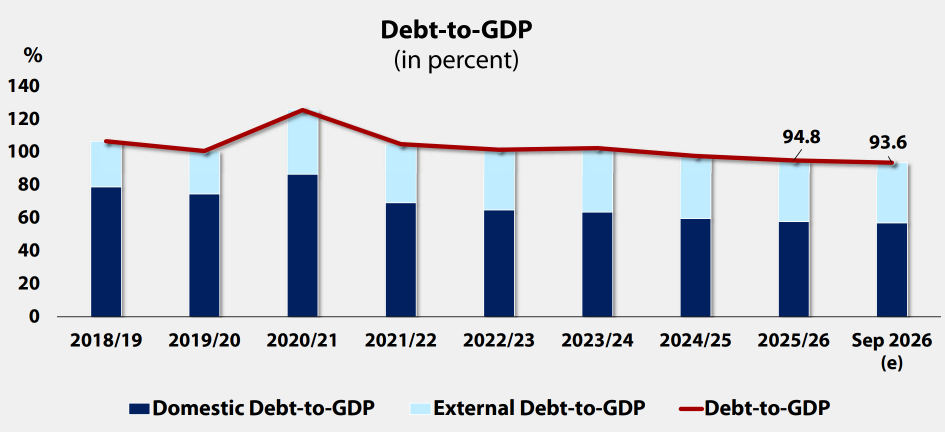
Financially, Arthur borrowed heavily, feasted on the NIS funds unconscionably, initiated the Al Barack problem, and ultimately rocketed the country’s Debt-to-GDP ratio into the rating agencies’ downgrade alert zone. Downgrades and rumors of downgrades have become the norm since then.

By the time he left office, Arthur had laid the perfect economic and financial trap for the PM who replaced him. No wiggle room was left available. The Thompson administration either had to apply financial skill and fiscal prudence, or the Barbadian economy would head down a slippery slope in a hurry.

2008-2010: Thompson had emerged as PM clinging tenaciously to the belief that he and his political teammates should enjoy the bounty flowing from political power, whilst the task of producing and executing national strategies would rest upon the backs of senior civil servants, local and foreign advisors and consultants, and hired technocrats like Darcy Boyce, Maxine McClean, and Dr. Justin Robinson.

Incredibly enough, Thompson had warned Barbadians that the economy would be viewed and managed as a ‘fatted calf’ waiting to be feasted upon only by specially chosen guests. Any guest, however welcome, was instructed to wait for his call.

As expected, the irresponsible raiding of NIS funds and the reckless build up of the national debt which had accelerated under Owen Arthur, went on unabated under Thompson.

Not surprisingly, a slight temporary lifting of the national veil of secrecy potently revealed familiar patterns with respect to the development of the CLICO problem. Furthermore, court-ordered payments to Al Barack remained untouched.

The introduction of free bus rides for school children and the establishment of constituency councils were meant to achieve political objectives, but they came at a heavy financial cost and only served to contribute to government’s worsening fiscal condition.

Mimicking the financial recklessness displayed by Tom Adams during the first half of the 1980’s, and by Erskine Sandiford in the early 1990’s, Thompson effectively inflicted severe damage on the economy and then tried to hoodwink Barbadians into believing that he and Sandiford were only responding to the bad financial hands that they had been dealt.

By the time of his death in 2010, Thompson had paid little or no attention to Public Sector reform. It should be noted, however, that whilst public workers in central government generally continued in their jobs with unproductive and discourteous habits, some of their colleagues in statutory corporations and state enterprises were identified and dismissed – unfairly in some cases.

2010 – Present: Against this background, the Freundel Stuart administration assumed responsibility for the Barbadian economy, and its built-in traps, in late 2010.

Probably unwittingly, Thompson added a subtle psychological trap to further handicap his successor.

The narrative fed to unsuspecting Barbadians from 2008 -2010 was that government was spending excessive money to stimulate the economy and protect jobs during a period of a global downturn. Thompson assured Barbadians that this strategy, coupled with massive capital inflows for earmarked projects, will enable the country to record fiscal surpluses of at least 5.9% starting in 2011.

Those surpluses, much to the chagrin of the present PM and his Minister of Finance, have never materialized. On the contrary, the fiscal deficit has soared to such giddying heights, that Professor Michael Howard recently advised the government of Barbados to start considering an IMF agreement. IMF agreement? One year after excessive spending on an election? Sounds familiar?

Although warning Barbadians that the government’s nipples have become euphemistically sore, the Freundel Stuart administration reassured civil servants that every effort will be made to preserve their jobs – even if, as a practical matter, money had to be borrowed to pay their salaries.

Juxtaposed against this promise of job security is another example which reinforces the notion that, when it comes to problem solving, the civil service “isn’t worth what Paddy shot at”:

A rather mundane and innocuous issue related to differing viewpoints among the principal and teachers of the Alexandra School snaked its way upwards past the governing body of the school, senior civil servants, and the political directorate. The simple solution, merely transferring the principal and a few teachers to other schools, had to be outsourced and purchased from the Hal Gollop Commission for a considerable fee.

Barrow’s 1974 constitutional amendment was utilized by the David Thompson & Freundel Stuart administrations to appoint the current Chief Justice, Sir Marston Gibson. The political opposition tried to fool Barbadians into thinking that by making this appointment, the government had committed a most heinous act. Realistically speaking, however, the government had merely exhibited sloppiness and incompetence by having to change the qualification standards of the law after it had chosen and publicly announced its candidate, but constitutionally, it had the right to recommend its candidate to the GG for appointment.

So far, calls for civil service reform within the Freundel Stuart administration have been limited to a proposal advanced by Sir Frank Alleyne who suggested that the hiring of Permanent Secretaries should be done on a contractual basis. In a nutshell, this simply means that Permanent Secretaries will become political appointees and would come in and go out with the administrations that appointed them.

However, implementing Sir Frank’s recommendation would do nothing to increase efficiency, productivity, and problem solving within the civil service.

As of today, problems with their roots going as far back as the Owen Arthur and David Thompson administrations have mushroomed into crisis proportions. Al Barack has not been paid. The CLICO problem has grown into an international scandal. The massive inflow of capital funds to start capital projects, promised by Thompson, has turned out to be useless propaganda. Downgrades by crediting agencies continue and no economic growth appears on the short-term horizon.

To put it mildly, at the end of 2013, the social, financial, and economic prospects for Barbados look bleak and dreary.

Lax regulations, corruption, arrogance, low productivity, incestuous relationships among political parties and a few businesses including the media and trade unions, and a desperate urge on the part of everyone to get rich quickly will all amalgamate to make a 2014 IMF agreement likely.

One way or the other, civil servants don’t give a damn.


Discover more from Barbados Underground

Subscribe to get the latest posts sent to your email.

96 responses to “Politics in the Civil Service of Barbados”


  1. Walter

    My friend, you have just done yourself a disservice.

    Political interference in the Public Service was institutionalised by Barrow with the introduction of the 1974 constitutional amendments. Thereafter, even temporary officers had to be approved by the Minister with responsibility for the Civil Service. From judges down to a temporary maid had to be approved by the minister.

    When Barrow returned to power in 1986, he tried to complete what he started in 1974 with the appointment of Harry Lewis, an excellent civil servant but a disaster as a minister. That period as now is seeing political interference at an unprecedented scale.

    Interviewing panels know who the successful candidate will be in advance of interviews. And the successful candidate is almost always a member or supporter of the DLP or supporter or kept-miss of a particular minister.


  2. […] Politics in the Civil Service of Barbados | Barbados Underground […]


  3. BILLIONS IN TAX EVASION IN BARBADOS BANKS.
    MOUNTIES COMING.
    YOU KNOW THEY ALWAYS GET THEIR MAN OR WOMAN……..HA HHAAAAAAAAAAAAAAAAAA THIEVING ASSHOLGERS.
    RUNNNNNNNNNNNNNNNNNNNNNNNNNNNNN.


  4. Caswell your post though short and to the point directly place the credibility of the writer once again under scrutiny and obfuscates the snippets of truth intended to put the article in good light.

  5. Back in Time Jack Avatar
    Back in Time Jack

    Oh dear, poor Chris. He now telling the Cabinet his doctor put him on medication for seriously high blood pressure and that his doctor has suggested he take a leave of absence from the stress of theosition of Minister of Finance.

    Coincidently he wishes the PM to grant the leave of absence before the Stuart administration announces the the laying of of 6,000 temporary staff in the public service, announces the arrangement with the IMF and his new taxes take effect.

    Nice one Chris, destroy the economy and then hide like a mouse in the corner. Coward.


  6. @Caswell

    You commented that political interference was institutionalized by Barrow with the 1974 amendments BUT does it negate the fact that political interference was at play before that time?


  7. @Back in Time Jack

    Have not seen this info in the public domain. Perhaps the MOF will make the info public as he did when he apprised Barbadians of his life being threatened.

  8. Back in Time Jack Avatar
    Back in Time Jack

    Cabinet finished at 8pm on Thursday after Sinckler announced his illness and the GOCB(present he was) confirmed the IMF conditions including laying off of 6,000 workers and introducing a mini budget with higher rates of taxes and more new taxes.

    All those who played politics and frolicked when a complete JOKER was installed a MOF, suck salt now cause wunna asses to be taxed in oblivion.


  9. We definitely know Cabinet finished late because Suckoo was late to the BWA meeting in Warrens, kept the Duke waiting.

  10. Caswell Franklyn Avatar

    David

    I am saying that there was no political interference in the Public Service prior to Barrow’s moves.

    Barrow neutered permanent secretaries and the Public Service Commission, and put structures in place to ensure that the politicians had full control of recruitment into the service.

    Barrow started the destruction of the professional public service. Others like Tom Adams contributed but it was Barrow’s shortsightedness that has the service where it is now.

    The Prime Minister according to Barrow’s amendments to the Constitution is to be consulted on the appointment of permanent secretaries and heads of departments and deputies. Instead of mere consultation, the PM now determines who fill those posts. As a result, we have a lot of weak ineffective permanent secretaries.

    In Trinidad, Patrick Manning tried that nonsense and the PSC stood up to him and refused to appoint the PM’s choice. Manning went to court and lost.

    Permanent Secretaries don’t stand up to Ministers anymore. We even had a situation where a permanent secretary took a public officer to a meeting with a minister so that the minister could abuse that officer. More of that to come.

    >


  11. 1976: Tom Adams became PM and political interference within the civil service reached unprecedented levels
    ;;;;;;;;;;;;;;;;;;;;;;;;;;;;;

    The gist of the article is captured in this sentence. Back in time Jack without a doubt is a left over from the notorious Tom Adams era.


  12. @Caswell

    Where you part company with Walther is his assertion that Grantley Adams started the process of wrestling control of the civil service under local government arrangment? Perhaps it is left to Walter to illustrate his point.

  13. Sunshine Sunny Shine Avatar
    Sunshine Sunny Shine

    Ewww I just love when someone can bring a critical and balance analysis, coupled with a time line of possible facts, to the debacle call – “The monster that is eating the Barbadian economy,”

    The two political dim wits and all their yard fowls, responsible for the mess that was accumulating for a long time in this island, still will not face up to the facts, which states that their corruptible intentions and poor management of a fragile economy has led to this chapter about to be written across the hearts and minds of those whose lives are being shattered by the confidence their place in a few to lead the many.

    The two dim wit political parties continue to play politics and the- lay -the blame- game either cognizant of the fact or refuse to acknowledge the reality that Barbados is sinking, sunk, or about to take the plunge into unknown and untold suffering. If indeed their behaviours are anything to go by it is clear that they can afford to do this because they have all “buttered their breads well” and their means of self preservation is well intact by activities that are covert and of a surreptitious nature.

    Yard-fowls of the two political parties will continue to defend and defend with much gusto and steam but the reality of the day is: No amount of rhetoric will pull Barbados out of this plunge; no amount of blame will pull Barbados out of this plunge; no amount of alliances and allegiances to either party will pull Barbados out of this plunge. What will pull Barbados out of this plunge is the forging of a togetherness approach that puts aside personal agendas for that of the national interest. If we cannot stand together at this time then we will remain divided and bare the brunt of the fall.


  14. Waiting to read comments from the more experienced posters on this blog. Alvin, Miller, Hal, Bushie, Checkit-Out where atr thou?


  15. From his earlier blog – Numbers Don’t Lie. People do! – Walter has proffered the following clarification.

    Please note that as a comment on my last article, you [SIC] stated that you would have used 1967 (1st year after independence) as the beginning year of your analysis. I was emphasizing the slide in the civil service which to my mind did not become apparent until the late 70’s. That’s why I started with 1976.


  16. David

    I don’t know of what you speak.

    >

  17. are-we-there-yet? Avatar

    This article is, like the other Walter Blackman one before it, a hodge podge of disparate half and quarter truths but flavoured here with outright lies and second hand impressions. Nevertheless, the overarching thesis is on the right track.

    Balance’s point at 8.01 pm is however most apt. Caswell is also right about Errol Barrow’s input that is glossed over by Walter Blackman. The decline in the Public Service started with EWB and has progressed inexorably since then.

    The article’s main thesis is that the public service is in crisis started by Tom Adams and continuing throughout all the administrations since then fuelled by the relevant Prime Ministers. Yes, the Civil service is in crisis and yes, most of the PM’s had a hand in extending the rot after Barrow started it. But to find a solution Walter needs to get his facts straight and identify, like Caswell, where the rot actually started so that that mistake can be remedied.

    As Blackman suggested Sir Frank’s suggestion, on its own, is a non starter especially since it would still allow Ministerial interference to stack the pack with top civil servants and temps who are creatures of such Ministers and who by now have a culture of doing only the perceived bidding of those ministers. Indeed, it might well escalate the bad influence of the resulting temporary top civil servants.

    I suspect that the Public service will only change for the better if Ministers are somehow taken entirely out of the equation re. appointments and promotions, ie. rescind the 1974 amendments; remove the now total influence of the ministers re. appointments to the Service Commissions; Bring in, on a temporary basis, a number of top PS’s and H of Depts from other Caribbean / Commonwealth countries to start back a proper culture in the Civil Service, giving them all the support necessary to do their jobs efficiently. Get the Integrity legislation up and running, etc. etc.

    Blackman should be thanked for bringing this matter to the fore, especially today, but it is to be hoped that other inputs will make possible solutions clearer. We really need it, especially if there is any smidgin of truth in “Back in Time Jack’s” post about the MoF.

  18. millertheanunnaki Avatar

    “Lax regulations, corruption, arrogance, low productivity, incestuous relationships among political parties and a few businesses including the media and trade unions, and a desperate urge on the part of everyone to get rich quickly will all amalgamate to make a 2014 IMF agreement likely.”

    As sure as night follows day ‘Independent’ Barbados is sleepwalking straight into the arms of the IMF. But this time those arms will be like a vice-grip and not a financial pillow of comfort to lean on.

    We will see if the mantra “No layoffs, No privatization” (and recently ‘we do not give a damn about credit ratings downgrades’) will continue to be trumpeted from the foul mouths of bragging buffoons full of political offal.

    The current DLP administration have no one to blame but themselves for what is about to unfold as the political shit hits the economic fan early next year.
    They were warned of the oncoming economic iceberg long ago and even recently by Prof. Howard whom I have the greatest of respect for, both at the professional and personal level.

    Even the stupid miller was advising them to stem the flow of fiscal blood by means of a privatization programme while outsourcing of some functions as a major plank of fiscal restructuring.
    The only way there could be an effective restructuring of the public sector and a meaningful reduction of political interference in its operations is if a concerted programme of privatization/outsourcing (despite Bush Tea’s constant objections) is undertaken either under the political directorate’s own volition or it is imposed by an outside agency.

    We shall see if the local buffoons forming the current administration will see the Light and administer their own home-made “Privatization/Divestment/Outsourcing” programme long recommended to this beleaguered administration to promote black economic enfranchisement or be forced to jump at the crack of the IMF whip and implement a programme designed to ensure the remaining economic landscape (and real estate) is totally controlled by foreign entities who have foreign money to splurge.

    The first step to recovery is to relieve the current MoF of his portfolio. Let him use his doctor’s advice as an alibi to leave the scene of the economic crime committed and save the face of his straw boss.
    The guv of the central bank needs to follow suit.

    ‘The evil that men do lives after them’ but their LIES & DECEIT are often buried in the pages of history’. No Layoffs, no Privatization, Amen!


  19. @are-you-there-yet

    You have accused Walter of stating lies BUT you have not pointed out the lies.

  20. are-we-there-yet? Avatar

    Hamilton Hill;

    Checkit-Out is on sabbatical.


  21. MOF – Leave of Absence — The RATS are abandoning the SINKING SHIP

    Most Bajans cannot swim and life rafts don’t exist, no money to buy.

  22. are-we-there-yet? Avatar

    David; I agree, lies is too harsh a term. My apologies.

    But just consider these statements.
    “1974: Apparently angry and frustrated over attitudes aimed at blocking the implementation of his governmental policies, Errol Barrow as Prime Minister (PM) of Barbados, denounced the civil service as an ‘army of occupation’. He also amended the constitution to base the appointment of all judges on the recommendation of the PM after consultation with the Leader of the Opposition.
    1976: Tom Adams became PM and political interference within the civil service reached unprecedented levels.”

    Blackman sought to put all the blame on Tom Adams by omitting any mention of the drastic changes in the downward trajectory of the Civil service coming out of the Barrow 1974 actions. The last emotive sentence above is particularly disingenuous seeking to link Adams alone with a perceived slide in the public service.

    1982; Errol Barrow ….. attempted to counter the high level of political interference in the Civil Service under Tom Adams by establishing a Ministry of the Civil Service with Senator Harcourt V. Lewis being the minister responsible for its operations..
    Anyone in the Public Service at that time knows that Sen. Lewis was a hatchet man with total in your face allegiance to Barrow and the DLP. His job could not have been to counter the high level of political interference in the “Civil service under Tom Adams” but to increase political interference.


  23. The worse thing is a partisan attempting to be balanced. When the tongue slips (repeatedly) it nullifies everything. It is also clear the writer has lots of time for Freundel. Two weeks and counting.


  24. @Miller,
    I began answering your previous contribution, Re privitization and outsourcing, but left to celebrrate the flagraising for independence at City Hall. However I am back now. Your recent post is interesting and shows the direction of your thinking; and your collegues, especially the last sentence: “…to promote black economic enfranchisement or be forced to jump at the crack of the IMF whip and implement a programme designed to ensure the remaining economic landscape (and real estate) is totally controlled by foreign entities who have foreign money to splurge.” People like you make statements that simple people, like me, have difficulty understanding. You say “..“Privatization/Divestment/Outsourcing” programme long recommended to this beleaguered administration to promote black economic enfranchisement…”
    Exactly what do you mean by “Black economic enfranchisement?
    Don’t we have that now? As far as I know the PSVs are a perfect example of Black economic enfranchisement. As far as I know the minimarts, many of the hardware places; Branker’s Lumber company, Sky Mall,many of the KFC franchises, Rayside, and so many others have to be considered as examples of “black economic enfranchisement”If you don’t agree with my assessment, give me examples of where we don’t have it. In your previous submission you spoke of the National Debt going from 4.7 billion to almost 10.6 billion, in 6 years Give me your figure. By the way the DLP has been in pwer for only fiveyears (2008-2013) not six years. You also propose outsourcing a number of entities, among which was Barbados Port Authority Inc. Your friend Chaucer also proposed outsourcing a number of other entities that contribute to the social fabric of the island. I will deal with that seperately. But why the Barbados Port Authority Inc? Why also the Barbados Grantley Adams Airport? Barbados is an island and the only access to it is by sea or air. Are you going to give control of these to “foreign entities with foreign money to splurge”? The Barbados Port authority,was government, was privatized by government and became the Barbados Port Authority Inc, and has Barbados Private sector involvement. The proposed Sugar Point Cruise Terminal Development will have significant Foreign investment by Royal Caribbean Cruise Lines. Are you proposing to privatize the Barbados Port Authority Inc. further? What would be the advantage? What would be the effect? How do you propose to control share ownership, especially since the Stock Market is free and open?You would thus be putting all the countries most valuable resources up for foreign ownership. We might therefore go the whole hog and have an open competition for another Barbados flag.
    You also said that the NIS was “desperate for suitable investments in the economy and there was a shortage of risk capital. Exactly what do you mean by this statement? Remember I have a simple mind. I do not think the Barbadian people would ever forgive you;or forget, if you privatized the airport and the seaport, not after what you did to the National Bank; an entity that grew out of the savings of the very poor, the agricultural labourers working in the cane fields. Remember it was first the Barbados Agricultural Bank, housed on the bottom level of the House of Assembly.
    You also speak about “broad share ownership.” How do you propose to achieve this? Are you going to limit how much investment can be done by one entity? How are you going to limit who buys shares? Since the Barbads Private sector could not come up to mark when funding was needed for the Four Seasons, or when BS&T shares and shares in he BNB came up for sale, it is obvious that the Private Sector has no money. Although a lot of people think so, but the facts show otherwise. The net result therefore, if we follow your thinking, is the whoesale ownership of Barbados by Foreign persons with lots of foreign money to splurge.
    Even if we have to suck salt, we as Barbadians have to have the intestinal fortitude, and do like Popsicle, ” refuse to sell we ass.”
    When you state the figures for National Debt, how much of this is local debt and how much of this is government ebt? How much of each one is owed to foreign entities and howmuch is local?
    When I lookedat the Standard and Pors Report they stated that the increase in debt, as a percent of GDP has been falling, and the growth in this debt per year has also ben falling from a high of plud 11.0 in 2009 to 3.1 in 2013 and a projected 1.0 in 201; a dramatic decrease in the 5 years the DLP has been in power. .


  25. Read, compare and contrast with Mr. Blackman’s contribution:
    http://www.lacea.org/WEB/country_studies/barbados.pdf


  26. WHAT IS THE FUTURE FOR “little Barbados” – the “GEM” of the Caribbean Sea?

    We have experienced fiscal & financial anomalies in our past [47] years of so-called independence but as a nation, we are in new terrain! We have never been here before or been looking down the twin barrels of a sawed-off shot gun – and this time, it’s deadly!

    Barbados right now is in a downward spiral – with the economy shrinking, its social fabric tearing, its political system in discombobulation, disarray and decline – with any of you wondering if there’s a way out of this MESS?

    How Barbados changes politically in the next one to two years is crucial because another round of ELECTIONS won’t change nothing anyway! It’ll just be a different day but same old shoite!

    As a nation, we have to learn the avowed “TYRANNY” of a 2 party state and the fractious nature of parliamentary democracy without CHECKS & BALANCES! But especially the rites of the people to keep politicians in check!

    No INTEGRITY, ACCOUNTABILITY & TRANSPARENCY legislation only vivifies the inevitable train wreck that much more – making it harder for voters to trust their PUBLIC SERVANTS when certain “TRUTHS” finally land in the public square!

    Like Greece (bad comparison you think? LOL), Barbados is dangling on the “fiscal cliff” of financial ruin. We will now have to suffer the indignity of having our country placed into the predatory hands of the IMF Paranas who will strip away every last vestige of autonomy we have, so long enjoyed and relished and GOD knows how long these acrimonious, “restructuring measures” will last.

    But people like me don’t feel too bad because these warnings were going out in social media circles now for the last 5 years since the Market Crash of 2007/8 – but many have been “SCOFFING”, insulting and even LOL at what are the “chickens coming home to roost”.

    This once proud, prideful political dynasty we have so long lauded is being shook to its very core! Are-we-there-yet (LOL) – and is it time for a clean sheet? Time will tell!

    In the egomanical words of our National Anthem (as well-meaning as they are): “The Lord has been the people’s guide for past three hundred years. With Him still on the people’s side, we have no doubts or fears. Upward and onward we shall go – inspired, exulting, free. And greater will our nation grow – In strength and unity”.

    Show us where any of those grandiose “LYRICS” are true TODAY?

    Time for Barbados to begin again – this time with a clean slate! Maybe even a new NATIONAL ANTHEM!!!

    RADICAL?

    TIME FOR THE COUNTRY TO AWAKEN OUT OF SLEEP!


  27. When are we going to realise that there can be NO restructuring of the economy without radical REFORM of the educational system. It is pointless to be constantly rehashing all these worn out reasons as to why we are here without seriously moving the entire debate to a more progressive level. What we have , is a pathetic assortment of so called intellectuals, who are pontificating. At the end of the day , it is the same soup but it is just warmed over. The future of Barbados and indeed the entire Caribbean now rests in the tiny hands of children making their way to the nursery and primary schools throughout the region. It is for ALL of us to lift our thoughts and at least give them a fighting chance. They need an educational system that will be in concord with national economic policy. Otherwise we are merely putting sand on the beach.


  28. @Alvin

    i hope your questions are answered.


  29. @New Blood,
    Read my contributions again. I did not ask any questions. I made statements and questioned Miller. I will comment on the “Politics” in the Civil Service. One thing people forget, or seem to ignore, is that the preswent civil service, is not composed of persons who have the same ethos as those who were there prior to and just after independence. Anybody working in the Civil Service at that time would have retired or be very close to retirement. People change, times change and societies change. What must remain constant for success is the standards and mores, and thedecency of those who have to perform their roles. This is what has changed. Walter has enunciated the political interference. The question is; what were the causes of the decision to interfere? One has to go back to the begining and look at the underlying causes. I would want those who are exra critical of Walter to give their explanation of the causes. What was happening in the society? What was the attitudes of the citizenry to the civil service? What happened to the integrity of the civil servants? Did some, or a lot, of this go by the wayside in the attempt to get rich quickly? Did the society change in terms of interpersonal relationships? Why did Barrow call the civil service an “army of occupation”? He was neither an idiot or a madman, so such a statement must have come out of frustration. Why was a need for Civil Service reform posited; even though its need seemed to be lost on the same civil service. What was the incentive for them to “reform” themselves?
    You see, the questions have not been answered. I was overseas during this critical period in the island’s development.One thing people also have to remember, 47 years in the development of a new nation is a very short time. The expectation that we could match the achievements of larger countries, with more resources and financial and economic power, with a longer history of parliamentary development if more utopian than realistic. The United States still has not reached the utopian expectation of smoothcontinuous functioning, and the recent shut down of congress is a good example. Before the United States became united they had to go through a long Civil war. Similarly with the British Parliamentary system which formed the basis of our own system.
    We have achieved a lot, and will achieve much more; not without turbulence, but we can achieve the best there is, given what we have.


  30. I AM NOT SURE ALVIN
    TOO MANY FOLK WHO RECIEVED THE FREE EDUCATION AND REALLY WANTED TO WORK IN THE CIVIL SERVICE WERE RUN AWAY
    AND THERE IS MUCH MORE


  31. @New blood,
    Despite what you may think, my knowledge of the education sysems of a number of countries convinces me that we have a good educational system, good teachers and a good delivery system that can hold its own with any country in the world. Using this system we have produced world leaders in all spheres of life.


  32. @GP,
    I can only call them cowards. What about those who did not get the Free education? They did not run away, even though many of them could have. What could cause you (Not you specifically) to run away? Integrity and courage can withstand challenges, especially from those who want you to sacrifice your dignity honesty and integrity.


  33. @ Alvin Cummins
    Have you missed your Alzheimer’s medication?


  34. Barbados still does a good job preparing the “cream of the crop” for University and technical college education.

    What is needed are more Scholarships and training targeted to emerging industries.
    Alternative energy is the way we have to go so Government should give scholarships relevant to Solar and wind energy.

  35. millertheanunnaki Avatar
    millertheanunnaki

    @ Alvin Cummins | November 30, 2013 at 1:59 PM |

    I refuse to respond in any detail to you mainly as a result of your stupidly asinine act of purposely overlooking the fact that the many statements attributed to me are really those made by the MoF in his budget speeches who is the one that proposed the divestment of shares in the GAIA and the Bridgetown Port; not Miller.

    Until you consider the MoF’s ‘privatization’ proposals and their justification then the miller would just consider you as an old worn-out blasted ass incapable of understanding the written word.


  36. @enuff

    Walter offers a critique of the civil service through time and you seek to compare with a report about the state of our economies by Downes?


  37. @Alvin
    The S& P report Bdos, d.d 20 Nov 2013:
    “The country international reserves have FALLEN SIGNIFICANTLY over the past six months to below the monetary base, reserve coverage of which we generally view as important in supporting a PEGGED CURRENCY”
    Do you know the impact of the aboved statement ?


  38. @ David
    My interpretation of an article is not guided simply by the heading. Now read Walter’s “critique” again and see if you see the relevance of the Downes’ article (pay attention to the FACTS) for contrasting and comparing.


  39. @ Hants
    AE is the way to go where?


  40. @enuff

    Downes is a facts based analysis agreed but there is still a discussion which just be had regarding the moribund nature of the civil service. A case of comparing apples and oranges.


  41. I’ll take FACTS over “critiques”, especially when they prove an author is trying to hoodwink readers.


  42. Some of these contribs are really too long for me to read .. Three paragragraphs and that’s it for me.

    Got to say that education in Barbados is designed to produce a consumption driven and supported society. Even UWI students are leaving Microsoft ready … Not good. But education is not it, not by itself anyway.

    What needs to be fixed is the mainstream press … the Fraud Squad that has traditionally portrayed Parliamentarians as heroes and Honorable men. Somethings in life should be earned .. the spineless Press and those that use call in programs to project themselves as fearless, fair and balanced just hand far too much significance over to the public profile of Public Officials at the exclusion of nearly everyone else.


  43. @enuff

    Not sure what you are on about, there is consensus that the civil service is in decline as a result of political infiltration, Walter uses 1954 as a point of reference and others 1974.


  44. “This article attempts to help readers understand the nature and depth of the civil service problem in Barbados by revisiting some historical signposts.”

    Really? Carry on smartly David with your two eyes wide shut.

  45. are-we-there-yet? Avatar
    are-we-there-yet?

    Newblood;

    You were there since perhaps 1974 but It might have been a bit later. What do you think of the “facts” presented by Walter Blackman re. a general accelerating malaise in the Public Service and the country that can be blamed almost solely on the Public service itself? Do you consider that Sen. Harcourt Lewis, who I think was your Minister at one time, had actively taken on a role to remove partisanship from the public sector?

    It would be very interesting to see your views.


  46. David, I wrote an answer for New Blood. Where is it?

  47. are-we-there-yet? Avatar
    are-we-there-yet?

    David; I think you misunderstood Walter Blackman’s point about Grantley Adams. He merely stated in that regard 1954: The system of ministerial government was introduced in Barbados. The BLP held 16 out of 24 seats at the time so Grantley Adams became the first premier of the island and local control of the civil service began in earnest.

    Local Control cannot be synonymous with the beginning of a slide unless you are intimating that Blackman is saying that once control of the Public Service was localized that a slide would have started. Blackman actually erroneously implies that the slide started in 1976 with the Tom Adam’s Government coming into power.

    But we need to address how to reverse the slide. If Back in Time Jack is correct there well might be a return to the Public Service initiatives which OSA started and which were damned with very faint praises by Walter Blackman but which were demonstrable and tangible attempts to get the Service back on track that were not continued thereafter.


  48. David Apologies I saw the item above.
    Now to Chaucer.
    This is the part of the report you mentioned. Not what it says:…foreign reserves have decreased by 30% from January to September, covering only 3.2 months of imports as of September, significantly lower than the 4.6 months of coverage averaged over the last five years.. It goes on to mention however, the effect of importsand continues”…We expect that the current account deficit will return to close to 6.0% of GDP in the 2014-15 period as the tourism sector picks up and investment inflows recover”. The fall in foreign reserves
    is not necessarily the result of government spending. When people travel and shop in Miami, the get foreign currency..not necessarily through the banking system, but from their “suppliers’ and this is usually foreign exchange that did not even reach the Central Bank, where it should be. The implication is that people would not be able to spend as they want; with gay abandon. It means tha discipline would have to be imposed on an indisciplined society; and the entire society is very indisciplined. You will note also that there is no mention of thechange in the peg; neither in terms of a change or negative commentWith regard to your recommendations for the outsourcing of 1. School transportation 2. District Hospitals,3.Drug Services 4.Maintainance of Gvernment Buildings and vehicles,6 School Meals. I have an answer written for you but you mentioned SBA, DIASPORA and SJPP as well as Credit Unions. Kindly clarify these for me and their function in these outsourcings.

The blogmaster invites you to join the discussion.

Trending