Banner promoting anonymous crime reporting with a phone and contact number 1 800 TIPS (8477), featuring the Crime Stoppers logo and a QR code for submitting tips.

← Back

Your message to the BLOGMASTER was sent

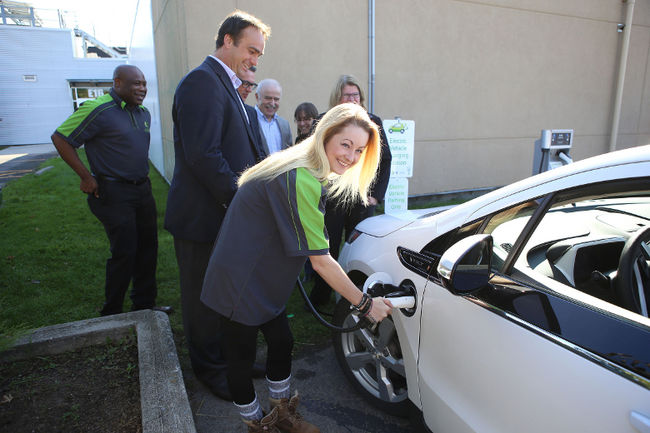
Brynn O'Reilley, a second year student in the Energy Systems Engineering Technology at St. Lawrence College plugs in an electric vehicle at the launch of the college's new charging station. (Elliot Ferguson The Whig-Standard)
Brynn O’Reilley, a second year student in the Energy Systems Engineering Technology at St. Lawrence College plugs in an electric vehicle at the launch of the college’s new charging station. (Elliot Ferguson The Whig-Standard)

Now that the outcry over government’s decision to make UWI students pay tuition cost has abated, there is the opportunity to debate the issue unhinged from political rhetoric. Let us keep hope alive!

At  a recent address to the CARILEC Renewable Energy Conference Minister of Energy Darcy Boyce stated that although he understands the industry is of national importance, government will not rush policy decisions to impact the stability of the grid. Many have come to appreciate that ‘rushing’ is not a quality which is associated with the Stuart led government.  At the same CARILEC conference Caricom Ambassador expressed the view that Barbados has reached a juncture where important decisions have to be made concerning energy production and there was a ‘certain urgency’ required.

Commonsense dictates that government and the regulator should not take decisions to destabilize the EMERA owned sole electric company in Barbados. BU must question whether the minister with responsibility for energy should be the one quoted. Minister Boyce must be perceived by his utterances to be the champion of government’s renewable energy program (RE). There must be no doubt in the minds of members of the public that he is part of a decision making process to rollout RE which is calibrated to the urgency of the times. All Barbadians must feel the weight of importance which the RE program has for Barbados. We must feel his energy!

Ambassador Bobby Morris needs to clarify when he stated government is “moving apace to establish the legal framework in cooperation and conjunction with the major players to facilitate the build out of renewable energy”. On the face of it it seems to BU the message he is sending is a more urgent one when compared to that of Minister Boyce.

One wonders if the UWI was able to add value to the RE debate if there might be justification that its curriculum is relevant and aligned to national priorities. And as a consequence paying tuition cost might have been a non issue. In this vein it was interesting to read this week about a college in Canada involved in a research project meant to study electric vehicle use. St. Lawrence College designed three electric vehicle charging stations to study electric vehicle use – see article College plugs into the future. Professor Oliver Headley must be writhing.

If RE is a national priority BU is not feeling the energy.

BU received the following suggestions from Serenity if it is serious about greening Barbados, a laudable initiative.

  • For houses they offer greater tax incentives to use photo voltaic energy. A number of other measures, such as powering government buildings with solar energy. Hopefully government goes totally green and include green computing. Electronic files, filing and database and only print when necessary.
  • The voluminous Gazettes should be eliminated. Have a public website, courtesy of the GIS, where an electronic publish of information suffices the law of Gazette publications.
  • Government should consider lowering the import duty on hybrid cars to allow more people to make the switch. A hybrid can get about 50 mpg these days which is about 8-900 km a tank depending on how you drive.
  • And since government has been leading the charge, they should also consider getting rid of the huge number of gas guzzlers in the current fleet of state owned vehicles. All the messenger vehicles, statutory corporations, all of them. Especially the police vehicles. Every single police vehicle is an SUV and this alone uses almost twice as much gasoline as a car.

If government was serious about spear heading the greening initiative then they would seriously consider this. But without compelling incentives for hybrids/electrics then we are going no where fast.


Discover more from Barbados Underground

Subscribe to get the latest posts sent to your email.

90 responses to “Energy in Renewable Energy”


  1. @ Man Pelt…
    50 % already have it
    10 % don’t want it (Um too ‘common’ – them got electric…)
    10% will NEVER be able to afford it (ESAF keeps them warm)
    20% Don’t need it (don’t wuk and don’t want to)
    6% waiting on a loan to buy one
    3%. Need to first repair the roof
    1%. (The “ac” group)….don’t even KNOW what a SWH is…. 🙂

    Market saturated skippa…


  2. Comrade Bush Tea

    Dat be fa kin su pah … but you not be aware of 3 dolla solution … no?

    In many country fah 3 dolla you buy attachement fah showah … Attachment heat watah on exit and light bill very little affected, or not atol atol … SWH no longer cost affective …. no?


  3. @bush ………………..wuh you meanac don.t know..that is my favouite recipe use it daily pon every thing… ac call it (SWH) SWEET WID HONEY… try putting on the botom u feet.de wiiffe u love u to death…


  4. Baffy, what do you heat it with, your right hand?


  5. @Millertheanunnaki ….Your comments raised some interesting issues and I will try my best to answer them point by point. Decoupling the required revenues to be independent of sales volume has very little to do with deregulation of generation. It is really an attempt to overcome one of the major problems of regulated monopolies such as BL&P which have very high fixed costs and very little variable costs.

    These high fixed costs are recovered through a small fixed fee for metering and billing and a much larger rate- based mechanism that depends on volume throughput of kwh. The problem with this approach is that BL&P has no incentive to promote reduced usage since this impairs their ability to recover allowable costs and earn a fair ROR.

    Decoupling offers an opportunity that allows BL&P through financial incentives to actively engage in serious innovation to improve efficiency, reduce usage and costs. In doing so they share in the benefits. For example, BL&P spends $400 million dollars in fuel each year ( about the equivalent of 4000 barrels of diesel) but 65% of the energy produced is wasted and only 35% actually ends up in generated kWh. Since fuel costs are passed through and don’t affect BL&P’s bottom line hardly any attention is paid to waste heat recovery systems to mitigate these costs.

    If a regulatory system were designed that allowed BL&P to gain financially from these cost recovery savings then they would be more inclined to pursue such strategies.. Decoupling allows special top-up rates similar to the FCA that allows BL&P to benefit from strategies that effect a reduction in our significant fuel bill. A win-win situation that requires no subsidy, do you think?

    Yes, there are sources other than solar that can exacerbate the impact on BL&P generation output and you mentioned a few. But the ones you referred to are all economically viable (unlike PV or household wind turbine) and will actually reduce the overall cost of electricity. The three goals of the Strategic Energy Framework of Barbados (SEFB) are: (1) To meet the energy needs (2) meet them reliably and (3) meet them at the least cost.

    Biomass Cogeneration can provide real economic benefits by satisfying 20% of our electricity needs at 24 cents per Kwh, the cheapest source possible in the foreseeable future using all local inputs. Land-fill-to-energy and WTE are also economically viable but to a lesser degree. These forms of generation are all synchronous and contribute to the stability of our island grid. The are also capable of displacing BL&P generation which wind and solar by their very nature are incapable of since they need either some form of storage or fast ramping capability.

    The issue of BL&P stranded assets is an important one and needs careful consideration. This is one of the issues that is holding up the Electric Light and Power Act. BL&P needs assurance that its shareholders and bondholders are not adversely affected by this change in legislation. And why not? I think it fair that they should seek to recover their investment.

    I have no problem with this form of government sponsored RE program even if it means that consumers are burdened with the cost of BL&P stranded assets. These investments are economically viable and will bring down the cost of electricity and save foreign exchange. I have less confidence with the large scale PV commercial projects that are being proposed by certain business entities that depend on government mandates and rate-payers support for their viability.

    Finally, the issues of economies of scale for generation have been debunked. There is no such natural monopoly in generation anymore. But transmission and distribution still retains the classic features of a high fixed cost enterprise whose average cost declines with volume and as such should continue to be regulated. The problem with deregulating the generation aspect of electric power is that I am not convinced that the long run marginal cost of PV is less than the short run marginal cost (or avoided cost) of current BL&P generation at this time.


  6. @Mike Mcleary

    Are you prepared to speculate or otherwise that the outcome of the last FTC rate hearing was a precondition for the consummating of the BL&P EMERA deal?

  7. millertheanunnaki Avatar

    @ Mike Mcleary | September 26, 2013 at 5:08 PM |
    “For example, BL&P spends $400 million dollars in fuel each year ( about the equivalent of 4000 barrels of diesel) but 65% of the energy produced is wasted and only 35% actually ends up in generated kWh. Since fuel costs are passed through and don’t affect BL&P’s bottom line hardly any attention is paid to waste heat recovery systems to mitigate these costs.”

    First let me thank you for your expanded and, may I say, ‘energetic’ elucidation that has shed brighter light on this most electrifyingly important topic. As you are quite aware a reliable energy supply is the sine qua non of any modern society and, like water to the human body, carries just as much vital status as foreign exchange being the lifeblood of the Bajan economy.

    However your statement repeated above is a ‘shockingly’ frightening statistic.
    If not for the electricity used to pump the water only that kind of wastage would be acceptable in a public utility such as the BWA where the major material input is freely provided by Mother Nature.

    If your assertion cannot be dismissed and debunked as arrant nonsense one can only conclude that the BL&P should be described not only as one of the biggest wasters of foreign exchange but also a major threat to the country’s long-term economic survival and restructuring efforts; in addition it ought to be deemed as the biggest environmental terrorist on the Island.

    This is certainly not good enough. The BL&P needs to be brought under the spotlight not to undermine its long-term relevance to the country but to bring it kicking and screaming into the light of the country’s current economic realities and challenges and to enlighten the owners and managers of their environmental responsibilities and need to follow the path of sustainable living leading to a green economy as they so proudly like to promote in their (now established) pseudo Public Relations propaganda.
    Please tell us Sir you made a mistake about the 65% rate of wastage and inefficiency in that BL&P.

    PS: The 4,000 bbls of diesel a year or its fuel oil equivalent seems a bit low.


  8. As I keep saying, we copy and transplant ideas without thinking them through often forgetting Barbados is 166sq miles and 280,000 people

  9. St George's Dragon Avatar
    St George’s Dragon

    The recent FTC ruling on renewables was the usual fudge. I actually don’t envy the FTC. BL&P have the money and the expertise. As a result, the FTC always seems to be on the back foot. Ultimately, their decisions are a small step forward for consumers, but never a brave decision that moves the goal-posts.
    A case in point. I have a 5 kW PV system with a grid interconnect, so I sell some excess power back to BL&P.
    BL&P’s accounting system can fire out my bills every month with no problem. They bill me either an actual amount based on a meter reading or an estimated one.
    For my generated power sold back to them, in the submissions to the FTC, BL&P wanted to pay me back every 6 months. Consumers asked for monthly, which to me seems eminently reasonable – all BL&P have to do is adjust their billing system to estimate my power generation in the same way as they estimate my consumption.
    What does the FTC do? Split the difference and tell BL&P to pay me every three months.
    The big decision in the recent hearing was about the overall percentage of generating capacity reserved for renewables. The FTC ducked that as well and left it at 10% of capacity. How then, are we going to achieve the Government’s stated target of 20% generation from renewables?
    We seriously need to consider giving the FTC more funding to enable them to employ the right people to counter BL&P’s arguments. At the moment BL&P is running rings around us.


  10. @ Miller
    Don’t get carried away with Mike McCleary’s assertion that “65% of the fuel is wasted”.
    The efficiency of a power station is rated by the extent to which it can extract as much of the available joules of energy out of each barrel of oil as electrical power.
    Older type stations can have efficiencies in the order of 25% while more modern stations can be as high as 45% or even better.

    Even the most modern station, run as expertly as possible can be (crudely) said to ” waste 55 gallons out of every 100 gallons of fuel.”

    The fact is that BL&P’s efficiency is on par with similar power stations anywhere.


  11. @Millertheanunnaki….Yes, you are right the energy used by BL&P is the equivalent of 4000 barrels is per day not per year. If you think about it, BL&P consumes 50% of our total energy consumption. Barbados produces 1000 barrels per day and consumes 11,000 barrels per day. When you consider the volumetric energy density of diesel this is about the equivalent of 4000 barrels of diesel per day of consumption.

    On the matter of the efficiency of energy usage, I would dare anyone including BL&P to dispute that their plant efficiency is above 35%. Their most efficient plant is the two recent LSD generators whose efficiencies at around 45% but the gas turbines and the steam turbines are very not very efficient.

    Forgive me, if I don’t sound enthusiastic about utility scale PV at this time. The reason is that despite the concessionary financing PV now enjoys, the number don’t really add up. And this is because of the extremely high PV capital cost, not withstanding its low variable cost. Furthermore, I am not even sure that the foreign exchange benefits being touted are there despite what some pundits are claiming. If I recall a little economics, in the long run all cost are variable. So if the long run marginal cost of PV (when all inputs are considered) is more than than the short run costs of existing generation (which basically is fossil fuel) where is the benefit to the country and where is the foreign exchange savings?

  12. millertheanunnaki Avatar

    @ Mike Mcleary | September 26, 2013 at 9:03 PM |
    “If I recall a little economics, in the long run all cost are variable. So if the long run marginal cost of PV (when all inputs are considered) is more than than the short run costs of existing generation (which basically is fossil fuel) where is the benefit to the country and where is the foreign exchange savings?”

    Point taken (in theory).
    But the country’s actual foreign exchange earnings are measured in the short-run and its capacity to earn measured more in the medium-term.
    What would happen if there are situations where the forex required to pay for imported oil is not readily available and has to compete for other vital imports in a “rationing” environment?

    There is a strong case to be argued for a radical move to RE sources for electricity generation with PV (solar) making a significant contribution.
    Given the now confirmed threat by global warming to the economies of small flat island states like Barbados the environment issue must take centre stage in all of this.

    It seems when most factors are considered there would be a few competing avenues for the route to satisfy Barbados’ electricity needs. As you pointed out the current setup does not incentivize the BL&P to achieve greater efficiency because of the fuel charge direct pass-through to the customers. It also represents a massive waste of forex despite the BNOC contribution sourced from local production.

    But in the light of factors (future forex shortages and environmental issues) it is becoming almost mandatory that RE makes a much higher contribution and within a shorter time horizon that initially expected.
    The country should therefore be prepared to pay the BL&P shareholders a guarantee a larger capital charge for the next 15 or so years to recover their investment in the generation plant while demanding the utility wean itself off fossil fuels (by shutting down the most inefficient generators) and increasing its take up of RE into its distribution systems.

    I am still not convinced about your reservations about further penetration of PV system. Your economic analysis of the PV viability does not take into account the full range of factors both endogenous and exogenous to the country’s economy.
    Can’t at least 3 solar farms to increase economies of scale be established on the island as a joint enterprise between the BL&P and other private sector players with capital? This kind of ‘farm’ exists in Spain and does not seem to be too land intensive (taking up too much).

    Can you shed some light on what happens to the residue of fuel oil (55%-65%) not efficiently utilized to generate electricity? It is emitted into the atmosphere as smoke from the turbines’ chimneys or is any “semi-liquid” material discharged into the sea?


  13. It seems we are finding all kinds of excuses to move to RE and quickly. This is about security from external shock and opportunity cost of associated with forex. Is it a national priority to not?


  14. If wunna people would attend the Winston Scott Memorial Lecture (I ain’ in the habit of recognising this “Sir” title foolishness …), you would know that in 2009 when Estwick was in charge of Energy, there was a guy from Canada named Jeremy Rifkin who introduced the idea that Barbados could be FIRST to get on board with a emergent campaign for energy generation and distribution. The plan was (is) to redirect the business model of BL&P from being the primary provider of energy and its distribution, to being simply the provider and maintainer of the distribution infrastructure (grid). Each household was to be equipped with the equipment necessary to provide its own energy (wind, sun and geothermal) and to feed the excess back to the grid for redistribution. That was the plan, and the audience was informed that “Only thing required from the Government of Barbados was an email in the affirmative”.

    The Minister walked out at the end of the Q&A and has never ever since spoken of the event in public.

    Of course the audience at the time would NOT have been aware that BL&P was already being reshaped for sale to the highest overseas bidder (who at the time had already been identified, but was still a carefully guarded secret) for us dollars


  15. @Baffy

    Note BU asked earlier about the rate hike as a condition of the EMERA sale with no response.

  16. millertheanunnaki Avatar

    @ David | September 27, 2013 at 11:22 AM |

    A rate hike was a precondition for the sale to be consummated and giving the government access to foreign exchange.
    That was made evidently clear by the behaviour of the regulator.
    Sir Neville has a lot to account for.
    Don’t be surprised if Emera is in the process of preparing a bid for a further hike in rates to shorten the pay back time for their recent investment in light of the recent developments in RE and sustained high oil prices.

    A similar rate increase might be on the cards for the landline telephone utility which C&W would offload at a drop of a hat tomorrow.


  17. @Miller

    The FTC is comprised of several Commisioners.


  18. @ Millertheanunnaki..
    “A rate hike as a pre-condition for the sale of (EMERA)”…There is a fallacy in argument called Post Hoc Ergo Proper Hoc. It is basically faulty causation and it suggests that if A follows B, then A is caused by B. The sale to EMERA came after the rate hearing and the rate increase but that does not mean one is a precondition for the other.
    There was no ROR stipulated in the 1983 rate hearing, only the required revenue was stipulated at that time.. For the 2009 rate hearing a cost of capital study was done that determined the achieved ROR in 2008 (the test year) was 6.07%. This was considered too low by BL&P for lenders and possibly shareholders and was, in my opinion, the basis for the FTC decision.
    Now in the hearing of 2009, none of the intervenors seem capable of understanding why it took 25 years for BL&P to approach the regulatory body (FTC at that time). The reason for that was ‘regulatory lag’, a phenomenon that occurs between rate hearings. During the 1980’s and 1990’s experienced significant growth in demand for electricity; an average of 9% during this time. This kind of growth exceeded what was forecasted during the 1983 rate hearing and meant that the ROR was very healthy during the two decades that followed. Also, by introducing the FCA a major source of volatility was removed, thereby leaving BL&P with the task of recovering only its fixed costs.

    By the early 2000’s the growth in demand had fallen to 3- 4% and this is what triggered the 2009 rate hearing. It would be a stretch to claim that motives other than the above-mentioned played a part.

  19. DR. THE HONOURABLE Avatar
    DR. THE HONOURABLE

    روزها وقتی پای درددل برخی افراد مطلقه می‌نشینیم و دلیل طلاق یا متارکه آنها را می‌پرسیم، اولین علت جدایی‌شان را تفاهم نداشتن با یکدیگر عنوان می‌کنند.وقتی هم علت این‌گونه طلاق‌ها را از متخصصان و روان‌شناسان می‌پرسیم، در پاسخی کوتاه و اجمالی، نداشتن مهارت‌های ارتباطی موثر را مهم‌ترین عامل ایجاد این آسیب می‌دانند.
    اما پرسش اینجاست منظور از مهارت های ارتباطی چیست و چگونه می توان از آن برای برقراری ارتباطی موفق با همسر یا دیگر افراد استفاده کرد. بتول جباریان، کارشناس ارشد روان شناسی تربیتی به این پرسش ها پاسخ می دهد.

    از آنجا که در چگونگی ارتباط، هر دو طرف دخیل هستند، نحوه ارسال پیام از جانب فرستنده، چگونگی پاسخ گوینده را تعیین خواهد کرد. هماهنگی و همخوانی زبان کلامی و زبان بدنی ارتباط کارآمدتری را موجب می شود و ما را در مسیر ارتباط موثر قرار خواهد داد.


  20. @DR.hon… looking inside the brain of a friggin madman…seems like one or all of your brains cells have exploded.


  21. @MiKe

    It does not mean that it wasn’t either, the precondition that is.


  22. Dr. the honourable…….i hope you are not bi*c*ing about women again. this time in Chinese.


  23. DR. THE HONOURABLE
    التوقف عن الحديث الهراء

    David
    I personally asked the PR guy from BL&P if Emmera was communicating with BL&P before 2008 and said not to his knowledge, but the holding company BL&P Holdings was aware of their existence and may have conversation. The PR person seems a very honest and up front guy, so when he was asked if the whole affair was in fact a “done deal” he preferred not to comment.

    There was a hearing two years prior to the rate adjustment hearing that was brought about to reconfigure how the companies assets were to be depreciated. The company easily got its way. The RAT in the room was smelling from that point.

    Don’ mind this Mcleary detractor; and btw the only thing that impressed me about the sitting commissioners is the sound of gravitas that some of them were capable of producing. The Chairman could easily by appearance alone, with a perennial silly smirk, be mistaken for a Alzheimer’s‎ sufferer …!


  24. Oh and BTW another little considered fact … The BL&P around 2008 had a rights issue of common shares that was OVER SUBSCRIBED … Hmmm … tells me that there was more than enough interest from current investors at the time to fund what ever it was that the company had in mind. But you see the company needed FOREX and the Barbados Government needed IMPORT COVER so the consumers of Barbados were sold on the auction block like the slaves that they really are …!


  25. Does the government of Barbados still have to provide sovereign risk guarantee for EMERA when they borrow?

  26. millertheanunnaki Avatar

    @ Mike Mcleary | September 27, 2013 at 1:32 PM |
    “By the early 2000′s the growth in demand had fallen to 3- 4% and this is what triggered the 2009 rate hearing. It would be a stretch to claim that motives other than the above-mentioned played a part.”

    Here is another “post hoc ergo propter hoc” that requires some debunking.
    We have a monopoly of a utility experiencing slow demand in a mature regulated pricing market using a “nasty and inefficient” form of raw material (heavy fuel oil instead of natural gas) with all the international market supply and demand variables along with growing concerns about environmental impact and long-term sustainability, yet its share price is “engineered” to move from around $13.00 to an Emera “too-good-an-offer-to-miss” of $25.00.
    Can you explain what happened here to the share price of an electricity utility barely meeting it “minimally acceptable and demanded” ROR at the old share value?
    Would the current slow down in economic activity and concomitant fall-off in electricity demand impact on the BL&P revenues, its bottom line and ROI?
    If so, could an application for a rate hearing be on the table given the fact that Emera paid almost double the then prevailing market value to entice suckers?
    Would Emera see the need to shorten its investment recovery timeline given the government’s evangelical pronouncements to energize the RE movement away from fossil fuels and an associated reduction in the demand for BL&P generation efforts.

    Another fallacy worthy of debunking is this:
    What fallacious reasoning would influence a government-controlled agency- mandated with the fiduciary responsibility to make long-term investment decisions to ensure the viability of the pension funds entrusted in its portfolio- to sell almost all of the shares invested in a strategic national asset which had recently been rewarded with a decent rate of return to maintain nits capital base and satisfy shareholder expectations?

    Was it a “paro” style act of desperation for forex to make things look good?

    Were the ‘windfall’ proceeds from the sale used to invest in better performing assets to meet the criteria the pension fund require?


  27. At this point Mr. Mcleary will consider NOT returning to the blog… games up

  28. DR. THE HONOURABLE Avatar
    DR. THE HONOURABLE

    ac
    You will say anything to attract men. I am mot minding you

    Hey Well Well, that is not Chinese. Get your languages right .It is the language of ‘my forefathers”

  29. St George's Dragon Avatar
    St George’s Dragon

    @miller
    “Can you shed some light on what happens to the residue of fuel oil (55%-65%) not efficiently utilized to generate electricity?”
    The fuel oil is all “burned” but the conversion rate from the energy contained in the fuel oil to the energy contained in the electricity is only 35%. The remaining energy is principally emitted as heat. This is why you see the plume of steam from the chimney and would feel heat radiating from the plant if you stood next to it.

    @ mike mcleary
    I can’t comment on the commercial viability of PV but I do know how it works out for a residential user. My 5 kW PV system stacks up like this:
    Monthly cost to pay back loan taken out to pay for system – $700
    Saving in BL&P monthly bill – $500
    Payment from BL&P for excess power sold back to them – $100
    Tax relief on installation per month – $100
    Result – $0 extra cost/month
    In 5 year’s time when the loan is paid off I have free electricity for the next 20 years.
    This does not allow for the reduction in land tax by 50% which is allegedly available to producers of PV power but no-one in Officialdom seems to know anything about.


  30. Dr. the Honorable said:

    Hey Well Well, that is not Chinese. Get your languages right .It is the language of ‘my forefathers”
    _______________________________________

    I was just guessing, but you still did not tell me what language it is and if you are still going on and on about women.


  31. Since he said forefathers it must be Syrian, iranian, turkish or something like that,…… now if he had said foremothers then it would have been gibberish


  32. a average house can run on a 2KW SYSTEM.


  33. IF THE CORRECT SOLUTIONS ARE APPLIED IN BARBADOS WE COULD SOLVE OUR DEBT PROBLEMS.

    http://youtu.be/O9RQ0wsOtWo


  34. Why would these kinds of solutions not be implementable in Barbados, a solar rich country?

    On 3 November 2013 12:46, Barbados Underground


  35. IF THE CORRECT SOLUTIONS ARE APPLIED IN BARBADOS WE COULD SOLVE OUR DEBT PROBLEMS.

    http://youtu.be/O9RQ0wsOtWo


  36. iwanted to say i endorse this video pass it on


  37. many other similar videos on yutube.
    stop waiting on politicans and the crooked private sector.


  38. check this out, thanks scifi.
    http://youtu.be/ibAVjO0C5mA


  39. David i hope we move in this direction .Solar dynamics need to get with the program. David why are we so slow in implementing the right solutions ?


  40. We have become fat and lazy which has dulled our capacity to react and be responsive.

    On 3 November 2013 13:41, Barbados Underground

The blogmaster invites you to join the discussion.

Trending

Discover more from Barbados Underground

Subscribe now to keep reading and get access to the full archive.

Continue reading