


Submitted by Looking Glass
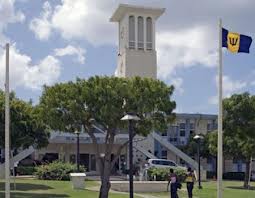
Theoretically economic laws tell us that if we connect all the world knowledge pools and promote greater trade and integration the global pie will become larger and more complex. Implicit is the trickle down effect which will increase the living standards of the masses. Also implicit is the greater and more specialize the knowledge the greater will be the amount and value of jobs coming on stream. Hence the nation able to significantly increase it s knowledge force will enjoy a larger share of the pie. Among other things the theory assumes rationality of behaviour which is simply not the case. The global playing field may be flat but certainly not level. Countries differ in terms of the amount of land space, natural resources, people, markets and power. For this reason especially post secondary education should be structured to facilitate strategic development as is the case in China and other countries.
Not long ago the goal, an extension of no child left behind and unique only to Barbados was said to be a university graduate in every household by 2020.
The Pro Vice Chancellor told the Cabinet he envisioned 12000 students in the next 4 years of which 20% will be masters and doctoral grads (Advocate 2/22/2011). Now Tertiary education is said to be “critical to the strategic development of the country.” The Cave Hill Campus and the expansion should be seen as a growth area. Having a township to accommodate 15,000 will make a “profound contribution to the country’s development” (Advocate 05/07/2012).
It is unwise to copy the development plans of others. Trinidad and Jamaica like Guyana have land, resources to develop and a bundle of people. Guyana is now into oil and gold production and Jamaica into large scale agriculture. It is understandable that they seek to expand the university as part of their “strategic development.” We have only a few square miles of land, no natural resources and about 310,000 people. The economy apart from tourism, over which we cannot control, is basically a ‘service’ economy. Right now we are producing lawyers, social scientists and little else. There is no way our economy as constituted can absorb our graduates. In resource rich USA kids are leaving university with an average $40,000 in debt and no jobs. Much the same thing in Canada.
Our economy as constituted cannot reward the increasing black mass. Education as currently structured cannot improve black socio-economic mobility in an economy ill-equipped to service the population. Migration doors, a saviour in the past are more or less closed. Chances that poor kids will be able to climb the income ladder will be greatly reduced, returns to education will continue to diminish as the gap between black and white widens. The socio-psychological implications for the Black Class System and the population is another matter. Imitating the “strategic development” of others is ultimately destructive. Among other things it will increase the ongoing diminishing returns to education.
Right now we have 870 students more than 50% under 24 years of age (Advocate 7/11/2012). I believe less than 100 of them are foreign. It is cheaper to send kids in the region to Trinidad, Jamaica or Guyana. Some people chose to send their kids abroad. More than 80% of the 1297 students in 2011 graduated with honours; 367 with post graduate degrees (Advocate July, 14, 2012). How many are or will be employed? Expanding Cave Hill into a township to accommodate 12000 students by 2020 and producing a product for which there is no demand is a bad joke. That turning it into a township primarily for Bajan students will make a profound financial impact in terms of foreign exchange is simply ridiculous. Codrington College as a graduate division of a top UK university may require a township, but it has nothing to do with you
Not all “standard” education is strategic to our development. Many of the world’s leading businesses were started by souls with less than a secondary education. Four white “Indentures” built and developed Bridgetown. Pine Hill products apart few of the products we make are available in the islands and Falernum is virtually unknown outside Barbados. For Cave Hill to support positive economic development we need to restructure post primary education to take advantage of what we have: to the ‘potentially productive sectors’ and courses related to manufacturing, small business, agriculture, technology, research and our history. Right now Research like Marketing and Case Studies is a bad word.
Positive activism requires a constant supply of ideas and innovation. Cave Hill and the public libraries are terribly short on books, journals, business and other socio-economic publications. It says a lot when persons are citing Wikipedia. Two blogs on post primary education written last year addressed the problem and offered suggestions. To learn more read A Look At Cave Hill, and A Look At Secondary Level Education.




The blogmaster invites you to join the discussion.