



Submitted by Yardbroom
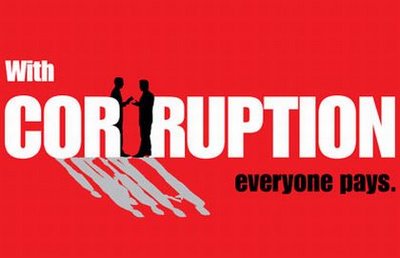 The word “corrupt” in reference to politicians in Barbados has become so entrenched in colloquial usage, the seriousness of that charge has almost become irrelevant. This presents dangers in that cases of “genuine” corruption will escape public scrutiny and secondly, hitherto unblemished politicians can easily become besmirched. It also allows politicians not to give an adequate or timely response to questions posed about corruption, even if there is a “prima facie” case to answer. The over-use or inference of corruption, often by men thought wise and even learned, particularly by those with party affiliations to massage, is most unfortunate.
It is wise before aspersions as to bribery/corruption are cast on individuals to ask, what is the evidence? “It is a common law offence for an officer who has a duty to do something in which the public is interested to receive a bribe either to act in a manner contrary to his duty or to show favour in the discharge of his functions.” Do note that even when a “prima facie” case can be made this is not always enough for a successful prosecution.
By way of example when “South Africa’s – then deputy – President Jacob Zuma came under investigations for allegations that he attempted to solicit a bribe from the head of the South African branch of the arms company Thomson in return for protecting the company from investigation and giving it “permanent support”. The case was brought to an end when the director of prosecutions, Bulelani Ngcuka, announced in August 2003 that Zuma would not be charged because although there was a strong “prima facie” case against him, the government could not be sure of winning the case in court.”
Directors of prosecutions are often loath to prosecute high profile politicians for a fear they will lose. They also know there is a possibility that the local defence barrister is likely to be in the top bracket, also questions could be asked about their political reasons – although there might be none – for bringing the prosecution. These reasons are of particular import when there is perceived political bias in the judiciary.
Where the judiciary take their responsibilities seriously are are as eager to stamp out bribery/corruption as the over-burdened electorate; strong signals can be sent to unscrupulous politicians. Only this year “Janos Zuschlag one of Hungary’s best known politicians was sentenced to eight and a half years in prison for embezzling state subsidies. This corruption case the first time ever in Hungary for a member of the ruling party – in this instance the Socialists” is evidence of that.
“The timing of the Zuschlag ruling raises more questions – the case ended just before the April 11 general elections. The court may have wanted to send a message to politicians and the public about corruption”. It also signals you are never so mighty that the justice system “properly administered” will not hold you to account. I have always been in favour of Integrity Legislation, but I believe it is the “Judiciary” who will decide the success or otherwise of it.
Politicians before entering politics must seriously ask themselves why are we entering the political ring…because their actions should be accountable and subjected to public scrutiny. Do they see politics as an avenue to quick riches? because as a politician you must be at arms length away from practices which otherwise would not have constrained you, if only for propriety’s sake. For those who enter politics with the bland statement…”I want to help the poor”. I am often minded to ask, how? For I believe that those who have an ideology with fairness at its core, with the required element of altruism are often best placed to do good.
Even great nations have been brought to their knees by bribery/corruption. In “186 AD in Rome the army strangled the new emperor, the practice of corruption began of selling the throne to the highest bidder. During the next 100 years Rome had 37 different emperors – 25 of whom were removed by assassination. This contributed to the overall weakness decline and fall of the empire”.
We have a lot going for us in this little island of ours Barbados; we should not see ghosts where there are none, neither should we allow for Political Parties to hold aloft a collective umbrella under whose cavernous shadow politicians can hide their nefarious activities.
I seek not to draw an analogy here; where it is not merited but it would be un-wise for us not to reflect on the road where others have laboured, particularly when the the message is from a literary giant:
“Rome was originally, when it was poor and small, a unique
example of austere; then it corrupted. it spoiled, it
rotted itself by all the vices; so, little by little we have
been brought into the present condition in which we are able
neither to tolerate the evils from which we suffer, nor the
remedies we need to cure them.”
Titus Livius (59BC-AD17) Know as Livy in English


The blogmaster invites you to join the discussion.