



Submitted by William H Harriss
GOOD LUCK WITH THAT
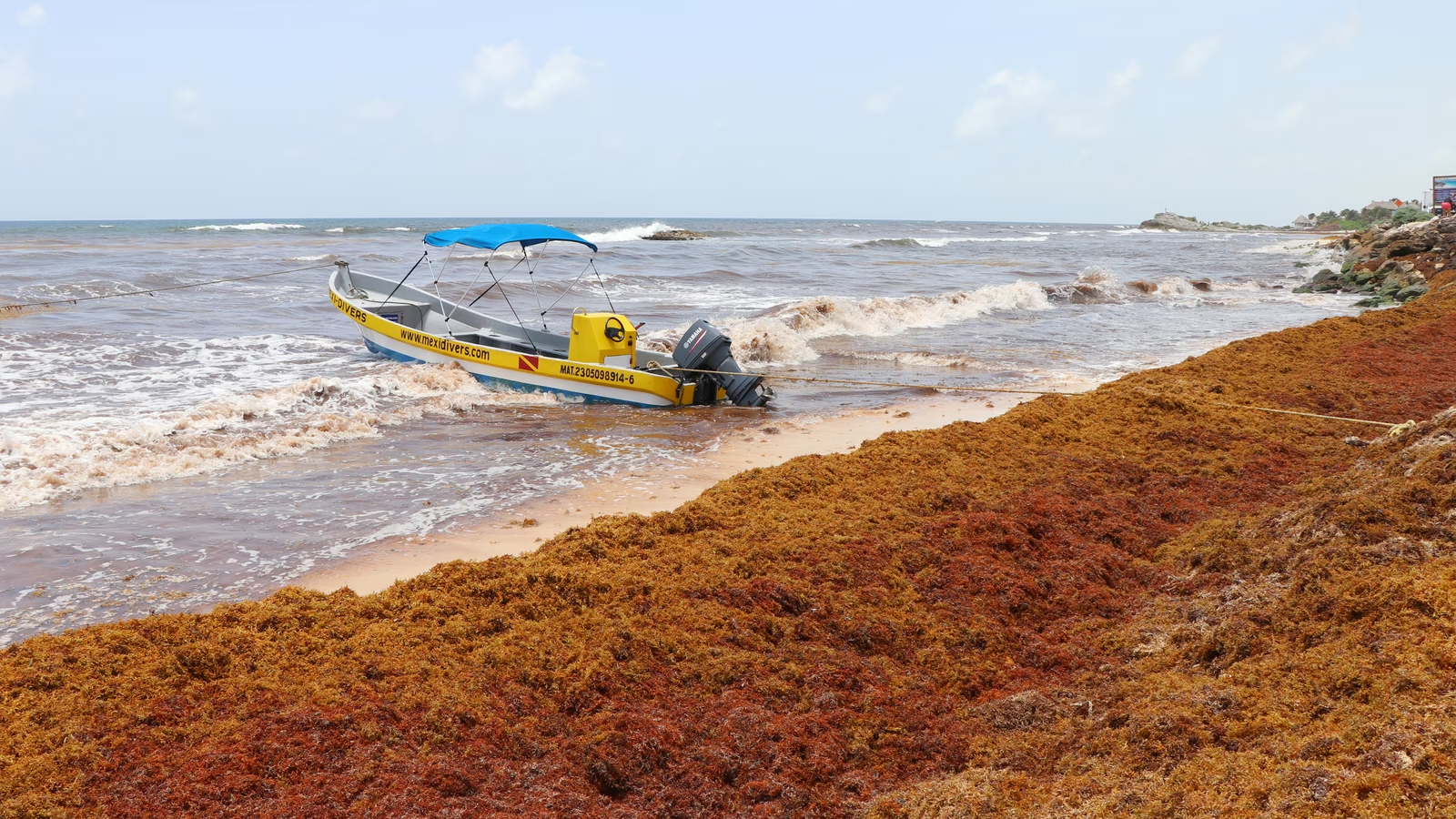
Large Sargassum invasions will reduce sea current power output by clogging turbines, slowing water flow, and increasing maintenance needs, especially at Saint Vincent’s windward coast where blooms have intensified since 2011, to an ultra serious problem in 2026.
Why Sargassum invasions matter for marine energy.
Sargassum events in the Caribbean have become more frequent and larger due to nutrient enrichment, warming waters, and changes in ocean circulation
These floating mats now reach tens of millions of metric tons in some years, driven partly by altered Atlantic currents and seasonal movement patterns. This year the Sargassum belt is 8,500 km long and is estimated to contain 60 million tons.
Because sea current turbines rely on unobstructed, predictable flow, any large biomass influx will disrupt performance.
How Sargassum affects sea current electricity systems
1. Reduced water flow and lower energy capture
Dense Sargassum mats can slow near surface currents and create turbulence. Changes in Atlantic circulation have already redistributed Sargassum into new regions, meaning turbines placed in previously stable flow zones may now experience seasonal flow variability. In the case of Argyle that flow may be year round and all year long.
2. Mechanical fouling and clogging
Sargassum accumulates in thick layers that can entangle or obstruct moving parts, similar to how it clogs fishing gear and boat propellers. Turbines with open rotors or intake screens are especially vulnerable.
3. Increased drag and structural stress
Large mats can wrap around turbine housings, increasing drag and forcing systems to operate outside design parameters. This is analogous to how Sargassum smothers seagrass beds and coral by blocking light and water movement
4. Corrosion and chemical impacts
Decaying Sargassum releases hydrogen sulphide and organic acids, which can accelerate corrosion of exposed metal components, especially in shallow deployments.
5. Higher maintenance and downtime
Caribbean Sargassum events have grown in scale and duration since 2011, meaning operators may face seasonal shutdowns, more frequent cleaning cycles, and higher operational costs. Shut downs at times may be inevitable to preserve the generators. So there will be a heavy eleiment of unreliability.
Saint Vincent specific considerations
Saint Vincent and the Grenadines lies directly in the seasonal path of Sargassum transport:
- Now all year round, Sargassum moves toward the Caribbean via the North Brazilian Current retroflection
- The worst invasions occurred in 2018 and 2022, with intensification continuing into 2023 and now again in 2026.
This means sea current generators in the region must be designed for biomass surges. There may even be times when the generators are useless and unuseable.They will be turned off to avoid serious damage.
Mitigation strategies
Operators can use these tools to plan maintenance or temporarily shut down turbines during peak influx.
Engineering adaptations
- Larger debris tolerant rotor designs
- Protective screens with automated clearing
- Subsurface placement below typical Sargassum depth
- Corrosion resistant materials to withstand chemical exposure
Operational planning
Aligning maintenance windows with known seasonal movement patterns (e.g., May–June Caribbean arrivals) reduces downtime.
Key takeaway
Sargassum invasions do not make sea current electricity impossible, but they nearly do, they reduce efficiency, increase equipment wear, and require adaptive design and monitoring.
When Sargassum passes through turbine blades it becomes chopped up and fragmented. Each piece of Sargassum with a float bladder will develop into a full bloom within 20 days and increase the local belts and mats of Sargassum by a hundred fold.
I hope that SVG are taking proper advice before asking for a professional survey and evaluation of such a scheme. Because if you guys are paying for such a survey our money will be totally wasted? Because I as a citizen with untold expertise regarding Sargassum, I can tell you for free that Sargassum will be a massive problem at Argyle. Next year the Atlantic Sargassum belt is forecast to be about a 100 million tons and the greatest influx ever should be expected.
I am currently working on a project to control the Sargassum flow in the Atlantic with a South American university and West African government agencies. Anyone interested can see on my Linkedin page what I have been writing about. I am unsure at the moment that we will extend the project to the benefit of the Caribbean or not. We made approaches to the Barbados Government and CARICOM but they have shown little or no interest, they do not even acknowledge emails. So it may well be the Caribbean will be left out of the scheme to continue suffering the ever increasing curse of Sargassum invasion.





The blogmaster invites you to join the discussion.