

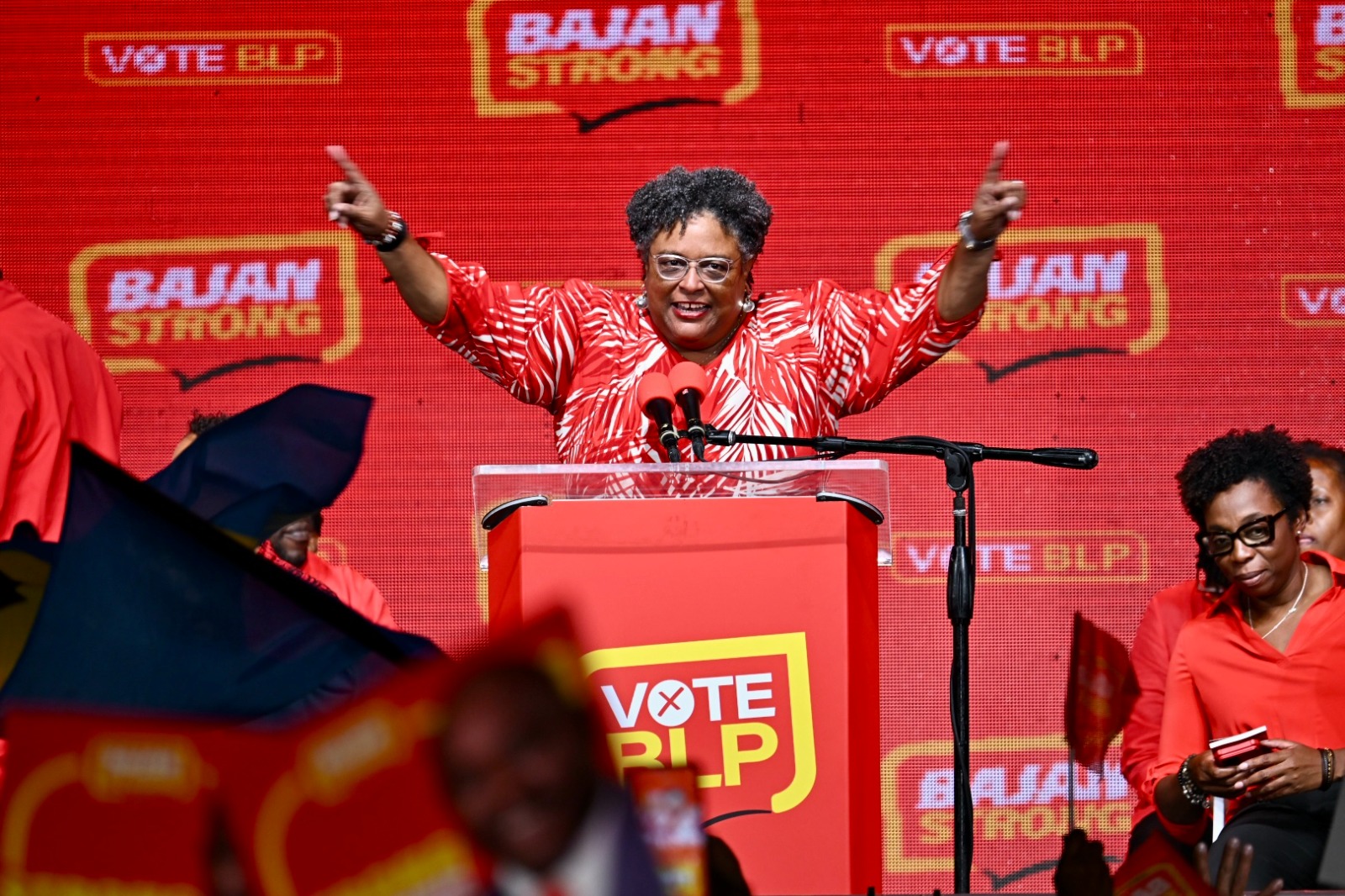


We have been hearing the term dictatorship should the Barbados Labour Party (BLP) win in dominant manner again on the 11 February 2026. What is meant is that we fear a de facto dictatorship which describes a system that keeps the outward appearances of democracy i.e. elections are held, there is a Constitution in place?, the Upper and Lower Houses of parliament assemble weekly, BUT, despite the appearance, there is no political competition or opposition politics. Alternative politics is unable to gain a foothold in the minds of members of the electorate. As a consequence, political power becomes concentrated in the hands of one leader or one party. In our case, the BLP.
The BLP dominated the polls in 2018 and 2022. As a result, we are seeing a lack of interest in parliamentary debates by the citizenry. This is especially true given the absence of elected members from opposition parties. Many opine that first Atherley and now Thorne represents contrived or opportunistic opposition, instead of the preferred organic development in the roles.
The blogmaster failed to find any scholarly research to understand the blurred lines forming between Barbados being a de factor dictatorship, and a living breathing democracy. A condition being driven by challenges that come if one political party continues to be dominant. The two consecutive 30-0 victories by the BLP under Prime Minister Mia Mottley are impressive. However, they run counter to how a Westminster system is framed to work. Think about it, when a political party wins the government, it has control – with the BLP winning all the seats (no disrespect to Ralph Thorne, but he won on a BLP ticket), dominance of the system becomes absolute. We have seen our parliament ceasing to function as a space of muscular political debate. If the parliament was considered a porakey place before, it has now a circus.
The absence of an opposition bench should not be trivialised. The blogmaster continues to flush the counter argument that a dissenting voice is possible outside of parliament. Especially with the rise of social media. Rubbish! Of course social media must continue to play an advocacy role, BUT, it cannot replace the formal role that is preserved for elected members of parliament. A role that questions and exposes proposed legislation for example. What about the oversight committees that are set in parliament to ensure rigour is exerted to parliamentary activities? Our system of governance it designed to be adversarial for chrissakes.
Those of us who are still aware of our civic responsibility reasonably expected that the Parliamentary Reform Committee (PRC) would recommend jettisoning the first past the post system. The committee was expected to show favour to proportional representation. Additionally, the selfish political act by Prime Minister Mottley to refuse to provide subventions to fledgling political parties only serves to make the threat to democracy as we know it more acute. It has created the environment to see the rise of the dominant party. We have a democracy in name only, one that is missing a critical plank in the support of the system, an elected opposition.
The blogmaster is not prepared to describe Barbados as an autocracy. However, if conditions created by repeated 30 to 0 victories continue after 11 February 2026, then we will have to admit there is a structural issue. This issue must be addressed concerning the democratic system that has brought us thus far.
The real question for Barbados is not whether we have a dictatorship but whether our institutional framework is resilient enough to address the dominant party rule from becoming permanent.





The blogmaster invites you to join the discussion.