




Over the past few days I’ve seen several articles in Barbados Today on praedial larceny and the futile pleas of farmers whose crops are continually targeted. That we don’t have adequate means of combating this scourge is simply remarkable and pathetic.
I remember at the beginning of my second year at St Augustine in 1974 we had a one week survey camp for the Civil Engineering class. It was held on a farm specializing in dairy and food crops. Close to the access road there was a grapefruit orchard with the best looking grapefruits I have ever seen. I remarked that the grapefruits looked really nice. One Trinidadian student responded that one could get up to 5 years in prison or a hefty fine for just stealing one grapefruit.
Many years later I came across the Praedial Larceny Act of Trinidad and Tobago which was enacted as far back as 1968. That was well over 55 years ago and shortly after Trinidad became independent. We are going into our 59th year but still haven’t been able to enact a meaningful piece of legislation with stiff penalties and long jail times along with adequate policing and monitoring.
All we need to do is to get the Trinidad document and modify it appropriately. What’s so difficult about this? The politicians who claim to be encouraging local food production need to get up off their asses and do something about this scourge.
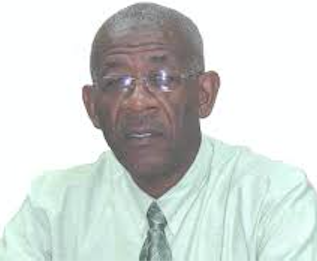
– Bentley Norville
There’s nothing more to add to Bentley’s quote, — it lays bare the problem endemic in our society. Barbados loves to wrap itself in pretty talk: food security, food sovereignty, green economy, resilient farming. But the people who grow the food are being robbed blind, and those charged with decision making cannot be bothered to lift the rh proverbial legislative finger.
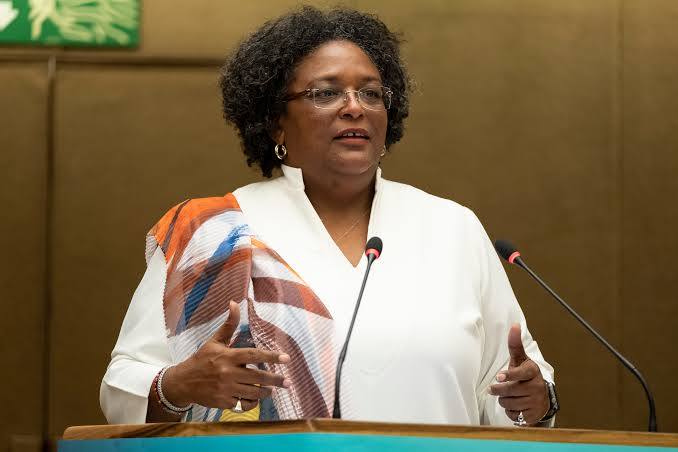
This praedial problem has been a perrenial problem. Local farmers have been begging for help for decades. Instead of action, they get platitudes. Instead of meaningful protection, they get empty meet and grin opportunities with the prime minister or her disciple minister of agriculture Indar Weir. If a farmer reports a theft, the police are often indifferent, although to be fair, what can they do in the prevailing circumstances? If the thief is caught, the punishment is less than for a spliff.
Meanwhile, as pointed out in the quote by Bentley, Trinidad had the foresight to pass a proper praedial larceny law in 1968 — just six years after independence. Barbados is going into year 59, and all we’ve done is talk and tinker while the fields are left vulnerable. In the interest of fairness the blogmaster’s research revealed the PROTECTION OF AGRICULTURAL PRODUCTS AND LIVESTOCK ACT, 2017–27 for Barbados. However it is little surprise that what is intended is not being enforced. This is our big problem, an innate inability to enforce laws on the statute books.
Ask any farmer — it is easier to grow food than to keep it. And once that reality sinks in, many give up or plant less. What’s the point, when the system does nothing to protect your labour? A simple activity like planning different crops to be harvested at different times to avoid glut is a big deal for our intelligent decision makers. Unless you are a farmer with access to guns, you are a sitting duck. Yet, Mottley and Weir will appear on CBC or at Agrofest preaching about food security, urging Bajans to grow more, buy local, eat what we produce. #pappyshow
Let’s be honest — Barbados is addicted to imported food. Over 80% of what we eat comes in through the port. When the global supply chain is interupted, we panic. Remember what happened during the pandemic? But still no urgency from the people in power to enforce legislation or to give it more ‘teeth’. What we do well in Barbados is write reports, establish committees, and stage consultations – do not forget Invocations.
We are now left with a farming community worn down by theft, fustrated by inaction which translates to a demotivated group. Those responsible continue to be a drain on the blogmaster’s optimism. There’s no sovereignty without enforcement. There’s no food security without protecting those who produce the food. Duh!
Until the political class finds the courage to protect the farmers — then all this talk about growing what we eat is nothing more than a photo op on a plantation cart road.




The blogmaster invites you to join the discussion.