



By Dr. Tara Inniss
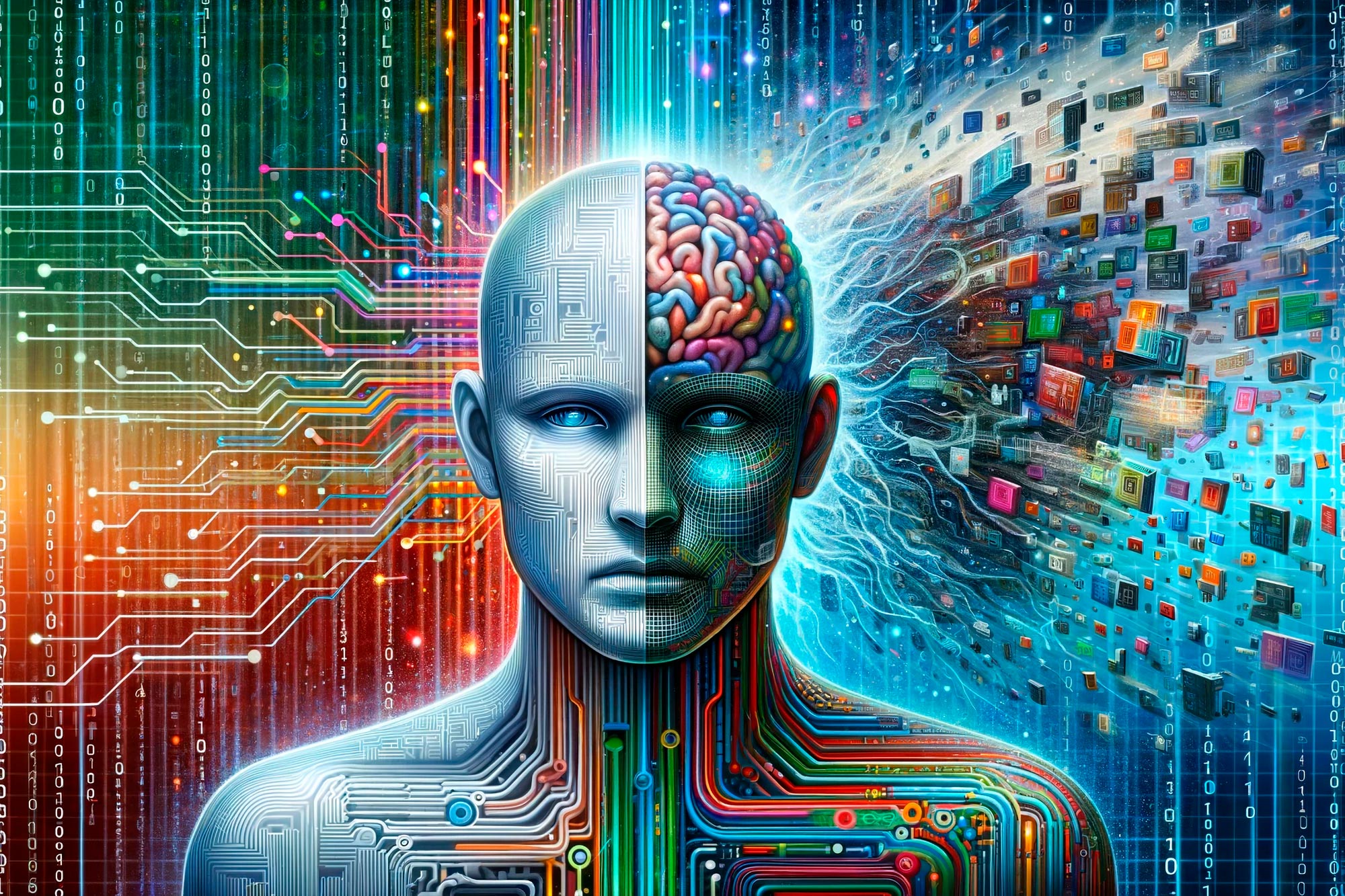
I have decided to make a conscious effort to navigate this age of Artificial Intelligence (AI) as a Human (at least for now). I can’t help it. I am in the Humanities after all. Never have I felt prouder to be able to say that until this moment. AI is both an expansive tool for humanity but also an existential threat if we become the tool. As a humanist and an historian I have had to rely on so many of these skills of late and I would like us all to communicate what the prospect of AI can do for us as humans and what it cannot (yet). This is a time-stamped conversation of course, but it is important to document. I would like to make a conscious effort to say when I am using AI and when I am not. I would like to use AI for some reasons and not to use it for others. I would like to consciously affirm that if I have used it, as a creator of that message and writing that I have reviewed, edited and approved what I sent.
I hope this doesn’t get time consuming but at the same time if it does, I should not be expected to work harder and longer to verify and authenticate the information I receive from AI or what I don’t. As a Human user, I should not be expected to do more with an expansive tool, I should be expected to use it wisely and free up more time to be human. However, I note that as an academic and a teacher, the uninformed, unconscientious, and unconscious use among students and even colleagues does take up a lot of my time to decipher so that is a tick in the negative box. We will need to navigate that in the field of education. But of course, we are deploying this technology in schools without actually considering ethics and pedagogy first.
It is important to note that we all use AI in many online applications that we are completely unaware of, but I am talking about the newer applications that have the power to produce meaningful thought that we can pass off as our own.
Over the past week, I have used AI to help write letters to Government and declared unequivocally that it was me who sent them with the assistance of AI. I have used it to review a legal film contract that I wanted to know would infringe on my digital rights. It did and automatically gave me text to communicate a revision but having to do that actually cost me loss in time to prepare so we are at deuce. I tried to use it for research. It was great for answering an in depth question in a field outside of my own — economics — but I had to have a fairly insightful prompt in my own discipline to get that response and continue prompting insightfully. But for something in my field, it offered a very bland response so that made question the whole thing. But its speed is amazing. Its breadth is far-reaching (but not far enough — yet). Its analysis of complicated scenarios is stellar but you have to understand first that the scenario WILL be complicated so it just verifies how challenged you might feel in asking a prompt as a Human.
But overall (and maybe so far), the most insightful thing about this process is that it is making me think about the prospect of what the differences are between living in a digital world versus a real one as a human. It makes me want to explore those thoughts in a human way even if that is asking AI some very human questions to understand the scenarios that I am working through. It has affirmed in a very visceral way for me that I am human. And, I wonder for our children who do not have the benefit of living in an analog world will know what that means. And it is a benefit. I regard the life that I have led as a child of the home computer age to be prepared for this moment. I can question outwardly where our ancestors could not. I am equipped to learn but also to question. I just worry that those skills as humanists and historians and philosophers and psychologists and writers and linguists and as teachers will be lost — because we deal with human subjects in a human way, and that should not easily give way to technologies that erode our humanity. And like our ancestors, our children will not be able to speak up to say anything because no one will know who they are. If technologies help us to be human, to contemplate our past; to think; to understand the mind; to read and research; to speak in our own languages and to teach human learners then, I am all for it. But we will need methodologies and structures that help us to do that ethically and mindfully. We will need to acknowledge what it is like to be Human. We will need the Humanities.
So that is my little plug for the Humanities in this moment — but perhaps there are forces that recognise that the need is also a challenge. It will say more about regimes who dismantle the Humanities and subjects that teach critical analysis to separate fact from fiction. If such regimes take away the opportunities to know ourselves as humans — especially as Caribbean people — better in this moment, it tells the world — they don’t care about humanity. If we are asked not to question, then that erodes a central tenet of being human. And we are seeing that play out on the streets in countries that have decided they don’t care about humans. They rip babies from mothers’ arms to place them in babies’ arms. No one should rip humanity out of the analog generation’s arms to dump it into the fraught embrace of a youthful, but immature digital one.

We need to think, do and feel. And we need to have structures to regulate, monitor and implement with compassion and protection of people as the goals. Until we learn those lessons from our own humanity and repeat them to our children — in our own experience as humans living in this region who were once dehumanized we are prone to repeat the past. When you watch, listen and think for yourself while navigating your own environment around you, you are already taking what is now a bold step in being Human.
Technology is a tool. Don’t be the tool.
Many thanks to a family member who is another humanist academic who gave my son this beautiful gift of a real book called “I am Human: A Book of Empathy” By Susan Verde, Abrams Books for Young Readers, New York 2018. It is probably the most poignant book I read and shared this week. Adults read it to your children. Children read it to your parents and one another. Keep reading. Digital literacy requires literacy first.
For reflections on other similar topics visit https://historyforumcavehillcampus.blogspot.com/.





The blogmaster invites you to join the discussion.