← Back

Your message to the BLOGMASTER was sent

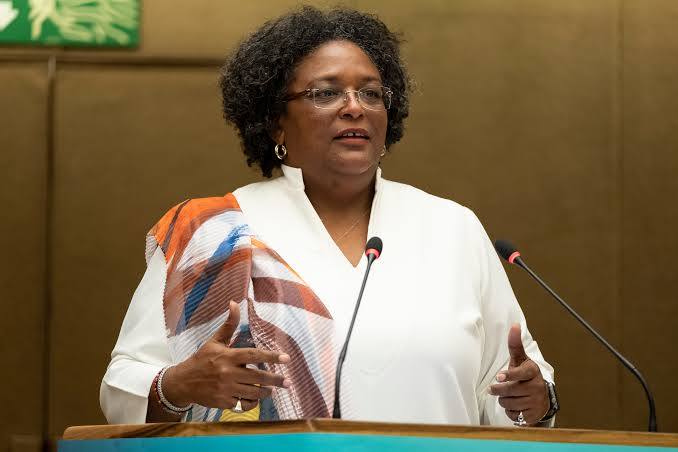
Mia Mottley
Prime Minister Mia Mottley and Chair of CARCOM

The HoGs are in town attending the 48th Regular Meeting of the Conference of Heads of Government. For those who entertain the dream of achieving a One Caribbean, the gathering if nothing else, keeps hope alive that someday Caribbean islands will rise up and achieve true integration.

The aspirational goal of CARICOM is stated to promote economic integration, social development, and functional cooperation among its member states, fostering a unified Caribbean identity. It aims to enhance the quality of life for Caribbean citizens through sustainable development, human rights protection, and regional resilience. The CSME (Caribbean Single Market and Economy) is a key initiative within CARICOM, thriving to create an elusive single economic space that allows for the free movement of goods, services, capital, and people. The ultimate goal is to increase competitiveness, economic growth, and social progress across the region while reducing poverty and inequality.

In the words of one of the reggae greats of the region:

Two of the talking points which caught the interest was Prime Minister Mottley addressing the need to repurpose our education system that is in ‘shambles’. It is noteworthy that while addressing the same forum President of the European Commission von der Leyen labelled the education system in the region as strong. An example of the rhetoric that is always present at these heads of governments meetings which is characterised as all talk and no action by a majority of regional citizens. It is all about kicking the can down the road for many.

The other issue was Prime Minister Andrew Holness seeing “gangs as an existential threat. Obviously, the ultimate case would be with the situation in Haiti but we also see gangs acting in ways and committing acts that can only be described as acts of terror“. He was bold to reference Haiti as the ultimate case of how the gang threat can play out for tiny nations of the Caricom. His call to action (arms) was direct – “I begin to call now on this CARICOM platform that there needs to be a global war on gangs in the same way that there is a global war on terror. If the gangs are allowed free rein, they will challenge the effectiveness and undermine the states, which we are seeing happening not just in the regional Caribbean, but in the wider Central and South America

The blogmaster agrees with the concerns raised my Mottley and Holness, it is good both have spoken directly to two issues which are fundemental to creating stable societies and driving advancement. Both issues have been pillar issues of Barbados Underground from inception. The culture of our communities unfortunately is led by the political directorate and only then will the traditional media and talking heads in other areas of civil society jump on the wagon to keep important issues on the front burner in a systematic way.

If Mottley is serious about transforming the education system, is it unreasonable to expect that Barbados should be a case study for what is required? Let Barbados be the change maker Prime Minister Mottley. Enough of what you and others do well, talk!

Holness is eminently qualified to discuss crime and the other HoGs should listen with rapt attention. It should be obvious Barbados- would you have believed it- and other Caribbean states are on auto-pilot trajectory to the Jamaica crime experience AND potentially Haiti. Some will suggest this is balderdash from an alarmist. If historical and current events in recent years are insufficient to convince doubting Thomases about achieving failed state status because of crime and an irrelevant education system, then lighting a candle in a storm is the perfect metaphor.


Discover more from Barbados Underground

Subscribe to get the latest posts sent to your email.

32 responses to “CARICOM: Lighting a candle in a storm”


  1. The “Caricom problem” just sounds like a bad Network internet connection
    Life is full of problems that need solving and not moaning about like an ungodly woman

    Jah Vengeance
    Out of the hills of Zion, comes
    Jah lightning.. and thunder

    Jah vengeance surely will come down, on anyone
    Who still insists to stay in wicked Babylon
    The God shall roam.. and shake the land
    The Lord shall roam.. and then, they’ll know


  2. Wow!

    It’s amazing how officialdom and their media proxies unquestioningly accept prescriptive notions as if these are unavoidable points of departure.

    As some one determined to always question false narratives, be afraid, this is such another case.

    Von de Leyen, came from a Europe, a still colonial grouping, which itself has become no more than colonial outposts of America.

    And she returns today to a Europa, a European Union and NATO embroiled by deep internal turmoil, with right wing forces in rebellion against her obeisance to Washington, collapsing economies everywhere, deepening political fissures, the total collapse of wokeism, made fools of in relationship to Ukraine and is left within a geopolitical no-man’s land by a Drumpf administration set to jettison the fictitious ‘special relationship’.

    And these are the people a Mia Mottley will invite to lecture us about regional unity. The kind of people who instantly receive soft peddling within these pages, uncritical acceptance. Even as the EU has been, for years denying migrants, generated by their own wars from seeking sanctuary.

    And is Mottley’s, Holness’s and Caricom’s war on Haiti, under the rubric of fighting crime, even as a hybrid war against Haiti, backed by the partially concealed hand of America, not make Mottley and Holness the same as von de Leyen.

    Where some look for hope, as elusive as it is, weeee see nothing more than a motley bunch of losers seeking solace in numbers. For the world has entered the end of their rulership, their philosophical dependencies – like it or lump it!


  3. If Mottley is serious about transforming the education system, is it unreasonable to expect that Barbados should be a case study for what is required?
    ~~~~~~~~~~~
    Boss ..
    Bushie warned you about that shiite kool aid that you insist on sipping….

    Ms. Mottley has been in Parliament since Adam was a lad.
    She served in the opposition, government, as Minister of Education, as Attorney General, as deputy Prime Minister, as Prime Minister, and most recently as ‘dictator in chief’ – “vetting” all ‘big works’…

    If therefore, she is “serious about transforming education” then our dog is as dead as a doornail…
    …cause THAT means that she has NO CLUE how to do it – even after 40 years of unriveled opportunities.. and some of those were years when ‘money was no problem’.

    If FORTY YEARS of failure can be reversed just because some white woman from Europe came here and said what Bushie and BU have been saying now for DECADES…
    ..then, thankfully – miracles are with us.

    ..or WAIT!!!
    .. perhaps the EU people read BU…. for the REAL news about Brassbados…
    LOL

    BU is a BOSS!!!


  4. Woke Woke Woke Woke is all I ever hear
    from moaners and the right who are wrong
    the politically incorrect
    so don’t think your third eye intuition is awakened
    there are different stages of awakening
    and this is a life long practice sometimes it takes lifetimes
    so we just continue going in the direction of third eye awakening
    which just means your intuition keeps getting better and better and better
    and there is no limit you can keep continuing going on this path
    and keeps progressing evolving so let’s not focus on a destination
    and lets keep continuing enjoying this journey of awakening


  5. @ David; @ Bushie
    @Bushie is correct, Barbados cannot be a case study because there is no case to study. We have been bumbling about education reform for the past three years and we have persisted with the Eleven Plus when all evidence calls for its termination.
    The entire Caribbean educational system has essentially the same problems and if we could collectively review the system, that would be the best way forward.
    On another note , we are very disappointed of of our leaders response to the current geopolitical developments , but will reserve further comment at this time.


  6. @William

    Note the wording, the suggestion is that we should be a case study in a new dispensation for education IF Mottley is aware of the need to pivot from where we are currently positioned.


  7. Flu stirring. Quite nasty, lethargy, fever, chills, stuffy and alternately runny nose. Appetite still good though. I haven’t gone outdoors since Monday and wunna know that I am an outdoors person. My experience is that this is worse than Covid19 in a person who had been vaccinated, but not anywhere as bad as dengue. My one experience with dengue is that it is a monster. With dengue I felt as though I was going to die, but not at all bothered by that, because at that point I felt that anything even death was better than the illness. Ooops!!! I neglected to take my flu vaccine. I haven’t yet gone to the doctor but may do so tomorrow. I will take my flu vaccine in future.
    Not at all surprised that the QEH like other hospitals in many other places is jammed.

  8. EVER HOPING FOR CHANGE Avatar
    EVER HOPING FOR CHANGE

    Blogmaster: This is one of the BEST editorials you have ever submitted. I would like to compliment you on its content and presentation.

    When we come to the various comments made I cannot say the same.

    First of all Ursula Von Der Leyen (that’s how her name is spelled) is at TOTAL loggerheads with the current administration in Washington and so is NATO. So commentators do some more homework. The world is changing at WARP speed.

    With regards to the Common Entrance Examination this has been hanging around the necks of the Ministry of Education for the better part of 50 years NOT THREE.

    The ONLY hope for the Ministry of Education is to dismantle it and Privatize it then our Precious children could get the education they are in such desperate need of.

    With regards to the “talking heads” and gangs, I have been out of Barbados for a while but if in fact gangs are now an issue in Barbados as they are in Haiti and as PM Holness says they are in Jamaica it is HIGH TIME to do something about that and stop talking. (PUT BOOTS ON THE GROUND AND HEAT IN THE HAND) And no “Sanctuary” for the higher ups – political or otherwise. The majority of the citizens want to live in a law abiding country.


  9. @Ever Hoping For Change “The ONLY hope for the Ministry of Education is to dismantle it and Privatize it then our Precious children could get the education they are in such desperate need of.”

    So many hanker for the “good old days” when Harrison College was an all white, all male school, and now that it is a largely black, largely female school, people are crying for the good old days, no thought for the precious black girls who in the “good old days” could only hope to work in somebody’s field or somebody’s kitchen.


  10. Mottley rolls out raft of decisions

    Prime Minister Mia Amor Mottley unveiled a raft of decisions for access to health, education, vehicle insurance coverage and other benefits to Caribbean nationals as they move from country to country under the free movement initiative.

    Mottley, chair of CARICOM, set a blistering pace for the 48th Regular Meeting of the Conference of CARICOM Heads of Government held here last Wednesday to Friday, with the group meeting from 9:30 a.m. on Thursday until 1 a.m. Friday to return for a 10 a.m. start later that day. “We worked through the last two days recognising that we are facing grave uncertainty, recognising the need for greater review of our institutions and our work programme, concerned about stability and security of sister nations, such as Haiti . . . ,” she said during a press conference Friday night. She said leaders were able to address freedom of movement, with one of the major decisions being there will be settled arrangements allowing smaller members of the community to act without requiring unanimity.

    That was important, Mottley said, because if the protocol for enhanced cooperation is ratified by the end of next month, it will open the way for “a number of countries to be able to admit the possibility for freedom of movement, for CARICOM nationals from June 1, with the according rights of primary and secondary education, emergency health care and access also to primary health care, recognising families will move and that this will be the suite of rights . . . available to those countries that will want to participate in the freedom of movement.

    “We are conscious that this region, with the exception of Haiti, has an acute problem of a declining and ageing populations. Therefore, it is imperative we move away from the gradual approach to the freedom of movement and move to the point where those of us who believe that we are ready for it can open up to ensure that that possibility, that has long been like the Holy Grail of the integration movement, can now become a reality in this year of 2025,” the Prime Minister stated.

    To accommodate this movement, an intergovernmental working group, to be chaired by Trinidad and Tobago’s Minister of Foreign Affairs Amery Browne, will identify in six weeks the work programme for the mutual recognition of driver’s licences, insurance products for vehicles in multiple countries, the harmonisation of customs and phytosanitary regulations for the seamless movement of goods, and the dismantling of 57 nontariff barriers identified by the Caribbean Private Sector Organisation.

    Mottley said CARICOM took a clear decision that after 22 years of the Rose Hall Declaration, there was a need to commission a quick but not long review of the governance and financing arrangements.

    “But we are very clear that we are committed to remaining a community of sovereign states, but would wish to deepen functional cooperation and to explore the possibility of greater political presence in the region . . . . The reality is that the Caribbean has strategic objectives that we must meet. Therefore, we recognise the urgent imperative of having another voice, but it will not be at the expense of our current constitutional arrangements. The Revised Treaty of Chaguaramas is premised on the simple fact that we are a community of sovereign states that commit to working with each other.”

    The group had an audience with Secretary General of the United Nations António Guterres, President of the European Commission Ursula von der Leyen, Commonwealth Secretary General Baroness Patricia Scotland, president of Afreximbank Professor Benedict Oramah, executive president of the Development Bank of Latin America and the Caribbean Sergio Díaz-Granados, and new president of the Caribbean Development Bank Daniel Best.

    “We spent the majority of our time in caucus because, as was indicated, if ever there was a time for full and frank discussion, particularly to inform not just decisions to date, but approach and strategy as we go forward for the rest of 2025, it is now. ( AC)

    Source: Nation


  11. @EVER HOPING FOR CHANGE

    You be responsible for your comment.


  12. Ali: Cost of critical food items soaring

    The prices of critical food items are soaring across the region, with President of Guyana Dr Irfaan Ali warning that the Caribbean is at a critical stage.

    During a press conference here, he produced statistics on the issue including some on decreased egg production, a problem with which the country is grappling. On the plus side, he said the regional agriculture production has risen in the last two years.

    Ali was speaking at the end of a CARICOM Summit Friday where the heads of government gathered to thrash out solutions to deportations out of the United States, possible shifts in tariffs impositions and a war on gang violence – among others.

    “We are indeed at a critical time, not only from a trade and geopolitical perspectives, but also food security, food production and food prices perspective. Last year had an impact in the region as food prices for cereals, meat, dairies, vegetable oil and raw sugar increased significantly on the global market. Of course, we imported those increases . . . we imported that inflation,” he said.

    Ali, who has lead on food security and agriculture within the CARICOM group, said 2025 was adding “a lot of worry to the situation” when the increased transportation and logistics costs, uncertainty in tariffs and trade rules were taken into account.

    He cited the example of eggs and poultry, pointing out that since bird flu was first reported around March 2022, the situation had become alarming.

    Egg production decline

    “There’s a 20 per cent decline in egg production from the United States and you will know that we source most of our table eggs and hatching eggs out of the US. When you look at the year-on-year increase in the cost of eggs since the first reported case of bird flu, it is a 70 per cent increase. When you look at egg prices as of January this year in the US, there’s a 15 per cent increase. When you look at poultry meat, there is a 11 per cent decline in production in the US, as you know, the US occupy about close to 30 per cent of global market share in terms of poultry meat.”

    The region, Ali said, was examining its supply chain, looking at alternative routes and enhancing and integrating its capacity and capability to withstand a possible “major shock in the global market”.

    “If Brazil becomes affected, then we will have major problems in terms of prices and supply. So we would not only have a price problem, you would have a supply problem. These are the challenges that we will face, at least in the first half of this year and we must be able to plan a strategy that will allow us to withstand these challenges,” he said as the 48th Regular Meeting of the Conference of CARICOM Heads of Government drew to a close at the Wyndham Grand Barbados Sam Lords Castle.

    The 25 X 2025 programme crafted just before COVID-19 had some success with about a 24 per cent increase in food production across the region and major investments in infrastructure from cold storage, farm to market access road, solar drying facility and establishing dairy facilities.

    “We have seen significant increase in private sector investment and lending in the agriculture sector and the food production chain within the region. However, given the current situation, we have established a holistic framework through which the industry and a food system must be built to ensure resilience, sustainability and competitiveness,” Ali said. ( AC)

    Source: Nation


  13. Education crisis called out again

    In light of the alarm sounded recently by the World Bank about the crisis in Caribbean education, I am revisiting some of my articles on the topic. The text that follows combines different articles published between 2015 and 2017, with only slight editing.

    This is an indication of how far we have or have not come.

    If you think that we have a problem managing our water or sanitation systems, what should we say about our educational systems?

    Like our water infrastructure, our educational system has been corroding for a long time. But under-performing students have been as well-hidden as underground pipes. Until now. Bad situations, long unattended to, eventually become critical and impossible to ignore. A seemingly flood of anti-social behaviour has caught our attention. Are we as bad at capturing human potential as we are at capturing rainwater?

    While we engage in our annual rituals of rain dances around the trickle of top students from the Common Entrance tap, as well as the sprinkle of Barbados Scholarship and Exhibition winners, the reservoirs of youth potential in our schools run low. Children leak out of the system untreated, at alarming rates. Disaffected youth are pooling in puddles of stagnation.

    For too long, Barbadians kept believing in the myth of the superiority of our educational system. And so, for too long we continue to get what you would expect to get from the position of head in the sand, bottom up. A nation of people who have been put in the prone position through centuries of deliberate miseducation has to get up and get serious about education and educational transformation. The whole cultural conception of education has to change.

    Can we face the facts? Barbados has an education problem. In fact, all of our problems can be seen as education problems, if only because we are not educated to solve problems, from long time.

    Therefore, the re-education of the nation’s adults, especially leaders, will have to be addressed alongside the education of children. It’s not that our education system has stopped working. It’s working how it has always worked.

    Re-education

    We inherited this system from colonial masters who had no interest in seeing us truly educated.

    Only educated enough to do required work. So, even if you went to one of the so-called top schools, you will still need some remedial re-education to address your miseducation. This can be a hard pill to swallow for a Bajan who is proud of what he or she has achieved in the hallowed halls of local learning.

    But swallow you must.

    Those in charge of our educational system are some of the ones who best mastered it. They know how to work it and make it work for themselves.

    This may lead them to think that the system works.

    If you excelled in our educational system, you may not understand why others don’t. For them to fix the system of education may call for great introspection and the recognition that in many ways, they were poorly educated too.

    People are this nation’s greatest resource. Our problem is that when it comes to developing people, we have not fully evolved out of plantation mode. We are still focused on producing workers and not well-rounded citizens. So subjects like history, civics and philosophy are undervalued. We still think we can chart a future without understanding the past. We still think that we can whip people and the nation into shape without sensitivity, communication, care, patience and time. We are still treating the under-performing students like expendable waste. However, they will not just blow away in the wind. They will blow back in our faces.

    Adrian Green is a communications specialist. Email Adriangreen14@gmail.com

    Source: Nation


  14. Jeffrey Sacks has been previously called upon by Mottley to help Caricom countries draft a proposal to raise capital. He promised to help at little cost.

    Recently, Beckles and the UWI had a forum at Mona discussing international affairs with Sacks again in tow.

    Sacks has recently told the EU that ‘it’s over’. His words not ours. Of course, referring to the self-inflicted purgatory, now inescapable.

    Sacks has been all over the internet for years now talking about the demise of the West and the rise of the East. There not a rasssoul boy in the region willing to bring this obvious factoid front and centre.

    20 years ago Pacha was telling a combination of the above that these circumstances were unavoidable.

    However, strategic confusion has a Mottley bringing a Von de Leyen to Barbados to talk shiiite.

    While these elite at the UWI are leading from the back. Cowards all, who operate on the pretext that they have no interests in offending the dying Western power structures while also fielding at first slip to catch any nic taken.

    Even as Jeffrey Sacks continues to make frontal assaults on the West for decades of crimes, the war in Ukraine, a war Mottley supported.

    Our people are at loss! Only Sacks is worthy to make a needed frontal assault on empire while the lackies in Caricom and the UWI continue, with their begging bowls outstretched, behaving like genuine house slaves.

    At root, Sacks is a staunch critic of Western wars. Where are the critics at the UWI interrogating wars when these international fora are held? How can there be any discussion about international affairs or business and not a boy wants to talk about war? Or are these feckers bringing Sacks to talk about areas for which they lack the balls.

    All of these feckers are following the advice of a past VC of the UWI, Rex Nettleford, about the ‘skill’ required to walk between the raindrops – without an umbrella, not taking a drop.

    These are the schemes of Caricom elites!

    We invite the one Caribbean ‘shaper’ to say it ain’t so.


  15. The current geopolitical atmosphere brings a reality to the region that we have been trying to ignore and perhaps avoid for the better part of the post-independence era. Those, who don’t live on other planets, would have been giving well defined positions, and all pointed to the reality, that we can only be major players on the geopolitical front if we dwell in pure common sense and political awareness. Elevating a new wave of imperialism defined as some undefined new world order , that will magically benefit us , has only been backed up by hope and is nothing more than pie in the sky emotionalism grounded in sporadic discourse and holds no real progress for us unless we can skillfully unify our position as a truly well organised and managed region.
    What we are witnessing now is the result of abrasive cultural penetration and the imminent collapse of a political class that bluntly refused to recognise that the region could not radically and progressively advance without harnessing our culture and paying attention to our educational system. Ironically, as Greene(Adrian) points out , some of those masquerading as supreme change agents are the vessels of the same Eurocentric educational institutions and we should not expect them to be in the forefront of any radical change because they live on other planets.
    We hope that the political class will not bend over backwards once more by literally begging to be recognized by essentially inferior so called world leaders, who see us as undeveloped places to be plundered for their pleasure. With all of our flaws , we are more developed than those so-called developed countries in many instances and our quality of existence is vastly superior to them when measured outside of materialism.
    We should now realise that we have to believe in ourselves and our historical journey and be skeptical of those bringing gifts. We should also guard against the agents promoting a new wave of imperialism against our people.
    Instill confidence in our people and then we will become the great protectors of our true legacy. That must be our focus.


  16. The above writer shows a lack of awareness for international relationships based on a set of national self interests.

    His, is a representation that up to now this region has not known independence. For it is entirely on the basis of independence on which interdependece amongst nations and regions is best built.

    Certainly, if the region’s self interests are only around borrowing and begging under any guise, then his fear of all fears for a different round of colonialism, even chattel slavery, are both not far off, even as the region’s behavious post independence have moved heaven and earth to achieve those goals.

    México is a non-borrowing member of the Caribbean Developmrnt Bank (CDB) and has been for decades. This means that México has contributed the capital from which only Caribbean nations borrow. Not Mexico!

    For México has determined that it’s within their own national interests to help the region to develop.

    Has México ever displayed any intention to colonialize the region? Indeed, the reverse has long been true. For it was México which did much to end global slavery.

    Canadá is another country which over decades has helped Barbados develop and in exchange Barbados was once the number one tourism spot for Canadians. Has Canadá shown any colonial intent?

    Barbados, under EWB, thought that our national interests lied in helping southern Afrika to deposed Apartheid. Has Barbados shown any colonial intent towards the countries in the South of Afrika.

    China, and while we admit there’s a need to stop all other forms of cultural penetration and reverse those currently dominant in the region, we have opposed the setting up of a Confucianism centre at the UWI.

    However, China has come from being one of the poorest countries in the world 40 years ago to being the richest, by some measures. To presume interactions with them is a path towards colonialism or chattel slavery is a bit rich, pun intended!

    How come people of your ilk have never demanded the return of the gifts from China?

    You represent a small-mindedness no larger than your puny universe of the Caribbean Sea. Why are you not ‘arrogantly’ talking about taking over the whole planet as Afrikan peoples once did? Why are the Chinese not to be afraid of the hoards from the Caribbean, led by Pacha, like Gengis Khan, not driving the fear of god into and conquering all of Eurasia?

    Russia, has Russia ever shown any intent to colonialize the Caribbean or anywhere else?

    We may say the same about Iran or any of the other BRICS countries, but lack the time.

    The truth is that the Caribbean can never develop sustainably unless it has external inputs – technology transfers etc and internally unless populations start growing again with an anticipated quantum least/s.

    This jaded canard that what happened is the past must always, not only rhyme, but repeat itself is the height of backwardness. A backwardness characteristic of those who remain locked within a past and to the dependence on such a history as the only window for viewing a nonexistent future.

    These international norms are the basis on which the BRICS, the Shangai Economic Cooperation Organization, and others are built. BRICS has enshrined the equality of nations. The UN never had this!

    As the global chessboard rearranges, as embamatic of detente between Russia and the USA and as seen with a mega project in the Artic which Russia is offering to share with the USA, time has long past, no doubt to your glee, when this region could have helped in fashioning a whole new international architecture.

    Not to be a rassoul coward like you!

    The last words are yours. We rest on the belief that your cowardice will die with you.


  17. David Commissiong is no more than a political lackey for the BLP.

    He had a lot to say when the DLP was in, much of what was true. However, not one complaint was made against this his now political party. All he’s been able to do since 2018 is to show nothing but obeisance to his first cousin.

    To talk shiiite about the Caricom conference being a success could only derive from a political-strategic, geo-strategic idiot.

    We’ll bet that 10 years from now there shall be no marker that that conference even moved the needle a single nanometer as measured based on the current and emerging correlation of forces.

    Such a man should have no role representing the country.


  18. CARICOM’s Trade Deals: Are They Working for Us?

    By caribbeantradelaw on February 25, 2025
    It is a provocative question but one which came to mind (not for the first time) as I read that Caribbean Community (CARICOM) leaders have launched a ‘comprehensive review’ of the region’s trading relationship with the United States of America (US). This was one of the major announcements from the recently concluded 48th Regular Meeting of Caribbean Community (CARICOM) Heads of Government in Barbados February 19-21, 2025 under the theme ‘Strength in Unity: Forging Caribbean Resilience, Inclusive Growth and Sustainable Development’. A necessary and timely move given the significant shifts in US trade policy, it should also serve as a wake-up call for CARICOM to adopt a culture of regular reviews of all its trade agreements and arrangements, with the findings not just for internal use but for all the region’s stakeholders to access.

    CARICOM countries are signatories to a number of trade arrangements and agreements with external partners, mostly as part of CARICOM. However, notably Trinidad & Tobago and Belize for example, have negotiated and signed a few partial scope agreements with external partners on their own. Most CARICOM countries enjoy duty-free access to the US market for their goods under the Caribbean Basin Initiative and its constituent legislation, such as the Caribbean Basin Economic Recovery Act (CBERA) and the Caribbean Basin Trade Preferences Act (CBTPA). CBI is a unilateral arrangement, that is, it is a result of legislation passed by the US Congress and not a negotiated trade agreement. It is also non-reciprocal in that beneficiary countries are not required to extend the same treatment to US goods. The extent to which this will still be the case is something I have discussed elsewhere.

    We also have a similar arrangement with Canada under CARIBCAN. This, like the CBERA, is subject to periodic World Trade Organisation (WTO) waivers. CARICOM countries also have trade agreements with the European Union (EU) and the United Kingdom (UK) through CARIFORUM, as well as with Colombia, Costa Rica, Cuba, Dominican Republic and Venezuela. These latter are mostly partial scope agreements. At one point the region was negotiating a trade agreement with Canada but these negotiations were eventually shelved.

    Unfortunately, many of CARICOM’s trade agreements have remained largely unexamined in terms of their development impact. At least, if such reviews have been conducted, this information has not been made publicly available for the most part. While the US conducts biennial reviews of the Caribbean Basin Economic Recovery Act (CBERA) as is going on right now, and the European Union regularly assesses its trade agreements, CARICOM does not appear to have institutionalised a similar approach. Right now, the most comprehensive publicly available information on the operation of our agreements is published in reviews by our partners and not by us. This must change.

    However, one of the most comprehensive reviews of CARICOM’s trade agreements, conducted by two renowned regional economists McClean and Khadan (2015), found that the region’s trade agreements are generally underutilized, leading to poor intra-regional and extra-regional trade performance. The reasons range from a lack of awareness among businesses to challenges in meeting market entry requirements and supply-side constraints.

    Regular reviews of its trade arrangements and agreements would allow CARICOM to have evidence-based interventions to improve our trade performance and to assess the real development impact of these agreements. Have they led to increased exports and increased export diversification? Have they strengthened our industries and led to job creation? What are the major challenges our exporters face in each of these markets? How can we better leverage the diaspora in these markets? Are our current agreements still fit for purpose given the new sectors we are exploring? Without this information, it is impossible to determine whether these agreements are truly serving the region’s economic interests and what, if any, future trade agreements we should seek to conclude. Moreover, these assessments should be data-driven. Addressing the chronic issue of data scarcity in the Caribbean is essential for making informed decisions that strengthen our trade policy. To achieve this, the private sector and academia must play a key role in the review process. Since businesses are the ones actively engaged in trade, their input—whether through surveys or interviews—is vital for conducting comprehensive empirically-sound evaluations. Meanwhile, academia offers a wealth of scholarly research on the region’s trade performance, providing valuable insights that can inform policy decisions.

    Beyond merely conducting reviews, CARICOM must also ensure that the findings are made publicly available. Transparency in trade policymaking is crucial for fostering public trust and allowing businesses, academia and civil society to engage meaningfully in shaping evidence-based trade policy that redounds to regional development. Citizens and the private sector must be able to see how these agreements impact their livelihoods. While the hard-working team at CARICOM has increased the visibility of their work, too often it still feels like what happens at the regional level is far-removed from the every day citizen.

    I warmly applaud the decision to review the CARICOM-US trading relationship, but this should not be an isolated exercise. The global trade landscape is rapidly changing, and CARICOM cannot afford to be reactive. Instead, this must be the start of a broader initiative to systematically monitor and evaluate all of CARICOM’s trading arrangements. Only through such an approach can CARICOM ensure that its trade agreements are truly working in the best interest of the region’s economies and people and contributing to resilience, inclusive growth and sustainable development.

    Alicia Nicholls, B.Sc., M.Sc., LL.B. is a trade policy specialist and founder of the Caribbean Trade Law and Development Blog: http://www.caribbeantradelaw.com.


  19. @ David
    Not surprising. For those who pay close attention to regional matters , one of the biggest failures of CARICOM and most regional bodies, is very poor communication with the people. We can attest ,that there are many initiatives that bear fruit but can be deemed low -keyed or basically unknown. This failure allows the non-informed to conclude that nothing happens.


  20. No place for doubt in Caricom

    The recent CARICOM Heads Of Government Meeting in Barbados has reignited a debate that surfaces repeatedly – whether CARICOM is truly delivering for the region’s people. One of the most striking moments from the opening ceremony was the blunt assessment from the recently returned premier of Montserrat, Reuben Meade.

    His message was clear: CARICOM is not working.

    It is a damning statement from a leader whose country has been a full member of CARICOM since its inception, despite Montserrat’s status as a British Overseas Territory.

    His words will undoubtedly fuel scepticism, reinforcing the perception that CARICOM is failing. But is that truly the case? Or is the real failure one of communication and implementation?

    CARICOM is far from perfect. Progress has been slow in fully implementing free movement, improving the ease of doing business across borders, and harmonising regional policies.

    Bureaucratic hurdles and inconsistent enforcement frustrate those who seek to benefit from regional integration.

    These are real concerns and they must be addressed with urgency.

    However, saying CARICOM is not working ignores its achievements.

    The Caribbean Court of Justice (CCJ) provides a fair and respected judicial mechanism.

    CARICOM’s coordinated COVID-19 response demonstrated the power of regional cooperation, securing vaccines and guiding public health strategies. These are tangible successes that directly impact Caribbean citizens.

    The real problem is that CARICOM does not sell itself.

    Its successes are not well communicated, leaving the public with the impression that regional integration is little more than high-level meetings and political speeches.

    This communication gap is CARICOM’s greatest weakness, and it’s time to bridge it for the sake of transparency and trust.

    Meade’s critique carries weight not just because he is a head of government but because of who he is.

    An economist by training and a former Caribbean Development Bank (CDB) official, he understands development finance and the economic frameworks that underpin regional cooperation.

    His leadership during Montserrat’s darkest period – the recovery from the volcanic eruptions of the 1990s – earned him respect across the region.

    His return to leadership after over a decade suggests a renewed vision for Montserrat and CARICOM.

    But when a leader with his experience declares that CARICOM is not working, he is not speaking from the sidelines. His words should not be ignored; they should catalyse change.

    Instead of dismissing Meade’s concerns, CARICOM should harness his experience to drive reform. The quasicabinet structure – where leaders are assigned responsibility for specific portfolios – presents the perfect mechanism for this. Why not designate Premier Meade as the CARICOM lead head for institutional reform and communication? If he believes CARICOM is not working, he should be empowered to help fix it.

    Equally crucial is transforming how CARICOM communicates its successes.

    Too many achievements go unnoticed, reinforcing the belief that it is ineffective.

    A clear, coordinated strategy is needed to engage the public, highlight progress, and ensure that CARICOM’s impact is visible daily. If regional integration is to remain relevant, it must prove its value to the people it serves.

    CARICOM already has an asset in Elizabeth Solomon, the deputy secretary general, whose extensive experience in media and communications makes her well placed to reshape the organisation’s engagement strategy.

    If Premier Meade were to take on the role of lead head for institutional reform and communication, he would have Solomon as a crucial ally in implementing a resultsdriven approach to reform and outreach. With Meade driving institutional improvements and Solomon leading a communications overhaul, CARICOM could finally bridge the gap between policy and public perception.

    Together, they could ensure that regional integration is not just a lofty idea but a visible, tangible force in the daily lives of Caribbean citizens.

    If one CARICOM leader has doubts, then, undoubtedly, many citizens do too. This cannot be ignored. CARICOM needs an annual report card – a transparent and accessible summary of its achievements, ongoing challenges and priority actions. This must not be a bureaucratic document buried on a website but a widely publicised, easily understood report that holds CARICOM accountable to the people.

    Additionally, CARICOM must take a more strategic approach to public engagement. To highlight CARICOM’s tangible impact, a multimedia campaign leveraging traditional media, digital platforms and direct outreach should be implemented.

    Without this, CARICOM will continue to suffer from a credibility gap, no matter how much it achieves.

    This is not the first time CARICOM has faced such a crossroads.

    Sir Shridath “Sonny” Ramphal’s West Indies Commission provided a clear roadmap for regional integration, but too much of it remains unfulfilled. The commission urged decisive action, not just words. It is time to revive that call. It is time for action.

    Regionalism is not self-sustaining; it requires leadership, accountability, and relentless implementation.

    CARICOM cannot afford to exist; it must deliver. The premier of Montserrat has sounded the alarm.

    The rest of CARICOM must respond – not with another declaration, but with measurable, visible progress.

    The urgency of the situation should not be underestimated and immediate action is necessary to address the issues at hand.

    Premier Meade’s remarks should not define this CARICOM meeting.

    Instead, they should ignite a reform process. The real question is not whether CARICOM is working but whether people know it is working.

    Are leaders willing to take bold steps towards deeper integration? And just as importantly, are they prepared to communicate those steps effectively?

    If Meade’s critique leads to more vigorous reform and better communication, his return to leadership would have been welltimed – not just for Montserrat but also for CARICOM.

    The time to act is now.

    Julian Rogers monitors regional developments from Belize. Write to him at mycaribbean@gmail.com.

    Source: Nation

  21. William Skinner Avatar
    William Skinner

    @ David
    Rogers is absolutely correct. All unions have problems. A careful dissection of CARICOM will reveal an intellectual bureaucracy that is a carbon copy of the inherited colonial civil service structure; removing such mental blocks was never going to be easy, hopefully with time and as new thinking emerges, these obstinate pillars will be systematically removed.
    Of course the lack of communication with the people has created a disconnect and that is why some come here dismissing anything related to the region as not fit for their superior minds and comments such as those made by enlightened Caribbean citizens such as Rogers.
    We apparently prefer to be taken up with the political gangsterism coming from elsewhere. This fascination with known political criminals and racists , makes for nothing more than comic relief. The Caribbean will pay a very heavy price if we decide to sell ourselves to a new brand of economic slavery. We know what slavery looks like regardless of the form it takes.


  22. @William

    Had some time for Roger’s perspective. He is defined what a Caribbean man looks like.


  23. A carpenter thinks that anything can be fixed with a hammer and saw, and Rogers is a communications specialists – and a good one at that, but CARICOM’s problem is MUCH bigger than shiite talk.

    Meade is absolutely correct. (What is he? an honest politician..???)
    He is right because CARICOM was an exercise in wishful thinking from the start.
    These jokers all want to go to heaven, but not a boy wants to die.

    How the Hell do you create a strong union, when EVERYONE want to be the boss?
    Not only their own ISLAND boss, but also the regional boss.
    So this annual (or is it six-month?) rotation of chairmen – for example, is an example of not wanting to die.
    What kind of VISION or continuity is even POSSIBLE, when every damn time you look there is a different leadership focus?
    The most VISIONARY, COMPETENT, and HONEST REGIONAL leader should be identified and appointed – if we were serious.

    So these people take YEARS to make the most OBVIOUS changes in ANY regional policy, …and then no one want to pay the agreed dues required to support the institutions that they create. Evabody does do as duh like…
    Lotta shiite!!

    They should be honest and call it a Caribbean Executive Limers Club – and hold the annual fetes with steelband, dancing and dinner …like we had last week…

    …oh yea!!
    …and speeches!! LOTS of speeches should be held, cause most of us can watch sports or some useful shiite on TV instead.

    steupsss..


  24. U.S.-Caribbean relations to be focus of visit to the region by Trump officials.

    Source: Miami Herald
    https://search.app/aPGQGyiKugYzZcCR9


  25. @ David
    Both you and Bushie done know that this visit will only serve to allow the USA to divide the region into who will kowtow, and who insist on respecting Cuba.

    Who will speak for CARICOM?
    What happens when INDIVIDUAL leaders take their OWN policy positions in the face of the USA arrogance?

    This exactly shows why CARICOM is just wishful thinking.

    Bushie is just waiting to see which jokers will accept the handpicked invitation to Trump’s lair in Florida …
    In a TRUE Caricom, any such ‘delegation’ would have been CARICOM chosen…

    Imagine the England Cricket Board selecting the West Indies eleven to compete in the next series in England…

    …although, …we may well end up with a better team then yuh…!!

    Murda…
    We dead!!!

  26. William Skinner Avatar
    William Skinner

    @ Bush Tea
    You are 100 % correct. We have said repeatedly that the region cannot make any significant global progress without a single voice. We have also said that this must be first achieved before we embrace new allegiances regardless of if they come from the north , south , east or west. We cannot afford a fragmented approach when dealing with global trends. Like we have said : we know 12×12 = 144 but we can’t work out 12×13.
    Once we remain fragmented, we will end up under the new wave of imperialism or the new imperialists. It will be the same wine in new casks.
    ” Those who cannot remember the past are condemned to repeat it.”
    George Santayana


  27. @William

    Do you agree with Jemmott?

    Imperfect, but no shambles

    At the recently concluded CARICOM Heads of Government Meeting in Barbados it was asserted that Caribbean education was “in shambles”.

    I cannot speak for the entire region, since I cannot say with any degree of certainty how the Trinidadian, Guyanese or Jamaican education systems are performing. For that matter, I don’t know that anyone can say with certitude how well or poorly the Barbadian schooling system itself is currently performing.

    The metrics by which we normatively judge educational performance are the 11-Plus marks, Caribbean Secondary Examinations Council (CSEC) grades, Caribbean Advanced Proficiency Examinations (CAPE) results and Barbados and Exhibition Scholarship numbers.

    There are legitimate and valid concerns at each of these levels, particularly at the primary stage where a significant number of children are leaving the primary school system having failed to master the required literacy and numeracy skills. This, understandably, has consequences for performance at the secondary cycle.

    Data

    However, I don’t know that the data would indicate that Barbados is currently doing any worse than its neighbours. A decade or so ago, when I had an opportunity to look at the information, the figures did not indicate such. In fact, the data suggested that Barbados, at least at CSEC and CAPE levels, was doing comparatively better. I don’t think that it can be truthfully said that Barbadian education was “in shambles”, whatever that means. We live increasingly in a world of political gobbledygook.

    Misplaced

    If the notion that Barbadian education system is “in shambles” has any validity, it would lead one to think much of the monies expended on formal schooling has been misplaced. It would also indicate that the Education Sector Enhancement Programme (Edutech) has not, as it was suggested, produced what the document termed a “learning revolution”. It is very difficult to determine the predictability of proposed educational outcomes because those outcomes depend on so many other variables outside of the parameters of formal schooling.

    Barbados has done well and is still doing well in terms of its quantitative provisioning, which would be the envy of some more developed societies. The deficiencies in our contemporary school system are qualitative and those deficits relate very much to factors external to the schools themselves.

    One such factor is the decline in our psycho-social culture. Children today can find themselves growing up in a society plagued by crime and violence.

    Secondly, many children now inhabit the visual rather than the book culture and the latter still remains the best conduit for in-depth learning. Some Swedish schools have recently brought back book libraries to replace computer rooms. The technology was in itself not enhancing cognitive growth as much as was expected.

    Thirdly, in many countries the classroom cultures are declining, as the classrooms have become less conducive for constructive teaching and learning.

    Finally, there are two other factors. One is the pervasive nature of a coarse entertainment culture that is disengaging our youth, boys in particular, from the gravitas needed for incremental, constructive learning. The other is the fact that the teaching profession is increasingly unable to co-opt and retain the quality of teachers needed to truly advance the school system.

    More problematic

    Instead of honestly addressing the demands of the various sectors of the system one by one and step by step, that is, pre-primary, primary, secondary and tertiary, the Barbados Government has opted to overhaul the whole educational structure. This has proven far more problematic than was originally imagined or re-imagined. The latest step is to appoint a minister of educational transformation.

    Henry Kissinger once remarked that revolutions are not defined by the systems they overthrow, but by the governance they build once they have overthrown the old regime. We must thread carefully and thoughtfully when we seek to fundamentally transform.

    – Ralph Jemmott


  28. Well Bushie DON’T agree…

    First thing is that bushmen DON’T take advice on ‘crime prevention’ from criminals, on ‘dieting’ from unhealthy doctors, (NOR on infrastructure from dentists)…

    Secondly, the very GENESIS of this article is seriously flawed via:
    Quote-
    “The metrics by which we normatively judge educational performance are the 11-Plus marks, Caribbean Secondary Examinations Council (CSEC) grades, Caribbean Advanced Proficiency Examinations (CAPE) results and Barbados and Exhibition Scholarship numbers.”
    ~~~~~~~~~~
    Nonsense!!!
    Education performance MUST be measured by the extent to which the system meets the strategic objectives set by the entity that is funding the process.
    Those shiite measures merely serve to stroke the egos of the mediocre players involved, and to raid the treasury of sleeping brass bowls.

    SO!!!
    – To what extent have graduates taken up the mantle of moving our economic development forward?

    – How has the system served to meet our various national SKILL needs …farming, construction, fishing, retail, professional?

    – How have we done in producing new NATIONAL entrepreneurship ?

    – How have our artistic and sport talents been able to compete on the global stage?

    Any JA (especially CXC and Cave Hill) can hand out certificates to Tom Dick and Jenny, but what if they can then only look for menial work UNDER foreign owners?

    Steupsss…
    Albert Einstein: “We CANNOT solve complex problems by using the SAME thinking (and people) who created the problem in the first place.”


The blogmaster invites you to join and add value to the discussion.

Trending

Discover more from Barbados Underground

Subscribe now to keep reading and get access to the full archive.

Continue reading