



Submitted by Observing
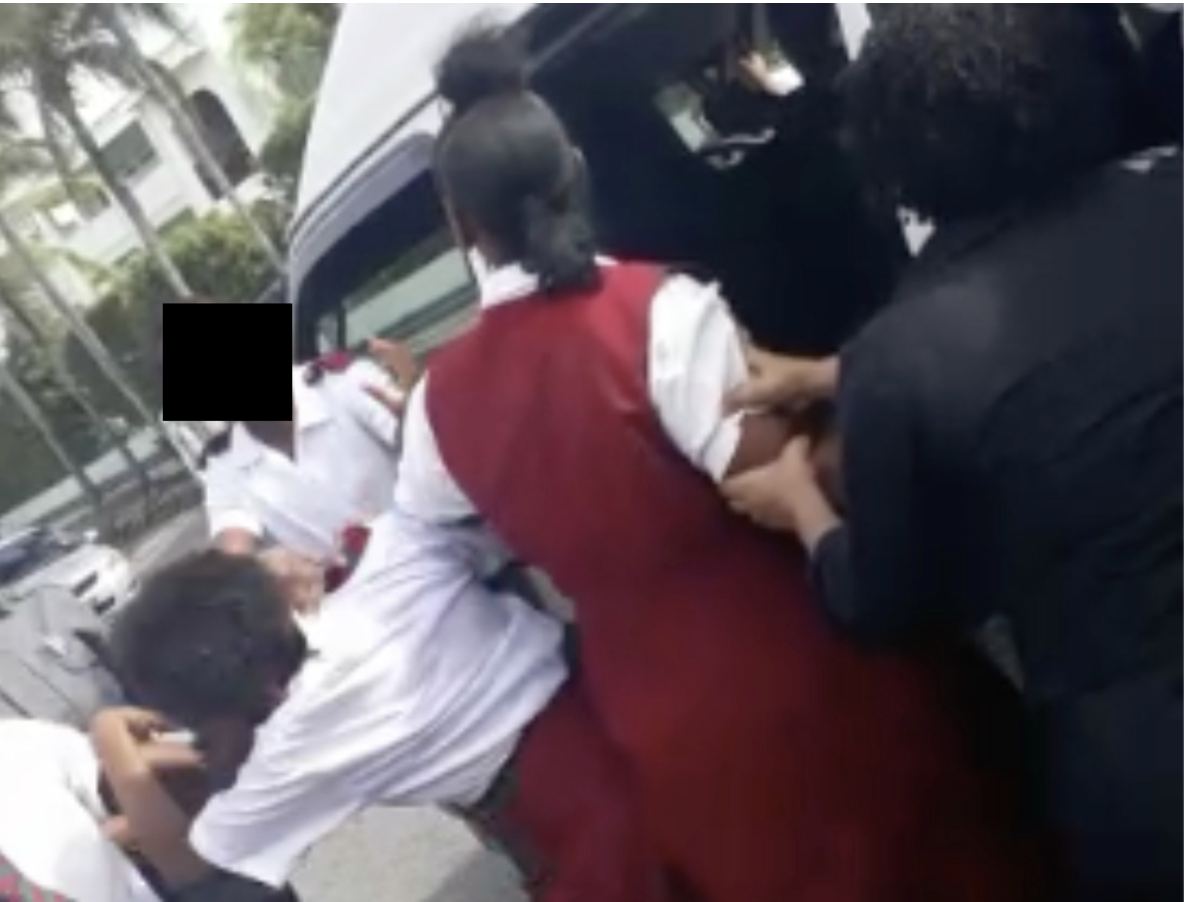
There has been much “talk” about violence in schools from many quarters. While there is no doubt that violence has been with us for a while, I wish to present eight (8) main factors which on their own or in combination with each other are primarily responsible for what we are facing now.
- Social and emotional regulation
Many students are unable to recognize far less regulate their emotions. Unfortunately, this skill is not typically taught in the “average” Barbadian home or early in primary school. Immediate adult managed behavioural control (aka punishment) is usually the norm. If we as adults often have difficulty controlling our emotions and reactions, we should expect that children will too. - Dysfunctional homes or families
The first place that children learn anything, is the home. Children learn from what they see. It is obvious then that where violence, vulgarity and vicissitudes exist in abundance, then that child will adopt and act out those accordingly. - Undiagnosed or untreated mental health issues and/or learning deficiencies
There is a clear rise in students who require additional learning assistance, or who have learning disabilities and socio-cognitive or psychological challenges. When left unchecked or undiagnosed, they manifest themselves in negative ways. Where teachers are not empowered to identify them or trained to intervene then the problem is magnified. - Abuse or neglect
Childhood trauma is real and stays with the individual for years. Abuse and neglect can have severely detrimental effects on a child. These effects impact their view of the world, their value system and their actions, sometimes on a subconscious level. - Drug use
Let’s face it, most of our children are experimenting with drugs. However, some of them have gone past experimenting, to making it a daily routine. Many cases of violence and outbursts in schools can be traced to young minds influenced too early by the effects of marijuana use. - Community / social norms
It takes a village to raise a child. IF that village is “negative” the outcome for that child is almost a foregone conclusion. Only strong homes, steady anchors and solid willpower can overcome some of what our students see every day. - Media and technology influences
Youtube, TikTok, Pornhub, WhatsApp, Snapchat and the list goes one. This unfiltered and easily accessible world has had a profound impact on the way our children see themselves and how they interact with each other. In the absence of a consistent guide, monitor or mentor, technology takes over to our sometimes shock and horror. - Lack of easily accessible positive alternatives, support, or early intervention
Every negative needs a positive. Every pessimistic child needs an optimistic adult. Young people need opportunities, alternatives and hope. If these are not provided, then the negative easily takes over. Additionally, early intervention (age 3 onward) when needed is an absolute must if we are to avoid the tragedies now facing us with our 16–21-year-olds.
When one looks at how we got here, one can argue that the period of the 1990’s played a huge part. This period saw the emergence of the ZR culture, the penetration by global media, the loss of the supportive extended family, the movement from the villages to the “heights and terrace”, the culture of materialism and excess in a time of economic “prosperity”, the normalization of marijuana use, the adoption of negative cultural norms from regional neighbours and the clear consistent but seldom spoken about corruption and cronyism at high levels.
We are seeing the results, not only in schools, but society as a whole. In the same way that Rome wasn’t built in a day, it took years of Neo’s fiddling for its burning to be complete.
Another post will touch on some solutions, the challenges to those solutions, and the role that various actors should play. Hopefully discussion may lead us to progress.
As Lord Ras Shorty I said, “watch out my children.”




The blogmaster invites you to join the discussion.