




“I don’t know what you mean by ‘glory’ “, Alice said.
Humpty Dumpty smiled contemptuously. “Of course you don’t -till I tell you. I meant ‘there’s a nice knock-down argument for you’!”
“But ‘glory’ doesn’t mean ‘a nice knock-down argument’ “, Alice objected.
“When I use a word,” Humpty Dumpty said, in a rather scornful tone, “it means just what I choose it to mean –neither more nor less.”
“The question is,” said Alice, “whether you can make words mean so many different things.”
“The question is,” said Humpty Dumpty, “which is to be master -that’s all.”
Alice was much too puzzled to say anything… Through the Looking Glass… -Lewis Carroll (1871)
Language, especially the English language, is notoriously imprecise. And, therefore, it is highly likely to confuse, bemuse and sometimes amuse when employed in its principal function -that of communication. This need for clarity might partly explain why lawyers and scriveners of old were much given to the use of the doublet expression (or the pleonasm as they are sometimes pejoratively called nowadays). These are phrases such as “to have and to hold”, “cease and desist”, “let or hindrance”, “aid and abet” and “null and void”.
A more mercenary and hence more popular explanation though is that since lawyers were then remunerated according to the number of words in a drafted document, the legal doublet became de rigueur in order for the attorney to earn a sizeable fee.
Of course, the relatively recent thrust towards the “plain English” mode of drafting legal documents has now rendered this style largely superfluous (no pun) and, too besides, the degree of difficulty in draftsmanship of the document has significantly replaced the number of words in it as the principal tariff of the attorney’s fee.
Even with plain English however, imprecision persists and the hoary principles of the interpretation of deeds and statutes yet maintain contemporary relevance. Imagine then, the bedlam that may ensue in lay communication when a speaker or writer attempts to convey information to the public. And add to that the Barbadian context whereby the identities of the speaker (especially if a politician) and of the reader or listener assume major relevance. More so, where the topic is one as sensitive as race relations or of what should be considered preservable local heritage; two matters that are swiftly becoming indistinguishable here.
In parenthesis, it should be recalled that Barbadians are rather ambivalent about communication. While English is the official lingua franca, and the use of more popularly spoken dialect is frowned on at times by some, it is nevertheless seemingly accepted in the media so long as there is a perception that the writer or speaker is, I suppose, otherwise proficient in the use of Standard English and simply being light-hearted or engaging in mimicry on the occasion.
For those of us writing in Standard English however, we are often enjoined to write for “the common man”, a fiat that entails using a range of words and expressions that should be familiar to the average third form student at secondary school. Thus, any usage that may not be grasped without using a dictionary (!) is considered as gratuitous ostentation or “showing off” by the author, although to be fair, there are some who have remarked favourably on the periodic additions to their vocabulary.
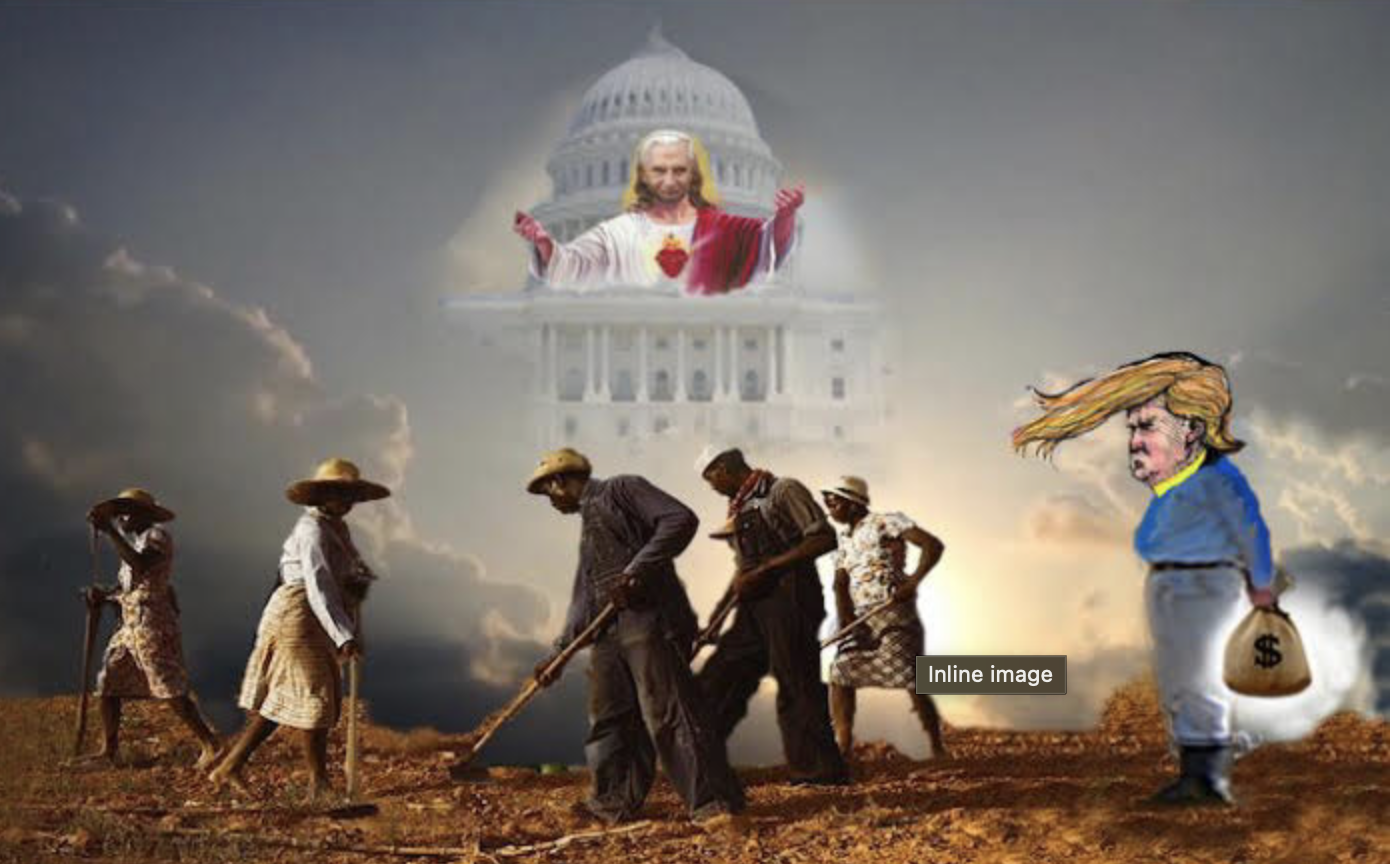
Both of the phenomena referred to two paragraphs earlier have entered the public domain in recent weeks. First, Mr Ralph “Bizzy” Williams, a lighter-coloured national, took umbrage at the Prime Minister’s public reference to Barbados as being the “freest black nation in the world”. Second, the historian, Mr Trevor Marshall, is reported as having expressed displeasure at an official reference to the late and eccentric public character “King Dyal” (aka “Hog Food” in my youth) as a “leading cricketing icon” and a “legend in his own right”.
With regard to the first issue, Mr Williams’s objection appears to be primarily based on the fact that it is a misnomer to describe Barbados as a “black” nation, given the presence and contribution of many whitish Barbadians over the years. I read a later clarification where he would have preferred a description of modern Barbados as “multi-racial”.
On the simplistic point of the various races present in the nation, Mr Williams is of course right, although I do not think that the Prime Minister was making a racial reference, erroneous or at all, by his description. In any event, it does seem particularly useless nowadays to refer to a country by reference to the races of its citizens. Indeed, given the incidence of forced and voluntary migration, there are currently very few nation states that may not be referred to as “multi-racial” by Mr Williams’s token.
However, while I thought that the Prime Minister’s statement was merely a harmless repetition of one of those idle jingoistic boasts that that we so much adore in this region –“a nation that punches above its weight” and “ the best beaches in the world” come readily to mind-, the geopolitical reality is that for those few individuals who may still want to describe a nation by reference to a colour, the principal cosmetic indicators are the race of the overwhelming majority of its citizens and the colour of those who hold economic and legislative power. An examination of apartheid South Africa provides a clear example; the majority race was African, although Whites controlled the laws and the chief economic indicators. How should one describe South Africa then? And now? How should the US or UK be described today ? Are we really a “monarchy”? A “Christian” society?
It is indeed remarkable that none chose rather to challenge the accuracy of Mr Stuart’s superlative.
Mr Trevor Marshall’s objection does carry some weight at first blush. To my mind, to describe King Dyal as “a leading cricket icon” oversteps hyperbole and “legend” [except perhaps in his own mind] is clearly a stretch. I have not seen the calendar to which Trevor refers, but his objection, from the press report, appears to be based on the odium that the late character displayed towards black people. If true, perhaps this is more to be pitied than anything else. My support for the assertion is based rather on the fact that the self-styled “King” was merely another local character, no more memorable for all that than “Gear Box”, “Bulldog” or “Town Man” and “Town Woman”, for examples.




The blogmaster invites you to join the discussion.