


One of the most controversial court decisions handed down by the United States of America Supreme Court is Roe v.Wade in 1973. To this day the decision continues to stoke public debate about the license humans should be given to determine when to abort the life of an unborn child. It is also interesting to note one of the highest courts in the United Kingdom – still the final court of appeal for the majority of former British colonies – allows Dissenting Opinions by the Judicial Committee of the Privy Council.
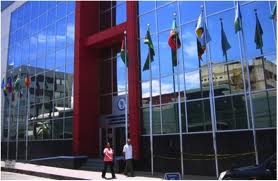
In 2001 the Caribbean Court of Justice (CCJ) was established. It is the original original jurisdiction to translate and arbitrate matters arising from the Revised Treaty of Chaguaramus. Many suggest it is unfortunate only Barbados, Belize and Guyana so far, are the countries to recognize the CCJ in its appellate jurisdiction.
Three interesting events occurred in House debate this week which placed the CCJ firmly in the crosshairs. We listened to Minister of Housing Denis Kellman taking a swipe at the CCJ. In his aggressive invective, he is quoted: “It is not fair that we are paying our dues and then getting a kick. We were the first to agree to the CCJ. But what have we received from the CCJ? A judgment that people in Barbados have questioned, and when we put people up to be judges we are told we are not good enough to have people on the CCJ. When it comes to paying money, though, we must be the first to pay the money. If our money is good enough for the CCJ, our workers got to be good enough for the CCJ too. And it is time that somebody tell them where to get off!”. It is hard to imagine Kellman would have offered his rant without a license from the Sheriff.
Kellman’s rant followed Minister Donville Inniss’ own view which addressed similar concerns. Inniss was quoted as not advocating for Barbados to withdraw support for the CCJ but admitted he was ‘deeply troubled’ about the failure of Barbadian applicants to secure jobs recently at the Port of Spain based CCJ. “I think this is a matter we have to be very frank about in this country. There are those who will always talk about, ‘Oh, you’re being nationalist and you ain’t committed to regional integration’ and all of that. When it suits them fine, they say that, once they [are] getting all the largesse and all the top picks. But, I am satisfied that we have bright Barbadians, competent Barbadians, who have served on benches across the region, who today could be serving on the Caribbean Court of Justice. But, for whatever reason, we cannot find it fit to get one there. I am not bashing the excellent judges who are serving on that court. Far from it. However, what I am saying is what the majority of Barbadians are thinking and saying, but are reluctant to come out and say so publicly; and, that is somewhat strange, especially when we were very instrumental in setting up the CCJ“.
Finally, Attorney General Adriel Brathwaite sealed it by challenging immigration officers appear – in his opinion – to be intimidated by the controversial CCJ Shanique Myrie decision. It is obvious what Braithwaite wanted to convey during debate to amend the Immigration Bill. He is quoted: ”notwithstanding, what is said in the judgment, no one in Trinidad [or outside this country] can determine what our national security considerations [are]. We have a responsibility as the elected members of Parliament and part of our responsibility is to secure our borders and, therefore, we should not water down what we do because we are afraid of what people might say outside the region, in the region about being sued.”
The other segment to the CCJ drama unfolding was the criticism levelled by the CCJ at two prominent senior lawyers Vernon Smith and Hal Gallop, QCs by CCJ president Justice Sir Dennis Byron in delivering on the case Systems Sales Ltd. The criticism was quickly dismissed by Smith as ‘diatribe’ .
The CCJ debate in its current form is unfortunate. However, the CCJ if compared to feedback meted to the US Supreme Court and British Privy Council by the public, cannot be placed on a pedestal to escape criticism. BU’s view is, we have two issues: the quality of the decisions being handed down and the concern by the Barbados government echoed by its trio of Ministers, Inniss, Kellman and Brathwaite. In the case of determining the quality of decisions handed down by the CCJ, these are public and can and will be critiqued for rigour by the legal fraternity near and far in the months to come. This will be the true measure of the CCJ’s reputation which its bench will have to defend. The concerns expressed by the politicians can easily be resolved by the administrative arm of the CCJ and has nothing to do with Sir Byron and his team.





The blogmaster invites you to join the discussion.