← Back

Your message to the BLOGMASTER was sent

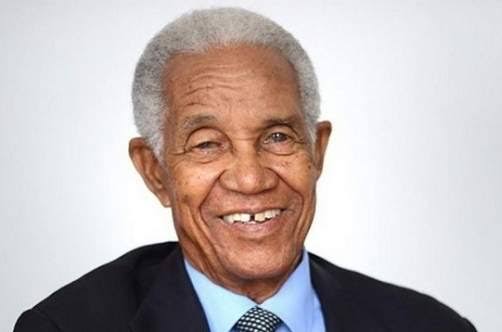
Anton Edmunds is the head of The Edmunds Group

A recent briefing by the Caribbean Tourism Organization reported tourism arrival numbers for the Caribbean region for 2013 as flat. The briefing and regional governments almost singular focus on arrival numbers highlights what is to some, a serious problem in how the economic value of this important industry is being tracked. The region and its tourism and economic officials seem to be engaged in the selective parsing of information related to the state of the industry and as a result may be misinforming the public. Numbers that focus on arrivals do not do enough to track the real economic impact of visitor travel, and ignore what may be the most important figures to Caribbean tourism economies – the spend level.

The so called spend level is an attempt to put a value on the actual expenditure per guest in each domicile visited and it is this number that helps show the “value on the street” of tourism to Caribbean economies. A direct correlation between employment and the tax base of a country, and the economic value of tourism is likely to be better understood looking also at these numbers than just focusing on cruise and/or stay-over visits. This is especially so in an era when hotel rooms are booked online as are cruise trips, allowing for almost all of that revenue to be processed and kept outside of the domicile/s to be visited.

Let us be clear that in no way am I discounting the direct jobs created by hoteliers and their purchasing power in terms of goods and local services, but in an age of investors requesting more and more in terms of corporate tax waivers, the baseline in terms of value to an economy of tourism may be employment beyond just that at the hotel facility and the tax base of those working there.

To be fair, while entities like the Caribbean Tourism Organization do at times address the spend level, the pomp associated with an increase in arrival numbers by governments often bely the reality that visitors are spending less, and as a result, the region’s economies are receiving less in terms of revenues. A sad reality is also that an uptick in arrival numbers may not correspond to more spending, contrary to what officials may try to insinuate. In fact, anecdotal evidence suggests that even countries that are seeing more and more tourist arrivals are seeing less and less in terms of visitors buying products and services. Maybe this can be chalked up to the economic downturn, the demographic of the traveller and/or the lack of variety of services and products that individual countries and the region sell. If so, it would be helpful if precisely this kind of analysis could be done and countries advised as to whether it is for example the cheapening of products available for sale that is part of the possible reason for lower spending by visitors. Ultimately, the numbers of stores shuttered in many countries, restaurants along main strips that now compete on the price for a bucket of beer and cheap tee shirt sales may serve to highlight a serious problem for the region. A commercial tourism sector that employs less may mean more unemployed roaming the streets and increased crime.

Some have blamed the cruise industry, arguing that this industry has served to bring to the region a visitor of a lower demographic station, insinuating that parties that visit via this medium are “cheaper”. That may well be an unfair assumption as in this industry as with others, demographics differ widely and there is a swath of people who cruise that have relatively high incomes and are willing to spend. Interestingly, a trend in this industry that should be noted by governments and policy makers is the increased use of preferred vendors to provide services to passengers and the effective steering of people to certain on-shore facilities and activities. The reason behind this may well be more one of entities trying to guarantee their charges the right kind of experience in order to secure their return business to the cruise ship brand, rather than an attempt to somehow segment the market space. A sad fact may be that this industry may feel the need to point people to certain locations and develop relationships with certain vendors to ensure a certain quality of service and security that Caribbean countries cannot in the wider community. If this is indeed the case, industry has had to step into a space where policy makers are failing.

Similar complaints were made against the all-inclusive industry years ago, as this type of value proposition to the traveller was seen as one that pulled visitors away from truly exploring the country they were visiting. The claim which was that a SuperClubs and Sandals experience was seen as the Caribbean experience that allowed people to check off their bucket list, not get to know the country, and diminish the likelihood of a return. The harsh light of day shows that in the case of the all-inclusive industry, while there is indeed a market for the value conscious experience, here as in the cruise industry there is also the high-end traveller. What the all-inclusive experience also now seems to provide beyond the value proposition, is also a security blanket within an enclave setting that is safe. The need for these two industries to protect their brands through managing the on-island experience may be just as high a priority as anything else.

At the end of the day and sadly after so many decades of apparently wandering in the wilderness, the question for the Caribbean and individual countries as it relates to tourism still is, “what do you want to grow up to be”. In essence, what is the region’s value proposition and how is it going to sell itself. While there are clearly island brand names like The Bahamas, Jamaica and St. Lucia, time may be running out for the Caribbean if tourism continues to be looked at through the myopic lens that it is.

If the region is to be a place where the cruise and hotel passengers come and can expect much in terms of a clean, safe and vibrant environment where the business community is actively involved in the development of policy and a whole of government approach is taken, then the region has a future. If however all the countries are, is an airport or cruise terminal for visitors to step of, en-route to a predetermined location away from a vibrant city center, the region’s economies are doomed and we may be well on the way to seeing this.

An encouragement to government leaders and tourism officials, be they at the local level or regionally such as the Caribbean Tourism Organization and the Caribbean Hotel & Tourism Association, is to step into the breach once and for all and work though the apparent chasm that is characterized by mistrust between regional civil servants and the private sector involved in the industry before it is too late. There is a need to engage in some of the granular issues affecting the economies of the region and the industry. Namely,

  • Acknowledge and embrace the sad fact that crime is an issue and partner with civil society to find ways to solve this beyond piecemeal efforts at increasing police presence in certain tourist spots;
  • Engage the rural and agricultural community to find ways to build farm to table programs to encourage employment in that space and ensure not only food security but maybe more importantly, employment. Cleary, not every one can get a job in tourism.

Ultimately it may well be tourism that offers the perfect opportunity for countries to properly integrate the agriculture, culture/heritage, transportation and energy sectors. The time to act is now however!

Finally, let us cease to release the numbers of arrivals alone but instead provide a comprehensive look at the real state of the industry. Recognizing that any true analysis is a result of numbers aggregated by individual countries, let us see governments effectively track and report on spend levels at the same time as visitor arrivals. Let us also have tourism and economic offices properly report on the buying power of visitors and in the case of cruise passengers, develop models that correctly estimate numbers for their individual countries versus claiming per passenger spend levels of a 3-5 day cruiser as their own when that individual visits multiple locations. The full accounting of the numbers can only help in providing an honest assessment of the value of tourism to the region, the real downstream value to the countries and the areas where Caribbean countries as a whole can do better to grow and protect the industry and the country/region brand.

Anton Edmunds is the head of The Edmunds Group, a business and government advisory service firm that focuses on the Caribbean. TEG has offices in the US and the Caribbean. Anton is also a senior Associate at the Center for Strategic & International Studies (CSIS http://www.cisis.org). He can be contacted at anton@theedmundsgroup.com and prior posts reviewed at the firm’s website: www.theedmundsgroup.com.


Discover more from Barbados Underground

Subscribe to get the latest posts sent to your email.

9 responses to “Caribbean Tourism – The Numbers Game”


  1. The tourism industry in the Caribbean is considered a very mature one. The fact that the author expresses concern about how we are tracking relevant KPIs is interesting.


  2. I know I am just a silly voice in the wind but this gentleman knows the truth and whilst he is being kind in asking the questions, the facts are that he answers them well in between the lines.

    While there is much good in the Caribbean islands and we cannot negate that what is bad is really bad and those who are at the top better haul up and think again. When one island in the chain lacks the understanding of what tourism is all about, then all are branded but right now I must say that ALL are lacking in much.

    Tourism is NOT what it used to be. As life changes so does tourism. Simply put.

    1. We can definitely stop thinking that because we are THE CARIBBEAN we are so special people will come anyhow.
    2. We can no longer believe it is the recession that keeps people away.
    3. We are no longer going to only attract sea, sun, sand and sex.
    4. We can no longer close our eyes to the high crime rate.
    5. We can MOST IMPORTANTLY no longer not understand the importance of food tourism – farm to table, clean (no use of pesticides) local ingredients used the traditional way and taken up a notch as well…(WHY WOULD I WANT TO GO TO THAILAND AND EAT KFC FOR INSTANCE? So what makes us believe that Canadians, Americans and Europeans want to come here or anywhere in the Caribbean to eat imported crap from the US???). Foodies today make up a huge chunk of the tourism product – so get real!!..and for local food we need a vibrant agricultural sector that can also get involved in the tourism business…study Goodfellow Farms just outside of Nassau – IICA have a little book that can tell you how a farm becomes a productive money-making entity interacting with tourism. Does not take a rocket scientist)
    6. We can no longer allow the indiscriminate filth of garbage being thrown wherever…
    7. We can no longer allow our water, land, reefs and seas to be compromised and contaminated.
    8. We can no longer feel that high prices on everything can get us through the day and we can no longer dig out the eye of a tourist. They must feel welcomed and not unfaired.
    9. We can no longer pretend that our service can be whatever, the adage of “slow in the Caribbean” can no longer be used and certainly ‘slow and rude’ has to go so pride in the industry needs to be seriously pulled up (and in Barbados Percy The Pig is a message that Bajans are pigs but Percy can lead the way out of this – not a good message in my mind and NISE does not cut it either! Adopt what Nevis does and what I saw in Antigua a few days ago as signage – asking a question to make one think, like “What Will Crime Do For You?” or “Will being rude be your legacy?” And so on – questions that make one think – something we seem to have forgotten since the advent of sticking our service-oriented heads into a Blackberry or IPhone!
    10. We can no longer allow old and historic buildings to be destroyed in order to put up modern concrete blocks of no aesthetic value. Heritage is a big drawing card – in Barbados The Empire Bldg, the Queen’s Park bldg, and several in Bridgetown need to stop being decrepit falling apart eye-sores.
    11. We do not need the whole of the waterfront area in Bridgetown to be made into high rise concrete Miami-type (let Americans love Miami) how about renovating those old warehouses into amazing restaurants/culinary schools for visitors/shopping areas/arts & crafts – real Bajan arts & crafts where visitors can learn, where locals actually work.
    12. Do not allow politics to get involved in tourism – both parties must have a common goal to get tourism back on its feet. The reality must be alive and well – we now live by tourism only thanks to those who saw it fit to destroy a vibrant sugar industry that could affect our rum industry – so much could have (and still can be) done with our sugar…so much.
    13. REGIONAL TRAVEL – need I say more?
    14. Locals are tourists too – need I say more?
    15. Our other islanders are tourists too – need I say more?
    17. Art. Art. Art. Theatre. Theatre. Theatre. Music. Music. Music. Dance. Dance. Dance. Creativity. Creativity. Creativity. How about a national day like Dominica has? Invent one if needs be for crying out loud – we have just about invented most of our culture, so why not one more thing eh? Pride and Industry. Talk to the creatives – the real ones, not just the chosen ones – they will speak and tell you what is required once they know that their spoken word will not go against them but be productive, listened to and implemented. CRAFT MADE ON THE ISLAND.
    18. Our airports and seaports are what the tourists see first, their first vision on arrival – so clean it up – friendly smiling immigration officers do not have to be inefficient in making sure that criminality walks through the door – we can smile and attend to that too. Art at the airports. Music at the airports. Some semblance of welcome at the airports. How difficult is this?
    19. Stop the dyamned blame game between people and islands – the childish fighting and bullying that is going on – the racism that is rearing its head in all its ugliness again – all of it only there to disband us from unification – much easier to control one island, one race, one people than several that are united in force – we have to understand and embrace Caribbean unity fully. We do not have to change our culture, traditions; we do not have to change the way we speak or the foods we eat – the fact that we are different is the best thing for tourism but the fact that we are at war with each other constantly over dyamned unimportant in the scheme of things nonsense, is not.

    And the list goes on and on and on.OUR PRODUCT IS TIRED IN SO MANY WAYS – we have made a mess of what is so precious – to completely reconstruct will take the same amount of time we took to destroy but perhaps if EVERYONE could only band together with one common goal we could overcome.

    Perhaps being a tourist will teach all of us what it means to be one. Our arrogance has to stop and our product has to be saved – a product that was once a proud and good product – an eco-sustainable product – a clean, friendly, safe environment not just for tourism, but for us – for actually tourism begins at home and then – we can deal with those who visit us with the same respect we deserve and live with.

    Mostly we also need to stop looking at countries in the north for leadership of our own – why can we not do what we have to do because it requires being done and not say things like “well in New York people are….” or “in Montreal, London this or that” – WHO CARES?

    WE ARE THE AMAZING CARIBBEAN.

    It will not be easy to rebuild what we have destroyed but good marketing and word of mouth will give us the push required to reach the end goal – a vibrant tourism sector again.

    We are stunning, beautiful islands and we must go back to knowing this. We must be the village that we were – where everyone keeps an eye out for the other, where we respect and uphold each other, where love and respect for man, woman, child and animals is part and parcel of our lives. PERHAPS WE NEED TO START THIS NEW BEGINNING IN PRIMARY SCHOOLS and hope that one day we will achieve what is best for us.

  3. millertheanunnaki Avatar
    millertheanunnaki

    Oh! Mercy | November 26, 2013 at 7:43 AM |

    A piercing analysis that goes straight to the crux of the matter of what is wrong with tourism and some of the things needed to fix the problems we so easily blame on some international recession and on others rather than on ourselves.

    Now how can you blame the piling up of garbage on the streets, flagrant cases of constant littering, environmental degradation, the awful state of the country side and ‘piss-filled’ Bridgetown, rude and disgusting service in the stores, restaurants and from ground transportation providers and the downright harassment -both verbal and sexual- from musty smelling uncouth pimps and drug pushers on some recession in North Atlantic economies.

    Just take a journey along the South Coast and ask yourself whether the place isn’t in urgent need of a clean up. First impressions count and Bim is turning off a lot of discerning people at first sight given the amount of money being demanded for a visit.


  4. Tourism is also very related to investment. Capital flows to safe havens where there is free movement of money without foreign exchange controls. When you are desperately looking for investment to improve the product being offered, FX controls are a bad thing. No money, no honey. A massive restructuring also means a massive change in lifestyle.


  5. Oh!Mercy. Added to your comprehensive list, is the question of Noise Polution. Barbados is fast becoming the noise capital of the region and further afield. A receipe , to guarantee that many a first time, as well as seasoned visitors, do not return here on vacation.
    All hours of the day and night, Barbados is constantly assaulted by the ear splitting noises emitting from these modified motor cycles,especially the scrambler type, and so called-souped up motor cars.
    The irony of it is that these noisy vehicles fly past the doors of many a police station and patrol car without ,seemingly, being challenged.


  6. @Millertheanunnaki
    Last week it was reported in the press that the Heritage watchdogs in Barbados are worried that if the NHC build high rise accommodation blocks more that 4 stories high, Bridgetown stands to loose its accreditation as a World Heritage Site.
    I would like to inform all concern , that Nelson Street and its environs is part of the same Bridgetown UNESCO World Heritage Site, so too are those back alleys, and places like Henry’s Lane where piles of garbage now seems to be part and certainly parcel of the local landscape. And the Garrison is not much better, I have just done a photo shoot around the Garrison and is ashamed to placed many of those photos on,mainly, FlickR. Many of them , I had to edit, in order to delete unsightly garbage .
    The Garrison committee needs to enlist the help of the residents to the east of the race track, in keeping the area nearest the road, free of unsightly bush ,overgrown grass and out of control shrubs.


  7. @David,
    You don’t like me to copy and paste “thees” so I would invite you to visit this link and then you decide whether the entire contribution should be published.:

    http://repeatingislands.com/2013/11/27/analyzing-the-impact-of-kamau-brathwaites-work-on-the-caribbean


  8. @David,
    Sorry, should read “Theses”


  9. NICE BLOG!!!!!!

The blogmaster invites you to join the discussion.

Trending

Discover more from Barbados Underground

Subscribe now to keep reading and get access to the full archive.

Continue reading