



Submitted by Terence Blackett
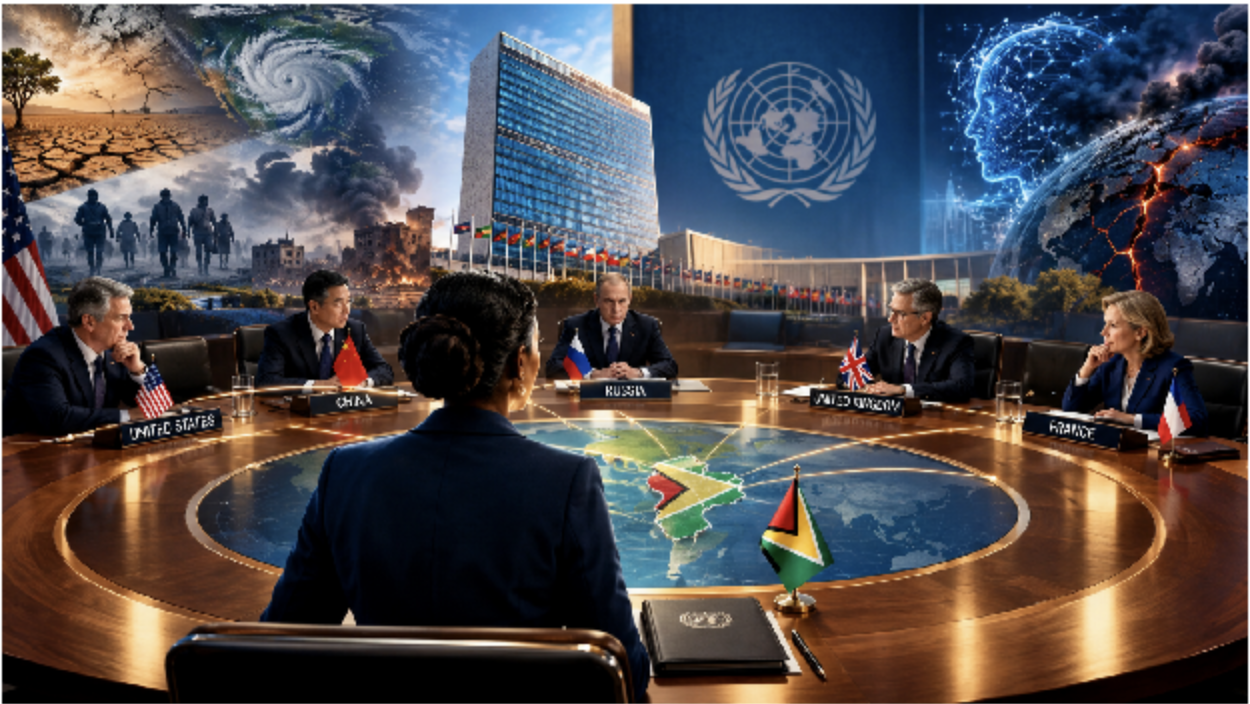
 The 64th Session of the UN General Assembly began with the issue of climate change, followed by the G-20 Meeting in Pittsburgh where world leaders work to put together a framework for tackling this issue as doing “NOTHING” could be disastrous.
For most people today, the issues and discourses on climate change is a parody of scientific gobbledegook where proponents like Nobel Prize winner and former Vice-President of the United States Al Gore, uses this agenda as a big stick to beat world leaders, institutional heads and public sectors officials into the looming dangers we face as a planet, if these issues are not tackled immediately.
Barbados is not exempt from the effects of this emergent global phenomenon which has been with us for over 20 years. Since the years of the oil boom and the mass globalization of what many sociologists have termed the McDonaldization of society or as Davis, Baudrillard et al called the era of “hyper-reality” we have seen climate change climb to the top of the global agenda.
This is a period in earth’s history, where the pace of economic and technological development has not kept pace with ecological sustainability and the rapid pace of change is creating imbalances within our planet. These forces are both structural and aesthetic.
The planetary earth science issues and its effects on climate change affect our atmosphere, weather, geology and oceanography. Our environment is being hard done by acid rain, air pollution resulting in poor air quality, drought, global warming, hazardous waste, melting ice caps, ozone holes, carbon pollution, recycling and waste, a lack of renewable energies, and ecological instability.
The end-result is that our ecosystems is under threat, our energy reserves depleting, disappearing rain forests, slash and burn of our grasslands, invasive hybrid species, environmentally destructive mining, disappearing tundra, water depletion and increased wildfires due to dry, arid conditions and a host of environmental pollutants seeping into our ecology creating cancers and all kinds of weird diseases.
These insidious conditions have exacerbated natural disasters like the earthquake experienced almost two years ago in Barbados. We are seeing more and more severe freak weather resulting in landslides, El Nino and La Nina, hurricanes, cyclones, storms, tornadoes, massive snow and avalanches, tsunamis and volcanoes. And all this seems like only the beginning of environmental sorrows.
No time to bury our heads in the sand
Environmental sustainability high impact studies in the 1990’s in Barbados showed that the effluent and the waste from our hotels and commercial urban sprawl would have been a major contributing factor to the eventual destruction of our coral reefs. The destruction of coral reefs was a biological factor which was subsequently borne out and responsible for the Tsunami on December 26th 2005 which devastated Indonesia and many other countries. A fact subsequently discovered by marine biologists.
In the Science Daily dated (Jun. 11, 2007) it was reported that the “Caribbean coral species are dying off, indicating dramatic shifts in the ecological balance under the sea, a new scientific study of Caribbean marine life shows. The study found that 10% of the Caribbean’s 62 reef-building corals were under threat, including Staghorn and Elkhorn corals. These used to be the most prominent species but are now candidates to be listed as ‘Critically Endangered on the IUCN Red List of Threatened Species’”.
Let us be under no illusion. As Science Daily reports that “one of the Atlantic Ocean’s most beautiful marine habitats no longer exists in many places because of dramatic increases in coral diseases, mostly caused by climate change and warmer waters,” said Dr. Michael L. Smith, director of the Caribbean Biodiversity Initiative at Conservation International.
Based on our changing ecology, “climatologists forecast completely new climates. Something we are increasing seeing in Europe. Geographers have projected temperature increases due to greenhouse gas emissions to reach a not-so-chilling conclusion: climate zones will shift and some climates will even disappear completely by the year 2100”.
Eminent environmental scientists like Dr. Cao et al. seek to quantify the effect of climate change on ocean acidity and on the calcium-carbonate minerals that form shells and skeletons. “By using an Earth system model, the researchers find that the ocean pH will decline by 0.31 units by the end of this century if atmospheric carbon dioxide concentrations continue on a trajectory that ultimately stabilizes at 1,000 parts per million. This increase in acidity occurs regardless of how much of a global-warming-related temperature rise takes place as carbon dioxide builds up to that concentration”.
“Like a piece of chalk dissolving in vinegar, marine life with hard shells is in danger of being dissolved by increasing acidity in the oceans. Ocean acidity is rising as sea water absorbs more carbon dioxide released into the atmosphere from power plants and automobiles. The higher acidity threatens marine life, including corals and shellfish, which may become extinct later this century from the chemical effects of carbon dioxide, even if the planet warms less than expected”.
Many in Barbados and throughout the Caribbean (especially in Guyana & Trinidad) will agree with these finding but moreover that in the last decade our local temperatures has increased several degrees hotter due to wilfully destructive practices of maize and soybean producers, urban developers, house builders and infrastructural planners in both our Town & Country Planning and Urban Development departments, where basically men are void of vision and lack the fundamental knowledge of ecological sustainability and how that impacts on climate change.
It is common sense to deduce that if one cuts down trees while slashing and burning to plant crops (which is a good thing) or refuse to plant trees as a form of sustainability, as we plant more and more houses every year, at the same time concreting over the landscape of beautiful Barbados and our other idyllic island paradises, the end result will be increased heat, and unpredictable patterns of seasonal instability.
The greatest threat facing our nation states is not from international terrorists, money launderers, unscrupulous politicians and business people, youth crime and violence, drug trafficking, or even the spiralling cost of living even though these are all symptomatic of the moral landslide endemic within contemporary society and the breakdown of ethical values which makes us human and not ruled by the conventional law of the jungle – but the real burning issue is how climate change will change us all in the near future.
Governments must lead from the front to avert what will be a catastrophe of unparallel proportions to our environment if these issues are not addressed speedily. We cannot continue the wanton destruction of our society or our fragile planet without calamitous results both for us and for our children in the very near future. Now is the time for all of us to act with resolve to change Barbados and our world to more “GREENER”, sustainable and friendlier planet. Let’s make that change!



The blogmaster invites you to join the discussion.