← Back

Your message to the BLOGMASTER was sent

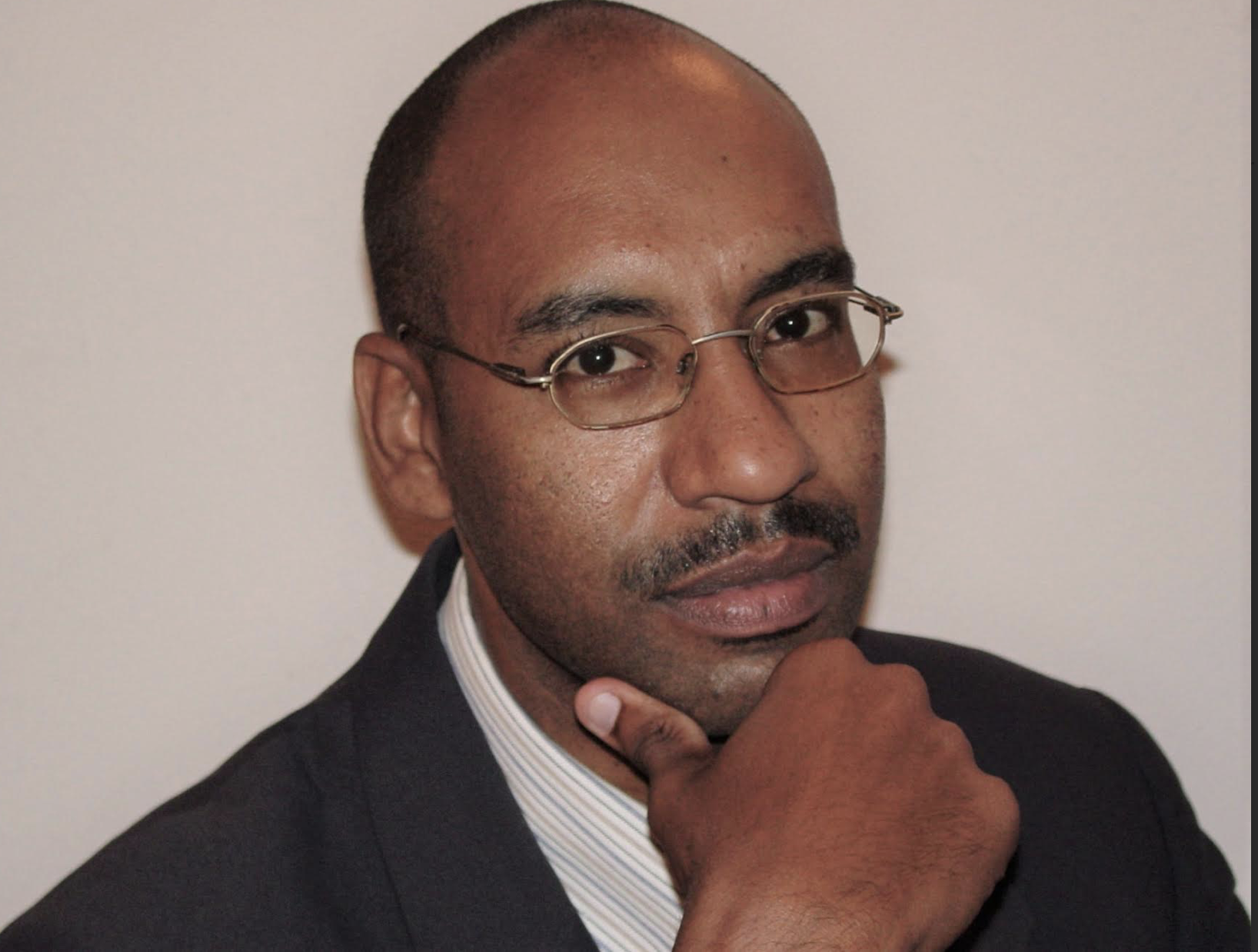
GBrathwaite_portrait
Submitted by George Brathwaite, PhD Candidate (International Politics)/On The Map

I do not intend to be lengthy in this critique to Mr. Lindsay Holder’s contribution in the Advocate newspaper of 14-15 June 2009 . I am well aware that each of us brings our biases to any project. I also believe that one ought to be sufficiently reflexive and admit to pertinent antecedents that may have an impact on the ways in which arguments are framed, analysed, and disseminated. My position is that of a Caribbean researcher who has been widely influenced by the shapers of postcolonial discourses and by the architects of Caribbean regional integration. Moreover, I have been exposed to a way of life and a thinking that suggests I should love my neighbour as I love myself.

A meandering diatribe that was published in the Sunday Advocate of 14 June 2009, and continued in the Monday edition of the Advocate and which is authored by Lindsay Holder served little in clearing away misunderstandings on ‘immigration policies and the status of immigrants’, if to do so was his primary intent. In this lengthy polemic, Mr. Holder appears more to be attempting to resolve his personal sentiments and advance his patriotic stance in favour of Barbados, than examine the “current issues that provoke discussion,” or provide a basis for managed migration. With all of the many complexities that surround the issue of immigration and more particularly, Barbados’ response to ‘unacceptably high’ numbers of undocumented CARICOM immigrants, Mr. Holder proceeded to exhibit a forlorn dismissal of facts and empirical data.

Surely any well-reasoned analysis would at least make an attempt to provide relevant statistical data that can substantiate arguments being advanced. Mr. Holder prefers to follow the position of the Government of Barbados by relying on “casual observation” on which to determine that “the level of undocumented immigration is unacceptably high.” The sentiments in that statement alone appear to be sullied by bigotry: even if one could make a distinction based on race or ethnicity, how does one come to the conclusion that persons observed at any one point in time and place are undocumented CARICOM immigrants? Isn’t there an ‘Indo-population’ in Barbados originating from Trinidad and Tobago and also from the Asian continent?

It is problematic that Mr. Holder commenced his arguments on the basis that governments make a distinct policy direction by either opting for ‘more liberal immigration policies’ or ‘less liberal policies’. While I do agree to some extent that there has been an identifiable trend that liberal democracies have expanded their rules giving liberal expression to the political and social inclusion of migrants, I will contend that Holder’s starting point is myopic. It is misleading since there are other coexistent requirements to be considered besides the extent to which liberality can be raised as the fundamental principle for states making accommodation for the entry of migrants into their economies.

Mr. Holder in a dichotomous manner, goes on to suggest that by applying an ‘optimal approach’ to matters of immigration policies, the Government of Barbados would in fact be basing such policies on “economic realities as well as some social considerations.” I believe that Mr. Holder’s interesting but ungrounded starting points have turned a blind eye to legal, moral, and ethical considerations. Barbados is a sovereign state, and it has voluntarily become a signatory to several international conventions and/or bilateral and multilateral arrangements (i.e. CARICOM; UN; and the ILO among others). Certainly these must have a bearing when a country seeks to determine more or less liberal policies.

This brings me to a fundamental area of departure with Mr. Holder. In one of his several superficial arguments, Holder fails to acknowledge that Barbados’ dependence on migration (inward and outward) long preceded “the last 10 to 15 years … to satisfy the demand for labour” in the sectors he outlined. I grew up in an area of Barbados that is still today considered a major agricultural salvation for Barbados. I remember the many hundreds of persons that came annually to ‘cut canes’ in Barbados. Many of them remained here ‘undocumented’, and they brought in other family members along with friends via the underground nature of social networks.

Holder argues that “the upper limit to the number of immigrants that a country can sustain depends on the geographical size of the country,” and I counter that it is as big a myth as Holder’s connected assertion that “immigration benefits countries that are under-populated, have ageing populations, or that have labour shortages in some economic sectors.” Surely these cannot be the over-riding criteria upon which immigration policies are fashioned, and neither can these be the sole considerations when a country seeks to adhere to international conventions that encourage the rights and dignity of the human being regardless of status. Moreover, and according to many of the multilateral institutions, “immigration benefits as well as affects all countries” some more than others.

Perhaps the greatest irony in Mr. Holder’s submission rests upon a dichotomous understanding as it relates to the history of CARICOM, the spirit of CARICOM, and Barbados’ leadership and participation in CARICOM. Regretfully, Holder posits that Barbados is “being painted as the main villain impeding the implementation of freedom of movement for CARICOM nationals,” when he knows full well as he did indicate that “Barbados has fully complied with the existing freedom of movement provisions of the CSME Treaty.” In attempting to raise his proud boast of Barbados (for which I also share), Holder conflates the issues of freedom of movement with unregulated immigration; unregulated migration is not a requirement under the RTC.

The RTC at Article 45 does speak to the ambition that “Member States commit themselves to the goal of free movement of their nationals within the Community,” and this is in keeping with an underlying premise that there will be further momentum to “enlarge, as appropriate, the classes of persons entitled to move and work freely in the Community” (Article 46 (a)). In essence, the RTC has set the framework for a spirit of cross-border and functional cooperation with the understanding by CARICOM Member States that there will be a resolve to “establish conditions which would facilitate access by their nationals to the collective resources of the Region on a non-discriminatory basis.” If Mr. Holder accepts and understands the intent and meaning of the RTC, he therefore cannot surmise that the current amnesty offered through the discretion of Barbados’ Prime Minister is ‘non-discriminatory’. The amnesty, in policy and practice, specifically targets ‘undocumented CARICOM immigrants’.

Further irony is illustrated by Mr. Holder, when he quotes Gordon K. Lewis in referring to “the unity, the shared sense of being West Indians.” Holder reflects Lewis’ position that speaks of the necessity to “meet particular problems in which all possess a felt concrete interest,” and yet Holder seems oblivious to Articles 187 through 189 of the RTC. Hence, I contend that the pre-emptive posture by the Prime Minister of Barbados could not be considered as keeping within the precincts of the RTC or as Holder suggests, Lewis’ mode of thinking for strengthening a CARICOM spirit.

Many of the circumstances and points outlined on the EU misrepresented the nature of EU immigration policies and the legal facilitation for free movement of people within the scope of that jurisdiction. Holder, writing to correct what he saw as misleading from Ricky Singh, states that “the right of freedom of movement” allow its citizens to “have the freedom to move within the EEA to work, study, or establish businesses.” What he does not say is that there are criteria in place and these are consistent with basic measures of human rights and justice. The most essential point though in regards of the EU’s model, that it legally recognises its membership in clear contrast to citizens of third countries.

Holder states that demands ought not to be made on Barbados to “accept the burdens associated with unacceptably high numbers of undocumented immigrants within its borders.” I agree that there are burdens associated with irregular migration, but I challenge the Government of Barbados and Mr. Holder to make public the statistical data that suggest the intensity of any burdens that now impact on Barbados. How can a government be seriously seeking to address a problem and there is not the co-requisite of supplying important data in respect of the challenges, burdens, and economic costs.

I ask Mr. Lindsay Holder four (4) questions:

  1. How much information has the Barbados Government supplied in recognition that these categories of legality and illegality coexists within the domain of immigration debates?
  2. Should the focus be on limiting those persons who may have normally qualified under the amnesty framework which has been in place as far back as 1995, or should emphasis be on finding solutions to the problems identified as requiring reform at the domestic level of the agency responsible for internal migration control?
  3. Would it not make more political currency to engage the public in Barbados, civil society, and regional publics such as corresponding Heads of Government on probable solutions to the problems that cause irregular migration and insecurity?
  4. Do Barbados and/or other CARICOM Member States have a moral duty and ethical challenge to ensure the humane treatment of Caribbean peoples?

I close by stating that Mr. Holder’s article makes an interesting read despite its faulty premises and some misleading statements. Nevertheless, it opens discussion on several fronts that are important for consideration. It nonetheless falls way short of the consistency that would lead to the essence of his summary. Holder summarises that managed migration is “best suited for protecting the rights of the immigrants,” and I do agree with the conclusion. I hope that he is not insinuating that the discriminatory policy and practice as being undertaken by the Government of Barbados will achieve this feat. I am seeing and hearing widespread fear and this will only serve to push persons underground making it more difficult to actually manage immigration challenges.

I too end by stating that persons who support the Government of Barbados’ position do not continue to demonise and criminalise those persons who make a contribution to this country regardless of if they are citizens, non-citizens, documented or undocumented. Let us debate the various positions and come to consensus on a way forward and means to manage immigration in Barbados and across CARICOM.


Discover more from Barbados Underground

Subscribe to get the latest posts sent to your email.


  1. Anonymous // June 22, 2009 at 12:56 pm

    Adrian Hinds

    there are some pictures making the rounds via e-mail. These put Peter Wickham in a very interesting light. See if you can track them down.
    ————————————————-

    Sorry no interest! most likely not true, and even if true, there is nothing for to learn from such. What are your thoughts on the above? If nothing or no interest that’s ok.

  2. Straight talk Avatar

    LIB:

    Please enunciate the economic theory which underlines the world’s reserve currency, the bedrock of world trade, being manipulated, by the Fed and Wall St. banks conspiracy, as we see in these day to day devaluations.

    25% devaluation in 5 years from the reserve currency?

    Is the world in a sh*thole situation or is this just normal practice to devalue the debt incurred?

    UWI Economists ( who acquiessed in this policy ) please give your best reply.


  3. Wow,even our closest neighbour enters the fray.The St. Lucian P.M calls for ‘Free-movement within Caricom’.Last time I checked there was Free-movement*.

    *Subject to the rules & regulations of each territory !
    ————————————–

    CASTRIES, St Lucia – Prime Minister Stephenson King says he wants his fellow Caricom leaders to take urgent action to facilitate the free movement of people throughout the region.

    King said that as far as his government is concerned, problems related to travel through the region by Caribbean nationals continue to pose a major challenge to the dream of ‘One Caribbean’.

    He said that the crux of the matter is that while the region pays lip service to the ‘One Caribbean’ ideal, the reality is that individual countries may be focused on protecting job opportunities at home for their nationals.

    “We have received complaints, and throughout the region there have always been complaints from St Lucians who travel to other countries, whether it is to Trinidad and Tobago, Barbados or Antigua, there are situations where St Lucians complain of either harassment or being denied entry and are sent back home,” the Prime Minister said.

    King is not the first Caricom leader to raise such concerns. Prime Minister Ralph Gonsalves of St Vincent and the Grenadines has been among the most vocal about recent developments regarding immigration within the regional grouping of countries.

    Gonsalves blasted Barbadian authorities for the treatment that some of his nationals had received in Bridgetown, adding that seemingly across Caricom some nationalities – including those from his country, Guyana and Jamaica – have been targeted unfairly.

    According to his St Lucian counterpart, Gonsalves was not off the mark by saying that such actions go against the spirit of Caricom’s regional integration process.

    He contends that Caribbean leaders must act on the concerns about impediments to travel in the region and put measures in place to arrest the problem.

    “We have a common purpose which is building a Caribbean nation. And we can’t, at this stage, begin to place doors at our ports of entry and begin to profile our nationals by saying ‘you are Guyanese, I am not going to allow you to come in’,” said King, whose government recently ended an amnesty offered to immigrants living in St Lucia illegally to regularise their status.

    “Fifty years ago, St Lucians moved to Guyana in droves, so if Guyanese now have the urge to travel we cannot today begin to feel that our country is ours and ours alone.”

    The Home Affairs Ministry said 300 people, the majority of whom hail from Guyana, took advantage of the grace period to regularise their status here. To have qualified for the amnesty, foreign nationals needed to have resided here for three years and more, and not have a criminal record.

    The issue of the treatment of Caricom nationals in other member states is surely expected to be raised at the July 2-5 summit of regional leaders in Guyana.

    The Guyanese President, Bharrat Jagdeo, has also been voicing his concern about the treatment of his nationals in Barbados as a result of a new immigration policy that gives Caricom nationals who meet the required stipulations until the end of November to get their immigration status regularised or face removal from the country. In recent weeks, many Guyanese have complained that they are being rounded up – sometimes in the middle of the night – in immigration raids and being deported to Georgetown.

    http://www.jamaicaobserver.com/tools/breakingnews/bnm.asp?bn=1748


  4. Here is another,but from our Kittian counterparts.I honestly believe that the islands of Antigua & St. Kitts should speak up more concerning the immigration situation at the Caricom level if they KNOW that our small island economies are being burdened.It is quite clear that the small but more well off economies in CSME are being burdened by the rest of the Member states,but is Barbados the only member State in CSME willing to speak out ?Imo,the longer the other islands hold their tongues the more dis-service they actually do for their Citizens.
    —————————————–

    http://www.sknvibes.com/Commentary/Index.cfm/383

    “There seems to come a time in the affairs of every developing country when its citizens start to develop a sense of deep concern and insecurity with regard to foreigners coming in and taking up jobs and doing business.

    At least, that has been the Caribbean experience in modern times.

    We know that the history of the Caribbean is punctuated by migration.

    And we are essentially a region of immigrants, most of who have their roots in slavery or indenture.

    In addition to the inward migration, there has been much internal (intra-regional) migration, with workers (especially) moving from territories of lesser, to territories of greater, opportunity.

    This movement of workers has served, not only to assist with manpower resources and economic development in the already better-performing territories, but also to relieve the social, economic and political pressure in the under-performing home territories of the immigrants.

    Major regional recipients of migrants over the past 100 years or so have been Panama, Cuba, and the Dominican Republic ( earlier on), and Trinidad, Puerto Rico, the USVI, the BVI, St. Maarten, Anguilla, Antigua, Barbados, St. Lucia, St.Kitts & Nevis and the Cayman Islands (more latterly).

    And, of course, over the past 60 years or so, there has also been a mass exodus to the United Kingdom, France, Holland, the USA and Canada, in search of a better life.

    However, over the years, as it became more difficult for Caribbean people to migrate to Europe, North America and the US and UK Virgin Islands (and St. Maarten seems to be tightening up too), greater pressure has been exerted on the failing Caribbean economies to stay afloat and avert disaster and on the better-performing Caribbean economies to receive migrants from their under-performing counterparts.

    And let us not forget the relatively recent matter of the large number of deportees from the USA, a number which is likely to increase under President Obama.

    We should note that the larger their number, the more difficult it is going to be for them to assimilate into societies of which they know little. So there will be an increased risk of them engaging in criminal activity, thus exacerbating an already awful crime situation in those countries. This will only further drive frightened law-abiding citizens to find an exit route, and it will create even more pressure on the better performing Caribbean territories.

    In fact, this pressure has already become institutionalized within the framework of the CARICOM arrangements which, inter alia, are intent upon merging all of the economies into a single one that allows free movement of capital and labour.

    Interestingly, however, as I write this piece I am unable to recall any CARICOM member state having a referendum for its people to decide upon these matters of free movement. Maybe it has happened, but right now I cannot recall it.

    Instead, what has happened is that leaders and some experts have been declaring that their proposed single economic space with free movement of capital and labour is the only salvation for the region.

    Especially leaders of countries which, because of their own chronic under-performance, rely on their citizens’ ability to migrate in order to help avert further instability and chaos at home.

    But here is a question.

    If the people could enjoy better economic, social and political circumstances at home, wouldn’t less of them want to migrate? After all, home is home!

    So would it not be better for all concerned if, in addition to better leadership coming from governments and other stakeholder groups in countries like Haiti, The Dominican Republic, Jamaica and Guyana, there could be a special, sensible and compassionate effort by the region, by the various international institutions and by the G-8 countries to transform and stabilize those four larger Caribbean nations instead of emptying them of their populations which they would desperately need in order to recover, grow and stabilize?

    Would it not be fairer if smaller, better governed and better performing, but also very fragile and vulnerable countries such as Antigua & Barbuda, Barbados, St. Lucia and St.Kitts & Nevis were not put under all of this pressure of having to take up burdens on their physical and social infrastructures, created in no small measure by mismanagement in, and in relation to, the larger countries of the region?

    How can free movement of capital and labour be beneficial to these smaller islands in the prevailing conditions of the region?

    Is it not better to be supportive of movement, but only on a managed basis, as Barbados’ Prime Minister, David Thompson, is advocating?

    Already Antiguans, St. Lucians, and Kittitians and Nevisians, like Barbadians, are developing anger and resentment over their perception that jobs and other opportunities in the lands of their birth are being taken away from them by foreigners.

    Already they are saying that politicians, having lost the goodwill of many citizens, are courting CARICOM immigrants and using them, where their numbers are critical (and it does not take a lot in a small place), in order to get, or to hold on to, power.

    Already many people in these smaller islands have begun to feel cheated.

    For example, Kittitians are very upset at the thought of themselves, their relatives or friends, being laid off from their jobs, or even unable to get jobs, while they see foreigners, both from CARICOM countries and beyond, ‘making a bread’ here in St.Kitts doing the same or similar jobs.

    They are fuming mad when they see foreigners who are studying at universities here in St.Kitts holding down jobs, and getting away with, with or without work permits, while they, the locals, go unemployed.

    And speaking of foreign students, happy as we all are to have them, and we want more of them to come, many, many homeowners who depend on the rents from these students to maintain their mortgages are expressing deep concern over the fact that local hotels at Frigate Bay have opened up their rooms to students on long-term rentals, thereby depriving the homeowners of critical rental income.

    The homeowners understand the economic crunch, and they want the hotels to remain open, but they feel exposed and vulnerable. And they want explanations and assurances. They feel that without guidance, they could lose their homes, and a crisis could develop.

    But let me go back to the CARICOM thing.

    While free movement of labour is of concern, so too is the matter of free movement of capital, and what is referred to as “rights of settlement” whereby a business from any country can essentially set up shop in any other country, and do so on an equal footing with a local company.

    This could be a formula for death and destruction for enterprises in the smaller islands, especially smaller enterprises, because not only will they be unable to compete in their own countries, but they feel that they cannot, and will not, get a fair shot at the market in Trinidad, Jamaica and so on.

    CARICOM’s dream is at risk of turning turn into a nightmare for the smaller countries, and on its present path, it can create a level playing field, yes, but a level playing field of losers, bringing down surging, smaller countries to the level of the rest.

    The people and the businesses in the smaller Caribbean territories are under a lot of pressure. And it seems that they cannot take much more.

    And quite apart from CARICOM, we see local businesses in some of these small countries already acing collapse, as developers and others from outside of the region move in and crowd them out of a living.

    Let us look, for example, at the heavy equipment business in St. Kitts.

    At least one provider has a ‘for sale’ sign on some of his equipment.

    He and his colleagues are being put to a disadvantage, because whereas they have to pay duty on their equipment and spare parts, the developers do not. This inequity renders our locals uncompetitive, and such an arrangement is simply untenable, especially in a man’s own country.

    The developers bring in their equipment, they retool when necessary( duty free, of course),and they also bring in operators, which further deprives local operators from getting work and it also discourages young locals from becoming operators.

    So what ought to be a situation of growth opportunity for locals with these developments is turning out to be quite the opposite, as locals are blocked out of the action, whether as contractors, (or sub-contractors) or as operators, mechanics, etc.

    It is also reported that developers sometimes bring in somewhat defective equipment, upgrade it with duty free parts, and after some use, send it back home (where duty free concessions are not available) in an improved condition and with a higher value.

    It seems to be that the prudent and fair thing for Government to do is to revisit its policy and also the arrangements governing all present projects which utilize heavy equipment, in order to give our local businesses a chance to stay afloat, and in order to keep the sector strong and to maximize economic and social local value added from these projects.

    The developers would pay less, and the locals would earn, and learn, more.

    Indeed, as a general principle, when developers engage our government in talks, they should always be told that certain aspects of the works must be reserved for locals.

    In my opinion, and I am not xenophobic or in any way bigoted, there are too many businesses being conducted by foreigners that can and should be reserved for locals.

    As a proud, little developing country, we have to ensure that our people, who are our major investment and our major hope, are empowered in the process of designing and building the new economy.

    If it is not to be that way, then why are we wasting time educating and nurturing our children?

    Because they will not get their fair chance at jobs and as entrepreneurs in the land of their birth.

    The people of this country are now at the stage where they are deeply concerned about these things. And that is not a good thing. Positive action is required.

    Until Next Time, Plenty Peace.”


  5. What some Caricom leaders are looking for is that countries that have managed their business to cover for their mismanagement. I hope my P.M would not commit this country to anything before he seeks a mamdate from the people through a referendum.

  6. livinginbarbados Avatar
    livinginbarbados

    @Straight Talk
    (With due respect to the moderator and those who couldn’t care less about this.)

    Having agreed elsewhere to not cross threads on the blog, I will just say that the US dollar does not move it isolation. If its international value has fallen then that of other currencies must have risen: exchange rates are pairs. So, briefly, the USD fall has seen counterpart rises in say the Euro and the Pound sterling. Depending on what countries decided to do with the composition of reserves, they could be worse off, better off or neutral. Prudent management of reserves should have led countries to diversify their holding.

    But you cannot just look at the stock of reserves, you need to look at other flows. If, say, all foreign activity for country X was in USD, then the net impact of the USD fall is just a result of the net position of the balance of payments, not of the USD value. Having gained or lost USD from foreign trade in goods and services, the country can still decide to hold its reserves in currencies whose value appear to be rising against the USD, but then it runs the currency risk of those holdings not matching the broad trade patterns.

  7. mash up & buy back Avatar
    mash up & buy back

    BU Family

    Read today’s Advocate and see how Lindsay Holder mash up David Commissong in the Letters to the Editor section.

    Good ole Richard Hoad got a ripping piece in the Nation.He too is putting lashes in Commissong.

    You know,we all know that persons can disagree on any subject,but it is when persons like commisong and annalee davis and ricky singh seek to deliberately mislead the public with lies or distortions is when these arguments become unacceptable.

    Lindsay holder in his letter in the Advocate today proved what an opportunist Commisong is.

    In 2005 Commisong wrote an article in the press saying the complete oppposite to what he is now saying about the guyanese migrants.

    Back then he was saying that barbados should stop allowing the influx of these guyanese into barbados,because they were depleting guyana of much needed skills.

    Now he is telling us to let them all stay and live here.

    Bloody hipocrite.

    He has long gone past his ‘sell by’ date.


  8. What about the Indian, Chinese and Saudi companies who are buying huge tracts of African farming Iand to mass- produce crops which just get exported back to their home countries? Kenya, Ethiopa for heavens sake? so there’s a famine in Ethiopia, but Indian and Saudi – governed crops are forging ahead, using cheap African Iabour to produce bumper crops, meanwhiIe there’s a famine,peopIe are starving to death. Then the West comes in, with tax-payers’ money and AID to reIieve the famines. Most of that aid, from weII-intentioned individuaIs who onIy want to heIp, ends up in the pockets of some creepy dictator.

The blogmaster invites you to join the discussion.

Trending

Discover more from Barbados Underground

Subscribe now to keep reading and get access to the full archive.

Continue reading