


Submitted Jolly Green (Nathan)
The views and opinions expressed in the articles published on this website are those of the authors and do not necessarily reflect the official position of Barbados Underground.
On the Caribbean island of St. Vincent and the Grenadines, gun-related crimes and cocaine trafficking are accelerating like a runaway train, and the authorities appear to be at a loss for a solution.
St Vincent (SVG) morphing into a cocaine-infested murder hotspot, by Saint Vincent Times.
Cocaine is a vile, addictive, and corruptible drug, More susceptible to drug abuse and addiction than the Caribbeans previous preference drug marijuana. Capturing whole Caribbean communities who have become trapped in a cycle of poverty, gang violence, and addiction. Today many Vincentian youth struggle with cocaine abuse and addiction, its general availability has grown to epidemic use during the last 25 years. It is still a hidden and secretive trade in the islands because the penalties for selling transporting or using cocaine is far greater than that for marijuana. Yet for a long time the authorities have not taken it seriously enough to inflict the severe penalties required to curtail its use and distribution.
Gangs have become a serious problem in Saint Vincent, and the underlying cause of many gang battles, shootings and killings are cocaine related. Governments old and new want to hide the cocaine problem from the general citizenship and from other island states they just want to hide the fact. But the problem is a regional problem every island is having the same problems and each government are whitewashing it being the main cause of gang violence and shootings.
Saint Vincent first got mentioned to be related to cocaine in 2004 when a Vincentian Canadian who had been issued with a Vincentian diplomatic passport but was not a registered Vincentian diplomat was found to be in possession of a kilo of cocaine at a London airport.
The Searchlight Newspaper Online, December 10, 2004., Diplomat caught with coke in London The Searchlight Online, August 12, 2005., Reuben Morgan acquitted in London
The Barbados Free Press, November 6, 2014., Government corruption in St. Vincent – remembering the Ruben Morgan cocaine smuggling affair.
Coast Guard and Customs in most of the Caribbean island states are incompetent regarding controlling and identifying the drug trade that is happening in their waters and bays. Caribbean fishermen play a crucial role in the cocaine trade as mules, facilitating the transportation of cocaine from Venezuela to Europe. They often use go-fast boats to move cocaine from Venezuela and then island to island, reducing the chance of detection by maritime patrol. This method allows traffickers to bypass interdiction efforts and continue their operations. The larger fast two and three engine boats often split their loads into smaller lots once arriving in the islands to smaller fishing boats who are less likely to be suspected of passing the cocaine to the waiting yachts for onward shipping. The small fishing boats often approach the yachts selling fish and lobster to them, so are far less suspected of being involved in the cocaine business. The Caribbean’s strategic location between South American producer nations and European markets makes it an attractive route for drug traffickers.
Cocaine shifted from being primarily shipped from Colombia to Venezuela over the last 28 years. While Colombia was historically the major source, Venezuela has now become a significant transit hub for cocaine trafficking, especially after the departure of the DEA from Colombia and the expansion of partnerships with Colombia in 2005. Venezuela’s extensive border with Colombia and its strategic location have made it a key route for cocaine shipments, not just to the United States and Europe, but world-wide.
Venezuelan President Hugo Chávez in the 2000s ordered his top lieutenants to work with Colombian Marxist guerrillas to flood the U.S. with cocaine in his government’s efforts to combat the Bush administration, according to U.S. documents obtained by The Wall Street Journal that shed new light on the leftist regime’s struggle with Washington.
Article: September 19, 2019. By Jolly Green.
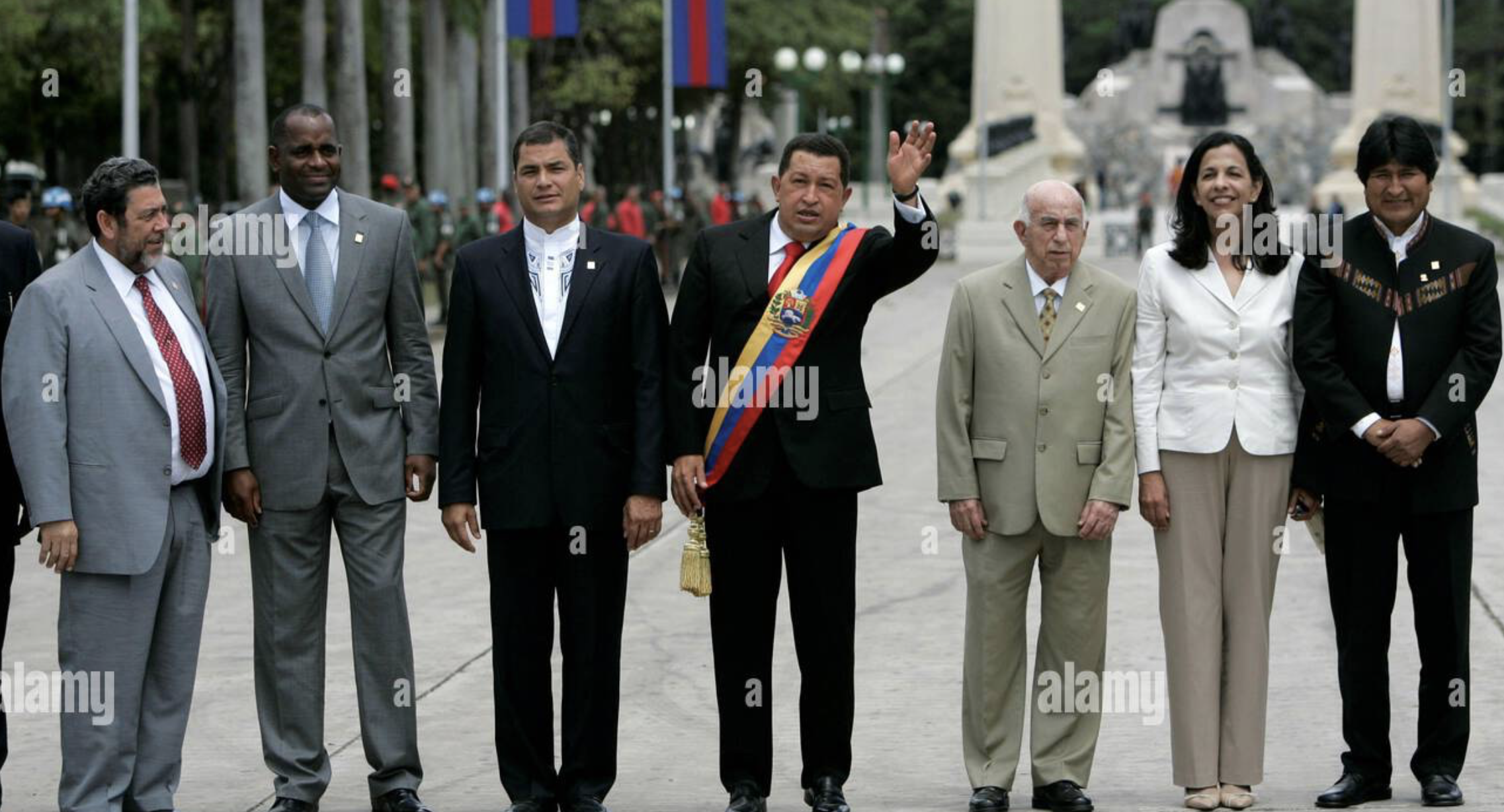
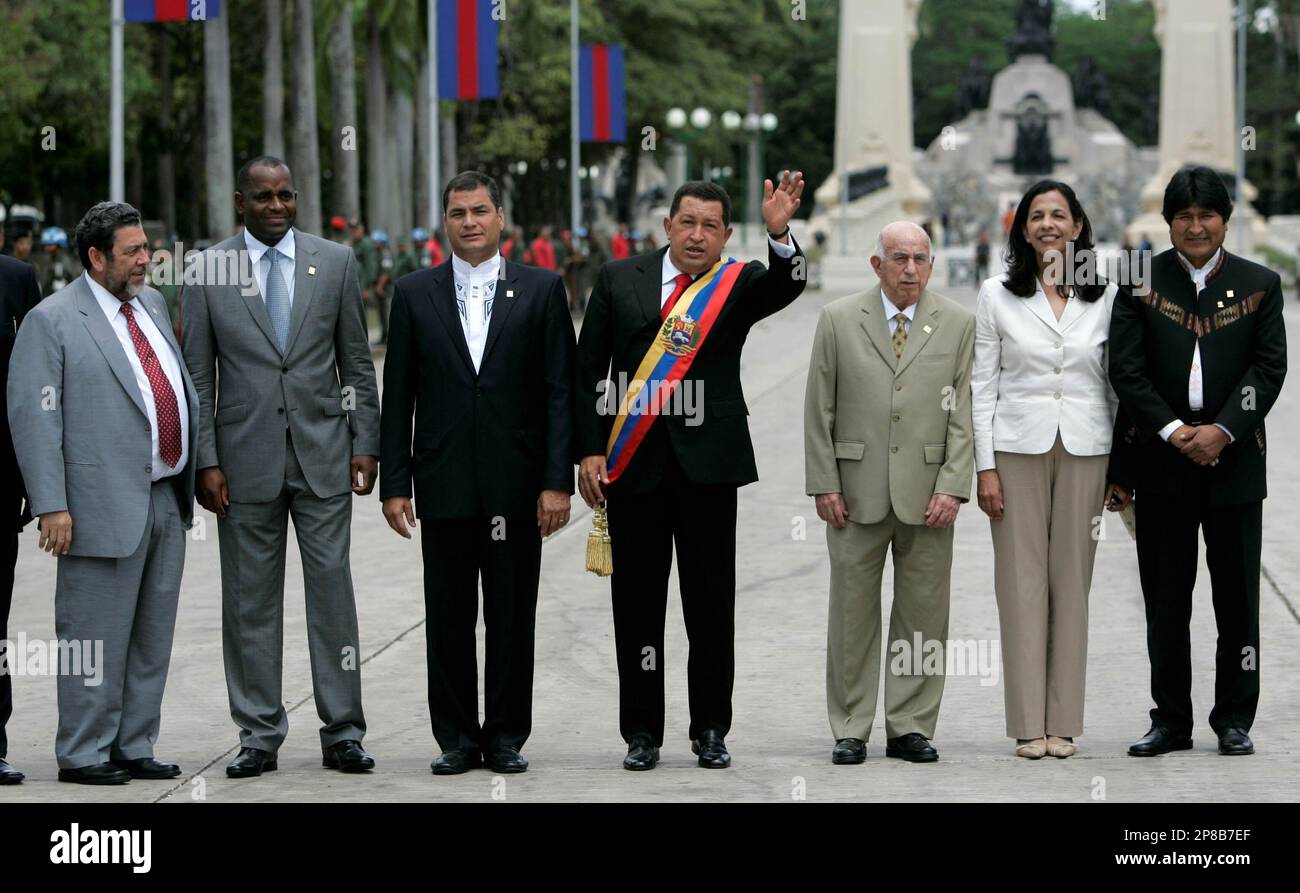
Hugo Chávez’s friendship with Caribbean leaders was marked by a shared commitment to socialism and anti-imperialist policies. His alliance with leaders like Fidel Castro and Raúl Castro of Cuba, Ralph Gonsalves of Saint Vincent, Roosevelt Skerritt of Dominica, as well as with Evo Morales of Bolivia, Rafael Correa of Ecuador, and Daniel Ortega of Nicaragua, and several others, was a significant aspect of his foreign policy. Chávez’s policies and ideas, which he termed “Chavismo,” were closely associated with Bolivarianism and socialism of the 21st century, influencing the political landscape of Latin America and beyond.
Ralph Gonsalves, the Prime Minister of Saint Vincent and the Grenadines, had a significant relationship with Hugo Chavez. Gonsalves has spoken about Chavez’s love for children and his dedication to the poor and working class. Gonsalves proposed naming a facility in St. Vincent and the Grenadines in Chavez’s honor, reflecting the impact Chavez had on the region. Gonsalves was a vocal supporter of Chavez’s social legacy, emphasizing the importance of Chavez’s work in the region and his role in the Caribbean.
The main cocaine supply in the Caribbean during the last 28 years came from Venezuela. It was enlarged under a scheme by Hugo Chavez to try and further damage the US by flooding it with cocaine. Because of the absolute closeness and attachment of Chavez and Fidel Castro, perhaps Castro was part of this conspiracy. The secondary main contributor in handling the cocaine and its international distribution is someone in Saint Vincent and the Grenadines who became the distribution hub organizer for Venezuelan cocaine in ever increasing massive amounts. From Vincentian waters cocaine is transshipped to other Caribbean Islands, and sent to Africa, Europe, and the UK in transatlantic sailing yachts. There have been dozens of sailing boats found to be smuggling cocaine in European and British waters that originated fro Saint Vincent.
According to Europol, in one particular operation a total of 50 individuals were arrested for smuggling cocaine from Saint Vincent to British and European waters. 39 individuals were arrested on 24 June in Spain, Norway, Poland and UK after cocaine worth an estimated EUR 45 million was seized from a vessel at sea in 2023. The crew of 8 people were also arrested during that initial interception. Simultaneously, a total of 47 house searches were carried out in Bulgaria, Colombia, Norway, Panama, Portugal, Spain and Trinidad and Tobago. Subsequent weeks saw three other individuals detained, bringing the total number of arrests to 50.
During the investigation, the agents identified a total of 10 other vessels used by the organization along the ‘drug routes’ and that the criminals had different bases of operations in Spain and South America. In Spain, they used Valencia, Alicante, Almería, Málaga and the Canary Islands, they used Trinidad and Tobago, Saint Lucia, and Barbados, to keep the sailboats ready to sail with the drugs. This system meant shipments could move as soon as the orders from the leader of the criminal network and his lieutenant were received.
The cocaine is then picked off the coast of the Caribbean islands such as St Vincent and other Grenadine islands by sailboats which would shortly thereafter set sail towards Spain, from where the cocaine was distributed onward to different EU countries by overland transport. The crew for the sailboats had been recruited in Norway by one of the leaders of the drug trafficking organization, who Europol had designated as a High Value Target. This individual was among those arrested in Norway on 24 June.
There are almost 7,000 online pages about cocaine smuggling involving Saint Vincent origin into British waters. There are a further 19,000 pages about smuggling cocaine from SVG into the US.
In Bequia there is a drug Barron and there are also drug kingpins associated with Bequia. The execution-style murder of American businessman Frankie Mitchell on the island drew attention, leading to discussions about the rising crime rate and the need for solutions to combat drug-related violence. Additionally, the island is experiencing a cocaine-infested environment, indicating a significant drug trafficking presence. Prime Minister of Saint Vincent and the Grenadines Ralph E Gonsalves observed that the Bequia murder was a “terrible thing that happened,” and he expressed hope that the relevant authorities will “get to the bottom of this particular killing”.
According to AI: The son of a Vincentian politician is suspected of being a drug baron in Bequia. Immigration authorities in Saint Lucia are investigating potential violations, including unauthorized entry and suspected prohibited immigrant status. Additionally, there are reports of a Vincentian man being referred to as The Don of Dons, indicating involvement in the illegal drug trade.
The “Don of Dons” in Bequia is believed to be deeply involved in the illegal drug trade in Grenada, specifically described as a key figure in the Grenadian underworld. This individual was suspected to be hiding in Grenada at one time and was believed to be involved in trafficking cocaine into the British Virgin Islands.
A Vincentian businessman Antonio “Que Pasa” Gellizeau was arrested in 2008 and charged with money laundering after law enforcement authorities seized U$1.6 million aboard his yacht. The largest money laundering case in the sub-region, he was found guilty on two charges of money laundering involving US$1.7 million in cash. The case was significant and involved a multi-agency cross-border investigation. Gellizeau was arrested aboard ‘Jotobin’ in Vincentian waters, April 5, 2008. Gellizeau was found guilty of money laundering, March 9, 2012, and sentenced July 22, 2913 to ten years in prison.
Anthony “Que Pasa” Gellizeau during a court case on another matter, told the court that he gave money to Julian Francis to help fund ULP campaigns. PM Ralph Gonsalves said that was a dastardly lie. Francis had denied, under oath, receiving any money from Gellizeau.
This case was about charges against Edwardo Lynch stemming from his comments that Francis, then a government minister, along with Assistant Commissioner of Police Lenroy Brewster and Gellizeau were on a beach on the night of August 4, 2007.
Saint Vincent, has for the last twenty five years been utilized as a transit point in the cocaine corridor from South America to North America and Europe, and now face unprecedented scrutiny as U.S. prosecutors investigate a belief that a systemic nexus of political bribery, protection rackets has been operated in SVG, and transshipment operations have actually been provided protection by politicians. The Americans recently invaded Venezuela and took the president Nicholas Maduro prisoner and took him back to the US to stand trial on charges of involvement in the cocaine trade. Maduro had many political friends in the Caribbean and the Americans most probably have the belief that there is a Caribbean conspiracy involved in Maduros alleged Venezuelan cocaine trade. Cocaine makes most of those involved in the trade rich, and there are politicians in the Caribbean who cannot or will not explain how in the last 25 years they accumulated immense wealth.
This article is based on previous and established information currently available online and neither the writer nor the publisher have any personal opinion on the persons named herein. Nor do they allege, accuse, or imply that any persons named herein are involved now, or then, in any illegal drug actions or involvement, unless previously prosecuted for the same.





The blogmaster invites you to join the discussion.