โ† Back

Your message to the BLOGMASTER was sent

Submitted by Dr.Georgie Porgie
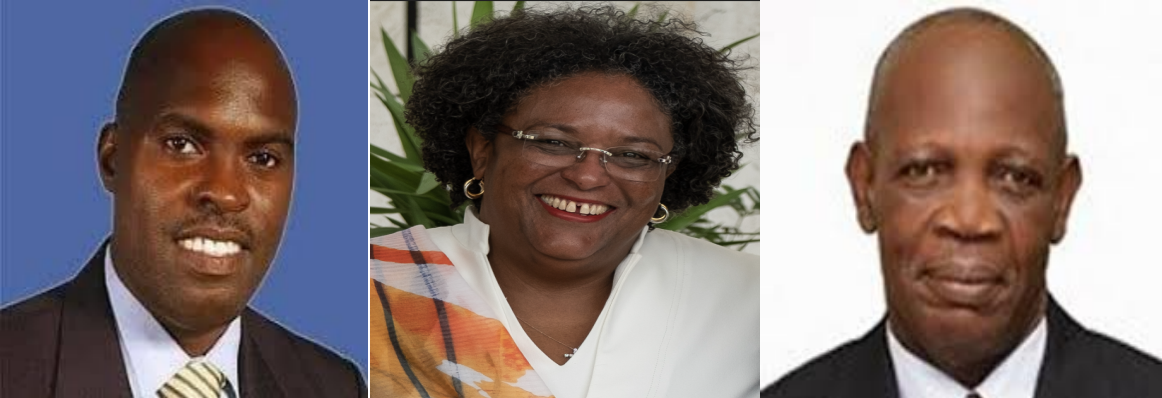
 John Boyce, Minister of Health
John Boyce, Minister of Health

I woke up this morning to read this rubbish in the SUNDAY NATION NEWSPAPER of Barbados.

BARBADIANS SHOULD SOON have access to totally free medical attention. The lone offshore medical school operating here, the American University of Barbados (AUB), is only awaiting word from Government to start such clinics. AUB president Meesam Ali Khan said the clinics were delayed because of certain permissions needed from Government, for which the process was ongoing.

AUB is also in talks with the Government for placing super-specialty doctors in their polyclinics for specialised medical care in the field of medicine, pediatrics, orthopedics, surgery, and so on. โ€œThe benefit of this will be that the Government polyclinics will have super-specialty doctors without the Government having to pay for it. โ€œIt will also benefit the patients because they wonโ€™t need to wait for an appointment at the [Queen Elizabeth Hospital], which is already overworked,โ€ said Khan. (SP)

What rubbish? Since September 1985, long before the American University of Barbados (AUB), was conceived, access to totally free medical attention was the norm in Barbados has been the norm. The American University of Barbados (AUB), needs to explain to the people of Barbados where and when and how these clinics will be staffed and where they will be set up.

The Government of Barbados needs to explain to the medical fraternity in Barbados what it is going to spring on the people of Barbados in association with the American University of Barbados (AUB). Is AUB implying that they are no specialists in Barbados in the field of medicine, paediatrics, orthopaedics, surgery, and so on?ย  Are they going to hire UWI trained doctors and specialists? Where will they bring these super-specialty doctors from? India? Mars?

When I read about โ€œThe benefit of this will be that the Government polyclinics will have super-specialty doctors without the Government having to pay for it, I think BEWARE OF THE GREEKS BEARING GIFTS. Since 1978 there have been and increasing number of Offshore Medical schools in the Caribbean. Never before has such an offer been made. Why was not such an arrangement not been made before? Why did not our fumbling Government negotiate such in the terms of they being here in the first place.

How many Bajan doctors are teaching at AUB now?

THIS IS OBVIOUSLY A PLOY BY THIS SCHOOL WHICH IS HAVING DIFFICULTY IN FINDING SITES FOR CLINICAL ROTATIONS OVERSEAS. This is a ploy to fool the students of the school that working or following doctors in these clinics that this is the same as their clinical training. EVERYONE KNOWS THAT THE OFFSHORE MEDICAL SCHOOLS ARE FINDING IT INCREASINGLY DIFFICULT TO GET CLINICAL ROTATIONS IN THE STATES AND ELSEWHERE.

WHO WILL SUPERVISE THESE CLINICS?

ARE OUR PEOPLE TO BE USED AS GUINEA PIGS?

WHAT RULE WILL BAMP AND THE BARBADOS MEDICAL COUNCIL HAVE IN THE SUPERVISION OF THESE CLINICS?

CAN A BUNCH OF INDIANS RUNNING A MEDICAL SCHOOL JUST WALK INTO BARBADOS AND FOOL THE BARBADOS GOVERNMENT JUST SO?

WHAT IS GOING ON?


Discover more from Barbados Underground

Subscribe to get the latest posts sent to your email.

126 responses to “American University of Barbados Offers FREE Medical Attention”

  1. Georgie Porgie Avatar
    Georgie Porgie

    Simple Simon May 22, 2016 at 11:45 PM #
    Georgie Porgie is right. The school needs clinical rotations for its students as it is becoming increasingly difficult for any medical school to obtain clinical rotations in the highly competitive/highly desired hospitals in the U.S., U.K., Canada etc.

    So Bajan patients will be it.

    CORRECT SIMPLE

    My questions: Who will supervise these clinical rotations? THEY WERE SAYING THAT THEY WILL BRING IN SUPER SPECIALIST DOCTORS TO DO IN A FACILITY THEY PLAN TO BUILD IN SILVER SANDS
    NOW THEY ARE SAYING THAT THEY WILL OPERATE FROM THE POLYCLINICS

    If our polyclinics and hospital must provide clinical training for this for-profit medical school wonโ€™t that then deprive our own Bajan/Caribbean students the opportunity to receive training? (bearing in mind that the number of patients is a finite resource)

    YES
    And why would we wish to deny our own students training opportunities?
    ASK JONES AND JOHN BOYCE

    And onec these foreign medical students are trained do we get to keep them?
    NO THAT IS IF THEY INDEED GET TRAINING. WE KNOW THAT THE STUDENTS WILL BE FLEECED

    Or will they be of to greener (backs) pastures in the U.S., U.K., Canada etc. THAT IS IF THEY INDEED GET TRAINING. WE KNOW THAT THE STUDENTS WILL BE FLEECED

    And what effect will this have on the provision of medical care for Bajans?

    Bear in mind that the majority of Bajan citizens/taxpayers will NEVER have enough money which will enable them to access medical care in the U.S., U.K., Canada etc. So when we train foreign doctors who then take off to richer countries how does that benefit our Bajan grannies and grandads, and how does that benefit our Bajan infants.

    THEY WILL GET TREATED BY THE SUPER SPECIALIST DRS IN THE POLYCLINICS FOR FREE AINT THAT WHAT THEY SAYING
    MURDAH

    BARBADOS REALLY GOING TO THE DOGS………..AND REAL FAST TOO


  2. @GP

    Are we saying there are NO legit offshore medical hospitals?


  3. Note the date of the article.

    MEDICAL SCHOOL AT BARBADOS AT CENTER OF CONTROVERSY

    By SHEILA RULE
    Published: May 18, 1984


    BRIDGETOWN, Barbados, May 13โ€” The St. George’s University School of Medicine is at the center of a storm of charges and countercharges over the campus it set up here after its campus in Grenada was temporarily evacuated during the invasion of that island last October.

    The controversy has produced wide- ranging allegations against the school, including low standards, improper importation of cadavers and financing by organized crime in New Jersey. Permanent Campus Approved

    The Barbados Government recently approved the establishment of a permanent campus for the American- owned school, viewing it as an economic asset that could pump millions of dollars into the island. Approval was given over the vociferous objections of the country’s doctors, its opposition party and the University of the West Indies. They argue, among other things, that the school has substandard students and curriculum, will undermine medical education in the Caribbean region and lower the quality of health services.

    The school, housed in a former convent north of Bridgetown, says its students are of high caliber and receive solid medical schooling.

    ”If we’re so lousy, how come 30 to 37 percent of every one of our classes is gobbled up by American medical schools in their third year?” said Dr. David E. Lennon, administrator of the campus.

    Dr. Lennon said that according to one opponent, ”We’re owned by the Mafia, the faculty is Communist and the students are C.I.A.-trained Manchurian candidates. We’re being used as a political football. We’re staying out of it and maintaining ourselves above this political imbroglio.”

    The medical school moved much of its operation here after the United States-led invasion of Grenada. The invasion took place after a coup that resulted in the murder of Grenada’s Prime Minister, Maurice Bishop, and several Cabinet officials. 207 Students in Barbados

    There were 207 students enrolled at St. George’s Barbados campus in the semester that recently ended, while another 140 were at the seven-year-old campus in Grenada. After coming here, the school was told it could remain temporarily until this month, but negotiations for a permanent site on the island soon began.

    An acrimonious dispute erupted in January after a shipment of 15 corpses, to be used in St. George’s anatomy class, arrived on the island. There were allegations that the bodies threatened public health and that the method of transporting them – bags instead of coffins were used – flouted Barbadian law.

    Dr. Richie Haynes, a member of the opposition party in Parliament, and a physician, later charged that the school was backed by what he called the New Jersey Mafia. He also charged that a high-ranking school official was head of a center in Georgia working closely with the Soviet Union in a program to alter ”the psychological behavior of human beings for the production of psychological shock-proof terrorists.” It was unclear where Dr. Haynes received his information, but Prime Minister Tom Adams said it may have come from an extreme right-wing American publication.

    Mr. Adams’s Government denies the charges. The Government estimates the school will make a sizable contribution to Barbados’s economy, through the purchase of goods and services, direct employment of local workers and travel by parents and visiting faculty.

    ”In the six months they’ve operated here, they’ve brought in over one million U.S. dollars to Barbados,” said Senator Clyde Griffith, Minister of State for Planning. ”We have a policy of promoting Barbados as a center for offshore business activity and the medical school is an offshore activity that comes highly recommended. We have done our own investigation and found it to be a credible institution. As a result, we decided to allow them to have a campus in Barbados.”

    In allowing St. George’s permanent residence, the Government imposed some requirements. These included a stipulation that the school’s curriculum must win approval from the Ministries of Health and Education and that the school would be granted registration as an educational institution only after a determination that it had satisfactory standards. A decision on whether to allow graduates of the school to practice here would be left up to the island’s Medical Registration Board. In addition, the Adams Government has said that St. George’s could not use state- run health facilities. Warnings of Overcrowding

    This last point addresses one of several fears of Barbadian doctors and the University of the West Indies, which uses a government hospital here to train medical students. They warn that allowing the American-owned school to use such centers would overcrowd them and thus lower standards and the quality of doctors in the Caribbean. The President of the Barbados Association of Medical Practitioners said doctors viewed the school as more a business than a medical university.

    ”Our traditional medical schools have a strong academic base which sets standards and monitors our performance,” said the president, Dr. Michael Hoyos.

  4. Georgie Porgie Avatar
    Georgie Porgie

    RE This bill seeks to implement the agreement reached by Caribbean nations for accreditation of medical schools in the region. It is noteworthy that a committee made up of knowledgeable experts will evaluate and report on schools applying to operate in the region, and in so doing, it will also seek to ensure the highest standards and so avoid any โ€œfly-by-nightโ€ operators.

    THIS IS A LOAD OF BULL PATTIES
    THERE IS A BODY CALLED CAMC THAT HAS TEMPORARILY BLESSED SOME OF THESE SCHOOLS EVEN THOUGH THEY KNOW THAT THE SCHOOL IS LIKELY TO CLOSE ANY TIME BECAUSE THEY HAVE NOT BEEN ABLE TO ATTRACT ENOUGH STUDENTS AND ARE NOT BREAKING EVEN

    ONE SUCH SCHOOL HAS NOT GRADUATED ONE PERSON IN THE SIXTH YEAR OF ITS OPERATION

    ANOTHER SUCH SCHOOL LASTED LESS THAN 2 YEARS IN ST LUCIA

    ANOTHER ONE IN ST LUCIA WITNESSED THE CEO ARRESTED BY THE ST LUCIA POLICE

    ANOTHER ONE IN ST KITTS WAS SET UP BY A LAWYER OF A CLOSED SCHOOL AND A FAKE DR……….IT CLOSED IN SHORT TIME

    SOME OF THE MEN APPROVING SCHOOLS TODAY FOR CAM C WERE AGAINST THEM LAST YEAR AS IT WERE

    RE Offshore medical schools have in the past three decades gained acceptance and recognition as centres where high quality medical education is given and proficient and knowledgeable students are produced.

    LIST THEM MR EDITOR! LIST THEM!
    THE GRADUATES OF MOST OF THESE SCHOOLS ARE NOT ON THE CALIFORNIA LIST OF ACCEPTED SCHOOLS
    DO WE KNOW HOW MANY STATES FOLLOW THE CALIFORNIA LIST?
    BAJANS INTERESTED IN THESE SCHOOLS OUGHT TO READ THROUGH THE PAGES OF VALUEMD TO SEE THE HISTORY OF THESE SCHOOLS

    I WILL FINISH OFF REBUTTAL TO THIS EDITORIAL TOMORROW AND AS WE GO ON I WILL SHOW YOU THAT WE ARE SPINNING TOP IN MUD HERE


  5. It is important to add that the Opposition with responsibility to shadow health is the rookie M.P. Dwight Sutherland.


  6. @ David ANd GP,

    Wunna is two bright men.

    Let me put this to you as a scenario.

    In fact let me be very clear on this BECAUSE THESE MOFO’s are really ingrunt.

    The reason that the Government of the United States is insisting on the fingerprinting of our citizens is because of these stupid schemes that this government has and continues to implement.

    Effers like Stupid Ass ROnald We Jonesing and others in the Band of Inept Dufuses, in a fit to make it seem like their ingrunt selves are doing anything, and encouraging all and sundry to leave the bowels of the Jihadist Countries and migrate to Barbados where a Red Effing Cap will take $500 from a man outside and bring out 5 Johnny Walker Black Label bottles Duty free AND because dem only interested in mekking a dollar will tek an item into the airport and our Airport Security Cannot Detect that shyte furthermore if Abin El Baktr, 10th on the US Terrorist lists applies from Mumbai to come to BIM as a student and thereafter wreak havoc on our poorly guarded airport(s)

    We cant even find the man who killed Colin in Baxters Road furthermore defend ourselves against these Clear and Present Threats.

    Dem find de Remingtons yet?

    Let me tell you what is going to happen with this scenario.

    Once the US government confirms the laxness that is associated with these so called “medical schools” and makes the determination that they constitute a threat to US Citizens travelling to the region, they will issue a heightened alert which will kill all these gains recently touted by Minister Stinkliar.

    THis is serious business that goes beyond the serious medical accreditation standards that GP is hinting at, we are playing around with medical schools that the vetting processes of our Immigration Department CANNOT DEAL WITH!!

    As long as a man OR A WOMAN, and there are women terrorists too, got shiny hair, dem does be allowed to cum n Barbados. So I am not even talking bout the Waki Waki dat really emigrating to Barbados, that is par for the course, until of course we end up like Trikidad, but I am talking about the commensurate vetting mechanisms that these dufuses DO NOT HAVE ONE CLUE ABOUT.

    But all these re-election gimmicks are going to leave a serious mess that the incoming government WILL NOT BE ABLE TO FIX

  7. Georgie Porgie Avatar
    Georgie Porgie

    RE David May 23, 2016 at 12:18 AM #
    NOTE THE DATE OF THE ARTICLE.

    MEDICAL SCHOOL AT BARBADOS AT CENTER OF CONTROVERSY

    THIS REFERS TO WHEN THE FLEDGLING ST GEORGES MEDICAL SCHOOL WAS TEMPORARILY HOUSED AT ST JOSEPHS CONVENT. IT WAS THEN ONE OF 3 OR 4 OFFSHORE CARRIBEAN SCHOOLS.

    THIS SCHOOL HAS BEEN LED AMD MANAGED BY A SERIOUS DR AND HAS BECOME THE BEST OF THE SCHOOLS. IT IS ACCEPTED AND VERY EXPENSIVE AND BY BUYING LOTS OF CLINICAL SPOTS IN THE US HAS PUT LOTS OF THE COMPETITION IN DEEP DO0 DOO

    ROSS WAS KNOWN TO BE A TOP SCHOOL TOO AND WAS VERY IMPORTANT TO THE ECONOMY IN DOMINICA, BUT SINCE ROSS SOLD IT TO DEVRY, THE REPORTS ARE NOT THAT GLOWING

    THESE TWO ARE THE TOP TWO

    DOES THE STUPID CABINET THINK THAT OFFSHORE MEDICAL SCHOOLS WILL IMPACT THE LOCAL SCENE LIKE THEY DID IN THESE TWO ISLANDS AT A TIME WHEN THERE WAS NO COMPETITION.

    AS WE GO ON I WILL TELL YOU WHY IT IS NOT GOING TO HAPPEN

    IN SHORT THE RESIDENCY SPOTS ARE NOT ENOUGH IN THE USA……….WHER THESE STUDENTS WANT TO GO TO WORK OR END UP WORKING IF THEY MAKE IT.

    THOUSANDS OF STUDENTS WHO PASS STEPS 1 AND 2 CAN NOT GET A RESIDENCY. THIS IS SO ESPECIALLY FOR FOREIGN MEDICAL AND INTERNATIONAL MEDICAL GRADUATES AS THEY ARE CALLED

    THE SCHOOLS CAN FLEECE AS MUCH AS THEY WISH BUT THE OTHER PART OF THE BUSINESS IS DRYING UP

  8. Georgie Porgie Avatar
    Georgie Porgie

    PIECE
    YOU AINT LIE
    THIS IS WHAT I SEE WID MY TWO EYE DEM

    i WENT TO TEACH A CRASH COURSE IN ANTIGUA IN 2003

    A RED CAP MAN AT THE AIRPORT USED TO DRIVE THE OWNER OF THE SCHOOL AT NIGHT

    WHEN I LIFTED UP MY BAGS TO HAVE THEM INSPECTED AT CUSTOMS, THE RED CAP MAN PICKED UP MY BAGS BEFORE THEY WERE INSPECTED AND TOLD ME TO FOLLOW HIM.

    TWO MONTHS LATER I WENT BACK TO ANTIGUA TO TEACH AT TH EASTER BIBLE CONFERENCE. THE CUSTOMS PEOPLE OBVIOUSLY KNEW ME AND WAVED ME THROUGH,

    THE STUDENTS AT THAT SCHOOL GOT THE SAME TREATMENT

  9. Georgie Porgie Avatar
    Georgie Porgie

    David May 23, 2016 at 12:05 AM #
    @GP

    Are we saying there are NO legit offshore medical hospitals?

    i am saying that there are no offshore school IN THE ISLANDS that i KNOW HAVE THEIR OWN HOSPITALS
    WHEN I was at A CERTAIN SCHOOL IN sT kITTS, THE STUDENTS WENT TO THE LOCAL HOSPITAL TWICE WEEKLY WHERE THEY WERE SUPERVISED AND TAUGHT BY THREE UWI TRAINED SPECIALIST. THESE STUDENTS DID VERY WELL AT USMLE. THAT SCHOOL NO LONGER REALLY OPERATES IN THAT ISLAND AS FAR AS I KNOW.

  10. Well Well & Consequences Avatar
    Well Well & Consequences

    More importantly GP…are you saying there is no legislation in place on the island to regulate the scam offshore medical schools and monitor their activities. First of all, they should not be advertising as an American school if their principle owners are all Indian, from India, unless they are also registered in the US…that’s false advertising and needs to be brought to the attention of the US Embassy, if that’s the case.

    Did none of the jackass politicians background check the credentials of any of the owners BEFORE taking their money.

  11. Well Well & Consequences Avatar
    Well Well & Consequences

    Piece…isnt it a tragedy that Bajans are still being socialized in 2016, from the politicians back down, to allow those with “shiny hair” and/or fair skin to go into Barbados and do whatever they feel like on the island, things they cannot do in their own countries, they are allowed to do in Barbados, is that not a shame and disgrace, blight and pox on the people and island.


  12. @GP

    If the doctors were to be supervised by UWI trained doctors while doing their clinical you will be able to live with it? Or are you condemning wholesale the quality of medical student produced.


  13. Didn’t GP make a career of teaching at this category of medical school, in many countries (in the Caribbean, Mexico, the US and the Pacific) for many years?

    I am surprised that a prominent local surgeon (UWI trained), a Principal of a leading secondary school and a well known DLP politician, along with parents of children who could have gained entry to a UWI medical school did not realize that they are being scammed and have allowed their relatives to be enrolled at the American University of Barbados and similar medical schools. Recently one Barbados Scholar chose to study at St. Georges University rather than UWI (to GP’s chagrin).

    The issues for me are: Are the doctors of the AUB who will attend to Barbadians accredited, licensed and insured in the same manner as all other doctors in Barbados? Will claims of malpractice against these doctors be heard in the Barbadian courts of Law? Will the Government of Barbados be making any financial or material contribution to the operation of such schools and their ancillary operations? Will the polyclinics and the QEH be accessible to the AUB? Will the graduates of such medical schools be registered to practice in Barbados BEFORE receiving registration in other jurisdictions namely the USA, Canada or the UK?

    Other than these questions all I would say is “caveat emptor”!

  14. Georgie Porgie Avatar
    Georgie Porgie

    Ping Pong May 23, 2016 at 7:23 AM #
    Didnโ€™t GP make a career of teaching at this category of medical school, in many countries (in the Caribbean, Mexico, the US and the Pacific) for many years?

    NO. GP WORKED FOR MOST OF HIS CAREER IN THE POLYCLINICS OF BARBADOS
    GP DID TEACH IN A NUMBER OF OFFSHORE MEDICAL SCHOOLS FOR SHORT PERIODS< AND IS THEREFORE WELL POSITIONED TO REPORT ON WHAT HAPPENED IN THEE PLACES AND COMPARE IT WITH THE STELLAR TRAINING HE RECEIVED AT UWI.

    NO OFFSHORE MEDICAL SCHOOLS IN US SIRโ€ฆโ€ฆ.BY DEFINITION

    I WORKED HERE AND THERE WITH SOME GREAT MEN WHOM I ADMIRED IMMENSELY, BUT OFTEN BAULKED AT EVIL MERCENARY OWNERS AND ADMINISTRATORS, LIKE THE ONE IN BONAIRE WHO SAID ABOUT THE STUDENTS, WHILE TAKING THEIR MONEYโ€ฆโ€ฆโ€ฆ WE WILL WEED THEM OUT AT STEP ONE..โ€

    I CAN SHARE INFORMATION WHERE OWNERS AT AIMU GAVE INSTUCTIONS TO PASS STUDENTS WHO FAILED AND TO ALLOW BLACK ST LUCIANS AND AFRICANS TO FAIL WHO HAD BETTER MARKS. I CAN GO ON AND ON. AND I WILL

    I am surprised that a prominent local surgeon (UWI trained), a Principal of a leading secondary school and a well known DLP politician, along with parents of children who could have gained entry to a UWI medical school did not realize that they are being scammed and have allowed their relatives to be enrolled at the American University of Barbados and similar medical schools.

    SO AM I, BUT THEY WILL LEARN VERY SOON. JUST AS MANY JAMAICANS WHO ATTENDED AAIMS FOUND OUT BEFORE RUNNING DOWN TO GUYANA. MANY OF US THINK THAT OUR INSTITUTIONS ARE INFERIOR TO THOSE โ€œ FROM OVER AND AWAY.โ€ HOW ON EARTH CAN A FLEDGLING START UP JOKE SCHOOL BE SUPERIOR TO ONE WHICH HAS BEEN IN EXISTENCE SINCE 1948 ) i.e 68 years.

    Many students of these schools struggle to pass the USMLE exam. In my time we did it as a mock exam in January preparation for finals in May. Some failed finals who passed the ECFMG

    Recently one Barbados Scholar chose to study at St. Georges University rather than UWI (to GPโ€™s chagrin).
    ST GEORGES IS EXTREMLY EXPENSIVE AND IS IN NO WAY SUPERIOR TO UWI EXCEPT FOR COST
    NOTE THAT UWI IS WELL KNOWN IN THE USA AND IS LISTED ON THE IMPORTANT CALIFORNIA LIST

    The issues for me are:
    Are the doctors of the AUB who will attend to Barbadians accredited, licensed and insured in the same manner as all other doctors in Barbados? SHOULD HAVE NOTHING TO DO WITH US IF THEY OPERATE LIKE THE STANDARD PARASITIC SCHOOL AND DOES NOT INVOLVE BAJANS AS PATIENTS EN MASSE

    Will claims of malpractice against these doctors be heard in the Barbadian courts of Law? DONโ€™T KNOW. ANYTHING CAN HAPPEN UNDER THe PRESENT DLP FOOLS

    compare this to the statement in 1984 by th then BLP administration when St Georges was here temporarily, as pointed out in the report Dabvid posted last night thus…

    In allowing St. Georgeโ€™s permanent residence, the Government imposed some requirements. These included a stipulation that the schoolโ€™s curriculum must win approval from the Ministries of Health and Education and that the school would be granted registration as an educational institution only after a determination that it had satisfactory standards. A decision on whether to allow graduates of the school to practice here would be left up to the islandโ€™s Medical Registration Board. In addition, the Adams Government has said that St. Georgeโ€™s could not use state- run health facilities. Warnings of Overcrowding

    This last point addresses one of several fears of Barbadian doctors and the University of the West Indies, which uses a government hospital here to train medical students. They warn that allowing the American-owned school to use such centers would overcrowd them and thus lower standards and the quality of doctors in the Caribbean. The President of the Barbados Association of Medical Practitioners said doctors viewed the school as more a business than a medical university.

    โ€Our traditional medical schools have a strong academic base which sets standards and monitors our performance,โ€ said the president, Dr. Michael Hoyos.

    Will the Government of Barbados be making any financial or material contribution to the operation of such schools and their ancillary operations? Will the polyclinics and the QEH be accessible to the AUB? IS THIS NOT WHAT IS BEING SUGGESTED

    Will the graduates of such medical schools be registered to practice in Barbados BEFORE receiving registration in other jurisdictions namely the USA, Canada or the UK? CANADA DOES NOT ACCEPT THESE JOKERS. TAUGHT SEVERAL CANADIANS WHO HAVE TO WORK IN THE USA.
    IF THEY CAN PASS THE STEP EXAMS AND DO A RSIDENCY IN THE USA THEY THEN BECOME DRS IN THE USA. BUT AS I WILL SHOW YOU EVENTUALLY MATCHING IN TO A RESIDENCY IN A RESIDENCY IN THE USA IF YOU ARE NOT FROM A US SCHOOL IS BECOMING MORE AND MORE DIFFICULT EACH YEAR
    Other than these questions all I would say is โ€œcaveat emptorโ€! CAVEAT EMPTOR INDEED

  15. Georgie Porgie Avatar
    Georgie Porgie

    David May 23, 2016 at 12:05 AM #
    @GP

    Are we saying there are NO legit offshore medical hospitals?

    NOTE THAT MOSTLY INDIANS AND A FEW LOCALS WHO STUDIED AT AIMU DO THEIR CLINICAL ROTATIONS AT VICTORIA HOSPITAL IN CASTRIES WHERE THEY ARE SUPERVISED BY UWI TRAINED SPECIALISTS.

    THE INDIANS GO HOME AND HAVE TO TAKE EXAMS FOR REGISTRATION THERE
    THE LOCALS CAN TAKE THE CAM C EXAMS

  16. Well Well & Consequences Avatar
    Well Well & Consequences

    Again….for those who dont know, if you are a lawyer or doctor…or…….or……any part of the world and you immigrate to Canada, unless you got your training and got your degrees in Canada, you have to go back to school and retrain and take exams for that discipline all over again…I know of no exceptions….they are not fly by night.

  17. Georgie Porgie Avatar
    Georgie Porgie

    Those who want to go and work in the USA MUST take the step exams and hope to get matched in a Residency programme.

    I always wanted to teach. One Saturday afternoon in 2001 I sent of a flurry of e mails to schools I saw listed on a now defunct site called GUIDE TO FOREIGN MEDICAL SCHOOLS.

    In January 2002, I flew to St Kitts and was shocked to find that the school was a little bungalow on the outskirts of Bassterre. I was paid very well for the little I did really.

    I soon learned that the school was an INTERNET SCHOOL , and that most of the students were in the USA. A single doctor was thought to be teaching all 8 modules of the course simultaneously……..straight out of the Merck Manual.

    In Basseterre we had a local surgeon for the Dean and Anatomy teacher. We also had a good Nigerian teacher and a young graduate from University of Virginia who was stoned most of the time with weed. He would walk in to the classroom and pull up a file on the internet and read it if the current did not go off.

    The programme was run on the basis of 80 weekly medical cases. My first week there we studied asthma and the second week Cystic Fibrosis. We met every week and divided up the work. I was satisfied that at the end of the first week that the students knew how to manage asthma.

    The students had a reading list for each week which detailed what pages they needed to read ON THEIR OWN about the case of the week and what they needed to know about the RESPIRATORY SYSTEM which was completed in 8 weeks.

    The best thing in this program was that the 8 or so students were divided into three groups and sent to hospital on Monday and Friday mornings, where they got some rigorous UWI training from early on. Another thing was we had USMLE REVIEW SESSIONS every Friday afternoon.

    We noticed that the lad from Virginia disappeared. I learned later that the school would not pay for him to get a work permit, and that he used to be sent out of the island every six months and brought back in again during his tenure there.

    After six months my passport was returned with out being stamped, and I was dismissed
    Eventually my Nigerian colleague who was then teaching everything, more or less. They hired a man who was not a Dr . He only said he was, but he had not passed the Step exams or done a Residency. By then the large contingent of US online students were told the truth about the school in a series of daily posts on GUIDE TO FOREIGN MEDICAL SCHOOLS, and quit. The students on the island were well taught and got by. The school folded before being restarted started some time after.

    The chap who was not a Dr started his own school on the island with the schools lawyer…..but that did not last too long.

    This is what a recent student of the school said ………
    Pros and Cons of IUHS
    Advertisements

    Pros
    1) No need to attend actual lectures so that you can work full time.
    2) Expenses are far more less than other Caribbean school because you don’t physically have to be there. No extra living expenses
    3) Some of the lecturers are awesome.
    4) You can attend your video lectures in your pajama.

    Cons
    1) Most of the states don’t recognize IUHS Graduates. The rest doesn’t favor them either. You will get residency if you are so lucky.
    2) During the clinical rotation, you won’t learn that much. (this could be for all Caribbean schools I suppose)
    3) Their USMLE pass rate is questionable. They mention higher than US based school average. In reality, they will sponsor(pay) only best students for USMLE. If the class size is 10, they will sponsor the best two students for USMLE exam and when they pass, the percentage on their website shows 98%. How about the rest they never sponsor (pay)? Those students can write USMLE themselves. IUHS doesn’t count their failure or pass. Most students didn’t pass. So you can only see highest digits on their web.
    4) The communication is horrible. They rarely respond emails from students and rarely help students if even the problem is on their side.

    You can give it try but I won’t recommend anyone. It could be waste of money and time if you don’t get residency.

    Here is an interesting response to the above

    I have no doubt at all that you are speaking the truth, but it seems you MUST NOT EVER tell the truth on valuemd. No one really listens.

    How do I know? Well over the last 10 years the number of offshore schools have more than doubled.

    I actually taught at IUHS in St Kitts years ago. In those days there were a few teachers and students on the island but the vast number of students were online.

    They were taught all the 8 modules by a single man. He often did not turn up and students would drive miles from work to their homes in vain for their lectures

    A man called georgiegporgie exposed them on the now obsolete site Guide to Foreign Medical Schools that preceded valueMd, and many of the online students quit.

    Eventually, before they folded on the island thy had a “President” running things on the island. He was said to have graduated from some strange medical school but was not really a doctor as he had not passed the steps or done a residency. This did not stop him from joining up with the IUHS lawyer on the island to start his own school on the island . This did not last very long, however.

    Some how out of the ruins of a failed IUHS of the early 2000’s has emerged what seemed to be a better solution.

    However, you have been honest or disappointed enough to tell the truth here, and you must be commended for doing so.

    But few will take heed. Too many folk think that being a doctor is glamorous, and many will continue to be fleeced by offshore schools and online schools like IUHS.
    Few will learn from your misfortune.
    Many of your class mates will rush here to make you out to be a whiner, or a villian. You will find this type of delusion on all of these fora.

    WELCOME TO THE MORASS OF PARASITIC BOGUS OFFSHORE MEDICAL SCHOOLS

    AUB IS TAKING THEIR PARASITISM TOO FAR UNDER THE WATCH OF OUR POOREST EVER CASH STRAPPED GOVERNBMENT WHO IS LOOKING EVERY WHERE FOR MONEY TO PAY THEIR PENSIONS

  18. Georgie Porgie Avatar
    Georgie Porgie

    THIS IS A WARNING FOR BAJANS WHO WANT TO ATTEND EXPENSIVE BOGUS OFFSHORE MEDICAL SCHOOLS OTHER THAN THE “BIG THREE”
    What Happens to Medical School Graduates Who Can’t Get a Residency?

    Unmatched – What happens to Medical School Graduates Who Can’t Get a Residency?

    Whatโ€™s the most dramatic day of medical school? Itโ€™s not the first day of anatomy lab, when students cut into cadavers, or the beginning of rotations, when they meet patients for the first time. Itโ€™s match dayโ€”the day when soon-to-be doctors find out where they will complete their residencies.

    Match Day is the culmination of a grueling process. After two years of basic science training and more than a year of clinical rotations, fourth-year medical students spend months interviewing with residency programs, sometimes dozens of them, at hospitals across the country. The ritual resembles a cross between job hunting and speed dating. Students arenโ€™t just trying to impress residency program directors, theyโ€™re also trying to gauge whether the attraction is mutual. When all the interviewing is done, students rank their top hospitals, and hospitals rank their favorite students. You donโ€™t want to waste your energy on a program that just isnโ€™t that into you. After both sides have submitted their preferences, everyone waits for months while a somewhat opaque algorithm spits out the results.

    The stakes are inevitably high, but medical schools ramp up the tension of the big reveal on Match Day, which took place March 20 this year. Some force their students to walk across a stage and announce their result, sharing their big moment with the assembled student body (either with a fist pump or barely disguised tears). Other schools hand out envelopes and ask students to open them simultaneously. Itโ€™s a contrived and uncomfortable situationโ€”and thatโ€™s if youโ€™re lucky.

    The even darker side of the match process happens a few days earlier, on a day known as Black Monday. Students who havenโ€™t matched with a hospital get a phone call from their medical school breaking the news. Medical students spend that day hoping the phone doesnโ€™t ring, like worried military spouses.

    Those who get the call have a chance to find a residency spot through the โ€œscrambleโ€โ€”a frantic few days before the official match results are announced, during which unmatched students try to pair themselves up with hospitals that have unfilled slots.

    Most students at U.S. medical schools donโ€™t have much to worry about. Historically, about 94 percent of U.S. medical graduates match successfully on the first try. An additional 3 percent find a residency during the scramble. A few more students stumble into positions between Match Day and graduation.

    By the time they get their diplomas, about 3 percent of U.S. medical graduates are still looking for a residency position. โ€œSome of them had challenges during medical school with basic science or their clinical years,โ€ says Geoffrey Young, senior director of student affairs and programs at the Association of American Medical Colleges. โ€œBut others applied to specialtiesโ€”orthopedics, neurosurgery, etc.โ€”they were not competitive for against advice they were given. These are students who have always been successful, and they think it canโ€™t happen to them.

    Although failure to match is chastening, U.S. graduates have an excellent chance at finding a program the next year. In the meantime, many of them get a masterโ€™s degree, or they teach or work in a laboratory to strengthen their applications. If they decide not to pursue a residency, itโ€™s almost always by choice. Despite the pressure of Match Day, life is pretty forgiving to U.S. medical school graduates.

    For graduates of foreign medical schools, the world is a harsher place. This year, 12,380 doctors attempted to match from medical schools outside the United States. Only 6,301 matched, for a success rate of approximately 50 percent.* That figure, although very low compared with U.S. medical school graduates, probably flatters the international students. People who graduate from medical schools in the Caribbean or Eastern Europe often apply for programs such as family medicine that generally have a harder time filling their positions. This self-selection inflates the international studentsโ€™ match numbers.

    Why do they fare so poorly? I spoke with a couple of people who administer residency programs, on condition of anonymity because this is a sensitive subject that raises legal issues. They explained that there are two different categories of international applicants. โ€œForeign medical graduates,โ€ or FMGs, grew up and attended medical school abroad. โ€œInternational medical graduates,โ€ or IMGs, are Americans who left the United States to go to medical school. (The terminology is strange, I know.)

    The directors of residency programs arenโ€™t at all enthusiastic about IMGs. American students who study medicine abroad, with rare exceptions, couldnโ€™t get into U.S. medical schools. Some of them also failed to earn admission to colleges of osteopathic medicine, a parallel U.S. medical education thatโ€™s similar to traditional medical school but generally less competitive. (Osteopathic doctors have D.O. rather than M.D. after their names.) Their education abroad may have been fine, but residency selectors highly value the sorting function that U.S. medical school admissions offices perform, whether or not you consider it fair.

    FMGs face an entirely different challenge. Many residency directors hold foreign medical graduates in high regard for their technical expertise and basic science knowledge. Medical schools in some countries, particularly in Asia, are hard to get into and even harder to graduate from. Since U.S. residency training is valuable all over the world, residency directors can basically skim off the top layer of foreign doctors. Thatโ€™s especially valuable for less prestigious residency programs because they donโ€™t get their pick of the U.S. medical graduate litter.

    There is, however, a widespread perception that foreign medical graduates donโ€™t communicate well with U.S. patients. I live very near a massive academic hospital, and I often hear patients saying on the sidewalk that their doctor โ€œbarely spoke English.โ€ Itโ€™s a cringe-inducing complaint because you canโ€™t become a doctor in the United States without speaking fluent English, but many patients equate sounding foreign with not speaking English. Yuck, I hate having to write that.

    Thereโ€™s a more legitimate side to the discomfort. Doctors in many foreign countriesโ€”even Western countriesโ€”are accustomed to making major decisions with little input from patients. That can be jarring to patients familiar with the American model, in which shared decision-making is valued.

    These complaints have been heard, and most physicians are now acutely aware that their patients simply donโ€™t like foreign doctors. For that reason, residency directors often shy away from foreign medical graduates, even if they are otherwise excellent candidates.

    What happens to international doctors who donโ€™t match in U.S. residency programs? No one seems to know. I sent three emails to the Educational Commission for Foreign Medical Graduates but never heard back. Apparently, they donโ€™t like to talk about the low match rate for their clients.

    A large proportion of the Match Day losers clearly give up, or the match rates would drop lower and lower under the weight of repeated failures. Foreign medical graduates may choose to practice medicine in their home countries or elsewhere outside of the United States. Many of the American candidates probably also practice medicine abroad, or go to work for pharmaceutical companies. (Donโ€™t reserve too much pity for those peopleโ€”big pharma pays pretty big bucks.)

    The other big Match Day losers are American patients. Over the next decade, we will need to import tens of thousands of doctors. It would be smart to open up more residency slots now and bring in the brightest graduates of medical schools from around the world. The problem is Congress. The federal government pays for residency slots through Medicare, and Congress more or less froze the number of positions itโ€™s willing to fund (and the amount residents are paid) several years ago. Without more money, few hospitals are willing to expand their training programs. The system, in short, is suffering from Congress-itis: an increasingly common ailment caused by the atrophying of the deliberative body.

    The above article was authored by Blake Palmer.


  19. @GP

    Keep posting. We are reading and following closely.

  20. Georgie Porgie Avatar
    Georgie Porgie

    David,
    Im trying to find some good juice on ValueMd.
    I dont check it so often as I used to over the last 13 years….so I cant find things as quickly

    But here is a nugget from the AUA forum –one of two schools in Antigua

    The question was asked
    “How is it possibly acceptable that 50/350 students passed their Step 1? I know Caribbean schools don’t have the best track record but I am sincerely interested in possibly applying to AUA in the future but that stat scares the day lights out of me. It’s an indicator of the faculty and school not adequately preparing their students. What else am I supposed to make of that?”

    AUA was started by a lawyer involved in running Ross at its peak when Ross sold out to Devry about 12 years ago. He set up a big impressive complex in Antigua after getting the shitty stick from Devry.

    This is one of the top schools yet in 2015 it had the poor step 1 rate of 14.285% after 12 years of operation.

    I have not seen the list of past rates for a while, but all the UWI schools despite the fact that the students are not specifically prepared for these exams are usually top of the list with St Georges and Ross and AUC.

  21. Well Well & Consequences Avatar
    Well Well & Consequences

    Yeah….let the nincompoop ministers see that they are the ones to control and monitor the influx so the island’s reputation is no further tarnished re shady medical offshor schools…ee know how badly the US needs doctors and look what congress is doing.

  22. Georgie Porgie Avatar
    Georgie Porgie

    David

    This is a good example of the scamming practiced by these bogus schools
    http://www.tampabay.com/news/business/windsor-university-school-of-medicine-produces-profits-few-doctors/1069719

  23. Georgie Porgie Avatar
    Georgie Porgie

    GOD IS GOOD THE OWNER OF THIS SCHOOL COCKED UP DIED SUDDENLY LAST YEAR AT ABOUT AGE 50 VERY RICH AND VERY DEAD AND HE DIDNT CARRY ONE CENT OF HIS ILL GOTTEN GAINS WITH HIM.

    i FIRST personally encountered Windsor in 2002 when I went to seek a job there. The school then was two old barns by the Basseterre docks. They had lots of good informative files on the website then In the next few years they built some modern buildings at a place called CAYON AND ADVERTISED AGRESSIVELY TO INDIANS. i FLEW IN TO BASSETERRE IN 2008 FROM MIAMI WITH A PLANE LOAD OF STUDENTS HEADED FOR WINDSOR!

    THE COMPLAINTS ON THE WINDSOR FORUM ARE MONSTROUS AND MIND BOGGLING

  24. Georgie Porgie Avatar
    Georgie Porgie

    This is the story of the Offshore Founder GERU of SABA & MUA

    http://hcrenewal.blogspot.com/2013/10/the-mystery-of-fugitive-founder-and.html

    http://www.bloomberg.com/news/articles/2013-10-24/caribbean-medical-school-founder-guilty-at-florida-tax-trial-1-

    Frederick was really the geru who taught that you needed 90 students to break even.In 2005 while I was at St Martinus he told one of my colleagues that both SABA and MUA were booked up solid up to 2007!

    After teaching and learning the ropes at ROSS for a decade or so he branched out and successfully started and ran two schools.


  25. @ GP

    To be absolutely truthful this fiasco is totally of how palpably foolish our country and most of the region is

    A simple search of the Internet makes anyone aware of the credentials and or accreditation sof anyone or institute

    I copied this from your Windsor article just to underscore that cretinism.

    1.Oversight of offshore schools by U.S. regulators is minimal to nonexistent. If the very cuntry from which these entities originate, state thusly, why in the world would we be so quick to accept them here?

    2.Promises made over the Internet can evaporate once students arrive in a foreign country, leaving them with little recourse. What are the criteria through which we Jonesing et al. Permit these entities to come to Barbados? Where are the due diligence files?

    3.Credits earned at such schools often can’t be transferred. And guarantees of training slots in U.S. hospitals โ€” key to getting a physician’s license in the States โ€” can prove illusory as fast-growing schools accept more students than they can ever place. The mere fact a credit can’t be transferred is a red light for the dumbest enrollee furthermore a government that is approving their license to operate locally.

    Oh what a tangled web we weave when we first practice to deceive

  26. Georgie Porgie Avatar
    Georgie Porgie

    RE Oversight of offshore schools by U.S. regulators is minimal to nonexistent.

    ALL THEY CARE ABOUT IS WHETHER YOU CAN PASS THE STEP EXAMS

    They dont ask if you related to AC or DOMPEY etc or nuttin so


  27. @Well Well & Consequences May 23, 2016 at 5:55 AM “they should not be advertising as an American school if their principle owners are all Indian, from India, unless they are also registered in the USโ€ฆthatโ€™s false advertising and needs to be brought to the attention of the US Embassy.

    The school which was or is at Wildey is located one bus-stop away from the U.S. Embassy. The Embassy MUST therefore know that the school is there.

    However unlike France which holds a copyright on the word “Champagne” and nobody else can call their white sparkling wine “Champagne” even if it is an excellent sparkling white wine, the U.S. does not hold copyright on the words “America” or “U.S.” or “United States” etc. so therefore anybody can call their thing “American” and the real, real Americans can’t do a thing about it.

    The American University in Barbados is a school located in Barbados run by Indians. The Americans have NOTHING to do with it.

    Anybody can therefore traffic on the good name of the Americans.

    I think that the use of the term “American” for something which is not American is deceptive, but hey I am only a

    Simple Simon

  28. Well Well & Consequences Avatar
    Well Well & Consequences

    Lol…Simple as I said, if it’s not registered as an American entity in America and is actually an Indian med school owned by Indian nationals from India, it’s false advertising…regarding the US having a patent for the use of the name America is a separate issue, which I know nothing about, would have to check the Library of Congress, they deal with US patents.

    Ya see, the problem with false advertising, potential medical students from India will actually believe they have a shot of getting a slot at residency in a US hospital…according to GP, they now have a snowballs chance in hell..so it could never be an American med school.

    You really believe that embassy staff look around when they go to and leave work, they might have seen the school, but even if it registered, they too probably believe it’s an American school, until someone brings it to their attention and/or they find out otherwise…or the school might actually be also registered in the US…who knows unless they check…that is what background checks or for…tell ya politicians.

  29. Well Well & Consequences Avatar
    Well Well & Consequences

    GP…those indian dudes are ruthless and reckless, all that scheming, he drops dead and they still continue the scam school, but the St. Kitts authorities are obviously allowing it, Barbados is doing the same thing…good luck to them I say.

    “July 3rd, 2014 — The Board of Directors of Windsor University School of Medicine sadly announces the passing away of its founder: Doctor Srinivas Gaddam (1962-2014). President Gaddam is survived by his mother, his wife, and his two children.

    Doctor Gaddam went to medical school in India; he did his Family Practice residency training in Washington DC. After a brief stint of practice in Virginia Beach, Virginia, Doctor Gaddam established Windsor University School of Medicine in 1998 in Turks and Caicos and moved it to the island of St. Kitts in 2000.

    He had a passion for Medical Education – He wanted to help students who aspired to become physicians and could not get through the traditional medical school realize their dream at Windsor University School of Medicine.

    He brought together an excellent faculty, created the infrastructure and the curriculum to make Windsor University School of Medicine a highly successful medical school in Caribbean where students come from all parts of the world for their medical education.

    On Thursday, July 3, 2014 a brief gathering was held on Windsor Campus in Doctor Gaddamโ€™s honor and was attended by Faculty, Staff and Students.

    Doctor Gaddam’s Thanksgiving Service will be held at Heartland Memorial Center (1-708- 444-2266), 7151 183rd St, Tinley Park, IL 60477, Chicago on July 5th, 2014. He will be cremated as per the Hindu Tradition.

    His Love for the island of St. Kitts and its people was deep and enduring.

    His Family and Board of directors of Windsor University School of Medicine intend to continue and build on his legacy by making Windsor University School of Medicine stronger and better to serve the future generations of medical students.”


  30. @ Well Well

    You are absolutely wrong on that count About the US Embassy does not look and see its neighbors .

    Because of many incidents most infamous of which were the bombing of the US barracks in Beirut in 1983 EVERY PROXIMATE ENTITY, PARTICULARLY THOSE THAT LOVE DIGGING TUNNELS TO YOUR PERIMETER, IS GOING TO BE MONITORED BY ACCOUSTIC, VISUAL & OTHER MEANS.

    Choosing that site for their school would not have been perceived to be accidental by US officials but AUB is not in Wildey now? they’re in Christ Church somewhere close to Silver Sands

  31. Well Well & Consequences Avatar
    Well Well & Consequences

    “So somehow Saba University transitioned from being a non-profit meant to serve the medical education needs of the Netherlands Antilles to a for-profit owned by US private equity firms (and apparently now focused on serving Americans.)”

    GP….the above I got from the Saba article, might be how the med school in Barbados can call itself an American med school. ..if it’s owned by US equity firms, they got private loans from US entities, still has to be checked out though…it always a scam going.

  32. Well Well & Consequences Avatar
    Well Well & Consequences

    Yeah..GP, I remember the truck bombing in Lebanon, they probably checked out the med school already, as I said, if it’s some equity loan scam going between the med school and a US entity, unless US laws are being broken or US citizens complain about the med school, it will be ignored.

  33. Georgie Porgie Avatar
    Georgie Porgie

    wELL WELL

    there AUA IN ANTIGUA AUC IN ST MARTEN AND NOW AUB

  34. Georgie Porgie Avatar
    Georgie Porgie

    HERE IS A SNIPET ABOUT AAIMS——THE FIRST MED SCHOOL ON A UWI CAMPUS TERRITORY
    ALL AMERICAN INSTITUTE OF MEDICAL SCIENCES DECLARES THAT IT IS THE PREMIER MEDICAL SCHOOL IN THE CARRIBEAN WHICH PROVIDES EDUCATION PAR EXCELLENCE!
    ALL AMERICAN INSTITUTE OF MEDICAL SCIENCES BEGAN TEACHING ON JANUARY 11 2011T
    IT HAS TAKEN FIVE WHOLE YEARS FOR THEM TO BE ABLE TO ADVERTISE {AND donโ€™t THEY LIKE TO ADVERTISE} THAT

    2 STUDENTS HAVE PASSED BOTH STEP 1 & STEP 2CS
    1 OF THESE STUDENTS HAS ALSO PASSED STEP 2CK

    IN 5 YEARS 13 STUDENTS HAVE PASSED STEP 1
    IS THIS THE TRACK RECORD TO EXPECT FROM A SCHOOL THAT IT IS THE PREMIER MEDICAL SCHOOL IN THE CARRIBEAN WHICH PROVIDES EDUCATION PAR EXCELLENCE!
    CHECK IT FOR YOURSELF AT AAIMS (All American Institue of Medical Sciences)
    JUST SCROLL RIGHT DOWN TO THE RIGHT OF THE PAGEI OF THE 13 STUDENTS WHO HAVE PASSED STEP 1 BEGAN STUDIES AT AAIMS IN MAY 2011———5 YEARS!

    I OF THE 2 STUDENTS WHO HAVE PASSED BOTH STEP 1 & STEP 2CS BEGAN STUDIES AT AAIMS IN MAY 2011———5 YEARS!

    THIS PREMIER MEDICAL EDUCATION AT AAIMS DEFINITELY TAKES TIME ah lie?

    1 of the 5 students who started at AAIMS IN MAY 2011 LEFT AFTER THE FIRST TERM AND WENT TO ANOTHER SCHOOL IN ST VINCENT. HE HAS LONG SINCE PASSED
    THE STEP EXAMS AND IS IN RESIDENCY. Reports are that he was by far the worse of these 5 students who started in May 2011.

    None of the 6 students who started at AAIMS in January 2011 have passed anything.They have all left the premier education at AAIMS. i of these and 1 from the second class and MANY from subsequent classes have been seen at Medical Schools in Guyana.

    This is the plain truth– IT CAN NOT BE REFUTED.
    MORE ON AAIMS LATER

  35. Georgie Porgie Avatar
    Georgie Porgie

    ADVICE FOR BAJAN PARENTS SEEKING TO SEND THEIR STUDENTS TO SCHOOLS LIKE AUB EVEN IF THE TUITION IS WAVED

    Where Do International Medical Graduates Fit in the US Healthcare Picture?
    Advertisements

    Page 1 of 8.

    I found the following article by Leigh Page. Where Do International Medical Graduates Fit in the US Healthcare Picture? Medscape. Feb 03, 2016. and thought I’d share.

    Where Do International Medical Graduates Fit in the US Healthcare Picture?

    Is the Need for Foreign Graduates Changing?

    International medical graduates (IMGs)โ€”physicians with degrees from foreign medical schoolsโ€”may be facing some fundamental challenges in their role in the US healthcare system.

    For more than half a century, there has been a mutually beneficial relationship between IMGs and the residency training system. Programs have more positions than US graduates, so IMGs are needed to fill in the gap. For their part, IMGs are attracted to a US healthcare system that may often be more advanced than their own. Though many IMGs go back home after training, many others apply for residency positions to get into the US system.

    IMGs have been able to count on a relatively abundant number of residency positions that can’t be filled by US graduates. In academic year 2014-2015, for example, there were 21.7% more slots than US seniors, according to a November 2015 report[1]published by some top physician-supply experts in the New England Journal of Medicine.

    In the future, however, it may be harder for IMGs to get those positions, owing to a huge increase in the number of US medical school graduates, the authors wrote. Since 2002, 16 new allopathic and 15 new osteopathic medical schools have opened in the United States, and many existing schools have expanded class sizes. By the time all of the new US students get through the pipeline, medical school enrollment in the states will have risen by almost 50%, they wrote.

    The problem for IMGs is that it’s hard to grow the number of residency positions to meet this surge, so that they can have the same number of slots as before. Medicare, the chief funder of residency positions, hasn’t increased the number of funded positions since 1997.

    However, the situation for IMGs isn’t as dire as many people think, the authors reported. Although Medicare lags, other funding sources are stepping up to the plate. For example, a bill passed by Congress in 2014 to reform the Veterans Health Administration will provide 1500 more training slots. As a result, the authors forecasted that the proportion of slots available to non-US graduates would indeed shrink, but is far from disappearingโ€”dropping from 21.7% of positions in 2014-2015 to 13.5% by 2023-2024.

    So far, however, the big squeeze on IMGs has yet to materialize. The National Resident Matching Program reported[2] that the 2015 Match offered a record number of positions and was the best ever for IMGs, and the match rate for US-citizen IMGs was the highest since 2005.

    But as US schools continue to increase their graduating classes, IMGs are expected to feel the pinch. Furthermore, IMGs from many foreign schools could become completely locked out of the US system in the next decade. The Educational Commission for Foreign Medical Graduates (ECFMG) has announced[3] that in 2023, it will require all applicants to have graduated from schools that have been accredited by standards that are equivalent to those used for US schools. To achieve this standard, the ECFMG will be evaluating accreditors for hundreds of schools around the world.


  36. This must be akin to Trump University!

  37. Georgie Porgie Avatar
    Georgie Porgie

    s the Need for Foreign Graduates Changing?
    Page 2 of 8:

    I found the following article by Leigh Page. Where Do International Medical Graduates Fit in the US Healthcare Picture? Medscape. Feb 03, 2016. and thought I’d share.

    Where Do International Medical Graduates Fit in the US Healthcare Picture?

    Is the Need for Foreign Graduates Changing?

    Even today, when there’s a relative abundance of residency slots for them, IMGs still have to clear a set of hurdles to break into the US system, and only a minority of applicants will succeed.

    First, they have to take the United States Medical Licensing Examination (USMLE), testing them for a somewhat different style of medicine than they were used to back home. What’s more, many IMGs who are citizens of other countries (foreign IMGs [FIMGs]) have to take the test in an unfamiliar language.

    All IMGs who pass the USMLE have to be accepted to the ECFMG, which verifies their medical education and issues certificates based on USMLE performance. Only about one half of ECFMG applicants get certified.

    After ECFMG certification, IMGs have to be accepted into a US residency program. Again, only about one half get a residency slot, according to the National Resident Matching Program, which oversees placement of applicants into residency programs.

    FIMGs have the further burden of being unknown entities when they apply for residency programs. In many cases, they haven’t had a US clerkship and may not know a US physician willing to write them a recommendation letter, both of which are important criteria for the program directors choosing positions.

    Because they’re almost completely unknown, IMGs have to stand out in some wayโ€”which usually means being “academic rock stars,” according to Geoffrey A. Talmon, MD, director of the pathology program at the University of Nebraska Medical Center.

    For these reasons, FIMG applicants need to have higher scores on the USMLE than US graduates. A 2009 study[4] found that FIMGs have higher scores than USIMGs on Step 1 and Step 2 (Clinical Knowledge)โ€”though not on Step 2 (Clinical Skills), which includes tests of spoken English and communication skills.

    FIMGs may even outperform US graduates when they enter medical practice. A 2010 peer-reviewed study[5] found that among patients with congestive heart failure and acute myocardial infarction, those treated by FIMGs had lower mortality rates than those treated by graduates of US medical schools. The study was led by John J. Norcini, PhD, president and CEO of the Foundation for Advancement of International Medical Education and Research, which consists of organizations that certify the competency of US doctors. These groups include the Federation of State Medical Boards, the National Board of Medical Examiners, the Association of American Medical Colleges (AAMC), and the American Board of Medical Specialties.

    “We have been blessed with the cream of the crop of the doctors from other countries,” says Dr Norcini, who previously oversaw clinical evaluation at the American Board of Internal Medicine.

  38. Georgie Porgie Avatar
    Georgie Porgie

    Where Do International Medical Graduates Fit in the US Healthcare Picture?

    Breaking Into the US System Has Always Been Hard

    IMGs often have to take extra steps to ensure entry into the US system. Busharat Ahmad, MD, a retired ophthalmologist who helped found the IMG Section of the American Medical Association (AMA) in the 1990s, recalls that he didn’t get into the US system in one easy step.

    Dr Ahmad was part of the first great wave of IMGs into the US in the 1950s. He came here hoping to train in ophthalmology after graduating from the University of Karachi in Pakistan in 1956. “I got a couple of responses, but no dice,” he recalls. He was told it was impossible for an IMG to get into a US ophthalmology program. However, he tried a program in London and was accepted there. On the strength of the British diploma, he was able to get into an ophthalmology program in St Louis and, finally, into one at Harvard.

    Getting into the US system is still a difficult task for IMGs today. Because their educational backgrounds are often viewed here as being unclear, and because they often lack a favorable letter of recommendation from a US physician, “It’s harder to get a sense of their medical reasoning abilities and procedural skill sets from the standard outside documentation,” says Dr Talmon, the pathology program director.

    “So when we look at foreign-national IMGs,” he continues, “we tend to look at only the very best.” These applicants have very high USMLE scores and high grades, or have done research work at a world-class institution. Many other program directors feel this way, too. A 2010 study[6] found that when psychiatry and family practice programs were given identical applications, they were 80% more likely to respond to US seniors than to IMGs.

    The higher bar for FIMGs means they have to work harder and do more. Writing in 2011, Kenneth Christopher, MD, a nephrologist who is assistant director of the Preliminary Residency Program at Brigham and Women’s Hospital in Boston, estimated that whereas most US seniors take about 4 weeks to study for Step 1 of the USMLE, some IMGs study for 2 focused years.[7]

    Carl Shusterman, an immigration-law attorney in Los Angeles, reports that many FIMGs arrive in the US on student visas 2 years before applying for programs, so that they can take prep courses for the USMLE at such companies as Kaplan. They also try to get paid observerships and externships at hospitals, so that they can gain some clinical experience and make contacts with physicians. In addition, they may take research positions in the United States as another way to stand out when they contact program directors.

    But many don’t make it. “I spent close to US $18,000 [and] wasted 2 years,” a Pakistani IMG who failed to get a match wrote[8] on a website for IMGs in 2013. “My fiancรฉe of 5 years almost left me and it was very hard convincing her to stay.”
    Doc

  39. Well Well & Consequences Avatar
    Well Well & Consequences

    There you go GP…their funding have to be coming from the US lenders…unless they break a US tax law or US students get dissatified and report them, they will stick around and milk everyone.

    I noticed they were in different jurisdictions…students and their parents have to beware….buyer bewsre.

  40. Georgie Porgie Avatar
    Georgie Porgie

    PAG 4 OF 8 FOR SMART BAJANS HOPING TO PRACTICE MEDICINE IN THE USA BY ATTENDING BOGUS OFFSHORE MEDICAL SCHOOLS
    Where Do International Medical Graduates Fit in the US Healthcare Picture?

    Shut Out of the System for Good

    Whereas many IMGs go back home after they fail to get a residency position, many others stay in America. In many cases, their spouses are US citizens or hold green cards, or they’ve obtained refugee status, according to Josรฉ Ramรณn Fernรกndez-Peรฑa, MD, associate professor of health education at San Francisco State University.

    Dr Fernรกndez-Peรฑa, an IMG from Mexico who made it into the US system, is the founder of the Welcome Back Initiative, a nonprofit organization that helps doctors and other healthcare professionals educated abroad find work here. Despite their healthcare training in their native countries, most of these people wind up doing menial work when they arrive in the United States, such as driving taxis or working as janitors, Dr Fernรกndez-Peรฑa says. “Highly trained people are sitting around unable to use their expertise. It’s a great waste of brainpower.”

    Welcome Back helps many participants find healthcare work, but it’s much harder to help foreign doctors get into their profession. Of more than 4600 foreign-trained physicians who have participated in Welcome Back, only 130 have subsequently won US residency slots, Dr Fernรกndez-Peรฑa reports. That translates to a success rate of under 3%.

    These IMGs get shut out of the system quickly, often because they didn’t understand how it works, Dr Fernรกndez-Peรฑa says. For example, many decided to take the USMLE without adequate study. If they fail, they can try again, but the initial score goes onto their permanent record. Even if they score well later, their chances of getting into a residency are almost zero.

    Dr Fernรกndez-Peรฑa helped found a free program for Spanish-speaking IMGs at the University of California, Los Angeles. Entrants get test-preparation courses and clinical observerships to help them get into the US system, and in return, they agree to spend 2-3 years in family medicine programs that treat underserved populations. But owing to the cost of the program, just a few slots are available, which hardly puts a dent in the need for Hispanic doctors in California. Dr Fernรกndez-Peรฑa says that although 35% of Californians are Latino, only 5% of California doctors share their ethnicity.

    Doctors from the Middle East are another group of IMGs who fall into limbo here, according to Wael Al-Delaimy, MD, an Iranian IMG who works in the Department of Family Medicine and Public Health at the University of California, San Diego.

    Many of these IMGs “came here in mid-career as refugees with a green card,” he says. “They had no job and no income, and that’s devastating on multiple fronts. Imagine, you were the lead surgeon at home and now you have become an assistant to an assistant.” He tries to find contacts for these doctors with US training programsโ€”he helped host a jobs forum for about 50 FIMGs last yearโ€”but he says it remains an uphill struggle for these doctors.

  41. Well Well & Consequences Avatar
    Well Well & Consequences

    *buyer beware…

    Trump has a court case in November for that scam university, he robbed thousands of students who actually tookm out loans to fund another of Trump’s scams, they are horribly greedy and would rob their mothers…these scam artists.

  42. Georgie Porgie Avatar
    Georgie Porgie

    PAGE 5 0F 8 FOR SMART ALEC BAJANS WANTING TO ATTEND BOGUS OFFSHORE SCHOOLS
    Gaining Entry Via Caribbean Schools
    Page 5 of 8:

    I found the following article by Leigh Page. Where Do International Medical Graduates Fit in the US Healthcare Picture? Medscape. Feb 03, 2016. and thought I’d share.

    Where Do International Medical Graduates Fit in the US Healthcare Picture?

    Gaining Entry Via Caribbean Schools

    An increasing number of IMGs entering the US system are US citizens, mostly from medical schools in the Caribbean. The oldest Caribbean schoolsโ€”St George’s University School of Medicine and Ross Universityโ€”were founded in the late 1970s, when it was becoming more difficult to get into US medical schools. Students with grade point averages and scores on the Medical College Admission Test that would have gotten them into US schools only a few years earlier found themselves shut out.

    Today, the competition for enrollment in US medical schools may be even more intense. The AAMC reported[9] in 2013 that a record number of people applied to US medical schools, yet despite an increase in the number of positions available, only 41% of applicants were accepted. About 28,000 students who had planned a medical career were turned away from US schools.

    Some of these students apply to Caribbean schools, which have been growing rapidly. The ECFMG’s 2014 Annual Report[4] shows that the number of ECFMG applicants from Caribbean schools doubled from 2000 to 2013, and USIMGs now account for almost one third of ECFMG certificates.

    Fully 31 medical schools in the Caribbean cater to US students, and the flow of graduates back to the United States has been growing, according to the AAMC report. The quality of Caribbean schools varies. A peer-reviewed study[10] of Caribbean schools led by Dr Norcini found that the rate of a school’s graduates getting ECFMG certificates ranged from 28% to 86%. Many of the established Caribbean schools, such as Ross and St George’s, were at the top end.

    Working Hard to Erase a Stigma

    Caribbean schools have been champing at the bit to prove their quality. Accreditors of Caribbean schools have been at the forefront of qualifying for the ECFMG’s new accreditation standards. In 2015, with the deadline for approval still 8 years away, the ECFMG announced[11] that the accrediting body for several Caribbean schools was one of only three accreditors to be approved so far.

    USIMGs have a leg up on graduates from other foreign schools because their schools closely imitate US schools. The USIMGs’ schools have basically the same curricula, employ US-trained faculty, and even send their students to clinical clerkships in the states. They tend to go to clerkships in New York State, where the state Department of Health takes on the unusual role of monitoring the quality of these clerkships.

    In US clerkships, students can audition for US-based physicians, who may write letters of recommendation for them for training programs. FIMGs, in contrast, rarely are able to enter US clerkships and are always struggling to find US doctors who could recommend them.

    US program directors who screen applicants for the crucial step of residency training like being able to assess an education similar to that of US graduates, says Dr Talmon. “I don’t treat USIMGs any differently than medical students from US schools,” he says. “When they come into the program, I can’t tell the difference from the US graduates.”

    Program directors’ greater familiarity with USIMGs’ experiences may explain why USIMGs have somewhat better odds of being matched to a residency program than do FIMGs: 53.1% for USIMGs in 2015 compared with 49.4% of FIMGs, the ECFMG reports.[12]

    Whereas some program directors require a minimum score on the USMLEโ€”typically around 230 or 240 out of a perfect score of 300โ€”Dr Talmon isn’t so hung up on scores. “The USMLE was initially designed as kind of a driver’s license test, in which passing or failing was the important thing,” he says. “If you get just a few answers wrong, it can have a huge impact on your score.”

    According to recent statistics, USIMGs fit very well into US workforce needs. When they go into practice, they fill in the gaps in primary care even better than FIMGs or DOs. A 2013 report[13] found that 56.7% of Caribbean-educated USIMGs chose a primary care specialty, compared with 54.0% of osteopathic graduates, 42.3% of non-Caribbean IMGs, and 32.9% of graduates from US allopathic schools.

  43. Georgie Porgie Avatar
    Georgie Porgie

    Page 6 of 8:

    I found the following article by Leigh Page. Where Do International Medical Graduates Fit in the US Healthcare Picture? Medscape. Feb 03, 2016. and thought I’d share.
    Where Do International Medical Graduates Fit in the US Healthcare Picture?

    Having a Limited Set of Choices

    When IMGs actually get into residency, they find that their career choices are decidedly more limited than for US graduates. According to the physician-supply experts writing[1] in the New England Journal of Medicine, the way the US system works is that IMGs get very little specialty choice so that US seniors can have much more specialty choice.

    US seniors enjoy a “selection subsidy,” the authors wrote. IMGs take the less competitive positions in primary care, and as a result, US seniors have improved chances of getting highly competitive positions in such areas as surgery. The US students wouldn’t have such a wide choice if there were just enough positions for them alone. In other words, in a zero-sum system, they would have to take a certain percentage of primary care slots or not get anything at all.

    There has been a wide gap between IMGs’ specialties and those of US seniors. In the 2015 Match, 39% of US seniors chose primary care, and those who chose internal medicine often plan to subspecialize. Meanwhile, fully 67% of IMGs filled primary care spots. For many of them, it was the only way to get into the US system. In some cases, the specialties they had practiced in their home countries were different from the ones they were able to get into here.

    Most IMGs seem to make the best of this lack of specialty choice and enjoy a career in their assigned specialty, but some do not. A study[14] of family physicians found that being an IMG was a key predictor of dissatisfaction with the specialty.

    When many IMGs in internal medicine try to subspecialize, the choices again are limited. Fellowships in some subspecialties are less IMG-friendly than others. An analysis[15] of 2012 Match data found that although infectious diseases was the easiest subspecialty for all applicants to get into, on the basis of the ratio of applications to acceptances, it was the third hardest for IMGs. And although allergy was the sixth hardest for all applicants to get into, it was the hardest of all for IMGs.

    Nephrology, on the other hand, was the second easiest for everyone and the easiest of all for IMGs. Nevertheless, nephrology wasn’t the first choice for many of the IMGs going into it. In a separate 2012 study,[16] 23% of IMG nephrologists didn’t choose the specialty, compared with 11% of US graduates

    Even after training, many FIMGs again put aside what they want to do and agree to work in remote areas of the United States. Left to their own devices, FIMGs tend to gravitate to large urban areas, where they can congregate with other people from their country, but they agree to serve in remote areas because that’s the only way they can stay in America.

    The J-1 visas that are issued to FIMGs during training require them to go back to their home countries for 2 years after their training is completed. Apparently most of them do go back homeโ€”after all, many of them came here just for the training. But J-1 holders can get the requirement waived if they agree to work in an underserved area in the United States for a few years in several different programs. There are a limited number of such positions, and the competition for them is often very intense.

    As one might expect, working in small-town America can be quite lonely for a newly arrived foreigner. In his book My Own Country, Abraham Verghese, MD, recounts serving as a resident in Johnson City, Tennessee, where he was virtually the only person from India. He recalled going to the local bar to drink with one of his few friends, the mechanic who worked on his car. Afterward, Dr Verghese entered an infectious diseases fellowship in Boston. But interestingly, when he finally had a choice of where to practice, he decided to return to Johnson City. He turned out to be invaluable to the community, fighting the AIDS epidemic when it had just arrived in the area.

  44. Georgie Porgie Avatar
    Georgie Porgie

    Page 7 of 8:

    I found the following article by Leigh Page. Where Do International Medical Graduates Fit in the US Healthcare Picture? Medscape. Feb 03, 2016. and thought I’d share.

    Where Do International Medical Graduates Fit in the US Healthcare Picture?

    Meeting Cultural Challenges

    Meeting Cultural Challenges

    Graduates from India are still the largest IMG group in the United States, representing 20.7% of the total, according to the AMA’s IMG Section.[17] However, there has been a decline in the number of new candidates from India and a rise in the number of USIMGs, according to a recent speech[18] by the ECFMG’s president.

    Even so, FIMGs still make up the lion’s share of the American IMG population. In addition to India, the top countries of origin for FIMGs are Pakistan, China, the Philippines, Iran, and Israel, according to the AMA’s IMG Section.

    When Alok A. Khorana, MD, an Indian IMG, arrived at a US residency program in 1996, it was a massive culture shock. “I had never used a pager or answered a page, never looked up labs on a computer screen, never dictated a note, never been exposed to American patients’ expectations of privacy and medical information, never dealt with discharge planning or nursing home placement or insurance issues,” he recalled in an article[19] in Health Affairs.

    He had already been responsible for treating patients at his medical school in India, so his clinical experience was vastly greater than that of his US peers, but when he treated his first patient, he was stumped. She needed something for her pain, and the nurse on duty suggested Tylenol, but Dr Khorana had never heard of Tylenol. He realized then that he had many more things to learn. He easily made it through residency, but he faults his program (and most others) for failing to provide an orientation course for IMGs.

    Most FIMGs also have to struggle with language. Since all of them had to pass the Spoken English Proficiency component of the USMLE, they can speak and understand English very well, but “the ability to communicate goes beyond the ability to speak and write English,” according to an opinion piece[20] published by the American College of Physicians. “Accents, slang terminology, street language, and idioms all influence the communication between physician and patients as well as hospital staff,” wrote Barbara L. Schuster, MD, a former American College of Physicians regent.

    “It’s easier for people like me, because I’ve spoken English all my life, even in medical school,” Dr Ahmad says, “but I know I still have an accent.” (His English is usually quite clear, but when he said he had studied at Harvard, it sounded like he said “Howard.”) “Also, there is a different kind of English spoken here, so you have to learn the lingo,” he says.

    FIMGs can take courses to improve their language skills. According to the “medical accent reduction” page[21] on the website of G.E.T. English Training in Dallas, “there is a big difference between a language barrier and an accent barrier. If you are frequently asked to repeat yourself, you are a candidate for accent reduction.”

    Dr Ahmad, a dignified man of patrician bearing, became a kind of George Washington figure for IMGs in the AMA. In the late 1980s, he served on an AMA committee that planned an IMG advisory committee and became its chair when it was launched in 1989. And when it became a full-fledged AMA section in 1997, he became the section’s first chair.

    For 2 or 3 years after the World Trade Center attacks on September 11, 2001, Dr Ahmad reports, it was hard for IMGs from such countries as Pakistan to get visa clearances from the US Department of State.

  45. Georgie Porgie Avatar
    Georgie Porgie

    age 8 of 8:

    I found the following article by Leigh Page. Where Do International Medical Graduates Fit in the US Healthcare Picture? Medscape. Feb 03, 2016. and thought I’d share.

    Where Do International Medical Graduates Fit in the US Healthcare Picture?

    The Struggle to Get Promoted

    IMGs have a conflicting sense of self-worth in America, says ***** G. Chen, MD, a researcher at the RAND Corporation who has studied the IMG experience extensively. “As a doctor, you’re in a high-prestige position, but as an IMG, you may be viewed as an outsider by some of your patients and some of your colleagues,” says Dr Chen, whose own parents were highly educated immigrants.

    According to a 2012 study[22] that Dr Chen led, IMGs report lower satisfaction with their careers. Whereas 82.3% of US graduates reported career satisfaction, 75.7% of IMGs did so. The study was unable to identify why this is, but some light was shed on this in an earlier anecdotal study[23] led by Dr Chen, in which several IMGs were interviewed. In that study, a family physician from Southeast Asia working at a large organization said that few IMGs reach the top, and their work is “not validated” by the organization.

    Someone who has had these kinds of experiences is Bhushan Pandya, MD, chairman-elect of the AMA’s IMG Section and a gastroenterologist in Danville, Virginia. When he arrived in Danville in 1985, he was one of the first IMGs in the area, and his application for privileges at the local hospital was “delayed and delayed,” he recalls. Only with the help of a lawyer was he finally able to get on staff. He then joined the same hospital credentials committee that had balked at granting him privileges and eventually became its chair. As the new evaluator of applications for privileges, “I made sure that everyone was treated equally,” he says.

    Dr Pandya’s easygoing manner and willingness to promote change from the inside no doubt helped make him popular with colleagues. He became the first IMG president of the medical staff, and currently he’s president-elect of the Medical Society of Virginia. Again, he’s the first IMG to hold the position. “It’s to the credit of the establishment that they elected me,” he says.

    Like Dr Ahmad, Dr Pandya is a steadfast advocate of assimilation. When he arrived in Danville, he was told, “Everyone here has roots in Danville,” he recalls. “I may not have roots here,” he replied, “but my grandchildren will.”

    Dr Pandya believes there’s less discrimination against IMGs within medicine than when Dr Ahmad formed the IMG Section two decades ago. Last year, when leaders of the section met with the AMA president, “nobody was talking about discrimination,” he says. The subjects were the usual ones for other physicians: electronic medical records, the move to the 10th edition of the International Classification of Diseases, and the new payment methodologies.

    “Many of us have been able to establish ourselves in mainstream medicine,” Dr Pandya says. “After all, we represent 25% of the physician workforce.”

  46. Well Well & Consequences Avatar
    Well Well & Consequences

    GP…I see Carol Haynes is taking issue with AUB setting up their own clinics on the island, she apparently much prefers polyclinics have the doctors, to ease the current problems, it would make for better supervising and monitoring of what these doctors ae getting up to.

    http://www.nationnews.com/nationnews/news/81643/concern-shortage-intern-spaces

    The politicians are such shithounds with the intelligence level of goldfish…ya dont know what promises the idiots made or contracts they signed.

  47. Georgie Porgie Avatar
    Georgie Porgie

    The basic problem in the polyclinics is that the doctors dont come to work on time and that some attend their practices before turning up.

    Dr Jacobs is moaning about the fact that we dont have enough spots for interns at QEH. GOVERNMENT DOES NOT HAVE THE MONEY? NEITHER THE DOLLARS OR THE SENSE LITERALLY


  48. @GP

    I’d we don’t have the money to place interns why not reduce the intake from the UWI by increasing tuition and economic cost?

  49. Georgie Porgie Avatar
    Georgie Porgie

    dONT THINK THAT IS A GOOD OPTION
    WE NEED TO FIND THE MONEY
    WE NEED THE SERVICES
    WE NEED THE DOCTORS
    I THINK INTERNS COULD PROBABLY DO A ROTATION THROUGH THE POLYCLINICS UNDER SUPERVISION

    I AM NOT FOR THE USE OF OUR POLYCLINICS FOR THE TRAINING OF OFFSHORE MEDICAL STUDENTS. WE HAVE ONE SCHOOL ALREADY AND SOON THERE WILL BE 3 OR 4 LIKE ST LUCIA AND STKITTS
    WHERE WILL IT END

    IF THEY WANT TO BRING IN LONG STAY TOURISTS FOR 2 YEARS …OK
    BUT LET THEM STAY OUT OF OUR HEALTH BUISNESS EXCEPT FOR PROVIDING FUNDS OR EQUIPMENT OR MATERIALS


  50. If we go by the braying from Harry Husbands who is the parliamentary secretary in Education more medical schools will be approved shortly. To be expected the focus is on the economic considerations, spending, housing, etc. What about the concerns raised by GP? No mention of it!

The blogmaster invites you to join and add value to the discussion.

Trending

Discover more from Barbados Underground

Subscribe now to keep reading and get access to the full archive.

Continue reading