← Back

Your message to the BLOGMASTER was sent

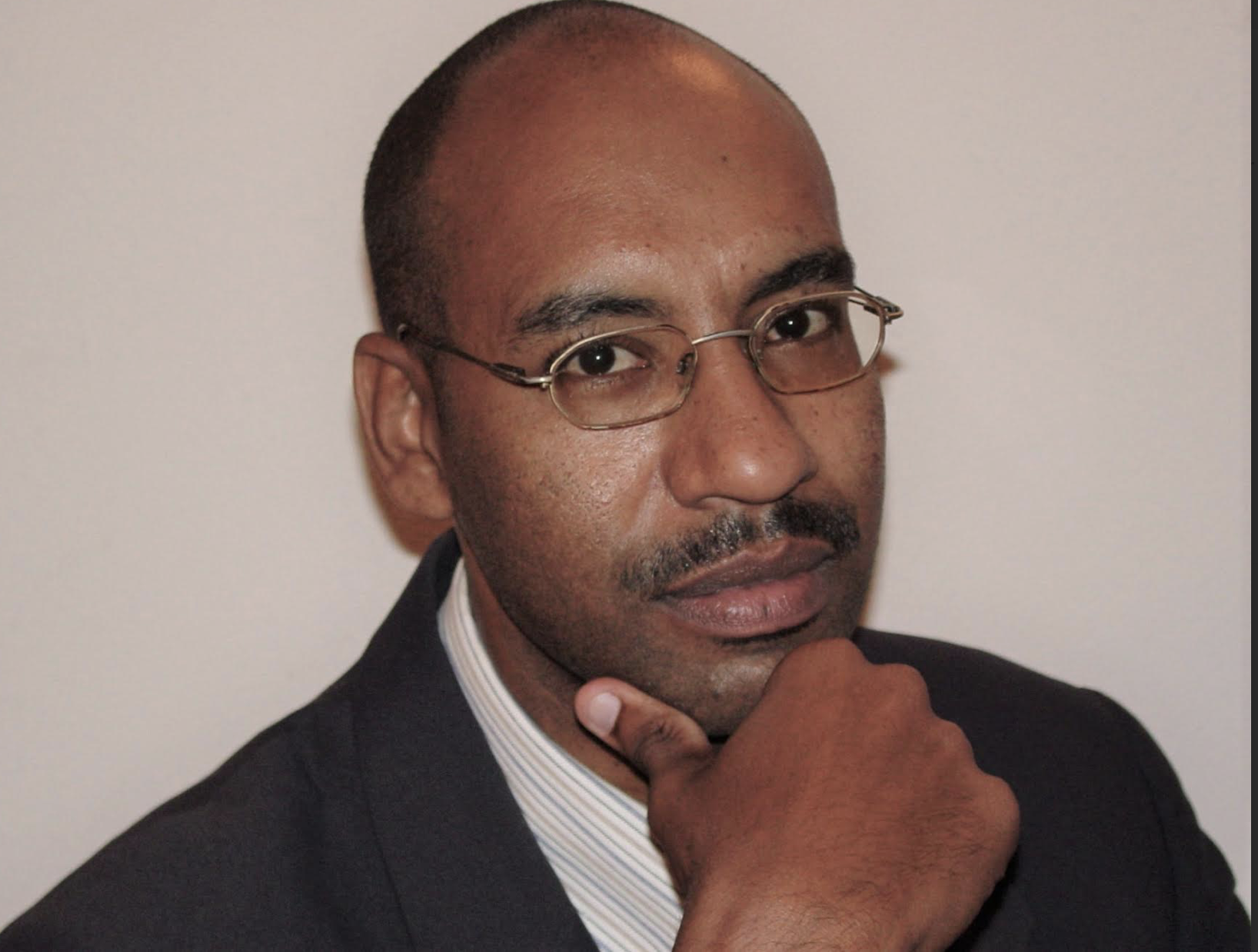
Hartley Henry - DLP Political Strategist
Hartley Henry – DLP Political Strategist

Sorry, but once again I shall defer dealing with the now contentious issue of immigration and more importantly migration, as it relates to the enunciated policies of this Democratic Labour Party administration.

I suspect that when the dust has settled and all the facts have come to light, the person who will be credited for having broached the critical point worthy of focus in this entire debate, will be businessman, Ralph “Bizzy” Williams. He apparently saw through the shenanigans and alluded to the real issue about which Barbadians should be fearful.

I seem to believe that sooner, rather than later, the real sinister plot of those who contrived and facilitated mass, unchecked migration in Barbados will be uncovered. Timing is critical to everything and I somehow believe that there will be ample evidence, when the time comes, to prove the absence of naivety and the existence of a plot to “teach Bajan voters a lesson”.

I will say no more at this stage. What I will do, however, is share two recent experiences, in sister Caribbean states, upon which Barbadian voters should ponder.

Recently in the Cayman Islands, there was a change of government. An administration elected four years ago, with more than 65 per cent of the popular vote, went under to the party it defeated back then; losing critical support in its key voting district. Political scientists will attribute that loss to the impact of the current economic decline, disconnect of elected Members from their constituents, misplaced policy and project priorities and such like.

The dots that serious political thinkers are however beginning to connect pertain to the granting of “Status” (remember it’s a British Overseas Territory) to some 4, 000 mostly undocumented and majority Jamaican residents a few weeks before the 2005 general election and the fall out that the new governing party would have suffered as a result of its opposition to that move. Those “new Caymanians” could not vote in the 2005 election but several definitely could and did exercise their franchise in the 2009 election. The rest, as the saying goes, is history.

There is another Caribbean country where persons only need to arrive and reside for three years and they automatically can register to vote. Even without “permanent status” they are entitled to vote. This situation, I am aware, was exploited to the fullest by one governing party in successive elections until the challenger got wise and proclaimed a few days before an election, that should it be successful, it would regularize the residence or citizenship status of all these persons. Well which party do you think won that election?

I will not say much more on this issue at this time, because I need for the monkey to climb a bit higher before I expose his rear. Those latter day Pontius Pilates, with supposedly clean, innocent hands, can continue to believe that only they have brain and intelligence, and that because, like the proverbial ostrich, their heads are buried in the sand, their sinister plot has not been unravelled.

Of course, when the facts come to light, she, who is now in charge, will say “oh, I knew nothing about that. That is yet another example of how he handled these matters, without any of us knowing”. In turn, “he” will deliver one of his predictable broadsides against this writer and quietly claim that “she” was part of the plot and was actually given full responsibility for its implementation.

My advice to innocent and unsuspecting observers is ‘stay tuned’, for the worse of this sordid mess has not been revealed. This current debate has less to do with the thousands of Caribbean nationals who have made Barbados their temporary home and who, in large measure are contributing to the social and economic development of Barbados. It would do well for persons to recall that hours after the now-distorted Amnesty Statement was made, spokespersons for the nationality considered most affected, hailed the measure as the greatest thing since slice bread. Political operatives here in Barbados and their allies abroad put their spin on the matter, and ‘all hell broke loose thereafter’.

Emotions in Barbados are running high because the plotters have sought to divert attention from the real sinister plot. Overseas based Barbadians should not jump to conclusions and rush to error on this issue. There are sound arguments relative the social, economic and cultural impact of mass, undocumented and unchecked migration. But in this emerging controversy, there is more in the mortar than the pestle.

What I would say at this point is that Barbadians changed more than a government on January 15th, 2008. Evidence in hand suggests they rescued a nation from the claws and clutches of a modern day version of Burnham or Duvalier. If one does not understand the analogy then tune into CNN tonight and follow unfolding developments in Tehran.

Hartley Henry is a Regional Political Strategist. He can be reached at hartleyhenry@gmail.com

Discover more from Barbados Underground

Subscribe to get the latest posts sent to your email.


  1. Since “This current debate has less to do with the thousands of Caribbean nationals who have made Barbados their temporary home and who, in large measure are contributing to the social and economic development of Barbados.”

    With bated breath I’ll stay tuned to lying CNN to follow unfolding developments in Tehran, simply because I don’t get this twisted analogy.


  2. I think that is maybe his way of talking about rigged elections,it is believed it happened in Tehran to the opposition

    I believe the BLP are just trying to use Caricom nationals as votes & nothing more by being so called “welcoming”.There are only so many Bajans to go around but there are plenty of Caricom nationals whom are apart of the British Commonwealth & as such are entitled to vote after remaining 3 years in Barbados.

    Didn’t Motley take a trip into Guyana some years back.Who knows what sort of shady deals they could have made at the time during her visit & may explain why she continues to maintain her current position on immigration.

    http://3.bp.blogspot.com/_hFvTUKoc_As/Rv5c5W0ZkeI/AAAAAAAABgg/2NJvKIWEiVU/s400/Anu-Sept-28.bmp


  3. Letter to Editor which appears in the Kaeiture Newspaper today:

    Guyanese cannot keep voting PPP and then run to other countries to live
    July 2, 2009 | By Christopher | Filed Under Letters

    Dear Editor,
    I have been following the illegal-Guyanese-in-Barbados brouhaha and I have come to this conclusion: It is a wake up call for Guyanese at home to change the government in Guyana so that instead of Guyanese running away, they will be running back home.
    Last week, I wrote a letter that SN captioned, “Why is Suriname better than Guyana?” in which I laid out the path Suriname took to become a successful country compared to Guyana, even though Suriname is smaller in geographic size and population than Guyana, and also has less natural resources than Guyana. The gist of my letter was to show that Guyana lacked a visionary leader.
    Today, the focus is on Barbados and I want to cite the World Bank as my source, (which anyone can easily Google and get the same information). Barbados is 166 square miles compared to Guyana’s 83,000 square miles and has a population of 281,968 compared to Guyana’s 700,000.
    According to the World Bank, Barbados is a high income economy, while Guyana is a developing economy. In fact, the WB says Barbados’ human development index is consistently among the top 75 countries in the world and that in 2006, it was ranked 31st in the world and third in the Americas behind Canada and the United States.

    Though it historically depended on sugarcane, in recent years Barbados has diversified into manufacturing and tourism, with solid foreign exchange earnings support from offshore finance and information services. The government has been described as business-friendly, encourages direct foreign investment and is economically sound, and since the late 1990s there has been a construction boom, with the development and redevelopment of hotels, office complexes and homes.
    Traditional trading partners include Canada, CARICOM nations (but especially Trinidad and Tobago), the UK and the USA. In 2003, the island nation saw a Can$25B in investment holdings, placing Barbados as one of Canada’s top five destinations for Canadian Foreign Direct Investment (FDI).
    Now here is the kicker: According to the World Bank, while 90 percent of all Bajans are of African descent, there are other smaller ethnic groups that make up the population. “The Indo-Guyanese,” says the WB, “(are) an important part of the economy due to the increase of immigrants from partner country Guyana.
    There are reports of a growing Indo-Bajan Diaspora originating from Guyana (and India)…but they are smaller than the equivalent communities in Trinidad and Guyana.” The report also said Hinduism is one of Barbados’ growing religions.

    So when Guyanese, including the President, start ‘kicking up a stink’ against the Bajan authorities for rounding up illegal Guyanese in Barbados, it is imperative that they be fair and balanced in their raucous ruckus.
    While we may not like the methods employed arresting illegal Guyanese and their post-arrest detention and treatment, the truth is, there are thousands of Guyanese in Barbados – legal and illegal – so if the Bajan authorities are rounding up a handful illegal Guyanese while leaving thousands untouched, that is enough proof that the Bajans are not on an anti-Guyanese crusade to purge the island nation of our countrymen and women.
    I close by reverting to my opening line in which I say the brouhaha in Barbados should make us realise that we have a country that is blessed with rich resources but cursed with poor political leaders, and the only remedy is to kick the poor political leaders to the curb.

    Our Indian Guyanese brothers and sisters, who have traditionally voted for the PPP should be at the forefront today leading the fight to change this government in 2011; after all, when the World Bank says Indian Guyanese are an important part of the Barbadian economy due to increased migration from Guyana, it is for Indian Guyanese to see that they cannot keep voting for the PPP and then run to other people’s country, leaving their own country behind at the whims and fancies of poor political leadership.
    If the President and the PPP have not shown leadership to Guyanese while at home, how can they show leadership to Guyanese caught in a dilemma in another country? Wake up Guyana!
    And Dr. Yesu Persaud, a prominent Guyanese businessman of Indian extraction, is on the money when he said that politics have screwed up Guyana to the extent that Guyanese are leaving and not returning and so Guyana is adversely affected.
    Is anyone, including Indian voters, paying attention to where the problem rests and what needs to be done?
    Emile Mervin


  4. Here is what a Trinidadian blogger has to say on these matters.

    What’s really behind Mr. Manning’s union proposal?

    22 hours ago by caribbeanwriter.

    Expect mass migration of desperate people to Trinidad and Tobago from the Eastern Caribbean countries looking for a better life. That was one of the dire warnings from Trinidad and Tobago’s prime minister Patrick Manning of the consequences the country faces if it did not engage in an economic and political union with Eastern Caribbean countries.

    Even more chilling was his next declaration that Port of Spain could “pay in blood” if it failed to enter into the union with the smaller island states.

    Is he trying to scare the population into supporting his latest foray? – which by the way is not getting wholesale support if one can judge comments made by the numerous callers to a number of talk programmes on the radio stations in Trinidad.

    Having heard about the proposed union back in August 2008, I must admit to feeling a bit disappointed that the major reasons came down to this – and I’m wondering whether Mr. Manning is not exaggerating his case a bit too extreme.

    According to the proposal, Trinidad and Tobago, Grenada, St Vincent and the Grenadines and St. Lucia are seeking to achieve economic integration by 2011 and political integration two years later.

    All four countries belong to the wider Caribbean Community (CARICOM) grouping which has set a 2015 deadline for the formation of a single economy.

    The countries met in a mini-summit in Port of Spain in August 2008, which was also attended by the Foreign Ministers of Barbados and Guyana as observers.

    Then, Mr. Manning flew off to five other CARICOM countries over a 36-hour whirlwind trip to sell his idea to the other leaders who included Prime Minister Bruce Golding of Jamaica, Hubert Ingraham of the Bahamas and Dean Barrow of Belize.

    I have not had the privilege of getting a copy of the Vaughan Lewis report outlining the modalities for getting towards the ambitious time-lines of the proposed union. But prime minister Manning so far in his public utterances has not stated whether the arrangement will involve the full integration of goods, labour, a common currency, free movement or whether countries would have to give up some sovereignty and pooling it.

    He hasn’t clarified either whether under the political union, that I can take up my bags and freely move into one of the islands or whether more Vinceys, Lucians and Grenadians will be able to migrate to the twin-island, just as easily.

    Mid-last week, the prime minister came to the Parliament and announced several economic stimulus initiatives to bail out the struggling economies of the Eastern Caribbean.

    These include the opening of an aircraft maintenance facility in Grenada, expanding a ship maintenance facility in St. Vincent and the Grenadines, labour intensive plastics industries in the eastern Caribbean from primary products of aluminum and polypropylene from Trinidad and investing in quarrying facilities in Dominica.

    For Jamaica, he said government was ensuring that sending liquefied natural gas (LNG) into Jamaica was now a national priority of his country. And he also hoped to get alumina from Jamaica for the aluminium smelter plant, projected for construction later this year once it gets the necessary environmental clearance permit.

    Sorry, Guyana, you were not included for any investment projects, even though you are struggling just as much as those eastern Caribbean islands.

    Mr. Manning told the Parliament that he was very concerned about the economic conditions in the Caribbean – and pointed out that in terms of their debt, international agencies have put a limit on it to GDP ratios of 50 percent.

    If it crosses 50 percent, there is cause for concern – and he detailed how badly countries were faring.

    At the end of 2008, the debt to GDP ratio in St. Vincent and the Grenadines was 67 percent; in St. Lucia – 71 percent;  in Barbados, 95 percent, in Dominica, just under 100 percent and in Grenada, it was just over 100 percent.

    The debt to GDP ratio in Antigua and Barbuda is 120 percent; about 180 percent in St. Kitts and Nevis and Jamaica, it is about 130 percent.  In Trinidad and Tobago, the debt to GDP ratio was 27 percent at the end of last year.

    He also highlighted the countries reserves position, normally measured by the cover for imports in months.

    The reserves of the Bahamas reflect import cover of 2 months; Belize of 2.8 months, the Eastern Caribbean Currency Union, 2.5 months, Guyana 2.5 months, Jamaica 2.3, Netherlands Antilles 2.9 and in the case of Trinidad and Tobago, it is 11.3 months of import cover.

    The poverty index in the Eastern Caribbean ranges between 20 and 37 percent while unemployment is between 15 and 25 percent.

    I’m all for economic cooperation between Trinidad and Tobago and the Caribbean, our major export market for manufactured goods. At the same time, there continues to be strong sentiments in the twin-island that Mr.Manning ought to do much more to improve infrastructure and services in his own country before trying to help others.

    It may also not be the most appropriate time for talking about investing in other countries when government revenues have been significantly reduced because of the global financial crisis.

    Suspicious minds including my own, however see him trying to use the petro-dollars to wield and extend influence in the Caribbean, given Venezuela’s growing dominant role in the region through the Petrocaribe initiative.

    Mr. Manning’s announcement of initiatives for Caribbean countries also came shortly after a summit of leaders of the 18-nation Petrocaribe organization in St Kitts and Nevis earlier this month.

    There was glowing praise from the Caribbean for the four year old Petrocaribe. Mr. Golding described it as a model of cooperation within the region and among developing countries, Antigua and Barbuda’s Prime Minister Baldwin Spencer said it is rooted in a new paradigm of South-South partnerships while St Kitts and Nevis leader, Dr. Denzil Douglas saw it as one of the most progressive agreements made in theWestern Hemisphere.

    Venezuelan leftist President Hugo Chavez also promised to strengthen the alliance that allows the nations to purchase Venezuelan oil on better terms.

    The leaders at that meeting heard how the Petrocaribe initiative had developed important energy projects and boosting the socio-economic development of member countries.

    Between 2007- 2009, 14 countries have activated the crude and oil product supply mechanism and reported an increase of the volumes shipped from 59 thousand barrels daily to 121 thousand barrels daily, equal to a 105% increase over the period.

    There has also been investments in infrastructure projects to facilitate the development of fuel distribution systems in member countries, such as Dominica, St. Vincent and the Grenadines, Grenada, St. Kitts and Nevis and Nicaragua, reaching a potential distribution capacity of 727 thousand barrels.

    An additional 5 thousand barrel fuel storage tank is being built in the electric plant of St. Kitts and Nevis to increase the electric power generation capacity while St Vincent and the Grenadines now has an LPG bottle filling plants project with a capacity of 20 thousand gas bottles per month.

    Petrocaribe’s Energy Security Treaty includes the expansion of the power distribution network through the construction, financing and expansion of power generation plants in Nicaragua, Haiti, St. Kitts and Nevis, and St. Vincent and the Grenadines.

    Eight refining projects which will have a manufacturing capacity of around 580 thousand barrels per day, with an investment of about US$24 billion will be located in Cuba, Nicaragua, Haiti, Jamaica and Dominica.

    A very impressive record from a four year old initiative, which has bumped off Trinidad and Tobago’s state-owned Petrotrin as the region’s dominant petroleum supplier.

    But coming back to Mr. Manning’s latest idea of an economic and political union with the Eastern Caribbean countries, I’d really like to hear much more – perhaps debate it in the Parliament – before I’m sold on it.

    But right now, I’m not too convinced.


  5. I can’t believe that the Barbados government does takes up $200,000+ of we tax dollars every year to pay Hartley.

    And on his way to the bank Hartley laughing at we.

    Hartley Henry wrote “Evidence in hand suggests they [the DLP] rescued a nation from the claws and clutches of a modern day version of Burnham or Duvalier. ”

    All right Hartley since you have the evidence in hand, put it up here.

    Or shut up.

    Political partisians like you, like to feel that you all have the Barbados vote lock down, but that is just not true. There are enough of us who NEVER vote party, so that neither the BLP nor the DLP has the vote locked down.

    You are Wishing in Vain for that day to come, but it will not come as long as enough of us have brains in our heads.


  6. Keep on writing Hartley!! Some people don’t want to hear the truth about a corrupt BLP administration we had in Barbados for the last 5 years of its 14 year term.


  7. According to the latest iteration of CSME agreed to by the Government of Barbados the BLP will get their wish,maybe even the DLP.The elections did not change anything.

    Illegal immigration & expanded legal immigration definitions will inundate Barbados’ population & eventually lower Barbados’ standard of living in order to be in compliance with Caricom treaties.It appears to be the ultimate truth at this particular point.I support the enforcement ACTIONS of the Thompson administration against illegal immigration but I will not support this current move.

    Barbados is NOT a SOVEREIGN STATE anymore as the ‘Devised’ Treaty of Chaguaramas’ take center stage as the supreme law of Barbados headed by the MADministration known as Jagdeo.

    ————————————-
    http://www.stabroeknews.com/2009/news/local/07/05/caricom-leaders-recommit-to-free-movement/

    “Caricom leaders have reaffirmed their commitment to free movement across the region as set out in the Revised Treaty of Chaguaramas amid the growing controversy over individual immigration policies, and have also firmly accepted that migrants who fall outside the declared categories are entitled to humane treatment.

    The migration debate emerged a critical issue for the regional heads during the 30th Regular Meeting of the community which wrapped up here late last night,

    but the discussions ended with a string of reaffirmations to the regional integration process.

    But perhaps more crucial than others was the decision reached at the meeting in Georgetown to include a new category of skilled workers for recognition in moving freely under the treaty – household domestics.

    President Bharrat Jagdeo, Chairman of Caricom, announced at a late night press briefing yesterday that as of January 1, 2010 household domestics who have obtained the appropriate qualifications will be allowed to move freely across the Caribbean region.

    However, he also announced that Antigua and Barbuda and Belize are not required to sign onto the expansion to include household domestics until a socio-economic impact study of the migrant situation is conducted in both countries.

    “…we have noted that concerns of Antigua and Barbuda and Belize with respect to the implementation of their obligations related to the expansion of eligible categories of persons free movement under the free movement of skills regime and the grant of contingent rights without the conduct of a socio-economic impact assessment in those member states,” Jagdeo stated.

    But on this particular issue, he noted that they have agreed that the Caricom Secretariat will expedite the study. He said too that the leaders have granted Antigua and Barbuda a five-year derogation on the free movement on the new category of household domestics, “in order for it to make the necessary adjustments to its infrastructure and other imperatives to facilitate the fulfilment of its treaty obligation with respect to the free movement of skills.”

    According to the Guyanese President, the conference recalled that Antigua has always implemented a very liberal immigration policy which extended beyond the agreed categories and that it recognized the efforts of the country to streamline its current migration policies.

    Specifically, he told reporters that the leaders have recognized that free movement is an essential element of the Common Market and Single Economy (CSME), but given the current economic crisis “its full implementation at this point in time will be challenging for some member states.”

    He said that they have also noted that migration is a human right though circumscribed by domestic law, and also recognized that in keeping with the spirit of the treaty and the requisites of international law all migrants are accorded humane treatment.

    Jagdeo said that the conference also re-affirmed that all eligible categories of skilled community nationals must be granted a definite entry of six months if they present their skilled certificate at a point of entry and that they have the right to work immediately. During that period the receiving country has the right to verify the qualification of the skilled nationals, he added, but pointed out that once completed an indefinite stay shall be granted.

    The leaders also noted that persons who are moving to exercise the right of establishment, the provision of services and the movement of skills have the right to move with their spouse and immediate dependent family members.

    He added that the schedule of free movement of persons would be reviewed at the CSME Convocation to be convened later this year with a view to advising on the timetable for full free movement.

    On the issue of contingent rights, the President explained that these are rights which are granted to a Caricom national and his/her spouse and immediate dependent family members if the principal beneficiary has exercised the right of establishment, provision of services and movement of capital or free movement of skills.

    He said that the leaders have agreed that the spouse of the principal beneficiary who qualifies for such rights also has a right to work without the need to obtain a work permit.

    Further, he disclosed that the conference concluded that persons qualifying for contingent rights have the right to primary education and emergency health care, which are key elements to be included in a protocol on contingent rights. However, he pointed out that temporary service providers will only be entitled to emergency health care.

    The President noted also that the leaders recalled the decision made in 2007 to Antigua and Barbuda an exemption on the free movement of non-graduate teachers and nurses. He added that countries must put in place the necessary arrangements to issue the certificate of recognition Caricom skilled qualifications to Caricom nationals who are eligible.

    “Countries must put in place the necessary arrangements to issue the certificate of registration as the Caricom service provider to service providers who are moving on a temporary basis [inter-island traders]”, Jagdeo added.

    Prior to the press conference and much earlier in the day Prime Minister of St Vincent and the Grenadines Ralph Gonsalves told reporters that the re-affirmations by the community have in essence recognized that certain minimum standards must be adhered to.

    Saying that there was no need for him to go into any gruesome details as to what would fall short of those minimum standards, Gonsalves declared that in every single Caribbean country, some more than others, migrants are taken up and treated in a manner which is not humane.

    “I will not expect somebody in St Vincent, an immigration official, to go and knock on somebody’s door at 3 am in respect of an immigration offence and tell them that they have to buy a ticket to get out of the country or they would be deported… if my immigration so acts they would be acting contrary to the spirit of the treaty and specifically Article 45, and also international obligations,” Gonsalves said while stressing that he was speaking hypothetically.

    He emphasized that “everybody has agreed on” a regional position on the issue. Therefore, he noted that any immigration official who acts in such a manner is acting unlawfully and contrary to the public policy of each government in Caricom.

    The Prime Minister said further that it is now up to the region to work out the

    necessary protocol which would adhere to the standards [agreed on] given that they have acknowledged that the spirit of the treaty also addresses certain minimum standards of treatment as encoded in international law and best practices.”


  8. We respect the comments so far on the plan to include domestics which as stated above is not new. What will be interesting is to see how this impacts the governments new immigration policy. For example what will be the role of the Accreditation Council? At this point we will wait for the official government respond to the change before we comment.

The blogmaster invites you to join the discussion.

Trending

Discover more from Barbados Underground

Subscribe now to keep reading and get access to the full archive.

Continue reading