Banner promoting anonymous crime reporting with a phone and contact number 1 800 TIPS (8477), featuring the Crime Stoppers logo and a QR code for submitting tips.

← Back

Your message to the BLOGMASTER was sent

Submitted by Bush tea

NON-TARIFF BARRIERS (NTBs) imposed by some developed countries are a concern for Caribbean governments and, Minister of Foreign Affairs, Foreign Trade and International Business Christopher Sinckler warns, they can derail regional efforts to export. Sinckler said agriculture, the region’s “most protected sector” would be the hardest hit by NTBs which he claimed had “reduced the benefits of trade liberalisation”.

The minister told members of the Caribbean Farmers’ Network meeting at Savannah Hotel, “Developed countries such as the United States and the European Union often boast of having very low tariffs relative to developing countries. What they are silent on is the level of non-tariff barriers relative to developing countries.

“Standards generally differ as to the level or incidence of non-tariff barriers. They all, however, seem to point to the fact that NTBs are more prevalent in developed than in developing countries,” he noted.

Sinckler said that while Caribbean governments support establishing international standards for goods and measures aimed at genuinely protecting human, animal and plant health and safety, they would never support measures “which are deceptively designed to exclude the few agricultural products we can competitively export”. (GC)

Source: Nation Newspaper

*********************************************************************

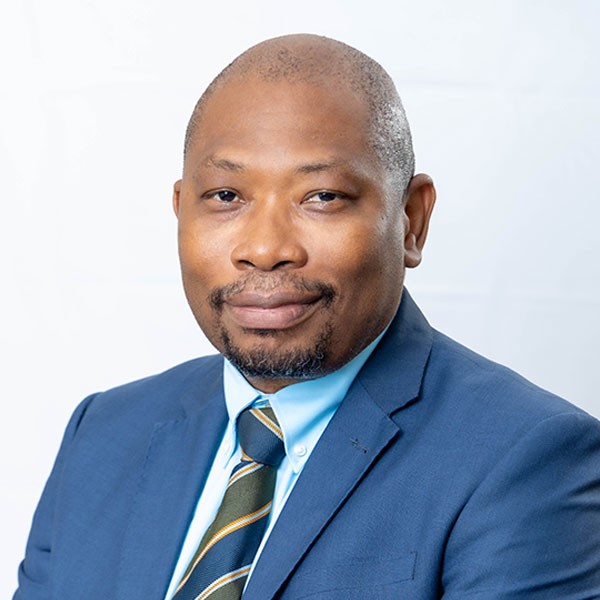
Chris Sinkler, Minister of Foreign Affairs

It is really interesting how quickly our new ministers learn the language of international politics (.. from the old civil servants no doubt..)…. Did you note the term ‘NON TARIFF BARRIERS’ (NTB)? …. Sounds so harmless…

Let me define that term for the BU family.

The developed world has led a global drive to remove all national barriers to international trade. Their plan was based on the premise that their superior technologies and economies of scale would easily allow their industries to overwhelm those of the developing world who would then be reduced to mere markets. This is the real focus of Globalization.

The developed countries then essentially removed their trade tariffs. HOWEVER, they introduced numerous and varied OTHER barriers to trade which effectively inhibits the ability of developing countries to export goods to these developed markets.

Examples of these NTBs are:

1-The establishment of new safety and health rules, which require expensive and exhaustive ‘safety standards’ to be met for all products imported.

2 -Setting new and ever-changing Quality standards that must be met in order to qualify for export status. These Quality standards, such as ISO2000, incur significant costs, and exposes any industrial secrets to the first world ‘inspectors’. This removes any possibility of competitive advantages for developing industries.

3- Providing substantial subsidies to their own farmers and manufacturers which artificially lower their per-unit costs resulting in unfair advantages over those of developing countries who are not allowed subsidies.

These are only SOME of the schemes designed to disadvantage and frustrate us.

Despite these well documented and generally known shortcomings, we still have third world leaders calling for us to ‘sign on’ to this trap called the EPA.

What ROT.

Rather than wasting time even debating this useless document, Bajans should be being educated about the REALITIES that face us – USING LANGUAGE that we understand…

What Non Tariff Barriers What?!?

Did you mean ‘underhanded, deceitfulness’ Mr. Sinckler? And if these are the kind of ‘partners’ that we will have to work with do we really need meaningless agreements – or should we be seeking realistic COUNTER STRATEGIES?

…..we may well all end up in duck’s gut anyway… But Bush tea would MUCH PREFER to go down roaring and fighting like a lion, than being led like sheep to certain slaughter…

Related link

CARIFORUM EU (EPA) Deal Could Be Problematic For CARICOM


Discover more from Barbados Underground

Subscribe to get the latest posts sent to your email.

81 responses to “Minister Sinckler Admits "We are being tricked…."”


  1. We thank Bt for his boldness to expose the other view which is not being discussed in the Barbados media. While our media continues to focus on the American elections and the Olympics our small islands continue to work diligently to sign-off on the EPA agreement which will make us 100% mendicants.

    The truth is the Guyana media in our opinion is the most active on the EPA issue and to the credit of Guyana they have come out in the opening and challenge the value of the Cariforum/EU EPA.

    Chairman of CARICOM Balwin Spencer is calling for all CARICOM members to sign-off on the EPA because of a ONE Foreign Affair policy, what a joke! We should remember that the EPA is an agreement between individual countries.


  2. But this minister said in as plain language as one could get, (words to the effect) ” Guyana will come around and sign this EPA. It is a good deal!” . I am beginning to believe that Minister Sinckler behaves more like a graduate student learning about international trade agreements than a member of government actually involved in the negotiation of such agreements.

    Oh David, have you heard Minister Benn go on about back yard gardening! Who was is it that said “Grow your own” and was derided by many even you ? I know I mentioned this before but there does not seem to be any other response to the issue of food prices. Oh I forgot those Dominican vegetables are on the way.


  3. It all comes back to leadership!
    We listened to Sinkler on the Festival Stage program recently singing his own praises on how he was able to effectively negotiate on behalf of Caribbean and some other countries. He was particularly vociferous on the opportunities for our entertainers and how the EPA will serve as a catalyst for a music industry for Barbados. We have no doubt that the Cariforum/EU APA has some good stuff but forgive us Chris if we are selfish, it seems the EU is very selfish so why cant we? Are we not the resource poor countries of the Caribbean?


  4. David, well said. We should be less concerned with John Mccain’s Age and Barack Obamas oratorical skills and for more concerned with the ninja-inspired vocalist, Mr. Sinkler.

    To be any more vague he would have to be silent.


  5. maybe it’s good for these guys to be in the hot seat and feel the burning. Experience would be the winner here. I hope that they would be man enough to seek advice in the interest of the country from persons who have been there and done that. I also hope that if such advice is sought that the politician involved would be matured enough to keep it to themselves instead of trying to score cheap points


  6. Chris sinckler makes my stomach sick,that’s the truth.

    He always comes across as someone who now he has some power has gotten very big headed.

    It is one thing to be confident, but another to act arrogant.

    I always believed that these world trade agreements and in particular this EPA matter was the perfect stage chris sinckler was looking for to show off that he spent a little time working in an international organisation.

    If he is not careful he will end up looking just as ‘stupid and empty’ as Dale Marshall.

    What’s the harm to Barbados saying we are not signing on to the EPA as it currently stands?

    To listen to chris calling in from Switzerland a couple of weeks ago you would think that he was a big player on the scene making things happen for Barbados.

    I don’t know but I think David needs to have a quiet word with him.

    He is someone who has a lot of potential but he must remember every time he engages the public that he is not on a political platform talking to semi-literates.


  7. It should be noted that in today’s leading article in the Advocate, Director General of the Caribbean Regional Negotiating Machinery (CRNM), is waxing lyrical about an upcoming trade agreement to be negotiated with the Canadians. The problem that Mr Gill and his colleagues will have is that there is a part of the EPA agreement with Europe called the “MFN” clause, this meaning “Most Favoured Nation”. Effectively, this clause means that in any future bilateral trade negotiations, Cariforum cannot offer the new trade partner any benefits less than those agreed in the EPA. So effectively, the Europeans have already done a lot of the negotiating for the Canadians. You can be sure, also, that when the Canadians sit down to talk, in the next room will be the representatives of their manufacturing and agricultural industries, TO WHOM THEIR NEGOTIATORS ANSWER!
    Ask any manufacturer or farmer in Barbados when was the last time any of our trade negotiators from the Ministry of Foreign Affairs consulted with them. Yes, we have the Private Sector Trade Team, but there have to be deep divisions within that stucture, as it represents both producers and importers. So whlst the developed countries continue on their way with non-tariff barriers and other impediments to trade, our negotiators and governments roll over like puppy dogs to have their tummies rubbed. Sorry, I should have said “egos”.


  8. I should have contunued to state that the MFN clause is what makes the EPA so insidious.


  9. The MFN clause applies both ways, Peltdownman. And it does not apply to the Canadian negotiations unless it is separately agreed there.


  10. I have never liked the way the owen arthur administration slavishly followed to the letter everything these U.N. bodies and international organisations laid down as the rule.

    Haven’t we learnt anything from WTO agreements and the clamour about the FTAA and the Caribbean Basin Initiative under Regan?

    The gurus that are our caribbean prime ministers ,told us that coming together as one grouping under the CSME would be beneficial to us when dealing with these large blocks e.g. EU,USA etc

    To me as other bloggers have said these international treaties are just exercise in sightseeing and shopping for civil servants and ministers and their spouses,and I blame arthur for being the one who pushed all of this and signed on the dotted line.

    Can david thompson get out of any of these arrangements or does he want to anyhow?

    China and India and the USA never seem to observe all these arrangements they sign on to – so why must the caribbean be so submissive?


  11. @ Bush Tea

    Thanks for informing the Bajans about what is really going on. We up North, have seen first hand this “underhanded, deceitfulness”, re their hefty subsidies, etc. This natiness is carried on in spite (or despite) of NAFTA. We have won many rounds at WTO, but it meant nothing to our “good friends and partners” to the South.


  12. David:
    dittoo on Guyana and the EPA discussion. From what i can gather, Bharat Jagdeo is the only Caricom leaders that has some level of consistency on the Whole EPA agreement. He has even hinted at public discussion in Guyana on the issue. I will stay tune to Guyana’s media for this, if and when it occurs.
    …. Also it is indeed a joke for Baldwin Spencer to suggest at this late stage in the history on the Caribbean that anyone will want to talk to the islands as a group.
    1: Venezuela to their benefit, over the years as worked out, separate EEZ/maritime boundaries agreements with most Caribbean islands, that took into account their position that Birds island is theirs, and doing so using the “Arcipeligic base line method”

    2: Venezuela has repeated this approach of individual island negociations and agreements with Petro-Caribe

    …and they are several other situations of individual behaviour for foreign governments and trading blocs to draw from and infer, that there is no real unity, amongst these countries.


  13. “Don’t dumb it down Mr. Minister”

    What exactly is so esoteric about “non tariff barriers”? And are people actually arguing against uniform health and safety standards? Is it any wonder after 58 years of universal suffrage we’re still a developing country? Don’t worry about the salmonella Mother Agard; just wash it with a little lime water. Also, I’m sure the agreement like most, allows for reciprocity so the issue of “first world inspectors” stealing our trade secrets is a non issue. Likewise, any signatory who continues to provide subsidies would be subject to sanctions and countervailing duties. All the tariffs need to go! It’s time for a change.


  14. The Anon above is me. Hit some, key and de whole ting disappeard from view.

    Note, de traditional grammar errors and misspelling should be proof enough.


  15. Time to wake up “degap”. If you seriously think that Caribean food exports will get away with washing with a little lime water when it comes to health and safety regulations in the EEC, then think again. Also, if it were as easy as applying conterveiling duties and sanctions against countries that subsidise exports, we would have done it long ago to each and every item imported from China, for a start. You, of course, are ready to run an economy where all the foreign exchange has gone to the Far East in exchange for a bunch of non-saleable junk.


  16. “Caricom an’ de Tariffs gone”

    The developed countries currently impose countervailing duties on violative goods from their biggest trading partners. Why is it beyond our capability to do the same? Also the market should determine what is salable and non-saleable. What is the point of continuing to subsidize high prices when pensioners and many working families can’t make ends meet without remittances from Bajan Yankees? The tariffs have to go; it’s time for a change.


  17. “Caribbean Community (Caricom) countries will sign the Economic Partnership Agreement (EPA) with Europe on Sept 2 as planned”

    “It is likely that the agreement hammered out last year between Europe and CARIFORUM, which included Caricom and the Dominican Republic, would be signed by INDIVIDUAL COUNTRIES ON THAT DATE.

    “Quite frankly the EPA is between individual member states and the EU. It is not a CARICOM and the EU. It is the CARIFORUM countries in their individual capacities”

    Baldwin Spencer re. Nationnews 8/12/08

    What is CARIFURUM? Is it an organized grouping bound together by treaty, like CARICOM, or by verbal or written agreements, not formalize as a treaty?
    Who came up with the name? The EU or the individual countries with whom the EU is entering into an Economic Partnership with?

    I think i would like to hear from My government only, on this. Am i wrong?


  18. @Adrian Hinds: “I think i would like to hear from My government only, on this. Am i wrong?”

    You are not wrong. To the contrary — you are *entirely* correct!

    *Our* government must explain to us why this agreement is worth signing.

    As I personally think we’ve demonstrated here — we have the ability to understand. If only the *data* and the *rational* was available to the *people* to consider…


  19. @All…

    Can anyone *please* bring forward some public analysis done by our own thinkers on this matter?

    We are a smart people(s). Why do we not publish?

    (Taking a leap here…) A mind cannot be chained…


  20. @Wishing In Vain…

    We haven’t heard from you yet…

    You claim to have seriously deep connections to the ruling party…

    Pray tell, can you and/or yours speak to the requests here for information about the EPA?

    You know, like *details*?

    URLs would be fine.

    Thanks.


  21. degap, what happened to prices in 1997 when a whole host of duties (on some items up to 100%) were replaced by the VAT at 15%. Remember how it was going to be the panacea? Prices would fall and government would be awash in money. Well, the second part came true, but prices did not fall one bit. The importer just got fatter. Reducing duties won’t make it easier for pensioners and the poor, it will just make the rich richer. I dunno, maybe you’re one of them.


  22. 65-page review and evaluation of the CARIFORUM-European Union Economic Partnership Agreement: Implications For Barbados, released earlier this month.

    ================================
    Does anyone know where we can this document?

    There are so many conflicting comments that begs for clarity

    1: We are hearing that EPA requires removal of subsidies
    which conflicts with:
    “THE CARIBBEAN REGIONAL NEGOTIATING MACHINERY (CRNM) says it is wrong to suggest that the Economic Partnership Agreement (EPA) with Europe requires CARIFORUM members to remove domestic subsidies
    —————————–

    2: Is the EPA good or bad or both? We are hearing that “the EPA had the potential to undermine the Caribbean Community, or CARICOM.” That “It can seriously restrict the power of regional leaders to frame policy and intervene to put their economies in order, he told the forum hosted by Oxfam GB”

    Professor Don Marshall
    —————————
    Which conflicts with

    “THE ECONOMIC PARTNERSHIP Agreement (EPA) should be seen as a tool for development and a promise to help Caribbean economies rather than a threat.”

    Press and information officer with the Delegation of European Commission in Barbados and the Eastern Caribbean, Wayne Lewis


  23. @All…

    For the record, there were two posts here today by someone claiming to be “JoshWink”. These posts have since been deleted.

    Would “BU.David” be willing to confirm this?

    Kindest regards to all…


  24. @Chris

    thanks for explaining. I thought you were soaked.


  25. @Pat… LOL…

    Yeah, it can be a bit confusing when posts disappear without explanation… Legitimate posters appear to be talking to ghosts…

    @BU.David: Again, care to confirm that two posts were deleted from this blog today? #35486 posted at 19:44:10 UTC, and the next #35501 posted at 20:35:00 UTC.


  26. We have been saying for a long time that both DLP and BLP are the same essentialist philosophic labels around which certain people -within and without Barbados – continue to gather, devise and politicize, so that – in the final analysis – they can primarily promote and secure their own fundamental interests, and those of their families, friends and corporate businesses, rather than primarily promoting and securing the fundamental interests of the masses and middle classes, the country and public.

    Thus, instead of electing backwardist reactionary DLP and BLP Governments, the vast majority of voters in Barbados must – at this present juncture – seriously look at availing themselves of the opportunity of ELECTING at the NEXT ELECTION a PDC Government that shall overwhelmingly foster and secure the fundamental interests of the masses, the middle classes, the country/the public, rather than mainly the basic interests of the individual members making up such a government or the relevant other basic interests of those members. Indeed, one way of definitely proving that a future PDC Government will be a people-oriented government will be through the PDC greatly assisting in the bringing about of national coalitional government for Barbados – whereby parties, non-party political groups, and independent non-partisan political personalities – will form the basis of such a government – and whereby a variant of the proportional representational electoral system will be the electoral basis upon which such a government will be ushered in this country, as opposed to the current ineffective first past the post electoral system – which – instead of it being used by a future PDC Government as a basis for the ushering in of this national coalitional government, will be surely Abolished by such a government in the future.

    As well, the primary basis for Barbados and other CARICOM countries continuing to realize massive failures and dysfunctions in the operation of multi-lateral trade and investment deals like this EPA, of course, comes largely through the types of governmental, political and educational systems that our post-independence leaders and principals – in most of their very supine and unthinking ways and at varying times throughout our post independence periods – have consequently managed to inherit and adapt from the Western world, and with very minimal changes being carried out to them over time. No doubt, it is these same systems that are constantly helping to reproduce and reinforce some glaring weaknesses in the negotiating strategies/outcomes of those who claim to be negotiating on our behalf in respect of these types of agreements. By this, whole countries and peoples within our CARICOM region will continue suffer from the consequences of such alarming deficiencies.

    Finally, it is so absolutely dastard, obnoxious and rebarbative that Foreign Minister Christopher Sinckler could have been reported on pg. 19 of the Barbados Business Authority, Monday, June 23, 2008, as saying that “the EPA represented a regional instrument for effective cooperation with Europe”, and Prime Minister Baldwin Spenceer of Antigua and Barbuda could have been reported on pg. 9 of the Daily Nation, Tuesday, August 12, 2008, as saying that CARICOM countries as individual countries will sign the EPA with Europe on September 2, as planned, yet at the same time the broad masses and middle classes of people in these (CARIFORUM) countries do not know what is contained in this CARIFORUM/EU EPA and have not even been able to make any inputs into this deal, primarily because leaders like Mr. Sinckler and Mr. Spencer are prepared to NOT ONLY promote their own interests and those interests of a narrow band of people throughout the region BUT ALSO are prepared to practice irresponsible and undemocratic government – just like how the British – a former major colonizer of our peoples – would have been practicing for years. The time for the Sinklers, the Spencers and the Mottleys and others relevant have surely come and have gone!! Indeed!!

    PDC


  27. @Chris

    Some serious topics are being discussed on the blog but instead you chose to ask us about the deletion of two SPAM comments which by your confirmation were pointing the BU family to pornographic sites? Look its the summer, we have many things happening why dont you contribute to the blog and if you have a query like asking about spam comments please take it offline?

    To be frank we are little tired reading your negatives in recent days.


  28. @David
    Responses that are polite, yet idiotic, may very well be attempts to derail the debates here in. I refuse to respond, or engage, and will not let the effrontery of him coming amongst us Islanders, uninvited, to, as he say “conduct experiments” I leave him to you.

  29. In the name of GOOD Avatar
    In the name of GOOD

    Hello all,

    Let me join this very interesting even though sometimes scattered discussion on the EPAs and well Minister Sincklers role in this issue. I am not really interested in his mouthings though because he is like all the rest a politician who will say what he needs to when it suits him.

    Dont get me wrong i have nothing against him of the DLP or the Bees for that matter i just like dealing with the substance of the matter. In that regard it would be useful if the person(s) whoi control the positings on the blog allow serious issues like this to be discussed minus the extraneous comments that are not remotely connected to the subject. No on to the EPA.

    I am not sure how many of you know but the EPA represents the folow-through from the outcomes of the negotiations in the late 90s that gave rise to the COTONOU Agreement betwen the EU and the ACP. That Agreement itself replaced the last of the LOME Agreements (lome 4) all of which characterized by one was or non-reciprocal trade.

    That meant that ACP countries were able to send their goods to Europe duty free with very generous quotas (serveral of which the Caribbean did not manage to even meet) and with a guaranteed price. These exports were all or mainly agriculture goods and some industrial products but very little of those.

    Some time around the mid-eighties the international trade regime started to change as the free traders won the intellectual and even economic argument of how to grow economies over the protectionist.

    And in many ways the failure of import substitution policies in promoting economic growth and creating jobs allowed the free traders to run rampant. Unfortunately i cannot go into all of that detail here but suffice to say it led to a shift in how the bigger countries saw trade and used it.

    Their firms began to realize that in order for them to make super rents or prifits as we call it they would need to get into other markets in a big way. In order to do that though it meant that countries had to bring down trade barriers starting with tarrifs and then to non-tariff barriers.

    So naturally the best place to start would be at the multilateral level where you could set a platform for opening up world markets and then work your way down through regional agreements like EPA , FTAA even CSME to some extent even though that is fractionally different, and then through country to country bilaterals if needed.

    So countries pushed for a new round of global trade talks in the GATT which started around 1985 and ended in 1994. Unlike the previous rounds however this round was more comprehensive and added additional subject areas or discipline as they are called including GATS (services) , TRIPS (intellectual property rights) GP (government procurement) along with
    other things pertaining to the rules governing how trade will work, and most importantly dispute settlement processes that would allow for
    the first time real sanctions for countries which break trade rules to the detriment of other countries.

    These agreements are what people refer to as the
    WTO agreements as they all make up the rules governing global trade.

    Now one of the most telling aspects of that process was the fact that the push towards freer trade through liberalization meant that all of the previous provisions governing Special and Differential Treatment (S&DT) for poor and other developing country came under severe threat from industrialized countries.

    In international trade they are called the PART IV provisions of the GATT that were agreed in previous Trade Rounds and that allowed developed countries to negotiate and put in place non-reciprocal agreements like LOME and Conotou in place.

    It was largely found that these one-sided agreements where done up between rich countries and their former colonies or smaller neighbours. So hence we got LOME Europe and ACP, CBI USA and the Caribbean and Central America, and CARIBCAN between Canada and Caribbean.

    Of course they were others all over the world. The point here is that prior to the coming of the WTO where the PART IV “enabling clause” allowed even demanded that developed countries negotiate these one-way trade deals with developing countries, the new rules watered down that language and made it non-mandatory.

    This then opened up the way for pressure to be brought to bear on the international trading system to do away with these types of agreements in the furtherance of trade liberalization.

    The other key factor here is that in the negotiations OF the URUGUAY Round, GATT members agreed no just to limit the scope of any new trade deals between developed and developing countries but did three very critical things:

    1. They said that any such agreements had to be WTO COMPATIBLE – that is that they had to be consistent with WTO rules which as i said above were more towards free trade than previous.

    2. Had to be subject to the rules of ART. 24 of the GTAA 47 and ART. 5 for the GATS 94 which in essence says that any regional trade agreement 9like the EPA) between developed and developing countries must liberalize “substantially all trade” between the parties – meaning not less than 75%

    3. That all existing non-reciprocal trade deals like LOME and Conotou because they were WTO incompatible had to seek waivers in the WTO to be able to continue to be “legal” and not face challenge by other countries not benefitting from the same preferential treatment (the so-called MFN- most favoured nation clause in the GATT Art. I.)

    So since LOME and its successor Cotonou were both preferential and discriminated against other WTO members in favour of the ACP countries, a waiver was sought and granted in WTO. However the waiver was granted on one condition: that it would end on December 31st 2007 (having taken effect from January 1st 2000) and would not be renewed in WTO unless a new trade deal was negotiated between the ACP and the Europeans that satisfied the 3 provisions I outlined above.

    And so that is why following the conclusion of the COTONOU negotiations and the signing of the Agreement the EU and CARIFORUM (CARICOM PLUS THE DOMINICAN REPUBLIC) were forced to launch new negotiations on the trade aspectes of the Cotonou to bring it in line with the WTO requirements.

    That process began in April 2004 and is has now led to what is now called the ECONOMIC PARTNERSHIP AGREEMENT.

    At a nother time i will, once allowed go on to describe the negotiations, the major positions as i understand them and the politics associated with the process. I hope that this little intervention help your blog members to begin to understand a little of what is going on with the EPA.

    I will end by saying that there is a lot of mis-information about the process and the agreement out there and based on some comments coming from even very well education persons it is clear to see that many of them have not actually read the draft EPA or if they have they have not understood what is in it.

    One clear example is post i read from a peron going by the name Dr. Don Marshall, which said in its first major critique of the EPA is that is lays bear our regional agri-sector because unlike WTO the EPA has no safeguard mechanisms to protect against a surge in cheap imports. THAT IS NOT TRUE – THE EPA DOES HAVE A SPECIAL AGRICULTURE SAFEGUARD (SSG) AND DOES ALLOW FOR MOST OF THE SENSITIVE AGRI-PRODUCTIONS DEMANDED BY THE REGION TO BE EXCLUDED FROM LIBERALIZATION.

    now for the person to make a claim otherwise means that he/or she has not reand the text of the agreement and so i really doubt its the real Don Marshall from UWI.

    But enough for now more later.

    Thanks


  30. @In the name of GOOD… Welcome, and thank you for your 1331 words above…

    You are obviously very knowledgeable on this subject matter; this domain…

    So, let me please ask you a few questions:

    1. Do you consider the EPA to be an agreement to which the government of Barbados should sign on to? In your opinion, should the people of Barbados be behind this agreement, or against it?

    1.1. What are the benefits to Barbados and its people being a signatory? What do we gain?

    1.2. Reciprocally, what does Barbados give up by signing? What do we lose?

    @In the name of GOOD…

    In your opinion, what we do need to know? What are the issues we need to keep in mind? What do we need to read and understand?

    Thanks for entering this discussion, and kindest regards.


  31. @Adrian Hinds: “and will not let the effrontery of him coming amongst us Islanders, uninvited, to, as he say “conduct experiments””.

    Mr. Hinds… Please forgive me… I was obviously not clear as to what I meant by experiments…

    Let me please present the following experiment:

    1. While standing still, hold a dollar coin (or any object with mass) above your hand, and then drop it. Observation: it falls straight down.

    2. While moving straight forward (while running or in a vehicle), hold a dollar coin above your hand, and then drop it. Observation: it falls straight down.

    3. While moving on a curve, (while running or in a vehicle), hold a dollar coin above your hand, and then drop it. Observation: it falls opposite to the direction you’re turning towards.

    From the observations above, you can immediately deduce Newton’s first Law of Motion.

    If you are particularly observant, you can also deduce Newton’s second and third laws…

    Also, the insight of a “frame of reference” becomes obvious.

    @Adrian Hinds: “Responses that are polite, yet idiotic, may very well be attempts to derail the debates here in.”

    (IMHO) To the contrary — I’m trying to *focus* the debate here.

    And yet, while there’s a great deal of “talk” here, there’s very little substance. It’s a bit like autogratification, but without the euphoria.

    Kindest regards to all..


  32. @In the name of GOOD

    Thanks for your elucidation on the EPA subject. We can also confirm that the author of the EPA submission is Dr. Don Marshall who confirmed that he submitted the article on national radio yesterday.


  33. For the record…

    A post I made here (under my own name, at 18:56 Barbados time) has been deleted.

    I dared to ask BU.David: “Would you please care to explain how your above provides any insight? Any advantage? Any value? Is any question answered?”

    It seems serious questions are not welcomed here…

    So very sad…


  34. I doubt Mr Halsall’s patronising attitude is welcomed either


  35. @Amused…

    Please tell me: is fundamentally truthful patronizing?


  36. Halsall

    You must be a lonely man!!!

    PLEASE
    Get a life!!!


  37. In the name of GOOD // August 14, 2008 at 2:38 pm

    Hello all,

    =================================

    Thanks so much for your EPA summery. I look forward to your futher contribution on this subject. Maybe David can, at some point take all of your postings on this subject and present a chronology for us.

    Thank again.

  38. In the name of GOOD Avatar
    In the name of GOOD

    Hi Guys,

    I will try to go through his as quickly as possible so as not to be too long winded as this trade business can be quite boring at best. Thank Chris Halsall for your questions which i will try to answer.

    EPA NEGOTIATIONS:

    Under the Cotonou Agreement ACP countries agreed to do a number of things some of which i identifed in the previous piece. 1. to engage trade negotiations that would produce a WTO compatible agreement and hence get approval in WTO to replace LOME/COTONOU trade; 2. liberalize “substantially all trade” between ACP countries and Europe (interpreted in all modern trade deals as not less than 75% market access as required under WTO ARTs 24 in GATT 5 in GATS; You will find these provisions in ARTs. 36 and 37 of Cotonou Agreement on ACP or EU websites for those interested in reading more.

    But ACP countries also agree to a most curious and telling provision in Contonou, that is that unlike the previous trade negotiations between EU and the ACP the EPA would not be negotiated by the ACP as a group but divided up into regions.

    So Africa was divided up according to its regional integration alliances e.g Southern African countries or SADAC as it is called, Eastern Africa or ECOWAS and so on. The Pacific countries negotiate as a group and so too the Caribbean. The problem in our region is that not all of the countries, mainly the Dominican Republic, were part of the CARICOM system.

    So that in order to ensure that the DOM. REP was not excluded CARICOM joined with them and negotiated the EPA as CARIFORUM, (CARICOM + Dom. Rep) which was a mechanism also used in Cotonou and in other relations with the EU particularly when accessing EU Aid funds.

    Now there aere a number of major problems in my view with that approach by the ACP and inparticular for CARICOM. It effectively meant the breaking up of the ACP as a trade bloc and with it their collective negotiating strength which was built up over more than 25 years. So none of the regions would have the other to lean on and pressure the EU. Of course CARICOM would more likely suffer the most from this than some of the others because of our small market size.

    Secondly while the Dom. Rep is a Caribbean country and while CARICOM has a partial scope (meaning very limited and i might add yet unfinished) trade agreement with the with them, the Dom. Rep’s economy or focus is a good match with CARICOM. They are more wedded to the US economy, and to Latin America than our part of the world and more frighteningly their economy is far more open than ours. Indeed the only match that you could find in CARICOM for them would probably be Trinidad and even then they markets are more open to free trade than Trinidad.

    Interesingly too the DR. had only recently negotiated a trade deal with the US that liberalized up to 65% of their tariffs to 0% CARICOM’s Common External Tariff (CET) on average was 35% and internal bound tariff rates going in some instances as high as 300% on some agricultural products.

    Now it is not difficult so see why the regions began these negotiations from a disadvantage. Not only were we negotiating free trade agreements between ourselves and Europe for the first time, but we were essentially doing it alone (without ACP) and with a partner that was far more advanced in terms of trade liberalization than we were.

    But the Europeans through us another curve ball. even before the negotiations got on the the EU announced that it would offer the African LDC’s total duty free, quota free access on any products they could send to Europe except weapons – the so called Every Thing But Arms Policy. This meant that even african and the wider ACP was further broken up and divided as several of the African LDC’s new from the start that their case was secured no matter what was negotiated. So if they got a deal they did not like they could reject it because they would still get to export duty free to Europe.

    Unfortunately the Caribbean Did not get such luxuries.

    So we began the negotiations in that state with those rules as outlined above and with a hard deadline for talks to be concluded by December 31st 2007 when the current WTO waiver expired. Now Europe, knowing this and being naturally more powerful than us was operating from a position of strength. It was in other words a negotiation between unequals. One other point that is worth noting here and it is that if we did come to agreement my December 31st we faced the real spectre of the EU putting all our products under their GSP (Generalized Syatem of Preferences) which would mean that several of our exports would be limited by quota and forced to face taxes when entering Europe. Given that already we are not price competitive against Latin America, USA, China and others, to have duties place on our products would almost guarantee that we would not be able to sell anything in Europe.

    So Europe had theam team comprising European Commission Staff and lead by EU trade commissioner Peter Mandelson. CARIFORUM’s was comprised of RNM staff augmented by a College of negotiators, technical working groups comprising national ministry of trade experts and lead my Billie Miller at the political level and Dr. Richard Bernal at the technical level.

    In any such negotiation our region’s interests are quite simple. First you want to limit the amount of exposure who subject your sectors to through opening and hence competition. Second, you want to pry open the other party’s market to get your goods and services access to sell as much and make even more profits.

    Thirdly, knowing that you will have to open substantially in order to meet the WTO requirements your next task is to grade your opeining. Give up the sectors than mean less first and fight hard to shield the ones that are sensitive. So you rate the sectors on a scale of 1 to 10 for liberalization. Those that are most sensitive get the lowest grade point those which will have least impact get get a higher mark.

    Naturally for all countries agriculture is likely to occupy most of the lowest number rankings as these are most sensitive. Not all agri-products are sensitive though so some can go. The ones that are most sensitive like poultry and vegetables you would take those off the table altogether. The next set of more sensitive sectors you put at the bottom end of the liberalization effort. And you come all the way down. The same is also done for non-agri products as well.

    But even as you expose sectors to liberalization as part of your defensive strategy you seek to negotiate safeguards that would trigger if the ones you put up come under undue stress from liberalized competition – the so-called safe guard mechanisms which can take many different forms.

    In your offensive strategy you simply look to get greater markets access which means you pressure your opponents to remove not only tariff barriers but importantly as well the non-tariff barriers which obstruct trade. These barriers have many different forms – SPSs, Rules of Origin conditions, technical requirements on labelling, packaging etc.

    Then you look to see what level of assistance the other side (provided that they are willing- which they dont have to be) is prepared to give to help you a less developed trading partner to build your capacity to produce for export, diversify your export base, and mitigate the cost of liberalization which will have a negative impact on your traded sectors and government revenues. This is what they call the “development Dimension”

    So these were the essential strategies which CARIFORUM adopted going into the negotiations with the EU.

    More later


  39. @In the name of GOOD: “I will try to go through his as quickly as possible so as not to be too long winded as this trade business can be quite boring at best. Thank Chris Halsall for your questions which i will try to answer.”

    Thank you again for your contributions to date. Personally, I find such matters fascinating. (But then, admittedly, I don’t get out much…)

    And while I appreciate greatly your above background, I would argue that you haven’t actually answered my questions. (Although I hope you will soon.)

    But please let me add another question to you, since you’re obviously well briefed on this subject matter. To the best of your knowledge, what publicly available information has been produced by our own thinkers on this issue? Can you provide URLs to same?

    Hopefully without stepping on too many toes, I would argue that we in the Caribbean have an issue with openness. “Knowledge shared is power lost” seems to be a philosophy deeply ingrained…

    To introduce the analogy of the Olympics… Each nation brings its best forward to compete. Some win; most lose. That’s just the way it is.

    I would argue that if we’re going to compete (and we *are* going to, even if we don’t like it), then perhaps it would be to our mutual advantage to cooperate amongst ourselves when facing others.

    IMHO, this involves open and free dialogue, analysis, disclosure and criticism.

    (For what the above is worth… )


  40. @In the name of GOOD: failing all else above, could you please answer these simple questions:

    Exactly, when is Barbados expected to sign this agreement?

    Exactly, who is to sign?

    (Bonus question): once again, exactly, why are we signing?

    As always, kindest regards to all…

  41. In the name of GOOD Avatar
    In the name of GOOD

    Chris, In short i can provide the following answers:

    1. Is the agreement a good one;

    That depends on interpretation as does do many things. In any trade agreement negotiation you will never all you want but must weigh the results based on what you were hoping to get. In that we regard the region wanted to limit the extent of liberalization, shield its most sensitive sectors from opening up and delay any liberalization you have to undertake as far as possible.

    As i noted we were locked in to “liberalizing substantially all trade” in order to make the agreement WTO compatible. So we had to open up upwards of 75% of our markets in goods and services. What happened. In goods we agreed to liberalize 86% and in services 75%. This is substantial opening and will have a heavy impact on both our productive sectors and our government revenues from trade taxes. Our businesses will face increased competition from Europe and will have to upgrade production quickly in order to compete.

    2. if you have to open up you want to protect your most sensitive sectors either taking them off the table altogether or delaying the opening up as long as possible. What did we get.

    The region was able to take up to 14% of its sebsitive products off the list and these will not face liberalization at all. Some services like public services, education, health, postal etc have been excluded as well.

    Of the products and services we agreed to liberalize the region was able to partition these according to sensitivity and liberalize these over a 25 year period. Those that we could give up immediately we put those in the 5 year basket – that is that five years after the agreement is sign they will be liberalized. Those that can be given up but are more sensitive we put those in the 10 year basket for liberalization and so these will not be exposed until after 10 years. Then there is a 15 year basket and a 20 year and a 25 year basket.

    Now this is not an insignificant achievement since in all modern trade agreements the phase in period for liberalization of products/sectors never goes beyond 15 years. we got 25.

    The the region wanted to ensure that were it agreed to liberalize that if per chance their was a flood of the market by cheap EU products we would still have a defense mechanism to protect the sector and the economy. What did we get?

    We got a special safeguard mechanism in both Ag. and NAMA which allows us to re-impose if the volumes of imports in any one sector exceed a certain amount and threaten injury to the local sector. There is also a Balance of Payments mechanism in their to allow governments to suspend liberalization of tariffs if imports begin to adversely impact on the country’s foreign exchange earnings.

    There are also anti-dumping provisions in the agreement to allow countries to suspend importation or apply quotas to certain products if evidence shows that EU producers/suppliers have been under pricing exports through export subsidization. Equally the region also got the EU to agree that it will not export any subsidized products to the region in those sectors/products which we agree to liberalize. This has never been agreed to before by the EU.

    In terms of our offensive interests what did we get?

    In goods the region has secured quota free duty free access for all our products from January 1 2008 providing we sign the agreement. Actually we are already enjoying the benefits of this into the market even though we have not signed yet. But it must be pointed out that the EU is doing this illegally since the agreement has not been signed nor notified and agreed to in the WTO. In other words it can and most likely be successfully challenged by other WTO members if it continues this way without the region signing and a waiver being give. Why? because the EU would be discriminating against other WTO members who do not have similar access to their markets but deserve to get it under the MFN principle (what i give to one i must give to all unless the others agree to wave it.)

    The region has also for the first time secured an opening up of the EU services markets to our services providers to the tune of 95%. It means that our lawyers, doctors, engineers, cultural artistes, etc can now go to EU and sell their services just as theirs will be able to come to ours.


  42. In the name of good I thank you very much I knew NOTHING at all for me to even discuss this with any of my friends if they asked me a question thanks BU!


  43. @In the name of GOOD. Thank you for your above!

    I, like JC, knew effectively nothing about the EPA before your contributions. This, IMHO, is seriously distributing…

    For context, I would like to also point out the full page article in yesterday’s Nation “Sunday Sun” (2008.08.17) by Mr. Harold Beckles, titled “The EPA Explained”. However, the EPA was not actually explained. Instead, there were lots of acronyms and name dropping, but no actual explanation.

    Ironically, this article is the first of four. Based on one article a week, we may find that the EPA is finally explained to us by the “media” only after the agreement is signed…

    But coming back to this thread… I would argue that I *still* know effectively nothing. But what I do now know is because of ItnoG…

    Mr. Good: I would like to ask once again: is there *any* publicly available information provided by Caribbean based thinkers on this subject matter which we might reference? Which we might learn from?

    Or are our “leaders” about to sign off on an agreement which will very likely impact us all without the “people” actually understanding why we’re doing so? Without knowing how to leverage on the opportunities, and defend the exposures?

    I’m sorry if I’m being dumb here. I often have to be told things once; sometimes (although rarely) twice…

    But I go out of my way to never ask anything three times… Unless, of course, I never receive actual answers to my previous questions…

    Kindest regards to all.


  44. @In the name of GOOD et al…

    Please do not misunderstand me here… I personally believe strongly in open markets, and free trade.

    However, these (basic) concepts are fundamentally predicated on transparency… A “market” does not work without friction without *every* actor within same knowing the environment within which they are working.

    Personally, I’m simply trying to determine if we all are actually working within such a transparent marketplace. Or instead of actors, are we simply pawns?

    Based on what we have all observed on this single Blog, I personally would argue, empirically, that we are the latter.

    But, of course, I’m always more than happy to be proven wrong…

    Would someone *PLEASE* prove me wrong!

    A more detailed post is pending…


  45. This is the first informative discussion regarding the proposed EPA and how it will/will not benefit Barbados. What I am surprised about, is the same Chris Sinckler ridiculing the said EPA discussion prior to the general election and saying his party will not be signing on to the EPA “unless drastic changes are made to the proposal”. We have not seen any changes, yet he is eager to put ink to paper and underscoring the rights of other member nations including Guyana who seems not be eager in rushing to join this EPA which will become “business as usual” by the controlling states whose only interest are to divide and rule. Fantastic explanation by ‘In the name of GOOD’.


  46. @In the name of GOOD.

    To follow up on my above, following up on your above.

    I note that you have very specific details on the EPA agreement. I would like to ask you a few very specific questions in relation to same:

    @GOOD: “In goods we agreed to liberalize 86% and in services 75%.”

    Q1: Exactly what are these?
    Q1.1: Where is this (publicly) documented?

    @GOOD: “The region was able to take up to 14% of its sebsitive [sic] products off the list and these will not face liberalization at all. Some services like public services, education, health, postal etc have been excluded as well.”

    Q2: Exactly, what are these sensitive products?
    Q2.1: Where is this publicly documented?

    Q3: Is your provided list of public services complete?
    Q3.1: Where is this publicly documented?

    @GOOD: “Of the products and services we agreed to liberalize the region was able to partition these according to sensitivity and liberalize these over a 25 year period.”

    Q4: What is the break-down of the products and services with relation to the five year, ten year, fifteen year, twenty year and twenty five year baskets.
    Q4.1: Where is this publicly documented?

    @GOOD: “In goods the region has secured quota free duty free access for all our products from January 1 2008 providing we sign the agreement.”

    Q5: If I’m understanding you correctly, you are saying that we’ve done well by securing “quota free duty free access”. Am I to read from this that we can “flood” the EU with our products without risk of anti-dumping charges. Wow. What an opportunity… Now, if only we had the ability to mass produce anything but commodities…

    @GOOD: “The region has also for the first time secured an opening up of the EU services markets to our services providers to the tune of 95%. It means that our lawyers, doctors, engineers, cultural artistes, etc can now go to EU and sell their services just as theirs will be able to come to ours.”

    Q6: Where is the 95% documented?
    Q6.1: What is the 5% excluded?

    Q7: With regards to professionals, surely there must be accreditation alignment?

    Q7.1.1: For example, are the EU’s engineers automatically accredited here in the Caribbean?
    Q7.1.2: Reciprocally, are Caribbean engineers automatically accredited in the EU?

    Q7.2.1: Are the EU’s Doctors automatically accredited here in the Caribbean?
    Q7.2.2: Reciprocally, are Caribbean Doctors automatically accredited in the EU?

    Q7.3.1: Are the EU’s Lawyers automatically able to practice here in the Caribbean?
    Q7.3.2: Reciprocally, are Caribbean Lawyers automatically able to practice in the EU?

    Q7.4.1: et al…

    @In the name of GOOD et al…

    I guess, fundamentally, I’m simply asking the following:

    WHERE IS THE PUBLICLY AVAILABLE DOCUMENTATION(!)??? HOW DO WE (“THE PEOPLE”) COME TO KNOW WHAT YOU KNOW???

    WHAT DO WE NEED TO READ???

    Kindest regards to all.


  47. It is interesting to note that Minister Sinckler has indicated that he is not aware that other countries will not be signing on to the EPA. It has been widely reported in the media that Guyana, Grenada and of late St. Lucia have all indicated that they will delay sign-off. Minister Sinckler you need to take your head from the sand.


  48. Mr ‘In the name of GOOD,’

    Ok, you have a good technical grasp of the EPA and the background to its coming into being. You are also able to spout the rhetoric that has come to characterize government officials and technocrats who would have us believe that this agreement is some critical ‘God-send’.

    I hope however that you are able to recognize that this is NOT THE POINT at issue.

    What concerns thinking Bajans is WHY ARE WE PURSUING THIS AT ALL?
    Particularly in light of the KNOWN fact that ALL the advantages are with the massive EU block and that by signing we are merely condoning their intended domination of our economies and the demise of our productive sectors.

    Suggestions by you that;
    ****************************************
    “It means that our lawyers, doctors, engineers, cultural artistes, etc can now go to EU and sell their services just as theirs will be able to come to ours.”
    *****************************************
    …is somehow a good reason to remove all barriers to their services being marketed here is at best misguided and probably better described as downright foolish…

    We all know that these people have in place an unlimited number of ‘not tariff barriers’ that effectively prevent our services from succeeding in their developed countries..

    For example, they have established what they call ‘International Quality Standards’ through which they can determine minimum standards required for any products being sold in their countries. Meeting these standards (such the ISO series of standards) means reconfiguring your entire operation to meet specifications set by the standards group (guess who they are…)!?!
    Good luck to a little Bajan company seeking to challenge a multi billion European entity under such conditions

    No doubt a Bajan doctor, lawyer or engineer could sell their services in Europe since these professionals have to meet stringent qualification standards anyway… BUT THIS HAS ALWAYS BEEN THE CASE….before EPA…

    As it stand now, the major concern of the large multi national corporations is that our developing countries COULD re-establish trade barriers to re-level the trade playing field in response to the NTBs that developed countries have successfully leveraged against us.
    In order to forestall this possibility, they have been trying to entice people like ‘Owing’, Sinckler and ‘In the name of GOOD’ to assist in cutting our own throats.

    True to our history, there appears to be many among us who are only too willing to accept costume jewelry from Gringos in exchange for our ancestral birthrights.

    If we follow these jokers, we will all end up on reservations – those of us lucky enough to be left alive…


  49. I received this via e-mail last night. For what the below is worth…

    Join the Campaign! Sign the Petition Below!

    Send to all your Friends

    5000 signatures needed!

    READ: According to Sir Shridith Ramphal the rest of the developing world, in their negotiations with Europe, have decided to either initial an interim agreement or sign nothing at all. He expressed concern that Caribbean countries have broken the solidarity that existed within the African, Caribbean and Pacific (ACP) states. “What we have done is break ranks with those brothers who had stood by us in the bad days of Lomé and said we will sign up with the EU; now the EU is going around hitting these countries over their heads with the Caribbean signatures,” he said.

    Let us therefore stand as a region, in solidarity with our African and Pacific brothers and sisters who stood with us in the bad times.

    ASK OUR GOVERNMENTS NOT TO SIGN THE ECONOMIC PARTNERSHIP AGREEMENT WITH THE EUROPEAN UNION! TO DO THIS:

    Sign the petitions:

    Who should sign? All Caribbean Nationals: businessmen, consumers, environmentalists, the disabled community, NGO Leaders, concerned citizens, housewives, youth, women, elderly, men, sportsmen, cultural practitioners, services industries, manufacturers, craft-persons, vendors, professionals, academics, etc.

    PETITION FOR ALL CARIBBEAN NATIONALS:
    http://www.ipetitions.com/petition/epa/index.html – Coordinated by CPDC (Caribbean Policy Development Centre)

    BARBADIAN NATIONALS SHOULD ALSO SIGN THIS PETITION:
    http://www.ammado.com/Nonprofits/ViewPetition.lnk/44586/67 – Coordinated by BANGO

    SEND IT TO YOUR FRIENDS AND FAMILY AT HOME AND ABROAD and recommend that they sign the petition!

    For more information:

    1. View the EU Report: http://www.normangirvan.info/category/papers/epa-resources/
    2. View Sir Ronald Sanders opinion: http://www.caribbeannetnews.com/news-9040–6-6–.html
    3. Sir Shridith Ramphal make the issues clear: http://www.igloo.org/bangoonline/download-nocache/Library/cotonoup/epas/nwcotbarba/updates/threecmcst
    4. Download Jane Kelsey’s Regulatory Implications of CARIFORUM EPA: http://www.igloo.org/bangoonline/download-nocache/Library/cotonoup/epas/janekelsey


  50. What an interesting session on EPA. I think that you have to be fair minded when dealing with these discussions. The post by “in the name of good” added much value to this discussion. I might not agree witl all that was said by the person but they did try to give a balance historical account of what happen. And reading from the last post the piece was obviously unfinished.

    Nevertheless I think that people like “Bush tea” need to read the piece again or aleast do more reading on the subject. The fact remains that Caribbean countries have no real choice but to sign the agreement. The WTO waiver that allowed the old agreement which was non-reciprocal, to remain in place has expired since the end of last year.

    The EPA for whatever you think about it is the negotiated replacement. There is no other agreement. Perhaps your government’s have not told you but if the region’s does not sign the agreement then the EU will have no choice but to put CARICOM countries under what is call GSP and what that means is that no longer will the region be able to export all items to the EU duty free quota.

    In other words you will have to pay duty on exports into Europe. Now under the best circumstances none of the countries in the region can compete with the bigger suppliers from across the world on a “pound for pound” basis. Our costs are too high. So we need some level of preferential access. How do you get it? by entering regional or hemispheric agreements like EPA.

    Now we could bury our heads in rthe sand and spoute all the “colonialist” and “imperialist” and “slave master” rethoric we like, and quite a bit of it is true, but at the end of the day we have to deal with the real world and make decisions that protect our interest and those of our firms and workers.

    Not the EPA is disaster – pure and simple. Do you feel that Guyana will be able to protect jobs in that country if its rice, sugar, rum, and other commodities face excessive duty going into europe with India, Brazil, Australia, parts of africa who export duty-free to the EU, Asia and Latin America and the US get in there on better terms than they do.

    You think Barbados would be able to export anything at all and compete against these countries – joke.

    So who are we fooling? No EPA no exports, no foreign exchange, no economic growth no jobs – pure stress. It is not Chris Sinckler or Owen Arthur that made those rules, its the WTO, and the world trading system that set those rules.

    Now surely as independent, sovereign countries we dont have to sign anything that we feel is injurious to our well being. The question though is what is the alternative? Thats what the critics are not telling you.

    What is the alternative? They say re-open the negotiations. How are we going to get that done? We did not negotiate by ourselves. It takes at least two sides to negtiate and therefore both sides would have to agree to re-open to negotiate. The EU has already said they are not doing so cause they believe that the region got a good deal.

    So are you going to negotiate with yourself? WAKE UP. The region’s leaders missed the boat last December when they had the opportunity to keep the negotiations going but instead against better advice OWEN ARTHUR, BAHRAT JAGDEO, STENPHENSON KING, KEITH MITCHELL, PATRICK MANNING, HUBERT INGRAHAM, BRUCE GOLDEN, DENZIL DOUGLAS AND RALPH GONSALVES gave the RNM the go ahead to initial the agreement.

    Its not Chris Sinckler or David Thompson who did that they were not in office. And rather than realize that the horse done bolt and get on with implementing the agree, regional leaders are again stalling. Now if something positive, like a real change in text could come out of that then I would be all for supporting but IT IS TOO LITTLE TOO LATE. Truly because the region has little or no choice at all.

    so here we go:

    In the name of all that is good, let this annonymous poster encourage you guys to drink some bush tea and sign the bloody agreement. Because we have no other recourse that makes sense.

The blogmaster invites you to join the discussion.

Trending

Discover more from Barbados Underground

Subscribe now to keep reading and get access to the full archive.

Continue reading