



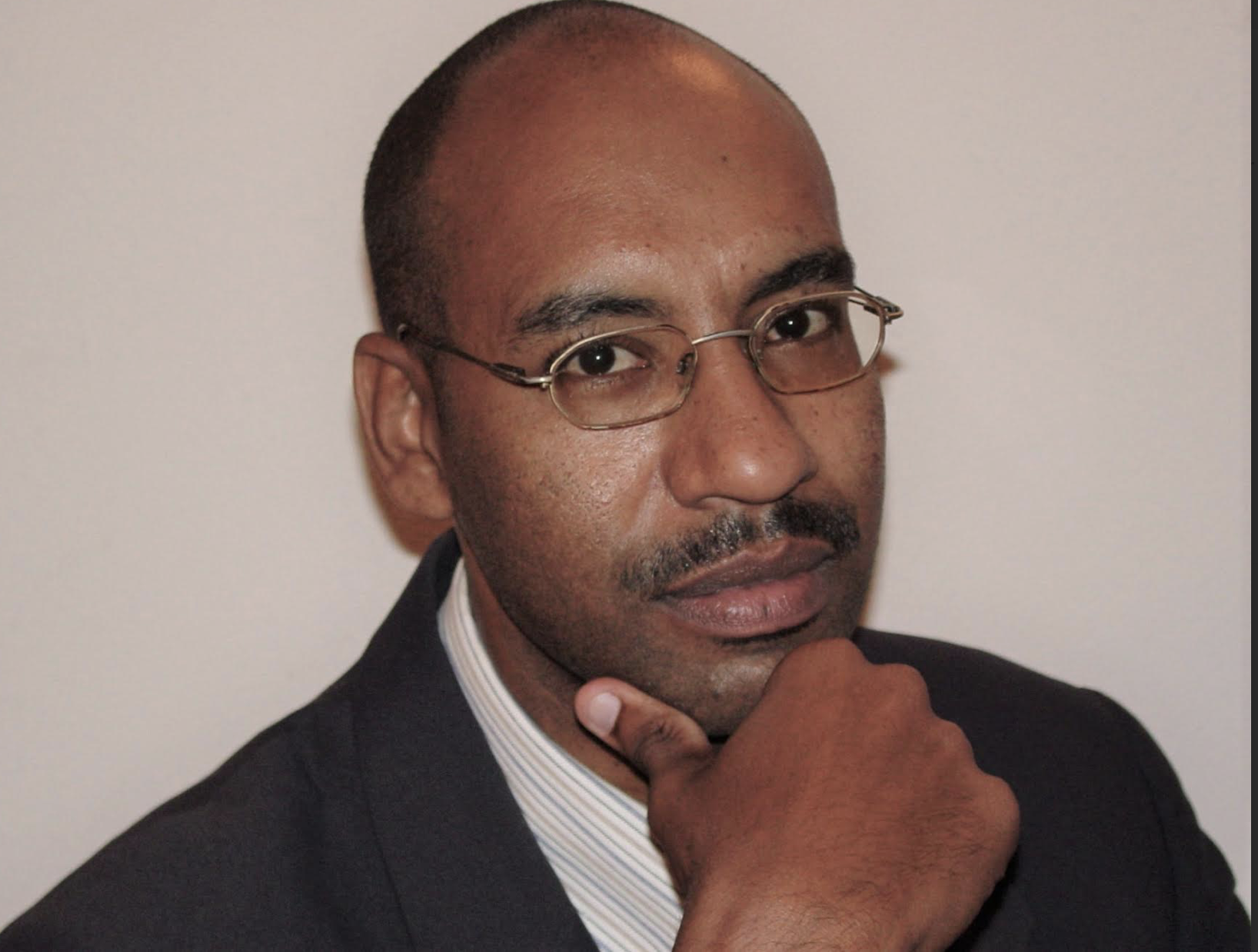
Submitted by Dr. Don Marshall

Next the challenge thrown out to me by BU to shed some light on the CARIFORUM/EU (EPA) Deal. I was said to play a key role in the negotiations. This is a mistaken view. I played no role at all in the CARIFORUM/EU negotiations. In fact, on April 21 2008, through a region-wide news link-up with OXFAM, I raised concerns over what I thought to be a problematic deal. That instantly meant that I joined the company of a much-maligned group of commentators for daring to say “I disagree with the signing of the CARIFORUM/EU deal.”
At the OXFAM forum, I emphasised, among other things, that the Doha Development Round proposals were being undermined by the provisions under a full EPA.
For example, in the trade in agricultural goods:
Least developed countries and some developing countries benefited from exemptions, flexibilities in the formula for cutting tariffs, and special safeguard mechanisms in the Doha Round.
But under a Full EPA:
All ACP countries are to eliminate and bind applied tariffs on 80-97 % of trade with Europe. No sector is exempted and no special safeguard mechanism is in place for agriculture.
Trade In Services under a Full EPA:
While we are being told that Barbados and other Caribbean countries stand to benefit from trade in services, little is mentioned about the commitments in the Deal that go substantially beyond the prevailing Generalised Agreement on Trade In Services (GATS) established under the WTO.
These are in terms of opening and regulations. Put simply, service providers leaving our shores will face stiffer requirements as it relates to rights of establishment, the need to have a prior work contract secured, and a matter of two years is allotted for qualification and vocational standards to be harmonised, even as each country reserves the right to benchmark the incoming service provider’s qualification to its standards.
Another point to note is the substantive commitments to transparency of government procurement markets in the CARIFORUM/EU deal. This appears useful at the surface as we all will wish for greater transparency in the way government contracts for services are awarded. But suspicions about this provision are in order as the pursuit of market liberalisation or openness in the area of government procurement was halted and taken off the Doha agenda at the Cancun Ministerial in 2003.
Imperial oversight of how our governments award contracts in the provision of public services lays future ground for the argument suggesting open competition, meaning allowing all countries in the EU and in Caricom including the Dominican Republic equal opportunity to bid for such contracts. This has been a traditional area for governments to stimulate the rise of new domestic entrepreneurs and sustain business enterprises. Brazil and other Latin American countries objected to it in Cancun. However Cariforum has made commitments to transparency in the Deal, creating the negotiating space for further liberalisation inroads where this was rejected in the Doha Round.
I have only raised some of the issues here but I could not end this post without pointing readers to a troubling foreboding. Havelock Brewster recently raised the point about the undermining of the CSME once the full EPA is in place between Cariforum and EU. At the OXFAM forum, I also spent some time on this point by focusing on the new architecture to come. I argued that CARICOM will lose its organic intensity and regional `feel’ once this new architecture is in place.
There is proposed, the creation of Joint Cariforum-EC Council, whose responsibility it is to actualize the EPA in all its aspects including monitoring, trouble-shooting and reviewing the EPA. This council will comprise representatives of signatory Cariforum states and members of the Council of the European Commission (EC) and the EC itself. This Joint Council will have the power to take decisions on all matters covered by the EPA. In this regard, it will have more authority over the region’s external trade than Caricom itself.
There is also a Cariforum-EC Trade and Development Committee comprising senior officials of both parties. This body is expected to service the Council and assist it in the execution of its responsibilities. It is thus responsible for ensuring that disputes are resolved and that the opportunities afforded by the agreement for trade, investment business ventures, and so on are utilized. In this regard it has responsibilities for securing the development objectives of the EPA.
There is in addition a Special Committee on Customs Cooperation and Trade Facilitation proposed, which is responsible for the effective implementation/administration of the EPA Chapter on Customs and Trade facilitation.
There are also two other non-specialist committees to be created, namely the Cariforum-EC Parliamentary Committee and a Cariforum-EC Consultative Committee. The former shall comprise representatives of the various parliaments that are party to the agreement and the latter organizations of civil society. I think you can glean how much CARICOM/CSME will slip from the mainstream.
The appeal remains the same. Caricom countries should avoid signing this agreement in its current form. The EU hopes to have all 76 ACP countries complete the signing of full EPAs. Strategically, Caricom governments may sign onto the trade in goods with some special exemptions but work alongside ACP partners to get a better deal in trade in services; intellectual property; investment; competition; government procurement — all of which go beyond commitments made in the current Doha Round.
There is nothing radical in this as developed countries and emerging countries stalled talks in Cancun on investment, non-agricultural market access, and competition policy and government procurement. Talks broke down again on July 29 2008 at the Doha Meeting in Geneva when India and China refused to accept the reduction of proposed measures (i.e. a US proposed formula) to protect their (i.e. China’s and India’s) farmers from trade liberalisation.
Barbados seems set to sign on, if it has not already, and this can only mean that it is operating under the swing of the pendulum. No brownie points are on offer in this conjuncture. It is now in the circumstances of an oil price crisis, a carbon/energy/environmental crisis, a credit crunch caused by a mortgage crisis in the US, and a commodity price spike that the circumstances are ripe for vulnerable countries to demand exemptions and considerations in their trade deals. Certainly the cost of living spiral necessitates flexibility in trade deals in the direction of food security, employment creation, poverty alleviation and some degree of economic protectionism.
The accustomed pragmatic neoliberal counsel is not suited at this historical moment as its premises are under ideological attack. Even the Conservative Party of Britain under a resurgent David Cameron is maintaining that the market cannot be left alone to affect its putative miracles.



The blogmaster invites you to join the discussion.