← Back

Your message to the BLOGMASTER was sent

There is so much to unpack from today’s back page Nation News article ‘Crop us out!‘.

There was high expectation in the land when an ambitious plan was revealed by Minister Weir in late 2023 that there was an MOU established to transition the ownership of sugar cane industry to the Barbados Sustainable Energy Co-operative.

In the Nation article President of Co-Op Energy in his usual no-nonsense style referred all inquiries about the deal to Minister of Agriculture Indar Weir. In turn Weir punted the matter to prominent government consultant Ambassador Clyde Mascoll who declined to answer questions on the matter. In case you missed the point – Minister Weir – an elected member of government and minister responsible for the deal – deflected questions to consultant Mascoll.

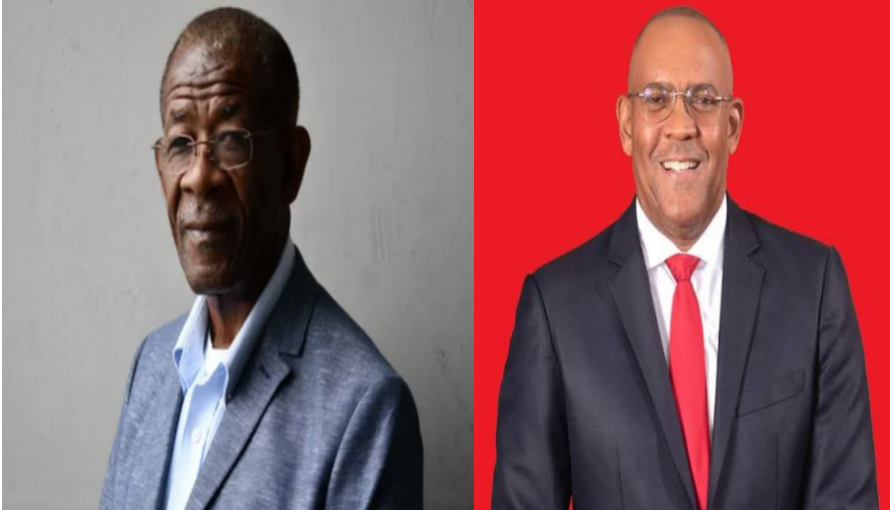
Dr. Clyde Mascoll, BLP Consultant

Further in the article Chairman of the Barbados Sugar Industry Ltd (BSIL), Mark Sealy is reported to be happy with the progress of the 2025 sugar harvest along with other vacuous comments. He was quick to dissociate the BSIL from the ongoing disagreement between Co-Op Energy. What the blogmaster would like to know is what is the BSIL doing about helping to increase the sucrose content of local sugar cane. Is it correct to say it takes over 20 tonnes of sugar cane to produce a tonne of sugar? Back in the day when Barbados was a model sugar cane producer it took less than 10 tonnes to produce 1 tonne.

Obviously the deal between government and Co-Op Energy has tilted south. President of Co-Op Energy has been pellucid on the matter – produce audited financials or no deal. Based on the record of the incumbent and successive governments to produce audited financials of state owned entities, it is not obviously not a strong suit. In fact, if the most important SOE, the rebranded NISS, cannot deliver current financials what do we expect from a mismanaged, corrupt sugar cane industry?

Of concern to the blogmaster is the inability of Barbados to deliver on what is a visionary ideal – using the production of sugar cane to fuel the vision for a sustainable energy plan for Barbados. We continue to fail when it comes to being innovative and creative and seem happy to remain hewers of wood and drawers of water.

Until the obvious gad order is removed by Prime Minister Mottley, the people who the government serves we have to be happy being none the wiser.


Crop us out!

Coop says it’s nothing to do with sugar industry

by CARLOS ATWELL

carlosatwell@nationnews.com

IT APPEARS the Barbados Sustainable Energy Cooperative Society Ltd (CoopEnergy) is washing its hands of the sugar industry.

When asked for an update on the harvest yesterday, president of Coop Energy, Trevor Browne, said nothing had changed and as it stood, Coop Energy had nothing to do with either Portvale factory or the sugar industry.

“We offered to buy the shares in the new companies and that sale has not been completed. So as far as I am concerned, you have to find that out from the past, and who continues to be the current owners, which is the Government. We really don’t have anything to do with what’s going on.

“We offered to buy it and we were in the process of buying it, but it’s not been completed, so what would we have to do with it? You want the minister, you want Weir, that’s the body you want, not me,” he told the MIDWEEK NATION.

When contacted, Minister of Agriculture Indar Weir referred queries to senior economic advisor Ambassador Dr Clyde Mascoll, who he said was leading the project. However, Mascoll said he was not answering any questions relating to Coop Energy.

At Portvale yesterday, operations were in full swing as truckloads of canes were being delivered. Signage indicated the plant was under the operation of the Barbados Energy and Sugar Company Inc (BESCO), a subsidiary of Coop Energy.

To further complicate matters, relations between BESCO and its employees are strained as the Sugar Industries Staff Association (SISA) said BESCO was escalating tensions by instructing workers to return revised employment contracts. SISA management said BESCO had not upheld its promise to hold further discussions with the union before finalising any new agreements.

There were also concerns raised about malfunctioning equipment, poor communication from management and uncertainty over the promised 20 per cent ownership stake under the new structure.

Meanwhile, chairman of the Barbados Sugar Industry Ltd (BSIL), Mark Sealy, said things were looking good for this year’s harvest from their end with no major problems so far.

“At the start, we had a few challenges, but that is usual when it comes to sugar factories. It was the first time that we were looking after the equipment, the trailers and the tipping bins, so one or two of us were a little bit late, but we’re now all going. I have to say that this is one of the better crops for consistently delivering very close to 2 000 tonnes of cane per day,” he said.

Sealy said around 40 000 tonnes of cane had been brought in around 31 delivery days, which included both BSIL and the Agricultural Business Company Ltd (ABC) – the other company under Coop Energy. He added there was still a long way to go before the end but he was optimistic.

“All in all, things have been going well, the truckers have been working well, the equipment’s holding up pretty good, and the factory has been running particularly well. So congratulations to them. Of course, we do not call the end of the crop, but if you estimate there are 100 000 tonnes of cane to be delivered, and you’ve delivered 40 000, then you can expect that we would have quite a bit more time left to go in the crop. But all in all, it’s very, very positive,” he said.

Sealy declined to comment on the ongoing feud between CoopEnergy and Government, but said whatever happened, the sugar industry was too important to be allowed to fail.

“That’s really nothing to do with us. Our job is to grow quality cane that has good sucrose content, good volume and to keep Barbados very well organised, out of bush and green, and that’s what we’re really concentrating on. I would just like to say, though, that I don’t think the sugar cane industry is going to shut down. We’ve been in it for a long time.”

In 2023, Co-op Energy and Government signed a memorandum of understanding whereby the cooperative would take over the industry from the Barbados Agricultural Management Company (BAMC) to transform it into a renewable energy operation. BAMC was then divested into BESCO and the ABC under the cooperative.

Since then,both sides have accused each other of not meeting their financial obligations, with Browne saying the plant was still under Government control.

-Source: Nation Newspaper


Discover more from Barbados Underground

Subscribe to get the latest posts sent to your email.

30 responses to “Still hewing wood and carrying water”

  1. William Skinner Avatar
    William Skinner

    This is clearly representative of the way business is being conducted by both the public and private sectors; a backward culture of egos, and basic political ignorance. We are into pointless pontification and doses of non-productive intellectualism while basic common sense has been driven into ground.
    Current global developments , most of it almost without warning, have exposed us to the realities of hanging on to peoples’ coat tails. Our leaders, now appear weak and we can expect the so-called intelligentsia to continue spouting their ineffective brand of rubbish.


  2. @ W SKINNER

    NOW YOU UNDERSTAND WHY IN 2025 AND PRIOR YOUR PIE IN THE SKY DREAM OF CARIBBEAN ISLANDS HOLDING THEIR OWN IS JUST A PIPE DREAM.

    THE ONLY THINGS THEY ARE GREAT AT IS BORROWING AND KICKBACKS.

    PITY FOR THE GULLIBLE TAXPAYERS.


  3. Jesus!
    I never understood this deal.
    Now I learn it wasn’t meant for me to understand.
    But I see that metrics I use can still be employed here
    Who mek money from this?
    Who running to the bank?
    Who is ‘one smart’ and who is ‘two smart’
    Got to give these guys an A for creativity.

    Gonna wait and see if NO and John A can mek sense from this

    —x–
    What I would like to see is someone going for a housing/sugar/BL&P deal. Throw in the word ‘tariffs’ and ‘climate change’ and I would be hooked. Might not understand the fancy footwork, but I would be hooked.

  4. NorthernObserver Avatar
    NorthernObserver

    But you always get news
    “We offered to buy the shares in the new companies and that sale has not been completed.”
    So what I thought were companies incorporated by the Co-op…shame on me. These new entities were incorporated by the GoB?
    The next wonderment is exactly what financials are outstanding.
    So the GoB took assets related to the sugar industry out of one entity, and placed them into two separate new entities.
    No wonder Clyde is running for the hills.


  5. THE SAME CLYDE MASCOLL THAT WAS INVOLVED IN HARDWORD HOUSING A PRIVATE BUSINESS WHICH TOOK BD$2 MILLION FROM EGFL UNDER OWEN ARTHUR BLP GOVERNMENT AND THEY RAN TO THE HILLS WITH NOTHING TO SHOW FOR IT.

    NO WONDER BLP AND DLP POLITICIANS STAY IN POLITICS THEY ARE CORRUPTED PARASITES ALWAYS LOOKING TO GET INVOLVED WITH THE BIG DEALS ONCE THEIR ELECTED PARTIES ARE IN POWER.

    I PITY THE GULLIBLE TAX PAYERS

  6. NorthernObserver Avatar
    NorthernObserver

    On further review, we were told while the BAMC had ” divested” itself of operations, it retained operational responsibility. (figure that one out for 10 marks)
    I gather if you move assets from an SOE, the BAMC, to another corporate entity(s), even if those entities are owned by the GoB, it is called divestment.
    The more accurate description would have been the BAMC had transferred assets to two new companies, pending the sale of those new companies to the Co-op.
    The bottom line is the taxpayers are still on the hook.
    And the GoB is running the two new companies. At a loss.


  7. @NO

    What happened with the discovery in 2023 sugar producers were selling sugar at 2k per tonne and the production cost was 4k? Again the taxpayers held the bag with no accountability enforced between the actors.


  8. Unfortunately the focus of the majority of the nation is split, those supporting the reggae shows and others against.


  9. “𝚄𝚗𝚏𝚘𝚛𝚝𝚞𝚗𝚊𝚝𝚎𝚕𝚢 𝚝𝚑𝚎 𝚏𝚘𝚌𝚞𝚜 𝚘𝚏 𝚝𝚑𝚎 𝚖𝚊𝚓𝚘𝚛𝚒𝚝𝚢 𝚘𝚏 𝚝𝚑𝚎 𝚗𝚊𝚝𝚒𝚘𝚗 𝚒𝚜 𝚜𝚙𝚕𝚒𝚝, 𝚝𝚑𝚘𝚜𝚎 𝚜𝚞𝚙𝚙𝚘𝚛𝚝𝚒𝚗𝚐 𝚝𝚑𝚎 𝚛𝚎𝚐𝚐𝚊𝚎 𝚜𝚑𝚘𝚠𝚜 𝚊𝚗𝚍 𝚘𝚝𝚑𝚎𝚛𝚜 𝚊𝚐𝚊𝚒𝚗𝚜𝚝.”

    African Roots Chapter 11 Jah Children Invasion
    Roots Reggae and Soul Fans had Children
    who became the Ragga and Hip Hop Fans

    Too Much War, Too Much Dub, Chant Down War, Drum & Bass Dub

  10. NorthernObserver Avatar
    NorthernObserver

    @David
    The Medium Term Fiscal Framework 25/26 to 27/28 indicated a BAMC expense budget of $0 for prior year, but they actually LOST $50M+. The next year’s budget was also $0, yet I suspect without the sale, taxpayers are on the hook for another $50M+.
    Whatever the basis for Co-op’s positive projection, it appears they didn’t share it with the BAMC.
    So the entity which was buying sugar at LESS than COST, may(?) have found a way, legal or otherwise, to keep the contract.
    #wegotthis


  11. Farley.


  12. Our laden footed Prime Minister is hailed by the west, simply because she has created a vassal state for others to mould, manipulate and profit from.

    On the contrary, another leader in West Africa has infuriated the west by simply not playing ball.

    Judge me, by my deeds and not my words. This is a message which should resonate in the conscience of the BLP leader who has been in power for seven years. Can anyone name what her achievements have been since she was elected?

    Contrast her minimal achievements with that of the young president of Burkina Faso and you can only conclude that her period in office has been a complete failure.

    Some will say, you can’t say this. My reply would be as follows: if no Western leader is prepared to condemn a leader of a black country then that black leader is aligned to outside groups.

    I am waiting for Mia’s fan boy – Dub 555 – to give us a list of his leaders achievements since being in office. I expect him to say that she is an inspirational figure and admired internationally.

    https://m.youtube.com/watch?v=ihdIoZp53qQ


  13. @ TLSN
    It is unfair to compare our PM to Traoré.
    We need to compare her to Froon and Stinkliar.

    The Captain is not from a cursed land of BBs who spent 500 YEARS being brainwashed that they are inferior, that albino-centricity is ’success’, and that gaining the praise of ‘Massa’ represents life’s key achievement.

    Traoré clearly sees VALUE in his OWN people.
    He is therefore not open to their exploitation by the SAME UNASHAMED white people that exploited them and their lands for centuries. Therefore there is NO NEED for any lotta long shiite talk – just a FIRM and polite ‘NO THANK YOU’ to the many GIFTS, GRANTS, LOANS, SCHEMES and other Trojan horses that are so BLATANTLY used to entrap and enslave the GULLIBLE among us…

    But most important about Traoré is that he EXPECTS and DEMANDS top quality outputs from his own people too – based on MERIT.

    So while WE EXPAND welfare, invest in free (but HOPEless) public housing, transfer crime fighting to social services, bribe gangs to stop killing each other, and sponsor football distractions…
    … Traoré has been building AGRICULTURE, technology, manufacturing, National SECURITY, and doing so by using HIS OWN PEOPLE – so that they will NOT have to depend on welfare, State housing, and Chinese labour to eat – BUT INSTEAD, PROUDLY EARN THEIR WAY IN LIFE.

    So he does not need to BUY votes by political underhandedness – funded by bribes and ‘political donations’.., he EARNS public support by the RESULTS that he is able to produce.

    Notably, he has not even bothered to promote himself above the rank of ‘Captain’ as yet… a sign of a man who is committed to PUBLIC SERVICE and not SELF aggrandizement.

    What a man!

    Chalk and Cheese!


  14. The long and short of it – “everyone wants to go to heaven but nobody wants to die.”


  15. Do you REALLY think that BBs ‘want to go to heaven?’
    LOL…
    BB’s just want whatever it is that Massa tells them that they should want… via the global education system called ’Social Media’.
    Currently, that is MONEY, BRAND, and PARTY….

    Meanwhile, our expensive Eddykashun system, far from COUNTERING this global, albino-centric, brainwashing of our youths, is even more insipid in its messages….

    The ‘long and short of it’ is that there are LEADERS, and then there are persons who happens to find themselves ‘in front of the BB pack’ – because the previous bunch who the flock followed, were ‘froons and stink liars’.

    The thing is that people – and PARTICULARLY brass bowls, -almost alway get the leaders that they DESERVE… (occasionally we get one who is SENT to make a specific point – EWB, Adams, Obama, Traoré)

    When we are able to free ourselves of the MENTAL SLAVERY of which Bob Marley sang, THEN perhaps we will DESERVE leaders of Traoré ’s ilk.

    Perhaps you can see now why Bushie is so pissed with our education leaders – and in particular with Sir Cave Hilary and the shiite institution that he built on the Hill.

    What a world!!


  16. ” (occasionally we get one who is SENT to make a specific point – EWB, Adams, Obama, Traoré)” and Bush Tea.


  17. No rush. Import fish till the boats can be repaired.

    https://nationnews.com/2025/04/19/over-60-boats-still-need-repairs/


  18. @ Hants
    “..Traoré) and Bush Tea.”
    ~~~~~~~~~~~~
    Whaloss!!
    When you aint playing gallows bait with Bushie, yuh mekking mock sport and laughting stock at muh!!
    Boss, Bushie’s only claim to fame was with de whacker…. um was cat piss and peppa…
    But de Big Boss tek dat ‘way a couple years back…

    Probable due to excess collateral damage cause when Bushie was faced with wid d lotta brassbowlery…LOL!!
    Somebody big (a blogmaster?) may have complained ….

    Those circles too big for stinking Bushie bozie.
    But if yuh got any shiite bush & weed (not the Kiki stuff) around yuh place that you want whacked…


  19. Risk to US dollar dominance

    THE UNITED STATES (US) DOLLAR, the bedrock of US global power, influences everything from international trade and finance to the geopolitical landscape. Yet, beneath this financial supremacy lies a critical dimension: technological dominance.

    In recent years, three seemingly disparate elements – Huawei, TikTok and the CHIPS and Science Act – have emerged as flashpoints in the battle between the US and China. These elements are deeply intertwined with the broader story of US hegemony, its ballooning debt, efforts to contain China and the growing ambitions of BRICS nations (an alliance of Brazil, Russia, India, China and South Africa that now includes Egypt, Ethiopia, Indonesia, Iran and the United Arab Emirates) to develop alternative financial systems.

    At the heart of US hegemony is not just the privilege of issuing the world’s reserve currency, but also the ability to set global rules and maintain technological superiority. The US has long used its leadership in innovation, data infrastructure and communications technology to reinforce trust in its financial systems. However, China’s meteoric rise, with companies like Huawei at the forefront, threatens to undermine this delicate balance.

    Huawei’s global push into 5G infrastructure epitomises this challenge. It is not just about faster Internet – it is about who controls the pipelines through which data, financial transactions and communications flow. Should Huawei become the dominant supplier of nextgeneration networks worldwide, China could wield unprecedented influence over global data and possibly even financial messaging systems.

    Threat to the West

    This directly threatens the integrity of Western-dominated platforms like SWIFT, which underpin the use of the dollar in international transactions. Consequently, the US sees Huawei not as a business competitor but as a strategic threat and responded by banning its technology and lobbying allies to do the same. This ban extends to other companies like ZTE, China Mobile and China Telecom, among others.

    The narrative does not stop at telecommunications. TikTok, a seemingly harmless social media app, has also become a geopolitical pawn. The app’s staggering global influence and its collection of massive amounts of user data have raised alarms in Washington. Data is power – and the concern is that China could use this power to shape public narratives, influence consumer behaviour or even integrate financial services and digital payments that circumvent dollar-based platforms. Imagine a world where TikTok, with its billions of users, facilitates microtransactions in digital RMB. That scenario would represent a subtle but powerful blow to US financial dominance.

    National security

    The US government has taken multiple actions to limit TikTok’s influence, citing national security concerns over data privacy and potential Chinese government access to American user data. In late 2024, a law was passed banning the app in the US, unless TikTok’s parent company, ByteDance, fully divested its American operations by late January 2025, though an executive order by President Donald Trump halted enforcement of the ban for a 75-day period while his administration pursues a potential sale to American owners.

    These technological threats prompted the US to not only ban and restrict Chinese firms but also to reinvest in its own innovation ecosystem. Enter the CHIPS and Science Act. Passed in 2022, this sweeping legislation allocates more than US$280 billion to rebuild and secure US semiconductor manufacturing and research. The reason for this heavy investment is clear: semiconductors are the foundation of every modern technology, from defence systems to banking software to artificial intelligence. If China were to surpass the US in this domain, it could undermine global confidence in the American economy and, by extension, the dollar.

    What ties all these elements together is the complex interplay between technological supremacy and financial dominance. The US issues enormous amounts of debt, much of which is purchased by foreign investors because they trust in the strength of the US economy and its leadership in innovation. As long as the US remains at the forefront of technology and security, investors are willing to buy US treasuries and hold dollars as reserves.

    China, aware of this dynamic, is not merely content to challenge the US in the realms of manufacturing and trade. It is leading efforts through BRICS to build parallel financial systems. BRICS countries have already established the New Development Bank and non-dollar trade arrangements. Huawei’s infrastructure and platforms like CIPS – China’s alternative to SWIFT – are the technical backbones of this vision. Similarly, TikTok’s global reach could become a vector for promoting Chinese digital payment systems or blockchain-based currencies, further chipping away at the dollar’s dominance in digital commerce.

    The US dollar’s dominance depends on global trust in US stability and technological leadership. Containment efforts by the US only serve to accelerate China’s resolve to develop BRICS-based financial alternatives. As China’s ecosystem becomes more robust, the risk to dollar dominance grows.

    Professor Troy Lorde is an economist and Dean of the Faculty of Social Sciences at the University of the West Indies, Cave Hill Campus. Email troy.lorde@cavehill.uwi.edu


  20. Realistic prospects for export diversification

    by DR DELISLE WORRELL

    The candidates for export diversification in the Caribbean are the products and services that these countries are able to market successfully in North America, Europe and elsewhere, in competition with other international suppliers. Notice that our concern is exports; production for the domestic market provides no foreign exchange, and without foreign exchange for essential imported supplies, fuel and materials, nothing can be produced.

    Tourism is the industry in which the Caribbean has a distinct comparative advantage, thanks to our tropical climate, excellent beaches and proximity to the North American and European markets. Tourism still offers the greatest potential for economic growth everywhere in the insular Caribbean, but it requires smart official policies to realise its potential, especially in more mature markets.

    The Caribbean as a whole remains a competitive tourism destination, but each country and location has its own particular appeal. It is incumbent on national governments to craft land use policies and incentives to preserve and enhance the features and qualities that set each destination apart.

    The target must always be to increase earnings of foreign currency; the preferred strategy is to increase the quality of the product so that it will fetch a higher price, along with a modest, sustained increase in the number of visitors. It is a good sign when people comment on how expensive things are, but hotels are always full to capacity.

    Conversely, when guests enthuse that they are getting three-star quality for one-star price the business is headed for bankruptcy. The aim should always be to provide good value for the quality of service on offer.

    The agricultural exports that were once the mainstay of Caribbean economies declined into insignificance with the end of the special marketing arrangements for sugar and bananas provided by the United Kingdom and the European Union. Caribbean protests that their competitors in these markets were benefiting from subsidies on beet sugar and substitutes cut no ice. Their taxpayers were content to subsidise their own farmers, but they had no interest in subsidising Caribbean producers.

    Garment manufacturing, pharmaceuticals and the assembly of small instruments and devices offered some opportunities for exports during the 1970s and 1980s, but Asian countries have now captured that market. The same is true of call centres, data processing centres and other services that require modest levels of skill.

    Renewable energy most promising

    The remaining possibilities are in non-traditional areas, and they all face major difficulties. The most promising is renewable energy. Replacing fossil fuels with solar and onshore wind power saves on imports of an input that is essential to all production and consumption. Solar and onshore wind are the only fully matured renewable energy technologies currently available to the Caribbean. However, there are major costs of storage and distribution associated with the transition to renewables.

    The power generated must be stored for use as needed, and the existing grid which distributes the electricity from a central power station to consumers must be replaced with a smart grid that collects electricity from thousands of producers and stores or delivers it to consumers as needed. The storage and grid replacement costs are very high, and when added to electricity tariffs which are already high, they constitute a formidable barrier.

    Caribbean artistic talent has earned the region an enviable international reputation, in music, literature, painting, theatre, performance and the festival arts. Caribbean countries continue to seek ways to domesticate the economic benefits from the cultural industry. However, unlike tourism, where the customer travels to the country, practitioners in the cultural industry must travel to their customers. There are economic benefits to the home country, depending on how much time the practitioner spends there, but they are not large enough to make a significant contribution to the diversification of exports.

    The challenges to marketing other products and services successfully in North America and Europe, the most accessible markets, have proved insurmountable. There have been individual successes with educational services, medical services, specialised manufactured products, rum and other items, but there is no Caribbean country which can boast of a diversified export base as a result of these efforts.

    While diversification of products is not possible, the Caribbean may diversify the markets to which it sells and the qualities of product on offer. For example, hotels may choose to market selectively by US zip codes, making a choice based on the quality of accommodation they offer and the average income of the neighbourhood. Communications technology now offers possibilities for targeted marketing and strategies tailored to the demographic the producer needs to reach.

    The US is not a single market for any Caribbean producer; within every city there will be counties of wealthy households whose travel is unaffected by economic fluctuations, not to speak of great disparities between states and regions of the country. Seen from this perspective, the possibilities for diversification within the Caribbean’s traditional tourism markets in North America and Europe are limitless.

    Dr DeLisle Worrell is an independent international economic consultant who was Governor of the Central Bank of Barbados from 2009 to 2017.


  21. Innovation.

    https://havengreens.ca/


  22. @William Skinner April 16, 2025 at 5:55 am “culture of egos”

    And those egos are attached largely to balls. And the people with balls are largely “the leaders”

    So…


  23. “Sugar crisis deepens as industry workers seek union intervention
    The Sugar Industries Staff Association (SISA) has escalated its concerns to the highest level of trade union representation in Barbados, seeking urgent intervention from the Congress of Trade Unions and Staff Associations of Barbados (CTUSAB) amid growing unrest in the sugar industry, CTUSAB confirmed on Wednesday.
    SISA has formally requested support from the umbrella body, as mounting grievances among sugar workers—including broken promises, unsafe equipment, and contract irregularities—threaten to push the sector deeper into crisis, CTUSAB General Secretary Dennis De Peiza told journalists.
    “Only last night, SISA brought this matter to the congress,” De Peiza revealed during a press conference. “We will be meeting with SISA tomorrow [Thursday] at 10:30 a.m. to first be fully briefed before we can make a comment to the press [on issues affecting workers in the sugar industry].”
    The intervention comes on the heels of alarming disclosures by industry employees who say they are being left in the dark by both management and government.
    Workers have flagged a range of critical issues at Portvale Factory—the island’s only operational sugar plant—including delays in wages, malfunctioning equipment, unkept contractual commitments, and the risk of injury due to deteriorating working conditions.
    The Sugar Industries Staff Association has charged that the Barbados Energy and Sugar Company Ltd (BESCO) is further escalating tensions within the already embattled sugar industry.
    The development is the latest amid growing labour unease as the sugar industry undergoes a troubled transition from the state-owned Barbados Agricultural Management Company (BAMC) to the new BESCO entity, part of a broader divestment plan involving parent Co-op Energy.
    Monthly factory workers received a memo in March instructing them to return revised contracts regardless of whether they were signed or not.
    The memo sparked an immediate backlash from SISA, which said the directive was issued without resolving outstanding concerns about job terms, working hours and labour representation.
    In response to the memo, SISA wrote to BESCO, expressing “shock and disgust” over the ultimatum.
    “To date, apart from this direct and dismissive memorandum… there has been no communication about the concerns of the workers,” the letter stated. “They seem to be in a haste to have contracts signed without due process,” the statement read.
    (SZB)”

    Source: BT


  24. Chad speaks.


  25. shouting at another rass meeting.

The blogmaster invites you to join the discussion.

    Trending

    Discover more from Barbados Underground

    Subscribe now to keep reading and get access to the full archive.

    Continue reading