← Back

Your message to the BLOGMASTER was sent

How Barbados Became a Republic (Part 1 of 3) – The Court Case

In a previous article (28 Feb 2025) I promised to publish my evidence-based witness account, for the benefit of future historians and journalists, to fill the gap in this current misinformation age.  This is the first of three articles on how Barbados became a Republic. This first part describes the court case.

[Republic minus 65 days]. On 26th September 2021, the House of Assembly passed the Constitution Amendment No.2 Bill (2021) for Barbados to become a Republic on 30th November 2021. In my opinion, the Bill seemed to violate the Constitution of Barbados. During its passage, the Prime Minister acknowledged that there were differing legal opinions on the lawfulness of the Government’s actions and advised that Barbadians could argue their case in Court. Her words follow.

“You argue a case once, in court, and the truth is that the courts are always open to those who believe that there is a different and better way. But we are satisfied that we have chosen a way that accords not only with legal precedent, but also, Mr Speaker, with our interpretation of the law.”

The problem is that the Government neither explained the legal basis of the Bill nor their interpretation of the law.

[Republic minus 54 days]. The Constitution Amendment No.2 Bill (2021) was passed in the Senate on 6th October 2021 – without the legal basis being explained or their interpretation of the law being revealed. Therefore, the only option left for citizens to understand the legal basis for Barbados becoming a Republic was to reluctantly follow the Prime Minister’s advice. Since none of the approximately 1,000 lawyers in Barbados seemed interested enough, I petitioned the court on 7th October 2021 to urgently review whether the Government’s actions were lawful.

[Republic minus 49 days]. On 12th October 2021, two lawyers from the Attorney General office and I appeared virtually before The Hon. Mr. Justice Barry Carrington, where it was agreed that in order to start the process: (i) the Attorney General would respond to my application for judicial review on or before 26th October 2021, (ii) I would file Submissions on or before 26th October 2021, and (iii) the Attorney General would respond to my Submissions within 14 days of receiving them.

Given the urgency of the matter, I filed my Submissions on 17th October 2021. By 4th November 2021 the Attorney General had neither responded to my Claim nor Submissions, but the Government was proceeding with haste to change Barbados from a Constitutional Monarchy to a Republic on 30th November 2021.

[Republic minus 26 days]. On 4th November 2021 I filed notice of my intention to apply to the Court for an order of an interim injunction, preventing the Government from changing Barbados to a Republic until my Claim (Reference: CIV 0867/2021) was determined by the Court. I followed through by filing my injunction request on 11th November 2021. The Attorney General sent me his response the following day (17 days late).

[Republic minus 18 days]. On 12 November 2021, the Attorney General finally revealed how they justified making Barbados a Republic. I filed my Submissions in Response on 18th November 2021, addressing in detail each of the Attorney General’s arguments.

THE GOVERNMENT’S LEGAL JUSTIFICATION.

The Constitutional Head of State of Barbados was the Queen. The Government wanted to change the Head of State by changing the Constitution. Many relatively simple provisions in the Constitution can be passed with a simple majority (1 plus half the number) of Parliamentarians. However, there are some very important provisions that are called entrenched and require a 2/3rds majority vote.

Changing the Head of State in every known Constitution on this planet is an entrenched provision. In other Caribbean and Commonwealth Constitutions, it is an entrenched provision that may require a public referendum in addition to a 2/3rds majority vote in Parliament. In Barbados’ case, we seem to have negotiated a constitution that does not allow the removal of the Head of State by Parliament, not by 2/3rds or 3/3rds.

There were sacred oaths in our Constitution where our elected representatives, appointed senators and armed forces had to swear before God to be faithful to the Queen and her successors. People are normally released from their oaths by the one to whom they swore. The Constitution of Barbados did not give the Parliament of Barbados any authority to unilaterally force persons to break their sacred oaths, or to absolve people for breaking them. We could become a Republic, but it had to be negotiated with our Head of State.

INDEPENDENCE NEGOTIATION MEETINGS.

We may understand why a negotiation is needed by reading the negotiation minutes of our Independence meetings with the UK Secretary of State for the Colonies completed on 1st July 1966. There is a copy in the Reference section of the UWI Law Library and I was surprised at how few persons had signed it out over the past 50 years.

In attendance for the Democratic Labour Party were: E.W. Barrow, H.A. Vaughn, J .C. Tudor, P.M. Greaves, C.L. Brathwaite and F.W. Walcott with advisors O.R. Marshall, K.W. Patchett and J.A.J. Murray. The Barbados National Party were represented by: E.D. Mottley, F.C. Goddard and J.S.B. Dear with advisors E.R.L. Ward, L.A. Lynch and D.G. Leacock. The Barbados Labour Party were represented by: F.E. Miller and H.B. St John with advisors H. de B. Forde and J.M.G.M. Adams.

The minutes show the following pattern of behaviour for several provisions where there was no agreement. The opposition BLP and BNP would object to a constitutional provision, then they would be overruled and insist on their dissent being included in the minutes, which was done. However, for some provisions, it was not merely dissent, but the minutes state: “The Conference noted the strong objections of the Barbados National Party” and “The Barbados Labour Party expressed their strong objections”. The UK Secretary of State explained to the BLP and BNP that they could change certain provisions if they were elected to govern.

The Conference Report (4 July 1966) noted that when the Independence bill was being debated in Barbados’ parliament, the two Opposition parties, BLP and BNP, took no part in the debates. It appears that they decided to raise their objections in the UK instead. The inability of the BLP and BLP to reach consensus with the DLP on some important provisions, coupled with their strong objections, displayed disunity at this critical time, and a risk of political instability in an Independent Barbados. This risk appears to have been addressed by not allowing Barbados’ Parliament to unilaterally change the Head of State.

SHATTERING.

In the Attorney General’s submissions, the Attorney General agreed that the Constitution forbade them from changing the Head of State with a 2/3rds majority. To force this change, they decided that changing the Head of State was not an important and entrenched provision like in all other Commonwealth Constitutions, but a relatively minor matter that could be changed with a simple majority. The sacred oaths were similarly discounted. This seemed to require not bending, but shattering the Constitution of Barbados, thereby rendering the Bill entirely unlawful.

[Republic minus 6 days]. On 24th November 2021 (48 days after my initial claim), the Judge ruled that I had no grounds on which to petition the Court and ordered me to pay the Attorney General $5,000. The Attorney General objected that the sum was too low and asked the Judge to increase it to $10,000.

The Attorney General should provide the legal basis for all legislation as a matter of course. Since he did not, I went to court as advised by the Government to obtain information that should be freely available to the public. Next week, our Republic’s foundation.

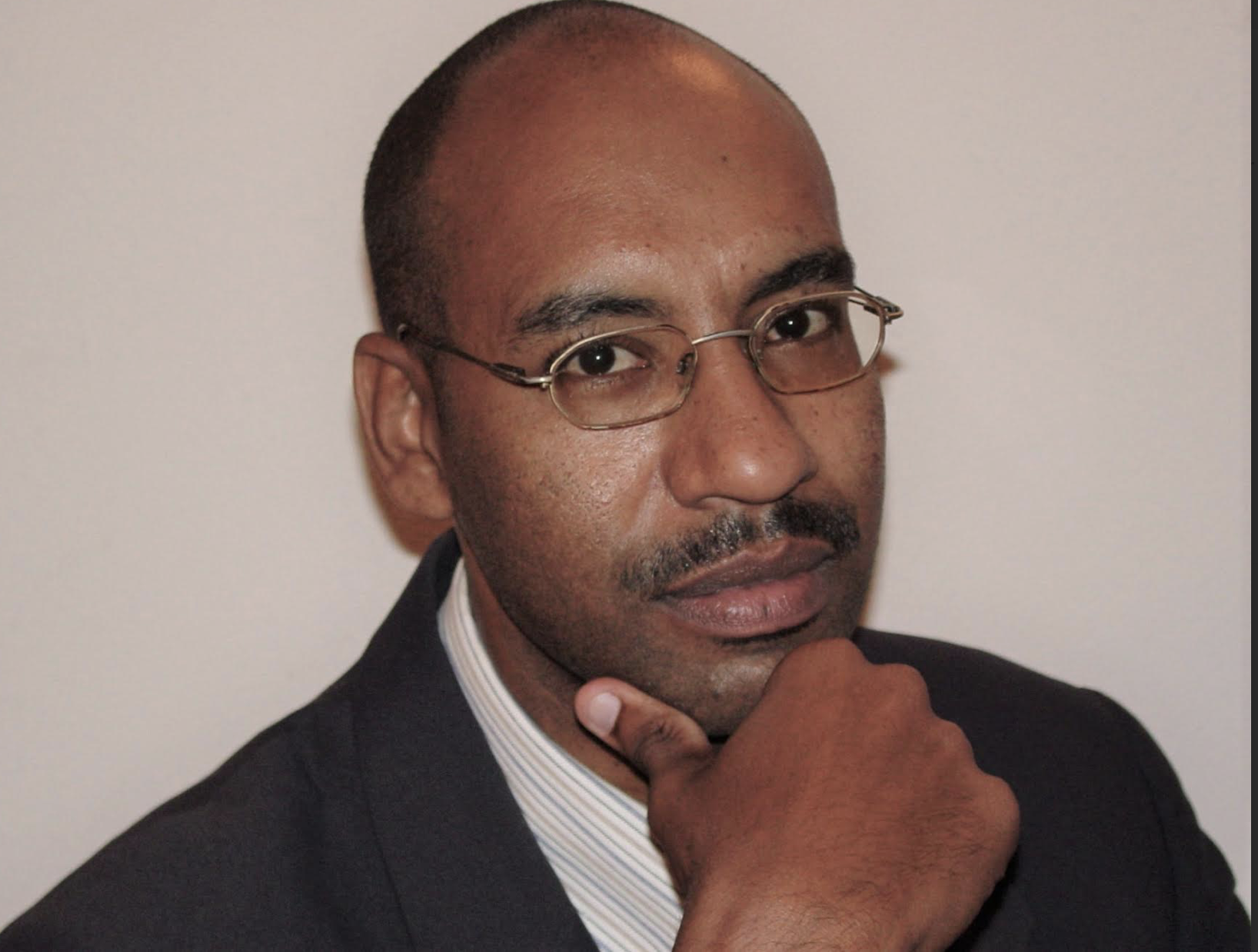
Grenville Phillips II is a Doctor of Engineering and a Chartered Structural Engineer. He can be reached at NextParty246@gmail.com


Discover more from Barbados Underground

Subscribe to get the latest posts sent to your email.

15 responses to “The Court Case – Part 1 of 3”


  1. Jamaica tables bill to oust King Charles as head of state and become a republic | Jamaica | The Guardian

    https://www.theguardian.com/world/2024/dec/13/jamaica-king-charles-republic
    https://www.theguardian.com/world/2024/dec/13/jamaica-king-charles-republic


  2. Too complicated!!

    All you had to do was file a constitutional motion against the office of the attorney general to the effect that in the absence of a leader of the opposition appointed by the largest group in the HOA that opposed the Government there could be no constitutional parliament and any action taken by the rogue political party was null, void and of no effect.

    30-0 is a nullity!!

    You could even now file a constitutional motion to the effect that in the absence of a leader of the opposition no judges can be appointed as specified in the constitution and as a citizen you are being deprived of a court comprised of judges who are appointed based on consultation between the Leader of the opposition and the Prime Minister, who also does not exist in the absence of a presence of a leader of the opposition.

    BTW, which judge decided your case?

    Was he or she appointed after 2018?

    If appointed after 2018, the “judge” was conflicted!!!!!!!

    If so, apply to the CCJ for Special Leave to appeal the decision on the grounds that it is a matter of public interest. Bypass the Court of Appeal because all of its justices of appeal were appointed after Barbados ceased having a constitutional parliament.

    Justice of Appeal Burgess was appointed to the CCJ in 2019. Make sure you let the CCJ know that so he can recuse himself.

    You see how that 30-0 result has effectively destroyed the judiciary.

    …. and not one single lawyer appointed to be a judge post 2018 would refuse the appointment but would still sit on cases as a judge knowing full well that any decision he or she took was null, void and of no effect!!

    So much for reducing backlog.

    The thing is that any citizen(s) if he or she or they was/were so minded could become co-defendant(s) with your good self and make the action into a class action.

    I could think of one such citizen.

    The benefit to Barbados would be that elections would be forced and never again would 30-0 occur.

  3. Terence Blackett Avatar
    Terence Blackett

    #GreatPiece, my dear bruh – looking forward to #2 & #3!!!

    Meantime, I reserve “COMMENT” in the light of the preceding aspects that will follow!!!

    #BeBlessed


  4. You don’t have to worry about Burgess after April 11!!

    The ICC does not have a stellar reputation but the CCJ may be a bit leery about accepting anymore judges from Barbados for the time being while the unconstitutional parliament persists!!!

    All the Justices of Appeal are appointed after 2018.

    What a complete mess of the judiciary the BLP aided and abetted by the DLP have made.

    barbadostoday

    48m
    The Regional Judicial and Legal Services Commission (RJLSC), has appointed Dr Chile Eboe-Osuji of Nigeria and Canada as a judge of the Trinidad-based Caribbean Court of Justice (CCJ).

    The RJLSC, independent body responsible for recruiting staff and judges for the CCJ, said that Eboe-Osuj will fill the vacancy created by the retirement of Justice Andrew Burgess on April 11, this year.

    It said that Justice Eboe-Osuji is an international jurist, who served as a judge of the Hague-based International Criminal Court (ICC), from March 2012 to March 2018 and as ICC president from March 2018 to March 2021.


  5. @John

    You have no idea if Barbadian justices applied, do you?


  6. What could you let go of that no longer serves you
    Let’s begin by throwing out the trash
    Throw out everything that no longer serves you
    Let it go


  7. David
    March 24, 2025 at 12:38 pm
    Rate This

    @John

    You have no idea if Barbadian justices applied, do you?

    +++++++++++++++++++++++++++++++++++++++

    Given the known current ramshackle state of the legal system of Barbados it would be unlikely that the RJLSC, independent body responsible for recruiting staff and judges for the CCJ would entertain their application.

    Do we even have any leading lights in the legal profession?

    The whole legal profession exists under a cloud of suspicion.

    Who is the Chief Judge and how he got there?


  8. The answer is no then.


  9. David
    March 24, 2025 at 4:23 pm
    Rate This

    The answer is no then.

    +++++++++++++++++++++++++

    The answer is it does not matter!!


  10. It is typical of you, it matters when you use a non factual point to support a statement. So dishonest for a big rh man.

    #karma


  11. Use your noggin.

    All the justices in the Court of Appeal are recent appointments.

    What experience could they bring at Appellate level in support of an application to the CCJ?

    The answer remains it does not matter whether they applied or not.

    The RJLSC is an independent body and will process applications from candidates with far more experience at the appellate level.

    ……. and, even worser, as I pointed out, the recent appointments have a problem as to the constitutionality of their appointments.

    You think the CCJ would be satisfied to have a justice of appeal who accepted an appointment and maintained the status quo in Barbados after not one but two 30 – 0 results?

    That is now an indelible mark on every one of their records.

    One day it will explode on them.

    Justice Burgess got out in 2019.

    But he still has the same problem, he remained silent when he knew better.


  12. Here is the oath every lawyer in Barbados is required to take.

    9. Every person, on being admitted to practise law, shall take the following oath:

    “I, do swear that I will truly and honestly conduct myself in the practice of law as an attorney-at-law according to the best of my knowledge and ability and the laws of Barbados.”

    You are supposed to know the Laws of Barbados if you are an attorney at law.

    You are held to a higher standard than any member of the public.

    If you by your example turn a blind eye to a breach of the constitution, the Supreme Law of the land, you are breaking your oath.

    The problem we have is that all lawyers are turning a blind eye, and it is left to a few logically thinking individuals to raise the issues lawyers should be raising.

    There is going to be one hell of a mess that will result from the legal profession not adhering to their oath.

    No wonder that Barbadians view them all as pariahs.


  13. failed.


  14. “There is going to be one hell of a mess that will result from the legal profession not adhering to their oath.”
    ~~~~~~~~~~~~~~~~~~
    LOL
    ha ha ha
    Murduh!!

    Boss…
    EVERYBODY knows that our attorneys are told to cross their big toe and second toe on the left foot when saying that pledge …and to leggo a RH swear word at the end..

    This apparently then morally frees them up to take client accounts as their own funds, to rob defenceless land owners of their properties, to accept bribes, and to toe the various party and lodge lines – no matter how clearly CROOKED and illegal the top-down instructions are…

    Far from UPHOLDING laws as officers of the shiite courts, our lawyers are bosses at JUSTIFYING the endemic law-breaking by government and state agencies – while gunning mercilessly for little hungry BBs who tek up a tin of sardines from Massy and run….

    Shiite den!!
    When the nig Boss returns in judgment…
    Bushie MEKING SURE not to be even NEAR any damn Bajan lawyer….
    least he be associated with such evil…

    Perhaps it is only fitting that they grab as much money, power and fame as they can now…. cause the coming price that will be extracted from their various donkey by Karma – will be massive.


  15. Over on the other side of the Pond, the Crown gave their permission to Barbados after it’s throne speech in 2020 and had already given their tacit approval prior to this.

    UK General Public is still pig ignorant about their slave trade and the dummies thought that Caribbean people have always been black since the beginning of time.

    https://www.theguardian.com/world/2025/mar/25/most-britons-do-not-know-scale-of-uks-involvement-in-slavery-survey-finds

    Pure Brutality, Jungle Step Dub

The blogmaster invites you to join and add value to the discussion.

Trending

Discover more from Barbados Underground

Subscribe now to keep reading and get access to the full archive.

Continue reading