← Back

Your message to the BLOGMASTER was sent

Former Governor of the Central Bank in history mostly podcast delivered a scathing critique of governments of the Caribbean (public service) regarding its capacity to execute projects. He called for a reform of the public sector to support the development of Caribbean economies.

Also interesting was his rubbishing the need for countries like Barbados to hold significant foreign reserves. Holding large sums of DOLLARS at Bank of New York and other US banks serve to benefit the US economy. It will be interesting to listen to the ‘budget’ next week – whether Junior Minister of Finance Ryan Straughn addresses Worrell’s critique or the ubiquitous Governor of the Central Bank for that matter who learned his practice at the feet of Worrell.

Could it be our young Governor is supporting a more politically expedient narrative? After all he is a ‘creature’ of the Minister of Finance.

Read the PDF or listen to the 5 minute podcast.

Discover more from Barbados Underground

Subscribe to get the latest posts sent to your email.

43 responses to “Worrell criticises ‘excess’ foreign reserves”


  1. Delisle Worrel should be the last to talk. As governor he was as feckless as can be.

    We say this knowing that he has a fan on BU who sees him as the kind of ‘progressive’ beyond criticism and who should be respected.

    And we say yes, partially, that Worrell is not a bad fellow. His wife is also a wonderful woman too. However, as governor of the central bank he did not have such a stellar career as to want to tell others what should be happening now.

    We are surprised that Worrell cannot see why the government has to have lodged offshore a higher level of USD holdings.

    In Barbados, for decades too, banks were flushed with liquidity. These two factoids should have required Worrell to design a completely different recommendation.


  2. Now is actually the time to be holding excess reserves. At any moment, with the current erratic US policies, the tourism flows could be interrupted or halted totally.

    That said, having the major portion of reserves directly in gold might be better at this time. Because who knows where the US Dollar will end up.


  3. Debt Swaps: Are we robbing Peter to pay Paul?
    By Dr Juliet Melville

    In another section of the media, an article appeared on February 24, 2025 entitled Fiscal Benefits’ from Debt Swaps which articulated the case for debt for development swaps as advanced by the Central Bank of Barbados (CBB) in a Press Release (Feb. 20, 2025). There is no denying that debt-for-development swaps, with the right structure and participants, may ease debt burdens and create fiscal space for growth. The reality is that various writings on the subject have pointed to the fact that many debt swaps have failed to deliver the touted benefits to debt distressed countries, for one reason or another. Debt swaps have traditionally involved primarily the repurchase of external debt. In the case of Barbados, the first debt swap focused on both domestic and external debt, while the second debt swap entailed the repurchase of only domestically held debt. A more fulsome analysis of all aspects of the debt swap operations undertaken by Barbados is therefore warranted to glean its full development impact.
    According to the CBB, some $595.7 million in debt was repurchased in the most recent debt swap, and was expected to generate interest savings of $220 million after accounting for interest payment on the loans from the commercial banks. The source of this interest savings was not identified. According to the CBB, $546.4 million worth of Series E bonds held by the National Insurance and Social Security Service (NISS) was repurchased, while $20.1 million of Series B and $29.2 million of Series D bonds were repurchased. Originally, it was expected that $400 million worth of Series E bonds and $100.0 million each of Series B and Series D bonds would be repurchased. Series B bonds are held by individuals and banks, life insurers and other institutions including the NISS, and Series D by banks and nonbank institutions. However, it appears that lack of appetite from bondholders in Series B and Series D forced government to rely on the NISS to backstop the debt swap. As a result of its participation in this debt buyback, the NISS would be deprived of over $300 million in interest income which would have been realised if the instruments were held to maturity. In the case of Series B and D, the bondholders will collectively lose approximately $40 million. This means most of the interest savings, which the government enjoyed as a result of this second debt swap, was at the expense of the NISS.
    The NISS reinvested a part of the repurchased funds in a 7.75 per cent Debenture issued by the government in December 2024 as compared to the 8 per cent return on the repurchased debt. Both Series E and the debenture have similar tenor, the former maturing in September 2043 and the latter in 2044. Given the losses incurred by participating in the debt swap, one must ask whether the NISS’ actions reflect good financial management practices. Is this sound management of the public funds held by the NISS or good stewardship by the management of the NISS? What is the impact of these losses on the NISS’ financial position? It is evident that the NISS has been the main institution/party which has borne the cost of the government’s debt restructuring efforts. Since 2018, the NISS would have lost $1.3 billion of its holding of government debt as a result of the debt restructuring exercise and over $400 million in interest income due to the two debt for development swaps. Is the NISS the primary target of the government’s debt management efforts? There needs to be an assessment of the impact of the losses imposed on the NISS’ on its ability to discharge its mandate to provide social security services including pensions, unemployment and other benefits to the public, especially given the concerns expressed about the sustainability of the NISS.
    The second part of the debt for climate swap operation, the construction of South Coast Water Reclamation Facility, will be funded by $140 million in additional loans from the Green Climate Fund and the Inter-American Development Bank. This financing arrangement will add to the external debt stock. The interest on these loans will be funded from the savings clawed back from the NISS. The debt buyback part of the operation may be debt neutral, but the entire operation is not. Finally, the full cost of the debt for climate swap has not been disclosed, but the Estimates 2025-2026 show a sizeable increase in expenses associated with loans. There were significant costs related to the debt for climate deal, which would have offset some of the interest savings from the debt restructuring. Further, given the reverse auction for the Series B and D bonds did not yield the expected level of participation, which would have resulted in additional savings as a result of the debt being repurchased at a discount, the projected savings would have fallen short. The net savings, after accounting for all costs and all the financial transactions, have not been disclosed. The importance of the climate projects being undertaken is not in question, but the true costs and benefits must be objectively assessed.
    Finally, readers may wish to refer to the following for another take on debt for climate swaps: Debt-for-Nature Swaps: Shadows in a Shiny ‘New’ Business by Iolando Fresnillio (Debt-for-Nature Swaps: Shadows in a Shiny ‘New’ Business Niche.
    Dr Juliet Melville is a former Director of the Economics Department at the Caribbean Development Bank and a former lecturer at The University of the West Indies St Augustine Campus.

    Source: Nation


  4. @Horsemeat

    Is the issue about excess reserves or holding a diverse base of reserves.


  5. Horsemeat!

    This conversation is not new here and for decades we’ve held that you are right.

    The problem with being right in these circumstances are many fold.

    One, Barbados has no history in acting against the USD, even in its own self interests, like independent countries are to.

    Two, Barbados has no history in dealing with the gold markets.

    Three, even if Barbados did one and two, it might leave such gold reserves for safe keeping in Western banks and in worst case scenarios such gold reserves would be stolen, as has long been the norm.

    Four, there will be no differences between the allocations of currencies as some may presume. What is happening is a move against all fiat currencies. And they will all suffer when the shit hits the fan.

    And on and on ………….


  6. @ Horsemeat
    “That said, having the major portion of reserves directly in gold might be better at this time. Because who knows where the US Dollar will end up.”
    ~~~~~~~~~~~~~~~~
    Well said…!!
    Anyone with eyes to see …can see where the US$ will end up….

    Unfortunately we are so INDEBTED and SUBJECTED to the US$ (via the IMF /World Bank/ IDB /WHO / PAHO etc, that WE ARE EFFECTIVELY the US$…

    There is NO WAY that the ‘many-headed- beast’ will permit us (note the requirement) to convert US$ reserves to gold.

    Therefore, anyone with eyes to see KNOWS where our burros are headed…
    It may just be TOO frightening to contemplate for most…

    What a time!!


  7. @Bush Tea

    Can you comment on small poor, even rich countries that have tried to move away from US ‘systems’ in recent history? Has there been blowback? This is not to say your ideological position is wrong but there is a level of pragmatism that has to bear maybe?


  8. Boss
    If you continue to do what you have always done …What results can you expect?

    The REAL issue is INDEBTEDNESS … and consequent SERFDOM.

    Can YOU think of any small countries that took the IDEALOGICAL decision to live WITHIN their own productive means?
    …meaning that they LIMITED their debt to GDP ratios to BELOW 30%…?

    SUCH are the countries that are now able to DETERMINE their own future – independent of the many-headed-Beast.

    ….the only class of people who determine to permanently live ABOVE their PRODUCTIVE capacity are prostitutes and Parros….

  9. William Skinner Avatar
    William Skinner

    What Worrell is saying is quite interesting : the fridge is full of goodies but the children can’t enjoy them because it is locked .
    We think Mascoll said something similar a few years ago .
    Similarly, we often hear about our banks brekking down with money. We never stop to ask who really owns this money.
    Well if the house is falling down and we don’t want to touch the savings to at least execute some repairs it would just have to fall down pun us.
    Really don’t know any economics and certainly not gifted in international economic theory but neither were the people from the village where we grew up.


  10. @ William
    What economic theory what…??!!
    You are an ACTUAL EXPERT.. just like our grandparents and parent were… BEFORE we were INFECTED with these jokers called ‘economists’ (what ever the Hell those are…).

    A man is supposed to eat what he has been able to sow, and successfully grow…

    In short, to LIVE WITHIN YOUR PRODUCTIVE MEANS.
    In crises situations, it makes sense to BORROW for TEMPORARY relief – WITH THE OBJECTIVE of getting back on your OWN feet.

    These jokers came along with this shiite about living in perpetual DEBT.
    AN OBVIOUS PONZI SCHEME that common sense tells us MUST collapse at some point.
    Well, that point is here.

    Anthony B explains the albino-centric thinking…

    “Nobody wannu plant the corn
    Everybody want to raid the barn
    Who yuh a guh blame it on
    When is a next man yuh a depend pon
    Well yuh wrong”

    What a world…


  11. Anthony B’s lyrics provides a true EDUCATION in what SHOULD be ‘Economics’.
    They are worth a read….

    I was looking a start, Just a likkle ease off
    Noone would help me push that old hand caart
    Dem a laugh, never tak mi serious
    So many goals and thoughts as potholes I pass everyday
    My Lord, I have to pray on my way
    Dem never realise with a little cooperation
    Wi coulda unify relieve the frustration
    Instead dem want to ride upon dem bredda back
    No tears or cares if him even did stop or drop

    I feel pleased, when I take a likkle ease
    From a long hard day of work
    A sense of achieving, to know I’m contributing
    Doing my part, oooowi dis is my comfort
    I know there is a reward for every trying man
    Who walk this land with an intention
    To do good for his self and everyman
    Just a meditation

    Well Ive been up from early this morning
    Never drink nuh tea, mi never eat nuh fry dumpling
    Never see noone to strengthen me on mi journey
    Now mi mek a change di whole a dem waan fi fren mi
    Waan fi take it all, nuh mind if mi stall
    Dem nuh business if mi back gainst the wall
    Dis yah living sometime mek mi ball
    Seems like there ain’t no love afterall

    @ William
    Do you recall how ‘poor as mice’ neighbors and families could DEPEND on each other?
    How a ‘poor as shiite’ country could afford a Harbour, free education? industry?

    Then came the borrowers…..

    It was PROMISED that the TRUTH would be ‘out there for all the world to see’
    …and it is….
    But it will NEVER be found in any shiite university… unless of course one rebels against the institutionalized shiite they push…

    WHAT a world nuh!!

  12. William Skinner Avatar
    William Skinner

    @ Bush Tea
    Thanks for the compliment.
    Please remember We were educated by Sparrow. For example : you can’t mek love pun hungry belly.
    Well if yuh can’t mek love pun hungry belly; your population drops and yuh import workers from India etc
    Ah lie


  13. @Bush Tea

    A big issue is not having the earning capacity to pay down debt. The only reason we put a dent in the debt to gdp post 2018 is because we had to suffer a haircut or debt restructure. We are now caught up in this debt reprofiling process that economists love to bray about.


  14. @Bush Tea

    You continue to hark back to a once upon time. Recent generations have become addicted to consumption behaviour. Politicians come from among us.


  15. “A big issue is not having the earning capacity to pay down debt.”
    ~~~~~~~~~~~~~~~~~~
    Why don’t you let sleeping bushmen sleep nuh…???
    Yuh gallows bait… 🙂

    Boss..
    If you don’t have the capacity to pay down debt – then you are a SERF….
    OWNED by those whom you owe… so quietly bend over and hope for the best…

    If you don’t have the capacity to sustain YOURSELF, then you are a PARASITE…
    (a parro) (a societal LIABILITY) and need to be ejected…

    Success is about putting in the EFFORTS needed, along with your given TALENTS, to not only sustain yourself, but ALSO your family, neighbors, community, country and perhaps (depending on the TALENTS given) the whole shiite world…

    Life is hard …and death is a 100% REALITY.
    No one is GURANTEED success without effort.

    If Bajans are ‘addicted to consumption behaviour’ and we MUST have that luxury..
    …then we need to stock up on vaseline.
    …or forget about sitting down comfortably.

    No wonder that CBC was always seeking advice from Petra… Presumably they are well prepared for their new future…

    What a hopeless people…
    ‘Dry bones’ according to Ezekiel…
    ‘Brass bowls’ in Bushie’s humble opinion.


  16. @ David

    You have raised an interesting point and it is what would our life be like if we did not run a deficit and live as we do?

    If you figure on the fact that we will run if we lucky, a billion dollar debt this year. IF we tried to eliminate it what expenditure would we cut to the tune of 1 billion? What would we all be willing to do with out?

    Now another way would be to try and cut government spending by a few hundred million, while at the same time increase revenue by a couple hundred million. That would of course require some drastic changes in this country, especially seeing that not even Covid was strong enough to spur a more diverse economy. So what have we done to change things other than more of the same tourism?

    We instead have decided to play shuttle board with our debt. We had the rescheduling which crippled the NIS and hurt many others. When it was realised later though that this was not enough, we then started pushing the debt down the road by borrowing fresh at lower rates to pay off loans at higher rates. But guest what this slide of hand DID NOT REDUCE OUR TOTAL DEBT. Reason is it spread the debt over a longer period at a lower rate, hence lowering our yearly debt service. Once this was done the elected all clapped each others back and said “look how well we done oh common Bajan.”

    What they did not tell you was that the total debt was now increasing. Impossible some will say so let me ask you this. If you owe Courts $1200 with a payment of $100 monthly then 12 payments will clear it. But along comes the bank and says ” Courts reallly unfairing you . I will cut your payment to $80 a month for 20 months so you would now got Chefette money.” You happy as ass now aint you? Truth is your debt now gone from $1200 to $1600 in a flash though!

    Take the above simple example and mutiply it cross the state at a government level and that is where we now are. The only difference being the state did not take the $20 saved monthly and go to chefette. No sir they went to another bank and borrow another $300 with the $20 they saved as their new debt service money. Not only did they increase your debt on the initial loan by going for the longer period, but instead of using the $20 they saved to pull down other debt, they borrowed more money using it, giving you even more debt in you tail! Sounds like a pyramid scheme aint it?


  17. @Bush Tea

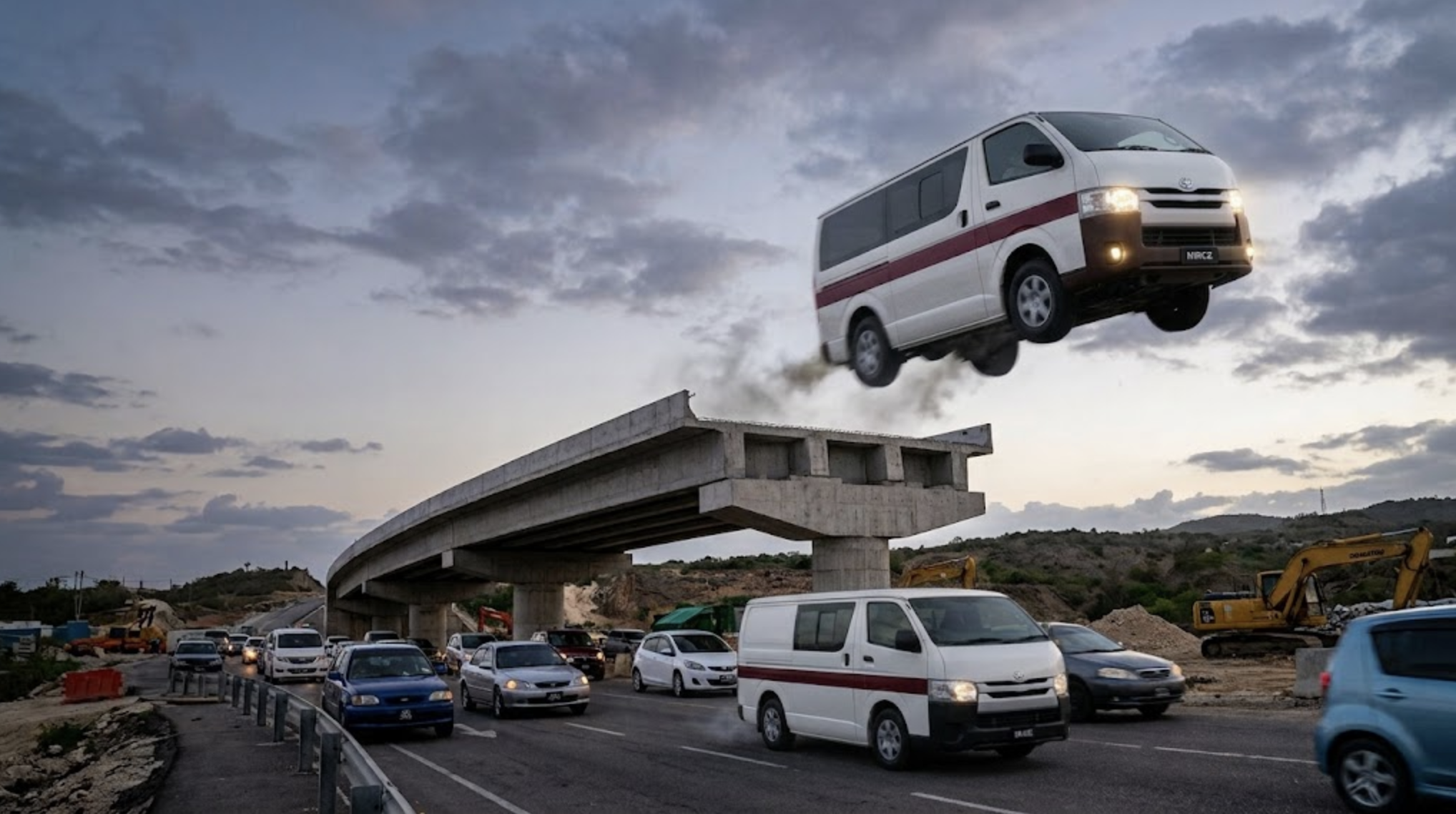
    This is the current state of affairs isn’t it? We discuss the Barbados economy like we are in a strong position. We have champagne tastes and mauby pockets. Do you know it takes one hour on most evenings to travel between one or two roundabouts on the ABC highway. This single example explains what the ‘why’.


  18. @John A

    Let us hear what Straughn will have to say next week during the “show” in the Lower House coming soon to a TV near you.

  19. NorthernObserver Avatar
    NorthernObserver

    “This means most of the interest savings, which the government enjoyed as a result of this second debt swap, was at the expense of the NISS…..one must ask whether the NISS’ actions reflect good financial management practices. Is this sound management of the public funds held by the NISS or good stewardship by the management of the NISS? What is the impact of these losses on the NISS’ financial position?”
    Dr.Melville you better be careful they don’t lock you up.
    Luckily, the NISSS doesn’t report, so Barbadians will not know it’s true position.
    Anyways Bajans seem to be cautious. Not buying a Bond or TBill, though the fecking GoB forced the NISSS to purchase a Debenture after hitting the same NISSS with a $300M loss.
    “Since 2018, the NISS would have lost $1.3 billion of its holding of government debt as a result of the debt restructuring exercise and over $400 million in interest income due to the two debt for development swaps. Is the NISS the primary target of the government’s debt management efforts?
    You definitely need locking up with comments like this.


  20. He will feature on the figures that sound good and stay far from those that show our true position. In other words stress the $20 you save and say nothing bout where it went. Lol

    You forget we had a debt restructuring and yet to hear what we net saving was after white oak fees and the cost of crppling the NIS was deducted? You forget we were never told what kicking the can down the road did to our total debt? Them was too busy talking bout reducing we annual debt service to mention it!


  21. @ David

    I will say now and anybody that say i wrong well bring the blasted numbers to prove it!

    I hereby declare that after deducting the cost of the loss to the NIS in terms of capital and lower interest payments and adding to this said figure the cost of whiteoak, that we ended up as a country in a worst position than before the restructuring. Also as if this was not bad enough, we placed the NIS in a position going forward where it would of had to been insolvent. Wunna doubt me well i going give you a quick exercise. Go back to the last audited financials from when the lion at Gun Hill was a cub and deduct 1 billion dollars plus from its net earnings that year and see for yourself where it leaves the fund. Add to that loss the pain of covid and all it went through in terms of lost of earnings on returns from its government paper and see where it really is. In Bajan terms EM BREK AS ASS.


  22. @John A

    What you are saying doesn’t not align with the last actuarial report?

  23. NorthernObserver Avatar
    NorthernObserver

    Go back to the last audited financials from when the lion at Gun Hill was a cub….
    One of the better lines I’ve read on BU 👍👍


  24. David an actuary ain’t no different to an auditor in that they work with the information given. The actuary can not make the necessary adjustments to the NIS asset base to represent what has happened, nor can it decide the grotto for example only has a market value of half what it cost to build.

    Its like a company, the directors can say the stock is $1 million dollars and the auditors will do a few cost checks to ensure the landed cost and retail etc are correct. If the stock only really has a market value of $750,000 because of discounts and right offs required due to market conditions and economic reality, don’t expect the auditor to know this as its not his responsibility to make these decisions.

    Look I don’t care who say what, if you lose 33% of your asset base overnight, you got to be The Lord above to make the same return as before with the 66% you got left. Add to this the fact that on the paper that you left with the earnings get slash from 7% to 1% and you still say you good, well skipper share with me you secret so I could sell it and be like Elon.


  25. @John A

    A rummage in the archives to serve as a gentle reminder with all due respect.

    “NIS funds “safest’ in Gov’t investment
    by Randy Bennett
    Prime Minister Mia Mottley has defended Government’s involvement with the National Insurance Scheme (NIS), saying the monies were used to benefit the country.
    However, she admitted that the NIS needed to find investment opportunities outside of Barbados so as not to “put all of its eggs in one basket”.
    Mottley was responding to recent criticisms that both the Democratic Labour Party (DLP) and the Barbados Labour Party (BLP) administrations had used the NIS as their personal piggy banks.
    The critics also suggested that Government was too involved in the NIS and called for the involvement to be limited.
    But Mottley explained that with limited options the NIS needed to invest its money, while pointing out that Government was the safest way to do so, while providing some of the highest returns on their investment.
    “The bottomline is that the pension funds and the NIS funds represent a pool of savings.
    If they did not do anything with it, it means that they would not be able to earn from the savings. Remember that their income is not only contributions from what you pay in, but it is also investment returns and therefore, you only have so many things that you can invest in.
    “To assume that a social security system is going to have a pool of savings that is not going to help to build out schools in a country, that’s not going to help to build out an airport in a country, that’s not going to help to build out the health systems in a country, is to assume first and foremost that there is somebody else’s system and country that you are going to build out because if you don’t invest what are you going to get back? You’re going to get back no returns and a $100 30 years ago is not a $100 today so it can’t do what it could do otherwise 30 years ago, so you’ve got to be able to invest,” the Prime Minister contended.
    “The question then is who best and how best do you invest? Now I think that there is a legitimate case for saying that the level of diversification is perhaps not sufficient and that we need to have more investments than simply just Government investments.
    “But at the same time, who is the most certain bet on a small state? More often than not, people know that when a Government owes them they are going to get paid even before a private sector investment because some private sector investments will succeed and some will fail miserably.”
    Mottley said the problems highlighted in relation to the National Insurance Fund, which is in danger of being depleted in the next 12 years, were much deeper than simply Government’s involvement with the NIS.
    “The issues are broader and deeper and more structural than are being said, but it sounds sexy to put it in terms of B’s and D’s. But, when you break it down and ask yourself as a small state what are the investments that the NIS can make to ensure that they’re not only relying on $100 paid in 30 years ago – but that they make that $100 work for them to keep up and outpace with inflation so that they can pay you benefits when they need to be paid and on time when they need to be paid,” Mottley said.
    randybennett@barbadostoday.bb


  26. “Let us hear what Straughn will have to say next week…”
    ~~~~~~~~~~~~~~~~~~
    You got time to waste it seems…
    Wuh we can probably reproduce that speech now…

    Imagine bad news needing to be shared …devoid of the lotta emotional long talk and false promises… and bragging about busses, garbage trucks and sewerage fixes – all of which have flopped.
    Can we continue to blame storms for HOPE, ash falls for loans, …and Bushie and Hants for Bajans talking shiite?

    Have you EVER heard admissions of failure coming from modern top leaders?
    NO!! ..they ALL now have ‘communications specialists’ who are paid to talk about things the have NO IDEA about – and to look knowledgable.

    Besides, Straughn has been there from the beginning – spending and borrowing as instructed. What can he possibly say differently – except perhaps that HE takes responsibility for the mess…

    LOL
    The Gun Hill lion cub is a classic..
    Murda!!!


  27. Bushie

    Straughn wuh! Maybe Mia just letting he do that merely to show how useless the budgetary process really has become.

    Elsewhere you seem to have some company in equating the simple adding and subtracting within a village setting to modern economic or monetary theory.

    For people who have evidently never read a word therefrom but believe that everything must be subsumed by the most simplistic, even when it’s clear at times that economists have difficulties with arithmetic, without studying the financial system, how in hell can one then interpret the language of economy as spoken by those involved? Furthermore impose one interests and upon one’s adversaries.


  28. @ Bush Tea

    I give you and Northern full permission to use the term as is required! LOLL


  29. @Bush Tea

    You have become too too cynical. Agree Straughn started out as little works, learning chapter and verse from big works. After six years it is time…


  30. Maybe Mottley also wants to locate the opposition leader to a position beneath her, fending off Thorne’s arguments in the main by having Straughn take the brunt, thus deflecting Thorne’s arguments to one less worthy.


  31. Yours is a reasonable position.


  32. Bushie…You have become too too cynical.
    ~~~~~~~~~~~
    ‘become??!!’
    LOL
    ‘Cynical’ is the bushman’s second name Boss…
    If you FULLY understod the state of our shiite world, you would be WORSE than Bushie…

    Agree with Pacha…
    How can the PM give the budget when she ain’t even manage yet to respond to Thorne’s ‘HOPE-FUL’ questions from last budget ..?

    Wunna would face up to Thorne NOW? – a FULL YEAR into the role…
    WHEN HE WAS SO DEVASTATING last time – after only WEEKS on the job, …and with two clowns in tow?

    Wunna think the PM is a Gun Hill lioness cub or WUH? [(c) John A]

    Bushie actually thought that she would have had an appointment in Turkanistan…
    or at Mar-a Largo .
    LOL


  33. Beyond the numbers: The real impact of Barbados’ rising debt

    At the recent signing ceremony for a $150 million (US$75 million) loan from CAF – the Development Bank of Latin America and the Caribbean, Prime Minister Mia Mottley sought to defend her administration’s borrowing policy.
    Though not mentioning the names of people who comment publicly on the implications of her administration’s excessive borrowing policy, the prime minister noted that “when people have nothing else to criticise, then they try to create something and a monster of something”.
    Referencing the decline in the debt to gross domestic product (GDP) ratio and the presence of the International Monetary Fund (IMF), the prime minister also stated: “I just want to give Bajans that context, because of all of the swirling of misinformation and judgements that are being made.”
    The basis for her statements is that the borrowing is taking place whilst Barbados remains in the IMF programme, and Barbados’ credit rating agencies have improved the country’s credit rating.
    A few things emerge from the prime minister’s statements, which she seems not to understand. First, it is healthy for competing views on her administration’s economic management to contend. When trained economists perform a public intellectual role, it redounds to the benefit of society. Informed comments on public policy should not be viewed as criticism by the prime minister.
    The contention that “when people have nothing else to criticise, then they try to create something” is without foundation given the social, economic, moral, and governance realities in Barbados.
    By the prime minister’s own admission, there are numerous challenges facing the islands of the Caribbean. At the opening ceremony of the 48th Regular Meeting of the Conference of CARICOM Heads of Government in Barbados on February 19, the prime minister called for urgent solutions to the pressing problems facing Caribbean people, including the climate crisis, reducing the cost of living, fixing an education system in shambles, achieving food security, reducing gun violence and an overall worrying crime situation, and finally achieving full freedom of movement in the region.
    The list mentioned by the prime minister is not exhaustive in the case of Barbados. There are other structural weaknesses in the Barbadian economy and society highlighted in published articles written by myself and others. The prime minister should therefore accept that she does not have a monopoly on criticising her administration.
    Second, it is disingenuous for the prime minister to categorise analyses of the administration’s debt policy by trained professionals as “the swirling of misinformation and judgements that are being made.”
    The persistent borrowing by the administration whilst the relationship with the IMF continues should not be construed as the IMF officials giving their blessing to such behaviour.
    The immediate concerns of the IMF are that the quantitative targets in the Barbados Economic Recovery and Transformation (BERT) programme are met, recommended structural reforms are undertaken, and their loans are repaid in a timely manner.
    Barbados’ experience with the IMF-supported BERT programme is unique. It runs counter to the typical country’s experience with IMF economic adjustment programmes. Excessive borrowing and escalating expenditure are not features of a standard IMF programme with a stabilisation focus.
    We should place the prime minister’s recurring mention of a decline in the debt to (nominal) GDP ratio in context. This ratio is simply the quantum of public debt divided by nominal GDP and expressed as a percentage. It is an indicator of the country’s ability to repay its debt by comparing what the country owes with what it produces. The debt-to-GDP ratio may fall as a result of a decline in the level of debt, an increase in nominal GDP, or a combination of the suggested movements in the two variables.
    The best way of achieving a lower debt-to-GDP ratio from a sustainable economic management perspective is through the reduction of the level of debt rather than via the growth in nominal GDP, which can be influenced in a disproportionate way by price increases in a high-inflation environment. Reducing the quantum of debt lessens the debt overhang challenge and frees up resources for developmental purposes. That is, a lesser amount of taxation revenue and foreign exchange will be required to meet debt service obligations.
    Of course, it is desirable that the reduction in the level of debt be achieved through interest and amortisation payments and not via debt repudiation or debt default.
    A review of the debt management experience of the Mottley administration reveals three distinct movements in the debt-to- GDP ratio. The first movement from 158.3 per cent to 117 per cent resulted from the unprecedented, hypocritical decision to default on the country’s debt shortly after assuming office in May 2018. This action resulted in a reduction of approximately $4 billion of the country’s indebtedness of $15.84 billion.
    Achieving a reduction in the debt-to-GDP ratio through debt default should not be considered a celebratory event given the magnitude of the impact it had on domestic and foreign financial institutions and private individuals locally.
    The unprecedented nature of the debt default and the size of its impact also led to mistrust in the administration and undermined the reputation of Barbados as a country that repaid its debt in full even in difficult economic circumstances.
    The second movement in the debt-to-GDP ratio is from 117 per cent after the debt restructuring with the default component in late 2018 to 138 per cent on September 30, 2021. The increase resulted from a combination of a sizeable increase in borrowing and a sharp decline in gross domestic output during the pandemic.
    During the review period, net borrowing increased by $1.4 billion to reach $13.1 billion. Simultaneously, after an initial increase in nominal GDP to $12 billion during the financial year 2019-2020, there was a sharp decline as the coronavirus pandemic had a devastating impact on the tourism sector and those activities closely linked to tourism. Nominal GDP declined by twenty per cent between March 31, 2020, and September 30, 2021, with the figure reaching $9.5 billion.
    The third movement in the debt-to-GDP ratio is from 138 per cent on September 30, 2021, to 103.5 per cent on December 31, 2024. The decline resulted exclusively from an increase in nominal GDP, which reached $14.3 billion at the end of the review period.
    The increase in nominal GDP was influenced disproportionately by price increases (rather than output increases), as evidenced by the fact that the size of the economy in real terms only surpassed the 2019 level during the latter part of the review period.
    Simultaneously, there was sustained borrowing with the level of debt increasing from $13.1 billion on September 30, 2021, to $14.8 billion on December 31, 2024.
    Two essential points emerge from the review of the debtto-GDP ratio. First, the debt default in late 2018 was the only occasion that a reduction in the debt level contributed to a decline in the debt-to-GDP ratio.
    Second, despite the size of the economy increasing by over $4 billion in nominal terms between 2018 and 2024, the debt-to-GDP ratio declined moderately from 117 per cent (after the default) to 103.5 per cent. Over the six-year period, gross borrowing was in excess of $5 billion (and net borrowing approximately $3.1 billion).
    The excessive borrowing policy reflected in the debt-to-GDP ratio of 103.5 per cent ensures that Barbados remains in the classification of a highly indebted country. It is informative to note that Barbados is the only country within the Caribbean with a debtto-GDP ratio in excess of 100 per cent. Finally, Prime Minister Mottley sought to justify the country’s debt-to-GDP ratio metrics on the credit rating agencies giving improved credit ratings. This is a superficial suggestion by the prime minister, given that the country’s credit rating is retained at junk bond or high risk. To move from the bottom closer to the top of the junk bond scale after two successive IMF-supported BERT programmes, spanning six and a quarter years, is not an achievement worthy of much celebration. Indeed, one of the major factors constraining the rating agencies from providing a more improved rating is the high indebtedness of the country.
    Anthony P. Wood, economist, and former lecturer in economics, banking and finance at the University of the West Indies at Cave Hill. He was also a minister in the Owen Arthur administration.

    Source: BT


  34. The shopkeeper can add nothing further to Mr Wood’s comments as wuuna have now been told by a brand name economist the facts.


  35. Well Wood seems to be mekking sense as for as the standard equation goes.

    Maybe, if he were in the MoF there would have been another, equally plausible, calculus.

    What Mottley now, and Wood maybe in the future, lack is a radical developmental ethos. Which would require level of pain heretofore unknown.

    Certainly, there is no way, barring such, that Barbados could ever escape this financialized slavery. We speak again about a debt jubilee as the aged old or classical response to debt.

    For surety, Mottley, Arthur, Thompson, Stuart and others have done nothing but laid a perennial debt trap for generations to come.

    The only salvation thus, is the clearing out of all debt from the financial system and starting anew, with a different non-debt economic set of relationships.

  36. NorthernObserver Avatar
    NorthernObserver

    One of Wood’s better constructed and executed articles.


  37. “The only salvation thus, is the clearing out of all debt from the financial system and starting anew, with a different non-debt economic set of relationships.”
    ~~~~~~~~~~~~~
    Speculative, and wishful musings from @Pacha.

    It avioids ANY contact with the ROOT causes of our imminent demise, and targets one of the more obvious SYMPTOMS… for unspecified transformation.

    The ONLY salvation is that which promises a NEW PERSONAL disposition. One that reflects a character of LOVE, Community-centricity, Godliness and TRUTH…

    Unfortunately THAT salvation is not academically based…
    ..and YOU (Dear Pacha) have dissed a KEY source of literature review that is required for successful matriculation….


  38. Well, Bushie

    We are making basically a materialistic argument. Unlike you, it was not our intention to imbue that comment with other ‘modalities’ as you are want to do.

    Surely, under a wholistic structure, then those deeper values are indispensable. However, weee have no expectation that your preferred awaking represents any near term end point.


  39. Even so Pacha, materialistically, …a change in financial system – with the underlying ALBINO-CENTRIC disposition that dominates brass bowls, SOLVES NOTHING.

    The MOST PERFECT financial system – under the control of a typical BB, will SHORTLY become wicked and evil.

    Conversely, the most IMPERFECT system, in the hands of a RIGHTEOUS and honest leader, will produce miracles….

    You would be aware of the concept of the 50-year jubilee, that promotes the ‘debt reset’ of which you speak….
    But note that the shiite keeps coming back…


  40. Bushie

    The whole world is not dominated by albinos. Of course, yours is to eliminate all possible solutions except the one preferred.

    Well, it depends on how far back one wishes to go. For we’ve had Twi-lineal Age-Ranged civilizations right here on earth which reached a social state of near perfection.

    Your conception of leadership is as albino as can be. Let women lead, let children lead, as your book says.

    Forgive us. However, there are no cases of imperfect systems in the hands of socalled righteous women where miracles were evident.

    No! We referred to the practice started by the Hamarabees. As farming communities they found it necessary, every seven years or so, to wipe out all debts to stop the merchants from impoverishing the farmers, thereby collapsing their societies.


  41. The Western-backed terrorists which took over Syria a few months ago are going door to door killing Christians, Allawites, Shia and other minorities, people who they presume are not in sync with their Tafari ideology. These minorities are seeking refuse within the Russian military base in Syria.

    Egypt has massed tens on thousands of troops in the Sinai, titularly to prevent the Zionists from pushing the Palestinians into the desert. However, the tensions in the areas suggest war is not far off.

    Iran is on high alert given the that Drumpf is saying one thing, however his actions and those of the Christian crusader regime in Washington, are planning war with their unsinkable aircraft carrier in the regime, the Zionist state, to strike Iran.

    The Russians have encircled up to ten thousand NATO-backed, Ukrainian fascist troops within a cauldron in the Kurst region. Krust, a part of Russia pre 2022, was invaded by the NATO-backed Nazis about six months ago as a ‘card’ for possible peace negotiations.

    The Russians otherwise continue their advances along the line of contact.

    The Ansarallah in Yemen threatens the Zionist state.

    The Chinese are transferring fighter jets to Egypt,

    On and on.

    World War Three has been here. However, the fascist oligarchs in Washington, including Drumpf, are merely seeking to fill their pockets.

    All of these equations about local economy will need to be suspended when the realization strikes home.


  42. Controversy or …

    The recent revelation by St. Vincent and the Grenadines Prime Minister, Ralph Gonsalves, about the construction of a new official residence for the Governor of the Eastern Caribbean Central Bank (ECCB) has ignited debate over governance, transparency, and the decision-making process within the ECCB. At the heart of the matter is the reported EC$22 million

    https://www.iwnsvg.com/2025/03/09/the-eccb-governors-residence-controversy-governance-transparency-and-the-politics-of-accountability


  43. @Pacha said…
    “The whole world is not dominated by albinos.”
    ~~~~~~~~~~~~~~~~~~~

    LOL ha ha ha
    Are you into comedy now Pacha?

    WHERE or WHO in this world, are not full fledged ‘albino-centric’ in their thinking, values, character and disposition?

    – When brass bowls – who have been EXPLOITED now for 500+ years by this kind of thinking can now be FULL CONVERTS – as we see with the Barbados government and local BBs, to the LOVE OF MONEY…
    – When even the communists countries such as China and Russia have now FULLY ADOPTED the capitalist mantra of GREED and domination (albeit they do it EVEN MORE EFFECTIVELY than the inventors)
    – When EVEN FREE THINKERS such as yourself, still think of ‘success’ in economic and financial concepts….

    THE WORLD IS INDEED dominated by albino-centric values, thinking, and characteristics… without a doubt.

    Anyone now seen to be promoting LOVE, Godliness (respect for our CREATORS), selflessness and especially TRUTH, is seen as an outcast, heretic and idiot… deserving of prison…

    The present world is completely under the influence of the WRONG set of spiritual forces in the ongoing battle in which we find ourselves.
    Just look at the RESULTS all around you… none more pointed than here in BBland

    However a dramatic COUNTER OFFENSIVE is imminent..
    and the days of the albinos are NUMBERED….

The blogmaster invites you to join and add value to the discussion.

Trending

Discover more from Barbados Underground

Subscribe now to keep reading and get access to the full archive.

Continue reading